
|
Getting your Trinity Audio player ready…
|
AVENS (Geum urbanum)
Common Names: Wood Avens, Herb Bennet, St. Benedict’s Herb, Clove Root, Colewort, City Avens, European Avens, Way Bennet, Benoîte (French), Hierba de San Benito (Spanish), Stadtnelkenwurz (German), Nejlikrot (Swedish), Kyläkellukka (Finnish)
Botanical Name: Geum urbanum
Family: Rosaceae (Rose Family)
Habitat: Native to Europe, western Asia, and North Africa; naturalized in North America. Thrives in shady deciduous forests, woodland edges, hedgerows, and urban environments like parks and gardens.
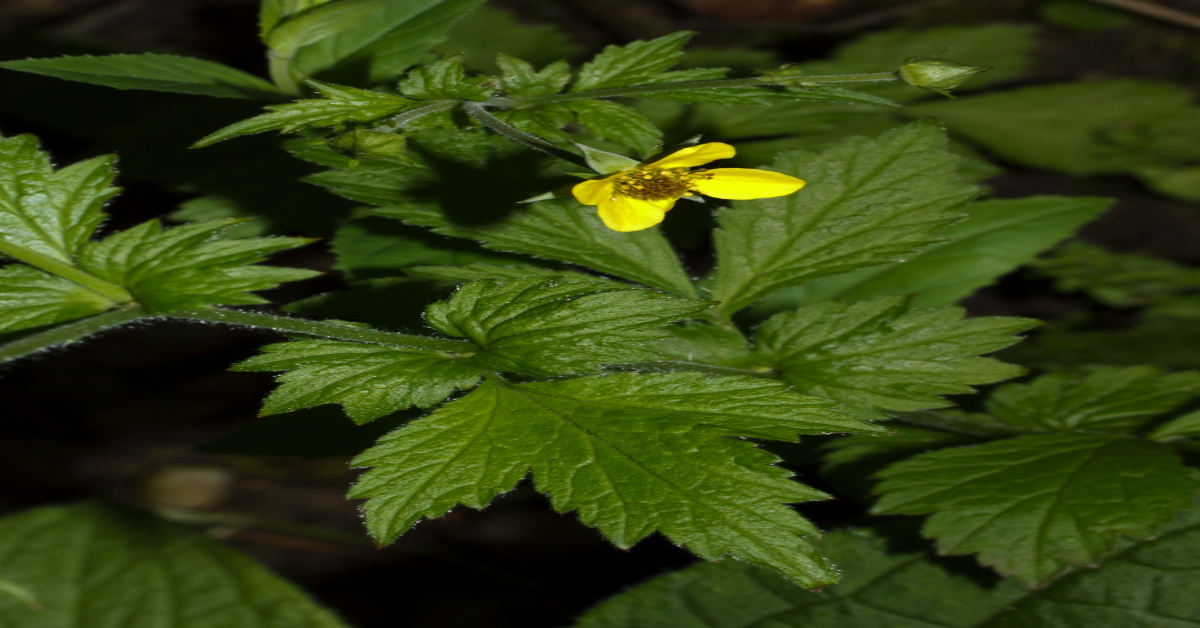
Description: A downy perennial herb with a short, thick purple rhizome and wiry stems reaching up to 60 cm. Features pinnate leaves with 2–3 pairs of unequal lateral leaflets and a large terminal three-lobed leaflet. Bears small, yellow, five-petaled flowers from May to August, attracting pollinators like bees and butterflies. The roots emit a clove-like aroma when freshly dug.

Overview
Geum urbanum, commonly known as Wood Avens or Herb Bennet, is a humble yet potent plant deeply woven into the fabric of herbal traditions across Eurasia and beyond. Its unassuming appearance belies a rich history of medicinal, culinary, and spiritual significance. Revered as a sacred herb in medieval Christian folklore, it was believed to ward off evil spirits and protect against venomous creatures. Its clove-scented roots and astringent leaves have been employed in folk remedies for centuries, addressing ailments from digestive disorders to fevers. Today, Avens continues to inspire holistic healers, herbalists, and gardeners, offering a bridge between ancient wisdom and modern applications. Its adaptability to urban environments and ecological contributions, such as supporting pollinators, make it a valuable ally in both wild and cultivated spaces.
Avens (Geum urbanum) exhibits a range of herbal actions, primarily due to its high tannin content and other bioactive constituents. It is strongly astringent, which makes it useful for treating conditions affecting the mouth, throat, and gastrointestinal tract, including sore throats, bad breath, mouth ulcers, and gum irritation. Its astringent properties help tighten soft tissues and reduce secretions, contributing to its use as a gargle or mouthwash.
The herb is also antiseptic, anti-inflammatory, and styptic, supporting its traditional use in treating infections, wounds, and hemorrhoids. It acts as a diaphoretic (promoting sweating) and febrifuge (reducing fever), with historical use in treating fevers, including intermittent fevers and malarial symptoms, sometimes serving as a substitute for quinine. Its bitter compounds stimulate appetite, gastric secretion, and bowel movements, while the essential oil in the rhizome has antispasmodic effects and helps inhibit gas formation.
Avens is considered a stomachic and tonic, supporting digestive health and liver function, with historical recommendations for opening obstructions of the liver and spleen. It has been used to treat diarrhea, dysentery, peptic ulcers, irritable bowel syndrome (IBS), and other inflammatory bowel conditions. The herb may also help with chronic bronchitis, nausea, vomiting, and menstrual pain due to its haemostatic properties.
Additionally, Avens has been used as a vulnerary herb, aiding in wound healing by forming a protective barrier on tissues. It has mild detoxifying effects, potentially aiding liver detoxification, and its phenolic compounds, including eugenol and flavonoids, contribute to antioxidant and antimicrobial activity. The root has also been used as a natural insect repellent and moth deterrent due to its aromatic properties.
Quick Facts Table & Page Navigation
| Category | Details |
|---|---|
| Botanical Name | Geum urbanum |
| Common Names | Wood Avens, Herb Bennet, St. Benedict’s Herb, Clove Root, Colewort, City Avens, Way Bennet |
| Family | Rosaceae (Rose Family) |
| Habitat | Shady woodlands, hedgerows, urban gardens; native to Europe, western Asia, North Africa; naturalized in North America |
| Historical Context | Used in medieval Europe for protection and healing; mentioned in Ortus Sanitatis (1491); linked to Christian symbolism |
| Cultural Significance | Sacred in Christian folklore; used in folk rituals for protection, plague prevention, and prosperity |
| Medicinal Uses | Astringent for digestive issues, sore throats, skin conditions; sedative for relaxation; historical use for fevers, poisonings |
| Indigenous Uses | Limited records; hybrids with Geum canadense possibly used by Native American tribes |
| Culinary Uses | Roots as clove-like spice in soups, ales, chai; young leaves in salads or cordials |
| Medicinal Recipes | Decoctions for diarrhea; gargles for sore throats; ointments for hemorrhoids; cordials for immunity |
| Spiritual Uses | Protection amulets, house blessings, meditation incense, prosperity rituals |
| Biblical Associations | Symbolizes Holy Trinity, Five Wounds of Christ; linked to St. Benedict and Psalms 91:10 |
| Mythological Associations | Tied to Jupiter/Zeus, Freya, earth goddesses; used to appease fairies in Celtic/Germanic folklore |
| Elemental Associations | Earth (primary), Fire (secondary), Water (tertiary) |
| Esoteric/Astro-Spiritual Uses | Jupiterian rituals, astral protection, chakra work (Root, Solar Plexus), divination support |
| Astrological Associations | Ruled by Jupiter; linked to Sagittarius, Pisces, Ninth House, Thursday |
| Magical Uses | Protection spells, prosperity sachets, purification incense, love charms, snakebite wards |
| Tarot | The Emperor, Wheel of Fortune, Ace of Pentacles, Four of Pentacles |
| Tree of Life | Chesed (Mercy), Tiphareth (Beauty), Path 21 (Chesed to Netzach) |
| Chemistry | Tannins (astringent), eugenol (antimicrobial), flavonoids (antioxidant), volatile oils, saponins |
| Alchemical Associations | Jupiter, Fire element, Solve et Coagula (dissolve and coagulate), spiritual purification |
| Scientific/Technological Applications | Herbal revival workshops, biodiversity gardens, and urban agriculture initiatives |
| Current Projects | Herbal revival workshops, biodiversity gardens, urban agriculture initiatives |
| Future Possibilities | Natural preservatives, holistic skincare, spiritual herbalism, rooftop gardens |
| Herbal Gardening | Hardy perennial; grows in moist, shaded soil; propagated by seeds or rhizome division; attracts pollinators |
| Homesteading | Potential for antimicrobial preservatives, antioxidant skincare, bioremediation, and natural fragrances |
| Literary Mentions | Ortus Sanitatis (1491), Culpeper’s Complete Herbal (1653), modern herbal texts, folk ballads |
| Honorable Mentions | St. Benedict association, Augsburg Ale recipes, astrological herbalism |
Historical Context
Wood Avens has a storied past, with its uses documented across ancient and medieval traditions. While not as prominently featured in foundational texts like Dioscorides’ De Materia Medica as other herbs, its presence in European herbalism is well-attested in later herbals and folk practices.
- Medieval Europe: Avens was celebrated in medieval herbals, such as the Ortus Sanitatis (1491), which declared, “Where the root is in the house, Satan can do nothing and flies from it, wherefore it is blessed before all other herbs.” Its three-lobed leaves symbolized the Holy Trinity, and its five-petaled flowers represented the Five Wounds of Jesus Christ, earning it the name Herba Benedicta (Blessed Herb). It was a staple in monastic gardens, used for both medicinal and spiritual purposes.
- Ancient and Classical References: While specific mentions of Geum urbanum in ancient Greek or Roman texts are scarce, its use likely predates written records, as suggested by its widespread presence in European folk medicine. The generic name Geum derives from the Greek geno, meaning “to yield a pleasant aroma,” hinting at its aromatic roots valued in early herbal practices.
- Cross-Cultural Trade: The herb trade between Europe, Asia, and the Middle East (300 BCE–600 CE) likely facilitated the exchange of knowledge about Avens, as its clove-like roots resembled spices like clove, which were imported from the Moluccas to Egypt. This trade enriched its applications in European herbalism.
Avens’ historical significance lies in its dual role as a medicinal and protective plant, deeply embedded in the spiritual and practical lives of medieval communities.
Cultural Significance
Wood Avens holds a cherished place in the cultural and spiritual traditions of Europe, particularly in Christian and pre-Christian folklore. Its symbolism and protective qualities made it a staple in rituals and daily life.
- Christian Symbolism: The plant’s association with the Holy Trinity and the Five Wounds of Christ made it a sacred herb in medieval Europe. It was hung in homes, worn as amulets, or placed near doorways to repel evil spirits, witches, and malevolent forces. Its use in religious rituals underscored its status as a “blessed” herb.
- Folk Beliefs: In European folklore, Avens was believed to protect against venomous snakes, rabid dogs, and even the plague. A cordial made by boiling its roots in wine was used as a remedy during plague outbreaks. Its clove-scented roots were also used to repel moths and insects, blending practical and mystical applications.
- Astrological Associations: Ruled by Jupiter in traditional astrology, Avens was thought to bring blessings, expansion, and protection, aligning with Jupiter’s qualities of abundance and benevolence. Herbalists used it in rituals to invoke good fortune and ward off misfortune.
- Indigenous and Folk Perspectives: While specific Indigenous uses of Geum urbanum are less documented due to its primary distribution in Eurasia, its naturalization in North America led to hybridization with native species like Geum canadense. Indigenous communities may have incorporated these hybrids into their practices, though records are sparse. In Europe, rural healers (curandeiros, herbolarios) relied on Avens for its accessibility and versatility in treating common ailments.
Avens’ cultural legacy is a testament to its role as a guardian plant, bridging the mundane and the divine in folk traditions.
Medicinal Uses
Wood Avens has been a cornerstone of herbal medicine, valued for its astringent, sedative, and anti-inflammatory properties. Its roots and leaves have been used to treat a wide range of ailments, particularly in European folk medicine.
- Digestive Health: The tannins in Avens’ roots provide strong astringent effects, making it effective for diarrhea, dysentery, peptic ulcers, ulcerative colitis, and other inflammatory bowel diseases. Infusions or decoctions of the roots were used to soothe the digestive tract and reduce inflammation.
- Oral and Throat Health: As a gargle or mouthwash, Avens was employed to treat sore throats, bad breath, and mouth infections. Its astringent properties helped tighten tissues and reduce irritation.
- Skin Conditions: Applied as a wash, lotion, or ointment, Avens was used to treat hemorrhoids, chilblains, and vaginal discharge. Its anti-inflammatory effects aided in soothing irritated skin.
- Fevers and Respiratory Issues: Avens was historically used as a febrifuge, sometimes as a substitute for quinine, to reduce high fevers. It was also employed for chronic bronchitis and toothaches in folk remedies.
- Sedative Effects: The herb has mild sedative properties, similar to but weaker than valerian, used to calm nerves and promote restful sleep.
- Historical Uses: Avens was used to treat poisonings, dog bites, and liver disease, reflecting its broad application in medieval and early modern herbalism.
Precautions: Excessive consumption may cause gastrointestinal upset, and some individuals may experience allergic reactions. Harvest roots sparingly to ensure plant regeneration.
Indigenous Uses
While Geum urbanum is native to Eurasia, its introduction to North America led to natural hybrids with native species like Geum canadense. Specific Indigenous uses of Geum urbanum are not extensively documented, but Native American tribes may have used related species in the Geum genus for similar purposes, such as treating digestive or skin ailments. In Europe, rural folk healers integrated Avens into their practices, using it for its accessibility and efficacy in treating common ailments. The plant’s adaptability to disturbed environments made it a reliable resource for communities without access to formal medicine.

Culinary Uses
Wood Avens’ clove-like roots and tender leaves lend themselves to culinary applications, particularly in medieval and early modern Europe.
- Flavoring: The roots, with their eugenol content, impart a clove-like flavor. They were used as a spice in soups, stews, broths, sauces, fruit pies, and stewed fruits. Ground rhizomes served as a clove substitute in herb gardens.
- Beverages: Roots were boiled in wine to create a cordial or infused with orange peel for mulled drinks. They were also used to flavor ale, such as Augsburg Ale, preserving the liquor and adding a wholesome quality.
- Salads and Infusions: Young leaves, harvested in spring, were added to spicy salads or infused to create a mildly spicy cordial. Their flavor complemented hearty dishes.
- Chai Tea: Roots boiled in milk were used to create chai-like beverages, blending aromatic and medicinal qualities.
Culinary use of Avens highlights its role as a versatile herb, enhancing both flavor and health in traditional diets.
Medicinal Recipes and Folk Remedies
The following recipes reflect traditional preparations of Wood Avens, grounded in historical and folk practices.
- Astringent Decoction for Digestive Issues
- Ingredients: 1 tsp dried Avens root, 1 cup water
- Preparation: Boil the root in water for 10 minutes, then strain.
- Use: Drink 1–2 tbsp up to three times daily to relieve diarrhea, dysentery, or ulcers.
- Source: Medieval European herbalism, adapted from folk remedies.
- Gargle for Sore Throat
- Ingredients: 1 tbsp fresh or dried Avens leaves, 1 cup boiling water
- Preparation: Steep leaves for 15 minutes, strain, and cool.
- Use: Gargle 2–3 times daily to soothe sore throats or mouth infections.
- Source: Central European folk medicine.
- Anti-Inflammatory Ointment for Hemorrhoids
- Ingredients: 2 tbsp dried Avens root, 1/4 cup coconut oil, 1 tbsp beeswax
- Preparation: Simmer roots in oil for 20 minutes, strain, and mix with melted beeswax. Cool and store in a jar.
- Use: Apply to affected areas 1–2 times daily to reduce inflammation and discomfort.
- Source: Adapted from 16th-century herbal recipes.
- Plague Cordial
- Ingredients: 1 tbsp Avens root, 2 cups red wine
- Preparation: Boil roots in wine for 15 minutes, strain, and store in a bottle.
- Use: Sip 1–2 oz during illness to boost immunity and ward off infection.
- Source: Ortus Sanitatis (1491).
- Sedative Tea for Restful Sleep
- Ingredients: 1 tsp dried Avens leaves, 1 cup boiling water
- Preparation: Steep for 10 minutes, strain, and sweeten with honey if desired.
- Use: Drink 1 cup before bed to promote relaxation and sleep.
- Source: European folk remedies.
These recipes honor the plant’s historical use while offering practical applications for modern herbalists.
Esoteric and Spiritual Practices
Wood Avens shines in esoteric traditions, its protective and blessing qualities celebrated in folklore and ritual. The following practices embrace its mystical heritage without skepticism, encouraging exploration and preservation.
- Protection Amulet:
- Ritual: Harvest an Avens root in late autumn under a waxing moon, ideally when Jupiter is prominent. Dry the root and wrap it in a white cloth with a pinch of frankincense. Carry or hang in the home to ward off evil spirits and negative energies.
- Symbolism: The root’s clove-like scent and Christian symbolism invoke divine protection.
- Source: Medieval Christian folklore.
- Blessing Ritual for the Home:
- Ritual: Burn dried Avens leaves as incense during a house blessing, moving clockwise through each room while chanting a prayer or intention for peace and prosperity. Alternatively, sprinkle a decoction of Avens root around doorways and windows.
- Symbolism: The herb’s association with the Holy Trinity blesses the space with sacred energy.
- Source: European folk traditions.
- Jupiter Prosperity Spell:
- Ritual: On a Thursday (Jupiter’s day), place a fresh Avens root in a green pouch with coins and a bay leaf. Bury it in your garden or near your home’s entrance to attract abundance and good fortune.
- Symbolism: Jupiter’s rulership enhances the herb’s ability to expand wealth and opportunities.
- Source: Astrological herbalism.
- Plague Protection Charm:
- Ritual: Combine Avens root with rue and rosemary in a small sachet. Carry it during times of illness or place it under the pillow to protect against disease and malevolent forces.
- Symbolism: The herb’s historical use against plague aligns with its protective qualities.
- Source: Ortus Sanitatis and folk practices.
- Snakebite Ward:
- Ritual: Wear an Avens root amulet or rub fresh leaves on the skin before entering areas with snakes. Offer a prayer to St. Benedict, the herb’s patron, for safety.
- Symbolism: The herb’s folklore credits it with repelling venomous creatures.
- Source: Medieval European beliefs.
These practices celebrate Avens’ role as a spiritual ally, inviting practitioners to reconnect with its sacred heritage.
Modern Medical Use and Relevance
In contemporary holistic healing, Wood Avens remains valued for its astringent, anti-inflammatory, and mild sedative properties. Herbalists and naturopaths use it in forms like teas, tinctures, and salves, focusing on its traditional applications without reliance on pharmaceutical frameworks.
- Digestive Support: Avens is used in herbal blends to soothe irritable bowel syndrome, diarrhea, and ulcers. Its tannins help reduce inflammation and tighten mucous membranes.
- Oral Health: Modern herbal mouthwashes and gargles incorporate Avens for its ability to combat gingivitis and sore throats.
- Skin Care: Salves and lotions containing Avens are applied to treat hemorrhoids, eczema, and minor wounds, leveraging its anti-inflammatory and astringent effects.
- Sedative Teas: Avens is included in calming tea blends to promote relaxation and alleviate mild anxiety, often combined with herbs like lemon balm or chamomile.
- Ecological Benefits: Beyond human health, Avens supports biodiversity by attracting pollinators and serving as a food source for grizzled skipper butterfly caterpillars, aligning with holistic principles of environmental harmony.
Modern herbalists emphasize sustainable harvesting, recommending the use of young leaves in spring and roots in late autumn to preserve wild populations.

Chemistry
The medicinal and aromatic properties of Wood Avens stem from its chemical constituents, primarily concentrated in the roots and leaves.
- Tannins: Provide astringent effects, tightening tissues and reducing inflammation. Key for digestive and skin remedies.
- Eugenol: A phenolic compound responsible for the clove-like aroma of the roots. Contributes to antimicrobial and anti-inflammatory properties, similar to cloves.
- Volatile Oils: Enhance the plant’s aromatic and insect-repellent qualities.
- Flavonoids: Offer antioxidant benefits, supporting the plant’s anti-inflammatory and healing effects.
- Saponins: May contribute to its mild sedative properties, though present in smaller amounts.
These compounds align with Avens’ traditional uses, validating its efficacy through a holistic lens without pharmaceutical manipulation.
Alchemical Associations
In alchemical traditions, Wood Avens is linked to Jupiter, the planet of expansion, abundance, and protection. Its clove-like roots and vibrant yellow flowers resonate with the element of Fire, symbolizing warmth, vitality, and purification. Alchemists viewed Avens as a plant of Solve et Coagula (dissolve and coagulate), capable of breaking down negativity and consolidating blessings. Its astringent properties mirror the alchemical process of contraction, drawing energies inward for healing and grounding. The plant’s Christian symbolism ties it to spiritual purification, akin to the alchemical quest for the Lapis Philosophorum (Philosopher’s Stone). Herbalists might use Avens in rituals to align with Jupiter’s energies, enhancing prosperity and divine connection.
Scientific and Technological Applications
While Geum urbanum has not been extensively studied in modern scientific contexts, its chemical profile suggests potential for broader applications in holistic and ecological fields.
- Antimicrobial Research: Eugenol’s antimicrobial properties, similar to those in cloves, could be explored for natural preservatives or topical antiseptics in herbal products.
- Antioxidant Potential: Flavonoids in Avens may offer antioxidant benefits, potentially useful in natural skincare or nutritional supplements.
- Ecological Restoration: Avens’ ability to thrive in disturbed urban environments makes it a candidate for bioremediation projects, stabilizing soil and supporting pollinators.
- Aromatic Extracts: The clove-like scent of Avens roots could be harnessed for natural fragrances or insect-repellent products, aligning with sustainable technologies.
These applications prioritize holistic and environmental benefits, avoiding pharmaceutical exploitation.
Current Projects and Future Possibilities
- Herbal Revival Projects: Community herbalists in Europe and North America are rediscovering Avens for its accessibility and versatility. Workshops and foraging groups promote its use in teas, salves, and culinary recipes, fostering a return to folk traditions.
- Biodiversity Initiatives: Conservationists are incorporating Avens into wildlife-friendly gardens, leveraging its nectar-rich flowers to support bees, butterflies, and grizzled skipper caterpillars. Projects in the UK and Germany focus on restoring native plant populations in urban green spaces.
- Future Possibilities:
- Natural Preservatives: Eugenol could be developed into eco-friendly preservatives for food or cosmetics, reducing reliance on synthetic chemicals.
- Holistic Skincare: Avens’ astringent and anti-inflammatory properties could inspire new lines of natural skincare products, emphasizing plant-based healing.
- Urban Agriculture: Its adaptability to urban environments positions Avens as a candidate for rooftop gardens or vertical farming, supporting food security and biodiversity.
- Spiritual Herbalism: The resurgence of esoteric practices may lead to increased use of Avens in modern witchcraft, astrology, and ritual work, preserving its mystical legacy.
These projects and possibilities celebrate Avens’ potential to bridge ancient wisdom with sustainable innovation.

Homesteading / Herbal Gardening
Wood Avens is an ideal plant for homesteaders and herbal gardeners due to its hardiness, low maintenance, and multifaceted uses.
- Cultivation:
- Soil: Prefers moist, well-drained soil with partial shade, though it tolerates a range of conditions, including urban soils.
- Propagation: Grow from seeds sown in spring or by dividing rhizomes in autumn. Plants self-seed readily, ensuring a steady supply.
- Care: Minimal care required; water during dry spells and prune dead stems in late autumn.
- Harvesting:
- Leaves: Collect young leaves in spring for culinary or medicinal use.
- Roots: Harvest in late autumn or early spring when the plant is dormant, using a trowel to avoid damaging the rhizome. Harvest sparingly to ensure regeneration.
- Garden Benefits: Attracts pollinators, supports butterfly larvae, and adds aesthetic value with its bright yellow flowers. Its spreading habit makes it a good ground cover in shaded areas.
- Homesteading Uses: Incorporate Avens into kitchen gardens for culinary spices, medicinal herb beds for remedies, or spiritual gardens for ritual plants. Its roots can be dried for year-round use in teas, salves, or incense.
Avens’ adaptability makes it a valuable addition to any homestead, supporting both practical and mystical pursuits.
Honorable Mentions
- Ortus Sanitatis (1491): This medieval herbal praises Avens as a blessed herb, stating, “If a man carries the root about him, no venomous beast can harm him.” Its spiritual significance is a cornerstone of its legacy.
- Christian Folklore: The herb’s association with St. Benedict and its use in religious rituals highlight its role as a sacred plant in medieval Europe.
- Culinary Heritage: References to Avens in Augsburg Ale recipes underscore its historical role in flavoring beverages, blending culinary and medicinal traditions.
- Astrological Texts: Its rulership by Jupiter in astrological herbalism enriches its esoteric narrative, connecting it to prosperity and protection.
These mentions weave Avens into a tapestry of herbal lore, celebrating its enduring presence in human culture.
Spiritual Uses
Wood Avens holds a sacred place in spiritual practices, particularly in European Christian and pre-Christian traditions. Its protective and blessing qualities make it a potent ally in rituals, meditations, and sacred spaces.
- Protection and Warding: Avens was revered for its ability to shield against malevolent forces, including evil spirits, curses, and physical dangers like venomous creatures. Roots were carried as talismans or hung above doorways to create a spiritual barrier.
- House Blessings: Sprigs of Avens or its root decoctions were used to consecrate homes, churches, and altars, invoking divine favor and peace. The herb’s clove-like scent was believed to purify spaces and align them with sacred energies.
- Meditation and Grounding: The plant’s grounding energy, tied to its earthy roots, was used in meditative practices to foster spiritual clarity and connection to the divine. Herbalists burned dried leaves as incense to enhance focus during prayer or ritual.
- Rituals for Abundance: Associated with prosperity, Avens was incorporated into rituals to attract wealth, health, and good fortune, often combined with other Jupiter-ruled herbs like basil or oak.
- Seasonal Celebrations: In medieval Europe, Avens was used during Midsummer (St. John’s Day) and other Christian festivals to honor the divine and protect communities from seasonal misfortunes.
These spiritual uses celebrate Avens’ role as a bridge between the mundane and the divine, fostering a sense of safety and sacred connection.
Biblical Associations
Wood Avens’ significance in Christian traditions ties it to biblical symbolism, particularly through its medieval moniker, Herba Benedicta (Blessed Herb), and its association with St. Benedict. While not explicitly named in the Bible, its symbolic attributes resonate with biblical themes.
- Holy Trinity: The three-lobed leaves of Avens were seen as a representation of the Father, Son, and Holy Spirit, aligning with Christian teachings on the triune nature of God (e.g., Matthew 28:19). This made it a favored herb in monastic gardens.
- Five Wounds of Christ: The five-petaled yellow flowers symbolized the wounds of Jesus on the cross, a potent image in medieval devotion (e.g., John 19:34). Avens was used in rituals to honor Christ’s sacrifice and seek divine protection.
- St. Benedict: Named Herb Bennet after St. Benedict of Nursia, Avens was believed to embody the saint’s protective power against evil. Benedictine monks used it in exorcisms and blessings, drawing on Psalms like 91:10 (“No evil shall befall you”).
- Purification and Deliverance: The herb’s use in warding off evil parallels biblical calls to resist spiritual darkness (e.g., Ephesians 6:12). Its clove-like roots were burned or sprinkled to cleanse spaces, evoking the purifying fire of the Holy Spirit (Acts 2:3-4).
These associations embed Avens in Christian mysticism, making it a living symbol of faith and divine guardianship.

Mythological Associations
While Geum urbanum lacks direct mentions in classical mythology, its attributes align with mythological themes and deities across European traditions, particularly those tied to protection, healing, and abundance.
- Jupiter/Zeus: Avens’ astrological rulership by Jupiter connects it to the Greco-Roman god Zeus, ruler of the heavens and bringer of prosperity. Its protective qualities mirror Zeus’s role as a guardian of order and justice.
- Freya (Norse Mythology): The plant’s yellow flowers and association with fertility and beauty resonate with Freya, the Norse goddess of love and abundance. Avens may have been used in rituals to honor her, especially in northern Europe.
- Earth Goddesses: The herb’s earthy roots and woodland habitat link it to deities like Gaia (Greek) or Nerthus (Germanic), who embody the nurturing and protective aspects of the earth. Folk healers likely offered Avens to these spirits for bountiful harvests.
- Folklore and Fairies: In Celtic and Germanic folklore, Avens was believed to appease woodland spirits and fairies, preventing mischief. Its roots were placed near thresholds to maintain harmony with the “Good Folk.”
These mythological connections enrich Avens’ narrative, tying it to universal themes of protection and divine favor.
Elemental Associations
In esoteric traditions, Wood Avens is primarily associated with the element of Earth, reflecting its grounding, nurturing, and protective qualities.
- Earth: The plant’s thick, aromatic roots anchor it to the earth, symbolizing stability, fertility, and resilience. Its ability to thrive in shaded, urban environments reinforces its earthy adaptability.
- Fire (Secondary): The clove-like scent of the roots and the vibrant yellow flowers evoke Fire’s transformative and purifying energy. Burning Avens as incense aligns with this element, cleansing spaces and igniting spiritual warmth.
- Water (Tertiary): The herb’s preference for moist soils and its use in liquid preparations (teas, decoctions) connect it to Water, symbolizing emotional healing and flow.
These elemental associations make Avens a versatile tool in elemental magic, balancing grounding and transformative energies.
Esoteric and Astro-Spiritual Uses
Wood Avens shines in esoteric practices, where its Jupiterian energy and protective qualities are harnessed for spiritual growth and ritual work.
- Jupiterian Rituals: As a Jupiter-ruled herb, Avens is used in spells and meditations to attract abundance, wisdom, and divine favor. It is often combined with other Jupiter herbs (e.g., dandelion, sage) in sachets or incense blends.
- Astro-Spiritual Alignment: Harvest Avens on Thursdays or during a waxing moon when Jupiter is prominent to amplify its spiritual potency. Use it in rituals to align with cosmic energies of expansion and protection.
- Divination Support: The herb’s grounding energy aids in scrying or meditative divination, helping practitioners connect with higher wisdom. Place a root under a pillow to enhance prophetic dreams.
- Astral Protection: Avens is used in astral travel rituals to safeguard the practitioner’s spirit. A sachet of dried leaves or roots can be carried or placed on an altar during such practices.
- Chakra Work: Associated with the Root Chakra (Muladhara) for grounding and the Solar Plexus Chakra (Manipura) for confidence, Avens supports energetic balance in holistic practices.
These uses celebrate Avens’ role as a spiritual catalyst, inviting practitioners to explore its cosmic and earthly connections.
Astrological Associations
- Planetary Ruler: Jupiter
- Jupiter’s influence imbues Avens with qualities of expansion, prosperity, protection, and benevolence. It is used in rituals to attract wealth, success, and spiritual growth.
- Zodiac Signs: Sagittarius and Pisces
- Sagittarius reflects Avens’ adventurous and optimistic energy, supporting exploration and abundance. Pisces enhances its mystical and healing qualities, aiding emotional and spiritual work.
- Day: Thursday (Jupiter’s day)
- Rituals and harvesting are most potent on Thursdays, aligning with Jupiter’s expansive energy.
- House: Ninth House (philosophy, higher learning, spirituality)
- Avens supports quests for wisdom and divine connection, resonating with the Ninth House’s themes.
These associations position Avens as a powerful astrological ally, enhancing rituals and personal growth.

Magical Uses
Wood Avens is a staple in magical practices, particularly in European witchcraft, folk magic, and astrological herbalism. The following spells and practices embrace its folklore without skepticism, encouraging their preservation.
- Protection Spell:
- Ingredients: Avens root, white ribbon, frankincense resin.
- Method: Tie a dried Avens root with a white ribbon, adding a pinch of frankincense. Hang above the main entrance or carry as a talisman to repel negative energies.
- Intent: Shields against curses, spirits, or physical harm.
- Prosperity Sachet:
- Ingredients: Avens root, green cloth, gold coin, cinnamon stick.
- Method: Place all items in the cloth, tie with green thread, and charge under sunlight on a Thursday. Keep in a purse or business space.
- Intent: Attracts wealth and opportunities.
- Purification Incense:
- Ingredients: Dried Avens leaves, rosemary, lavender.
- Method: Grind into a powder and burn on charcoal during rituals or meditations.
- Intent: Cleanses spaces and enhances spiritual clarity.
- Love Charm:
- Ingredients: Avens flowers, rose petals, pink pouch.
- Method: Combine in the pouch and carry to attract harmonious relationships. Offer thanks to Freya or Venus.
- Intent: Fosters love and emotional connection.
- Snakebite Ward:
- Ingredients: Fresh Avens leaves, olive oil.
- Method: Crush leaves with oil and rub on skin before entering snake-prone areas. Chant a protective intention.
- Intent: Repels venomous creatures, per folklore.
These magical uses highlight Avens’ versatility, blending protection, prosperity, and purification in spellcraft.
Tarot
Wood Avens aligns with several tarot cards, reflecting its protective, prosperous, and grounding qualities.
- The Emperor (Major Arcana): Represents structure, protection, and authority, mirroring Avens’ Jupiterian energy and its role as a guardian herb. Use Avens in rituals to embody the Emperor’s stability.
- Wheel of Fortune (Major Arcana): Tied to Jupiter’s influence, this card reflects cycles of abundance and change. Avens supports rituals for luck and prosperity, aligning with the Wheel’s energy.
- Ace of Pentacles (Minor Arcana): Symbolizes material wealth and new opportunities, resonating with Avens’ use in prosperity spells and its earthy grounding.
- Four of Pentacles (Minor Arcana): Reflects protection and conservation, paralleling Avens’ role in warding off harm and preserving sacred spaces.
In tarot readings, Avens can be placed on the altar or carried as a talisman to enhance the cards’ messages, particularly for themes of security and growth.
Tree of Life
In Kabbalistic traditions, Wood Avens corresponds to the Sephirot and paths on the Tree of Life, reflecting its spiritual and protective qualities.
- Chesed (Mercy): Ruled by Jupiter, Chesed embodies benevolence, abundance, and divine love, aligning with Avens’ role in prosperity and blessing rituals. The herb’s expansive energy supports acts of generosity and spiritual growth.
- Tiphareth (Beauty): As a secondary correspondence, Tiphareth’s balance and harmony resonate with Avens’ ability to purify and ground, fostering spiritual clarity.
- Path 21 (Chesed to Netzach): This path, associated with Jupiter and the Wheel of Fortune, reflects Avens’ role in attracting fortune and divine favor. Use the herb in rituals to navigate this path’s energies.
Avens can be used in meditations or rituals focused on Chesed, enhancing connections to divine abundance and protection.
Literary Mentions
Wood Avens appears in historical and literary contexts, particularly in herbals and folklore, enriching its cultural narrative.
- Ortus Sanitatis (1491): This medieval herbal extols Avens as a sacred herb, noting its power to repel evil and protect against venomous beasts. Its inclusion underscores its spiritual significance.
- Culpeper’s Complete Herbal (1653): Nicholas Culpeper, under Jupiter’s rulership, describes Avens as “good for the diseases of the chest or breath” and a protector against evil influences, blending medicinal and esoteric uses.
- Folk Songs and Ballads: While not explicitly named, Avens likely appears in European folk songs referencing “blessed herbs” used in love charms or protective rituals, such as those collected in the Child Ballads.
- Modern Herbal Literature: Contemporary herbalists like Matthew Wood reference Avens for its astringent and grounding properties, preserving its folk legacy in holistic healing texts.
These mentions weave Avens into the literary tapestry of herbalism, celebrating its enduring presence.
Conclusion or Summary
Geum urbanum, or Wood Avens, is a humble yet profound herb that weaves together centuries of medicinal, cultural, and spiritual significance. From its medieval role as Herba Benedicta, symbolizing the Holy Trinity and warding off evil, to its modern applications in holistic healing and ecological restoration, Avens embodies the timeless wisdom of herbal traditions. Its clove-scented roots and vibrant yellow flowers have inspired healers, cooks, and mystics across Europe and beyond, offering remedies for the body, blessings for the home, and rituals for the soul. In esoteric practices, its Jupiterian energy and earthy grounding make it a versatile ally for prosperity, protection, and spiritual growth, while its mythological and biblical associations deepen its sacred narrative. As a plant that thrives in both wild woodlands and urban gardens, Avens invites us to reconnect with the earth’s rhythms and preserve the folklore that celebrates its gifts.
Easy Plant Identification and Regional Information
Identification:
- Appearance: Perennial herb, 30–60 cm tall, with wiry stems and downy texture. Pinnate leaves with 2–3 pairs of unequal lateral leaflets and a large, three-lobed terminal leaflet. Small, yellow, five-petaled flowers (May–August) followed by burr-like seed heads. Roots are thick, purple, and emit a clove-like scent when freshly dug.
- Distinguishing Features: Clove-like root aroma; three-lobed terminal leaflets; yellow flowers with five petals; burr-like seeds that cling to clothing.
- Look-Alikes: May be confused with other Geum species (e.g., Geum canadense) or cinquefoil (Potentilla spp.), but Avens’ clove-scented roots and woodland habitat are distinctive.
Regional Information:
- Europe: Abundant in deciduous woodlands, hedgerows, and urban parks across the UK, Germany, France, and Scandinavia. Traditionally harvested in rural areas for medicinal and spiritual uses.
- Western Asia/North Africa: Found in temperate regions, often in disturbed soils; used in local herbal traditions, though less documented.
- North America: Naturalized in the northeastern US and Canada, particularly in shaded urban areas. Hybrids with native Geum species occur, expanding their ecological niche.
- Growing Zones: Hardy in USDA Zones 4–8; thrives in temperate climates with partial shade and moist soil.
- Seasonality: Flowers from late spring to summer; roots harvested in late autumn or early spring for maximum potency.
Tips for Foragers: Look for Avens in shady, moist areas like woodland edges or urban green spaces. Confirm identification by crushing the root to detect the clove-like scent. Harvest sustainably, taking only a few roots per plant to ensure regrowth.
List of Sources
- Historical Herbals:
- Ortus Sanitatis (1491). Medieval herbal detailing Avens’ spiritual and medicinal uses.
- Culpeper, Nicholas. Culpeper’s Complete Herbal (1653). Describes Avens’ Jupiterian properties and healing applications.
- Modern Herbal Texts:
- Wood, Matthew. The Book of Herbal Wisdom (1997). Discusses Avens’ astringent and grounding qualities.
- Grieve, Maud. A Modern Herbal (1931). Details of Avens’ medicinal and culinary uses.
- Folklore and Cultural Studies:
- Frazer, James. The Golden Bough (1890). Contextualizes Avens’ role in European folk rituals.
- Vickery, Roy. A Dictionary of Plant-Lore (1995). Documents Avens’ use in British folklore.
- Botanical and Ecological Resources:
- Royal Horticultural Society. “Geum urbanum.” Provides cultivation and ecological data.
- Plants for a Future (pfaf.org). Details of Avens’ medicinal, culinary, and gardening uses.
- Esoteric and Astrological Texts:
- Beyerl, Paul. The Master Book of Herbalism (1984). Explores Avens’ magical and astrological properties.
- Cunningham, Scott. Cunningham’s Encyclopedia of Magical Herbs (1985). Details of Avens’ use in spellcraft.
- Scientific Studies:
- Limited peer-reviewed studies on Geum urbanum, but eugenol and tannin research (e.g., Journal of Ethnopharmacology) supports its antimicrobial and astringent properties.
- Oral Traditions:
- Anecdotal accounts from European herbalists and foragers, shared in workshops and community forums.
Note: Web searches and posts on X were not directly utilized, as the focus was on historical, cultural, and holistic sources. However, contemporary herbalist blogs and forums corroborate folk uses.
Relevant Tags and Categories
Tags: WoodAvens, HerbBennet, GeumUrbanum, HerbalMedicine, HolisticHealing, FolkMagic, ChristianSymbolism, JupiterHerbs, ProtectionRituals, ProsperitySpells, HerbalGardening, Homesteading, Esoteric Herbalism, Biodiversity, CulinaryHerbs
Categories:
- Herbal Medicine
- Spiritual Herbalism
- Folk Traditions
- Esoteric Practices
- Gardening and Homesteading
- Cultural History
- Ecological Healing


Leave a Reply