Vital Spirit Medica: “From Root to Crown: Healing Body, Mind & Spirit.”


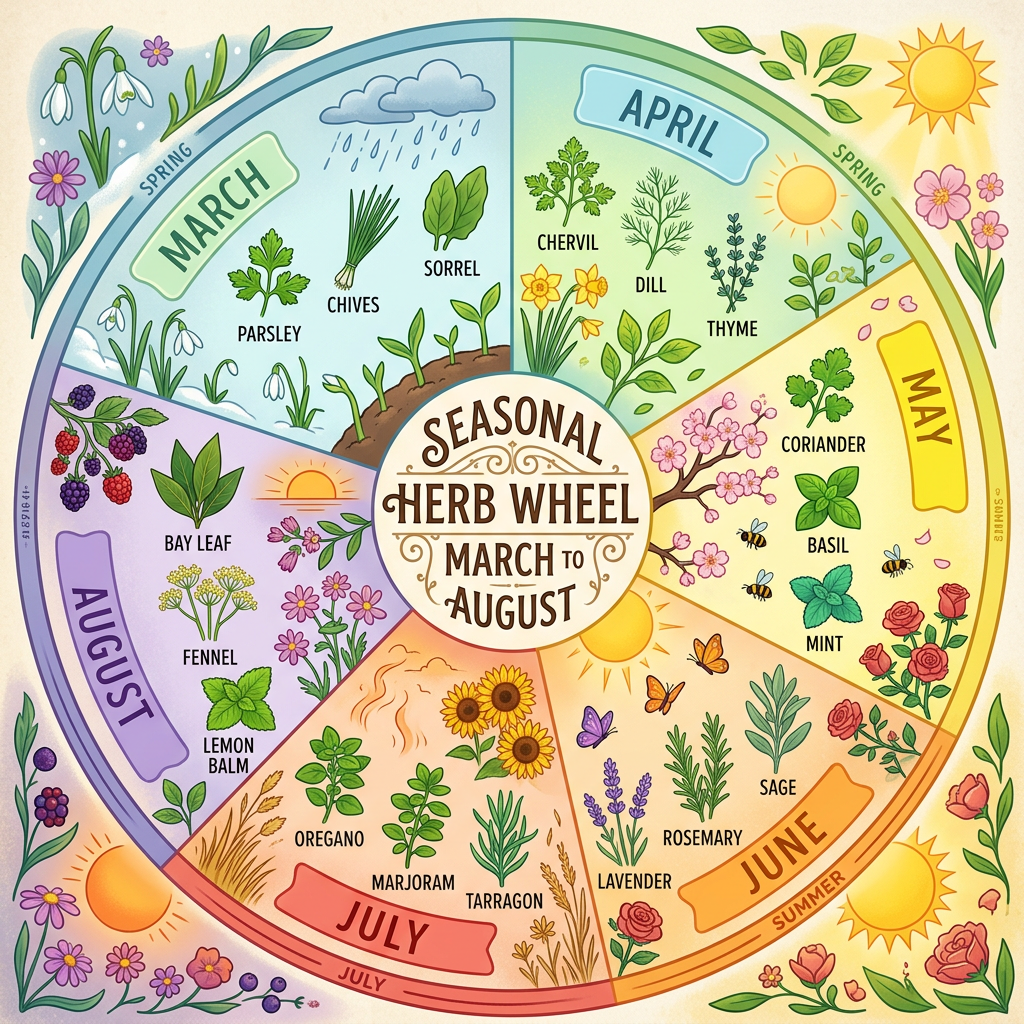
Seasonal herb wheel with herbs listed by month from March to August including parsley, chives, sorrel, chervil, dill, thyme, coriander, basil, mint, rosemary, sage, lavender, oregano, marjoram, tarragon, bay leaf, fennel, and lemon balm.

Seasonal herb wheel with herbs listed by month from March to August including parsley, chives, sorrel, chervil, dill, thyme, coriander, basil, mint, rosemary, sage, lavender, oregano, marjoram, tarragon, bay leaf, fennel, and lemon balm.

Top Herbal Remedies for March: Detox and Allergy Relief

Here are detailed herbal remedies tailored for March, aligning with the spring awakening around the Vernal Equinox (March 20, 2026). March brings a shift from winter stagnation to renewal—think detoxification after the cold months, preparation for seasonal allergies (pollen starting to stir), lingering respiratory concerns, fatigue, and a need for gentle liver/kidney support. These draw from traditional herbal wisdom, spring tonics, and natural allies like those in folklore and homestead practices.


March Herbal Focus: Detox, Renew, & Prepare for Allergies
Spring tonics emphasize bitter, cooling, and nutritive herbs to “clean the blood,” support the liver (associated with the Wood element in traditional systems), move lymph, and build vitality. Early March herbs often include wild greens emerging now or soon.


Key Spring Herbs & Remedies for March


Nettle (Urtica dioica) – The premier March ally!
A nutrient-dense spring tonic with antihistamine, anti-inflammatory, and diuretic properties. Excellent for early seasonal allergies (sneezing, itchy eyes), fatigue, and detoxification.

  • Remedy Ideas: Brew fresh or dried nettle leaf tea (1–2 tsp per cup, steep 10–15 min; drink 2–3 cups daily). Add to soups or pesto once young leaves appear.
  • Benefits in March: Opens elimination channels, nourishes with iron/minerals after winter, reduces histamine response as pollen ramps up. Start now for prevention.

Dandelion (Taraxacum officinale) – Root, leaf, and flower all shine in early spring.
Classic liver detoxifier, gentle diuretic, and alterative for sluggish digestion or skin issues post-winter.

  • Remedy Ideas: Dandelion root tea or decoction (simmer 1 tbsp dried root 20 min) for liver support; fresh young leaves in salads for bitters to aid digestion.
  • Benefits in March: Clears stagnation, supports kidney function, and carries spring’s “waking earth” energy—perfect around the equinox for renewal rituals.

Cleavers (Galium aparine) – Lymphatic tonic emerging in spring.
Cooling and soothing for swollen glands, skin eruptions, or mild urinary support.

  • Remedy Ideas: Cold infusion (steep fresh tops overnight) or tea; combine with nettle for a detox blend.
  • Benefits in March: Moves lymph after winter immobility, pairs well with nettle for allergy prep.

Goldenrod (Solidago spp.) – Often misunderstood, but a true decongestant.
Natural antihistamine and anti-inflammatory for sinus congestion and allergies (not the cause—ragweed often is).

  • Remedy Ideas: Tea from dried flowering tops (1 tsp per cup); use as steam for sinuses.
  • Benefits in March: Eases early pollen woes; supportive as blooms approach.

Astragalus (Astragalus propinquus) & Reishi (Ganoderma lucidum) – Immune modulators.
Build resilience against seasonal shifts and allergies without overstimulating.

  • Remedy Ideas: Simmer astragalus root in broths or chai-style tea (add cinnamon, ginger); reishi in decoctions or powders.
  • Benefits in March: Strengthens “wei qi” (defensive energy) for fluctuating weather; great preventives.

Supporting Herbs for Balance

  • Lemon Balm (Melissa officinalis): Calming nervine for allergy-induced stress or overwhelm; tea for itchy eyes/skin.
  • Peppermint: Clears brain fog, eases inflammation; add to teas for sinus relief.
  • Holy Basil (Tulsi): Adaptogen to handle environmental stress/pollen; tea for mood and immunity.

Simple March Herbal Blend Recipe (Spring Tonic Tea)

  • 1 part dried nettle leaf
  • 1 part dandelion leaf/root
  • ½ part cleavers or goldenrod
  • Optional: Pinch of lemon balm or peppermint
    Steep 1–2 tbsp in hot water for 10–15 min. Drink 1–3 cups daily for detox, allergy prep, and vitality. Sweeten with honey if needed.

Folklore & Practical Tips

  • “Bitter greens in March cleanse the blood for the year ahead.” Harvest young dandelion/nettle safely (gloves for nettle!).
  • Start tonics around the New Moon (March 18, 2026) for intention-setting.
  • Consult a herbalist or doctor before use, especially if pregnant, on meds, or with conditions—herbs are supportive, not substitutes.
  • Pair with equinox practices: Balance rituals, light movement, and planting intentions in your medicinal garden.

These remedies embrace March’s transitional energy—detox gently, nourish deeply, and ready your spirit for spring’s bloom. 🌿


Herbalist preparing tea with spring flowers and labeled jars of herbal remedies on a wooden table beside an open book on herbal tonics

April Herbal Remedies

April deepens spring’s bloom—pollen peaks, allergies intensify (tree/grass), energy rises, but fatigue lingers from detox. Focus on antihistamine, anti-inflammatory, liver/lymph support, and gentle immune modulation. Build on March’s nettle foundation with these allies.


Key April Herbs & Remedies

  1. Nettle (continued powerhouse) – Now at peak for fresh harvest.
    Freeze-dried nettle capsules or strong tea for “herbal Benadryl” relief—reduces histamine, eases sneezing/itchy eyes. Drink 2–3 cups daily or use tincture.
  2. Dandelion (Taraxacum officinale) – Full spring force.
    Root tea/decoction for liver detox; young leaves in salads for bitters/digestion. Supports elimination as the body clears winter buildup.
  3. Red Clover (Trifolium pratense) – Blooming now.
    Tea from blossoms for lymph cleansing, mild detox, and skin support (eases rashes from allergies). Combine with nettle.
  4. Holy Basil (Tulsi / Ocimum sanctum) – Adaptogen for stress/allergy fatigue.
    Tea for adrenal support, mood balance, and anti-inflammatory effects.
  5. Eyebright (Euphrasia spp.) or Plantain (Plantago major) – For eye/ sinus relief.
    Eyebright tea or drops for watery/itchy eyes; plantain poultice or tea for mucous membranes.
  6. Aromatics for Congestion – Ginger, peppermint, eucalyptus.
    Ginger steam (boil fresh ginger, inhale vapors) for anti-inflammatory sinus opening; eucalyptus in a shower for nasal passages.

April Allergy/Detox Blend Tea

  • 2 parts nettle leaf
  • 1 part dandelion leaf/root
  • 1 part red clover blossoms
  • ½ part holy basil or peppermint
    Steep 1–2 tbsp in hot water 10–15 min; 2–3 cups daily. Add local honey for soothing.

Additional Tips

  • Start remedies 4–6 weeks pre-peak pollen if possible.
  • Support gut/liver (allergies often root there) with bitters and castor oil packs.
  • Folklore: “April showers bring May flowers—and nettle power!” Harvest on sunny days post-rain.
  • Zodiac note: April energy (Aries/Taurus shift) favors bold action in health routines.

Embrace April’s vibrancy with these gentle, earth-given allies for clearer breathing, renewed energy, and seasonal harmony. 🌸 If symptoms persist, consult a practitioner. Happy foraging and healing!


Illustration of various herbs including lavender, chamomile, mint, calendula, lemon balm, yarrow, sage, borage, thym, and nasturtium with a bright sky background and text 'May to Summer Herbal Illustration'

May: Transition to Summer – Allergies, Fatigue, Digestive Shifts & Early Heat

May brings lingering spring pollen (trees/grass), rising heat, and energy fluctuations. Focus on continued allergy support, gentle cooling, liver/digestive tonics, and building resilience for warmer days.


Key Herbs:

  • Nettle (Urtica dioica): Antihistamine, nutritive, diuretic.
  • Dandelion (Taraxacum officinale): Liver support, digestion.
  • Plantain (Plantago major): Soothing for mucous membranes/skin.
  • Lemon Balm (Melissa officinalis): Calming, digestive.
  • Peppermint: Cooling, sinus relief.

May Allergy & Cooling Tea Blend

  • 2 parts nettle leaf
  • 1 part dandelion leaf
  • 1 part lemon balm
  • ½ part peppermint
    Steep 1–2 tbsp in hot water for 10–15 min. Drink 2–3 cups daily for histamine support, gentle detox, and mood balance. Add local honey.

Plantain Poultice for Skin Irritations/Bites (early bug season):

Mash fresh plantain leaves and apply them to itchy or irritated skin for 15–20 minutes. Or infuse in oil for a salve.

Folklore/Practical Tip:

May energy supports renewal—harvest young leaves on dry mornings. Pair with light movement and hydration rituals.


Garden bed with blooming herbs and flowers including lavender, peonies, and daisies labeled 'June Herbs & Flowers'

June: Early Summer Heat – Allergies Peak, Insect Bites, Mild Dehydration & Skin Irritation

June intensifies pollen/grass allergies in many areas, with rising bugs, heat, and outdoor activity. Emphasize cooling, anti-inflammatory, and first-aid herbs.


Key Herbs:

  • Calendula (Calendula officinalis): Skin healing, anti-inflammatory.
  • Plantain & Chickweed (Stellaria media): Itchy bites/rashes.
  • Lemon Balm & Hibiscus: Cooling, hydrating.
  • Yarrow (Achillea millefolium): Bug repellent, wound support (in moderation).
  • Elderflower (Sambucus): Mild allergy/sinus support.

Cooling Hydration Summer Punch

  • 1 part hibiscus flowers (for electrolytes/vitamin C)
  • 1 part lemon balm
  • ½ part peppermint or elderflower
    Cold-infuse overnight or steep lightly. Add fresh lemon slices and a pinch of sea salt. Drink throughout the day.

Bug Bite & Skin Salve Base


Infuse calendula, plantain, and chickweed in olive or coconut oil (solar infuse 2–4 weeks). Strain and blend with beeswax for a balm. Apply as needed for bites, minor rashes, or irritation.

Yarrow Bug Repellent Spray (simple version):


Steep fresh/dried yarrow in hot water, cool, strain, add a splash of witch hazel or vinegar, and optional essential oils like lavender. Spray on skin/clothing.

Tip: Peak sun hours call for shade, hats, and proactive hydration. Harvest flowers at their vibrant best.


July flowers and cooling remedies garden scene

July: Peak Summer – Heat Exhaustion, Sunburn, Dehydration, Bites/Stings & Fatigue

July heat brings risks of dehydration, sunburn, exhaustion, and more insect issues. Prioritize cooling, hydrating, and restorative remedies.


Key Herbs:

  • Aloe Vera: Sunburn cooling (fresh gel).
  • Lavender: Calming, skin soothing, minor pain relief.
  • Peppermint & Lemon Balm: Cooling nervines.
  • Hibiscus & Rose: Electrolyte-rich, heart-supportive.
  • Calendula & Plantain: Continued skin first aid.

Heat Relief Electrolyte Tea (cooled)

  • 2 parts hibiscus
  • 1 part lemon balm or peppermint
  • ½ part rose petals or holy basil (tulsi)
    Steep, cool, then add a pinch of sea salt and a squeeze of lemon/lime. Sip slowly for rehydration and cooling.

Sunburn & Burn Soother


Fresh aloe gel mixed with a few drops of lavender essential oil (diluted) or calendula-infused oil. Apply gently to cooled skin. Avoid broken skin.

Lavender-Plantain Bite/ Sting Roller


Infuse in jojoba or alcohol for a quick roll-on. Calms itching and swelling.

Tip: Move to shade at first signs of dizziness/nausea. Rest, hydrate, and use cooling compresses. July’s fire energy benefits from grounding practices.


Sunflowers, coneflowers, lavender, and other herbs with tinctures, salves, and a notebook on a wooden table

August: Late Summer – Lingering Heat, Digestive Upset, Skin Issues, Fatigue & Immune Prep

August continues heat stress with possible digestive sluggishness (from heat/diet), skin dryness, and transition toward fall. Focus on cooling restoratives and gentle immune building.


Key Herbs:

  • Holy Basil (Tulsi): Adaptogen for stress/fatigue.
  • Mint Family Herbs (peppermint, spearmint): Digestion & cooling.
  • Calendula, Chickweed, Self-Heal (Prunella vulgaris): Skin repair.
  • Dandelion or Burdock: Mild liver/detox support.
  • Elderberry (preparing for fall): Immune tonic.

Digestive Cooling Tea

  • 1 part holy basil
  • 1 part peppermint
  • ½ part dandelion leaf or ginger (small amount for warmth)
    Steep 10 min; drink warm or iced after meals for gentle digestion and calm.

Skin Repair Salve


Calendula + chickweed + self-heal in oil, thickened with beeswax. Excellent for dry, irritated, or healing skin.

Adaptogenic Daily Tonic


Tulsi (Holy Basil)+ lemon balm tea or tincture for summer fatigue and resilience as seasons shift.

Tip: Late summer invites reflection—harvest seeds/flowers for drying. Support gut health (often linked to seasonal sensitivities) with bitters and hydration. Prepare immune stores for fall.


These recipes draw from traditional herbalism, seasonal availability, and the supportive style of Vital Spirit Medica’s existing guides. They emphasize accessible, multi-use plants for homestead apothecaries. Experiment mindfully, document your experiences, and share observations (email vitalspiritmedica@gmail.com).

Stay cool, hydrated, and connected to the green allies this summer. 🌿☀️ Questions or custom blends? Reach out—we evolve together.


Disclaimer: These are supportive, traditional, and folk herbal suggestions aligned with seasonal patterns. They are not medical advice or substitutes for professional care. Consult a qualified herbalist or healthcare provider before use, especially if pregnant, nursing, on medications, or with health conditions. Start low and slow; patch-test topicals. Harvest sustainably and identify plants correctly.


Discover more from Vital Spirit Medica: “From Root to Crown: Healing Body, Mind & Spirit.”

Subscribe to get the latest posts sent to your email.


✨IF YOU ARE INTERESTED IN SHARING YOUR WILDCRAFTING, GARDENING, PLANT FINDS, OR YOUR WELLNESS JOURNEY WITH US…
EMAIL YOUR STORIES, IMAGES, AND VIDEOS TO✨

vitalspiritmedica@gmail.com


If You Made It This Far, Thank You For Visiting!


Leave a Reply

Your email address will not be published. Required fields are marked *


← Back

Thank you for your response. ✨

Rate your experience(required)


Are you up for the challenge?


Arabic Gum (Acacia senegal / Senegalia senegal)

Arabic Gum: Nature’s Healing & Cultural Treasure “AT A GLANCE” Harvested from the thorny branches of Acacia Senegal, Arabic Gum is a time-honored demulcent, prebiotic, and gentle astringent. Traditional healers across Africa and the Near East have long used its soft, water-soluble tears to calm inflamed tissues, support digestion and kidney function, and form a protective film over wounds—qualities now echoed in contemporary clinical observations of metabolic and gut health. Known in antiquity as the…

READ MORE

Strawberry Tree (Arbutus unedo)

Explore the Traditional and Modern Applications of Strawberry Tree “AT A GLANCE” Strawberry Tree (Arbutus unedo) thrives on rocky, well-drained soils from the Mediterranean Basin to southwestern Ireland, resprouting vigorously after fire through lignotubers and supporting late-season pollinators. Its leaves yield traditional astringent remedies, its fruits become jams and the renowned Portuguese medronho spirit, and its ornamental beauty and hardiness make it valued in sustainable landscaping and agroforestry. A multipurpose species of quiet strength and…

READ MORE

🌿Apricot (Prunus armeniaca)

Apricot (Prunus armeniaca) is the golden early-bloomer of the temperate world—a Venus-ruled tree whose soft pink blossoms announce spring’s return and whose sun-kissed fruit carries both sweetness and quiet power. From the highlands of Armenia and the ancient orchards of China to modern gardens, every part of Apricot has been treasured: the moistening kernel of traditional Chinese medicine, the love-drawing pit of folk magic, the nourishing flesh of countless cultures, and the resilient wood that…

READ MORE

🌿Apple (Malus domestica): The Ancient Fruit of Healing and Wisdom

Apple (Malus domestica) is a sacred and practical tree of temperate orchards, long revered across cultures as the Fruit of the Gods, Silver Bough, and keeper of the five-pointed star within its core. From Iðunn’s golden apples of eternal youth and Avalon’s healing isle to Venusian love magic, Samhain offerings, and the midwinter Wassail that awakens the Apple Tree Man, it bridges body, land, and spirit. Rich in polyphenols, fibre, and gentle cleansing energies, Apple…

READ MORE

🌿Anise (Pimpinella anisum)

Anise (Pimpinella anisum): A Comprehensive Guide “AT A GLANCE” Anise (Pimpinella anisum) is an annual herb of the Apiaceae family native to the eastern Mediterranean and Southwest Asia. Its aromatic seeds, rich in trans-anethole, have been used for millennia as a carminative, expectorant, and flavoring agent. Modern research supports modest benefits for functional dyspepsia, menopausal hot flashes, and lactation, while the plant continues to serve the food, cosmetic, and herbal-supplement industries. Provides an overview of…

READ MORE

Pulsatilla vulgaris: The Healing Pasqueflower

Pulsatilla vulgaris, the Pasqueflower, is a low-growing spring ephemeral with finely dissected silvery-hairy leaves and striking purple flowers that bloom around Easter. A Near Threatened indicator of high-quality chalk and limestone grasslands, it relies on grazing and disturbance to thrive. Its deep roots and wind-dispersed seeds support biodiversity and soil stability in nutrient-poor habitats, making it a flagship species for European grassland conservation.

READ MORE

Discover Andrographis: The King of Bitters

Andrographis paniculata, known as the King of Bitters or Kalmegh (“Dark Cloud”), is a bitter annual herb native to India and Sri Lanka, widely cultivated across tropical Asia. Renowned in Ayurveda, Traditional Chinese Medicine, and Siddha systems for its cooling, detoxifying, and immune-supporting properties, it is prized for clearing heat, supporting liver function, and addressing fevers, respiratory infections, and inflammation. Its primary bioactive, andrographolide, drives its potent antimicrobial and anti-inflammatory effects, making Andrographis paniculata a…

READ MORE

Exploring Kava (Piper methysticum): Origins, Benefits, and Uses

Pharmacology::

Kavalactones, the primary lipophilic α-pyrones in kava roots, enhance GABA-A receptor binding at sites distinct from benzodiazepines, increasing chloride influx and promoting inhibitory neurotransmission that underlies anxiolytic and sedative effects without heavy cognitive depression.

Key compounds such as kavain and dihydrokavain inhibit voltage-gated sodium and calcium channels, contributing to muscle relaxation, anticonvulsant activity, and local anesthetic properties through modulation of neuronal excitability.

Kavalactones demonstrate reversible inhibition of monoamine oxidase B (MAO-B) and reduced reuptake…

READ MORE

Sage (Salvia officinalis)

Sage (Salvia officinalis) is rich in rosmarinic acid, thujone, camphor, and 1,8-cineole, delivering clinically studied benefits for cognitive function, menopausal vasomotor symptoms, metabolic health, and oral hygiene. Its essential oil and standardized extracts demonstrate strong antioxidant, antimicrobial, and neuroprotective activity. Once called “Sage the Savior,” this Mediterranean herb remains a cornerstone of evidence-informed herbal practice and natural product development worldwide.

READ MORE

Lavender (Lavandula angustifolia)

Lavender (Lavandula angustifolia) is the quiet breath of peace in the plant kingdom. With its narrow silver-green leaves and fragrant purple spikes, it carries the living spirit of purification, protection, and profound relaxation. From Egyptian mummification rites to Virgin Mary legends, Roman baths to modern clinical trials, Lavender (Lavandula angustifolia) has consistently served as a bridge between body, mind, and spirit. Its rich essential oil — dominated by linalool and linalyl acetate — gently calms…

READ MORE

Exploring the Healing Power of Peyote: Lophophora williamsii

Peyote (Lophophora williamsii) is best understood as a Spiritual-Entheogenic Teacher Plant with profound holistic applications. Its healing power is primarily ceremonial and consciousness-based rather than everyday herbal tonic-style medicine. The most transformative effects typically emerge within proper ritual or guided therapeutic contexts that honor its sacred nature.

READ MORE

Blue Lotus (Nymphaea caerulea): Discovering its Mystical Properties and Uses

Blue Lotus (Nymphaea caerulea), known as the Sacred Blue Lily of the Nile, stands as one of humanity’s oldest revered botanical treasures. Celebrated in Egyptian temples and tombs for over 3,000 years, this aquatic beauty offers a rare combination of calming, euphoric, and spiritually uplifting qualities. Today it remains a treasured ally for relaxation, emotional balance, meditation, and heart-opening practices worldwide.

READ MORE

Psilocybin Mushrooms: Nature’s Healing Secrets

Psilocybin Mushrooms are multifaceted healers that work on the physical, emotional, mental, and spiritual levels. Their natural compounds promote neuroplasticity, reduce inflammation in the brain, and facilitate deep emotional processing. In traditional indigenous systems, they are used for soul retrieval, trauma resolution, and community healing. Today, they are studied for their ability to foster lasting improvements in mood, creativity, and sense of meaning. Gentle yet transformative, Psilocybin Mushrooms invite profound reconnection with self, others, and…

READ MORE

Vitex Agnus-Castus: A Natural Hormonal Balancer

Vitex Agnus-Castus, commonly known as Chasteberry or Monk’s Pepper, is a Mediterranean shrub revered for over 2,500 years for its ability to balance female reproductive hormones. Through dopaminergic activity that gently lowers prolactin and supports progesterone, it has become one of the most well-studied herbs for PMS, cyclical mastalgia, irregular cycles, and menopausal transition. Rich in flavonoids, diterpenes, and iridoid glycosides, it serves as a bridge between ancient women’s wisdom and modern phytotherapy.

READ MORE

🌿Hawthorn (Crataegus): Nature’s Heart Tonic Explained

Hawthorn (Crataegus) — May Tree, Holy Thorn, and Keeper of Boundaries — carries the living pulse of the land itself. With thorns that fiercely protect and flowers that tenderly open, this remarkable plant has walked beside humanity for millennia, healing hearts, nourishing spirits, and guarding the threshold between worlds. Whether used as medicine, magic, or sacred ally, Hawthorn (Crataegus) teaches us to bloom courageously even in the harshest seasons.

READ MORE

Ivy (Hedera helix) Therapeutic Benefits: A Deep Dive into Its Uses

Western Traditional & Clinical Actions: Primarily expectorant, mucolytic, bronchodilatory, and antispasmodic for respiratory catarrh, cough, and bronchitis. It thins mucus and eases a productive cough. Additional actions include mild anti-inflammatory, antimicrobial, and topical uses for skin conditions or cellulite. German Commission E approves it for chronic inflammatory bronchial conditions. Traditional & Historical Uses: Ancient Greeks and Romans used ivy for wreaths (Bacchus/Dionysus associations, believed to prevent intoxication), topical applications for wounds/burns, and internal remedies for…

READ MORE

The Power of Ashwagandha (Withania somnifera): Benefits and Uses

Meet Ashwagandha (Withania somnifera) — the ancient Ayurvedic treasure often called Indian Ginseng. This hardy desert shrub carries a unique dual gift for our plant medicine cabinet: it energizes when you are weary and calms when you are overwhelmed. Through its rich withanolides and time-honored Rasayana wisdom, Ashwagandha (Withania somnifera) helps rebuild Ojas (vital essence), supports restful sleep, balances stress hormones, and anchors the spirit with quiet, grounded strength.

READ MORE

Exploring American Ginseng Benefits: A Complete Guide

Ginseng (Panax quinquefolius), also known as American ginseng, is a medicinal herb native to eastern North America, valued for its cooling properties and unique ginsenosides. Recognized for adaptogenic, antioxidant, and immune-supporting effects, it has diverse applications in traditional and modern medicine, while advocating sustainable harvesting practices is crucial for its conservation.

READ MORE

Discover Holy Basil: Tradition Meets Modern Science

Native to the Indian subcontinent and widely cultivated across tropical and subtropical regions, Holy Basil (Ocimum sanctum) is cherished in Ayurveda, Siddha, Unani, and Hindu traditions as a rasayana (rejuvenative) herb and living embodiment of the Goddess Tulasi. Its warm, pungent, clove-like leaves and stems are rich in eugenol, rosmarinic acid, ursolic acid, and other potent bioactives that give it remarkable adaptogenic, anti-inflammatory, antioxidant, antimicrobial, and immunomodulatory properties.

READ MORE

Licorice (Glycyrrhiza glabra): Ancient Sweet Root Benefits, Uses & Spiritual Wisdom

Licorice (Glycyrrhiza glabra) is a perennial herb celebrated for its sweet roots and extensive medicinal properties, influencing cultures for over 5,000 years. It thrives in well-drained soils and is documented in ancient Egyptian, Greek, and Chinese texts for treating respiratory and digestive issues. Its roots contain glycyrrhizin, contributing to antioxidant, anti-inflammatory, and antimicrobial effects. In modern herbalism, licorice is used as a demulcent and adaptogen, supporting adrenal function and soothing mucous membranes. While beneficial, high…

READ MORE

Purple Deadnettle: Benefits, Uses, and Scientific Insights

Western Traditional & Clinical Actions: Astringent, diuretic, diaphoretic, purgative (mild laxative), anti-inflammatory, antibacterial, antifungal, and styptic (stops minor bleeding). It supports wound healing, reduces inflammation, and acts as a mild tonic for urinary and respiratory support.

READ MORE

Health Benefits of Ceylon Cinnamon Explained

Contemporary Medical Applications:

Cinnamomum Verum extracts and powders are clinically applied as adjunctive therapy for type 2 diabetes management, with doses of 1–3 g daily demonstrating reductions in fasting blood glucose, HbA1c, and improvements in insulin sensitivity in randomized controlled trials, particularly beneficial for patients with metabolic syndrome.

Standardized hydroalcoholic bark extracts (such as TAPP-CZ-IND02) show promise in alleviating symptoms of allergic rhinitis, including rapid reduction in nasal congestion, itchy eyes, and pruritus within 24…

READ MORE

Lactuca virosa: A Guide to Medicinal Uses

In Western herbalism, Lactuca virosa acts primarily as a nervine relaxant, mild sedative, hypnotic, analgesic, and antispasmodic. It has been used for nervous irritability, insomnia, restlessness (including in children), anxiety, tension headaches, muscular pain, irritable cough, and mild pain relief as a gentler alternative to opium. It is considered cooling and grounding, helping with overactive nervous system states without strong narcotic effects.

Ancient and historical uses date back centuries, with the latex (lactucarium) employed in…

READ MORE

How to Detect and Counter Psychological Operations

What is a Psyop and Why Does It Matter?

A psychological operation, or psyop (often stylized as PSYOP or PSYOPS), is a planned effort to convey selected information and indicators to target audiences—typically foreign governments, organizations, groups, or individuals—to influence their emotions, motives, objective reasoning, and ultimately their behavior in ways that align with the originator’s objectives. This definition draws from U.S. military doctrine, where psyops are seen as a non-lethal tool in the spectrum…

READ MORE

A Gentle Guide to Riding the Current Cosmic Wave

Good morning, friend.

Right now, our Sun is especially lively—sending waves of energy through our solar system after the recent eclipse. You might have noticed sleep shifting, emotions rising quickly, or intuition speaking a bit louder. It can feel personal, like the whole sky is whispering directly to you. And in a way, it is.

These solar pulses don’t just pass through the atmosphere; they touch our bodies, nervous systems, and inner worlds. Some days…

READ MORE

Forgotten Food #2: Acorns

Earliest Evidence: The oldest known food-processing tool in Europe is a 32,000-year-old grinding stone from Grotta Paglicci cave in Italy, used for acorns. In Morocco’s Taforalt caves (around 12,000 BC), acorn shells were so abundant that they were deemed a year-round staple. This predates the domestication of cereals, with acorn use traced back to 700,000 years ago in Paleolithic sites.

Ancient Civilizations: In Ancient Greece, acorns were called the “food of invincible men” and were…

READ MORE

Groundnut (Apios americana)

Groundnut tubers are utilized in modern herbal practices for metabolic support, often prepared as capsules or extracts standardized to isoflavone content, aiding in blood sugar regulation and anti-inflammatory effects, with recommended dosages of 500-1000 mg daily for adults based on preclinical evidence showing efficacy in reducing hyperglycemia without reported adverse effects in short-term use.

In integrative medicine, groundnut flower extracts are applied topically or ingested as tinctures for skin health and wound healing, leveraging their…

READ MORE

The Power of Forgiveness in Turbulent Times

Forgiveness isn’t weakness or denial; it’s a deliberate refusal to let violence recruit more violence by mirroring it. It allows us to say: “No more harm,” with clear boundaries and firm consequences, while still recognizing souls on both sides of the pain.

READ MORE

Uva Ursi: Nature’s Urinary Support Herb

Pharmacology:

The primary mechanism of Uva Ursi involves the hydrolysis of arbutin into hydroquinone in alkaline urine, which exerts potent antibacterial effects against pathogens like Escherichia coli and Staphylococcus, inhibiting bacterial adhesion and proliferation in the urinary tract to prevent and treat infections.

Tannins in Uva Ursi contribute to its astringent properties, contracting tissues and reducing inflammation in mucous membranes, which helps alleviate symptoms of cystitis and urethritis by forming a protective barrier and decreasing…

READ MORE

Something went wrong. Please refresh the page and/or try again.

Translate »