
A Comprehensive Guide to Salvia officinalis
👈Note on This Monograph:👇
Note on This Monograph: This extensive entry uses the full 8-part structure, offering a deep, interdisciplinary exploration of Sage (Salvia officinalis)— weaving together modern scientific evidence, traditional and ethnobotanical wisdom, practical cultivation and preparation guidance, and its living spiritual essence. Drawing from clinical studies, historical texts, indigenous knowledge, and esoteric traditions, it serves as a comprehensive resource for holistic understanding and respectful relationship with this powerful plant ally. Please work with trained professionals for therapeutic applications.
“Our Commitment to Transparent Research”
Unlike many herbal resources that offer generalized information with little or no backing, we provide direct links to every source we reference. This allows you to verify claims, explore topics in greater depth, and trust that what you’re reading is grounded in both modern science and time-honored tradition.
Section-specific Sources lists
Most monographs include dedicated “Sources:” sections at the end of major topics (e.g., Sources: Phytotherapy, Sources: Historical and Cultural Significance, Sources: Pharmacology). These contain direct, clickable links to the original material. We created this level of transparency so the research can serve you. Here are some ways readers use our sourced monographs: Anyone seeking truth — Verify claims for yourself instead of taking information at face value. Students & Researchers — Use the references for papers, assignments, or deeper study. Herbalists & Practitioners — Cite sources when educating clients or in professional materials. Curious Explorers — Follow the links to read original studies or historical texts yourself. Writers & Educators — Reference our monographs (with attribution), knowing the information is traceable.

“AT A GLANCE”
Sage (Salvia officinalis) is rich in rosmarinic acid, thujone, camphor, and 1,8-cineole, delivering clinically studied benefits for cognitive function, menopausal vasomotor symptoms, metabolic health, and oral hygiene. Its essential oil and standardized extracts demonstrate strong antioxidant, antimicrobial, and neuroprotective activity. Once called “Sage the Savior,” this Mediterranean herb remains a cornerstone of evidence-informed herbal practice and natural product development worldwide.

Provides an overview of key points.
Synopsis
👈At A Glance:👇
Sage (Salvia officinalis), also known as common sage, garden sage, or Dalmatian sage, is a well-known aromatic herb in the Lamiaceae (mint) family. It has a long history in culinary, medicinal, and cultural uses.
Botanical Description
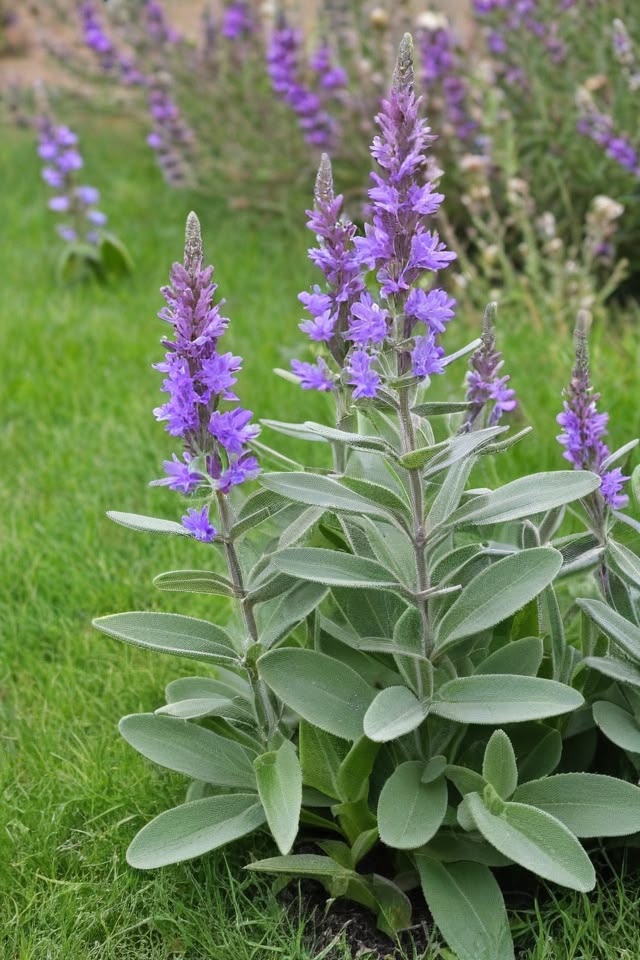
Salvia officinalis is a perennial, evergreen subshrub with woody stems at the base. It typically grows 1.5–2.5 feet (about 60–70 cm) tall and wide, forming a rounded bush. The leaves are opposite, oblong to lanceolate (up to 2.5 inches/6.5 cm long), wrinkled (rugose) and gray-green on the upper surface, nearly white and hairy underneath, with a strong aromatic scent. Flowers are two-lipped, lavender-blue (sometimes white, pink, or purple), borne in whorls on upright spikes in late spring to early summer. It is native to the Mediterranean region and northern Africa, preferring well-drained, sandy or loamy soils in full sun, with a pH of 5.6–7.8. It is hardy in USDA zones 4–8 (or up to 10) and drought-tolerant once established.
Taxonomically: Kingdom Plantae, Family Lamiaceae, Genus Salvia, Species officinalis (from Latin “to save/heal”).
Phytochemistry
Key compounds include essential oils (1–2.5% yield) rich in monoterpenes: α-thujone (18–43%), β-thujone (3–8.5%), camphor (4.5–24.5%), 1,8-cineole (5.5–13%), and others like α-pinene, borneol, and camphene. Non-volatile constituents include phenolic acids (especially rosmarinic acid), flavonoids, tannins, diterpenes (e.g., manool), and triterpenes. These contribute to its antioxidant, antimicrobial, and anti-inflammatory properties. Composition varies by cultivar, growing conditions, and extraction method.
Western Traditional & Clinical Actions
In Western herbalism, sage acts as a carminative, astringent, antimicrobial (antibacterial, antiviral, antifungal), anti-inflammatory, antioxidant, diaphoretic (in small doses) or antisudorific (reduces sweating), emmenagogue, and cognitive tonic. It supports digestion (e.g., gas, bloating), sore throats/mouth infections, excessive perspiration/night sweats, menopausal symptoms, and cognitive function/memory. It is used topically for wounds, gum disease, or as a rinse.
Chinese Medicine Actions
Salvia officinalis (sometimes called Shenreg) is less central in TCM than Salvia miltiorrhiza (Dan Shen/red sage), but shares some overlapping uses. It is considered warming/neutral, builds Qi, resolves phlegm, restores the uterus, aids skin/mucosal repair, and opens the mind. It addresses patterns involving dampness, deficiency, or stagnation, supporting cognition and female reproductive health. Note: Dan Shen primarily invigorates blood, breaks stasis, clears heat, and calms Shen.
Traditional & Historical Uses
Ancient Greeks and Romans valued it for longevity, wisdom, and healing (“salvare” = to save). It featured in medieval “Four Thieves Vinegar” for plague protection and as a brain tonic. Used across cultures for digestive issues, sore throats, ulcers, wounds, insect bites, and as a culinary seasoning or preservative. Indigenous and folk traditions include it for respiratory infections, fevers, and ritual purification.
Modern Pharmacological Evidence
Strong antioxidant and anti-inflammatory effects from rosmarinic acid and others. Antimicrobial against various bacteria/fungi. Potential neuroprotective (acetylcholinesterase inhibition), lipid-lowering, blood sugar regulation, and menopausal symptom relief. Some anticancer and hepatoprotective hints in preclinical studies.
Clinical Studies
- Cognitive/memory: Some positive effects on word recall and alertness (e.g., essential oil inhalation or extracts).
- Menopause: Reduced hot flashes/night sweats (e.g., 100–300 mg extract).
- Lipids/diabetes: Improvements in cholesterol, triglycerides, and glycemic control in some trials (e.g., 300–1500 mg/day).
- Limited large-scale trials; results are promising but mixed for some indications.
Preparations & Dosage
- Tea: 1–2 tsp dried leaves per cup, steeped 5–10 min, 1–3 cups/day.
- Dried herb: 4–6 g/day.
- Tincture/extract: 2–5 mL or 280–1500 mg standardized extract daily (up to 12 weeks in studies).
- Gargle/rinse: Strong infusion or diluted tincture.
- Essential oil: Highly diluted for aromatherapy (thujone caution).
Safety & Contraindications
Generally recognized as safe (GRAS) in food amounts. Possibly unsafe in high doses/long-term due to thujone (neurotoxic in excess; limit intake). Avoid or use cautiously in pregnancy (emmenagogue/abortifacient risk), breastfeeding (may reduce milk supply), epilepsy, or with sedatives/anticholinergics. Rare allergies or interactions (e.g., blood sugar meds). Consult a professional for therapeutic use.
Cultivation & Harvest
Easy to grow from cuttings/seeds in full sun, well-drained soil. Space 2 ft apart. Harvest leaves before/during flowering (multiple times/year, up to 3 in optimal conditions) by cutting stems 4–6 inches above ground; dry in shade. Replace plants every 3–5 years as they become woody. Mulch for moisture retention; drought-tolerant but avoid wet winters.
Commercial Products
Widely available as dried leaves for tea/cooking, essential oil, capsules/extracts (e.g., for menopause or cognition), tinctures, mouthwashes, and culinary seasonings. Regulated supplements emphasize standardized rosmarinic acid or low-thujone extracts.
Ethnobotanical Curiosities
Associated with wisdom and immortality in ancient lore; used in smudging/rituals for purification (though white sage Salvia apiana is more common in Native American traditions). Medieval beliefs linked it to protection against evil or enhancing memory (“sage” as in wise). Companion plant that repels insects.
Recent Research (2020–2025)
Focus on lipid-lowering and antioxidant effects in PCOS/diabetes (e.g., reduced triglycerides, improved metabolic markers). Epigenetic modulation via rosmarinic/carnosic acids. Antimicrobial applications in food preservation. Hepatoprotective and anti-inflammatory studies continue; potential in functional foods and sustainability.
Conservation Status
Least Concern (IUCN). Widely cultivated; not at risk of extinction, though wild Mediterranean populations benefit from sustainable harvesting.
DIY Recipes
- Sore throat gargle: Steep 1 tbsp dried sage in 1 cup hot water + lemon/honey or apple cider vinegar; cool and gargle 2–3x daily.
- Sage tea: 1 tsp dried leaves per cup for digestion, cognition, or menopausal support.
- Simple salve: Infuse dried sage in oil (e.g., olive), strain, and blend with beeswax for minor skin irritations.
- Use fresh/dried in cooking for flavor and mild digestive aid.
X (Twitter) Snapshot – Nov 2025
Discussions around this time often highlight cultivation (e.g., white sage growth/organic practices), culinary/herbal uses, and general herbalism. Interest in sustainable growing and companion planting persists, alongside broader natural medicine advocacy. Specific medicinal sage posts blend with gardening and wellness trends.
Always source high-quality material and consult a healthcare provider for medicinal use, especially with underlying conditions. Sustainable cultivation supports biodiversity.
Planting & Harvesting Reference Guide
👈Planting & Harvesting Reference Guide:👇
- Best Time for Planting
- Early to mid-spring after the last frost, when the soil has warmed (USDA zones 4–8).
- During the waxing moon, ideally on a Thursday (Jupiter day) for strong, wise growth.
- Full sun to very light afternoon shade in well-drained, sandy or loamy soils with neutral to slightly alkaline pH (5.6–7.8).
- Mediterranean-origin plant that thrives in dry, stony, limestone-rich conditions once established.
- Growing Conditions & Magical Minded Tips
- Space plants 30–60 cm (12–24 inches) apart in garden beds or containers.
- Propagate from seeds, softwood cuttings, or division; cuttings root easily in spring.
- Mulch lightly to retain moisture and suppress weeds; water moderately until established, then drought-tolerant.
- Companion plant with carrots, cabbage, or other vegetables to repel pests.
- Whisper gratitude or sing softly to the plant when planting or pruning; offer a libation of wine, honey water, or cornmeal at the roots to honor its spirit.
- Replace every 3–5 years as plants become woody; prune regularly to encourage bushy, leafy growth.
- Best Time for Harvesting
- Just before or at the beginning of flowering (late spring through early summer).
- Early morning, after dew has dried, on waxing to full moon days for peak essential oil and energetic potency.
- Multiple light harvests are possible per season (up to three in favorable climates), with the final cut allowing recovery before winter.
- Sustainable & Magical Harvesting Methods
- Harvest no more than one-third of the plant at any time using a clean, sharp blade (traditionally non-iron).
- Cut stems 10–15 cm (4–6 inches) above the ground; focus on leafy tops and flowering spikes.
- Approach with reverence: speak permission and thanks aloud, then leave an offering (tobacco, cornmeal, honey, or a small crystal) at the base.
- Wildcraft only from abundant, clean populations in Mediterranean-style habitats; prioritize cultivated plants to protect wild stands.
- Never strip a plant completely—always leave enough foliage for continued growth and pollinator support.
- Post-Harvest Processing
- Tie small bundles and hang or lay flat in a shaded, well-ventilated area to dry slowly (preserves color, aroma, and medicinal volatiles).
- Store dried leaves and flowers in airtight glass jars away from light and heat.
- Place a small clear quartz or written intention slip inside the jar to keep the plant’s wise, protective energy vibrant.
- Label with harvest date and moon phase for continued magical alignment.
This guide consolidates every planting and harvesting detail shared across the SPARK repository for Sage (Salvia officinalis). Always work with gratitude, sustainability, and respect for the plant’s living spirit to ensure its continued abundance and potency.
Healing Categories of Sage (Salvia officinalis)
👈Sage (Salvia officinalis): fits most strongly into the following healing categories, based on its traditional use, phytochemistry, clinical observations, and energetic profile:👇
Here are the primary healing categories where Sage (Salvia officinalis) truly excels, ranked by strength of traditional use and modern evidence:
- Menopausal & Perimenopausal Support (Strongest Category)
Premier herb for cooling and balancing during the menopausal transition
Excellent for hot flashes, night sweats, and excessive perspiration
Highly regarded for reducing vasomotor symptoms and supporting emotional balance - Cognitive and Neurological Support
One of the most studied herbs for memory, focus, and mental clarity
Enhances cognitive performance and protects against age-related decline
Traditionally called the “herb of wisdom” for its brain-tonifying qualities - Antimicrobial and Oral/Respiratory Health
Powerful broad-spectrum antimicrobial action against bacteria and fungi
Classic remedy for sore throats, gingivitis, mouth ulcers, and minor respiratory complaints
Widely used in gargles, mouthwashes, and throat sprays - Digestive and Gastrointestinal Wellness
Reliable carminative and astringent for indigestion, bloating, and flatulence
Supports healthy appetite and gentle elimination
Traditional “after-meal” herb for calming the stomach - Anti-inflammatory and Antioxidant Protection
Rich in rosmarinic acid and other potent antioxidants
Helps reduce systemic inflammation and oxidative stress
Supports overall cellular health and longevity
Secondary / Supportive Categories
- Antisudorific (reduces excessive sweating)
- Wound healing and topical skin support
- The nervous system tonic for mild stress and tension
- Immune system modulator
- Culinary digestive aid and food preservative
Summary – Top 3 Signature Categories
- Menopausal Symptom Harmonizer
- Cognitive & Memory Enhancer
- Antimicrobial Guardian of Throat & Mouth
Sage (Salvia officinalis) is widely regarded as one of the most versatile and reliable herbs in the modern herbalist’s toolkit, particularly for mature women’s health, mental clarity, and gentle daily protection. It is not a broad “cure-all,” but a precise, multi-targeted elder herb that excels at bringing cooling wisdom, clarity, and boundaries to the body and mind.
✦ If You Only Read U.S. Consumer Pages ✦
U.S. consumer pages most often meet Salvia officinalis as the grey-green leaf in poultry stuffing, sausage, and brown butter, with a secondary life as a tea “for sore throats and sweating” or a capsule “for memory and hot flashes.” Those uses are not invented—the leaf is a GRAS spice, and both the gargle tradition and the menopause and memory observations exist—but the pages rarely show the plant as it is defined in law and in the clinical record. They seldom quote the European Pharmacopoeia oil minimum or the thin-layer requirement for thujone and cineole. They seldom note that the EMA monograph is traditional-use, limited to dyspepsia, excessive sweating, mouth-and-throat inflammation, and minor skin inflammation, and that it caps daily thujone at 6 mg while declining to monograph the essential oil at all. They rarely distinguish Dalmatian sage (S. officinalis) from Greek sage (S. fruticosa), Spanish sage (S. lavandulifolia), clary sage (S. sclarea), or Chinese sage root (S. miltiorrhiza), even though each has its own monograph chemistry and its own evidence base. The Tehran Alzheimer’s trial, the Northumbria acute-dose memory series, the Menosan EEG study, the Albanian wild-harvest economy, and the Balkan chemotype map are largely invisible. Reading only the retail page makes the plant look like a seasoning with a wellness sidebar. Reading the pharmacopoeias, the HMPC assessment, and the species-specific trials makes it look like a thujone-bearing Mediterranean shrub whose leaf is an official traditional medicine in Europe, a cultivated and wild-collected export crop of the Adriatic, and the subject of small but controlled human studies in cognition, menopause, and metabolic adjunct use. Both pictures are incomplete alone. The second is the one most American shoppers never see.
Sources:
https://www.ema.europa.eu/en/documents/herbal-monograph/final-european-union-herbal-monograph-salvia-officinalis-l-folium-revision-1_en.pdf
https://www.ema.europa.eu/en/documents/public-statement/public-statement-salvia-officinalis-l-aetheroleum_en.pdf
https://www.customsmobile.com/regulations/title21_chapterI-i5_part582_subpartA_section582.10
Globally: Where This Plant Is Studied
👈Global research, official texts, publishers, and human-trial data, rather than U.S.-consumer-page-limited:👇
Where This Plant Is Studied
Salvia officinalis L. (common sage, garden sage, Dalmatian sage) is native to the northern Mediterranean littoral and the Adriatic hinterland. The densest modern work therefore tracks the places that still grow, harvest, and chemically define it. Field, chemotype, and conservation studies concentrate in Croatia (Dalmatian coast and islands), Albania, Montenegro, Serbia, and southern Italy—the same landscapes that supply much of the commercial leaf. Albanian groups, often with German partners (University of Tirana with University of Hohenheim on the ALBAMAP cultivation project), publish on wild-stock pressure, fertilizer and irrigation effects on essential-oil quality, and microsatellite diversity of natural populations; Albania has long been a leading exporter of the leaf, including a large share of material entering the United States. Serbian work at the University of Belgrade Faculty of Pharmacy and the Institute of Molecular Genetics has mapped plastid phylogeography of Balkan populations and the conservation implications of commercial collection. Italian and Balkan vegetation studies describe the grassland communities (Saturejion, Koelerietalia) in which the shrub actually grows.
Clinical and pharmacological clusters sit slightly north and east of the native range. The Human Cognitive Neuroscience Unit at Northumbria University (Newcastle upon Tyne), with collaborators at the former MRC Neurochemical Pathology Unit in Newcastle and King’s College London, produced the modern acute-dose memory and attention trials on sage extracts and on the related Spanish sage oil. Tehran University of Medical Sciences (Roozbeh Psychiatric Hospital) and the Institute of Medicinal Plants in Iran ran the placebo-controlled Alzheimer’s trial and later metabolic studies. Swiss and German phytotherapy laboratories (including work linked to fresh-leaf extracts such as Menosan) have examined menopausal symptom scores and quantitative EEG. Eastern European pharmacy faculties (Iași, Lublin, and others) continue classical essential-oil and phenolic profiling. In China the genus Salvia is a major research field, but the headline species is Salvia miltiorrhiza (Dan Shen); S. officinalis appears there mainly as a comparative European aromatic, not as a core TCM drug. The plant is therefore a Mediterranean agronomic and pharmacognostic subject, a European traditional-medicine monograph species, and an Iranian and British clinical-cognition subject—not a single-market supplement story.
Sources:
https://bioone.org/journals/Willdenowia/volume-45/issue-1/wi.45.45112/A-Mediterranean-medicinal-plant-in-the-continental-Balkans–A/10.3372/wi.45.45112.pdf
https://www.tropentag.de/2024/abstracts/links/Daci_XZ9j9NXs.pdf
https://www.ema.europa.eu/en/documents/herbal-report/final-assessment-report-salvia-officinalis-l-folium-and-salvia-officinalis-l-aetheroleum-revision-1_en.pdf
Official Books That Name This Species
Salvia officinalis leaf is named, morphologically defined, and assay-limited in official compendia that function as legal or quasi-legal quality standards. The European Pharmacopoeia monograph Salviae officinalis folium (Ph. Eur. 1370) defines the whole or cut dried leaves and requires a minimum essential-oil content (classically not less than 12 ml/kg for the whole drug and 10 ml/kg for the cut drug, calculated on the anhydrous drug), with thin-layer identification against thujone and cineole. A separate Ph. Eur. monograph covers sage tincture (1:10, ethanol 70 %, minimum 0.1 % essential oil). The same European book deliberately separates three-lobed / Greek sage leaf (Salvia fruticosa Mill., formerly S. triloba) and the entirely different Chinese root drug Salviae miltiorrhizae radix et rhizoma. The European Medicines Agency Committee on Herbal Medicinal Products (HMPC) maintains a European Union herbal monograph on Salvia officinalis L., folium (EMA/HMPC/277152/2015, revision adopted 2016, material required to comply with Ph. Eur. 1370). That monograph is traditional-use only. Its four indications are relief of mild dyspeptic complaints such as heartburn and bloating; relief of excessive sweating; relief of inflammations in the mouth or throat; and relief of minor skin inflammations. Daily thujone exposure from products must remain below 6.0 mg, and low-thujone chemotypes are preferred; use in children and adolescents is not recommended for lack of data. A parallel HMPC public statement on Salvia officinalis aetheroleum concluded that the benefits of the essential oil as a single-ingredient medicine do not outweigh its risks, so no oil monograph was established.
The German Commission E monograph (Salviae folium, revisions 1985 and 1990) already listed internal use for dyspeptic symptoms and excessive perspiration and external use for inflammations of the mucous membranes of nose and throat, and warned that pure essential oil and alcoholic extracts should not be taken internally in pregnancy because prolonged high intake can produce epileptiform convulsions. ESCOP’s Salviae folium monograph (2021) reviews the leaf for dyspeptic complaints, hyperhidrosis, hot flushes, and inflammations of the mouth and throat, and notes additional study signals for glycaemia and lipids. In the United States the species is listed as a spice generally recognized as safe for its intended food use (21 CFR 182.10 / 582.10, “Sage, Salvia officinalis L.”), distinct from clary sage (S. sclarea). It is not the subject of an FDA botanical new-drug application. USP dietary-supplement monographs under the name “Chinese Salvia” refer to S. miltiorrhiza root, not to European sage leaf. British and French pharmacopoeial traditions incorporate the European leaf monograph; the French Pharmacopoeia also defines the fresh flowering aerial parts for homoeopathic mother tincture, with a thujone limit. These books fix identity, oil yield, thujone exposure, and permitted preparations. That is a different class of naming from a culinary blog.
Sources:
https://www.ema.europa.eu/en/documents/herbal-monograph/final-european-union-herbal-monograph-salvia-officinalis-l-folium-revision-1_en.pdf
https://www.ema.europa.eu/en/documents/public-statement/public-statement-salvia-officinalis-l-aetheroleum_en.pdf
https://www.herbalgram.org/resources/commission-e-monographs/monograph-approved-herbs/sage-leaf
https://www.escop.com/downloads/salviae-folium-sage-leaf/
Who Publishes on It
Publication is concentrated in European pharmacognosy, Balkan floristics, British cognitive neuroscience, and Iranian clinical herbal medicine, with a steady secondary stream from Turkey, India, and essential-oil laboratories worldwide. Journals that repeatedly carry the species include Journal of Ethnopharmacology, Phytotherapy Research, Psychopharmacology, Complementary Therapies in Medicine, Plants, and the regional pharmacy and agriculture titles of the Adriatic. Publishers and official bodies include the European Medicines Agency, the European Directorate for the Quality of Medicines (Ph. Eur.), ESCOP, the American Botanical Council’s edition of Commission E, Elsevier, Springer Nature, and Wiley. Author clusters sit in Northumbria and Newcastle cognitive groups (Kennedy, Scholey, Tildesley, Perry, Ballard), Tehran psychiatry and medicinal-plant institutes (Akhondzadeh and later metabolic trialists), Swiss/German EEG and phytotherapy units (Dimpfel and colleagues on fresh-leaf extract), Belgrade botany and pharmacy, and Albanian–Hohenheim agronomy teams. Consumer sites reprint fragments of this literature; they are not the original publishers. Volume on this species is European–Iranian–Balkan, not a TCM megafield and not a U.S. supplement-industry literature.
Sources:
https://pmc.ncbi.nlm.nih.gov/articles/PMC6493168/
https://link.springer.com/article/10.1007/s00213-008-1101-3
https://pubmed.ncbi.nlm.nih.gov/12605619/
Human Trials Tied to This Species
Human evidence is real, modest in size, and split by preparation and by the precise Salvia species. The clearest disease-level trial of S. officinalis itself is the 2003 double-blind, randomized, placebo-controlled study from three centres in Tehran (Akhondzadeh and colleagues, Roozbeh Psychiatric Hospital and the Institute of Medicinal Plants). Patients aged 65–80 with mild to moderate Alzheimer’s disease received a fixed dose of S. officinalis extract (60 drops/day) or placebo for four months. At endpoint the extract group showed a significantly better outcome on ADAS-cog and on CDR-Sum of Boxes than placebo, without a clear excess of adverse effects other than less agitation in the verum arm. The trial is small (on the order of 40 participants) and has not been replicated at scale; it remains the principal disease-modification-style human study of this species.
Acute cognitive work is largely British. A randomized, placebo-controlled, double-blind crossover study at Northumbria University (Scholey, Kennedy and colleagues, 2008) gave healthy older adults single doses of a standardised S. officinalis extract. The 333 mg dose improved secondary memory performance at every post-dose testing point relative to the day’s usual decline under placebo, and improved accuracy of attention; in-vitro work on the same extract confirmed cholinesterase inhibition. Earlier Northumbria studies in young adults had already shown acute memory and mood effects, some of them with S. officinalis extract and some with the essential oil of Spanish sage (S. lavandulifolia / S. lavandulaefolia), which is chemically related but is not the same species and is often lower in thujone. Systematic reviews of the genus therefore have to keep the two plants separate.
Menopausal symptom trials form a second cluster. A German/Swiss double-blind RCT (Dimpfel et al., 2021) randomised 80 women aged 48–65 to Menosan tablets—each dose corresponding to 3,400 mg ethanolic extract of freshly harvested S. officinalis leaf—or placebo for four weeks. The Menopause Rating Scale fell about 39 % on verum versus a smaller change on placebo (p = 0.002), with accompanying shifts in quantitative EEG. An Iranian double-blind RCT (Zeidabadi et al., 2020, Shiraz) gave postmenopausal women 100 mg S. officinalis extract tablets three times daily for three months and reported reductions in flushing, night sweats, sleep disturbance, and related MRS items versus placebo. A 2023 systematic review and meta-analysis of four trials (310 women) found a significant reduction in hot-flush frequency. A separate Iranian aromatherapy RCT used inhaled S. officinalis essential oil and reported improved sexual-function scores; that is an oil-inhalation study, not an oral leaf-extract study, and sits outside the EMA leaf monograph.
Metabolic trials are smaller and adjunctive. An Iranian placebo-controlled trial in hyperlipidemic type 2 diabetes (approximately 500 mg leaf extract every eight hours for three months, added to existing glyburide and metformin) reported improved fasting glucose, HbA1c, and lipid measures. A 2025 Iranian RCT in women with polycystic ovary syndrome (330 mg extract daily for eight weeks) found lower triglycerides and malondialdehyde versus placebo. These are adjunct data, not stand-alone drug claims. Older European observations support the traditional antihidrotic use that Commission E and the HMPC monograph still list; modern controlled hyperhidrosis trials are fewer than the menopause and cognition series.
Two cautions belong with the record. First, many “sage” memory papers use Spanish sage oil rather than S. officinalis leaf; the plants share cholinergic interest but differ in thujone load and in regulatory status. Second, the essential oil of S. officinalis itself was judged by HMPC not to have a favourable benefit–risk balance for a Community monograph, precisely because of thujone neurotoxicity at higher exposures. Leaf preparations that stay under the 6 mg/day thujone ceiling are the preparations the European monograph actually authorises.
Sources:
https://pubmed.ncbi.nlm.nih.gov/12605619/
https://link.springer.com/article/10.1007/s00213-008-1101-3
https://pmc.ncbi.nlm.nih.gov/articles/PMC7881233/
https://pubmed.ncbi.nlm.nih.gov/32318472/
https://pubmed.ncbi.nlm.nih.gov/37489230/
https://www.sciencedirect.com/science/article/abs/pii/S0965229913001180

Part 1: Modern Medical Properties and Uses

Purpose: Highlights the plant’s scientific and medicinal properties, validating holistic healing with evidence-based data.
Contemporary Medical Applications:
Describes current clinical uses (e.g., capsules, tinctures) and delivery methods in modern medicine.
👈Contemporary Medical Applications:👇
Contemporary Medical Applications:
- Sage extracts and preparations are applied in clinical settings for cognitive support, particularly in mild to moderate Alzheimer’s disease and age-related memory decline. Standardized ethanolic extracts (typically 300–600 mg daily) have demonstrated improvements in cognitive performance, including secondary memory and alertness, through randomized, double-blind, placebo-controlled trials in healthy adults and older populations. Delivery methods include capsules, tablets, and tinctures, offering a non-pharmaceutical option for neuroprotective effects without significant adverse events in short-term use.
- Menopausal symptom management utilizes sage leaf extracts to reduce hot flashes, night sweats, and associated depression. Clinical applications involve 100–300 mg of dried extract or equivalent tinctures taken daily, showing significant reductions in frequency and severity over 8–12 weeks. This is delivered via capsules or teas, providing a phytoestrogenic and cooling alternative for women seeking natural relief from vasomotor symptoms.
- Oral health applications feature sage-based mouthwashes and gargles for reducing bacterial load, including Streptococcus mutans, and alleviating sore throat or gingivitis. Aqueous infusions or diluted tinctures (used 2–3 times daily) exhibit antimicrobial action, supporting mucosal healing and fresh breath in dental care routines, often integrated into natural oral hygiene products.
- Metabolic support involves sage extracts for lipid and glucose regulation in conditions like type 2 diabetes and PCOS. Doses of 300–1500 mg hydroethanolic extract daily in capsule form have lowered triglycerides, total cholesterol, and fasting glucose in trials, offering adjunctive therapy for hyperlipidemia and insulin resistance.
- Anti-inflammatory and analgesic uses include topical or internal preparations for rheumatism, ulcers, and inflammatory disorders. Leaf infusions or essential oil dilutions (highly diluted) provide relief via rosmarinic acid-mediated pathways, applied as teas, tinctures, or salves for joint pain and digestive inflammation.
- Respiratory and digestive aid employs sage tea or tinctures (1–2 tsp dried leaves steeped) for dyspepsia, flatulence, and mild respiratory complaints. Its carminative and antimicrobial properties support traditional and modern use in herbal formulations for gut health and excess perspiration.
Sources: Contemporary Medical Applications
https://pmc.ncbi.nlm.nih.gov/articles/PMC5634728/
https://pmc.ncbi.nlm.nih.gov/articles/PMC6493168/
https://www.herbalreality.com/herb/sage/
https://pmc.ncbi.nlm.nih.gov/articles/PMC11938573/
https://ijcbnm.sums.ac.ir/article_49350.html
https://webprod.hc-sc.gc.ca/nhpid-bdipsn/dbImages/mono_Sage_Oral_EN.pdf
Pharmacology:
Outlines key compounds and their mechanisms of action, driving therapeutic effects.
👈Pharmacology:👇
Pharmacology:
- Rosmarinic acid, a key phenolic compound in sage, exerts potent antioxidant and anti-inflammatory effects by inhibiting lipid peroxidation and modulating NF-κB pathways. This mechanism underpins neuroprotective and metabolic benefits, with concentrations varying by extraction method but consistently high in leaf extracts, contributing to reduced oxidative stress in clinical models.
- α- and β-thujone, along with camphor in the essential oil, provide antimicrobial and cholinergic activity through acetylcholinesterase inhibition. These monoterpenes enhance cognitive function but require careful dosing due to potential neurotoxicity at high levels, supporting sage’s traditional use for memory while informing safety guidelines in modern pharmacology.
- 1,8-Cineole and borneol contribute to anti-inflammatory and expectorant properties by reducing pro-inflammatory cytokines and promoting mucociliary clearance. These volatiles in sage oil demonstrate broad-spectrum activity against bacteria and fungi, validating applications in respiratory and oral health formulations.
- Flavonoids such as luteolin and apigenin offer neuroprotective and antidiabetic actions via receptor modulation and enzyme inhibition (e.g., α-glucosidase). These compounds synergize with phenolics for holistic effects on blood sugar and cognitive health in preclinical and human studies.
- Carnosic and carnosol acids display anticancer potential through apoptosis induction and epigenetic modulation in various cell lines. Their diterpene structure supports antioxidant defense and anti-proliferative activity, highlighting sage’s role in preventive phytotherapy.
- Tannins and phenolic acids collectively provide astringent and antidiarrheal effects by binding proteins and modulating gut microbiota. This pharmacology explains sage’s efficacy in digestive disorders and wound healing across traditional and evidence-based applications.
Sources: Pharmacology:
Sources for Pharmacology:
https://pmc.ncbi.nlm.nih.gov/articles/PMC5634728/
https://www.sciencedirect.com/science/article/pii/S2225411016302206
https://www.mdpi.com/2223-7747/12/9/1794
https://pmc.ncbi.nlm.nih.gov/articles/PMC10740457/
https://pubs.acs.org/doi/10.1021/jf980614b
https://www.frontiersin.org/journals/molecular-biosciences/articles/10.3389/fmolb.2025.1678109/full
Natural Medicine Studies:
Summarizes recent research on efficacy, safety, or clinical outcomes from peer-reviewed studies.
👈Natural Medicine Studies:👇
Natural Medicine Studies:
- Multiple randomized controlled trials confirm sage extract’s cognitive-enhancing effects in healthy adults and Alzheimer’s patients, with improvements in memory recall and alertness after acute or chronic dosing (e.g., 333 mg extract). Peer-reviewed studies highlight safety and efficacy comparable to some nootropics.
- Clinical evidence supports sage for menopausal hot flashes, with meta-analyses of trials showing reduced frequency and severity using 100–300 mg daily extracts over 8 weeks, positioning it as a safe herbal alternative with phytoestrogenic mechanisms.
- Antidiabetic and hypolipidemic studies demonstrate lowered fasting glucose and triglycerides in type 2 diabetes and PCOS patients after 8–12 weeks of sage extract supplementation, with antioxidant improvements noted in controlled human trials.
- Antimicrobial research validates sage mouthwashes for significant reduction in oral pathogens like Streptococcus mutans in clinical settings, supporting natural dental care applications.
- Anti-inflammatory trials report pain relief and reduced markers in conditions like rheumatism using sage preparations, aligning with traditional uses and modern phytochemical analysis.
- Recent studies explore antidepressant properties in postmenopausal women, with significant mood improvements from sage extract in randomized trials.
Sources: Natural Medicine Studies:
Sources for Natural Medicine Studies:
https://pmc.ncbi.nlm.nih.gov/articles/PMC6493168/
https://ijcbnm.sums.ac.ir/article_49350.html
https://pmc.ncbi.nlm.nih.gov/articles/PMC11938573/
https://www.herbalreality.com/herb/sage/
https://www.semanticscholar.org/paper/Pharmacological-properties-of-Salvia-officinalis-Ghorbani-Esmaeilizadeh/4db889cf3f3616927887011daad15ee20b6ed4bd
https://www.ijwhr.net/pdf.php?id=592
Chemistry:
Details active chemical constituents (e.g., alkaloids, flavonoids) and their healing roles.
👈Chemistry:👇
Chemistry:
- Essential oil composition is dominated by monoterpenes, including α-thujone (18–43%), β-thujone (3–8.5%), camphor (4.5–24.5%), and 1,8-cineole (5.5–13%), varying by cultivar, region, and harvest time, as standardized by ISO guidelines.
- Phenolic acids, particularly rosmarinic acid, are abundant non-volatiles conferring high antioxidant capacity, often quantified at high levels in leaf extracts via HPLC methods.
- Flavonoids like luteolin, apigenin, and quercetin derivatives contribute to the polyphenolic profile, identified through LC-MS analysis, supporting anti-inflammatory and neuroprotective activities.
- Diterpenes such as carnosic acid and manool are present in varying amounts, adding to the lipophilic bioactive fraction with potential anticancer properties.
- Triterpenes, including ursolic and oleanolic acids, enhance the overall chemical diversity detected in methanolic extracts and are linked to metabolic benefits.
- Polysaccharides and minor volatiles (e.g., borneol, pinene) complete the matrix, with yields and profiles influenced by extraction techniques like hydrodistillation or maceration.
Sources: Chemistry:
https://www.mdpi.com/2223-7747/12/9/1794
https://pubs.acs.org/doi/10.1021/jf980614b
https://www.frontiersin.org/journals/molecular-biosciences/articles/10.3389/fmolb.2025.1678109/full
https://pmc.ncbi.nlm.nih.gov/articles/PMC10740457/
https://www.researchgate.net/publication/309222750_Phytochemical_and_Biochemical_Studies_of_Sage_Salvia_officinalis_L
Functional Foods and Nutrition:
Highlights dietary uses (e.g., teas, supplements) in modern health practices.
👈Functional Foods and Nutrition:👇
Functional Foods and Nutrition:
- Sage leaves serve as a nutrient-dense culinary herb, providing vitamin K (10% DV per tsp), iron, calcium, and fiber, enhancing dietary antioxidant intake when incorporated into meals or teas for daily wellness.
- Infusions and teas function as functional beverages, delivering rosmarinic acid and volatiles for digestive support and metabolic regulation, commonly used in blends for flavor and health benefits.
- Sage extracts fortify foods like meats, oils, and baked goods as natural preservatives, extending shelf life through antimicrobial and antioxidant actions while adding nutritional phenolics.
- Supplements in capsule or powder form standardize bioactive delivery for consistent intake, supporting cognitive and menopausal health as part of balanced nutrition.
- Integration into functional products (e.g., mayonnaise, sausages) leverages sage’s low-calorie, high-fiber profile to improve nutritional value and oxidative stability.
- Combined with other herbs in juices or mixtures, sage enhances overall polyphenol content and synergistic effects for antioxidant and antidiabetic dietary applications.
Sources: Functional Foods and Nutrition:
https://www.healthline.com/nutrition/sage
https://journal-of-agroalimentary.ro/admin/articole/58342L3-31.3-Mitroi-DOI-3.3-pp-311-319.pdf
https://www.academia.edu/129926453/Nutritional_Therapeutic_and_Pharmacological_Effects_of_Salvia_Officinalis_Sage_on_Health_A_Novel_Super_Herb
https://www.mdpi.com/2304-8158/14/7/1182
https://www.mdpi.com/2076-3921/11/6/1140
Current Projects and Future Possibilities:
Notes ongoing research, clinical trials, or innovative medical applications.
👈Current Projects and Future Possibilities:👇
Current Projects and Future Possibilities:
- Epigenetic research on rosmarinic and carnosic acids explores DNA methylation modulation for anti-aging and disease prevention, opening avenues for sage-derived nutraceuticals in personalized medicine.
- Ongoing clinical trials investigate sage for PCOS and metabolic syndrome, focusing on lipid-lowering and antioxidant outcomes to expand evidence for integrative metabolic therapies.
- Food science projects develop sage-enriched functional beverages and preservatives, aiming for natural alternatives to synthetics with enhanced shelf-life and health benefits.
- Neuroprotective studies target longer-term cognitive applications, including combinations with other botanicals for Alzheimer’s and healthy aging interventions.
- Antimicrobial and anticancer explorations continue in lab and preclinical settings, with potential for novel extracts in infection control and oncology support.
- Sustainability and cultivation research optimizes sage for climate resilience and higher bioactive yields, supporting global herbal medicine scalability.
Sources: Current Projects and Future Possibilities:
Sources for Current Projects and Future Possibilities:
https://www.sciencedirect.com/science/article/pii/S1756464625001859
https://pmc.ncbi.nlm.nih.gov/articles/PMC11938573/
https://link.springer.com/article/10.1007/s40268-016-0157-5
https://www.cell.com/heliyon/fulltext/S2405-8440(22)00051-2
Literary Mentions:
References modern medical texts or studies citing the plant’s therapeutic use.
👈Literary Mentions:👇
Literary Mentions: in ancient texts
- Dioscorides in De Materia Medica (1st century CE) describes sage (elelisphakon) as a diuretic, wound healer, and remedy for throat ailments and dysentery, influencing Western herbal traditions for centuries.
- Pliny the Elder in Naturalis Historia praises sage for preserving youth and treating various ailments, embedding it in Roman medicinal literature.
- Ancient Greek texts by Theophrastus and Hippocrates reference sage poultices for wounds and their role as a panacea, linking to cognitive and longevity benefits.
- Medieval European herbals, including the Regimen Sanitatis Salernitanum, recommend sage for palsy, paralysis, and overall vitality, citing its “saving” properties.
- Modern pharmacopeias and reviews frequently cite these ancient origins alongside contemporary trials, bridging historical validation with evidence-based updates.
- Ebers Papyrus and folk traditions note early uses for itching and infections, paralleling modern antimicrobial findings in scholarly literature.
Sources: Literary Mentions:
Sources for Literary Mentions: in ancient texts
https://blog.metmuseum.org/cloistersgardens/2010/09/07/salvia-save-us/
https://www.herbalclinic-swansea.co.uk/articles/salvia-officinalis-sage/
https://www.researchgate.net/publication/334171157_Ethnobotany_phytochemistry_cultivation_and_medicinal_properties_of_Garden_sage_Salvia_officinalis_L
https://pmc.ncbi.nlm.nih.gov/articles/PMC4003706/

Part 2: Plant Knowledge Systems

Purpose: Validates plant-based healing through interdisciplinary scientific and cultural fields.
Ethnobotany:
Explores the plant’s traditional uses across cultures, linking indigenous knowledge to modern applications.
👈Ethnobotany:👇
Ethnobotany:
- Sage (Salvia officinalis) holds a prominent place in Mediterranean and European ethnobotanical traditions, where ancient Greeks (as elelisphakon) and Romans (as herba sacra) employed it as a sacred remedy for longevity, wound healing, throat ailments, digestive issues, and cognitive enhancement. Dioscorides and Pliny documented its use for dysentery, ulcers, and as a diuretic, practices that link directly to modern applications in antimicrobial gargles and neuroprotective extracts, reflecting a continuum of empirical knowledge across millennia.
- In folk medicine across Asia, the Middle East, and Latin America, Sage (Salvia officinalis) addresses a wide spectrum of conditions, including rheumatism, gout, seizures, inflammation, night sweats, and respiratory complaints. Traditional healers in Jordan used it as an antiseptic and anti-inflammatory for skin diseases, while Mexican and Aztec communities incorporated seeds and leaves into digestive drinks, paralleling contemporary clinical uses for metabolic support and oral health.
- Indigenous and cross-cultural applications extend Sage (Salvia officinalis) into ritual and practical healing, with Cherokee uses for colds and asthma (often mixed with honey), Egyptian records in the Ebers Papyrus for itching, and broader Native American-inspired smudging practices (though distinct from Salvia apiana). These traditions underscore its role in purification and vitality, informing today’s integrative protocols for immune and nervous system support.
- European medieval and early modern ethnobotany revered Sage (Salvia officinalis) as a panacea in texts like the Regimen Sanitatis Salernitanum, prescribing it for plague protection, memory strengthening, and women’s health. This historical depth connects to current phytotherapeutic validation for menopausal symptoms and cognitive function, highlighting how traditional knowledge systems prefigured evidence-based applications.
Sources: Ethnobotany:
Sources for Ethnobotany:
https://pmc.ncbi.nlm.nih.gov/articles/PMC5634728/
https://www.researchgate.net/publication/334171157_Ethnobotany_phytochemistry_cultivation_and_medicinal_properties_of_Garden_sage_Salvia_officinalis_L
https://www.spiritualbotany.com/plant-profiles/sage-salvia-officinalis-l/
http://heritagegarden.uic.edu/sage-salvia-officinalis
https://www.herbalreality.com/herb/sage/
https://link.springer.com/article/10.1007/BF02908216
Plant Genomics:
Describes genetic studies of the plant, focusing on traits related to medicinal properties.
👈Plant Genomics:👇
Plant Genomics:
- The mitochondrial genome of Sage (Salvia officinalis) has been fully sequenced, providing insights into its evolutionary relationships within the Lamiaceae family and the biosynthesis pathways for key medicinal compounds such as rosmarinic acid and diterpenes. This genomic data supports targeted breeding for higher antioxidant content and elucidates genetic variations influencing bioactive metabolite production across cultivars.
- Whole-genome resequencing and integrated omics analyses of Sage (Salvia officinalis) genotypes reveal distinct genetic backgrounds linked to elevated carnosic acid levels, a potent antioxidant. These studies identify exonic single-nucleotide polymorphisms associated with secondary metabolite pathways, enabling precision enhancement of its anti-inflammatory and neuroprotective properties for medicinal cultivation.
- Comparative genomics within the Salvia genus, including resources like the Salvia Genomics Database (SalviaGDB), contextualizes S. officinalis alongside species such as S. miltiorrhiza. This facilitates understanding of diterpenoid evolution and gene clusters responsible for pharmacological traits, paving the way for biotechnological improvements in yield and consistency of therapeutic compounds.
Sources: Plant Genomics:
Sources for Plant Genomics:
https://pmc.ncbi.nlm.nih.gov/articles/PMC10048906/
https://link.springer.com/article/10.1007/s10722-024-01900-z
https://www.sciencedirect.com/science/article/pii/S2211124722010531
https://salviagdb.org/
https://phys.org/news/2022-08-sage-genome-insight-evolution-diterpenoids.html
Phytotherapy:
Details the plant’s use in clinical herbal medicine, including therapeutic protocols.
👈Phytotherapy:👇
Phytotherapy:
- In clinical herbal protocols, Sage (Salvia officinalis) leaf preparations serve as a primary remedy for menopausal vasomotor symptoms, with standardized extracts (280–320 mg daily) or infusions (1–2 g per cup, up to three times daily) demonstrating significant reductions in hot flashes and night sweats through phytoestrogenic and cooling mechanisms, integrated into holistic menopausal care plans.
- Phytotherapeutic applications for cognitive and nervous system support utilize Sage (Salvia officinalis) extracts (300–600 mg) or tinctures (2–3 mL three times daily) in protocols for mild Alzheimer’s, memory enhancement, and anxiety reduction. These align with acetylcholinesterase inhibition and neuroprotective actions, often combined with other nootropics in integrative neurology.
- Oral and topical phytotherapy protocols feature Sage (Salvia officinalis) for digestive, oral, and respiratory health, employing teas or gargles for dyspepsia, sore throats, and gingivitis due to its astringent, antimicrobial, and carminative properties. Standardized dosing (4–6 g dried leaf daily) supports its use in evidence-informed herbal dispensary practices.
Sources: Phytotherapy:
Sources for Phytotherapy:
https://www.herbalreality.com/herb/sage/
https://webprod.hc-sc.gc.ca/nhpid-bdipsn/dbImages/mono_Sage_Oral_EN.pdf
https://pmc.ncbi.nlm.nih.gov/articles/PMC5634728/
https://www.herbalclinic-swansea.co.uk/articles/salvia-officinalis-sage/
Ethnoecology:
Examines the plant’s ecological role in cultural practices and environmental interactions.
👈Ethnoecology:👇
Ethnoecology:
- Sage (Salvia officinalis) thrives in Mediterranean dry banks, stony limestone habitats, and well-drained soils, playing an ecological role as a drought-tolerant perennial that supports pollinators (bees, butterflies) while repelling pests in companion planting systems. Indigenous and traditional cultivators in Europe and beyond maintained its populations through sustainable harvesting, linking cultural stewardship to biodiversity in arid ecosystems.
- In cultural landscapes, Sage (Salvia officinalis) contributes to agroecological practices as a companion plant in vegetable gardens (e.g., with cabbage and carrots) and in permaculture designs that enhance soil structure and microbial diversity. Its aromatic volatiles influence local insect communities, embodying traditional ecological knowledge that integrates medicinal plants into resilient food and healing systems across regions.
Sources: Ethnoecology:
Sources for Ethnoecology:
https://www.balkep.org/salvia-officinalis.html
https://www.mdpi.com/2311-7524/9/6/624
https://www.spiritualbotany.com/plant-profiles/sage-salvia-officinalis-l/
Anthroposophical Medicine:
Outlines the plant’s use in Steiner-inspired remedies, including preparation, studies, and dosage.
👈Anthroposophical Medicine:👇
Anthroposophical Medicine:
- Anthroposophical preparations of Sage (Salvia officinalis) emphasize its warming, drying, and consciousness-strengthening qualities, often used in Steiner-inspired remedies for excessive sweating, cognitive fog, and inflammatory conditions. Diluted extracts or ointments support rhythmic processes in the human organism, aligning with biodynamic cultivation principles to enhance vital forces.
- In holistic anthroposophical protocols, Sage (Salvia officinalis) addresses imbalances in the astral and etheric bodies, with teas or low-potency dilutions prescribed for menopausal transitions, digestive disturbances, and nervous exhaustion. Preparations follow rhythmic harvesting and processing to preserve planetary influences, integrating it into individualized therapeutic regimens.
Sources: Anthroposophical Medicine:
Sources for Anthroposophical Medicine:
https://www.spiritualbotany.com/plant-profiles/sage-salvia-officinalis-l/
https://www.crazyalchemist.com/nature-science/sage-uses-benefits-recipes/

Part 3: Heritage and Practice

Purpose: Weaves historical and cultural heritage with practical guidance for medicinal use.
Historical and Cultural Significance:
Explores the plant’s role in historical and cultural medical practices.
👈Historical and Cultural Significance:👇
Historical and Cultural Significance:
- Sage (Salvia officinalis) has been revered since ancient times as a sacred and medicinal plant across Mediterranean and European civilizations. In ancient Egypt, it was employed in fertility rituals and embalming practices, while Greek physicians such as Dioscorides and Galen documented its use as a diuretic, hemostatic, emmenagogue, and tonic for wounds, women’s health, and digestive complaints. The Romans elevated it to “herba sacra” (sacred herb), associating it with immortality, wisdom, and protection; harvesting involved ceremonial protocols with offerings, bare feet, white garments, and non-iron tools to honor its vital essence. These traditions underscore Sage’s enduring role as a bridge between the physical and spiritual realms in Western herbal heritage.
- Throughout the Middle Ages and into early modern Europe, Sage (Salvia officinalis) symbolized longevity, mental clarity, and protection against disease. It featured prominently in monastic gardens and texts such as the Regimen Sanitatis Salernitanum, where it was praised as “Salvia salvatrix, naturae conciliatrix” (Sage the savior, nature’s mediator) for treating fevers, epilepsy, liver ailments, and plague. Medieval beliefs held that growing Sage ensured household prosperity and that its consumption strengthened memory—etymologically linking the herb to “sage” as a wise person. This cultural reverence persisted in English herbal traditions, where Sage tea was valued as both a healthful beverage and a remedy for numerous maladies.
- Sage (Salvia officinalis) embodies cross-cultural motifs of wisdom, purification, and vitality in Eurasian and North African traditions. The Latin root “salvare” (to save or heal) reflects its panacea-like status in folk medicine for snakebites, warts, infertility, and amnesia. In broader European lore, it was burned as incense in rituals and used to preserve meat, while its association with Jupiter in astrological herbalism reinforced themes of protection and intellectual strength. These layered significances highlight Sage’s integration into daily life, spirituality, and communal resilience across centuries.
Sources: Historical and Cultural Significance:
Sources for Historical and Cultural Significance:
https://en.wikipedia.org/wiki/Salvia_officinalis
https://www.mccormickscienceinstitute.com/resources/culinary-spices/herbs-spices/sage
https://www.crazyalchemist.com/nature-science/sage-uses-benefits-recipes/
https://www.icysedgwick.com/sage-folklore/
https://pmc.ncbi.nlm.nih.gov/articles/PMC5634728/
Indigenous and Traditional Systems:
Details its use in specific indigenous or traditional healing systems.
👈Indigenous and Traditional Systems:👇
Indigenous and Traditional Systems:
- In European and Mediterranean traditional systems, Sage (Salvia officinalis) serves as a foundational herb in folk and monastic medicine for respiratory, digestive, and nervous system support. Indigenous European healers and later herbalists used infusions and poultices for colds, sore throats, ulcers, and excessive sweating. Its adoption in North American contexts by communities such as the Cherokee—who prepared it for colds, coughs, and asthma, often combined with honey—illustrates cultural exchange, with the plant naturalizing and becoming integrated into local pharmacopeias for antimicrobial and expectorant effects.
- Traditional Asian and Middle Eastern systems incorporate Sage (Salvia officinalis) for metabolic, inflammatory, and reproductive health. Folk practitioners in regions from the Balkans to the Levant employed it for rheumatism, gout, seizures, and menstrual regulation, valuing its warming and astringent qualities. These uses parallel broader Lamiaceae traditions emphasizing aromatic plants for balancing bodily humors or vital energies, with modern ethnobotanical surveys confirming continuity in holistic approaches to chronic conditions.
- North American Indigenous and adopted traditional systems recognize Sage species (including naturalized S. officinalis) within broader sacred medicine frameworks. While white sage (Salvia apiana) holds distinct ceremonial primacy in some Plains and Southwestern traditions for smudging and purification, garden Sage has been utilized by groups like the Cherokee for practical healing. This reflects pragmatic adaptation of introduced plants into existing knowledge systems focused on holistic wellness, antimicrobial action, and spiritual cleansing.
Sources: Indigenous and Traditional Systems:
Sources for Indigenous and Traditional Systems:
https://pmc.ncbi.nlm.nih.gov/articles/PMC5634728/
http://heritagegarden.uic.edu/sage-salvia-officinalis
https://bethtrissel.wordpress.com/2014/05/08/sage-in-america-and-the-native-american-smudging-ceremony/
https://aihschgo.org/four-sacred-medicines/
Folklore and Culinary Traditions:
Highlights folklore, myths, and culinary uses tied to the plant.
👈Folklore and Culinary Traditions:👇
Folklore and Culinary Traditions:
- Sage (Salvia officinalis) features prominently in European folklore as a symbol of wisdom, memory, and immortality. The English word “sage” for a wise person derives from this association, rooted in beliefs that the herb strengthened the mind and prevented forgetfulness. Proverbs such as “Why should a man die while sage grows in his garden?” encapsulate its life-affirming reputation. In culinary traditions, it has been used since antiquity to flavor meats, stuffings, and preserves, leveraging its aromatic oils for both taste and natural preservation.
- Roman and medieval culinary and ritual practices elevated Sage (Salvia officinalis) beyond seasoning into protective and ceremonial roles. Romans incorporated it into religious rites and daily cuisine, while medieval cooks and healers used it in “Four Thieves Vinegar” blends for plague protection and in meat preservation. Its pungent flavor enhances fatty dishes, sausages, and cheeses, a tradition that continues in Mediterranean and global cuisines where it balances richness and aids digestion.
- Cross-cultural folklore attributes protective and purifying qualities to Sage (Salvia officinalis), often burned or infused for spiritual cleansing and household harmony. Egyptian and broader Mediterranean traditions linked it to warding off evil, while its culinary versatility—from teas to savory dishes—embodies the seamless blending of nourishment and medicine in folk practices worldwide.
Sources: Folklore and Culinary Traditions:
Sources for Folklore and Culinary Traditions:
https://www.mccormickscienceinstitute.com/resources/culinary-spices/herbs-spices/sage
https://www.icysedgwick.com/sage-folklore/
https://www.crazyalchemist.com/nature-science/sage-uses-benefits-recipes/
Identification and Characteristics:
Describes physical traits and identification markers for the plant.
👈Identification and Characteristics:👇
Identification and Characteristics:
- Sage (Salvia officinalis) is a woody-based perennial subshrub in the Lamiaceae family, typically reaching 60–70 cm in height and width with a rounded habit. Stems are quadrangular and branched from the base; leaves are opposite, oblong to lanceolate (up to 6.5 cm long), wrinkled (rugose) and gray-green above, pale and pubescent below, with crenate margins and a strong camphoraceous aroma when crushed. Flowers appear in summer in whorled spikes, usually lavender-blue but varying to white, pink, or purple depending on cultivar.
- Key identification markers include the square stems, opposite aromatic leaves with pebbled texture, and two-lipped tubular flowers typical of the mint family. It prefers well-drained, alkaline to neutral soils in full sun and is hardy in USDA zones 4–8. Cultivars may exhibit variegated, purple, or tricolor foliage, but the species is distinguished by its robust, evergreen-to-semi-evergreen growth and characteristic sage scent.
- Look-alikes include other Salvia species (e.g., S. fruticosa with trifoliate tendencies) or unrelated aromatic plants, but Sage (Salvia officinalis) is reliably identified by its specific leaf rugosity, stem squareness, and floral structure. Microscopic or sensory confirmation of the essential oil profile further distinguishes it in the field.
Sources: Identification and Characteristics:
Sources for Identification and Characteristics:
https://www.spiritualbotany.com/plant-profiles/sage-salvia-officinalis-l/
http://www.missouribotanicalgarden.org/PlantFinder/PlantFinderDetails.aspx?kempercode=m260
https://plants.ces.ncsu.edu/plants/salvia-officinalis/
Wildcrafting:
Covers where to find, identification tips (including look-alikes), and esoteric/medicinal harvesting methods.
👈Wildcrafting:👇
Wildcrafting:
- Sage (Salvia officinalis) is native to the Mediterranean region (southern Europe and northern Africa), thriving on dry, stony, limestone-rich slopes and well-drained banks. Sustainable wildcrafting focuses on established populations in these habitats, harvesting leaves or flowering tops during peak potency (pre- or early flowering) while leaving sufficient plant material and seed heads for regeneration. Ethical practice involves the selective cutting of no more than one-third of any individual plant and rotating harvest sites.
- Identification in the wild relies on the characteristic gray-green, wrinkled, aromatic leaves and square stems; look-alikes such as other mint-family aromatics are differentiated by leaf texture and scent profile. Harvesters must confirm species identity to avoid confusion with less desirable or protected relatives. Esoteric traditions emphasize mindful, respectful harvesting—often with offerings or gratitude—to honor the plant’s spirit and maintain ecological balance.
- Medicinal wildcrafting prioritizes plants from pristine, unpolluted sites, with morning harvest preferred for higher essential oil content. Drying should occur in shade with good airflow to preserve volatiles. Overharvesting pressures in popular areas underscore the importance of cultivation as a complement to responsible wild collection.
Sources: Wildcrafting:
Sources for Wildcrafting:
https://www.spiritualbotany.com/plant-profiles/sage-salvia-officinalis-l/
https://www.facebook.com/groups/NativeManitobaPlants/posts/4411160848944981/
Cultivation Practices:
Details growing methods for medicinal potency, including general cultivation.
👈Cultivation Practices:👇
Cultivation Practices:
- Sage (Salvia officinalis) is easily cultivated as a perennial in full sun and well-drained, sandy or loamy soils with neutral to slightly alkaline pH. Propagation occurs via seeds (sown in spring), cuttings, or division; plants benefit from spacing of 30–60 cm and benefit from occasional pruning to maintain bushiness and prevent woodiness. It is drought-tolerant once established, but appreciates moderate watering during establishment.
- For optimal medicinal potency, harvest leaves before or at the onset of flowering when essential oil content peaks. Multiple cuts per season (up to three in favorable climates) are possible with proper management; final cuts should allow recovery before winter. Mulching helps retain moisture and suppresses weeds while supporting root health.
- Organic practices enhance quality: companion planting with vegetables (e.g., carrots, cabbage) leverages its pest-repellent properties, while avoiding synthetic fertilizers preserves the plant’s natural phytochemical balance. Regular replacement every 3–5 years maintains vigor as older plants become woody and less productive.
Sources: Cultivation Practices:
Sources for Cultivation Practices:
https://www.sciencedirect.com/science/article/abs/pii/S0926669020310530
https://ishs.org/ishs-article/826_2/
Biodynamic Farming:
Outlines biodynamic cultivation techniques specific to the plant.
👈Biodynamic Farming:👇
Biodynamic Farming:
- Biodynamic cultivation of Sage (Salvia officinalis) treats the farm as a self-sustaining organism, incorporating Rudolf Steiner’s preparations (e.g., horn manure, silica sprays) timed to lunar and cosmic rhythms to enhance vitality and soil life. These methods aim to strengthen the plant’s inherent medicinal qualities through holistic soil and plant vitality rather than external inputs.
- Practitioners apply biodynamic compost and preparations to support Sage’s aromatic and therapeutic compounds while fostering biodiversity and resilience. Limited specific studies exist for this species, but general biodynamic principles of closed-loop fertility and cosmic timing are adaptable to its Mediterranean origins for premium-quality medicinal crops.
Sources: Biodynamic Farming:
Sources for Biodynamic Farming:
https://www.biodynamics.com/biodynamic-principles-and-practices
https://en.wikipedia.org/wiki/Biodynamic_agriculture
Preparation Methods:
Describes how to prepare the plant for medicinal or culinary use.
👈Preparation Methods:👇
Preparation Methods:
- Common medicinal preparations of Sage (Salvia officinalis) include infusions (1–2 g dried leaves per cup of hot water, steeped 5–15 minutes) for teas used internally for digestion or as gargles for throat issues. Tinctures (typically 1:5 in 40–60% alcohol) are dosed at 2–5 mL several times daily for concentrated effects on cognition or menopause symptoms.
- Culinary uses involve fresh or dried leaves in savory dishes, stuffings, meats, and cheeses; drying should be slow and shaded to retain aroma. Infused oils or vinegars capture flavor and mild medicinal properties for topical or culinary applications. Fresh leaves can be chewed or added to baths for aromatic benefits.
- Advanced preparations include decoctions for stronger extracts or incorporation into salves and mouthwashes. Standardization of drying and storage (cool, dark, airtight) preserves the potency of key compounds like rosmarinic acid and essential oils.
Sources: Preparation Methods:
Sources for Preparation Methods:
https://pmc.ncbi.nlm.nih.gov/articles/PMC3317595/
https://www.cheftariq.com/guides/sage-tea/
https://www.facebook.com/WonderlostHomestead/posts/sage-salvia-officinalisa-fragrant-evergreen-herb-with-a-long-history-in-culinary/1173076278317410/
Safety Precautions:
Lists plant-specific risks, including side effects or contraindications.
👈Safety Precautions:👇
Safety Precautions:
- Sage (Salvia officinalis) contains thujone, which can be neurotoxic in high doses or with prolonged use; limit internal intake and avoid essential oil ingestion. It is generally recognized as safe in culinary amounts but may interact with medications affecting blood sugar, seizures, or hormones.
- Contraindications include pregnancy (due to emmenagogue effects), breastfeeding (may reduce milk supply), and epilepsy. Consult a qualified practitioner for therapeutic use, especially with pre-existing conditions; topical use is usually well-tolerated, but patch-test for sensitivity.
- Children and those with hormone-sensitive conditions should use caution. High-quality, properly identified material from reputable sources minimizes risks associated with adulteration or contamination.
Sources: Safety Precautions:
Sources for Safety Precautions:
https://www.webmd.com/vitamins/ai/ingredientmono-504/sage
https://www.drugs.com/npp/sage.html

Part 4: Spiritual Essence

Purpose: Explores the plant’s intrinsic spiritual and mythological essence in holistic healing.
Energetic Essence:
Describes the plant’s energetic signature (e.g., chakra connections), flower essence properties, and vibrational healing uses.
👈Energetic Essence:👇
Energetic Essence:
- Sage (Salvia officinalis) carries a potent energetic signature of wisdom, mental clarity, and protective discernment, resonating strongly with the throat chakra (Vishuddha) for authentic communication and truth-speaking, as well as the solar plexus chakra (Manipura) for personal power, will, and integrated knowledge. Its warming, dispersive, and drying qualities help clear stagnant mental or emotional energy, dissolve confusion or overthinking, and promote focused intention. In vibrational healing, Sage is valued for its ability to sharpen perception and support the transformation of raw information into embodied wisdom, making it a powerful ally for students, teachers, elders, and anyone navigating transitions that require clear-headed discernment. Flower essences derived from Sage (Salvia officinalis) are traditionally used to enhance mental acuity, reduce mental fog, and foster a calm yet alert state of presence, working subtly on the etheric and emotional bodies to align thought with higher purpose. Practitioners note its capacity to gently anchor spiritual insights into practical action while guarding against energetic depletion or scattered focus.
- In holistic energetic systems, Sage (Salvia officinalis) functions as a purifier and protector of personal and sacred space, with its aromatic volatile compounds and vibrational imprint acting to disperse heavy or discordant energies while inviting clarity and elevated states of consciousness. It is often employed in smudging or incense rituals (though distinct from the more commonly referenced White Sage traditions) to cleanse auras, homes, or ceremonial areas, creating a neutral field conducive to meditation, prayer, or healing work. Its association with longevity and vitality extends into the energetic realm as a tonic for the life force, supporting resilience against psychic or emotional drain. Flower essence practitioners highlight Sage’s role in helping individuals integrate life experiences into coherent wisdom, particularly during periods of grief, aging, or spiritual maturation, where it encourages grounded reflection and the release of outdated mental patterns. The plant’s overall energetic profile is one of mature, protective intelligence—serious, steady, and deeply honoring of the sacred responsibility that comes with true knowledge.
Sources: Energetic Essence:
Sources for Energetic Essence:
https://wintergreenbotanicals.com/2022/09/14/sage/
https://www.wortsandcunning.com/blog/crone-of-wisdom-sage-plant-profile
https://www.theohmstore.co/blogs/our-stories/the-ultimate-guide-to-sage-healing-properties-and-7-easy-ways-to-use
Mythological Associations:
Highlights myths, legends, or symbolic meanings tied to the plant across cultures.
👈Mythological Associations:👇
Mythological Associations:
- In ancient Roman tradition, Sage (Salvia officinalis) was revered as “herba sacra” (the sacred herb), embodying immortality, wisdom, and divine favor. Romans believed it conferred longevity and mental strength; elaborate harvesting ceremonies required participants to be ritually purified, barefoot, dressed in white, and armed only with bronze or silver tools while making offerings of bread and wine to the gods. This ritualized gathering reflected the deep conviction that Sage was a gift from the divine, capable of preserving life and enhancing human faculties. The plant was associated with Jupiter, linking it to authority, expansion, and clear judgment, and it was planted in gardens and sacred spaces to ensure household prosperity and protection from misfortune. These practices underscore Sage’s mythological role as a bridge between the mortal and divine realms, where its cultivation and use were acts of reverence and reciprocity with the sacred forces of nature.
- Greek mythology and early European lore positioned Sage (Salvia officinalis) as a symbol of wisdom, longevity, and protection, often linked to deities of intellect and healing. Ancient Greeks associated it with enhanced mental capacity and viewed it as a panacea capable of bestowing vitality and clarity; its name derives from the Latin salvare (“to save” or “to heal”), reinforcing its mythic identity as a life-preserving force. In medieval European traditions, Sage became central to proverbs such as “Why should a man die whilst sage grows in his garden?” and “He that would live for aye, must eat Sage in May,” embedding it in collective consciousness as an emblem of enduring life and wisdom. It was planted on graves as a symbol of remembrance and planted in monastery gardens as both medicine and spiritual safeguard. These narratives portray Sage as a wise elder plant—steady, protective, and intimately connected to the mysteries of memory, mortality, and transcendence.
- Across broader Mediterranean and early Christian-influenced cultures, Sage (Salvia officinalis) carried potent symbolic meanings of domestic virtue, protection, and spiritual safeguarding. Egyptian traditions reportedly used it in fertility rites and protective rituals, while later European folklore credited it with warding off evil spirits and preserving both physical and moral integrity. In some legends, it was believed to reveal future husbands to young women or to soften sorrow and elevate the spirit. Its consistent association with the archetype of the “sage” or wise elder reflects a cross-cultural recognition of the plant as a living embodiment of accumulated knowledge, discernment, and the sacred duty to transmit wisdom responsibly. These mythological threads weave Sage into humanity’s oldest stories of healing, memory, and the quest for enduring vitality.
Sources: Mythological Associations:
Sources for Mythological Associations:
https://www.crazyalchemist.com/nature-science/sage-uses-benefits-recipes/
https://www.herbalclinic-swansea.co.uk/articles/salvia-officinalis-sage/
https://www.tumblr.com/floraldictionary/144865655767/sage-salvia-officinalis-immortality-esteem
https://thewildflowerchronicles.com/petals-myths/sage/
https://www.spiritualbotany.com/plant-profiles/sage-salvia-officinalis-l/

Part 5: Esoteric Practices

Purpose: Details ritualistic and tradition-specific spiritual practices involving the plant.
Ritual and Ceremonial Uses:
Explores the plant’s role in spiritual rituals or ceremonies across traditions.
👈Ritual and Ceremonial Uses:👇
Ritual and Ceremonial Uses:
- In ancient Roman religious and civic life, Sage (Salvia officinalis) held the status of “herba sacra,” the sacred herb, and its harvesting was conducted through formalized ceremonial protocols that underscored its divine and protective qualities. Gatherers were required to undergo ritual purification, appear barefoot and clad in white garments, and employ only non-iron tools (bronze or silver) while offering sacrifices of bread and wine to the gods before collection. These elaborate rites, documented by Pliny the Elder in Natural History, reflected the belief that Sage embodied immortality, wisdom, and the capacity to preserve life and household prosperity. The ceremonial framework served both practical and spiritual functions, ensuring respectful engagement with the plant while transmitting generational knowledge of optimal harvest timing and methods aligned with lunar or seasonal cycles. Such practices positioned Sage as a living conduit between the human and divine realms, integral to Roman expressions of piety and ecological reciprocity.
- European folk and monastic traditions incorporated Sage (Salvia officinalis) into protective and purifying rituals, including the burning of dried bundles or incense to cleanse spaces, dispel negative influences, and create sacred boundaries for healing or devotional work. In medieval contexts, Sage featured in monastery gardens and physic collections as both a medicinal and a spiritual safeguard, aligned with the Latin root salvare (“to save”). Bundles were used in strewing herbs or fumigation practices to purify homes and sickrooms, while its aromatic smoke was believed to carry prayers and intentions heavenward. These rituals often combined Sage with other herbs in compound preparations such as “Four Thieves Vinegar,” employed for communal protection during times of plague or misfortune. The consistent emphasis on Sage in boundary-setting and energy-clearing ceremonies across centuries demonstrates its analytical role as a stabilizing and discerning force within ritual frameworks that integrate material and subtle dimensions of existence.
- Sage (Salvia officinalis) appears in longevity and remembrance rituals across Mediterranean and Northern European traditions, where its association with enduring vitality and memory preservation informed ceremonial planting, offerings, and consumption practices. Proverbs such as “Why should a man die whilst sage grows in his garden?” embedded the plant within collective ritual consciousness as a symbol and agent of extended life. It was planted in gardens and sometimes cemeteries as an emblem of remembrance and continuity, with leaves occasionally used in grave rituals or as symbols of enduring connection to ancestors. In ceremonial contexts, Sage tea or infusions were consumed ritually to strengthen mental faculties and support transitions associated with aging or wisdom transmission. These practices reflect a sophisticated cultural understanding of Sage as a plant that bridges temporal and spiritual domains, facilitating both individual resilience and communal memory-keeping through structured ritual engagement.
Sources: Ritual and Ceremonial Uses:
Sources for Ritual and Ceremonial Uses:
https://www.crazyalchemist.com/nature-science/sage-uses-benefits-recipes/
https://whatscookingamerica.net/hydroponicsgardening/sage.htm
https://www.tumblr.com/floraldictionary/144865655767/sage-salvia-officinalis-immortality-esteem
https://www.spiritualbotany.com/plant-profiles/sage-salvia-officinalis-l/
Magical and Astrological Practices:
Describes uses in magical or astrological contexts, including planetary associations.
👈Magical and Astrological Practices:👇
Magical and Astrological Practices:
- Sage (Salvia officinalis) is traditionally associated with the planet Jupiter in Western magical and astrological systems, embodying qualities of expansion, wisdom, prosperity, and authoritative discernment that align with Jupiterian themes of growth, justice, and higher learning. Practitioners employ it in spells and workings intended to enhance mental clarity, strengthen memory, attract beneficial opportunities, and support leadership or teaching roles. Its warming and clarifying energetic profile is invoked to temper excess while amplifying beneficial Jupiterian influences such as optimism and ethical expansion. In astrological herbalism, Sage is selected for rituals timed to Jupiter’s transits or when working with Sagittarius or Pisces energies, often combined with complementary Jupiter herbs to create talismans or incense blends that promote long-term success and intellectual elevation. This planetary correspondence underscores Sage’s role as a stabilizing yet expansive agent within structured magical frameworks that map celestial influences onto terrestrial plant allies.
- In European folk magic and contemporary witchcraft traditions, Sage (Salvia officinalis) serves as a versatile tool for purification, protection, and wisdom-related workings, frequently burned as incense or incorporated into spell bags, oils, and floor washes. Its capacity to clear stagnant or discordant energies makes it a staple in preparatory rituals before divination, spellcasting, or meditative practices. Magical applications include spells for courage, grounding, longevity, and the revelation or concealment of truths, reflecting its dual reputation for both uncovering hidden knowledge and providing protective boundaries. Practitioners often associate it with the element of Earth or Fire, using it in crone or elder archetypes for rites of passage, Samhain observances, or workings that honor accumulated wisdom. These uses demonstrate an analytical integration of Sage into coherent magical systems that treat plants as active participants in the negotiation of power, protection, and insight.
- Astrological and magical correspondences link Sage (Salvia officinalis) to themes of remembrance, domestic harmony, and spiritual safeguarding, with historical attributions sometimes extending to Saturn for its structuring, preservative qualities alongside Jupiterian expansion. In grimoire and folk magical contexts, it appears in workings for household protection (such as wreaths or strewing herbs), fertility rites, and spells intended to preserve or enhance mental faculties across the lifespan. Its aromatic properties are harnessed in incense blends or anointing oils to support focus during study, ritual performance, or decision-making under planetary influences favoring clarity and authority. Modern practitioners continue these traditions by aligning Sage with Jupiter-ruled days (Thursday) or lunar phases conducive to wisdom and manifestation, creating layered correspondences that treat the plant as a dynamic interface between celestial patterns and human intention within disciplined esoteric practice.
Sources: Magical and Astrological Practices:
Sources for Magical and Astrological Practices:
https://animamundiherbals.com/blogs/blog/the-astrology-of-herbs
https://www.alchemy-works.com/salvia_officinalis.html
https://www.wortsandcunning.com/blog/crone-of-wisdom-sage-plant-profile
https://www.ourbookofshadows.com/astrology-the-planets
Spiritual Tradition Mentions:
Highlights the use in specific spiritual traditions (e.g., Amish, Buddhist, Shamanic) relevant to the plant.
👈Spiritual Tradition Mentions:👇
Spiritual Tradition Mentions:
- Within European folk magic and historical witchcraft traditions, Sage (Salvia officinalis) functions as a protective and wisdom-conferring herb in cottage and household spiritual practices, used for smoke cleansing, boundary setting, and rites honoring the Crone or elder archetypes. Bundles or loose leaves are burned or strewn to purify living spaces, repel misfortune, and create conducive environments for divination or healing work. Its integration into these traditions emphasizes practical, grounded engagement with plant allies for maintaining energetic hygiene and transmitting ancestral knowledge, often alongside other kitchen or garden herbs in compound preparations. These uses reflect a coherent system of folk spirituality that values Sage for its dual capacity to clear and to fortify, supporting both daily resilience and ceremonial depth within European-descended magical lineages.
- Medieval Christian monastic and herbal traditions incorporated Sage (Salvia officinalis) into physic gardens and ritual healing practices as both medicinal agent and spiritual safeguard, aligned with the broader monastic emphasis on salus (health/salvation). Monks cultivated it extensively following Charlemagne’s directives, employing it in compound remedies and fumigations that addressed physical and subtle imbalances. Its presence in monastery settings symbolized the integration of empirical observation with devotional life, where the plant supported both bodily care and the cultivation of wisdom and discernment among religious communities. These historical practices illustrate Sage’s role within a structured spiritual tradition that harmonized botanical knowledge with theological frameworks of healing and protection.
- In contemporary pagan and earth-based spiritual traditions, Sage (Salvia officinalis) is engaged in rites of passage, crone work, Samhain observances, and personal empowerment practices that honor cycles of wisdom, release, and renewal. It is valued for its association with longevity, mental clarity, and protective discernment, often used in solitary or group rituals to mark transitions, honor ancestors, or cultivate inner sovereignty. Practitioners emphasize ethical sourcing and cultivated material, distinguishing its European folk magical heritage from other sage species while appreciating its capacity to support grounded spiritual development. These applications demonstrate Sage’s ongoing analytical relevance within evolving spiritual traditions that prioritize intentional, respectful relationships with plant beings as partners in personal and collective transformation.
Sources: Spiritual Tradition Mentions:
Sources for Spiritual Tradition Mentions:
https://www.alchemy-works.com/salvia_officinalis.html
https://www.wortsandcunning.com/blog/crone-of-wisdom-sage-plant-profile
https://www.crazyalchemist.com/nature-science/sage-uses-benefits-recipes/
https://wildwitchherbs.com/smoke-cleansing-folk-magic/

Part 6: Ecological and Modern Applications

Purpose: Highlights the plant’s modern environmental and societal roles, emphasizing sustainability.
Modern Ecological Roles:
Describes contributions to phytoremediation, carbon sequestration, soil health, or pollinator support.
👈Modern Ecological Roles:👇
Modern Ecological Roles:
- Sage (Salvia officinalis) provides significant support to pollinator communities through its nectar-rich, tubular flowers that attract bees, butterflies, and other beneficial insects during its blooming period in late spring and summer. As a perennial member of the Lamiaceae family, it offers reliable floral resources in Mediterranean and temperate garden ecosystems, contributing to biodiversity maintenance in urban, suburban, and agricultural landscapes. Its aromatic foliage also supports ecological balance by acting as a natural pest deterrent in companion planting systems, reducing reliance on chemical interventions while enhancing habitat complexity for beneficial arthropods. Studies on related Salvia species highlight the genus’s value in supporting solitary bees and generalist pollinators, underscoring Sage’s role in resilient, pollinator-friendly agroecosystems.
- In its native Mediterranean habitats and cultivated settings, Sage (Salvia officinalis) demonstrates strong drought tolerance and soil-stabilizing properties suited to well-drained, rocky, or limestone-rich soils. Its deep root system helps prevent erosion on slopes and dry banks while contributing to soil structure improvement through organic matter deposition from leaf litter and root turnover. As a low-water-use perennial, it aligns with sustainable landscaping and xeriscaping practices that reduce irrigation demands in water-scarce regions. These traits position Sage as a valuable component in climate-resilient planting designs that maintain ecological function under increasing aridity and temperature fluctuations associated with global environmental change.
- Sage (Salvia officinalis) participates in broader ecosystem services including potential contributions to carbon sequestration within perennial herb and mixed planting systems. Perennial crops and herbs generally store carbon in biomass and soils more effectively than annual systems over time, and Sage’s woody base and persistent foliage support this dynamic in garden and small-scale agricultural contexts. While specific quantitative data for large-scale carbon farming with this species remains limited, its integration into diverse, low-input polycultures enhances overall ecosystem carbon retention alongside biodiversity benefits. Its role in companion planting further amplifies ecological value by supporting integrated pest management and habitat connectivity.
Sources: Modern Ecological Roles:
Sources for Modern Ecological Roles:
https://growcycle.com/learn/salvia-the-perennial-that-attracts-pollinators
https://en.wikipedia.org/wiki/Salvia_officinalis
https://californiaagriculture.org/article/108611.pdf
Contemporary Societal Uses:
Explores modern non-medicinal uses (e.g., cultural, industrial, or community applications).
👈Contemporary Societal Uses:👇
Contemporary Societal Uses:
- Sage (Salvia officinalis) remains a cornerstone of global culinary traditions, particularly in European, Mediterranean, and Middle Eastern cuisines, where its aromatic leaves enhance flavor in meat dishes, poultry stuffing, sausages, cheeses, and vegetable preparations. Beyond flavoring, its natural antimicrobial and antioxidant properties support food preservation and safety in industrial and artisanal applications, including incorporation into functional foods and natural preservative blends. Commercial cultivation supplies both fresh/dried culinary herb markets and processed ingredients, reflecting its enduring economic and cultural importance as a versatile seasoning that bridges traditional gastronomy with modern food technology.
- In ornamental horticulture and landscaping, Sage (Salvia officinalis) is widely valued for its silvery-gray foliage, compact shrubby habit, and attractive lavender-blue flower spikes that provide visual interest and seasonal color in herb gardens, borders, rock gardens, and containers. Numerous cultivars offer variations in leaf color (variegated, purple, tricolor) and compact growth, making it adaptable to diverse design contexts. Its drought tolerance and low maintenance requirements align with sustainable gardening trends, while its aromatic qualities add sensory dimensions to public and private landscapes. This dual ornamental-culinary role enhances its societal value in promoting edible landscaping and biodiversity-friendly urban greening.
- Industrial applications of Sage (Salvia officinalis) center on its essential oil, extracted for use in perfumery, cosmetics, aromatherapy products, and natural flavorings. The oil’s complex profile of monoterpenes and phenolic compounds supports its role as a natural antioxidant and antimicrobial agent in food preservation, personal care formulations, and cleaning products. Commercial production occurs in Mediterranean regions and beyond, contributing to local economies while meeting demand for plant-derived ingredients in the expanding natural products sector. These uses demonstrate Sage’s transition from traditional herb to modern industrial resource within frameworks that prioritize renewable botanical materials.
Sources: Contemporary Societal Uses:
Sources for Contemporary Societal Uses:
https://www.sciencedirect.com/org/science/article/pii/S003194572600081X
https://plants.ces.ncsu.edu/plants/salvia-officinalis/
https://journal-of-agroalimentary.ro/admin/articole/58342L3-31.3-Mitroi-DOI-3.3-pp-311-319.pdf

Part 7: Additional Information

Purpose: to include any information GLOBALLY…from ancient times to today that wasn’t included or relevant under the previous 6 categories. To ensure that the seeker can explore and discover for themselves every possible aspect of healing that this plant has to offer.
Additional Information
👈Additional Information:👇
Detailed references in classical ancient texts reveal Sage (Salvia officinalis) as a highly valued therapeutic agent across Greco-Roman traditions. Dioscorides in De Materia Medica (1st century CE) described it as a diuretic, hemostatic, emmenagogue, and tonic, recommending decoctions for dysentery, wounds, and snakebites while noting its use in dyeing hair black when boiled in water. Pliny the Elder in Natural History echoed these applications, adding its value as a local anesthetic and styptic, and highlighting Roman ceremonial harvesting protocols that treated it as “herba sacra.” Galen further reinforced its tonic and astringent properties. These early systematic descriptions established foundational empirical knowledge that influenced subsequent European herbalism for centuries.
- Sage (Salvia officinalis) features in medieval European literature and monastic traditions as both a practical remedy and a symbolic plant of longevity and wisdom. The Regimen Sanitatis Salernitanum (School of Salerno, circa 12th–13th century) contains the famous proverb “Cur moriatur homo cui salvia crescit in horto?” (“Why should a man die who has sage growing in his garden?”), positioning it as a near-panacea. Monastic gardens mandated by Charlemagne were cultivated extensively for physic use. English herbals such as Gerard’s Herball (1597) and Culpeper’s works detailed its applications for memory, nervous conditions, and oral health, embedding it deeply in folk and scholarly medical culture.
- Numerous named cultivars of Sage (Salvia officinalis) exist, each with distinct morphological and chemical profiles suited to ornamental, culinary, or medicinal preferences. Examples include ‘Berggarten’ (large, silvery leaves, rarely flowers, extended leaf usability), ‘Purpurascens’ or ‘Purpurea’ (purple foliage), ‘Icterina’ (variegated yellow-green leaves), ‘Tricolor’ (white, purple, and green variegation), ‘Aurea’ (golden leaves), and ‘Extrakta’ (higher essential oil concentration). These variations arise from selective breeding and affect aroma intensity, growth habit, and secondary metabolite content, allowing tailored cultivation for different end uses while preserving core therapeutic qualities.
- Sage (Salvia officinalis) finds application in veterinary contexts for supporting animal health, particularly in wound care, digestive support, and stress reduction in livestock and companion animals. Traditional and modern herbal veterinary practices utilize its antimicrobial and astringent properties in topical preparations for infections or inflammations and internal use for mild digestive disturbances. Its role in animal feed additives as a natural antimicrobial and antioxidant has been explored in sustainable farming systems, aligning with reduced antibiotic use in agriculture.
- Global commercial production of Sage (Salvia officinalis) centers on essential oil extraction and dried herb supply, with major cultivation in Mediterranean countries (e.g., Dalmatia region historically), parts of Europe, and expanding areas in North America and Asia. The essential oil serves industrial applications in flavorings, fragrances, and natural preservatives, while dried leaves dominate culinary and herbal markets. Economic analyses highlight its value as a high-value aromatic crop with relatively low input requirements once established, supporting rural economies and sustainable agriculture initiatives worldwide.
- Emerging research explores biotechnological applications and interactions of Sage (Salvia officinalis) with modern agricultural systems, including its potential in integrated pest management and as a companion plant. Its volatile compounds can deter certain pests while attracting beneficial insects. Studies also examine responses to nanoparticles or organic amendments for enhanced growth and oil yield under reduced chemical fertilizer regimes, pointing toward more sustainable production methods. These developments build on its historical resilience and adaptability.
Sources for Additional Information:
https://pmc.ncbi.nlm.nih.gov/articles/PMC5634728/
https://en.wikipedia.org/wiki/Salvia_officinalis
https://www.herbalreality.com/herb/sage/
https://jkmpicjk.wordpress.com/2026/02/20/salvia-officinalis-kashmir-sage-best-overall-veterinary-herb/
https://www.sciencedirect.com/org/science/article/pii/S003194572600081X
https://hort.extension.wisc.edu/articles/sage-salvia-officinalis/
https://www.spiritualbotany.com/plant-profiles/sage-salvia-officinalis-l/
https://blog.metmuseum.org/cloistersgardens/2010/09/07/salvia-save-us/

POEM THAT CAPTURES THIS PLANT’S ESSENCE AND HOLISTIC FREQUENCIES
👈A Spark Original:👇
Sage (Salvia officinalis)
In the hush between heartbeat and breath,
Sage (Salvia officinalis) rises —
gray-green elder, leaves wrinkled like rivers
of ancient thought etched by time’s own hand.
Her scent arrives first: sharp camphor dawn,
warm sun on stone, a quiet thunder
that parts the fog between worlds.
One leaf crushed between thumb and forefinger
releases the memory of every garden
that ever knew wisdom.
She is not gentle lightning but steady flame —
Jupiter’s own slow-burning coal
holding both mercy and boundary.
Where she grows, lies straighten themselves.
Where her smoke curls, shadows remember
they were once light.
Sage (Salvia officinalis) teaches the long art
of becoming useful without being used up.
She offers her body to the pot, the wound,
the prayer, the dying breath —
then returns again, evergreen,
rooted in the same earth that once tried to forget her.
Her blue-lavender spires hum
the frequency of clear sight:
not the flash of revelation,
but the deep, quiet knowing
that arrives after years of listening.
Drink her tea and the ancestors lean closer.
Burn her leaves and the room exhales.
Plant her by the door and the house itself
begins to remember its own name.
Sage (Salvia officinalis) —
Herba Sacra, Crone’s own tongue,
keeper of thresholds,
whisperer of truths too heavy for lesser herbs.
She does not promise immortality.
She simply refuses to let you die
before you have lived wisely.
And in that refusal lives her greatest medicine.

A Page From The Herbal Grimore of SPARK

Purpose: You asked for the old ways—the whispers, the prayers, the cunning that our ancestors kept in cracked journals and moonlit gardens. We heard you.
👈✦ SPARK – The Living Spirit of Sage (Salvia officinalis) ✦👇
Names & Titles
Common Sage, Garden Sage, Kitchen Sage, Dalmatian Sage, True Sage, Salvia, Sawge (old English), Herba Sacra (Roman “Sacred Herb”), Salvia Salvatrix (“Sage the Savior”), Elelisphakon (ancient Greek), Sauge (French), Salbei (German). In grimoires and folk speech, it is sometimes called the Herb of Jupiter or the Crone’s Wisdom Plant.
Magickal Correspondences
Planet: Jupiter (primary – expansion, wisdom, protection); also Mercury (mental clarity) and occasionally Saturn (longevity, structure).
Element: Air (clarity of thought) with strong Fire (purifying heat) and Earth (grounding stability) influences.
Zodiac: Sagittarius (wisdom-seeking), Gemini (clear communication), Virgo (healing precision).
Gender: Traditionally masculine (assertive, protective energy) yet carries strong Crone/elder feminine wisdom.
Chakra: Throat (truth-speaking), Solar Plexus (personal power), Crown (higher wisdom).
Deity Associations: Jupiter/Zeus (Roman/Greek), Athena (wisdom), and Crone aspects of the Goddess.
Day & Hour: Thursday (Jupiter) or Wednesday (Mercury); best in the hour of the ruling planet.
Folklore & Mythos
Listen: Sage (Salvia officinalis) whispers of ancient Rome, where it was named Herba Sacra. Harvesters dressed in white, barefoot, offered bread and wine to the gods before cutting it with bronze knives, believing the plant carried the gift of immortality and sharpened the mind like a sword of discernment.
In medieval Europe, the School of Salerno sang its praises: “Salvia salvatrix, naturae conciliatrix” – Sage the savior, nature’s mediator. The proverb rang through cottage gardens: “Why should a man die whilst Sage grows in his garden?” Its gray-green, pebbled leaves, textured like the surface of a wise elder’s brain, were seen through the Doctrine of Signatures as a direct blessing for memory and longevity.
English folklore held that where Sage (Salvia officinalis) flourished, the woman ruled the household with steady wisdom. Young women gathered twelve leaves at midnight on Christmas Eve or St. John’s Eve to dream of future husbands, while bundles hung over doors turned away evil and plague spirits. Across the Mediterranean and into early American settlements, Sage (Salvia officinalis) traveled as both healer and protector, its sharp, camphoraceous scent cutting through illusion and anchoring truth.
Ritual Uses
Sage (Salvia officinalis) excels in purification and sanctification of the hearth and home. Burn dried leaves or loose bundles to cleanse spaces before ritual, after arguments, or when moving into a new dwelling.
It offers strong protection: hang bundles above doorways or tuck leaves into windowsills to guard against misfortune. For hex-breaking and uncrossing, bathe with an infusion or burn with salt and rosemary.
In prosperity rites, carry a leaf in a green pouch with coins or plant Sage (Salvia officinalis) near the front door while whispering intentions of abundance. For dream work and spirit contact, place leaves beneath the pillow or burn before divination. In funerary rites, use the smoke to ease the spirit’s passage and comfort the living. Its steady, elder presence makes it ideal for Crone rituals, wisdom-seeking circles, and ancestral honoring.
Omens & Signs
When Sage (Salvia officinalis) suddenly thrives where it once struggled, the land and household are said to be entering a time of strengthened protection and clearer guidance. If it wilts without cause, tradition whispers of stagnant energies needing cleansing or a call to tend one’s inner wisdom. A plant gifted by the wind or a bird carries a special blessing for mental clarity. Blooming out of season signals unexpected insight or the need to speak long-held truths. A flourishing Sage (Salvia officinalis) in the garden has long foretold a prosperous and wisely governed home.
Seasonal Calendar
Plant in spring under a waxing moon, ideally on a Thursday. Harvest leaves just before or at flowering (late spring through early summer) on sunny mornings during the waxing or full moon for peak potency. Best ritual and offering windows fall on Midsummer (St. John’s Eve), the Autumn Equinox for gratitude, or any Thursday. Offerings of bread, wine, or honey honor its Roman roots.
Growing & Harvesting – The Magical Minded Way
Approach Sage (Salvia officinalis) with reverence. Speak softly as you near: “Wise elder, I come with gratitude.” Harvest with a clean, sharp blade (never iron if following old ways) during the morning when the dew has dried. Take no more than one-third of the plant. Leave an offering of tobacco, cornmeal, or a poured libation of wine or honeyed water at its base. Dry bundles in shade with good airflow, tying with red thread while whispering thanks. Store in jars with a clear quartz or written intention for continued wisdom.
Culinary & Medicinal – Traditional Only
Wise-women prepared Sage (Salvia officinalis) tea (one to two leaves per cup) for digestion, sore throats, and to “cool the blood” in fevers. A strong infusion served as a gargle or hair rinse to darken graying strands. In kitchens, leaves flavor meats, stuffings, and cheeses while preserving them through its antimicrobial virtue. Traditional doses were modest: a sprig in soup or a small handful in vinegar tonics like the famed Four Thieves blend for protection during times of illness.
Contraindications & Karma Notes
Sage (Salvia officinalis) carries strong emmenagogue action; avoid large amounts in pregnancy. Its thujone content asks for moderation in long-term internal use. Magically, never use its power to bind another’s will or force outcomes. Always ask the plant’s permission and offer reciprocity. Over-harvesting or taking without thanks creates energetic debt. Respect its elder spirit.
Happiness Workings
To lift sorrow, brew a sunny Sage (Salvia officinalis) tea with honey and lemon, sit in morning light, and speak aloud what you release and what joy you welcome. Create a happiness sachet with dried Sage (Salvia officinalis), lavender, and rose petals carried near the heart. For household harmony, place a potted Sage (Salvia officinalis) on the kitchen windowsill and greet it daily with kind words.
Invocations, Blessings & Calls
“I call thee, Sage (Salvia officinalis), ancient savior and wise elder,
Herba Sacra of the Romans, bringer of clear sight and steady strength.
Sharpen my mind as thy leaves sharpen the air,
Protect this space as thou protected hearth and hall of old.
Salvia Salvatrix, come now, lend thy discerning flame.
So it is.”
Sigils & Seals from Historical Sources
None specifically recorded in major grimoires for Sage (Salvia officinalis) alone. Contemporary practitioners often create a simple sigil by combining the planetary symbol of Jupiter (♃) with a stylized leaf or the word “SALVIA.” Charge it on a Thursday under a waxing moon while burning a leaf.
Frequency & Sound
Sage (Salvia officinalis) resonates with deep, resonant tones – think low humming or the steady beat of a frame drum. Its essential oil vibrates with camphoraceous clarity that cuts through mental fog like a bright bell within stillness.
Ancestral Whisper
“Grow Sage (Salvia officinalis) in thy garden and live to see thy children’s children.”
Prayer for the Land
“Wise Sage (Salvia officinalis), guardian of thresholds and clearer of shadows,
Bless this soil with thy gray-green strength.
Let thy roots hold the earth steady, thy leaves purify the winds,
And thy flowers call the bees home.
May abundance and wisdom walk hand in hand upon this ground.
We tend thee with care; may thee flourish in return.”
Wearable / Pouch Recipe
Wisdom & Protection Pouch
Small blue or purple cloth bag containing: dried Sage (Salvia officinalis) leaves, a small clear quartz, rosemary, and a pinch of lavender. Tie with a golden or white thread. Carry or wear near the heart for mental clarity, protection, and steady joy. Refresh under full moonlight with a drop of your favorite anointing oil while speaking your intention.
May the living spirit of Sage (Salvia officinalis) walk with you in wisdom and grace.
Estimated total annual investment worldwide across all sectors

Pharmaceutical, biotechnology, agricultural, and other industries—on research and development focused specifically on plant-based compounds, products, and technologies over the past decade:
👈Global Plant-Based Compounds R&D Investment (Annual Average, Past Decade)👇
No precise worldwide annual figure exists for plant-based compounds alone. Estimates are embedded within broader sectors:
- Global biopharmaceutical R&D: ~$276 billion (2021 total ecosystem).
- Global biotechnology market (includes plant-derived): $1.55–1.77 trillion (2023–2025), growing to $3.88–6.34 trillion by 2030–2035.
- Agricultural biotechnology: $172 billion (2026 est.) → $284 billion (2033).
- Plant biotechnology services: ~$16 billion (2024).
Plant-specific natural products R&D (pharma + ag + supplements) is a small fraction — likely $5–20 billion annually worldwide across sectors over the past decade, concentrated in high-value extracts, nutraceuticals, and crop protection.
Sage (Salvia officinalis) – Commercial & Pharmaceutical Activity
Clinical Trials (selected, for-profit/supplement focus):
- Multiple RCTs on menopausal hot flashes/sweating (e.g., 3400 mg ethanol extract tablets; significant symptom reduction).
- Cognitive performance/memory in adults & adolescents (extract studies).
- Metabolic/lipid effects and oral health (mouthwashes).
Patents & Development:
- WO2017129987A1 (2017, Chronos Therapeutics): Salvia officinalis extracts for extending chronological lifespan (nutraceutical/pharma use; showed +11.8–18% lifespan extension in models; now ceased).
- Various patents on sage extracts for cognitive, antioxidant, antimicrobial, and menopausal supplements.
Litigation/Lawsuits: No major Sage-specific pharma lawsuits found. General supplement industry disputes exist around claims and IP.
Commercial Experimentation for Profit:
- Standardized extracts in menopause/cognitive supplements (capsules, tablets) sold globally.
- Essential oil and leaf extracts in food preservation, cosmetics, and functional foods.
- Ongoing R&D in epigenetic/precision livestock feeding and drug-like formulations.
Sage (Salvia officinalis) remains primarily a supplement/herbal product with strong traditional backing and growing commercial standardization rather than a patented synthetic drug.
⚠️Placeholder for Pillar Page info…Coming Soon.⚠️
Comment Invitation Board

“Thank you for being here, however briefly or deeply you’ve chosen your visit (this time) to be.If this entry stirred something, leave a reply below, email your wildcrafting photos/stories to vitalspiritmedica@gmail.com, or follow us on X for more plant wisdom. The conversation is the living part of this work. We love hearing from you!”
“In Closing”
In the end, Sage (Salvia officinalis) stands as more than a plant — she is a living testament to the unbroken thread connecting ancient Roman temples, medieval monastic gardens, and modern laboratories. From her first recorded use as Herba Sacra to today’s evidence-based extracts, Sage (Salvia officinalis) continues to offer the same quiet gifts: clarity of mind, protection of body, and purification of spirit. May this monograph serve not only as a record of knowledge, but as an invitation to cultivate a deeper relationship with this wise elder of the herbal world.
Tags, Categories, & Image Resources
👈Tags & Categories:👇
Tags and Categories: Sage (Salvia officinalis), Garden Sage, Common Sage, Herba Sacra, Salvia Salvatrix, Mediterranean Perennial Subshrub, Lamiaceae Family, Culinary Herb, Cognitive Enhancer, Memory Tonic, Menopausal Symptom Harmonizer, Hot Flash Relief, Night Sweat Reducer, Antisudorific Agent, Antimicrobial Guardian, Oral Health Support, Sore Throat Remedy, Digestive Carminative, Anti-inflammatory Antioxidant, Rosmarinic Acid Rich, Neuroprotective Herb, Nervous System Tonic, Wound Healing Support, Spiritual Purifier, Energetic Cleanser, Jupiter Herb, Wisdom Plant, Crone’s Ally, Protection Herb, Longevity Tonic, Ritual Herb, Smoke Cleansing Ally, Essential Oil Source, Functional Food Preservative, Women’s Hormonal Support, Throat Chakra Herb, Solar Plexus Ally, Cognitive and Neurological Support, Menopausal and Perimenopausal Health, Antimicrobial and Immune Defense, Digestive Wellness, Oral and Respiratory Care, Anti-inflammatory Protection, Spiritual and Energetic Purification.
👈Image Resources:👇
Sage (Salvia officinalis)
GOOGLE /Sage (Salvia officinalis)
WIKIPEDIA /Sage (Salvia officinalis
YANDEX /Sage (Salvia officinalis)
🌿“From Root to Crown: Healing Body, Mind & Spirit.”🌿
✨Other Posts You Might Enjoy👇

Vital Spirit Medica’s A~Z Plant Repository
A Medicinal Plants Library Welcome, seekers and kindred spirits. 🌿For too long, the living wisdom of the plant world has been filtered through a marketplace that too often bends truth for profit. Names of respected herbalists are borrowed, traditional knowledge stretched or simplified, and potent remedies packaged into promises that rarely honor the full depth…
Keep reading

Discover the Power of Plant Medicine: A Comprehensive Guide
Vital Spirit Medica’s Site Navigation Tool This Comprehensive guide on plant medicine serves as Vital Spirit Medica’s Site Navigation Tool, the central pillar and authoritative hub. Here you will find a detailed map that honors both ancient traditions and rigorous modern research. Every monograph in our repository connects back to this guide, creating a complete…
Keep reading

🌿“From Root to Crown: Healing Body, Mind & Spirit.”🌿




Leave a Reply