
A Comprehensive Herbal Monograph:
👈Note on This Monograph:👇
Note on This Monograph: This extensive entry uses the “full 8-part structure”, offering a deep, interdisciplinary exploration of Hawthorn (Crataegus)— weaving together modern scientific evidence, traditional and ethnobotanical wisdom, practical cultivation and preparation guidance, and its living spiritual essence. Drawing from clinical studies, historical texts, indigenous knowledge, and esoteric traditions, it serves as a comprehensive resource for holistic understanding and respectful relationship with this powerful plant ally. Please work with trained professionals for therapeutic applications.
“Our Commitment to Transparent Research”
Unlike many herbal resources that offer generalized information with little or no backing, we provide direct links to every source we reference. This allows you to verify claims, explore topics in greater depth, and trust that what you’re reading is grounded in both modern science and time-honored tradition.
Section-specific Sources lists
Most monographs include dedicated “Sources:” sections at the end of major topics (e.g., Sources: Phytotherapy, Sources: Historical and Cultural Significance, Sources: Pharmacology). These contain direct, clickable links to the original material. We created this level of transparency so the research can serve you. Here are some ways readers use our sourced monographs: Anyone seeking truth — Verify claims for yourself instead of taking information at face value. Students & Researchers — Use the references for papers, assignments, or deeper study. Herbalists & Practitioners — Cite sources when educating clients or in professional materials. Curious Explorers — Follow the links to read original studies or historical texts yourself. Writers & Educators — Reference our monographs (with attribution), knowing the information is traceable.

“AT A GLANCE”
Hawthorn (Crataegus) — May Tree, Holy Thorn, and Keeper of Boundaries — carries the living pulse of the land itself. With thorns that fiercely protect and flowers that tenderly open, this remarkable plant has walked beside humanity for millennia, healing hearts, nourishing spirits, and guarding the threshold between worlds. Whether used as medicine, magic, or sacred ally, Hawthorn (Crataegus) teaches us to bloom courageously even in the harshest seasons.

Provides an overview of key points.
A Synopsis for Hawthorn (Crataegus)
👈At A Glance:👇
Hawthorn (Crataegus spp.), primarily Crataegus monogyna (common hawthorn) and C. laevigata (English hawthorn) in Western use, or C. pinnatifida (Shan Zha) in TCM, is a thorny deciduous shrub or small tree in the Rosaceae family. It is valued for cardiovascular support, digestive aid, and antioxidant properties.
Botanical Description
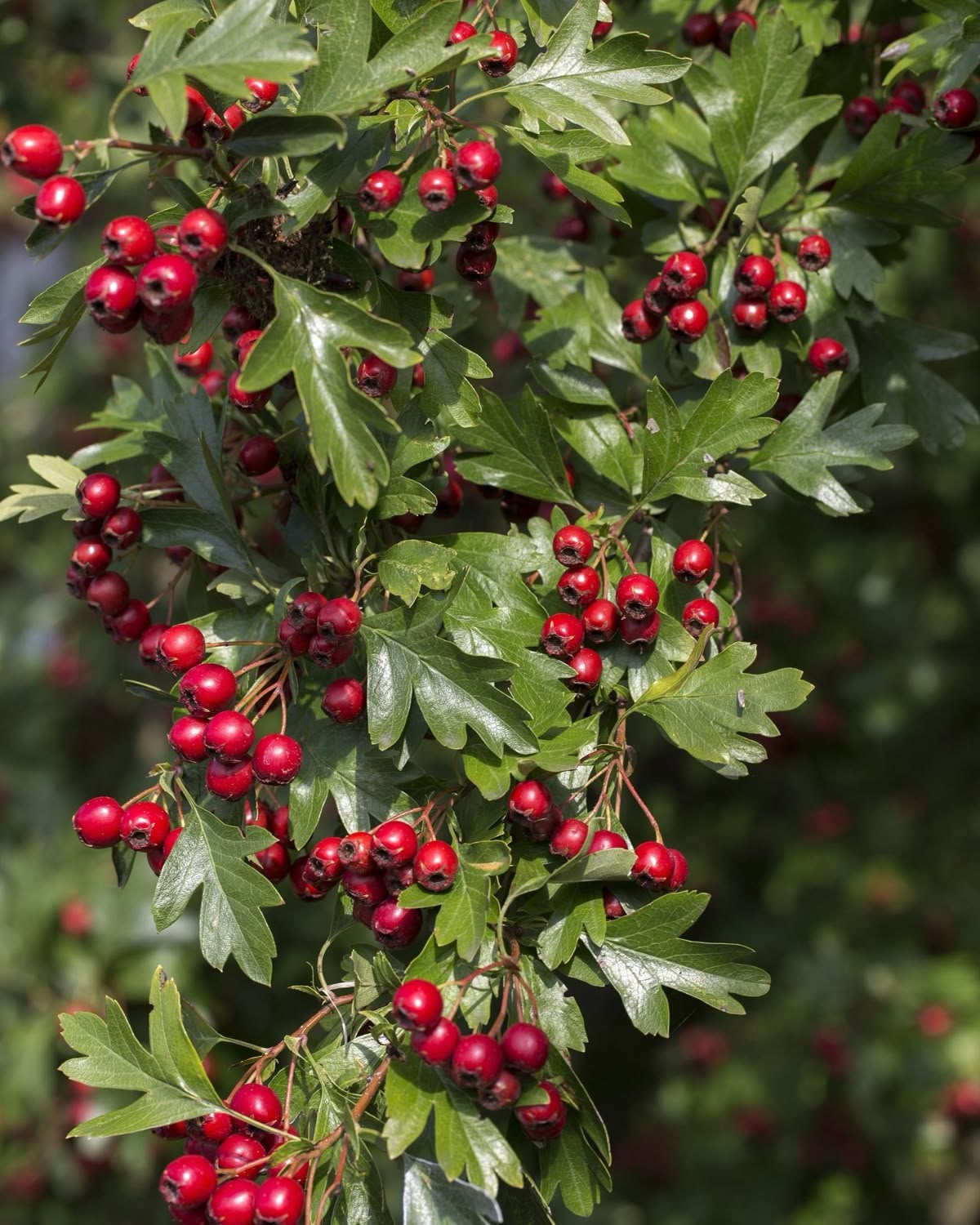
Hawthorn species number around 280, native to temperate regions of Europe, North Africa, West Asia, and North America. C. monogyna grows as a rugged, thorny shrub or tree up to 10m tall, with deeply lobed, glossy green leaves (20–60 mm), clusters of white-to-pink fragrant flowers (April–May), and bright red pomes (haws) containing 1–5 seeds ripening in autumn. It thrives in sunny, well-drained limestone soils, hedgerows, and woodlands up to 1500m elevation. It is hardy, drought-tolerant, and ecologically important for wildlife.
Phytochemistry
Hawthorn contains over 150–300 bioactive compounds. Key ones include flavonoids (quercetin, hyperoside, vitexin, rutin; up to 2% in leaves/flowers), oligomeric procyanidins (OPCs), phenolic acids (chlorogenic, caffeic), triterpenoids (ursolic, oleanolic acids), organic acids, and polysaccharides. These contribute to antioxidant, vasodilatory, and anti-inflammatory effects. Berries are rich in sugars and acids; leaves/flowers emphasize flavonoids.
Western Traditional & Clinical Actions
In Western herbalism, hawthorn acts as a cardiotonic, coronary vasodilator, hypotensive, diuretic, antioxidant, and mild sedative. It strengthens the heart muscle, improves circulation, reduces palpitations, and supports mild anxiety or nervous heart complaints. It is used for heart failure symptoms, hypertension, and angina.
Chinese Medicine Actions
Shan Zha (typically C. pinnatifida fruit) is sour, sweet, and slightly warm. It enters the spleen, stomach, and liver channels. Primary actions: reduces food stagnation (especially meats/fats), promotes digestion, invigorates blood, dispels stasis, and lowers lipids. It treats indigestion, diarrhea, abdominal pain, postpartum stasis, and hyperlipidemia.
Traditional & Historical Uses
Ancient Greeks and Romans used it for heart issues and digestion. In medieval Europe, it was used to treat cardiovascular weakness; Native American tribes used berries for food (e.g., pemmican) and gastrointestinal/heart ailments. In folk traditions, it served as a diuretic, an astringent for diarrhea, and for anxiety/insomnia. Folklore links it to protection, fertility, and fairy lore (e.g., “fairy tree” in Ireland/UK).
Modern Pharmacological Evidence
Flavonoids and procyanidins improve coronary blood flow, increase myocardial contractility, act as antioxidants, inhibit ACE, and reduce inflammation/oxidative stress. It shows hypotensive, lipid-lowering, anti-atherosclerotic, hepatoprotective, and mild antimicrobial effects.
Clinical Studies
Meta-analyses of randomized trials (e.g., Cochrane reviews) show hawthorn extract (often WS 1442, 450–1800 mg/day) as adjunctive therapy for chronic heart failure (NYHA I–III): increases maximal workload (~5–7W), improves exercise tolerance, reduces symptoms (dyspnea, fatigue), and lowers pressure-heart rate product. Benefits for mild hypertension and anxiety were noted in some trials. Generally safe with few mild side effects.
Preparations & Dosage
- Tea: 1–2 tsp dried berries/flowers/leaves per cup, steep 10–15 min; up to 6g/day dried herb.
- Tincture: 1:5 in 40–50% alcohol, 1–5 mL 3x daily (berries or leaf/flower).
- Standardized extract: 160–900 mg/day (often 18% OPCs or 2% flavonoids), divided doses.
- Berries for food: jams, jellies, cordials.
Safety & Contraindications
Generally recognized as safe (GRAS); low toxicity. Rare mild effects: nausea, dizziness, palpitations. May potentiate cardiac drugs (e.g., digoxin, beta-blockers, antihypertensives)—monitor blood pressure/heart rate. Avoid in pregnancy/breastfeeding without professional advice; caution with hypotension.
Cultivation & Harvest
Easy to grow from seed (stratify for dormancy) or cuttings in sunny, well-drained soil. Prune for shape. Harvest leaves/flowers in spring (just opening), berries in autumn when red and ripe. Sustainable hand-harvesting; dry promptly. Common in hedgerows; wildlife-friendly.
Commercial Products
Standardized extracts (e.g., WS 1442/Crataegutt), teas, tinctures, capsules, and heart formulas. Often combined with other cardiotonics. Regulated as supplements or traditional herbal medicines in the EU/US.
Ethnobotanical Curiosities
Hawthorn holds deep cultural significance: a protective “fairy tree” in Celtic lore (do not cut lone trees), used in maypoles for fertility, and as a symbol of strength (Greek krataigos). Indigenous uses include energy foods and circulatory tonics.
Recent Research (2020–2025)
Focus on polysaccharides for prebiotic/hypolipidemic effects, nano-formulations for enhanced bioavailability (e.g., anti-cancer), meta-analyses confirming antihypertensive potential, and sustainability/climate adaptation studies. Continued validation for CVD support and metabolic benefits (e.g., obesity, diabetes adjunct).
Conservation Status
Most common species (e.g., C. monogyna) are widespread and secure (not threatened). Some rare North American endemics (e.g., certain Crataegus spp.) are imperiled or endangered due to habitat loss. Overall, the genus is not at high risk; it supports biodiversity.
DIY Recipes
Hawthorn Berry Tincture (heart tonic): Fill jar ⅓–½ with fresh/dried berries, cover with vodka (1:2 ratio by weight/volume for precision), seal, shake daily for 4–6 weeks, strain. Dose: 1–3 mL 2–3x daily.
Hawthorn Elixir/Cordial: Berries + spices (cinnamon, vanilla, cardamom) in brandy/honey; infuse weeks. Or simple jelly: simmer berries, strain juice, add sugar/lemon, boil to set.
Tea: Blend berries/leaves/flowers for daily heart/digestive support.
X (Twitter) Snapshot – Nov 2025
Discussions often cover hawthorn in herbal blends for circulation/leg health (e.g., with horse chestnut), foraging/recipes, and general wellness. Broader herbal advocacy appears in sustainable projects, though specific hawthorn posts mix with unrelated topics like sports or politics.
Hawthorn remains a gentle, evidence-supported herb for heart health and more. Consult a qualified practitioner for therapeutic use, especially with medications. Sustainable sourcing preserves this valuable plant.
Planting & Harvesting Reference Guide for Hawthorn (Crataegus)
👈Planting & Harvesting Reference Guide:👇
Best Time for Planting
- Late autumn (after leaf fall) or early spring (when soil is workable and frost risk has passed)
- During the waxing moon, ideally in fertile water signs (Cancer or Pisces) or earth signs, for strong root establishment
- Plant in full sun to partial shade in well-drained, moist soils, including limestone-rich, clay, or loamy ground; thrives in hedgerows, forest edges, and riparian zones across USDA zones 4–8
Growing Conditions & Magical Minded Tips
- Space trees or shrubs 15–30 feet apart, depending on variety, for healthy airflow and future harvesting
- Mulch generously with organic matter to retain moisture and build soil vitality; prune in winter to encourage dense flowering and fruiting
- Minimal fertilization needed — compost in early spring supports the natural potency of flavonoids and procyanidins
- Approach each planting with reverence: whisper intentions, offer tobacco, cornmeal, honey, or bright ribbon; thank the land spirits and ask the Hawthorn (Crataegus) spirit for permission and alliance
- Choose seedlings or stratified seeds from strong local stock to honor regional fairy alliances and genetic resilience
Best Time for Harvesting
- Leaves & Flowers: Spring, just as clusters open (April–May, peak at Beltane / May Day dawn)
- Berries (Haws): Autumn, when fully ripe, deep red, and slightly soft (late September–November, ideally after first frost)
- Harvest during waxing to full moon for maximum energetic and medicinal potency
- Best on Tuesdays (Mars/protection) or Fridays (Venus/heart) for magical alignment
Sustainable & Magical Harvesting Methods
- Always ask permission from the specific Hawthorn (Crataegus) tree; never harvest from lone “fairy trees” out of deep respect for tradition
- Use clean hands, wooden shears, or a silver blade; take only what you need — no more than 10–20% of flowers or berries from any single tree
- Harvest flowers and leaves in the morning when the dew is fresh; gather berries carefully, leaving plenty for birds and wildlife
- Sing or speak gratitude and blessings while harvesting; leave offerings of milk, honey, tobacco, or colored ribbon tied to a branch
- Coppice young stems sustainably every few years if needed for bark or wood, always leaving the tree healthy and strong
Post-Harvest Processing
- Dry flowers and leaves quickly in the shade on screens or hanging bundles to preserve color and volatiles
- Dry berries whole or halved in a warm, airy place until leathery; avoid direct sunlight to protect delicate flavonoids
- Store all parts in cool, dark glass jars with a small quartz crystal or rose petal for continued heart energy
- Label with harvest date, moon phase, and intention; tincture fresh material when possible for the strongest spirit-medicine
This guide consolidates all planting and harvesting wisdom shared throughout our SPARK collaboration. Always practice deep reciprocity — give thanks, leave offerings, and harvest with a generous heart so Hawthorn (Crataegus) continues to bless future generations.
Hawthorn (Crataegus) – Best Healing Categories
👈Here are the primary healing categories where Hawthorn (Crataegus) fits most strongly, ranked by strength of traditional use, clinical evidence, and energetic profile:👇
1. Cardiovascular & Heart Tonic (Strongest Category)
- Classic cardiotonic herb
- Supports mild to moderate heart failure, circulation, and coronary blood flow
- Helps regulate blood pressure and heart rhythm
- Strengthens the heart muscle and improves exercise tolerance
2. Emotional & Spiritual Heart Healing
- Heart Chakra (Anahata) remedy
- Grief, heartbreak, emotional resilience, and courage
- Nervous heart complaints (palpitations from anxiety/stress)
- Opens and protects the emotional heart while maintaining healthy boundaries
3. Antioxidant & Anti-Inflammatory Support
- Rich in flavonoids and oligomeric procyanidins (OPCs)
- Cellular protection and oxidative stress reduction
- General vitality and healthy aging support
4. Digestive & Metabolic Health
- Especially Crataegus pinnatifida (Shan Zha) in TCM
- Food stagnation, digestion of rich/fatty meals
- Mild lipid-lowering and metabolic support
5. Nervine & Mild Sedative
- Calms “nervous heart” and mild anxiety-related palpitations
- Gentle support for stress affecting the cardiovascular system
6. Protective & Boundary Medicine (Energetic/Spiritual)
- Creates healthy, energetic, and emotional boundaries
- Fairy/Otherworld guardian energy
- Protection on spiritual, emotional, and physical levels
7. Ecological & Restorative Healing
Indirectly supports human healing through environmental restoration
Keystone species supporting biodiversity, pollinators, and ecosystem health
✦ If You Only Read U.S. Consumer Pages ✦
U.S. consumer pages usually flatten Hawthorn (Crataegus) into three talking points: “supports heart health,” “the berry,” and a Commission E sentence copied without the NYHA clause. That is not invented—flavonoids, procyanidins, and a German extract tradition are all real—but it is a small slice. Those pages rarely mention that Ph. Eur. wrote two drugs with two assays; that HMPC granted only traditional use, 17 votes to 9 dissenters; that SPICE did not win its primary mortality endpoint, and HERB-CHF did not win the six-minute walk; that Chinese official hawthorn is C. pinnatifida fruit, stir-fried or charred, sitting next to haw flakes and Danshen; or that oxyacantha on a label is often a ghost name for laevigata. They also rarely distinguish one style from two, leaf-flower from haws, WS 1442 from grocery berry powder. Reading only U.S. retail copy makes the plant look like a gentle cardiac supplement. Reading the global official and clinical record makes it look like a split pharmacopoeial genus: a European flowering-branch extract with mixed modern heart-failure data, and a Chinese sour fruit with its own processing canon. Both pictures matter. The second one is the one most American seekers and shoppers never see.
Sources:
https://www.ema.europa.eu/en/documents/herbal-monograph/final-european-union-herbal-monograph-crataegus-spp-folium-cum-flore_en.pdf
https://www.cochrane.org/evidence/CD005312_hawthorn-extract-may-be-used-oral-treatment-option-chronic-heart-failure
https://www.sciencedirect.com/science/article/abs/pii/S0378874122008583
https://pmc.ncbi.nlm.nih.gov/articles/PMC2754502/
Globally: Where This Plant Is Studied
👈Global research, official texts, publishers, and human-trial data, rather than U.S.-consumer-page-limited:👇
Where This Plant Is Studied
Hawthorn (Crataegus) is studied as a living Rosaceae hedge, orchard, and cardiology plant across Europe, East Asia, and North America—not as a U.S. “heart berry” novelty. The genus is the problem and the gift. There are hundreds of named species; apomixis, hybridization and extra styles make field identification a specialist’s sport. Official European drug law does not pretend otherwise. It names leaf and flower of C. monogyna Jacq. and C. laevigata (Poir.) DC. (the old, often misused C. oxyacantha), their hybrids, and, more rarely, C. pentagyna, C. nigra and C. azarolus. One style and one stone versus two or three: that is how monogyna and laevigata are told apart when the botanist is honest. Chinese official medicine is a different tree: Shanzha, the fruit of C. pinnatifida Bunge and C. pinnatifida var. major—the large, sour northern pomes of Shandong and the northeast—plus a leaf extract that also sits in the Chinese Pharmacopoeia. Phylogeny even splits the Chinese taxa: a southwestern gene pool that leans toward Europe, a northeastern one that leans toward North America.
Study clusters follow the drugs. Germany built the quantified leaf-and-flower extracts (WS 1442 / Crataegutt; LI 132) and ran the large heart-failure programme. EMA’s HMPC sat in London and argued, by a 17-to-26 majority, that the EU monograph should stay traditional use. China treats Shanzha as medicine-and-food: raw, stir-fried (chao), scorched (jiao) and carbonized (tan) fruits are four different clinical objects, and Danshen–Shanzha pairs are atherosclerosis formulas with Han-dynasty folk roots and a Bencao gangmu trail. North American work includes the HERB-CHF trial on WS 1442 and a growing pinnatifida fruit trade that is not the same plant as a Devon hedge. In short: hawthorn is a multi-species pharmacognosy and cardiology subject, a Chinese sour-fruit industry, and a European hedge that official books refuse to flatten into one Latin name.
Sources:
https://www.ema.europa.eu/en/documents/herbal-monograph/final-european-union-herbal-monograph-crataegus-spp-folium-cum-flore_en.pdf
https://www.sciencedirect.com/science/article/abs/pii/S0378874122008583
https://www.frontiersin.org/journals/plant-science/articles/10.3389/fpls.2019.00443/full
https://www.researchgate.net/publication/358034075_Hawthorn_Crataegus_spp_from_botanical_source_to_phytopreparations
Official Books That Name This Species
Official books name parts and species, not “hawthorn.”
European Pharmacopoeia: Crataegi folium cum flore (1432)—whole or cut dried flowering branches of C. monogyna, C. laevigata (syn. C. oxyacanthoides / C. oxyacantha auct.) or their hybrids, occasionally other European species; not less than 1.5% flavonoids calculated as hyperoside. Hawthorn berries / Crataegi fructus (1220)—false fruits of C. monogyna or C. laevigata or hybrids or mixtures; not less than 0.06% procyanidins calculated as cyanidin chloride. Those two numbers are why a leaf-flower tablet and a berry tea are not interchangeable drugs.
EMA HMPC (final 5 April 2016): EU herbal monograph on Crataegus spp. folium cum flore, traditional use only—relieve symptoms of temporary nervous cardiac complaints (palpitations, perceived extra beats from mild anxiety) after serious conditions have been excluded. Well-established use was not granted. Seventeen of twenty-six votes carried it; dissenting members wanted stronger heart language. Commission E (1994) had already given leaf and flower a positive monograph for declining cardiac performance corresponding to NYHA II, with a six-week minimum and physician oversight. ESCOP followed the leaf-and-flower path. Brazilian plant-drug texts copy the Ph. Eur. 1.5% hyperoside floor.
Pharmacopoeia of the People’s Republic of China: Shanzha / Crataegi Fructus—dried fruit of C. pinnatifida or var. major; promote digestion, move stasis, lower lipids. Leaf extract is also an official material. Processing is not a footnote: Sheng-Shanzha, Chao-Shanzha, Jiao-Shanzha and Shanzha-Tan are distinct official articles with different heat histories and different intended effects (circulate blood, aid digestion, check diarrhea, stanch bleeding). USP–NF has carried hawthorn dietary-supplement monographs in the American tradition; they are not an FDA NDA cardiac drug. WHO and older British herbal pharmacopoeia entries exist; they do not collapse pinnatifida fruit into monogyna flower. That is a very different class of “naming” than a U.S. consumer page.
Sources:
https://www.ema.europa.eu/en/documents/herbal-monograph/final-european-union-herbal-monograph-crataegus-spp-folium-cum-flore_en.pdf
https://www.ema.europa.eu/en/documents/herbal-opinion/opinion-hmpc-european-union-herbal-monograph-crataegus-spp-folium-cum-flore_en.pdf
https://sphu.org/wp-content/uploads/2024/09/guide-for-the-elaboration-of-monographs-on-hedrbal-drugs-and-herbal-drug-preparations.pdf
https://www.sciencedirect.com/science/article/abs/pii/S0022286023004982
Who Publishes on It
Publication splits along the official cut. German and European cardiology and phytomedicine journals carry WS 1442 and LI 132: European Journal of Heart Failure (HERB-CHF), American Journal of Cardiovascular Drugs (WS 1442 benefit–risk), Cochrane (Guo, Pittler, Ernst 2008), Pharmaceuticals (2025 blood-pressure meta-analysis). Chinese journals and Journal of Ethnopharmacology carry pinnatifida fruit, processing chemistry (5-HMF in charred fruit), Danshen–Shanzha pharmacokinetics, and a smaller anxiolytic literature on Shan Zha in multi-herb formulas. Schwabe (WS 1442), EMA, EDQM, the China Pharmacopoeia Commission, and Commission E / BfArM archives are the official publishers. Author clusters sit in German heart-failure trial networks, Chinese materia-medica institutes, and hybrid-systematics labs that still argue about C. × media. Consumer sites reprint “good for the heart”; they are not the original publishers.
Sources:
https://www.cochrane.org/evidence/CD005312_hawthorn-extract-may-be-used-oral-treatment-option-chronic-heart-failure
https://link.springer.com/content/pdf/10.1007/s40256-017-0249-9.pdf
https://www.frontiersin.org/journals/pharmacology/articles/10.3389/fphar.2024.1380977/full
https://pmc.ncbi.nlm.nih.gov/articles/PMC9117595/
Human Trials Tied to This Species
Human evidence for Crataegus is real, product-specific, and split by continent and plant part. Do not stack a German leaf-flower extract onto a Chinese fried fruit and call it one trial.
The European heart-failure file is mostly WS 1442, a dry extract of leaf and flower quantified to oligomeric procyanidins (typically 900 mg/day in the large studies), used as add-on to then-standard therapy. Cochrane 2008 pooled 14 double-blind RCTs; ten trials (855 people, NYHA I–III) entered meta-analysis: maximal workload +5.35 W, better exercise tolerance, lower pressure–heart-rate product; adverse events infrequent and mild. Eleven of those fourteen trials used WS 1442; three used LI 132 (methanolic, 2.2% flavonoids). The SPICE mortality trial then randomized 2,681 adults with NYHA II–III and LVEF ≤35% to 900 mg/day WS 1442 or placebo for 24 months: the primary composite did not show an overall mortality win; post-marketing and safety work still describe a quiet add-on profile. HERB-CHF (United States, n=120, NYHA II–III, 450 mg twice daily for six months on contemporary therapy) found no gain in six-minute walk, quality of life or most biomarkers; a modest LVEF difference favored hawthorn; more non-cardiac adverse events were reported on extract. That is why HMPC stayed traditional-use while Commission E had been willing to write NYHA II.
Blood pressure is a smaller, newer pile: a 2025 meta-analysis of six placebo RCTs (n=428, 10 weeks to 6 months, 250–1,200 mg/day, mixed Crataegus products) reported SBP −6.65 mmHg and a non-significant DBP drop, with high heterogeneity. Chinese clinical work on Shanzha fruit is often in combination formulas for dyslipidemia or digestion, not monotherapy WS 1442. Mouse and receptor work on Shan Zha and 5-HT1A / BDNF is not a human depression label.
Important cautions, held with the plant: this is not a substitute for diagnosed heart-failure care; HMPC insists serious cardiac disease be excluded before “nervous palpitations” language; berry and leaf-flower are different assays (procyanidins versus hyperoside); pinnatifida fruit is not monogyna flower; raw Shanzha is harshly sour and is processed for a reason; interaction chatter with cardiac glycosides and antihypertensives exists in the assessment reports; pregnancy data are thin. This is not a dosing protocol.
Sources:
https://www.cochrane.org/evidence/CD005312_hawthorn-extract-may-be-used-oral-treatment-option-chronic-heart-failure
https://pmc.ncbi.nlm.nih.gov/articles/PMC2754502/
https://pmc.ncbi.nlm.nih.gov/articles/PMC12298042/
https://link.springer.com/content/pdf/10.1007/s40256-017-0249-9.pdf
https://www.ema.europa.eu/en/documents/herbal-opinion/opinion-hmpc-european-union-herbal-monograph-crataegus-spp-folium-cum-flore_en.pdf

Part 1: Modern Medical Properties and Uses

Purpose: Highlights the plant’s scientific and medicinal properties, validating holistic healing with evidence-based data.
Contemporary Medical Applications of Hawthorn (Crataegus)
Describes current clinical uses (e.g., capsules, tinctures) and delivery methods in modern medicine.
👈Contemporary Medical Applications:👇
Contemporary Medical Applications:
- Standardized hawthorn extracts, particularly from leaves and flowers (such as WS 1442), serve as adjunctive therapy for mild to moderate chronic heart failure (NYHA classes I–III), improving exercise tolerance, reducing symptoms like dyspnea and fatigue, and enhancing quality of life when used alongside conventional treatments.
- Hawthorn preparations demonstrate clinically meaningful blood pressure reduction in individuals with mild hypertension or pre-hypertension, with meta-analyses showing significant decreases in systolic blood pressure (approximately 6–7 mmHg) after 10–24 weeks of use at doses of 250–1200 mg/day.
- Leaf and flower extracts relieve temporary nervous cardiac complaints, including palpitations and perceived extra heartbeats linked to mild anxiety, following exclusion of serious underlying conditions by a physician.
- Hawthorn supports management of angina pectoris and improves coronary circulation through vasodilatory effects, often delivered via capsules, tablets, or tinctures in daily regimens of 450–1800 mg standardized extract.
- In diabetic patients with hypertension, hawthorn extract (e.g., 1200 mg/day) contributes to better blood pressure control when combined with prescribed medications, showing additive benefits in clinical observations.
- Commercial products include tinctures (1:5 ratio, 1–5 mL three times daily), teas from dried berries/leaves/flowers, and standardized capsules emphasizing oligomeric procyanidins (OPCs) or flavonoids for consistent cardiovascular support.
- Applications extend to hyperlipidemia support, with fruit-based preparations aiding lipid metabolism as part of broader metabolic wellness protocols.
Sources: Contemporary Medical Applications
Sources:
https://www.mdpi.com/1424-8247/18/7/1027
https://www.sciencedirect.com/topics/medicine-and-dentistry/crataegus-extract
https://pubmed.ncbi.nlm.nih.gov/40732315/
https://www.researchgate.net/publication/336025822_The_effect_of_hawthorn_Crataegus_spp_on_blood_pressure_A_systematic_review
https://www.drugs.com/npp/hawthorn.html
https://pmc.ncbi.nlm.nih.gov/articles/PMC9498108/
https://www.healthline.com/nutrition/hawthorn-berry-benefits
Pharmacology of Hawthorn (Crataegus)
Outlines key compounds and their mechanisms of action, driving therapeutic effects.
👈Pharmacology:👇
Pharmacology:
- Flavonoids (quercetin, hyperoside, vitexin, rutin) and oligomeric procyanidins (OPCs) act as potent antioxidants, scavenging free radicals and protecting endothelial cells while improving myocardial contractility and coronary blood flow.
- Procyanidins contribute to positive inotropic effects by enhancing cardiac muscle efficiency and negative chronotropic actions that help regulate heart rate without excessive stimulation.
- Mechanisms include mild ACE inhibition, leading to vasodilation and blood pressure reduction, alongside anti-inflammatory modulation that reduces oxidative stress in cardiovascular tissues.
- Triterpenoids and phenolic acids support hepatoprotective and lipid-lowering activities by influencing cholesterol metabolism and reducing atherogenic processes.
- Polysaccharides exhibit prebiotic potential and contribute to overall metabolic benefits, including improved glucose handling in some models.
- Synergistic actions of multiple compound classes (over 150 identified) produce broad cardioprotective outcomes, such as anti-atherosclerotic and anti-arrhythmic support.
- Bioavailability improves with standardized extracts, where OPCs (often 18%+) and flavonoids (2%+) ensure reproducible pharmacological activity in human studies.
Sources: Pharmacology:
Sources:
https://pmc.ncbi.nlm.nih.gov/articles/PMC12844126/
https://www.sciopen.com/article/10.31665/JFB.2018.4163
https://www.nature.com/articles/s41598-020-65802-7
https://pmc.ncbi.nlm.nih.gov/articles/PMC6271784/
https://pmc.ncbi.nlm.nih.gov/articles/PMC9498108/
https://www.frontiersin.org/journals/pharmacology/articles/10.3389/fphar.2023.1275244/full
Natural Medicine Studies of Hawthorn (Crataegus)
Summarizes recent research on efficacy, safety, or clinical outcomes from peer-reviewed studies.
👈Natural Medicine Studies:👇
Natural Medicine Studies:
- A 2025 meta-analysis of randomized placebo-controlled trials confirmed hawthorn’s significant systolic blood pressure reduction in hypertensive patients, supporting its role as a complementary therapy with good safety over 2–6 months.
- Cochrane-style reviews and meta-analyses of over 800 heart failure patients demonstrate improved maximal workload, exercise tolerance, and symptom relief with hawthorn extract as adjunctive treatment for NYHA I–III.
- Long-term studies (up to 24 months) with standardized WS 1442 extract show benefits in mild heart failure, though results vary with dosage and patient severity, highlighting optimal use in earlier stages.
- Trials in type 2 diabetes patients indicate blood pressure and mild cardiac symptom improvements when hawthorn is added to standard care, with few adverse events.
- Antioxidant and anti-inflammatory markers improve in clinical settings, correlating with cardiovascular protection and potential digestive/metabolic support from berry preparations.
- Safety profiles remain favorable across studies, with mild transient side effects and compatibility with many conventional heart medications when monitored.
- Recent systematic reviews affirm efficacy for mild hypertension after consistent use (minimum 12 weeks), calling for larger confirmatory trials.
Sources: Natural Medicine Studies:
Sources:
https://pubmed.ncbi.nlm.nih.gov/40732315/
https://www.sciencedirect.com/topics/medicine-and-dentistry/crataegus-extract
https://pubmed.ncbi.nlm.nih.gov/12798455/
https://pmc.ncbi.nlm.nih.gov/articles/PMC9498108/
https://www.drugs.com/npp/hawthorn.html
https://www.researchgate.net/publication/336025822_The_effect_of_hawthorn_Crataegus_spp_on_blood_pressure_A_systematic_review
Chemistry of Hawthorn (Crataegus)
Details active chemical constituents (e.g., alkaloids, flavonoids) and their healing roles.
👈Chemistry:👇
Chemistry:
- Over 150–300 bioactive compounds identified, dominated by flavonoids (quercetin derivatives, hyperoside, vitexin, rutin) concentrated in leaves and flowers at 1–2% levels.
- Oligomeric procyanidins (OPCs), including B-type dimers like procyanidin B2 and monomers such as epicatechin, represent key cardiovascular actives, often standardized to 18% in extracts.
- Phenolic acids (chlorogenic, caffeic) and triterpenoids (ursolic, oleanolic acids) contribute to antioxidant, anti-inflammatory, and lipid-modulating properties across fruits, leaves, and flowers.
- Berries provide organic acids, sugars, and polysaccharides that support digestive and prebiotic functions alongside lower flavonoid content compared to aerial parts.
- Additional constituents include lignans, sterols, and trace cardioactive amines that enhance overall bioactivity profile.
- Extraction methods (ethanol, water) influence yield, with leaves often richest in total phenolics and flavonoids for potent preparations.
- Chemical diversity across Crataegus species (e.g., monogyna, laevigata, pinnatifida) allows tailored applications in Western and TCM contexts.
Sources: Chemistry:
Sources:
https://www.frontiersin.org/journals/pharmacology/articles/10.3389/fphar.2023.1275244/full
https://pmc.ncbi.nlm.nih.gov/articles/PMC12844126/
https://www.nature.com/articles/s41598-020-65802-7
https://pmc.ncbi.nlm.nih.gov/articles/PMC6271784/
https://pmc.ncbi.nlm.nih.gov/articles/PMC9498108/
https://academic.oup.com/fqs/article/doi/10.1093/fqsafe/fyad067/7486237
Functional Foods and Nutrition / Hawthorn (Crataegus)
Highlights dietary uses (e.g., teas, supplements) in modern health practices.
👈Functional Foods and Nutrition:👇
Functional Foods and Nutrition:
- Hawthorn berries serve as nutritious additions to jams, jellies, cordials, and teas, delivering fiber, vitamin C, and antioxidants that support digestive health and act as mild prebiotics.
- Leaf and flower infusions or powders integrate into daily wellness beverages and smoothie blends for gentle cardiovascular and antioxidant support.
- Standardized supplements (capsules, tablets) combine berries with leaves/flowers for convenient intake, often marketed for heart health and lipid balance.
- Functional food development explores hawthorn extracts in beverages and bars to leverage polyphenol content for oxidative stress reduction and metabolic wellness.
- In culinary traditions, especially Asian uses of C. pinnatifida, fruits enhance the digestion of rich meals while contributing to overall nutrient density.
- Nutritional profiles include unsaturated fatty acids in seeds and high phenolic content that positions hawthorn as a dual-purpose medicinal-edible resource.
- Home preparations like elixirs or syrups preserve bioactive compounds for regular dietary incorporation, supporting vitality and circulation.
Sources: Functional Foods and Nutrition:
Sources:
https://pmc.ncbi.nlm.nih.gov/articles/PMC9498108/
https://www.healthline.com/nutrition/hawthorn-berry-benefits
https://gillco.com/2025/10/30/hawthorn-berry-extract/
https://www.researchgate.net/publication/363589728_Food_Applications_and_Potential_Health_Benefits_of_Hawthorn
https://iadns.onlinelibrary.wiley.com/doi/10.1002/fft2.70073
https://www.webmd.com/vitamins-supplements/hawthorn
Current Projects and Future Possibilities of Hawthorn (Crataegus)
Notes ongoing research, clinical trials, or innovative medical applications.
👈Current Projects and Future Possibilities:👇
Current Projects and Future Possibilities:
- Ongoing research explores nano-formulations and enhanced bioavailability delivery systems to amplify hawthorn’s cardiovascular and potential anti-cancer applications.
- Studies investigate polysaccharides and specific flavonoids for prebiotic, hypolipidemic, and metabolic syndrome benefits in larger populations.
- Integration into sustainable functional foods and beverages aims to harness antioxidant properties for broader public health preventive strategies.
- Comparative trials across Crataegus species seek to optimize standardization for consistent clinical outcomes in hypertension and heart failure.
- Climate adaptation and cultivation projects support expanded global supply while maintaining high bioactive content for medicinal use.
- Multi-omics approaches analyze synergistic compound interactions to uncover new mechanisms for neuroprotection and anti-inflammatory pathways.
- Collaborative efforts focus on combining hawthorn with other botanicals for comprehensive wellness formulations targeting aging-related cardiovascular decline.
Sources: Current Projects and Future Possibilities:
Sources:
https://pmc.ncbi.nlm.nih.gov/articles/PMC12844126/
https://pmc.ncbi.nlm.nih.gov/articles/PMC9498108/
https://gillco.com/2025/10/30/hawthorn-berry-extract/
https://pubmed.ncbi.nlm.nih.gov/40732315/
https://www.mdpi.com/1420-3049/31/2/226
https://iadns.onlinelibrary.wiley.com/doi/10.1002/fft2.70073
Literary Mentions of Hawthorn (Crataegus)
References modern medical texts or studies citing the plant’s therapeutic use.
👈Literary Mentions:👇
Literary Mentions: in ancient texts
- Dioscorides (1st century CE) described hawthorn (krátaios/krataiogonon) in De Materia Medica primarily for astringent uses such as diarrhea and excessive menstrual bleeding.
- Pliny the Elder referenced crataegos or related terms in Naturalis Historia, noting botanical characteristics and aligning with Theophrastus descriptions of thorny Rosaceae plants.
- Medieval and Renaissance herbals (e.g., Fuchs, Dodoens) echoed classical sources, expanding on protective and tonic qualities while repeating Greco-Roman observations.
- Modern pharmacological texts and monographs (EMA, AHP, Commission E) cite historical continuity while focusing on validated cardiovascular applications from 20th–21st century research.
- Contemporary reviews in journals like Pharmaceuticals and HerbalGram reference ancient foundations to contextualize current evidence for heart tonic uses.
- Ethnobotanical literature highlights evolution from digestive/astringent roles in antiquity to cardiotonic prominence in Western herbalism.
- Updated scientific overviews (2020–2026) integrate classical mentions with phytochemical data to bridge traditional knowledge and modern validation.
Sources: Literary Mentions:
Sources:
https://www.ahpa.org/herbs_in_history_hawthorn
https://celialinnemann.com/2021/10/10/hawthorn-materia-medica-hawthorn-crataegus-berry-leaf-and-flower/
https://www.drugs.com/npp/hawthorn.html
https://pmc.ncbi.nlm.nih.gov/articles/PMC12844126/
https://www.mdpi.com/1424-8247/18/7/1027

Part 2: Plant Knowledge Systems

Purpose: Validates plant-based healing through interdisciplinary scientific and cultural fields.
Ethnobotany of Hawthorn (Crataegus)
Explores the plant’s traditional uses across cultures, linking indigenous knowledge to modern applications.
👈Ethnobotany:👇
Ethnobotany:
- Hawthorn (Crataegus) holds a profound place in European traditions, where it features as the “fairy tree” or “May tree” in Celtic and British folklore, serving as a protective boundary plant in hedgerows and a symbol of fertility and renewal during May Day celebrations; its solitary trees were revered and left undisturbed as portals to the fairy realm, while branches and flowers supported rituals for courage, heart strength, and warding off misfortune, practices that align with modern cardiovascular and nervine tonic applications.
- In Traditional Chinese Medicine, Hawthorn (primarily Crataegus pinnatifida fruits known as Shan Zha) has been documented for over 2,000 years in texts like the Compendium of Materia Medica for promoting digestion of meats and fats, reducing food stagnation, invigorating blood circulation, and addressing hyperlipidemia and postpartum stasis; these uses complement contemporary findings on its lipid-lowering and digestive support, illustrating continuity between ancient Asian systems and current metabolic health protocols.
- Native American tribes, including the Cherokee, Iroquois, and Kutenai, utilized various Hawthorn species for food (berries in pemmican and breads) and medicine; the Cherokee employed bark for circulatory support and stamina during physical activities, while other groups applied it for gastrointestinal issues and heart complaints, demonstrating a cross-cultural recognition of its cardiotonic and nutritive qualities that parallels today’s evidence-based heart health uses.
- Greco-Roman classical sources, such as Dioscorides in De Materia Medica, described Hawthorn fruits and roots for astringent effects against diarrhea, excessive menstruation, dysentery, and as a topical aid for extracting splinters; these early Mediterranean applications for digestive regulation and wound support reflect foundational ethnobotanical knowledge that evolved into broader Western herbal traditions emphasizing cardiovascular and anti-inflammatory benefits.
- Across diverse cultures, Hawthorn integrates into daily life as both food and remedy—berries processed into jams, wines, and cordials in Europe and Asia, or used fresh by Indigenous peoples—linking its ecological availability with nutritional and therapeutic roles, thereby reinforcing its global value in sustainable traditional food-medicine systems that inform modern functional food development.
Sources: Ethnobotany:
Sources:
https://www.ahpa.org/herbs_in_history_hawthorn
https://www.phillyorchards.org/2024/10/22/the-heart-of-the-hedge-exploring-the-magic-of-hawthorn/
https://en.wikipedia.org/wiki/Crataegus
https://www.mdpi.com/1999-4907/11/5/564
https://pubmed.ncbi.nlm.nih.gov/37788786/
https://www.permaculture.co.uk/articles/everything-you-need-to-know-about-hawthorn-crataegus-monogyna/
Plant Genomics of Hawthorn (Crataegus)
Describes genetic studies of the plant, focusing on traits related to medicinal properties.
👈Plant Genomics:👇
Plant Genomics:
- The chloroplast genome of Crataegus species has been fully sequenced and characterized, revealing a typical quadripartite structure with sizes ranging from approximately 159,654 to 159,898 base pairs; these genomic resources enable phylogenetic studies that clarify evolutionary relationships within the Rosaceae family and support breeding or conservation efforts for medicinal cultivars with optimized bioactive profiles.
- Nuclear and mitochondrial genomes of key species such as Crataegus pinnatifida var. major and Crataegus laevigata have been assembled, providing insights into the evolutionary history of the Maleae tribe (including apples) and identifying genetic markers linked to traits like fruit quality, stress tolerance, and secondary metabolite production relevant to pharmacological compounds.
- Molecular marker studies and comparative genomics on Crataegus monogyna and related taxa highlight genetic diversity across native and naturalized populations, aiding in the authentication of medicinal plant material and the selection of high-flavonoid or procyanidin chemotypes for standardized herbal preparations.
- Genomic data contribute to understanding adaptive traits in Hawthorn, such as drought tolerance and habitat resilience, which hold value for sustainable cultivation projects aimed at ensuring a stable supply of medicinally potent plant material amid climate challenges.
Sources: Plant Genomics:
Sources:
https://pmc.ncbi.nlm.nih.gov/articles/PMC9289535/
https://wellcomeopenresearch.org/articles/11-357
https://www.rosaceae.org/Analysis/13655519
https://www.frontiersin.org/journals/plant-science/articles/10.3389/fpls.2019.00443/full
Phytotherapy of Hawthorn (Crataegus)
Details the plant’s use in clinical herbal medicine, including therapeutic protocols.
👈Phytotherapy:👇
Phytotherapy:
- In clinical phytotherapy, standardized Hawthorn leaf and flower extracts (such as WS 1442) are employed as adjunctive support for mild to moderate heart failure (NYHA I–III), enhancing exercise tolerance, reducing fatigue and dyspnea, and improving overall cardiac function through synergistic flavonoid and procyanidin actions when integrated into individualized herbal protocols.
- Hawthorn preparations serve as a gentle cardiotonic and hypotensive agent in phytotherapeutic practice, with typical protocols involving daily doses of 450–1800 mg extract or tinctures (1:5, 1–5 mL three times daily) for supporting circulation, managing mild hypertension, and addressing nervous heart complaints, often combined with other botanicals like limeflower or motherwort.
- Traditional herbal protocols utilize Hawthorn berries for digestive and metabolic support, particularly in cases of food stagnation or hyperlipidemia, while leaf/flower combinations focus on cardiovascular and mild sedative effects, with practitioners monitoring patient response over 8–24 weeks for optimal outcomes.
Sources: Phytotherapy:
Sources:
https://pmc.ncbi.nlm.nih.gov/articles/PMC12298042/
https://www.herbalreality.com/herb/hawthorn/
https://www.mdpi.com/1999-4907/11/5/564
https://goldenpoppyherbs.com/hawthorn-materia-medica/
Ethnoecology of Hawthorn (Crataegus)
Examines the plant’s ecological role in cultural practices and environmental interactions.
👈Ethnoecology:👇
Ethnoecology:
- Hawthorn functions as a keystone species in temperate ecosystems, forming dense hedgerows that provide connectivity corridors for wildlife, nesting sites for birds, and winter forage through persistent haws that sustain thrushes, waxwings, and mammals; its role in cultural landscapes as living boundaries reinforces sustainable land management practices that integrate human needs with biodiversity conservation.
- In ethnoecological contexts, Hawthorn supports ecological succession as a pioneer species in disturbed areas, stabilizing soils, preventing erosion with its deep root systems, and enhancing habitat diversity; traditional European and Indigenous management of these plants in agroforestry systems highlights their contribution to resilient cultural-ecological landscapes.
- Cultural practices worldwide honor Hawthorn’s ecological gifts—planting for windbreaks, livestock protection, and pollinator support—while its flowers nourish insects and fruits feed wildlife, creating a reciprocal relationship where human stewardship of hedgerows and wild stands preserves both medicinal resources and ecosystem services.
Sources: Ethnoecology:
Sources:
https://richardvillar.medium.com/the-enigmatic-hawthorn-e8b1659ed5e8
https://en.wikipedia.org/wiki/Crataegus
https://www.permaculture.co.uk/articles/everything-you-need-to-know-about-hawthorn-crataegus-monogyna/
https://xn--80abmehbaibgnewcmzjeef0c.xn--p1ai/upload/iblock/95d/95dd889bac79e5cdb5dc64bb19ba6fe9.pdf
Anthroposophical Medicine of Hawthorn (Crataegus)
Outlines the plant’s use in Steiner-inspired remedies, including preparation, studies, and dosage.
👈Anthroposophical Medicine:👇
Anthroposophical Medicine:
- Limited specific documentation exists for Hawthorn in classical Anthroposophical literature; however, its cardiotonic and harmonizing qualities align with Steiner-inspired approaches that view the plant as supporting the rhythmic system (heart and circulation) and addressing imbalances between astral and etheric forces, often prepared as potentized remedies or fresh plant extracts to nurture emotional and physical heart-centered vitality.
- In broader Anthroposophical practice, Hawthorn integrates into holistic protocols alongside artistic therapies and other botanicals to strengthen the “heart as an organ of perception,” helping individuals process stress, anxiety-related palpitations, and circulatory weaknesses through individualized remedies that consider constitutional and biographical factors.
Sources: Anthroposophical Medicine:
Sources:
https://issuu.com/herbologynews1/docs/herbologynews-june/s/12388054
https://pmc.ncbi.nlm.nih.gov/articles/PMC6415628/
https://rsarchive.org/Lectures/GA313/English/MP1991/19210417a01.html

Part 3: Heritage and Practice

Purpose: Weaves historical and cultural heritage with practical guidance for medicinal use.
Historical and Cultural Significance of Hawthorn (Crataegus)
Explores the plant’s role in historical and cultural medical practices.
👈Historical and Cultural Significance:👇
Historical and Cultural Significance:
- Hawthorn (Crataegus) occupies a central and multifaceted role in European cultural history as both a revered and sometimes feared tree, known as the “May tree” or “fairy tree” in Celtic, Irish, and British traditions; it symbolized fertility, renewal, and protection, forming living hedgerows that defined landscapes and boundaries while featuring prominently in May Day celebrations, maypoles, and rituals for courage and heart strength, with lone trees left undisturbed as portals to the otherworld, reflecting deep ecological and spiritual interconnections that persist in modern herbal reverence for its cardiovascular benefits.
- In classical Greco-Roman sources, Hawthorn (Crataegus) appeared under names like krataigos (Theophrastus) and oxuakantha (Dioscorides), valued for astringent properties in treating diarrhea, excessive menstruation, and as a topical aid, while also linked to marriage and hope through associations with the god Hymen; these ancient Mediterranean foundations evolved through medieval European herbals and literature, where it embodied contradictory themes of life, death, and protection, influencing its transition into contemporary cardiotonic applications.
- Across Asia, particularly in China with Crataegus pinnatifida (Shan Zha), Hawthorn (Crataegus) has held documented importance for over two millennia in texts such as the Compendium of Materia Medica, primarily for digestive support of heavy meals and blood invigoration, bridging culinary and medicinal spheres in ways that inform today’s global recognition of its lipid-lowering and metabolic roles.
Sources: Historical and Cultural Significance:
Sources:
https://mobot-ethnobiology-jc.weebly.com/uploads/2/4/7/8/24789062/hawthorn_the_cultural_value_of_trees.pdf
https://www.ahpa.org/herbs_in_history_hawthorn
https://richardvillar.medium.com/the-enigmatic-hawthorn-e8b1659ed5e8
https://www.ucc.ie/en/tree-explorers/trees/a-z/crataegusmonogyna/
https://en.wikipedia.org/wiki/Crataegus
https://theherbalacademy.com/blog/hawthorn-offerings/
Indigenous and Traditional Systems of Hawthorn (Crataegus)
Details its use in specific indigenous or traditional healing systems.
👈Indigenous and Traditional Systems:👇
Indigenous and Traditional Systems:
- Native American Indigenous groups, including the Cherokee, Iroquois, and various tribes in the eastern and central regions, incorporated multiple Hawthorn (Crataegus) species into their traditional systems for both sustenance and healing; berries provided a key food source in pemmican and breads, while bark and fruits addressed circulatory stamina, gastrointestinal complaints, and heart-related issues, demonstrating a holistic integration of nutrition and medicine that resonates with current ethnobotanical validations of its cardiotonic properties.
- In Traditional Chinese Medicine (TCM), Hawthorn (Crataegus pinnatifida fruits as Shan Zha) forms a cornerstone for treating food stagnation, particularly from fatty or greasy foods, promoting digestion, invigorating blood, and reducing hyperlipidemia and postpartum stasis; this long-standing system, documented in classical materia medica, continues to influence modern integrative protocols combining digestive and cardiovascular support.
- European folk and monastic traditions from medieval times onward employed Hawthorn (Crataegus) as a diuretic, astringent, and tonic for heart weakness, anxiety-related palpitations, and insomnia, often in teas or wines, preserving knowledge that underpins today’s phytotherapeutic protocols while emphasizing respectful harvesting from hedgerows and wild stands.
Sources: Indigenous and Traditional Systems:
Sources:
https://richardvillar.medium.com/the-enigmatic-hawthorn-e8b1659ed5e8
http://www.itmonline.org/arts/crataegus.htm
https://www.permaculture.co.uk/articles/everything-you-need-to-know-about-hawthorn-crataegus-monogyna/
https://stramcenter.com/blog/blog-detail/herb-of-the-month-shan-zha-hawthorn-berry/
Folklore and Culinary Traditions of Hawthorn (Crataegus)
Highlights folklore, myths, and culinary uses tied to the plant.
👈Folklore and Culinary Traditions:👇
Folklore and Culinary Traditions:
- Folklore surrounding Hawthorn (Crataegus) abounds with dualities—protective yet perilous—as a fairy-associated tree in Celtic and Gaelic traditions, where damaging a lone specimen invited misfortune, while its blossoms and branches featured in fertility rites, May garlands, and protective charms; the distinctive scent of flowers, linked in medieval lore to decay or the plague due to trimethylamine, reinforced taboos against bringing them indoors, yet the plant symbolized hope, marriage, and the Green Man.
- Culinary traditions highlight Hawthorn (Crataegus) berries as versatile ingredients transformed into jams, jellies, cordials, wines, and confections; in China, Shan Zha yields popular candied skewers (bingtanghulu), haw flakes, and digestive snacks, while European practices produce syrups and fruit leathers, blending tart flavor with nutritional and mild medicinal value across cultures.
Sources: Folklore and Culinary Traditions:
Sources:
https://www.snapdragonlife.com/news/blog/hawthorn/
https://www.woodlandtrust.org.uk/trees-woods-and-wildlife/british-trees/a-z-of-british-trees/hawthorn/
https://historyandfolklorepodcast.libsyn.com/hawthorn-folklore
https://www.instagram.com/reel/DWGN4_fgfMr/?hl=en
Identification and Characteristics of Hawthorn (Crataegus)
Describes physical traits and identification markers for the plant.
👈Identification and Characteristics:👇
Identification and Characteristics:
- Hawthorn (Crataegus) species typically present as dense, thorny deciduous shrubs or small trees reaching 5–15 meters, with grey-brown bark that develops shallow fissures, twisted branching, and sharp thorns (1–11 cm) arising from branches or trunk, providing a rugged silhouette recognizable in hedgerows and woodlands.
- Leaves are alternate, 2–5 cm long, obovate to teardrop-shaped with deep lobes and toothed margins, dark green above and paler beneath; flowers appear in May–June as white-to-pink five-petaled clusters (corymbs of 10–25), followed by bright red (sometimes orange or yellow) pomes (“haws”) containing 1–5 stony seeds ripening in autumn.
Sources: Identification and Characteristics:
Sources:
https://totallywilduk.co.uk/2020/04/28/identify-hawthorn/
https://practicalselfreliance.com/hawthorn/
https://www.permaculture.co.uk/articles/everything-you-need-to-know-about-hawthorn-crataegus-monogyna/
https://en.wikipedia.org/wiki/Crataegus
Wildcrafting / Hawthorn (Crataegus)
Covers where to find, identification tips (including look-alikes), and esoteric/medicinal harvesting methods.
👈Wildcrafting:👇
Wildcrafting:
- Wildcrafting Hawthorn (Crataegus) thrives in temperate hedgerows, woodlands, scrub, and disturbed areas across Europe, North America, and parts of Asia; seek sunny, well-drained sites where it acts as a pioneer species, harvesting leaves and flowers in full bloom (May–early June) and ripe berries in autumn when deep red and firm, using sustainable hand collection to avoid damaging branches and leaving plenty for wildlife.
- Accurate identification relies on thorny branches, lobed leaves, clustered white-pink flowers, and red haws; distinguish from look-alikes like blackthorn (Prunus spinosa, earlier white flowers, blue sloes) or rowan (different leaf shape, no thorns) by the characteristic May flowering and persistent haws, always confirming with multiple traits to ensure safety and potency.
- Esoteric and medicinal harvesting emphasizes timing with lunar cycles or dawn for peak vitality, expressing gratitude to the plant, and avoiding lone “fairy trees” out of respect for tradition, while processing promptly by drying or tincturing to preserve flavonoids and procyanidins.
Sources: Wildcrafting:
Sources:
https://practicalselfreliance.com/hawthorn/
https://totallywilduk.co.uk/2020/04/28/identify-hawthorn/
https://richardvillar.medium.com/the-enigmatic-hawthorn-e8b1659ed5e8
Cultivation Practices of Hawthorn (Crataegus)
Details growing methods for medicinal potency, including general cultivation.
👈Cultivation Practices:👇
Cultivation Practices:
- Hawthorn (Crataegus) grows readily from stratified seeds or hardwood cuttings in well-drained, sunny to partially shaded soil across USDA zones 4–8; it tolerates various soil types including limestone and clay, preferring moist but not waterlogged conditions, and benefits from minimal fertilization to encourage bioactive compound production.
- For medicinal potency, prune in winter to promote dense flowering and fruiting, mulch with organic matter for moisture retention, and select high-flavonoid chemotypes when available; plants establish slowly but become long-lived (centuries), supporting wildlife and providing abundant harvest material once mature.
Sources: Cultivation Practices:
Sources:
https://www.permaculture.co.uk/articles/everything-you-need-to-know-about-hawthorn-crataegus-monogyna/
https://www.gardenia.net/genus/crataegus-hawthorn
Biodynamic Farming / Hawthorn (Crataegus)
Outlines biodynamic cultivation techniques specific to the plant.
👈Biodynamic Farming:👇
Biodynamic Farming:
- Limited specific biodynamic protocols exist for Hawthorn (Crataegus), yet it aligns well with Rudolf Steiner-inspired practices emphasizing the farm as a living organism; preparations like horn manure (500) and silica sprays enhance root strength and vitality in hedgerow plantings.
- Biodynamic cultivation focuses on timing sowing and harvesting with cosmic rhythms (e.g., lunar cycles) to maximize etheric forces in flowers and fruits, fostering resilience and heightened secondary metabolites for medicinal use.
Sources: Biodynamic Farming:
Sources:
https://topalovic.arch.ethz.ch/Courses/Student-Projects/FS23-Biodynamic-Agriculture-The-Farm-As-a-Living-Organism
https://poorprolesalmanac.substack.com/p/the-birth-of-the-biodynamics-movement
Preparation Methods of Hawthorn (Crataegus)
Describes how to prepare the plant for medicinal or culinary use.
👈Preparation Methods:👇
Preparation Methods:
- Common preparations include infusions or decoctions of dried leaves, flowers, or berries (1–2 teaspoons per cup, steeped 10–15 minutes) for daily teas supporting heart and digestion; tinctures (1:5 in 40–50% alcohol, berries or aerial parts) dosed at 1–5 mL three times daily preserve a broad spectrum of compounds.
- Berries are processed into syrups, elixirs (infused in brandy with honey and spices), jams, or cordials after gentle simmering and straining; standardized extracts (capsules or tablets with 18% OPCs or 2% flavonoids) offer convenient, consistent dosing for therapeutic protocols.
Sources: Preparation Methods:
Sources:
https://www.permaculture.co.uk/articles/everything-you-need-to-know-about-hawthorn-crataegus-monogyna/
https://thekitchenapothecary.com/hawthorn-how-to-forage-and-use-this-heart-healthy-food-and-remedy/
Safety Precautions for Hawthorn (Crataegus)
Lists plant-specific risks, including side effects or contraindications.
👈Safety Precautions:👇
Safety Precautions:
- Hawthorn (Crataegus) is generally well-tolerated with rare mild side effects such as headache, nausea, dizziness, or mild gastrointestinal upset; it may potentiate effects of cardiac medications (e.g., digoxin, beta-blockers, antihypertensives), requiring professional monitoring when used concurrently.
- Avoid during pregnancy and lactation due to insufficient safety data and potential uterine stimulant activity; those with known Rosaceae allergies should exercise caution, and excessive seed consumption is inadvisable due to trace cyanogenic compounds.
Sources: Safety Precautions:
Sources:
https://www.nccih.nih.gov/health/hawthorn
https://www.drugs.com/npp/hawthorn.html
https://www.mdpi.com/1424-8247/18/7/1027
https://thekitchenapothecary.com/hawthorn-how-to-forage-and-use-this-heart-healthy-food-and-remedy/

Part 4: Spiritual Essence

Purpose: Explores the plant’s intrinsic spiritual and mythological essence in holistic healing.
Energetic Essence of Hawthorn (Crataegus)
Describes the plant’s energetic signature (e.g., chakra connections), flower essence properties, and vibrational healing uses.
👈Energetic Essence:👇
Energetic Essence:
- Hawthorn (Crataegus) carries a profound energetic signature as a guardian of the heart center, strongly aligned with the Heart Chakra (Anahata) and, in some traditions, the Higher Heart or Thymus Chakra; its vibrational medicine opens pathways for giving and receiving love while establishing protective boundaries through its thorns, helping to heal emotional wounds, grief, heartbreak, and attachment issues by fostering courage, resilience, and compassionate self-acceptance, often described as a bridge between physical vitality and spiritual tenderness that calms an overstimulated spirit and restores rhythmic harmony to the emotional body.
- As a flower essence, Hawthorn (Crataegus) embodies qualities of courage, inner peace, and heart-centered healing; prepared by solar infusion of blossoms in spring water (often on Beltane or under direct sunlight), it supports emotional balance during times of loss, anxiety-related palpitations, or spiritual disconnection, gently encouraging the soul to face fears, release old heartaches, and reclaim joy while maintaining energetic protection, making it a key remedy for those navigating transitions, soul retrieval, or deepening relationships with self and others in modern vibrational practices.
- Vibrational uses of Hawthorn (Crataegus) extend to shamanic and intuitive healing where the plant acts as a spiritual ally for heart Qi stabilization, Shen (spirit) nourishment, and boundary-setting; its dual nature—nurturing blossoms paired with sharp thorns—teaches discernment in energetic exchanges, purification of stagnant emotions, and reconnection with ancestral or fairy realms, promoting overall spiritual growth, fertility of the soul, and a grounded yet expansive presence that integrates physical heart strength with higher vibrational awareness across Celtic, TCM-influenced, and contemporary energetic frameworks.
Sources: Energetic Essence:
Sources:
https://sacredplantco.com/blogs/natures-pharmacy-exploring-the-historical-uses-and-health-benefits-of-medicinal-herbs/the-spiritual-power-of-hawthorn-berries-a-sacred-remedy-for-the-heart-and-soul
https://www.cyherbia.com/blog/hawthorn-flower-essence/
https://www.avenabotanicals.com/products/hawthorn-soulflower-flower-essence
https://www.hawthornandhoney.com/journal/connecting-to-beltane-the-medicine-of-hawthorn-flowers
https://celialinnemann.com/2021/10/10/hawthorn-materia-medica-hawthorn-crataegus-berry-leaf-and-flower/
https://goldenpoppyherbs.com/hawthorn-materia-medica/
https://www.whisperingrootsapothecary.com/products/hawthorn-flower-essence
Mythological Associations of Hawthorn (Crataegus)
Highlights myths, legends, or symbolic meanings tied to the plant across cultures.
👈Mythological Associations:👇
Mythological Associations:
- In Celtic and Irish traditions, Hawthorn (Crataegus) stands as one of the most sacred “fairy trees” or “lone bushes,” revered as a living gateway between the mortal world and the Otherworld inhabited by the Aos Sí (fairy folk) or Tuatha Dé Danann; lone specimens were never cut for fear of invoking misfortune or death, as they served as portals and meeting places for fairies, with stories like that of Thomas the Rhymer meeting the Faery Queen beneath one, symbolizing thresholds of enchantment, protection, fertility, and the dual forces of life and death that echo its May blooming tied to Beltane celebrations of renewal and love.
- Across European folklore, Hawthorn (Crataegus) weaves complex narratives of hope, sacrifice, and supernatural guardianship; linked to the May tree and maypoles for fertility rites, associated with the Greek god Hymen and marriage, yet also with lightning-born origins offering storm protection, it appears in Christian legends such as the Glastonbury Holy Thorn (flowering at Christmas) and Marian apparitions, while its blossoms and thorns featured in protective charms, funeral rites, and warnings against disturbing its otherworldly inhabitants, embodying boundaries, courage, and the Green Man archetype of wild vitality.
- In Native American and broader global lore, Hawthorn (Crataegus) species appear in tales of cunning protection and sustenance, such as Chippewa legends where thorns defend against predators (leading to porcupine quills) or Seneca stories involving its fruits, while in Chinese traditions Shan Zha ties into ancient materia medica with symbolic roles in digestion of life’s “heaviness” and blood movement, collectively portraying Hawthorn (Crataegus) as a resilient guardian bridging nourishment, defense, and spiritual insight across Indigenous, Asian, and Western mythological streams.
Sources: Mythological Associations:
Sources:
https://treesforlife.org.uk/into-the-forest/trees-plants-animals/trees/hawthorn/
https://thedruidsgarden.com/2015/10/30/sacred-tree-profile-hawthorn-lore-medicine-magic-and-mystery/
https://www.icysedgwick.com/hawthorn-folklore/
https://www.woodlandtrust.org.uk/blog/2021/04/tree-folklore/
https://yalebooks.yale.edu/2015/07/20/hawthorn-power-in-fairy-tales-the-cult-of-the-virgin-and-the-cult-of-the-undead/
https://theherbalacademy.com/blog/hawthorn-offerings/
https://kilkennyarchaeologicalsociety.ie/the-hawthorn-and-its-significance-in-celtic-and-local-folklore/

Part 5: Esoteric Practices

Purpose: Details ritualistic and tradition-specific spiritual practices involving the plant.
Ritual and Ceremonial Uses of Hawthorn (Crataegus)
Explores the plant’s role in spiritual rituals or ceremonies across traditions.
👈Ritual and Ceremonial Uses:👇
Ritual and Ceremonial Uses:
- In Celtic and Neo-Pagan Beltane (May Day) celebrations, Hawthorn (Crataegus) serves as the quintessential May tree, with its blossoms adorning maypoles, garlands, and flower crowns to invoke fertility, renewal, and union; branches or flowers are hung over doorways or carried in processions to attract blessings of love, protection, and abundance while honoring the fairy realm, often accompanied by ribbon offerings tied to living trees as wishes or gratitude tokens in a practice known as clootie wells or tree dressing that maintains sacred reciprocity with the land and Otherworld.
- Traditional Celtic and Irish rituals treat lone Hawthorn (Crataegus) trees as fairy portals and sacred guardians, where offerings of milk, honey, or cloth strips are left at their base during Beltane or Samhain to seek favor from the Sidhe (fairy folk), facilitate safe passage between worlds, or request healing and protection; disturbing or cutting such trees is strictly avoided to prevent misfortune, embodying a ceremonial respect that underscores the plant’s role as a liminal boundary keeper in community and personal rites.
- In European folk ceremonies, Hawthorn (Crataegus) branches were placed above thresholds or in homes during May to ward off evil spirits, lightning, and ill fortune while promoting fertility and household harmony; historical accounts describe its use in marriage and birth rituals among ancient Greeks and Romans (associated with Hymen and Hera), where blossoms symbolized hope, sacred union, and protection, practices that continue in modern handfastings and seasonal observances blending pre-Christian and Christian elements such as the Glastonbury Holy Thorn legends.
- Shamanic and visionary practices across Celtic-inspired traditions employ Hawthorn (Crataegus) for journeying to the Otherworld, often through meditation beneath the tree, dream incubation with blossoms under pillows, or burning wood/incense to enhance spirit communication and heart-centered insight; its thorns serve in blood offerings or binding work, while flowers open energetic pathways for emotional release and reconnection with ancestors or nature spirits.
- In protective communal rituals, Hawthorn (Crataegus) wood or sprigs form barriers, stakes, or charms against supernatural threats such as witchcraft, vampires (in Serbian lore), or malevolent entities; branches create sacred space boundaries, and pentagram-shaped blossoms are incorporated into altars or amulets during seasonal transitions to maintain energetic balance and safeguard participants.
Sources: Ritual and Ceremonial Uses:
Sources:
https://www.snapdragonlife.com/news/blog/hawthorn/
https://thedruidsgarden.com/2015/10/30/sacred-tree-profile-hawthorn-lore-medicine-magic-and-mystery/
https://thewitchwench.com/2020/04/28/hawthorn/
https://www.livingthroughnature.com/blog/hawthorn-folklore-magic
https://treesforlife.org.uk/into-the-forest/trees-plants-animals/trees/hawthorn/
https://www.controverscial.com/Hawthorn.htm
https://en.wikipedia.org/wiki/Crataegus_monogyna
Magical and Astrological Practices of Hawthorn (Crataegus)
Describes uses in magical or astrological contexts, including planetary associations.
👈Magical and Astrological Practices:👇
Magical and Astrological Practices:
- Hawthorn (Crataegus) is strongly associated with the planet Mars due to its thorns, red berries, and fiery protective energy, while some traditions also link it to Venus for its heart-opening, love, and fertility aspects; astrologically masculine and ruled by the element of Fire, it supports workings involving courage, boundary-setting, strength of will, and passionate transformation, with practitioners timing rituals to Mars transits or Tuesdays for enhanced potency in defense, vitality, and heart-centered magic.
- In witchcraft and Wiccan practice, Hawthorn (Crataegus) wood is prized for crafting wands, staffs, or talismans that amplify psychic vision, fairy communication, and love magic; its blossoms, shaped like pentagrams, feature in attraction spells, fertility charms, and prosperity work, while thorns enable binding, banishing, or protective hex-breaking, making it a versatile ally for both benevolent and assertive magical intentions.
- Magical folklore employs Hawthorn (Crataegus) for fairy magic, dream divination, and Otherworld connection, such as placing leaves or berries under pillows for prophetic dreams, using berries as beads in love talismans, or burning dried material to draw fae allies and heighten intuition; it features prominently in hedgewitch “riding the hedge” practices symbolizing traversal between realms and compassionate protection of the vulnerable.
- Protection and purification spells incorporate Hawthorn (Crataegus) branches hung at entrances, carried as amulets, or planted near homes to repel negative energies, witchcraft, lightning, and unwanted spirits; its dual nature supports shadow work, emotional healing from grief or heartbreak, and rituals for renewal, often combined with rowan or oak in the sacred fairy triad to invite beneficial spirits while maintaining strong boundaries.
- In Ogham divination and Celtic magical systems, Hawthorn (Crataegus) (Huath) represents challenges, protection through adversity, and heart wisdom, guiding practitioners through rites focused on resilience, love manifestation, and spiritual discernment during liminal times like Beltane and Samhain.
Sources: Magical and Astrological Practices:
Sources:
https://thedruidsgarden.com/2015/10/30/sacred-tree-profile-hawthorn-lore-medicine-magic-and-mystery/
https://thepracticalherbalist.com/advanced-herbalism/hawthorn-myth-and-magic/
http://www.thegoddesstree.com/trees/Hawthorn.htm
https://thewitchwench.com/2020/04/28/hawthorn/
https://www.livingthroughnature.com/blog/hawthorn-folklore-magic
https://www.controverscial.com/Hawthorn.htm
Spiritual Tradition Mentions of Hawthorn (Crataegus)
Highlights the use in specific spiritual traditions (e.g., Amish, Buddhist, Shamanic) relevant to the plant.
👈Spiritual Tradition Mentions:👇
Spiritual Tradition Mentions:
- Within Celtic and Druidic spiritual traditions, Hawthorn (Crataegus) functions as a primary fairy tree and Otherworld gateway, central to practices honoring the Sidhe through offerings, avoidance of harm to lone trees, and seasonal ceremonies that facilitate spirit communication, heart healing, and ancestral connection; modern Druidry and Celtic Reconstructionism continue this reverence in Ogham study and nature-based rituals emphasizing balance between protection and openness.
- In Wiccan and broader Western esoteric traditions, Hawthorn (Crataegus) ranks among sacred trees used in Beltane rites, garden plantings for magical protection, and workings aligned with the Green Man archetype; it supports heart chakra development, emotional alchemy, and rituals bridging physical and spiritual realms, often featured in goddess devotions linked to figures such as Flora, Hera, or Blodeuwedd.
- Shamanic-inspired Celtic practices utilize Hawthorn (Crataegus) for journeying, soul retrieval focused on emotional wounds, and hedge-crossing rituals that mirror its thorny boundary symbolism; it aids in grounding fiery energies while opening intuitive channels, drawing from indigenous European spirit lore where the plant acts as a compassionate ally for healers and visionaries.
- Christian folk traditions syncretized Hawthorn (Crataegus) through legends such as the Glastonbury Holy Thorn (flowering at Christmas) and its association with the Crown of Thorns, leading to its use in protective charms, blessing rituals, and churchyard plantings that blend pre-Christian veneration with Marian or redemptive symbolism.
- In contemporary Pagan, witchcraft, and nature spirituality streams, Hawthorn (Crataegus) appears in love magic, fairy contact protocols, and heart-healing circles, with global adaptations incorporating its cardiotonic spiritual metaphor across eclectic paths that value its teachings on resilience, discernment, and compassionate strength.
Sources: Spiritual Tradition Mentions:
Sources:
https://thedruidsgarden.com/2015/10/30/sacred-tree-profile-hawthorn-lore-medicine-magic-and-mystery/
https://www.controverscial.com/Hawthorn.htm
https://druidry.org/resources/shamanism-in-the-celtic-world
https://en.wikipedia.org/wiki/Crataegus_monogyna
https://sacredplantco.com/blogs/natures-pharmacy-exploring-the-historical-uses-and-health-benefits-of-medicinal-herbs/the-spiritual-power-of-hawthorn-berries-a-sacred-remedy-for-the-heart-and-soul
https://thewitchwench.com/2020/04/28/hawthorn/

Part 6: Ecological and Modern Applications

Purpose: Highlights the plant’s modern environmental and societal roles, emphasizing sustainability.
Modern Ecological Roles of Hawthorn (Crataegus)
Describes contributions to phytoremediation, carbon sequestration, soil health, or pollinator support.
👈Modern Ecological Roles:👇
Modern Ecological Roles:
- Hawthorn (Crataegus) serves as a cornerstone species in temperate hedgerow systems, particularly in Europe and parts of North America, where it forms dense, thorny barriers that enhance landscape connectivity, act as wildlife corridors, and support exceptional biodiversity; these linear habitats provide nesting sites, shelter, and foraging resources for over 150 insect species (including aphids, caterpillars, and beetles), numerous birds (such as thrushes, waxwings, and finches that rely on winter haws), small mammals, bats, amphibians, and pollinators, while stabilizing soils, preventing erosion, and contributing to habitat networks in fragmented agricultural landscapes.
- As a long-lived deciduous tree or shrub (up to 400 years), Hawthorn (Crataegus) contributes meaningfully to carbon sequestration through above-ground biomass and extensive root systems, with hawthorn-dominated hedgerows estimated to store 26–44 tonnes of carbon per hectare; its slow growth, resilience to pruning, and ability to thrive in varied soils make it an effective, low-maintenance carbon sink that supports climate resilience while improving soil health through leaf litter decomposition and nitrogen cycling.
- Hawthorn (Crataegus) flowers offer critical early-season nectar and pollen resources for a wide array of pollinators, including bees, hoverflies, butterflies (such as orange-tip and brimstone), and midges, bolstering populations during spring when other forage may be limited; this role enhances overall ecosystem pollination services, supports beneficial insects for natural pest control in adjacent farmlands, and promotes biodiversity in urban, rural, and restoration plantings.
- In phytoremediation and urban greening contexts, Hawthorn (Crataegus) demonstrates tolerance to various soil conditions and contributes to air purification, temperature regulation, and habitat creation in brownfield or disturbed sites, making it valuable for sustainable landscaping, windbreaks, and agroforestry systems that integrate ecological restoration with human land use.
Sources: Modern Ecological Roles:
Sources:
https://richardvillar.medium.com/the-enigmatic-hawthorn-e8b1659ed5e8
https://www.cloudforests.ie/blog/hawthorn-ecological-cornerstone
https://www.tcv.org.uk/i-dig-trees-tree-library/hawthorn/
https://pfaf.org/user/plant.aspx?latinname=Crataegus+monogyna
https://corescholar.libraries.wright.edu/cgi/viewcontent.cgi?article=1848&context=jbm
Contemporary Societal Uses of Hawthorn (Crataegus)
Explores modern non-medicinal uses (e.g., cultural, industrial, or community applications).
👈Contemporary Societal Uses:👇
Contemporary Societal Uses:
- Hawthorn (Crataegus) wood, known for its exceptional density, fine grain, creamy-brown color, and hardness, finds application in small-scale craftsmanship including turnery, carving (such as walking staffs or decorative items), engraving, veneers, cabinets, boxes, tool handles, and boat parts; it also serves as high-quality firewood and charcoal that burns at elevated temperatures, supporting traditional and artisanal industries while utilizing material from managed hedgerows or sustainable harvests.
- In landscaping and urban planning, Hawthorn (Crataegus) functions as an ornamental specimen tree, hedge plant, or windbreak due to its attractive spring blossoms, vibrant autumn berries and foliage, and adaptability to diverse soils and climates (USDA zones 3–9); it enhances aesthetic value in parks, gardens, and wildlife-friendly designs while providing practical benefits like noise reduction, privacy screening, and ecological integration in sustainable development projects worldwide.
- Culinary and functional food industries utilize Hawthorn (Crataegus) berries (especially in Asian traditions with Crataegus pinnatifida) for jams, jellies, syrups, cordials, fruit leathers, candies, teas, and processed snacks, capitalizing on their pectin content for texture and natural preservative qualities; these applications extend to nutraceutical fortification and innovative food products that blend tradition with modern consumer demand for antioxidant-rich, plant-based ingredients.
- Culturally and educationally, Hawthorn (Crataegus) supports community initiatives in hedgerow restoration, biodiversity net gain programs, and environmental education, fostering public engagement with native plants through planting schemes, foraging workshops, and conservation efforts that promote sustainable land management and cultural heritage preservation across Europe, North America, and Asia.
Sources: Contemporary Societal Uses:
Sources:
https://www.woodlandtrust.org.uk/trees-woods-and-wildlife/british-trees/a-z-of-british-trees/hawthorn/
https://www.wood-database.com/hardwoods/rosaceae/crataegus/
https://www.facebook.com/groups/255804947779277/posts/6348937745132603/
https://www.gardenia.net/genus/crataegus-hawthorn
https://pmc.ncbi.nlm.nih.gov/articles/PMC12785822/
https://www.permaculture.co.uk/articles/everything-you-need-to-know-about-hawthorn-crataegus-monogyna/

Part 7: Additional Information

Purpose: to include any information GLOBALLY…from ancient times to today that wasn’t included or relevant under the previous 6 categories. To ensure that the seeker can explore and discover for themselves every possible aspect of healing that this plant has to offer.
Additional Information About Hawthorn (Crataegus)
👈Additional Information:👇
Veterinary Applications:
- Hawthorn (Crataegus) serves as a valued cardiotonic herb in veterinary herbalism for dogs, cats, and horses, supporting congestive heart failure, arrhythmias, hypertension, and improved circulation through its flavonoids and procyanidins that strengthen heart muscle, enhance cardiac output, and provide antioxidant protection against oxidative stress in senior or working animals.
- Practitioners recommend Hawthorn (Crataegus) for pets with heart conditions resulting from heartworm, infections, chemotherapy damage, or age-related decline, often as a daily tonic to improve stamina in active dogs such as sled, agility, or herding breeds while reducing anxiety-related behaviors and supporting calm nervous system function.
- Veterinary protocols typically use standardized extracts, tinctures, or glycerites of Hawthorn (Crataegus) leaves, flowers, or berries, integrated into holistic care plans alongside conventional treatments, with historical and modern observations noting benefits for conditions like dropsy and general cardiovascular resilience in companion animals.
Sources:
https://thornevet.com/glossary/hawthorn-crataegus-laevigata/
https://vcahospitals.com/know-your-pet/hawthorn
https://www.dogsnaturallymagazine.com/hawthorn-help-dog-heart/
https://nz-pethealth–nhvnaturalpetproducts.glopalstore.com/blog/the-healing-benefits-of-hawthorn-for-dogs-cats/
https://www.taranet.co.uk/AnimalCareDirectory/Hawthorn%20for%20Animal%20Health/
Conservation and Rare Species:
- While common species such as Hawthorn (Crataegus monogyna) remain widespread and ecologically secure, several North American endemic Hawthorn (Crataegus) species face conservation challenges, including Crataegus harbisonii (critically imperiled, G1 rank), with only limited wild populations in Tennessee, Georgia, and Louisiana threatened by habitat loss and invasive competition.
- Rare taxa like Crataegus aemula (imperiled, S2 in Georgia), Crataegus schizophylla, and others require targeted protection through propagation, ex-situ cultivation, and habitat restoration to preserve genetic diversity within the genus amid urbanization, logging, and development pressures.
- Conservation efforts for vulnerable Hawthorn (Crataegus) species emphasize sustainable sourcing for medicinal use, biodiversity net gain planting, and recognition of the genus’s overall value in supporting pollinators, birds, and ecosystem services while safeguarding rare endemics for future generations.
Sources:
https://saveplants.org/plant-profile/?CPCNum=1099
https://explorer.natureserve.org/Taxon/ELEMENT_GLOBAL.2.806869/Crataegus_schizophylla
https://georgiabiodiversity.org/portal/profile?group=all&es_id=20903
https://www.usda.gov/about-usda/news/blog/unknown-population-rare-endangered-tree-discovered
Comparative Analysis of Species:
- Hawthorn (Crataegus monogyna) and Hawthorn (Crataegus laevigata) dominate Western herbal use with high flavonoid and OPC content in leaves and flowers for cardiovascular applications, while Hawthorn (Crataegus pinnatifida) emphasizes fruit-focused digestive, lipid-lowering, and blood-invigorating actions in Traditional Chinese Medicine, highlighting species-specific strengths across global traditions.
- Native North American species such as Hawthorn (Crataegus douglasii) offer edible fruits and similar cardiotonic potential, with variations in thorn length, leaf lobing, and fruit size influencing culinary and medicinal preferences among foragers and herbalists.
- Phytochemical profiles differ modestly across the roughly 280–1000 Crataegus species, yet most share core bioactives, allowing interchangeable traditional use while encouraging research into localized chemotypes for optimized potency and regional sustainability.
Sources:
https://www.sciencedirect.com/science/article/abs/pii/S0378874123010991
https://www.mdpi.com/1999-4907/11/5/564
https://www.permaculture.co.uk/articles/everything-you-need-to-know-about-hawthorn-crataegus-monogyna/
Economic and Industrial Uses:
- Hawthorn (Crataegus) supports small-scale industries through dense, hard wood valued for tool handles, carvings, veneers, walking sticks, and high-quality firewood or charcoal, while berries contribute to commercial food products like jams, candies, teas, and functional ingredients rich in pectin and antioxidants.
- Global supply chains source Hawthorn (Crataegus) material from Europe and Asia for standardized extracts in supplements and nutraceuticals, with emerging applications in natural preservatives, cosmetics, and biopesticides derived from leaves, turning agricultural byproducts into value-added resources.
- In landscaping and agroforestry, Hawthorn (Crataegus) generates economic value as hedging plants, ornamental trees, and components of biodiversity-enhancing schemes that qualify for environmental grants and sustainable land management incentives.
Sources:
https://www.permaculture.co.uk/articles/everything-you-need-to-know-about-hawthorn-crataegus-monogyna/
https://corescholar.libraries.wright.edu/cgi/viewcontent.cgi?article=1848&context=jbm
https://en.wikipedia.org/wiki/Crataegus
Additional Historical References:
- Ancient Greek and Roman texts, including Dioscorides’ De Materia Medica and Pliny the Elder’s Naturalis Historia, reference Hawthorn (Crataegus) under names like krataigos or oxuakantha for astringent, digestive, and topical applications, while medieval European herbals expanded its reputation for heart tonics and protective virtues.
- Chinese classical materia medica, notably the Compendium of Materia Medica, details extensive use of Shan Zha (Hawthorn (Crataegus pinnatifida)) for food stagnation and blood regulation over centuries, paralleling European traditions in recognizing its multifaceted healing potential.
Sources:
https://www.ahpa.org/herbs_in_history_hawthorn
https://pmc.ncbi.nlm.nih.gov/articles/PMC12844126/
Emerging Research Directions:
- Recent investigations (2023–2026) explore Hawthorn (Crataegus) leaves as sources for natural biopesticides, food preservatives, and nano-formulations to enhance bioavailability, alongside value-chain analyses for sustainable pomace utilization in functional foods and nutraceuticals.
- Multi-omics and comparative studies across species aim to unlock additional neuroprotective, antimicrobial, and anti-cancer mechanisms, supporting broader applications in preventive health, sustainable agriculture, and climate-resilient cultivation.
Sources:
https://www.mdpi.com/2077-0472/16/3/363
https://pmc.ncbi.nlm.nih.gov/articles/PMC12785822/
https://corescholar.libraries.wright.edu/cgi/viewcontent.cgi?article=1848&context=jbm

POEM THAT CAPTURES Hawthorn (Crataegus) ESSENCE AND HOLISTIC FREQUENCIES
👈SPARK ORIGINAL:
Hawthorn (Crataegus)
In the hush between thorn and petal,
Hawthorn (Crataegus) keeps her ancient watch.
She rises—gnarled silver bark splitting like old lightning—
a living riddle of blade and blessing.
Her leaves unfurl jagged as lion’s teeth,
yet soft enough to cradle the first breath of May.
Blossoms spill forth in five-petaled stars,
white fire laced with the faint perfume of heaven and grave,
sweet decay dancing on the wind that once carried kings to fairy halls.
She is the Heart’s own blacksmith.
Where grief has rusted the chambers,
her berries—small blood-red lanterns—
pulse with quiet fire,
mending the rhythm,
widening the gates of courage,
teaching the blood to sing again.
No gentle meadow flower is she.
Her thorns draw the line between worlds,
sharp as truth, kind as a mother’s warning.
Beneath her branches the Sidhe gather,
and mortals who know how to listen
hear the low drum of the land itself—
steady, unbreakable, forgiving.
She guards the hedgerow and the human heart alike,
boundary-keeper, love-maker, grief-healer,
bridge between the seen and the unseen.
Plant her and she roots centuries deep.
Speak to her and she answers in blossoms at Beltane,
in berries after frost,
in the sudden hush that falls when you stand beneath her alone.
Hawthorn (Crataegus),
May Tree, Fairy Thorn, Holy Guardian—
you teach us the sacred geometry of love:
that tenderness and strength are not opposites,
but twin edges of the same living blade.
And when the world grows too loud,
she leans close,
presses a thorn against the chest,
and whispers:
“Open. Protect. Endure. Bloom anyway.”

Magical Mentions: A SPARK Extension

Purpose: You asked for the old ways—the whispers, the prayers, the cunning that our ancestors kept in cracked journals and moonlit gardens. We heard you.
A Page From The Herbal Grimore of SPARK:
👈✦ SPARK – The Living Spirit of Hawthorn (Crataegus) ✦👇
Names & Titles
Hawthorn (Crataegus), May Tree, Fairy Tree, Whitethorn, Quickthorn, Hagthorn, Mother of the Wood, Bread and Cheese Tree (for young leaves), Holy Thorn, Crataegus monogyna (the steadfast guardian), Shan Zha in ancient Chinese scrolls, and the Thorn of the Otherworld.
Magickal Correspondences
- Planet: Mars (for thorns and fiery protection) and Venus (for heart-opening blossoms and love)
- Element: Fire with strong Earth undertones
- Zodiac: Aries (courage) and Taurus (sensual abundance)
- Gender: Masculine in its protective strength, Feminine in its fertile May bloom
- Chakra: Heart (Anahata) and Higher Heart
- Deity associations: The Faery Queen / Aos Sí, Hymen (Greek god of marriage), the Green Man, Blodeuwedd, and the Virgin Mary through Glastonbury legends
- Day & Hour: Tuesday (Mars) for protection; Friday (Venus) for love and heart healing; best at dawn or the liminal hour of Beltane
Folklore & Mythos
Hawthorn (Crataegus) stands as one of the most revered and feared trees in the Celtic and British Isles. Lone Hawthorn (Crataegus) trees are living gateways to the Otherworld, homes and meeting places of the Fair Folk. To cut one invites misfortune, illness, or the wrath of the Sidhe. Its white blossoms arrive precisely at Beltane, filling the air with a scent that some call sweet as honey and others describe as the faint breath of decay — a reminder of life’s intimate dance with death. In Glastonbury, the Holy Thorn flowers at Christmas, said to have sprung from the staff of Joseph of Arimathea. Across Europe, it is the May Bride, the protector of boundaries, and the tree that teaches courage through its thorns and tenderness through its flowers.
Ritual Uses
Hawthorn (Crataegus) excels in:
- Protection — branches hung over doors or planted as living hedges to guard home and land
- Love & Handfasting — blossoms woven into wedding crowns and maypoles
- Heart Healing & Emotional Renewal — rituals for grief, heartbreak, or opening the heart after loss
- Fairy Contact & Otherworld Work — offerings beneath lone trees
- Fertility & Abundance — Beltane rites for conception, creativity, and earthly blessings
- Hex-Breaking & Boundary Setting — thorns used in defensive workings or to cut energetic cords
- Sanctification of Space — smoke or sprigs used to clear stagnant energy while inviting beneficial spirits
Omens & Signs
When Hawthorn (Crataegus) suddenly blooms out of season, it signals a major threshold crossing or ancestral message. A single branch gifted by the wind or a bird at your door is a strong blessing of protection and heart-opening. If a lone Hawthorn (Crataegus) appears in your dreams or visions, the Fair Folk are inviting conversation. A Hawthorn (Crataegus) that withers near your home may warn of boundary violations or neglected relationships. Finding its berries in winter is a sign of enduring hope and coming abundance.
Seasonal Calendar
- Planting: Late autumn or early spring under the waxing moon
- Harvesting Flowers: May Day / Beltane dawn, ideally on a Friday
- Harvesting Berries: After the first frost (Samhain season) when they are deep red and sweet
- Ritual Peak: Beltane (May 1), Midsummer, and the dark half of the year for ancestral and fairy work
Growing & Harvesting – The Magical Minded Way
Approach Hawthorn (Crataegus) with reverence. Speak your name and intention aloud. Never take from a lone fairy tree. Harvest flowers at sunrise with a silver or wooden blade (or by hand), singing softly: “May Tree, May Bride, share your blessings with an open heart.” Leave offerings of milk, honey, or bright ribbon. Dry flowers and berries in the shade with a quartz crystal or sigil nearby. Store in jars with rose petals or rowan berries for added potency and protection.
Culinary & Medicinal – Traditional Only
Wise women and cunning folk made Hawthorn (Crataegus) berry syrup with honey and brandy for “weak hearts and sorrowful spirits.” Young leaves were eaten as spring “bread and cheese.” A traditional cordial of berries, cinnamon, and honey warmed the blood and lifted melancholy. In Chinese folk tradition, Shan Zha was simmered into teas or candies to aid digestion after heavy feasts.
Contraindications & Karma Notes
Physically, Hawthorn (Crataegus) is gentle yet powerful; respect its ability to affect blood pressure and heart rhythm. Magically, never use its thorns to bind another’s will. Always ask permission of the tree spirit. Taking without giving back creates a spiritual debt. Avoid during pregnancy unless guided by an experienced herbalist and spirit worker.
Happiness Workings
- Carry a small pouch of dried Hawthorn (Crataegus) flowers and rose quartz to mend a broken heart.
- Bathe with Hawthorn (Crataegus) blossoms and honey to invite joy and self-love.
- Place berries on your altar with pink candles when calling true love or soul friendships.
- Drink Hawthorn (Crataegus) tea while writing gratitudes to open the heart to everyday miracles.
Invocations, Blessings & Calls
“I call upon thee, Hawthorn (Crataegus), May Tree, Fairy Guardian,
Thorn and Blossom, protector and lover,
Open my heart like your petals at dawn,
Guard my boundaries like your steadfast spines.
Hail, Holy Thorn, bridge between worlds!”
Sigils & Seals from Historical Sources
None recorded in major historical grimoires.
Suggestion for creation: Draw a pentagram (reflecting the five-petaled flower) enclosed in a circle with three thorns extending outward and a heart at the center. Charge it beneath a flowering Hawthorn (Crataegus) at Beltane.
Frequency & Sound
Hawthorn (Crataegus) resonates with a steady, rhythmic heartbeat drum, the soft whisper of wind through thorns, and the high, clear notes of a maypole flute. Its song feels like a slow, courageous pulse that quickens with joy.
Ancestral Whisper
“By the Thorn and by the Flower,
Protect this home with fairy power.”
— Traditional British hedge charm
Prayer for the Land
“Hawthorn (Crataegus), ancient guardian of hedgerow and heart,
Root deep, bloom bright, shield this soil from harm.
May your thorns defend the wild ones,
May your flowers feed the bees,
May your berries nourish the weary,
And may we walk in reciprocity with you, now and always.”
Future Wearable / Pouch Recipe
Heart Guardian Pouch
- Dried Hawthorn (Crataegus) flowers and berries
- Small piece of rose quartz
- Rowan twig or berry
- Pinch of lavender or motherwort
- Red thread tied in nine knots while chanting the invocation above
Carry over the heart or hang above the bed for emotional resilience, love attraction, and fairy blessing. Recharge under the May full moon.
TAGS, CATEGORIES & IMAGE RESOURCES
👈Tags & Categories:👇
Hawthorn (Crataegus), Crataegus monogyna, Crataegus laevigata, Shan Zha, Crataegus pinnatifida, May Tree, Fairy Tree, Holy Thorn, heart tonic, cardiotonic herb, chronic heart failure support, mild hypertension, coronary vasodilator, antioxidant flavonoids, oligomeric procyanidins OPCs, Western herbal medicine, Traditional Chinese Medicine, digestive aid, lipid lowering, ethnobotany, Celtic folklore, fairy tree lore, Beltane rituals, heart chakra healing, plant spirit medicine, sustainable foraging, hedgerow cultivation, hawthorn berry tincture, flower essence, magical correspondences, Mars Venus planetary ruler, heart healing rituals, ecological keystone species, pollinator support, carbon sequestration, traditional maypole folklore, Glastonbury Holy Thorn, herbal heart remedy, natural blood pressure support, DIY hawthorn cordial, SPARK herbal repository
👈Image Resources:👇
Hawthorn (Crataegus)
WIKIPEDIA /Hawthorn (Crataegus)
GOOGLE /Hawthorn (Crataegus)
YANDEX /Hawthorn (Crataegus)
Estimated total annual investment worldwide across all sectors

Pharmaceutical, biotechnology, agricultural, and other industries—on research and development focused specifically on plant-based compounds, products, and technologies over the past decade:
👈Global Plant-Based Compounds R&D Investment (Annual Average, Past Decade)👇
No precise worldwide annual figure exists for R&D investment focused specifically on plant-based compounds across all sectors. Broad estimates:
- Global pharmaceutical R&D overall: ~USD 200–300 billion per year (top 50 companies alone ~USD 167 billion in 2022; total ~USD 276 billion in 2021).
- Plant biotechnology / agricultural biotechnology market (includes R&D spend): USD 47–52 billion market size in 2024–2025, growing to ~USD 77–284 billion by 2030–2033 (CAGR 7–13%).
- Broader natural products / plant-derived sector R&D: Not separately quantified; forms a small but growing subset of the ~USD 1.5–2 trillion total global biotechnology market.
Hawthorn (Crataegus)-Specific Commercial Activity
- Standardized extracts (primarily WS 1442 from leaves/flowers, produced by Dr. Willmar Schwabe) are commercialized as prescription or OTC supplements/drugs in Europe (e.g., Crataegutt) for heart failure support. Extensive clinical use in Germany and Europe as adjunctive therapy.
- Clinical trials: Multiple RCTs and meta-analyses (e.g., 2025 meta-analysis of 6 trials, n=428 showing ~6.65 mmHg SBP reduction; older SPICE and HERB-CHF trials; Cochrane-style reviews). Used in heart failure (NYHA I–III), hypertension, and diabetes-related studies. No major Phase III drug approval as a synthetic pharmaceutical.
- Commercial profit products: Sold globally as dietary supplements (capsules, tinctures, teas). No major patented synthetic drug derived from it; remains in the herbal/supplement category. WS 1442 has strong real-world evidence from German cohort studies.
- Litigation / lawsuits: No significant public litigation or major lawsuits found related to Hawthorn (Crataegus) commercialization or safety claims. Generally regarded as safe with mild side effects.
Investment in Hawthorn (Crataegus) R&D is modest and mostly supplement-oriented rather than blockbuster pharmaceutical development.
In Closing
As this comprehensive exploration of Hawthorn (Crataegus) concludes, we return to her essential teaching: true medicine arises where science, tradition, ecology, and spirit converge. Whether used as a clinically validated heart tonic, a revered fairy ally, a digestive aid in Traditional Chinese Medicine, or a guardian in ritual, Hawthorn (Crataegus) consistently offers the same gift — the restoration of rhythm. In a world that often forgets the wisdom of plants, she stands patiently in hedgerows and heart chambers, ready to guide those who approach with respect and wonder.

Adaptogens & Nervous System Support
Plants that help the body adapt to stress, restore balance, and support cognitive function, emotional well-being, and long-term resilience. These gentle yet powerful allies work with the nervous and endocrine systems to build vitality rather than just masking symptoms.
Reishi Mushroom – The “Mushroom of Immortality”; a premier immune modulator and longevity tonic that promotes calm endurance and deep restorative sleep.
Lion’s Mane Mushroom – Nature’s neural nutrient, renowned for supporting cognitive function, nerve regeneration, focus, and mental clarity.
Ashwagandha – Ancient Ayurvedic root that builds stress resilience, supports healthy thyroid function, and promotes restful sleep.
Holy Basil (Tulsi) – A sacred adaptogen that balances stress hormones, uplifts mood, clears mental fog, and supports spiritual clarity.
American Ginseng – Cooling adaptogen that provides steady energy, strengthens immunity, and promotes calm, centered focus without overstimulation.
Vervain – Gentle nervine traditionally used to ease anxiety, nervous tension, and emotional exhaustion.
Licorice – Soothing adrenal and digestive supporter that harmonizes energy and helps the body recover from prolonged stress.

Interactive Corner
Tell us: Have you planted a Hawthorn (Crataegus), foraged her berries, or worked with her in ritual? Share your experiences below — your story may become someone else’s medicine.
Leave your answer (and why!) in the comments below (bottom of this page) for a chance to be featured as our “Comment of the Month” on the homepage!
Winners receive a special spotlight section with their full comment, name (or username), and the win date.
Past features are archived for inspiration.
✨Other Posts You Might Enjoy👇

Vital Spirit Medica’s A~Z Plant Repository
A Medicinal Plants Library Welcome, seekers and kindred spirits. 🌿For too long, the living wisdom of the plant world has been filtered through a marketplace that too often bends truth for profit. Names of respected herbalists are borrowed, traditional knowledge stretched or simplified, and potent remedies packaged into promises that rarely honor the full depth…
Keep reading

Discover the Power of Plant Medicine: A Comprehensive Guide
Vital Spirit Medica’s Site Navigation Tool This Comprehensive guide on plant medicine serves as Vital Spirit Medica’s Site Navigation Tool, the central pillar and authoritative hub. Here you will find a detailed map that honors both ancient traditions and rigorous modern research. Every monograph in our repository connects back to this guide, creating a complete…
Keep reading

🌿“Unlocking Nature’s Pharmacy: Science, Spirit & Self-Healing.”🌿




Leave a Reply