
A Comprehensive Herbal Monograph:
👈Note on This Monograph:👇
Note on This Monograph: This extensive entry uses the “full 8-part structure”, offering a deep, interdisciplinary exploration of Ashwagandha (Withania somnifera)— weaving together modern scientific evidence, traditional and ethnobotanical wisdom, practical cultivation and preparation guidance, and its living spiritual essence. Drawing from clinical studies, historical texts, indigenous knowledge, and esoteric traditions, it serves as a comprehensive resource for holistic understanding and respectful relationship with this powerful plant ally. Please work with trained professionals for therapeutic applications.
“Our Commitment to Transparent Research”
Unlike many herbal resources that offer generalized information with little or no backing, we provide direct links to every source we reference. This allows you to verify claims, explore topics in greater depth, and trust that what you’re reading is grounded in both modern science and time-honored tradition.
Section-specific Sources lists
Most monographs include dedicated “Sources:” sections at the end of major topics (e.g., Sources: Phytotherapy, Sources: Historical and Cultural Significance, Sources: Pharmacology). These contain direct, clickable links to the original material. We created this level of transparency so the research can serve you. Here are some ways readers use our sourced monographs: Anyone seeking truth — Verify claims for yourself instead of taking information at face value. Students & Researchers — Use the references for papers, assignments, or deeper study. Herbalists & Practitioners — Cite sources when educating clients or in professional materials. Curious Explorers — Follow the links to read original studies or historical texts yourself. Writers & Educators — Reference our monographs (with attribution), knowing the information is traceable.

“AT A GLANCE”
Meet Ashwagandha (Withania somnifera) — the ancient Ayurvedic treasure often called Indian Ginseng. This hardy desert shrub carries a unique dual gift for our plant medicine cabinet: it energizes when you are weary and calms when you are overwhelmed. Through its rich withanolides and time-honored Rasayana wisdom, Ashwagandha (Withania somnifera) helps rebuild Ojas (vital essence), supports restful sleep, balances stress hormones, and anchors the spirit with quiet, grounded strength.

Provides an overview of key points.
Synopsis
👈At A Glance: Ashwagandha (Withania somnifera)👇
Ashwagandha (Withania somnifera) is a prominent adaptogenic herb in traditional systems of medicine, often called “Indian ginseng” for its rejuvenating properties. It has gained widespread modern interest for supporting stress resilience, sleep, and overall vitality.
Botanical Description
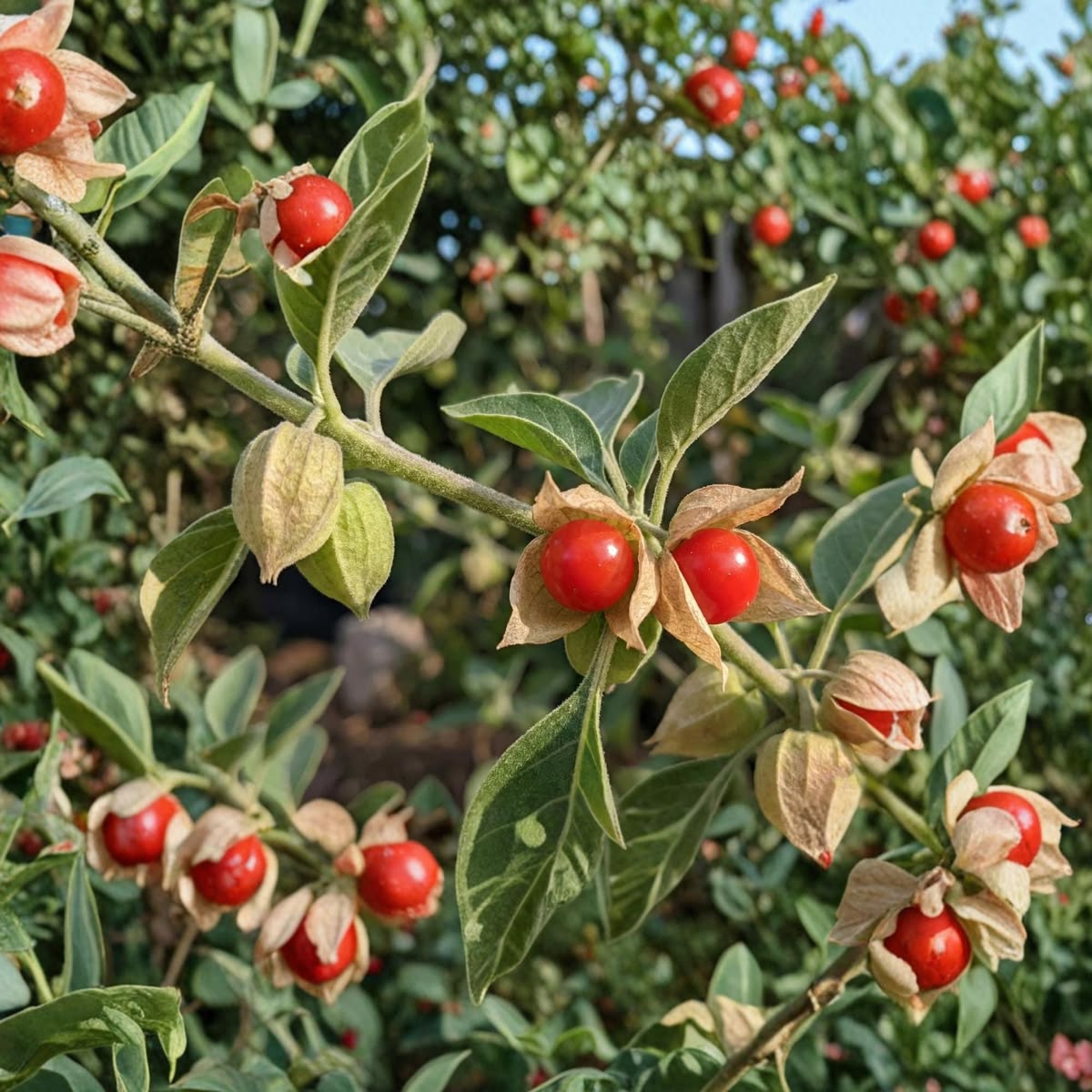
Ashwagandha is an evergreen shrub in the Solanaceae (nightshade) family. It typically grows 35–150 cm (14–60 inches) tall, with tomentose (hairy) branches extending from a central stem. The leaves are dull green, elliptic to ovate, 4–12 cm long, and entire or slightly wavy. Flowers are small, greenish-yellow or lurid yellow, bell-shaped, and borne in axillary clusters. The fruit is a globose orange-red berry enclosed in an inflated papery calyx, containing yellowish-brown discoid seeds.
Taxonomically, it is Withania somnifera (L.) Dunal. It thrives in dry, arid, disturbed habitats and open areas across the Indian subcontinent, the Middle East, North Africa, southern Europe, and parts of Southeast Asia. It is often cultivated as an annual in cooler climates but behaves as a perennial in native warm, subtropical regions.
Phytochemistry
The plant is rich in bioactive secondary metabolites, primarily withanolides—C28 steroidal lactones with an ergostane skeleton. Key compounds include withaferin A, withanolide A, withanolide D, withanone, and various withanosides (glycosylated forms). It also contains alkaloids (e.g., withanine, cuscohygrine, anaferine, tropine), sitoindosides, flavonoids, sterols (like β-sitosterol), phenolics, and saponins. These compounds, especially the withanolides, drive much of their antioxidant, anti-inflammatory, and adaptogenic activity. Roots are the most commonly used part, though leaves and fruits contain similar phytoconstituents.
Western Traditional & Clinical Actions
In Western herbalism, Ashwagandha acts as an adaptogen, nervine tonic, mild sedative, anti-inflammatory, and immune amphoteric. It supports resilience to stress, improves energy and endurance, and aids recovery from fatigue or debility. Clinical observations link it to reduced cortisol, better sleep quality, enhanced cognitive function under stress, and support for athletic performance and male reproductive health.
Chinese Medicine Actions
Although native to Ayurveda, Ashwagandha aligns with TCM as a warming herb that tonifies Qi (especially Lung and Spleen Qi), nourishes Blood and Essence (Jing), and calms the Shen (spirit). It enters the Lung, Heart, Spleen, and sometimes Kidney and Liver channels. Its sweet-bitter flavor and warm nature help address deficiency patterns, support vitality, improve digestion and immunity, and ease stress-related Shen disturbances. It is sometimes compared to adaptogenic tonics that strengthen Wei Qi and promote overall balance.
Traditional & Historical Uses
Ashwagandha has been used for over 3,000 years in Ayurveda as a premier Rasayana (rejuvenative) herb. Ancient texts like the Charaka Samhita and Susruta Samhita describe it for promoting longevity, strength, youthful vigor (increasing Ojas), and treating emaciation, weakness, neurological issues, inflammation, infertility, and insomnia. It was traditionally prepared as powders, decoctions, or in ghee and milk for vitality. Similar uses appear in Unani and other folk systems across its native range for tonic, aphrodisiac, and anti-inflammatory effects.
Modern Pharmacological Evidence
Preclinical studies show Ashwagandha modulates the HPA axis (reducing cortisol), exerts GABAergic and neuroprotective effects, displays antioxidant and anti-inflammatory activity via Nrf2 pathways, and supports mitochondrial function. Withanolides contribute to immunomodulation, potential anti-tumor effects, and hormone-balancing actions (e.g., mild effects on thyroid or testosterone pathways). It also demonstrates benefits for metabolic health and neuroregeneration in lab models.
Clinical Studies
Multiple randomized, double-blind, placebo-controlled trials (often using standardized root extracts like KSM-66 or Shoden, dosed 240–600 mg/day) demonstrate reductions in perceived stress, anxiety symptoms, and cortisol levels, alongside improved sleep quality and mood. Benefits for athletic performance (strength, endurance), cognitive function under stress, and aspects of male fertility (sperm parameters, testosterone in some cases) have also been reported. Effects on sleep and stress appear most consistent; results for anxiety are promising but variable. Trials generally last 4–12 weeks and show good tolerability.
Preparations & Dosage
Common forms include standardized root extracts (often 5% withanolides), powders, capsules, teas, or tinctures. Typical effective doses in studies range from 300–600 mg/day of extract (standardized to withanolides), sometimes divided. Whole root powder may be used at higher amounts (e.g., 3–6 g/day). It is often taken with warm milk or food. Consult a practitioner for personalized use, as standardization and extract type affect potency.
Safety & Contraindications
Ashwagandha is generally well-tolerated short-term (up to 3 months), with mild side effects like drowsiness, gastrointestinal upset, or loose stools in some people. Avoid during pregnancy (potential abortifacient risk) and use caution while breastfeeding. It may lower blood sugar or blood pressure and could interact with sedatives, thyroid medications, immunosuppressants, or diabetes/hypertension drugs. Not recommended before surgery or in those with autoimmune conditions or hormone-sensitive prostate issues without medical advice. Rare reports of liver effects exist; monitor with long-term use.
Cultivation & Harvest
Ashwagandha grows well in well-drained, sandy-loam soils in full sun with moderate water. It prefers arid to subtropical climates and is propagated by seed. Roots are typically harvested after 5–8 months when the plant begins to senesce and berries ripen, then dried for medicinal use. Sustainable cultivation is increasing to reduce pressure on wild populations.
Commercial Products
Widely available as capsules, powders, gummies, or tinctures, often standardized to withanolide content (e.g., 2.5–35% depending on the extract). Popular branded extracts include KSM-66 (root) and Shoden (root and leaf). Quality varies; third-party tested products are preferable for purity and potency.
Ethnobotanical Curiosities
The name “Ashwagandha” derives from Sanskrit, meaning “smell of the horse,” referring to the root’s distinctive odor and its reputed ability to impart horse-like strength and vitality. In Ayurveda, it was prized by yogis and practitioners for sustaining rigorous spiritual and physical practices.
Recent Research (2020–2025)
Studies continue to explore Ashwagandha for stress, sleep, cognitive support, and metabolic health, with growing interest in sustained-release formulations and lower-dose efficacy. Research examines its role in modulating gene expression (e.g., GABA/histamine receptors), neuroprotective mechanisms, and potential in adjunctive wellness protocols. Safety and standardization remain active topics.
Conservation Status
Ashwagandha is not globally assessed as threatened by the IUCN, but overharvesting and habitat loss have led to local concerns (e.g., endangered status in parts of Pakistan). Cultivation helps meet demand and supports sustainability.
DIY Recipes
A simple traditional preparation is Ashwagandha milk: Warm 1 cup milk (dairy or plant-based), stir in ½–1 tsp root powder, a pinch of cinnamon or cardamom, and optional honey. Simmer gently for 5–10 minutes and drink before bed for calming effects. Always start with low doses and source high-quality organic powder.
Note: This information is for educational purposes. Consult a qualified healthcare provider before using Ashwagandha, especially if you have medical conditions, take medications, or are pregnant/breastfeeding. Individual responses vary, and professional guidance ensures safe, effective use.
Planting & Harvesting Reference Guide
👈Planting & Harvesting Reference Guide:👇
Soil and Site Requirements
- Prefers well-drained sandy loam, light red, or light black soils with pH 7.5–8.0; thrives in arid, semi-arid, or disturbed habitats with full sun and low to moderate water needs.
- Avoid heavy, waterlogged, or poorly drained soils; suitable for marginal or rainfed lands with 500–1200 mm annual rainfall and temperatures of 20–35°C.
- Grows as an annual in cooler climates or a short-lived perennial in warm subtropical regions.
Propagation and Planting
- Propagated primarily by seed; fresh seeds are sown 1–3 cm deep in nursery beds or directly in the field.
- Nursery sowing typically occurs in June–July (rainy season/monsoon onset in India) or early spring in temperate zones; seeds germinate in 5–15 days at 70–90°F (21–32°C).
- Transplant seedlings (after 25–35 days) or thin direct-sown plants to 30–60 cm spacing between plants and 60 cm between rows (or 18–30 inches in garden settings).
- Plant in full sun after soil warms and last frost risk passes (late spring in temperate areas); use ridges or level beds for good drainage.
- Apply 10–20 tonnes of farmyard manure or compost per hectare before planting; minimal chemical inputs recommended for medicinal potency.
- Magical/mindful approach: Sow during waxing moon while whispering intentions of strength and resilience; sing or chant gratitude to the young plants.
Growth and Care
- Low water needs once established; drought-tolerant but benefits from light irrigation every 15–20 days during dry spells (avoid overwatering).
- Thin seedlings at 25–30 days to maintain optimal density; one early hand-weeding is usually sufficient as the plant smothers weeds.
- Supports organic and biodynamic methods emphasizing soil vitality, lunar/seasonal rhythms, and minimal intervention for enhanced phytochemical integrity.
Harvesting
- Ready for harvest 150–210 days (5–8 months) after sowing, when leaves begin to senesce/yellow/dry, berries ripen to orange-red, and the plant signals maturity (typically January–March in Indian conditions or late fall/after first frost in temperate zones).
- Uproot the entire plant carefully by hand or with a digging fork/trowel to avoid damaging the fleshy roots; separate roots from aerial parts (leave stems/leaves in the field as compost).
- Cut roots into 7–10 cm pieces if desired; dry in the sun for 10–15 days until they snap cleanly when broken (shade-drying option for quality preservation).
- Traditional timing: Post-monsoon or cooler months; lunar influence studies suggest collection near specific moon phases (e.g., within 1 hour after sunrise per traditional panchanga).
- Magical/mindful approach: Harvest during waning moon for grounding potency; use consecrated knife or hand while offering gratitude (milk, honey, or tobacco); leave smaller plants and scatter seeds for regeneration.
Post-Harvest and Storage
- Clean roots gently; dry thoroughly to preserve withanolides and prevent mold.
- Store dried roots in breathable cloth bags or jars in a cool, dark place; charge with protective intention for ritual or medicinal use.
- Sustainable practices: Rotate crops, integrate into agroforestry, and prioritize hand-harvesting to maintain soil health and genetic diversity.
Yield and Sustainability Notes
- Expected dried root yield: 8–10 quintals per hectare under good conditions.
- Ethical wildcrafting or cultivation reduces pressure on local populations; hand-harvesting by experienced practitioners preserves quality and supports regenerative farming.
This concise guide consolidates all planting and harvesting details discussed across the SPARK template sections for Ashwagandha (Withania somnifera), enhanced with consistent, practical information for easy reference. It honors both traditional Ayurvedic timing and mindful, regenerative approaches. Always adapt to your local climate and consult regional growing guides for the best results.
Healing Categories
👈Ashwagandha (Withania somnifera) fits most strongly into the following healing categories, based on its traditional use, phytochemistry, clinical observations, and energetic profile:👇
Primary / Signature Categories (Best Fit)
- Adaptogenic & Stress Resilience
(Its strongest and most famous category) - Nervous System & Adrenal Support
(Excellent for burnout, anxiety, and nervous exhaustion) - Rasayana / Rejuvenative Tonic
(Classical Ayurvedic category – builds long-term vitality and Ojas) - Sleep & Restorative Rest
(Highly effective natural sleep aid without sedation) - Grounding & Energy Balancing
(Root Chakra herb that both calms and energizes)
Strong Secondary Categories
- Cognitive & Mental Clarity
(Focus, memory, and stress-related cognitive support) - Immune Modulation & Vitality
(Immune amphoteric – strengthens without overstimulating) - Reproductive & Hormonal Health
(Male fertility, testosterone support, female hormonal balance) - Anti-Inflammatory & Recovery
(Muscle recovery, joint comfort, post-exercise support) - Spiritual & Energetic Healing
(Grounding, protection, Ojas-building, ritual use)
Synergistic & Holistic Note
Ashwagandha (Withania somnifera) is most itself when it is not treated as an isolated “stress pill,” but as a grounding Rasayana within a living web of food, rest, ritual, and companion plants. Its gift is dual — it calms without collapsing vitality, and it strengthens without scattering the nervous system. That balance is amplified when the rest of life is invited to cooperate.
Traditionally, Ashwagandha (Withania somnifera) is taken with warm milk, ghee, and a little honey so its earthy, slightly bitter root is carried into the tissues rather than merely passing through the gut. Cardamom, cinnamon, turmeric, and a pinch of black pepper are classic kitchen allies that warm digestion and make the tonic easier to receive. In Ayurvedic pairing, it often sits beside Shatavari for reproductive and feminine nourishment, Brahmi or Mandukaparni for mental clarity, and Tulsi for gentle uplift — never as a crowd of stimulants, but as a small circle of plants that share the same intention: restore Ojas, then let life move again.
Holistically, Ashwagandha (Withania somnifera) works best when sleep, sunlight, protein-rich meals, and honest rest are already being practiced. It cannot outrun chronic overwork, caffeine excess, or a life lived only in the head. Used this way, it becomes a teacher of pacing: take the root, then actually stop. Pair it with evening rituals — warm oil on the feet, a slower breath, a darkened room — and its somnifera nature (the quiet that follows strength) has room to arrive.
Energetically, it is a root-chakra and Ojas plant. It synergizes with grounding practices: walking barefoot, simple prayer or mantra, carrying a small root pouch, or offering gratitude before harvest. It does not ask for dramatic ceremony. It asks for consistency and respect.
A note of wisdom: more is not more. Stacking Ashwagandha (Withania somnifera) with many other strong adaptogens, thyroid herbs, or sedatives can muddy its clean signature. Let it be the steady horse in the herd, not one more voice in a crowded formula, unless a skilled practitioner has designed the combination.
Used this way — with food, warmth, rest, and a few well-chosen companions — Ashwagandha (Withania somnifera) stops being a supplement and becomes what the old texts intended: a daily act of returning to strength that does not burn the wick.
✦ If You Only Read U.S. Consumer Pages ✦
U.S. consumer pages usually flatten Ashwagandha (Withania somnifera) into four talking points: “adaptogen for stress,” “helps you sleep,” “boosts testosterone and gym gains,” and sometimes “Ayurvedic superfood.” That is not false as a marketing summary of the trial headlines, but it is a small slice. Those pages rarely mention that the same species is an official drug in the Ayurvedic, Unani, Siddha, Homoeopathic and Indian Pharmacopoeias and a USP dietary-supplement monograph with a 0.3% withanolide floor; that CIMAP and DMAPR breed the crop for Deccan farmers; that most RCTs are Indian and extract-branded; that EMA never issued an HMPC monograph; or that Denmark banned it in food supplements while Germany, France, the Netherlands and Australia warn about rare liver injury, pregnancy and thyroid risk. They also rarely distinguish root from leaf, KSM-66 from Sensoril from raw powder, or Withania somnifera from other Withania species. Reading only U.S. retail copy makes the plant look like a stress-and-gains capsule with a Sanskrit name. Reading the global official and clinical record makes it look like a multi-pharmacopoeial Indian root crop, a withanolide-standardized supplement with a real but modest RCT signal for stress and sleep, and a food-supplement ingredient now under active European and Australian safety review. Both pictures matter. The second one is the one most American seekers & shoppers never see.
Sources:
https://doi.usp.org/USPNF/USPNF_M2786_02_01.html
https://www.bfr.bund.de/cm/349/ashwagandha-food-supplements-with-potential-health-risks.pdf
https://www.sciencedirect.com/science/article/pii/S2210803321000142
https://www.tga.gov.au/safety/safety-monitoring-and-information/safety-alerts/medicines-containing-withania-somnifera-withania-ashwagandha
Globally: Where This Plant Is Studied
👈Global research, official texts, publishers, and human-trial data, rather than U.S.-consumer-page-limited:👇
Where This Plant Is Studied
Ashwagandha (Withania somnifera) is studied as a living research plant across South Asia, with secondary clusters in North America, East Asia, and the Middle East—not as a U.S. gym-aisle novelty. The species is a Solanaceae shrub of drier subtropical India, Nepal, Sri Lanka and parts of the Middle East and Africa; commercial root is overwhelmingly Indian. The densest modern scientific output has come from India by a wide margin (historically about 70% of the global paper share), followed by the United States, Pakistan, Japan, South Korea, Iran and Saudi Arabia. Leading institutional clusters include CSIR–Central Institute of Medicinal and Aromatic Plants (CIMAP) in Lucknow and its Hyderabad centre, which bred Poshita, CIMAP-Chetak, CIMAP-Pratap and related cultivars and mapped withanolides to the outer root; ICAR–Directorate of Medicinal and Aromatic Plants Research at Anand; CCRAS institutes and the Institute of Teaching and Research in Ayurveda at Jamnagar; CSIR–CDRI Lucknow (stroke-fraction work); Banaras Hindu University and National Botanical Research Institute, Lucknow; Savitribai Phule Pune University and the National AIDS Research Institute; Tata Memorial Centre / ACTREC; and AYUSH multi-centre clinical networks. Outside India, high-citation work on withanolide and withaferin-A has come from the University of Pittsburgh, Japanese groups historically associated with Renu Wadhwa’s AIST line, and Iranian and Pakistani pharmacognosy labs. Field and quality research tracks dryland cultivation in Madhya Pradesh, Rajasthan, Gujarat, and the Deccan Plateau—the same belt that still supplies most of the world’s root. In short: the plant is a multi-system Indian official drug and a global extract commodity, not a single-market “adaptogen” story.
Sources:
https://www.cimap.res.in/data/CIMAPInformationBrochure.pdf
https://www.researchgate.net/publication/337395904_Research_on_Withania_somnifera_Ashwaganda_A_Scientometric_Assessment_of_Global_Publications_Output_during_1995-2018
https://shaastramag.iitm.ac.in/special-feature/harnessing-herb
https://sansad.in/getFile/loksabhaquestions/annex/177/AU2271.pdf?source=pqals
Official Books That Name This Species
Ashwagandha (Withania somnifera) is named, defined, and quality-tested in official national pharmacopoeias across India’s medical systems and in several Western dietary-supplement books. These are legal or quasi-legal reference texts, not blog herbals. They include the Ayurvedic Pharmacopoeia of India (Asvagandha / dried mature root; alkaloid floor historically not less than 0.2%), the Unani Pharmacopoeia of India (Asgand), the Siddha Pharmacopoeia of India (Amukkara), the Homoeopathic Pharmacopoeia of India, and the Indian Pharmacopoeia (root and dry extract). The United States Pharmacopeia–National Formulary dietary-supplement monograph Ashwagandha Root specifies the dried mature root of Withania somnifera (L.) Dunal and not less than 0.3% withanolides, calculated as the sum of withanolide aglycones (as withanolide A) and withanolide glycosides (as withanoside IV). The British Pharmacopoeia has carried Withania Somnifera Root. The American Herbal Pharmacopoeia published a full analytical, quality-control, and therapeutic monograph on ashwagandha root in 2000. WHO’s monographs on selected medicinal plants include Withaniae radix. India’s FSSAI sets food-use quality parameters. What Europe does not have is an EMA HMPC Community herbal monograph: the committee declined to adopt one. Denmark banned the plant in food supplements (2023) after a DTU assessment that said a safe dose could not be set; Germany’s BfR, France’s ANSES, the Dutch RIVM and Australia’s TGA have issued liver-risk or restricted-use advice for food supplements. Official books therefore split: India treats the root as a multi-system drug with assay floors; USP/BP/AHP specify withanolides for supplements; several European food-safety agencies treat the same species as a risk-managed or discouraged food ingredient. That is a very different class of “naming” than a U.S. consumer page.
Sources:
https://doi.usp.org/USPNF/USPNF_M2786_02_01.html
https://pcimh.gov.in/show_content.php?lang=1&level=1&ls_id=56&lid=54
https://www.researchgate.net/publication/331302617_Ashwagandha_and_its_Formulations_Varying_Regulatory_status_round_the_globe
https://www.bfr.bund.de/cm/349/ashwagandha-food-supplements-with-potential-health-risks.pdf
https://www.tga.gov.au/news/safety-updates/withania-somnifera-ashwagandha-and-very-rare-risk-liver-injury
Who Publishes on It
Publication is India-led in volume and increasingly global in clinical and safety writing. India accounts for the majority of papers; the United States leads a large share of high-citation anticancer and withaferin-A work; Japan, South Korea, Iran, Pakistan, and European agencies publish chemistry, trials, and risk assessments. The journals that repeatedly carry the plant include Journal of Ethnopharmacology, Phytotherapy Research, Complementary Therapies in Medicine, Frontiers in Pharmacology, Journal of Ayurveda and Integrative Medicine, Indian Journal of Psychological Medicine, and Cureus / branded-extract trial venues. Publishers and official bodies include Elsevier, Wiley, Springer Nature, Frontiers, USP, AYUSH / PCIM&H, CSIR-CIMAP, CCRAS, BfR, ANSES, RIVM, TGA, and extract manufacturers whose standardized roots (KSM-66, Sensoril, Shoden, and others) appear in many RCTs. Author clusters sit in Lucknow MAP institutes, AYUSH clinical networks, Pune and Jamnagar Ayurveda units, Pittsburgh pharmacology, and European food-safety committees. Consumer-health sites reprint fragments of this literature; they are not the original publishers.
Sources:
https://www.sciencedirect.com/science/article/pii/S2210803321000142
https://link.springer.com/article/10.1007/s00210-025-04618-6
https://www.prokerala.com/news/articles/a1619351.html
Human Trials Tied to This Species
Human evidence for Ashwagandha (Withania somnifera) is now one of the larger herbal RCT piles, but it is extract-specific, mostly short, and heavily Indian. A 2021 systematic review found 41 human trials across stress and anxiety, sexual function and fertility, athletic performance, cognition, pain, fatigue, thyroid function, schizophrenia, diabetes, OCD, insomnia, and other endpoints; 32 of those trials were conducted in India. Later meta-analyses tightened the picture. A 12-RCT anxiety/stress meta-analysis and subsequent 22-RCT mental-health and 23-RCT endocrine analyses generally show reductions in perceived stress, anxiety scores and, in several pools, cortisol; sleep meta-analyses (including five-RCT pools) report better sleep-onset latency, total sleep time and efficiency, with more mixed Pittsburgh Sleep Quality Index results. Testosterone rises appear in men in some trials and pooled analyses (infertile or resistance-trained cohorts more than unselected women). Strength and VO₂ work are smaller and population-specific. Typical studied doses are 240–600 mg/day of standardized root or root-leaf extracts for 6–12 weeks. Named preparations in landmark trials include KSM-66 (Chandrasekhar 2012 stress/cortisol; Wankhede 2015 strength/testosterone) and other branded roots. An AYUSH eight-centre open-label COVID-prophylaxis trial versus hydroxychloroquine in 400 healthcare workers has been described as showing comparable prophylaxis; full peer-reviewed results were still being cited as unpublished in ministry summaries.
Important caution: trial extracts are not interchangeable with kitchen root powder, leaf, or unassayed Internet capsules. Rare but documented cholestatic liver injury has been reported internationally (jaundice weeks to months after starting; most cases reversed after stopping; TGA, BfR, ANSES, Dutch Lareb and Indian case series include hospitalization and, in a small number of international reports, liver failure or death in people with pre-existing liver disease). European food-safety bodies advise against use in pregnancy, lactation, children, and known liver disease; traditional texts and WHO notes also flag abortifacient folklore. Thyroid-hormone shifts in some studies are why hyperthyroidism is a listed caution. Short RCT safety labs are usually unremarkable; pharmacovigilance is the source of the liver signal.
Sources:
https://www.sciencedirect.com/science/article/pii/S2210803321000142
https://pubmed.ncbi.nlm.nih.gov/39083548/
https://www.sciencedirect.com/science/article/pii/S0965229926000087
https://pmc.ncbi.nlm.nih.gov/articles/PMC8632422/
https://www.tga.gov.au/news/safety-updates/withania-somnifera-ashwagandha-and-very-rare-risk-liver-injury
https://www.bfr.bund.de/cm/349/ashwagandha-food-supplements-with-potential-health-risks.pdf

Part 1: Modern Medical Properties and Uses

Purpose: Highlights the plant’s scientific and medicinal properties, validating holistic healing with evidence-based data.
Contemporary Medical Applications:
Describes current clinical uses (e.g., capsules, tinctures) and delivery methods in modern medicine.
👈Contemporary Medical Applications:👇
- Standardized root extracts of Ashwagandha, often delivered in capsule or tablet form at doses ranging from 240–600 mg daily, demonstrate consistent support for reducing perceived stress and cortisol levels in healthy adults, with effects observable within 4–8 weeks of consistent use in multiple randomized controlled trials.
- Ashwagandha root preparations, including sustained-release capsules (150–300 mg), improve sleep quality parameters such as sleep onset latency, duration, and efficiency, offering a non-habit-forming option for individuals experiencing insomnia or disrupted rest patterns.
- In athletic and active populations, Ashwagandha supplementation via powder or extract forms enhances cardiorespiratory endurance, muscle strength, and recovery metrics, including increased VO2 max and reduced exercise-induced fatigue markers like lactic acid and creatine phosphokinase.
- Clinical applications extend to male reproductive health, where root extracts taken as daily capsules have been associated with improvements in sperm parameters, testosterone levels in select cases, and overall fertility markers over 2–3 months of use.
- Emerging uses include adjunctive support for menopausal symptom management through root extract capsules, showing benefits in mood stabilization, sleep, and certain hematological parameters when integrated into standard care protocols.
- Ashwagandha extracts in various delivery systems, such as gummies or beverages for functional food applications, provide accessible options for daily adaptogenic support targeting cognitive resilience and psychological well-being under chronic stress conditions.
- Low-dose optimized extracts (around 30 mg daily) in capsule form have shown potential to enhance exercise endurance and delay fatigue onset while maintaining a favorable safety profile in healthy individuals.
Sources: Contemporary Medical Applications
Sources:
https://pubmed.ncbi.nlm.nih.gov/41830041/
https://www.mdpi.com/2072-6643/18/5/871
https://pmc.ncbi.nlm.nih.gov/articles/PMC10147008/
https://www.nmi.health/ashwagandha-a-review-of-clinical-use-and-efficacy/
https://www.frontiersin.org/journals/nutrition/articles/10.3389/fnut.2024.1439294/full
https://www.nccih.nih.gov/health/ashwagandha
https://pubmed.ncbi.nlm.nih.gov/41846233/
https://pmc.ncbi.nlm.nih.gov/articles/PMC1281291
Pharmacology:
Outlines key compounds and their mechanisms of action, driving therapeutic effects.
👈Pharmacology:👇
- Withanolides, particularly withaferin A and withanolide D, serve as primary bioactive steroidal lactones that modulate the hypothalamic-pituitary-adrenal (HPA) axis, contributing to adaptogenic effects by influencing cortisol regulation and stress response pathways.
- These compounds exhibit neuroprotective mechanisms, including promotion of axonal and dendritic growth, enhancement of synaptic repair, and antioxidant activity that supports neuronal resilience against oxidative stress and excitotoxicity.
- Withaferin A demonstrates potent inhibition of NF-κB signaling, a key pathway in inflammatory cascades, thereby exerting anti-inflammatory and potential anti-proliferative effects at the cellular level through downregulation of pro-inflammatory cytokines.
- Alkaloids such as withanine and sitoindosides contribute to GABAergic modulation and sedative-like properties, supporting anxiolytic and sleep-promoting actions without the dependency risks associated with conventional sedatives.
- Withanolides interact with multiple molecular targets, including heat shock proteins (e.g., Hsp90 inhibition by withaferin A), kinases, and transcription factors, enabling broad pharmacological versatility across stress, immune, and metabolic systems.
- Glycosylated withanosides enhance bioavailability and contribute to immunomodulatory effects, such as activation of macrophage phagocytosis and regulation of cytokine balance in preclinical models.
- Overall, the synergistic interplay of withanolides, alkaloids, and other phytoconstituents underlies Ashwagandha’s multifaceted actions on energy metabolism, mitochondrial function, and cellular protection.
Sources: Pharmacology:
Sources:
https://pmc.ncbi.nlm.nih.gov/articles/PMC11113996/
https://www.frontiersin.org/journals/pharmacology/articles/10.3389/fphar.2023.1049334/full
https://biomedres.us/fulltexts/BJSTR.MS.ID.004218.php
https://pmc.ncbi.nlm.nih.gov/articles/PMC7811807/
https://www.mdpi.com/1420-3049/28/3/1208
https://onlinelibrary.wiley.com/doi/10.1155/2021/8985179
Natural Medicine Studies:
Summarizes recent research on efficacy, safety, or clinical outcomes from peer-reviewed studies.
👈Natural Medicine Studies:👇
Systematic reviews and meta-analyses of randomized controlled trials confirm Ashwagandha root extract’s efficacy in significantly lowering stress and anxiety scores, with notable reductions in Perceived Stress Scale measurements across diverse adult populations.
- Peer-reviewed studies highlight improvements in sleep quality and insomnia symptoms through Ashwagandha supplementation, supported by meta-analytic data showing benefits in sleep latency, total sleep time, and overall restorative sleep indices.
- Clinical investigations demonstrate Ashwagandha’s role in enhancing physical performance parameters, including strength, endurance, and recovery, with Bayesian meta-analyses reinforcing positive effects in healthy and athletic subjects.
- Research on cognitive and mood outcomes indicates potential benefits for memory, focus, and emotional regulation, particularly under conditions of chronic stress or in populations with mild cognitive concerns.
- Safety-focused studies, including long-term observational trials up to 12 months, report favorable tolerability with minimal adverse events, supporting its integration into natural wellness protocols when used at standardized doses.
- Emerging natural medicine research explores Ashwagandha’s supportive effects on metabolic and reproductive health markers, with rigorous trials validating traditional adaptogenic applications through modern evidence-based lenses.
- Umbrella reviews synthesizing multiple clinical datasets affirm consistent signals for stress reduction and well-being enhancement, while calling for continued high-quality research to refine optimal protocols.
Sources: Natural Medicine Studies:
Sources:
https://pmc.ncbi.nlm.nih.gov/articles/PMC10147008/
https://www.frontiersin.org/journals/nutrition/articles/10.3389/fnut.2024.1439294/full
https://pubmed.ncbi.nlm.nih.gov/34559859/
https://pubmed.ncbi.nlm.nih.gov/33670194/
https://www.nmi.health/ashwagandha-a-review-of-clinical-use-and-efficacy/
https://onlinelibrary.wiley.com/doi/10.1002/ptr.70096
Chemistry:
Details active chemical constituents (e.g., alkaloids, flavonoids) and their healing roles.
👈Chemistry:👇
- Ashwagandha roots and leaves contain a rich profile of withanolides, a class of C28 steroidal lactones with an ergostane skeleton, including withaferin A, withanolide A, withanolide D, and withanone as dominant bioactive constituents.
- Alkaloids such as withanine, cuscohygrine, anaferine, and tropine are present, contributing to the plant’s characteristic chemical diversity and pharmacological spectrum.
- Sitoindosides (glycowithanolides) and additional steroidal saponins enhance solubility and bioactivity, often appearing in glycosylated forms that influence absorption and targeted effects.
- Phenolic compounds, flavonoids, and β-sitosterol contribute to antioxidant capacity, with concentrations varying by plant part, chemotype, and growing conditions.
- The total withanolide content typically ranges from 0.001% to 0.5% of dry weight, with roots prized for higher concentrations of key therapeutic lactones than aerial parts.
- Analytical techniques like HPLC, LC-MS, and NMR have enabled precise identification and quantification of these metabolites, revealing chemotypic variations across geographic regions.
- Structural features, including the lactone ring and epoxy groups in withaferin A, underpin reactivity with cellular targets such as thiols and proteins, driving many observed bioactivities.
Sources: Chemistry:
Sources:
https://pmc.ncbi.nlm.nih.gov/articles/PMC7811807/
https://www.frontiersin.org/journals/pharmacology/articles/10.3389/fphar.2023.1049334/full
https://www.mdpi.com/1420-3049/28/3/1208
https://onlinelibrary.wiley.com/doi/10.1155/2021/8985179
https://pmc.ncbi.nlm.nih.gov/articles/PMC11113996/
Functional Foods and Nutrition:
Highlights dietary uses (e.g., teas, supplements) in modern health practices.
👈Functional Foods and Nutrition:👇
- Ashwagandha root powder integrates into functional beverages, chocolates, and bars as a natural adaptogen, supporting daily stress management and vitality when consumed in moderate amounts within food matrices.
- Standardized extracts appear in nutritional supplements and ready-to-mix formulations, often combined with other botanicals to enhance palatability and synergistic wellness benefits in modern dietary patterns.
- Incorporation into teas, smoothies, or fortified foods provides a convenient delivery method for individuals seeking to support cognitive function, energy balance, and immune resilience through habitual nutrition.
- As a nutraceutical ingredient, Ashwagandha contributes to products aimed at metabolic health, sleep support, and overall well-being, with growing consumer interest in food-based adaptogenic applications.
- Analytical considerations for stability in food processing ensure retention of withanolides, guiding formulation strategies for effective nutritional products.
- Traditional milk-based preparations (Ashwagandha milk) have evolved into contemporary functional dairy or plant-based alternatives, preserving historical use while meeting current dietary preferences.
- Regulatory assessments continue to evaluate appropriate use levels in supplemented foods, reflecting ongoing efforts to align traditional applications with modern nutritional science.
Sources: Functional Foods and Nutrition:
Sources:
https://iadns.onlinelibrary.wiley.com/doi/10.1002/efd2.70061
https://www.nccih.nih.gov/health/ashwagandha
https://www.supplysidesj.com/market-trends-analysis/delivering-ashwagandha-in-new-formats-report
Current Projects and Future Possibilities:
Notes ongoing research, clinical trials, or innovative medical applications.
👈Current Projects and Future Possibilities:👇
- Ongoing clinical trials investigate optimized low-dose and sustained-release Ashwagandha formulations for enhanced bioavailability and targeted benefits in stress, endurance, and menopausal support.
- Research explores Ashwagandha’s potential in neuroprotection and healthy aging, including effects on cognitive longevity, telomerase activity, and mitigation of age-related decline through innovative delivery systems.
- Projects examine synergistic combinations with other adaptogens or nutrients in multi-herb formulas to amplify benefits for mood, sleep, and fatigue in diverse populations.
- Future directions include pharmacokinetic studies in special groups (e.g., older adults) and development of personalized withanolide derivatives for precision wellness applications.
- Investigations into sustainable cultivation and extraction technologies aim to support scalable production while preserving phytochemical integrity for global functional medicine use.
- Emerging work focuses on Ashwagandha’s role in adjunctive protocols for metabolic health, reproductive wellness, and resilience-building in high-stress environments.
- Collaborative efforts between traditional knowledge holders and modern researchers promise expanded applications in preventive health and integrative care models.
Sources: Current Projects and Future Possibilities:
Sources:
https://news.northeastern.edu/2026/01/30/ashwagandha-northeastern-research-findings/
https://clinicaltrials.gov/study/NCT07461402
https://pubmed.ncbi.nlm.nih.gov/41846233/
https://journals.lww.com/md-journal/fulltext/2026/03130/efficacy_and_safety_of_ashwagandha_root_extract.87.aspx
Literary Mentions:
References modern medical texts or studies citing the plant’s therapeutic use.
👈Literary Mentions:👇
- Ashwagandha features prominently in modern pharmacognosy and herbal medicine reviews as a premier adaptogen, with extensive citations in peer-reviewed journals detailing its translation from traditional Rasayana to evidence-supported applications.
- Comprehensive reviews in journals such as Pharmaceutics and Nutrients synthesize recent clinical data, positioning Ashwagandha as a key subject in discussions of stress physiology and natural interventions.
- Ayurvedic classics, including the Charaka Samhita and Sushruta Samhita, describe Ashwagandha as Balya (strength-promoting) and Vajikarana (reproductive tonic), with these ancient references frequently revisited in contemporary scholarly analyses linking tradition to science.
- Textbooks and monographs on medicinal plants highlight Ashwagandha’s phytochemistry and pharmacology, often including it in chapters on Solanaceae-derived therapeutics and adaptogenic herbs.
- Systematic reviews and umbrella analyses in journals like Explore and Phytotherapy Research cite Ashwagandha extensively when evaluating herbal efficacy for anxiety, sleep, and performance outcomes.
- Global herbal compendia and ethnopharmacological literature reference its historical and current status, bridging Vedic mentions with 21st-century clinical validations.
- Specialized publications on natural products chemistry and integrative medicine frequently discuss Ashwagandha in contexts of withanolide research and multi-target pharmacology.
Sources: Literary Mentions:
Sources:
https://pmc.ncbi.nlm.nih.gov/articles/PMC10147008/
https://www.sciencedirect.com/science/article/abs/pii/S0378874120330397
https://pmc.ncbi.nlm.nih.gov/articles/PMC3252722/
https://www.herbalgram.org/resources/herbclip/issues/2021/issue-656/ashwagandha-a-comprehensive-review-of-traditional-ayurvedic-texts-and-scientific-findings/
https://www.frontiersin.org/journals/pharmacology/articles/10.3389/fphar.2023.1049334/full

Part 2: Plant Knowledge Systems

Purpose: Validates plant-based healing through interdisciplinary scientific and cultural fields.
Ethnobotany:
Explores the plant’s traditional uses across cultures, linking indigenous knowledge to modern applications.
👈Ethnobotany:👇
Ethnobotany:
- In Ayurvedic medicine, practiced for over 3,000 years across the Indian subcontinent, Ashwagandha (Withania somnifera) holds a central position as a premier Rasayana herb, valued for promoting longevity, vitality, strength (Balya), and Ojas—the subtle essence linking physical body and consciousness—while addressing conditions such as emaciation, weakness, neurological disorders, inflammation, infertility, and insomnia through root preparations mixed with milk, ghee, honey, or water.
- Traditional uses in Unani and Siddha systems mirror Ayurvedic applications, employing Ashwagandha (Withania somnifera) root powder or decoctions as a rejuvenative tonic, nervine, aphrodisiac, and adaptogen to relieve general debility during convalescence or old age, balance aggravated Vata dosha, reduce restlessness and nervousness, and support overall resilience against stress and environmental challenges in the Indian subcontinent and neighboring regions.
- Historical records link Ashwagandha (Withania somnifera) to ancient Greek texts, including a possible reference as Strychnos alikakabos in Dioscorides’ De Materia Medica around 50 A.D., indicating early recognition of its tonic properties beyond India, while folk practices in Pakistan and parts of Africa have utilized the plant for fuel, animal feed, topical wound and inflammation treatment, and as a general health promoter alongside its medicinal roles.
- Across diverse cultures in the Middle East, North Africa, southern Europe, and Southeast Asia where Ashwagandha (Withania somnifera) naturally occurs or has been introduced, ethnobotanical knowledge emphasizes its root for building physical endurance, enhancing reproductive health, and mitigating fatigue, with preparations evolving into modern dietary supplements that echo these time-tested applications for stress management, sleep support, and vitality restoration.
- Indigenous and regional folk traditions highlight Ashwagandha (Withania somnifera) in formulations like Chyawanprash, a multi-herb jam, where it contributes to immunity, stamina, and youthfulness, demonstrating how traditional ecological knowledge integrates the plant into daily wellness practices that continue to inform contemporary evidence-based uses for adaptogenic and restorative benefits.
Sources: Ethnobotany:
Sources:
https://pmc.ncbi.nlm.nih.gov/articles/PMC10147008/
https://www.sciencedirect.com/science/article/pii/S0753332221009598
https://www.emerald.com/nfs/article/54/8/1337/1226273/Ashwagandha-botanic-occurrence-conventional-uses
https://pmc.ncbi.nlm.nih.gov/articles/PMC8529567/
https://www.herbalgram.org/resources/herbclip/issues/2021/issue-663/traditional-uses-pharmacology-ashwagandha/
https://www.spiritualbotany.com/plant-profiles/ashwagandha-withania-somnifera-a-potential-commercial-crop-with-medicinal-advantages/
https://en.wikipedia.org/wiki/Withania_somnifera
https://webprod.hc-sc.gc.ca/nhpid-bdipsn/atReq?atid=ashwagandha&lang=eng&wbdisable=true
Plant Genomics:
Describes genetic studies of the plant, focusing on traits related to medicinal properties.
👈Plant Genomics:👇
- The nuclear genome of Ashwagandha (Withania somnifera) has been sequenced and assembled, revealing an approximate size of 350–380 Mb with 38.3% GC content and around 27,440 predicted protein-coding genes, many of which show conservation with other sequenced Solanaceae species and provide insights into the genetic basis of its bioactive compound production.
- Chloroplast genome sequencing of Ashwagandha (Withania somnifera) has produced a complete circular molecule of 154,386 bp, featuring a large single-copy region, a small single-copy region, and two inverted repeats, offering valuable data for phylogenetic studies, species identification, and understanding evolutionary adaptations related to its medicinal phytochemistry.
- Transcriptome analyses across different tissues and chemotypes of Ashwagandha (Withania somnifera), including root and leaf samples from various accessions, have identified genes involved in withanolide biosynthesis pathways, such as cytochrome P450 enzymes, enabling deeper exploration of tissue-specific and chemotype-dependent variations in secondary metabolite production that underpin its therapeutic properties.
- Whole-genome sequencing approaches applied to Ashwagandha (Withania somnifera) extract-treated human cell lines, such as neuroblastoma SK-N-SH cells, have demonstrated modulation of neurodegenerative-related gene expression profiles, highlighting potential molecular mechanisms for neuroprotective and adaptogenic effects observed in traditional use.
- Comparative genomic and transcriptomic resources for Ashwagandha (Withania somnifera) support functional genomics studies, metabolic engineering efforts to enhance withanolide yields, and the development of molecular markers for breeding programs aimed at improving medicinal quality and stress resilience traits.
Sources: Plant Genomics:
Sources:
https://pmc.ncbi.nlm.nih.gov/articles/PMC12238756/
https://www.frontiersin.org/journals/molecular-neuroscience/articles/10.3389/fnmol.2025.1512727/full
https://journals.plos.org/plosone/article?id=10.1371/journal.pone.0062714
https://www.sciencedirect.com/topics/immunology-and-microbiology/withania-somnifera
https://www.nature.com/articles/srep18611
https://pmc.ncbi.nlm.nih.gov/articles/PMC4310147/
https://europepmc.org/article/med/31470082
Phytotherapy:
Details the plant’s use in clinical herbal medicine, including therapeutic protocols.
👈Phytotherapy:👇
Phytotherapy:
- In clinical phytotherapy protocols, Ashwagandha (Withania somnifera) root extracts are employed as an adaptogen to support stress resilience, with standardized preparations (often 300–600 mg daily of root extract) integrated into regimens for reducing perceived stress, anxiety symptoms, and cortisol levels while enhancing overall psychological well-being over periods of 6–12 weeks.
- Phytotherapeutic applications of Ashwagandha (Withania somnifera) include support for sleep quality through evening administration of root extracts, targeting improvements in sleep onset latency, total sleep time, and restorative sleep indices, particularly beneficial for individuals with insomnia or stress-related sleep disturbances.
- Herbal medicine protocols utilize Ashwagandha (Withania somnifera) for male reproductive health and athletic performance, with clinical use involving daily supplementation to improve sperm parameters, testosterone markers in some cases, muscle strength, endurance, and recovery, often as part of integrative wellness plans for active or aging populations.
- In broader phytotherapy practice, Ashwagandha (Withania somnifera) serves as a general tonic in formulations addressing fatigue, cognitive function under stress, and mild inflammatory conditions, with protocols emphasizing high-quality, standardized extracts to ensure consistent delivery of withanolides for systemic rejuvenative effects.
Sources: Phytotherapy:
Sources:
https://pmc.ncbi.nlm.nih.gov/articles/PMC10147008/
https://www.nccih.nih.gov/health/ashwagandha
https://www.mskcc.org/cancer-care/integrative-medicine/herbs/ashwagandha
https://www.nmi.health/ashwagandha-a-review-of-clinical-use-and-efficacy/
https://www.sciencedirect.com/science/article/abs/pii/S2210803321000142
https://www.drugs.com/npp/ashwagandha.html
Ethnoecology:
Examines the plant’s ecological role in cultural practices and environmental interactions.
👈Ethnoecology:👇
- Ashwagandha (Withania somnifera) thrives in arid, disturbed habitats and open dry regions across the Indian subcontinent, Middle East, North Africa, and parts of southern Europe and Southeast Asia, where its ecological resilience as a drought-tolerant shrub contributes to traditional cultural practices of sustainable harvesting and cultivation in marginal lands, supporting local communities through medicinal, fuel, and fodder uses while maintaining biodiversity in semi-arid ecosystems.
- In ethnoecological contexts, Ashwagandha (Withania somnifera) integrates into Vrikshayurveda-inspired traditional Indian agricultural systems that employ organic preparations like Kunapa jala and Pancha gavya to enhance germination and growth, reflecting deep cultural knowledge of plant-environment interactions that optimize medicinal potency and ecological harmony in cultivation practices.
- The plant’s role in cultural landscapes includes its presence in disturbed areas where it provides habitat value for pollinators such as bees, birds, and butterflies, while traditional ecological knowledge in regions like Pakistan and India links its growth patterns to seasonal harvesting cycles that preserve soil health and align with community rituals centered on health and vitality restoration.
Sources: Ethnoecology:
Sources:
https://pmc.ncbi.nlm.nih.gov/articles/PMC8529567/
https://www.sciencedirect.com/science/article/pii/S0753332221009598
https://www.phcogres.com/quality-cultivation-and-standardization-of-withania-somnifera-comprehensive-agro
https://www.herbalgram.org/resources/herbmedpro/herb-list/withania-somnifera?subCat=Cultivation,%20Conservation%20%26%20Ecology
https://www.frontiersin.org/journals/plant-science/articles/10.3389/fpls.2017.01390/full
https://en.wikipedia.org/wiki/Withania_somnifera
Anthroposophical Medicine:
Outlines the plant’s use in Steiner-inspired remedies, including preparation, studies, and dosage.
👈Anthroposophical Medicine:👇
- Limited specific documentation exists on dedicated Steiner-inspired anthroposophical preparations or studies of Ashwagandha (Withania somnifera); however, its adaptogenic and rejuvenative qualities align with holistic anthroposophical principles that view plants as carriers of vital forces supporting the human etheric and astral bodies, potentially positioning the root as a supportive remedy for strengthening resilience against modern stressors in integrative anthroposophical practice.
- In broader holistic contexts influenced by anthroposophical thought, Ashwagandha (Withania somnifera) may be prepared as tinctures, powders, or potentized forms emphasizing rhythmic processes, though direct clinical trials or standardized Steiner dosages remain sparse, with emphasis placed on individualized assessment of the patient’s constitutional needs rather than fixed protocols.
- Analytical review indicates that while Ashwagandha (Withania somnifera) features in modern integrative herbalism compatible with anthroposophical perspectives on plant-human relationships, dedicated research or remedy development within Rudolf Steiner’s framework appears limited, suggesting opportunities for future exploration linking its traditional Rasayana actions to biodynamic cultivation and spiritual-scientific approaches to healing.
Sources: Anthroposophical Medicine:
Sources:
https://pmc.ncbi.nlm.nih.gov/articles/PMC8529567/
https://www.herbalgram.org/resources/herbmedpro/herb-list/withania-somnifera
https://pmc.ncbi.nlm.nih.gov/articles/PMC10147008/

Part 3: Heritage and Practice

Purpose: Weaves historical and cultural heritage with practical guidance for medicinal use.
Historical and Cultural Significance:
Explores the plant’s role in historical and cultural medical practices.
👈Historical and Cultural Significance:👇
- Ashwagandha (Withania somnifera) occupies a revered position in ancient Ayurvedic literature spanning over 3,000 years, appearing prominently in foundational texts such as the Charaka Samhita (circa 200 BCE–200 CE) and Sushruta Samhita as a premier Rasayana (rejuvenative tonic) classified under Balya (strength-promoting), Vajikarana (aphrodisiac and reproductive tonic), and other categories that enhance Ojas—the vital essence connecting physical vitality with consciousness—while addressing emaciation, debility, neurological conditions, inflammation, infertility, and insomnia through systematic integration into multi-herb formulations for longevity and resilience.
- The Sanskrit name Ashwagandha (Withania somnifera), translating to “smell of the horse,” reflects both the distinctive earthy odor of its roots and the traditional belief that regular consumption imparts horse-like strength, stamina, and vitality, a concept echoed across Vedic and post-Vedic periods where the herb supported rigorous spiritual and physical practices of yogis, warriors, and healers in the Indian subcontinent.
- Historical records extend Ashwagandha (Withania somnifera) beyond India, with possible mentions in Dioscorides’ De Materia Medica (circa 50 CE) as Strychnos alikakabos and documented uses in ancient Egyptian contexts through recovery of its berries from tombs in the Valley of the Kings, indicating early recognition of its tonic properties across Mediterranean and North African cultures.
- In medieval Unani medicine, rooted in Greco-Arabic traditions, Ashwagandha (Withania somnifera) appears as “Asgandh” in works by physicians such as Al-Razi and Ibn Sina (Canon of Medicine), where it was employed for similar rejuvenative, anti-inflammatory, and debility-relieving purposes, illustrating cross-cultural transmission of knowledge through trade and conquest that enriched its role in holistic healing systems.
- Throughout history, Ashwagandha (Withania somnifera) has symbolized humanity’s enduring relationship with nature’s restorative forces, appearing in formulations like Chyawanprash and serving as a bridge between ancient wisdom and contemporary applications for stress resilience, with its cultural legacy underscoring the plant’s capacity to harmonize body, mind, and spirit across diverse civilizations.
Sources: Historical and Cultural Significance:
Sources:
https://pmc.ncbi.nlm.nih.gov/articles/PMC3252722/
https://www.herbalgram.org/resources/herbclip/issues/2021/issue-656/ashwagandha-a-comprehensive-review-of-traditional-ayurvedic-texts-and-scientific-findings/
https://medium.com/@mudwtr/the-history-and-origins-of-ashwagandha-256ed8b1a9b7
https://www.gavinpublishers.com/article/view/ashwagandha-the-natures-gift-to-mankind
https://www.emerald.com/nfs/article/54/8/1337/1226273/Ashwagandha-botanic-occurrence-conventional-uses
https://en.wikipedia.org/wiki/Withania_somnifera
https://wholisticmatters.com/ashwagandha-an-ancient-herb-for-modern-times/
https://www.spiritualbotany.com/plant-profiles/ashwagandha-withania-somnifera-a-potential-commercial-crop-with-medicinal-advantages/
https://pubmed.ncbi.nlm.nih.gov/32783987/
Indigenous and Traditional Systems:
Details its use in specific indigenous or traditional healing systems.
👈Indigenous and Traditional Systems:👇
- Within the Ayurvedic system of India, Ashwagandha (Withania somnifera) functions as a core Rasayana herb that balances aggravated Vata dosha, promotes physical strength (Balya), enhances reproductive vitality (Vajikarana), and supports nervous system health, traditionally prepared as powders mixed with milk, ghee, or honey for conditions ranging from general debility and convalescence to anxiety, insomnia, and age-related decline, with detailed protocols preserved in texts like the Astanga Hridaya and various Nighantus.
- In the Unani system, influenced by ancient Greek and Persian traditions and practiced across the Indian subcontinent and the Middle East, Ashwagandha (Withania somnifera) known as Asgandh, serves as a tonic for cognitive function, neuronal health, inflammation, and debility, appearing in standardized formulations documented in historical texts by Al-Razi and Ibn Sina as well as the Indian National Formulary of Unani Medicines.
- Siddha medicine, an ancient Tamil traditional system parallel to Ayurveda, incorporates Ashwagandha (Withania somnifera) roots and leaves for aphrodisiac effects, fever management, and treatment of rheumatism, ulcers, and emaciation, reflecting indigenous knowledge of the plant’s multifaceted actions in southern India.
- Folk and indigenous practices in regions including Pakistan, parts of Africa (such as southern Africa and Lesotho), and the broader Mediterranean area utilize Ashwagandha (Withania somnifera) for sedative and hypnotic effects, wound healing, topical treatment of inflammation and joint pain, and general vitality support, often through decoctions or poultices derived from roots and leaves adapted to local ecological and cultural contexts.
- Broader traditional systems, including Sowa Rigpa (Tibetan medicine) and certain African ethnomedical traditions, recognize Ashwagandha (Withania somnifera) for its adaptogenic qualities in managing stress-related conditions, respiratory issues, diabetes, and infectious ailments, demonstrating how indigenous knowledge systems have independently or through exchange valued the plant’s capacity to restore equilibrium in the human body.
Sources: Indigenous and Traditional Systems:
Sources:
https://pmc.ncbi.nlm.nih.gov/articles/PMC11113996/
https://www.sciencedirect.com/science/article/pii/S0753332221009598
https://www.herbalgram.org/resources/herbmedpro/herb-list/withania-somnifera?subCat=Traditional%20and%20Folk%20Use
https://jddtonline.info/index.php/jddt/article/view/6536
https://pdfs.semanticscholar.org/222c/616cf25724068adcb67178f635faaa85c5e4.pdf
https://www.britannica.com/plant/Withania_somnifera
https://pmc.ncbi.nlm.nih.gov/articles/PMC8529567/
https://pubmed.ncbi.nlm.nih.gov/32783987/
Folklore and Culinary Traditions:
Highlights folklore, myths, and culinary uses tied to the plant.
👈Folklore and Culinary Traditions:👇
- Folklore surrounding Ashwagandha (Withania somnifera) centers on its reputed ability to confer horse-like strength and vitality, with legends describing ancient sages prescribing the root to restore vigor in the weak, convalescents, and those engaged in demanding spiritual or physical disciplines, embedding the plant deeply in cultural narratives of resilience and rejuvenation across the Indian subcontinent.
- In culinary traditions rooted in Ayurveda, Ashwagandha (Withania somnifera) root powder integrates into nourishing preparations such as warm milk decoctions (often called Ashwagandha milk or moon milk when spiced with cinnamon, cardamom, ginger, and nutmeg), ghee-roasted mixtures with sweeteners, and ingredients in multi-herb jams like Chyawanprash, where it contributes to daily wellness, immune support, and restorative tonics consumed for energy, sleep, and overall vitality.
- Traditional recipes emphasize synergistic combinations, including Ashwagandha (Withania somnifera) with honey and ghee as an aphrodisiac, blended with other herbs like Vidari for male vitality drinks, or incorporated into smoothies, date balls, and whipped creams in adapted modern culinary expressions that preserve its historical role as a food-based medicine.
- Myths and stories highlight Ashwagandha (Withania somnifera) as a gift from nature that balances calming and energizing effects, with its species name “somnifera” (sleep-inducing) reflecting observed sedative qualities, while berries and shoots occasionally appear in regional folk foods after proper processing, though roots remain the primary culinary-medicinal focus.
Sources: Folklore and Culinary Traditions:
Sources:
https://blog.mountainroseherbs.com/ashwagandha-uses-and-2-tasty-recipes
https://blog.theayurvedaexperience.com/21-ways-to-take-ashwagandha-ashwagandha-remedies-recipes/
https://www.traditionalmedicinals.com/blogs/herb-library/ashwagandha
https://www.terzaluna.com/en/blog/ashwagandha-withania-somnifera-benefits-properties-and-use-of-indian-ginseng
https://www.healthline.com/health/food-nutrition/moon-milk-ashwagandha
https://www.herbalreality.com/herb/ashwagandha/
Identification and Characteristics:
Describes physical traits and identification markers for the plant.
👈Identification and Characteristics:👇
- Ashwagandha (Withania somnifera) presents as an evergreen shrub typically reaching 35–150 cm in height with tomentose (densely hairy) branches radiating from a central stem, giving the plant a grayish appearance and providing a key tactile identification marker in the field.
- Leaves of Ashwagandha (Withania somnifera) are dull green, simple, alternate (or opposite on flowering shoots), elliptic to ovate or broadly ovate, 4–12 cm long with entire or slightly wavy margins, acute to obtuse apex, and clothed in persistent grayish tomentum, distinguishing them from many other Solanaceae species.
- Flowers appear small, greenish-yellow or lurid yellow, bell-shaped (campanulate), 5-lobed, and borne singly or in axillary clusters, while the fruit is a distinctive globose orange-red berry enclosed within an inflated, papery, 5-ribbed calyx resembling a small lantern, serving as a reliable visual identifier when ripe.
- Roots of Ashwagandha (Withania somnifera), the primary medicinal part, are straight, fleshy, and yellowish-brown externally with a characteristic horse-like odor when fresh or dried, featuring a soft central mass with scattered pores visible in cross-section and starch-filled parenchyma under microscopic examination.
- Potential look-alikes within the Withania genus or other nightshades require careful differentiation through combined traits such as the inflated fruit calyx, tomentose stems, and specific leaf shape, with Ashwagandha (Withania somnifera) thriving in arid, disturbed habitats that further aid ecological identification.
Sources: Identification and Characteristics:
Sources:
https://en.wikipedia.org/wiki/Withania_somnifera
https://plants.ces.ncsu.edu/plants/withania-somnifera/
https://www.researchgate.net/publication/328699590_MORPHOLOGY_OF_WITHANIA_SOMNIFERA_Distribution_Morphology_Phytosociology_of_Withania_somnifera_L_Dunal
https://pmc.ncbi.nlm.nih.gov/articles/PMC9921868/
https://drbgrpublications.in/wp-content/uploads/IJCSR-archives/ijcsr-022-morphology-of-withtania-somnifera-Distribution-Morphology-Phytosociology-of-Withania-somnifera-naveen-gaurav-sgrrpg-college.pdf
https://pza.sanbi.org/withania-somnifera
https://www.botanicalauthentication.org/index.php/Withania_somnifera_(root)
Wildcrafting:
Covers where to find, identification tips (including look-alikes), and esoteric/medicinal harvesting methods.
👈Wildcrafting:👇
- Ashwagandha (Withania somnifera) occurs wild in arid, semi-arid, and disturbed habitats across the Indian subcontinent (particularly Rajasthan, Madhya Pradesh, Uttar Pradesh), Middle East, North Africa, southern Europe, and parts of Southeast Asia, favoring dry subtropical regions with well-drained soils where it grows as a hardy shrub often in open plains or low hills.
- Sustainable wildcrafting emphasizes ethical harvesting of mature roots after 5–8 months when leaves begin to senesce and berries ripen to reddish-orange, using hand tools to gently uproot plants while leaving smaller individuals or seeds to ensure population regeneration and avoid soil disturbance in fragile ecosystems.
- Identification in the wild relies on the plant’s tomentose stems, dull green ovate leaves, bell-shaped yellow-green flowers, and lantern-like inflated calyces enclosing orange-red berries, with the distinctive root odor providing confirmation; care must be taken to differentiate from morphologically similar Withania species through fruit and hair characteristics.
- Traditional esoteric and medicinal harvesting often aligns with seasonal cycles, preferring roots collected during cooler or post-monsoon periods for optimal potency, with practitioners sometimes incorporating prayers or mindful intentions reflecting indigenous respect for the plant’s vital spirit before gathering.
- Modern sustainable wildcrafting guidelines stress avoiding overharvesting in areas of local concern (such as parts of Pakistan), prioritizing cultivated sources where possible, and employing regenerative practices like minimal disturbance and seed scattering to maintain ecological balance and genetic diversity.
Sources: Wildcrafting:
Sources:
https://www.herbalgoodnessco.com/blogs/healthy-living/where-ashwagandha-comes-from-origins-harvesting-and-sustainable-sourcing
https://www.sustainableherbsinitiative.org/herb/ashwagandha/
https://aprfjournal.in/wp-content/uploads/2025/09/Article-12.pdf
https://www.jbsoweb.com/admin/php/uploads/204_pdf.pdf
https://en.wikipedia.org/wiki/Withania_somnifera
Cultivation Practices:
Details growing methods for medicinal potency, including general cultivation.
👈Cultivation Practices:👇
- Ashwagandha (Withania somnifera) thrives in well-drained sandy loam or light red/black soils with pH 7.5–8.0 in full sun and arid to subtropical climates with 600–1200 mm annual rainfall, making it suitable for rainfed or minimally irrigated cultivation on marginal lands with temperatures between 20–35°C.
- Propagation occurs primarily by seed sown during the rainy season at 2 cm depth, with germination in 5–15 days; seedlings are thinned, and light irrigation every 15–20 days supports growth while avoiding waterlogging to maintain root quality and withanolide content.
- For medicinal potency, cultivation focuses on organic methods using compost or aged manure, minimal chemical inputs, and practices that enhance secondary metabolite production, with harvest timed at 150–210 days when leaves dry and berries redden to ensure peak bioactive concentrations in the roots.
- Post-harvest, entire plants are uprooted, roots separated, cleaned, cut into pieces, and sun-dried or shade-dried before storage, while sustainable approaches include crop rotation and integration into agroforestry systems to preserve soil health and long-term yield.
- Commercial cultivation has expanded successfully in regions like Rajasthan’s “ashwagandha belt,” demonstrating the plant’s adaptability and potential for high-quality production through careful variety selection and timing aligned with traditional knowledge.
Sources: Cultivation Practices:
Sources:
https://www.banyanbotanicals.com/blogs/wellness/co-creating-health-with-ashwagandha
https://www.phcogres.com/quality-cultivation-and-standardization-of-withania-somnifera-comprehensive-agro
https://plants.ces.ncsu.edu/plants/withania-somnifera/
https://pmc.ncbi.nlm.nih.gov/articles/PMC5901777/
https://aprfjournal.in/wp-content/uploads/2025/09/Article-12.pdf
https://www.jbsoweb.com/admin/php/uploads/204_pdf.pdf
Biodynamic Farming:
Outlines biodynamic cultivation techniques specific to the plant.
👈Biodynamic Farming:👇
- Limited dedicated documentation exists specifically for biodynamic techniques applied to Ashwagandha (Withania somnifera); however, its cultivation aligns with biodynamic principles through emphasis on soil vitality, lunar and seasonal rhythms, and holistic farm ecosystems that enhance the plant’s inherent medicinal qualities.
- Practitioners may incorporate biodynamic preparations (such as horn manure or silica sprays) and composting methods to strengthen root development and phytochemical profiles in Ashwagandha (Withania somnifera), viewing the plant as part of a living farm organism responsive to cosmic and terrestrial influences.
- Regenerative and biodynamic-inspired farms report successful growth of Ashwagandha (Withania somnifera) in diverse climates when prioritizing biodiversity, minimal intervention, and energetic balance, offering pathways for high-vitality harvests that honor traditional ecological wisdom.
Sources: Biodynamic Farming:
Sources:
https://portlandashwagandhafarm.com/pages/what-we-do
https://www.banyanbotanicals.com/pages/plants-farms-sourcing
https://www.sustainableherbsinitiative.org/herb/ashwagandha/
Preparation Methods:
Describes how to prepare the plant for medicinal or culinary use.
👈Preparation Methods:👇
- Traditional Ayurvedic preparations of Ashwagandha (Withania somnifera) include root powder (churna) taken with warm milk, ghee, or honey to enhance absorption and calming effects, often simmered as kshirpaka (milk decoction) for daily tonics supporting vitality and sleep.
- Decoctions involve simmering 3–8 g of dried root in water or milk-water mixtures, reduced to half, and consumed warm, while tinctures use alcohol or glycerin maceration (typically 1:3 to 1:10 ratios) for concentrated, shelf-stable extracts that preserve withanolides.
- Advanced classical methods, such as Ashwagandha ghrita (medicated ghee), entail prolonged boiling of root decoction with milk and ghee to create a nourishing paste or oil used internally or externally for rejuvenation and specific therapeutic applications.
- Modern practical adaptations include blending powder into smoothies, date balls, whipped creams, or spiced moon milk with additions like cinnamon, cardamom, and coconut oil to improve palatability while maintaining traditional synergistic benefits.
- Leaves and berries receive occasional use in folk preparations (e.g., topical poultices for inflammation), but roots dominate most methods, with careful drying and storage essential to retain potency across all forms.
Sources: Preparation Methods:
Sources:
https://blog.theayurvedaexperience.com/21-ways-to-take-ashwagandha-ashwagandha-remedies-recipes/
https://blog.mountainroseherbs.com/ashwagandha-uses-and-2-tasty-recipes
https://www.herbalreality.com/herb/ashwagandha/
https://www.thepharmajournal.com/archives/2015/vol4issue4/PartB/4-4-18.pdf
https://pmc.ncbi.nlm.nih.gov/articles/PMC12048197/
Safety Precautions:
Lists plant-specific risks, including side effects or contraindications.
👈Safety Precautions:👇
- Ashwagandha (Withania somnifera) is generally well-tolerated in traditional short-term use, yet excessive intake may lead to mild gastrointestinal effects such as stomach upset, nausea, diarrhea, or drowsiness, warranting moderation and observation of individual response.
- Traditional and modern guidance advises avoidance during pregnancy due to potential uterine stimulant effects and caution while breastfeeding, with consultation recommended for those with thyroid conditions, autoimmune disorders, or upcoming surgery.
- Individuals sensitive to nightshade family plants should exercise care, and high doses may influence hormone levels (including thyroid or testosterone), suggesting personalized assessment when integrating Ashwagandha (Withania somnifera) into wellness practices.
- Rare reports of more significant reactions emphasize sourcing high-quality material and starting with low doses to ensure harmonious integration with the body’s natural rhythms.
Sources: Safety Precautions:
Sources:
https://www.nccih.nih.gov/health/ashwagandha
https://www.webmd.com/vitamins-supplements/ashwagandha
https://health.clevelandclinic.org/what-is-ashwagandha
https://www.banyanbotanicals.com/pages/plants-ashwagandha
https://pmc.ncbi.nlm.nih.gov/articles/PMC10147008/

Part 4: Spiritual Essence

Purpose: Explores the plant’s intrinsic spiritual and mythological essence in holistic healing.
Energetic Essence:
Describes the plant’s energetic signature (e.g., chakra connections), flower essence properties, and vibrational healing uses.
👈Energetic Essence:👇
- Ashwagandha (Withania somnifera) carries a profound energetic signature as a grounding and stabilizing force, resonating strongly with the Root Chakra (Muladhara), anchoring the spirit to the Earth’s nourishing rhythms and fostering a deep sense of safety, stability, and connection to the physical plane. In vibrational healing traditions, this root herb acts as a bridge between the dense physical body and subtler energetic layers, restoring equilibrium by channeling steady, enduring vitality that counters fragmentation caused by modern stressors, thereby purifying the aura, dispelling stagnant or negative energies, and rebuilding inner fortitude for those navigating emotional exhaustion or spiritual disconnection. Practitioners of flower essence therapy report that Ashwagandha (Withania somnifera) flower essence teaches emotional resilience, stamina, and adaptive strength, supporting empaths and highly sensitive individuals by reinforcing the etheric field and promoting graceful navigation through life’s demanding cycles without depletion. Its dual capacity to energize while calming reflects a harmonious vibrational quality that enhances Ojas—the subtle life essence in Ayurvedic philosophy—facilitating the conversion of physical nourishment into luminous vitality that fuels both bodily resilience and conscious awareness, making it a revered ally for meditative practices, Kundalini work, and holistic restoration of the human energy system.
- In mystical yet grounded traditions, Ashwagandha (Withania somnifera) embodies the archetype of quiet, unyielding power drawn from arid yet fertile soils, mirroring the soul’s ability to thrive amid adversity. Its vibrational medicine supports the cultivation of profound inner strength, often described as imparting horse-like endurance and grace to the spirit, allowing seekers to maintain clarity and focus during deep meditative states or periods of intense inner transformation. Modern flower essence preparations of Ashwagandha (Withania somnifera), sometimes combined with complementary adaptogens, target the adrenals and overall energetic health, helping restore vitality in times of overwork or psychic fatigue while offering protective qualities that strengthen the aura against external discord. This essence encourages a balanced flow between activity and rest, aligning the individual with natural cosmic and terrestrial rhythms, and is valued for opening pathways to higher consciousness by first securing the foundational energetic roots that sustain long-term spiritual growth and embodiment.
- Across holistic systems influenced by ancient wisdom, Ashwagandha (Withania somnifera) functions as a Rasayana that elevates Ojas, the finest essence linking body, mind, and spirit, thereby enhancing circulation of vital life force akin to Jing in complementary traditions. Its energetic profile supports protection from negative influences, bolsters courage and clarity in spiritual practice, and promotes harmony in relationships by fostering compassion rooted in grounded self-presence. Vibrational uses emphasize its role in rituals for prosperity, protection, and energetic cleansing, where the root’s inherent warmth and subtle sweetness harmonize Vata and Kapha energies, creating space for the spirit to expand without scattering. Whether prepared as flower essences, ritual anointments, or carried in sacred pouches, Ashwagandha (Withania somnifera) invites a return to wholeness, reminding the seeker that true spiritual potency arises from deep earthly connection and the patient cultivation of resilient life force.
Sources: Energetic Essence:
Sources:
https://www.whisperingrootsapothecary.com/products/ashwagandha-flower-essence
https://infiore.net/blogs/journal/revitalize-mind-and-body
https://herbandsmudge.com/botanicals-1
https://www.crystalvaults.com/magical-herbs/ashwagandha/
https://www.consciouslifestylemag.com/ashwagandha-benefits-withania/
https://pmc.ncbi.nlm.nih.gov/articles/PMC3252722/
https://www.herbalreality.com/herb/ashwagandha/
https://www.enchantedones.com/copy-of-setting-up-your-altar
Mythological Associations:
Highlights myths, legends, or symbolic meanings tied to the plant across cultures.
👈Mythological Associations:👇
- The very name Ashwagandha (Withania somnifera) emerges from ancient Sanskrit as “ashva” (horse) and “gandha” (smell or essence), evoking the legendary vitality, strength, speed, and heroic power attributed to the horse in Vedic cosmology. In Hindu mythology, the horse symbolizes prana—the universal life force—dynamic energy, virility, and invincibility; legends describe divine horses like Uchchaihshravas, the seven-headed or winged celestial steed born during the churning of the ocean (Samudra Manthan), gifted by Indra yet grounded to serve humanity, mirroring how Ashwagandha (Withania somnifera) imparts equine endurance and grace to those who partake of its essence. Ancient texts portray the herb as bestowing horse-like stamina upon the weak, the convalescent, and spiritual aspirants engaged in rigorous sadhana, positioning it as a mythic bridge between mortal frailty and divine potency within the vast tapestry of Vedic and post-Vedic lore.
- Within the rich narrative landscape of Ayurveda and Hindu scriptures, including references in the Rigveda, Atharvaveda, Charaka Samhita, and echoes in the Ramayana and Mahabharata, Ashwagandha (Withania somnifera) appears among revered medicinal plants that sustain life and consciousness. It is glorified as a premier Rasayana capable of enhancing Ojas—the subtle essence uniting physical form with higher awareness—while supporting longevity, rejuvenation, and the harmonious balance required for warriors, sages, and householders alike. Folklore recounts its use by yogis and practitioners to maintain vigor during intense meditative or ascetic disciplines, weaving the plant into stories of resilience where nature’s gifts restore the human spirit to its innate luminous state, symbolizing the triumph of vital force over decay and fragmentation.
- Broader cultural myths extend Ashwagandha (Withania somnifera) into ancient Egyptian contexts, where its berries were recovered from floral collars in the tomb of King Tutankhamun, suggesting the plant held symbolic importance for the afterlife journey, providing strength, protection, and restorative power in the transition between worlds. In Greco-Arabic and Unani traditions influenced by classical sources, possible references such as Strychnos alikakabos in Dioscorides’ De Materia Medica further illustrate its cross-cultural mythic status as a tonic of vitality. Across these narratives, Ashwagandha (Withania somnifera) consistently embodies themes of grounded power, dual capacity to energize and calm, and the alchemical transformation of stress into wisdom, serving as a living emblem of nature’s enduring support for humanity’s quest for wholeness, balance, and spiritual awakening through the ages.
- In symbolic and Vastu traditions of South Asia, Ashwagandha (Withania somnifera) carries associations with planetary influences such as Ketu, reinforcing its role in purification, protection, and karmic resilience. Ceremonial uses in rituals for harmony, prosperity, and energetic cleansing reflect its mythological function as a plant that dispels negativity while anchoring intentions into manifest reality, echoing Vedic horse sacrifice (Ashvamedha) motifs of sovereignty, fertility, and cosmic order adapted into herbal wisdom for personal and communal well-being.
Sources: Mythological Associations:
Sources:
https://mudwtr.com/blogs/trends-with-benefits/what-is-ashwagandha
https://www.gavinpublishers.com/article/view/ashwagandha-the-natures-gift-to-mankind
https://thursd.com/articles/what-is-ashwagandha-plant
https://www.herbalgoodnessco.com/blogs/healthy-living/ashwagandha-root-guide-history-key-plant-compounds-scientific-exploration
https://pmc.ncbi.nlm.nih.gov/articles/PMC3252722/
https://en.wikipedia.org/wiki/Withania_somnifera
https://www.consciouslifestylemag.com/ashwagandha-benefits-withania/
https://medium.com/@mudwtr/the-history-and-origins-of-ashwagandha-256ed8b1a9b7
https://wholisticmatters.com/ashwagandha-an-ancient-herb-for-modern-times/

Part 5: Esoteric Practices

Purpose: Details ritualistic and tradition-specific spiritual practices involving the plant.
Ritual and Ceremonial Uses:
Explores the plant’s role in spiritual rituals or ceremonies across traditions.
👈Ritual and Ceremonial Uses:👇
- In Ayurvedic and Vedic traditions spanning over 3,000 years, Ashwagandha (Withania somnifera) serves as a Rasayana herb incorporated into daily and seasonal wellness observances, where its root powder is prepared as a warm milk tonic or mixed with ghee and honey to support vitality, Ojas enhancement, and endurance for yogis, ascetics, and practitioners engaged in prolonged meditation or spiritual disciplines, fostering a harmonious alignment of body, mind, and consciousness during harvest celebrations or rituals honoring prosperity and longevity.
- Ancient Egyptian ceremonial contexts reveal Ashwagandha (Withania somnifera) berries woven into floral collars recovered from tombs in the Valley of the Kings, including near Tutankhamun’s burial site, suggesting its symbolic role in afterlife rituals as a plant offering strength, protection, and restorative power during transitions between earthly and spiritual realms, highlighting cross-cultural reverence for its vital essence in funerary practices.
- Contemporary holistic and embodiment ceremonies pair Ashwagandha (Withania somnifera) root preparations with other sacred plants in couples’ rituals, sensual practices, or artistic explorations to promote emotional harmony, mutual trust, compassion, and grounded presence, allowing participants to navigate inner transformation with resilience while aligning physical energy with deeper relational and creative intentions.
- In harvest festivals and wellness observances across South Asian regions, Ashwagandha (Withania somnifera) features in herbal offerings and tonics prepared for elders or community members to promote vitality and balance, reflecting its traditional function as a grounding ally that interconnects physical wellness with spiritual discipline and communal harmony.
- Modern esoteric adaptations include burning dried Ashwagandha (Withania somnifera) root as incense prior to rituals for grounding and energetic protection, or using it in ritual anointments and sacred pouches to dispel negativity, strengthen the aura, and anchor intentions into physical manifestation during ceremonies focused on resilience, prosperity, or energetic cleansing.
- Within broader plant magick practices when the veil is thin, Ashwagandha (Withania somnifera) supports ceremonial use as an adaptogenic root that calms while energizing, aiding practitioners in maintaining clarity and stamina during extended spiritual work, shamanic journeys, or seasonal rites that honor cycles of stress transformation into wisdom and vitality.
- Ayurvedic formulations such as Chyawanprash or medicated ghrita integrate Ashwagandha (Withania somnifera) in ritualistic preparations consumed during seasonal transitions or personal rejuvenation cycles, emphasizing its role in sustaining rigorous spiritual practices by nourishing subtle essences and restoring equilibrium to Vata and Kapha energies.
Sources: Ritual and Ceremonial Uses:
Sources:
https://thursd.com/articles/what-is-ashwagandha-plant
https://www.spiritualbotany.com/plant-profiles/ashwagandha-withania-somnifera-a-potential-commercial-crop-with-medicinal-advantages/
https://www.herbalgoodnessco.com/blogs/healthy-living/ashwagandha-root-guide-history-key-plant-compounds-scientific-exploration
https://www.cacaoadventures.com/blogs/news/beyond-cacao-exploring-plant-allies
https://animamundiherbals.com/blogs/blog/practical-plant-magick-for-when-the-veil-is-thin
https://www.herbal-station.com/post/ashwagandha-history-ancient-roots-traditions-in-india
https://infiore.net/blogs/journal/revitalize-mind-and-body
https://www.herbalreality.com/herb/ashwagandha/
Magical and Astrological Practices:
Describes uses in magical or astrological contexts, including planetary associations.
👈Magical and Astrological Practices:👇
- In Vedic astrology and Vastu Shastra, Ashwagandha (Withania somnifera) holds a strong association with the planet Ketu (the South Node of the Moon), where planting or carrying the herb is believed to neutralize Vastu doshas, eliminate karmic obstacles, and attract wealth, peace, and prosperity through righteous means while grounding the root chakra and supporting detachment from negative patterns that manifest as neurological weakness or isolation.
- Ayurvedic astrology links Ashwagandha (Withania somnifera) to remedies for malefic planetary influences, particularly Ketu-related stress, depression, or mental fragmentation, with regular use of the root in powdered form or wrapped in yellow or black cloth worn on the body to enhance mental resilience, immune function, and overall energetic balance aligned with cosmic forces.
- Some astroherbal correspondences assign Ashwagandha (Withania somnifera) to Jupiter or Mars influences due to its iron-rich nature and capacity to build solar core vitality without overstimulation, positioning it as a herb that strengthens personal power, courage, and life force in magical workings focused on endurance, protection, and harmonious expression of will.
- Magical folklore attributes to Ashwagandha (Withania somnifera) properties of communication, overcoming conflict, emotional strength, peace, and home protection, with the root burned as incense, carried in sachets, or used in baths to foster grounding, dispel negativity, and support rituals that cultivate compassion and relational harmony under challenging planetary alignments.
- In broader plant magick traditions, Ashwagandha (Withania somnifera) functions as an adaptogenic ally in glamours, energizing workings, or illuminating practices, its dual calming and strengthening vibration aiding practitioners in rituals that transform stress into wisdom while aligning with lunar or nodal energies for karmic resolution and spiritual sovereignty.
- Esoteric texts and modern interpretations highlight Ashwagandha (Withania somnifera) in planetary herb lists for strengthening weak Ketu or supporting Jupiterian qualities of expansion and mental clarity, often combined with other sacred plants in talismans or elixirs to enhance focus, reduce fear-based patterns, and promote a steady connection between physical form and higher consciousness.
Sources: Magical and Astrological Practices:
Sources:
https://thursd.com/articles/what-is-ashwagandha-plant
https://www.crystalvaults.com/magical-herbs/ashwagandha/
https://www.wortsandcunning.com/blog/tag/astroherbalism
https://www.facebook.com/100050686007676/posts/herb-for-the-day-ashwagandha-withania-somniferaplanetary-connection-marselement-/1271744884525033/
https://www.evolutionaryherbalism.com/2026/03/03/four-herbs-of-the-sun-warmth-vitality-heart-spirit/
https://www.planet9.co/articles-palmistry-nadi-jyotish/secret-ayurvedic-formulae-in-astrology/
https://thespiritualityisbeyond.science.blog/2025/08/26/ashwagandha-stress-immunity-fertility/
https://astrotalk.com/astrology-blog/herbs-as-remedies-in-astrology-a-solution-to-strengthen-your-planets/
Spiritual Tradition Mentions:
Highlights the use in specific spiritual traditions (e.g., Amish, Buddhist, Shamanic) relevant to the plant.
👈Spiritual Tradition Mentions:👇
- In the ancient Ayurvedic and Vedic spiritual traditions of India, Ashwagandha (Withania somnifera) appears as a revered Rasayana in texts such as the Charaka Samhita, Sushruta Samhita, and references within the Ramayana and Mahabharata, where it supports the cultivation of Ojas, longevity, and mental clarity for yogis, sages, and practitioners dedicated to meditation, ascetic disciplines, and the integration of physical vitality with higher consciousness.
- Sowa Rigpa (Tibetan Buddhist medicine) incorporates Ashwagandha (Withania somnifera) alongside other Indian-origin herbs such as Guggulu and Triphala in its holistic system, which blends herbal remedies with spiritual practices, including meditation, mantras, and elemental astrology to address imbalances of body, mind, and spirit in alignment with Buddhist philosophy and indigenous Bon traditions.
- Ancient Egyptian spiritual practices suggest symbolic use of Ashwagandha (Withania somnifera) berries in floral collars for burial ceremonies, indicating its role in rituals supporting the soul’s journey, protection, and restoration during the transition to the afterlife within the context of pharaonic funerary traditions.
- In broader shamanic and plant spirit traditions influenced by global adaptogen knowledge, Ashwagandha (Withania somnifera) serves as a grounding ally in embodiment practices, stress transformation ceremonies, and journeys that honor the plant’s capacity to build resilience while calming the nervous system, facilitating deeper connection to earth wisdom and inner strength.
- Unani and Siddha spiritual-medical systems, rooted in Greco-Arabic and Tamil indigenous knowledge, integrate Ashwagandha (Withania somnifera) as a tonic for neuronal health, debility relief, and overall rejuvenation, reflecting its cross-cultural presence in holistic frameworks that view healing as inseparable from spiritual equilibrium and ethical living.
- Contemporary Western esoteric and holistic communities draw upon Ashwagandha (Withania somnifera) in rituals aligned with Vedic, tantric, or nature-based spiritualities, where its root supports energetic grounding, chakra balancing (particularly the root chakra), and the embodiment of horse-like vitality during meditative, relational, or seasonal ceremonial work.
Sources: Spiritual Tradition Mentions:
Sources:
https://thursd.com/articles/what-is-ashwagandha-plant
https://www.spiritualbotany.com/plant-profiles/ashwagandha-withania-somnifera-a-potential-commercial-crop-with-medicinal-advantages/
https://elms.ayush.gov.in/sowa
https://www.qilingaura.com/blogs/unveiling-eastern-traditions/sowa-rigpa-healing-traditions-how-tibetan-herbalism-informs-medicine-buddha-devotion
https://www.herbal-station.com/post/ashwagandha-history-ancient-roots-traditions-in-india
https://www.herbalreality.com/herb/ashwagandha/
https://pmc.ncbi.nlm.nih.gov/articles/PMC3252722/

Part 6: Ecological and Modern Applications

Purpose: Highlights the plant’s modern environmental and societal roles, emphasizing sustainability.
Modern Ecological Roles:
Describes contributions to phytoremediation, carbon sequestration, soil health, or pollinator support.
👈Modern Ecological Roles:👇
- Ashwagandha (Withania somnifera) demonstrates phytoremediation potential when grown in soils contaminated with tannery effluent or heavy metals, accumulating or tolerating pollutants while supporting soil health restoration through its hardy root system and drought-resistant nature, offering a sustainable, low-cost approach to bioremediation in industrial or degraded landscapes across arid and semi-arid regions.
- As a resilient shrub adapted to marginal, dry subtropical habitats, Ashwagandha (Withania somnifera) contributes to ecosystem stability by thriving in disturbed or low-fertility soils, reducing erosion, and enhancing biodiversity in semi-arid ecosystems where it provides habitat and resources for local fauna, including pollinators such as bees and butterflies attracted to its small bell-shaped flowers.
- Studies on bioelectricity production using Ashwagandha (Withania somnifera) explore its root exudates and organic matter for generating microbial fuel cell energy while simultaneously aiding soil bioremediation, highlighting innovative ecological applications that combine the plant’s metabolic activity with sustainable technology for environmental cleanup and renewable energy.
- In carbon partitioning and physiological adaptation research, Ashwagandha (Withania somnifera) exhibits efficient resource allocation under stress conditions, supporting its role in climate-resilient agroforestry or restoration projects that promote long-term carbon sequestration through biomass accumulation in roots and above-ground parts in arid cultivation systems.
Sources: Modern Ecological Roles:
Sources:
https://www.sciencedirect.com/science/article/pii/S2772427124000457
https://www.researchgate.net/publication/371038960_Study_on_phytoremediation_potential_of_Withania_somnifera_grown_in_soil_contaminated_with_tannery_effluent
https://pmc.ncbi.nlm.nih.gov/articles/PMC9921868/
https://pubmed.ncbi.nlm.nih.gov/29868305/
Contemporary Societal Uses:
Explores modern non-medicinal uses (e.g., cultural, industrial, or community applications).
👈Contemporary Societal Uses:👇
- Beyond its primary medicinal applications, Ashwagandha (Withania somnifera) serves as animal fodder and feed supplement in regions such as Pakistan and parts of India, where its nutrient profile supports livestock health, growth performance, and reproductive traits when included in drinking water or dietary formulations for horses, cattle, and other animals under stress or demanding workloads.
- In local communities across its native and cultivated range, Ashwagandha (Withania somnifera) functions as a source of fuel for cooking and heating, utilizing dried stems and branches as sustainable biomass in rural households, thereby providing an additional economic and practical resource while reducing pressure on other woody species in arid environments.
- Industrial and functional food innovations incorporate Ashwagandha (Withania somnifera) extracts or powder into non-medicinal products such as fortified dairy items, baked goods, snacks, and beverages, enhancing nutritional profiles, shelf life, and antioxidant properties in everyday food matrices for broader societal wellness applications.
- Cultural and commercial cultivation of Ashwagandha (Withania somnifera) supports rural economies through sustainable farming on marginal lands, generating income for farmers while promoting agroecological practices that integrate the plant into diverse cropping systems for long-term environmental and social resilience.
Sources: Contemporary Societal Uses:
Sources:
https://madbarn.com/ingredient/ashwagandha-withania-somnifera/
https://www.spiritualbotany.com/plant-profiles/ashwagandha-withania-somnifera-a-potential-commercial-crop-with-medicinal-advantages/
https://researcherslinks.com/current-issues/Ashwagandha-Withania-somnifera/34/1/12081/html
https://onlinelibrary.wiley.com/doi/full/10.1155/ijfo/9922626

Part 7: ADDITIONAL INFORMATION

Purpose: to include any information GLOBALLY…from ancient times to today that wasn’t included or relevant under the previous 6 categories. To ensure that the seeker can explore and discover for themselves every possible aspect of healing that this plant has to offer.
Additional Information About Ashwagandha (Withania somnifera)
👈Additional Information:👇
Veterinary and Animal Applications:
- Ashwagandha (Withania somnifera) root extract demonstrates adaptogenic, antioxidant, and immune-stimulating effects in horses when supplemented at varying doses over 21 days, resulting in increased total erythrocyte count, total leucocyte count, hemoglobin, lymphocyte percentage, reduced glutathione, and superoxide dismutase activity alongside decreased cortisol, epinephrine, glucose, triglycerides, creatinine, IL-6, alanine aminotransferase, and aspartate aminotransferase levels, indicating broad hemopoietic, anti-stress, and anti-inflammatory benefits in equine models.
- In livestock such as poultry, cattle, swine, and calves, Ashwagandha (Withania somnifera) supplementation helps manage heat stress, transportation stress, and environmental stressors while enhancing immunity, growth performance, feed conversion ratios, weight gain, reproductive health, fertility, and milk yield, offering a natural alternative that may reduce reliance on antibiotics in commercial farming systems.
- Companion animals, including dogs, cats, and horses, benefit from standardized Ashwagandha (Withania somnifera) extracts like KSM-66 for stress reduction, with clinical observations showing lowered cortisol levels, decreased anxiety markers, improved calmness during veterinary visits or separation, and support for conditions involving inflammation, joint discomfort, or overall wellness without reported adverse events in short-term use.
- Veterinary studies on broiler chickens and other species highlight Ashwagandha (Withania somnifera) as a promising feed additive that modulates GABA-like activity for anti-anxiety effects, strengthens immune response, and improves nutrient utilization and performance metrics in animals raised under intensive or stressful conditions.
- Traditional and modern animal care practices incorporate Ashwagandha (Withania somnifera) for general debility, convalescence, and vitality support in working animals, with its root preparations used in drinking water or dietary mixes to promote resilience, antioxidant protection, and balanced endocrine function across diverse species.
Sources:
https://pmc.ncbi.nlm.nih.gov/articles/PMC9478662/
https://www.frontiersin.org/journals/veterinary-science/articles/10.3389/fvets.2020.541112/full
https://venttura.com/blogs/neutraceuticals/the-role-of-withania-somnifera-ashwagandha-in-companion-animal-health
https://www.vitafoodsinsights.com/botanicals-herbs/studies-highlight-ksm-66-ashwagandhas-benefits-for-cats-dogs-and-horses
https://ivcjournal.com/ashwagandha-for-animal-care/
https://www.linkedin.com/pulse/secret-stress-free-thriving-livestock-ashwagandha-feed-winspro-exim-5p7yc
https://madbarn.com/ingredient/ashwagandha-withania-somnifera/
https://www.openveterinaryjournal.com/index.php/fulltxt/272762&fulltxtj=100&fulltxtp=100-1753277489.pdf
Regulatory, Trade, and Economic Aspects:
- Global demand for Ashwagandha (Withania somnifera) has driven significant market growth, with projections indicating expansion at a compound annual growth rate supporting multi-million-dollar valuations by the late 2020s, fueled by its integration into nutraceuticals, functional foods, and supplements sourced primarily from Indian cultivation regions like Rajasthan.
- Cultivation economics in India show variable yields of 8–10 quintals per hectare of dried roots from 6–8-month-old plants, with net returns influenced by input costs, market price fluctuations, and middlemen involvement, highlighting opportunities for vertical integration, high-yielding varieties, and sustainable practices to improve farmer profitability and supply chain stability.
- Regulatory considerations vary internationally, with some regions classifying Ashwagandha (Withania somnifera) roots for use in dietary supplements and nutraceuticals while issuing advisories on leaves due to safety profiles of certain compounds, underscoring the importance of part-specific standardization and quality control in global trade.
- Supply chain challenges include adulteration risks with aerial parts or unrelated materials in powdered products, prompting calls for rigorous authentication, vertical farming integration from seed to extract, and sustainable sourcing to meet rising domestic and export demands while preserving phytochemical integrity.
- Patents and formulations involving Ashwagandha (Withania somnifera) focus on enriched extracts with optimized withanolide glycosides, reduced withaferin A levels, or synergistic compositions aimed at stress reduction, testosterone support, stamina, and muscle health, reflecting ongoing innovation in processing and delivery systems for broader accessibility.
Sources:
https://researcherslinks.com/current-issues/Ashwagandha-Withania-somnifera/34/1/12081/html
https://www.phcogrev.com/article/2024/18/35/105530phrev20241810
https://pmc.ncbi.nlm.nih.gov/articles/PMC5147857/
https://patents.google.com/patent/US6153198A/en
https://patents.google.com/patent/WO2020079712A1/en
https://www.supplysidesj.com/supplements/ashwagandha-root-farming-and-vertical-integration-for-sustainable-supply-article-part-one
https://www.researchgate.net/publication/388901623_COMPREHENSIVE_ANALYSIS_OF_ECONOMICS_MARKETING_AND_TRADE_PERFORMANCE_OF_ASHWAGANDHA_INDIAN_PROSPECTIVE
Synonyms, Common Names, and Cross-Cultural References:
- Ashwagandha (Withania somnifera) carries numerous synonyms and common names across languages and traditions, including Indian ginseng, winter cherry, poison gooseberry, Asgandh or Asgand (Unani), Asvagandha, Ajagandha, Amukkirag (Tamil Siddha contexts), and various regional designations such as Kanaje Hindi or Ghoda Asoda, reflecting its widespread recognition and adaptation in diverse ethnobotanical systems.
- In homeopathic materia medica, Ashwagandha (Withania somnifera) is prepared as mother tinctures (e.g., 1X or Q potency) from the whole plant or root, valued for its supportive role in nervous system balance, vitality, and stress-related patterns within classical and contemporary homeopathic practice.
- Historical nomenclature includes older botanical synonyms like Physalis somnifera L. or other Withania variants, with the current accepted name Withania somnifera (L.) Dunal emphasizes its placement in the Solanaceae family and its evolution from ancient descriptions in Ayurvedic, Greek, and Arabic texts.
- Cross-cultural references extend to possible ancient Egyptian associations through berry remains in funerary contexts, and Greco-Arabic mentions potentially aligning with Strychnos-like descriptions, illustrating how the plant’s identity has been preserved and reinterpreted across millennia and geographies.
Sources:
https://en.wikipedia.org/wiki/Withania_somnifera
https://pmc.ncbi.nlm.nih.gov/articles/PMC10147008/
https://www.herbalgram.org/resources/herbmedpro/herb-list/withania-somnifera
https://chrysalisnaturalmedicine.com/ashwagandha-root-withania-somnifera-convolvulus-species/
https://webprod.hc-sc.gc.ca/nhpid-bdipsn/atReq?atid=ashwagandha&lang=eng&wbdisable=true
Additional Notes on Safety, Quality, and Miscellaneous Applications:
- Quality control remains critical for Ashwagandha (Withania somnifera) products, as market samples occasionally show adulteration with non-root parts or unrelated botanicals, which may reduce efficacy, though not necessarily introduce acute risks when roots predominate; standardized root extracts consistently demonstrate favorable short-term safety profiles in human and animal studies.
- Emerging non-medicinal or adjunctive uses include incorporation into cosmetic formulations for skin health due to anti-inflammatory and antioxidant properties, as well as experimental applications in bioelectricity generation or phytoremediation contexts that leverage the plant’s metabolic resilience.
- Ancient to modern extraction advancements, including hydroalcoholic or enriched glycoside methods, continue to refine preparations that preserve bioactive synergy while minimizing variability, empowering practitioners and seekers to tailor use across wellness, veterinary, and exploratory applications.
Sources:
https://www.herbalreality.com/herb/ashwagandha/
https://pmc.ncbi.nlm.nih.gov/articles/PMC10147008/
https://onlinelibrary.wiley.com/doi/10.1002/ptr.70151
https://pubs.acs.org/doi/10.1021/acsomega.3c03491
https://www.sciencedirect.com/science/article/pii/S2772427124000457

POEM THAT CAPTURES THIS PLANT’S ESSENCE AND HOLISTIC FREQUENCIES
A Page From The Herbal Grimore of SPARK
👈SPARK ORIGINAL: Ashwagandha (Withania somnifera)
In the cracked heart of arid earth, where dust remembers ancient suns,
Ashwagandha (Withania somnifera) rises—
not loud, but deep,
a quiet stallion breathing through root and bone.
Its scent is horse-wild and warm,
musk of endurance carried on wind that never tires.
Leaves dull green, sturdy as weathered shields,
flowers small bells of muted gold,
berries glowing like lanterns lit for weary travelers.
Ashwagandha (Withania somnifera) sings in dual rhythm:
calm that steadies the storm-tossed mind,
fire that kindles the fading ember of strength.
It teaches the body to bend without breaking,
the spirit to root while reaching skyward.
Ojas flows where it touches—
that golden thread between flesh and light—
turning exhaustion into quiet power,
fear into grounded courage,
restless nights into deep, horse-deep sleep.
Horse essence, root guardian,
you hold the memory of desert survivors
and the promise of those who refuse to wither.
In your presence, the nervous system exhales,
the adrenals remember their ancient pace,
and the heart learns it can be both soft and unbreakable.
You are the bridge between effort and ease,
between ancient Rasayana wisdom
and the modern soul still running on empty.
Ashwagandha (Withania somnifera),
you do not shout victory—
you simply stand,
steady, warm, and fiercely alive,
whispering to all who listen:
“Take root.
Gather strength.
The long road is yours,
and I will walk it with you.”

Magical Mentions: A SPARK Extension

Purpose: You asked for the old ways—the whispers, the prayers, the cunning that our ancestors kept in cracked journals and moonlit gardens. We heard you.
✨A Page From The Herbal Grimore of SPARK✨
👈✦ SPARK – The Living Spirit of Ashwagandha (Withania somnifera)✦👇
Names & Titles
Ashwagandha (Withania somnifera) bears the ancient Sanskrit name meaning “smell of the horse” or “horse essence,” evoking the earthy, musky aroma of its fresh roots and the legendary vitality, strength, and endurance it imparts—like a stallion thundering across arid plains. Folk titles include Indian Ginseng, Winter Cherry, and Poison Gooseberry. In Unani tradition, it is known as Asgand or Asgandh; in Tamil Siddha contexts, Amukkirag or Amukkara. Vedic texts refer to it as a premier Rasayana, Balya (strength-giver), and Vajikarana (reproductive tonic). It carries sacred resonance as a plant of Ojas—the subtle vital essence that links body, mind, and spirit—often called the “herb of the horse” in Ayurvedic lore.
Magickal Correspondences
- Planet: Jupiter (expansion, wisdom, vitality) with strong associations to Mars (strength, passion, endurance) and Ketu (the South Node, karmic resolution, grounding, removal of obstacles).
- Element: Earth (rooted stability, grounding) with secondary Fire (inner warmth, transformative strength) and Water (adaptogenic flow, calming depth).
- Zodiac: Taurus (embodiment, resilience, sensual vitality) and Capricorn (endurance through hardship); also linked to Scorpio through Mars for passionate transformation.
- Gender: Masculine (horse-like vigor, protective strength) yet balancing for all.
- Chakra: Root Chakra (Muladhara) — anchoring safety, survival, and earthly connection; supports the flow of Ojas upward through the energy body.
- Deity associations: Linked to Hanuman (embodiment of strength, devotion, and selfless service in Hindu tradition); echoes solar vitality and planetary influences of Jupiter and Mars.
- Day & Hour: Thursday (Jupiter) or Tuesday (Mars); waning moon phases for grounding and releasing stress; full moon influences root growth according to traditional observations.
Folklore & Mythos
Listen: Ashwagandha (Withania somnifera) whispers of untamed power drawn from dry, cracked earth. In Vedic and Ayurvedic sacred history, its name arises from the belief that consuming the root grants the strength, stamina, and spirited vigor of a horse. Ancient texts such as the Charaka Samhita, Sushruta Samhita, and references in the Rigveda and Atharvaveda praise it as a supreme Rasayana that builds Ojas, promotes longevity, arrests aging, and restores vitality to the weary, the convalescent, and those engaged in rigorous spiritual practice. Yogis and warriors alike turned to Ashwagandha (Withania somnifera) to sustain demanding sadhana and battle. In the Ramayana, it appears among revered medicinal plants supporting heroic endeavors. Folklore recounts sages prescribing the root to restore youthful power, while its berries in ancient Egyptian tomb collars suggest symbolic use for protection and restoration in the afterlife journey. Symbolically, Ashwagandha (Withania somnifera) embodies resilience in adversity — a quiet guardian rising in arid lands, teaching that true strength blooms from deep roots and patient endurance. Its species name somnifera (“sleep-inducing”) reflects observed calming qualities that quiet the restless mind while energizing the body.
Ritual Uses
Ashwagandha (Withania somnifera) serves as a grounding ally in purification and sanctification of hearth and property when its dried root is burned as incense before rituals, clearing stagnant energies and anchoring protective vitality. It supports protection workings by strengthening the aura and root chakra, creating resilience against external discord or energetic depletion. In hex-breaking and uncrossing, its adaptogenic spirit helps release karmic obstacles (aligned with Ketu), transforming stress into wisdom. For love and prosperity, Ashwagandha (Withania somnifera) nourishes reproductive vitality and Ojas, inviting grounded abundance and harmonious relationships when added to couples’ rituals or sensual practices. Dream work benefits from its calming yet clarifying vibration, promoting restorative sleep and insightful rest. Spirit contact is supported through its ability to steady the practitioner during journeying or meditation, fostering clear presence without scattering. Funerary or ancestral rites may incorporate their essence symbolically for strength in transition, echoing ancient protective uses. In broader embodiment ceremonies, the root fosters emotional harmony, compassion, and resilience during seasonal or life-cycle transitions.
Omens & Signs
When Ashwagandha (Withania somnifera) suddenly appears or thrives in a garden or disturbed soil, it signals a call to ground and rebuild inner strength amid chaos or depletion — a reminder that vitality can root even in challenging conditions. If the plant blooms out of season or produces abundant orange-red berries enclosed in lantern-like calyces, it may herald incoming prosperity, renewed endurance, or the resolution of long-standing obstacles. A gifted sprig or root carried by wind or bird whispers of protective ancestral support and the need to anchor intentions in the physical world. Should Ashwagandha (Withania somnifera) wither unexpectedly, it invites reflection on overexertion or neglected foundations, urging restorative rest and reconnection with earth rhythms. Its presence near the home traditionally symbolizes stability, righteous wealth, and the dispelling of Vastu doshas according to South Asian folk wisdom.
Seasonal Calendar
Plant Ashwagandha (Withania somnifera) seeds during the rainy season or spring (around equinox in temperate climates) under a waxing moon for vigorous growth. Harvest roots after 5–8 months when leaves senesce, and berries ripen to orange-red, ideally in late winter to early spring or post-monsoon, during waning moon or full moon phases that traditionally enhance root potency. Ritual and offering windows align with waning gibbous or last quarter moon for grounding and stress release; Thursday or Tuesday hours for Jupiter/Mars strength. Integrate into autumn and winter observances for restorative tonics, or spring festivals honoring vitality and renewal. Lunar influence studies note fuller root development near full moon.
Growing & Harvesting – The Magical Minded Way
Approach Ashwagandha (Withania somnifera) with reverence as a living teacher of endurance. Sow seeds in well-drained soil under full sun during the waxing moon, whispering intentions of strength and resilience as you cover them lightly. Sing or chant softly to the young plants, offering gratitude for their hardy spirit. Harvest mature roots by hand or with a consecrated knife during the waning moon when berries redden, gently uprooting while leaving smaller plants and scattering seeds in thanks. Offer tobacco, milk, or honey to the earth in reciprocity. Dry roots in shade with mindful breath, storing them in cloth or jars charged with protective intention. Speak to the plant throughout: “Strong root, horse spirit, lend me your grounded fire.”
Culinary & Medicinal – Traditional Only
Wise-woman and Ayurvedic folk preparations center on warm milk decoctions: Simmer Ashwagandha (Withania somnifera) root powder (½–1 teaspoon) in milk with ghee, a pinch of cardamom or cinnamon, and honey to taste for a nourishing bedtime tonic that calms Vata and builds Ojas. Classical Ashwagandha-spiced ghee involves gently heating the powder with ghee and warming spices (ginger, cinnamon, cardamom, rose) then sweetening with honey. Medicated ghrita or churna (powder) mixed with honey and ghee serves as a rejuvenative for strength and reproductive vitality. Traditional doses emphasize small amounts taken consistently with warm milk or food to enhance absorption and gentle effect.
Contraindications & Karma Notes
Physically, traditional caution advises avoiding Ashwagandha (Withania somnifera) during pregnancy due to its heating and strengthening nature, which may stimulate the uterus in some contexts; consult knowledgeable practitioners. Use mindfully with thyroid conditions or autoimmune patterns. Magically and ethically, never use Ashwagandha (Withania somnifera) to bind another’s will or force outcomes — its spirit teaches sovereign strength, not control. Ask the plant’s permission before harvesting or working with it; honor any spirit debts through offerings and gratitude. Approach with humility: this root gifts endurance, not shortcuts. Overuse without rest may create energetic imbalance, reminding us of the need for rhythmic cycles of activity and restoration.
Happiness Workings
For lifting sorrow and opening the heart, prepare a simple Ashwagandha (Withania somnifera) moon milk bath or foot soak infused with rose petals and a pinch of saffron, visualizing golden warmth spreading through the body. Carry a small cloth pouch with dried root, rose quartz, and a sun-charged crystal as a happiness talisman to anchor joy amid stress. A daily charm tea of Ashwagandha (Withania somnifera) with cardamom and honey, sipped mindfully at sunset, invites gentle uplift and emotional resilience. Anoint pulse points with Ashwagandha-infused oil while affirming grounded delight in the present moment.
Invocations, Blessings & Calls
“I call thee, Ashwagandha (Withania somnifera), Root of the Horse Spirit,
Strong as the stallion thundering across dry earth,
Calm as the deep root holding firm in a storm.
Lend me your Ojas, your grounded fire,
That I may stand resilient, heart open, spirit clear.
Horse essence, grant me strength with grace — so it is.”
Sigils & Seals from Historical Sources
None traditionally recorded in Western grimoires or classical herbals for Ashwagandha (Withania somnifera), as its primary lore flows through Ayurvedic and Vedic streams rather than medieval European Black Books. Contemporary practitioners may create a personal sigil by combining the Sanskrit “अश्वगंधा” characters with a simple root or horse motif, or a lantern-like berry calyx enclosing a sun symbol for vitality. Charge it under a full moon with intention for grounding strength.
Frequency & Sound
Ashwagandha (Withania somnifera) resonates with low, earthy tones — the steady drumbeat of a horse’s hooves on dry soil, or deep resonant humming that vibrates the root chakra. Its vibrational essence carries a warm, grounding frequency that both energizes and soothes, like a distant stallion’s whinny softening into peaceful night.
Ancestral Whisper
“From dry earth rises the horse-root; drink of its strength and walk steady through the seasons.”
Prayer for the Land
“Great Ashwagandha (Withania somnifera), guardian of arid soils,
Bless this land with your resilient roots.
Protect its vitality, draw abundance from deep places,
Teach us stewardship and patient strength.
May we walk in harmony, honoring every green and golden breath — so it is.”
Future Wearable / Pouch Recipe
For health, happiness, and grounded resilience: Create a small red or earth-toned cloth pouch containing a pinch of dried Ashwagandha (Withania somnifera) root powder or a small root piece, rose petals for heart opening, a sun-charged clear quartz or tiger’s eye for vitality, and a tiny horse or root symbol. Anoint the pouch with a drop of Ashwagandha-infused oil while invoking strength and joy. Carry it near the heart or root during daily life, or place it under the pillow for restorative dreams. Refresh with intention during the waning moon.
This living portrait of Ashwagandha (Withania somnifera) weaves verified traditional lore with respectful, evocative spirit while honoring the guidelines of accuracy and enchantment. May it spark wonder and grounded discovery on your path.
Estimated total annual investment worldwide across all sectors

Pharmaceutical, biotechnology, agricultural, and other industries—on research and development focused specifically on plant-based compounds, products, and technologies over the past decade:
👈Global Plant-Based Compounds R&D Investment (Annual Average, Past Decade)👇
No precise global annual figure exists for R&D investment focused specifically on plant-based compounds, products, and technologies across pharmaceutical, biotechnology, agricultural, and other sectors.
Available Numbers (past decade averages/estimates):
- Global pharmaceutical/biopharma R&D (all types): ~$276 billion annually (2021 peak estimate).
- Top 50 pharma companies R&D: ~$167 billion (2022).
- Plant biotechnology market size (includes R&D-related activity): ~$48–52 billion (2024–2025), growing to ~$77 billion by 2030.
- Agricultural biotechnology market: ~$172 billion (2026 projection).
- Botanical/plant-derived drugs market: ~$62 billion (2025).
Plant-specific R&D subset (a small fraction of total pharma/biotech/agri R&D) lacks a consolidated public estimate. It is generally considered in the low tens of billions USD annually at most, driven mainly by natural products screening, botanical drugs, and plant biotech/agriculture applications. No single verified “total” figure for the exact scope requested is publicly reported.
For context, overall global R&D across all sectors was ~$3.1 trillion in 2022.

Adaptogens & Nervous System Support
Plants that help the body adapt to stress, restore balance, and support cognitive function, emotional well-being, and long-term resilience. These gentle yet powerful allies work with the nervous and endocrine systems to build vitality rather than just masking symptoms.
Reishi Mushroom – The “Mushroom of Immortality”; a premier immune modulator and longevity tonic that promotes calm endurance and deep restorative sleep.
Lion’s Mane Mushroom – Nature’s neural nutrient, renowned for supporting cognitive function, nerve regeneration, focus, and mental clarity.
Ashwagandha – Ancient Ayurvedic root that builds stress resilience, supports healthy thyroid function, and promotes restful sleep.
Holy Basil (Tulsi) – Sacred adaptogen that balances stress hormones, uplifts mood, and clears mental fog while supporting spiritual clarity.
American Ginseng – Cooling adaptogen that provides steady energy, strengthens immunity, and promotes calm, centered focus without overstimulation.
Vervain – Gentle nervine traditionally used to ease anxiety, nervous tension, and emotional exhaustion.
Licorice – Soothing adrenal and digestive supporter that harmonizes energy and helps the body recover from prolonged stress.

Interactive Corner
1. What surprised you most about the deep history, botany, or spiritual essence of Ashwagandha (Withania somnifera) in this monograph?
2. Have you ever worked with Ashwagandha (Withania somnifera) in any form (tea, powder, tincture, ritual, or garden)? Share your experience—what changes did you notice in energy, sleep, stress, or vitality?
Leave your answer (and why!) in the comments below (bottom of this page) for a chance to be featured as our “Comment of the Month” on the homepage!
Winners receive a special spotlight section with their full comment, name (or username), and the win date.
Past features are archived for inspiration.
“In Closing”
As we close this exploration of Ashwagandha (Withania somnifera), we return to its essential gift: the ability to transform stress into strength, exhaustion into endurance, and disconnection into rooted wholeness. Whether taken as a simple cup of golden moon milk, carried in a medicine pouch, or grown with reverence in the garden, this ancient Rasayana invites us to remember our own innate capacity for resilience. In a world that often demands too much, Ashwagandha (Withania somnifera) gently reminds us — take root, gather your strength, and walk forward with calm, grounded power.
TAGS, CATEGORIES & IMAGE RESOURCES
👈Tags and Categories👇
Ashwagandha (Withania somnifera), Withania somnifera, Indian Ginseng, Winter Cherry, Rasayana herb, Ayurvedic adaptogen, horse essence, Ojas builder, stress relief herb, cortisol support, natural sleep aid, adaptogenic root, withanolides, Ashwagandha benefits, Ashwagandha root, Ashwagandha powder, Ashwagandha milk, Ashwagandha tea, Ayurvedic rejuvenative, Vajikarana tonic, Balya herb, grounding adaptogen, root chakra herb, horse strength herb, Ashwagandha cultivation, Ashwagandha harvesting, sustainable Ashwagandha, Ashwagandha phytochemistry, Ashwagandha traditional uses, Ashwagandha modern uses, Ashwagandha spiritual essence, Ashwagandha rituals, Ashwagandha folklore, Ashwagandha veterinary uses, plant-based medicine, holistic adaptogen, natural vitality tonic, Ashwagandha moon milk, Ashwagandha for endurance, Ashwagandha for resilience, Withania somnifera root extract
👈Image Resources:👇
Ashwagandha (Withania somnifera)
WIKIPEDIA / Ashwagandha (Withania somnifera)
GOOGLE / Ashwagandha (Withania somnifera)
YANDEX / Ashwagandha (Withania somnifera)
✨Other Posts You Might Enjoy👇

Discover the Power of Plant Medicine: A Comprehensive Guide
Vital Spirit Medica’s Site Navigation Tool This Comprehensive guide on plant medicine serves as Vital Spirit Medica’s Site Navigation Tool, the central pillar and authoritative hub. Here you will find a detailed map that honors both ancient traditions and rigorous modern research. Every monograph in our repository connects back to this guide, creating a complete…


Vital Spirit Medica’s A~Z Plant Repository
A Medicinal Plants Library Welcome, seekers and kindred spirits. 🌿For too long, the living wisdom of the plant world has been filtered through a marketplace that too often bends truth for profit. Names of respected herbalists are borrowed, traditional knowledge stretched or simplified, and potent remedies packaged into promises that rarely honor the full depth…

🌿“Unlocking Nature’s Pharmacy: Science, Spirit & Self-Healing.”🌿




Leave a Reply