
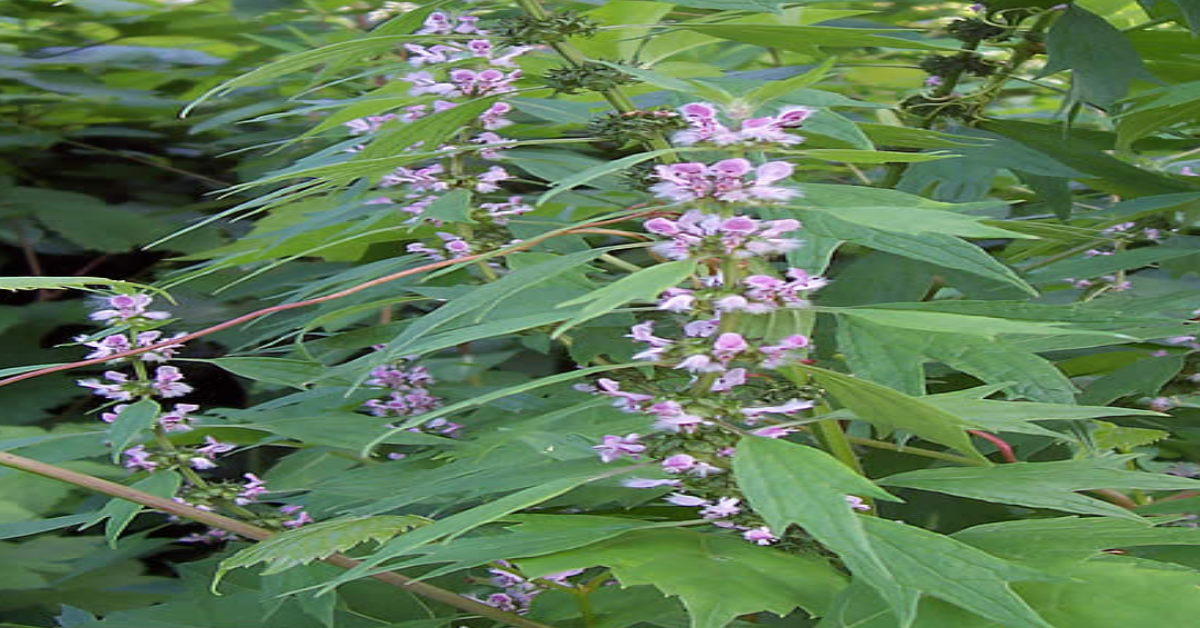
A Comprehensive Herbal Monograph:
👈Note on This Monograph:👇
Note on This Monograph: This extensive entry uses the full 8-part structure, offering a deep, interdisciplinary exploration of Motherwort (Leonurus cardiaca)— weaving together modern scientific evidence, traditional and ethnobotanical wisdom, practical cultivation and preparation guidance, and its living spiritual essence. Drawing from clinical studies, historical texts, indigenous knowledge, and esoteric traditions, it serves as a comprehensive resource for holistic understanding and respectful relationship with this powerful plant ally. Please work with trained professionals for therapeutic applications.
“Our Commitment to Transparent Research”
Unlike many herbal resources that offer generalized information with little or no backing, we provide direct links to every source we reference. This allows you to verify claims, explore topics in greater depth, and trust that what you’re reading is grounded in both modern science and time-honored tradition.
Section-specific Sources lists
Most monographs include dedicated “Sources:” sections at the end of major topics (e.g., Sources: Phytotherapy, Sources: Historical and Cultural Significance, Sources: Pharmacology). These contain direct, clickable links to the original material. We created this level of transparency so the research can serve you. Here are some ways readers use our sourced monographs: Anyone seeking truth — Verify claims for yourself instead of taking information at face value. Students & Researchers — Use the references for papers, assignments, or deeper study. Herbalists & Practitioners — Cite sources when educating clients or in professional materials. Curious Explorers — Follow the links to read original studies or historical texts yourself. Writers & Educators — Reference our monographs (with attribution), knowing the information is traceable.

“AT A GLANCE”
Motherwort is the lion-tailed mint of the European fence line: bitter flowering tops used for a nervous heart and a womb that needs settling. Official in the European and Russian pharmacopoeias, Culpeper blessed it as the herb that takes melancholy vapors from the heart and makes a merry soul. Not the same plant as Chinese Yi Mu Cao.

Provides an overview of key points.
A Synopsis for Motherwort (Leonurus cardiaca)
👈At A Glance:👇
Scientific Name: Leonurus cardiaca L. (Western/common motherwort). Closely related Leonurus japonicus Houtt. is the principal TCM species (Yi Mu Cao).
Family: Lamiaceae (mint family)
Common Names: Motherwort, common motherwort, throw-wort, lion’s ear, lion’s tail, heartwort; German Herzgespann; French agripaume; Chinese Yi Mu Cao (益母草, “benefit-the-mother herb”).
Note: “Lion’s tail/ear” is also used for Leonotis species; they are different plants.
Botanical Description
Leonurus cardiaca is an herbaceous perennial, typically 60–150 cm tall (sometimes taller), with stiff, four-angled, often purplish, short-hairy stems. Leaves are opposite: lower leaves palmately 3–7 lobed, upper leaves narrower and less divided, with toothed margins and prominent veins; undersides paler. Small two-lipped pink to lilac flowers (~1 cm) sit in dense axillary whorls along the upper stem, giving a “lion’s tail” look. Calyces become prickly. Fruit is a four-nutlet schizocarp. Flowers June–September.
Native to southeastern Europe and central/western Asia; now naturalized widely in Europe, North America, and elsewhere on roadsides, waste ground, field edges, and disturbed sites. Prefers sun to part shade and moist but well-drained soil. Hardiness roughly USDA 3–8.
Phytochemistry
Major groups include:
- Alkaloids: stachydrine (often the dominant quantified alkaloid in L. cardiaca), leonurine (more characteristic and abundant in L. japonicus; reports in L. cardiaca are inconsistent), related guanidine and pyrrolidine alkaloids
- Labdane and other diterpenoids
- Iridoid glycosides (leonuride/ajugol, galiridoside, etc.)
- Flavonoids (rutin, quercetin, hyperoside, isoquercitrin, apigenin glycosides)
- Phenolic acids and phenylethanoid glycosides (lavandulifolioside, verbascoside)
- Triterpenes (ursolic, oleanolic acids), tannins, essential-oil traces (caryophyllene, humulene), vitamin A
Stachydrine and leonurine are the most studied bioactives. Composition varies by species, organ, harvest stage, and geography.
Western Traditional & Clinical Actions
Classically: nervine, cardiotonic/hypotensive, antispasmodic, emmenagogue, uterine tonic, mild sedative, diaphoretic, bitter. Used for palpitations and “nervous heart,” anxiety with tension, menstrual cramps, delayed or irregular menses, menopausal irritability, and postpartum uterine support. EMA traditional-use indications: nervous tension and nervous cardiac complaints such as palpitations (serious disease excluded).
Chinese Medicine Actions
Yi Mu Cao (L. japonicus aerial parts) is pungent, bitter, and slightly cold. It invigorates blood, regulates menstruation, promotes urination, and reduces swelling. Used for blood stasis patterns: irregular menses, dysmenorrhea, amenorrhea, postpartum lochia retention or pain, traumatic bruising, and edema. Seeds (Chong Wei Zi) are used separately for some eye and blood-stasis indications.
Traditional & Historical Uses
The name “motherwort” reflects long use by midwives for uterine tonicity, afterpains, and “women’s complaints.” Culpeper placed it under Venus/Leo and praised it for melancholy vapors of the heart. Greeks and Romans used related Leonurus for heart and uterine issues. In China it has been used for gynecological conditions for well over a millennium. European farmers also used it in folk veterinary practice.
Modern Pharmacological Evidence
Preclinical work supports:
- Cardiovascular effects: mild hypotensive, antiarrhythmic, antiplatelet, and cardioprotective actions (antioxidant, anti-fibrotic pathways; stachydrine and leonurine prominently studied)
- Uterine smooth-muscle modulation (tone can increase or spasm can ease depending on context and constituent)
- Anxiolytic/sedative and anti-inflammatory effects
- Antioxidant and some antimicrobial/antibiofilm activity
- Organ-protective signals in heart, kidney, uterus, and liver models
Mechanisms include COX-2/PGF2α modulation, MAPK/MEK-ERK, Nrf2, calcium handling, and NO pathways. Evidence is stronger for isolated alkaloids than for whole-herb L. cardiaca extracts.
Clinical Studies
Human data are limited and often small or focused on Asian preparations:
- Oil extract of L. cardiaca (1200 mg/day, 28 days) improved BP, heart rate, ECG parameters, and anxiety/sleep in stage 1–2 hypertension with psychoemotional symptoms.
- Injectable L. japonicus plus oxytocin reduced postpartum blood loss and PPH risk versus oxytocin alone in large observational and trial data (2025 analyses). Stachydrine is implicated in uterine contraction synergy.
- Broader claims for menopause, palpitations, and anxiety rest mainly on traditional use plus pilot data; high-quality RCTs on oral Western motherwort remain scarce.
Preparations & Dosage
EMA traditional posology (adults):
- Tea: 1.5–4.5 g comminuted herb per dose; 3–10 g/day
- Powder: 150 mg, 1–3 times daily
- Tincture 1:5 (45% ethanol): 2–6 mL, 3 times daily
- Tincture 1:5 (70% ethanol): 0.5–1.0 g, 3–4 times daily
- Liquid extract 1:1 (25% ethanol): 2–4 mL, 3 times daily
Herbalist ranges often: dried infusion 2–4 g t.i.d.; tincture 1–4 mL (1:5) t.i.d. TCM decoction of Yi Mu Cao commonly 9–15 g (sometimes higher under supervision). Review if symptoms last beyond ~4 weeks.
Safety & Contraindications
Generally well tolerated at traditional doses. Common cautions:
- Pregnancy: contraindicated (emmenagogue/uterotonic); late-pregnancy/labor use only under qualified care
- Heavy menstrual bleeding, some fibroids/endometriosis patterns
- Possible additive sedation with CNS depressants
- Theoretical interactions with hypotensives, antiplatelets, and thyroid drugs (use caution)
- Hypersensitivity; occasional GI upset or drowsiness
- Not established in children under 18 (EMA)
- High-dose alkaloid toxicity reported mainly with concentrated Asian material
Not a substitute for evaluation of true cardiac disease.
Cultivation & Harvest
Easy from seed (spring or autumn), division, or self-sowing. Full sun to light shade; moist, reasonably fertile, well-drained soil. Can spread aggressively. Harvest aerial parts at early to mid bloom (highest vitality); dry quickly in shade. Cut back after flowering to limit seeding. Hardy; little pest pressure.
Commercial Products
Dried herb, teas, tinctures, fluid extracts, capsules, and (in China) injections and standardized alkaloid products. L. japonicus is a major cultivated TCM crop; L. cardiaca is more often wildcrafted or small-farm grown in Europe/North America. Quality issues: species substitution, heavy metals, variable alkaloid content. Look for identity-tested material (AHP monograph exists for L. cardiaca / L. quinquelobatus).
Ethnobotanical Curiosities
The “lion’s tail” inflorescence and cardiaca epithet encode both appearance and heart lore. Culpeper’s “merry, cheerful soul” line is still quoted by herbalists. Flowers have been used to flavor pea/lentil soups; leaves yielded olive-green dyes. In some European folklore it was a protective garden herb. The Chinese name literally frames it as a mother’s ally.
Recent Research (2020–2026)
Focus has shifted toward:
- Leonurine and stachydrine mechanisms in CV, CNS, uterine, renal, and inflammatory models
- Multi-omics of leonurine biosynthesis in Leonurus
- L. japonicus injection + oxytocin for postpartum hemorrhage (clinical + mechanistic)
- Stachydrine in primary dysmenorrhea (COX-2/PGF2α)
- Antioxidant/antibiofilm profiling of L. cardiaca extracts
- Quality-marker work (leonurine, stachydrine, trigonelline) and organ-protection reviews through 2024–2026
Whole-herb L. cardiaca RCTs still lag behind constituent pharmacology.
Conservation Status
Globally not considered threatened (Kew predicted extinction risk: not threatened). IUCN global listing is not a high-profile endangered ranking. Regionally it is declining or Red-Listed in parts of central Europe (e.g., Endangered on the Swiss national list; strongly endangered in Germany) because of habitat change around settlements and reduced ruderal sites, while it can be weedy where introduced in North America. Prefer cultivated or sustainably wildcrafted supply.
DIY Recipes
Simple nervine tea: 1–2 tsp dried flowering tops per cup, covered 10–15 min. Bitter; blend with lemon balm or mint if needed. Up to 3 cups/day.
Tincture (dried): 1:5 in 40–60% ethanol; 1–4 mL up to 3× daily.
Do not use homemade preparations in pregnancy. Identify the plant carefully (square stem, opposite lobed leaves, axillary pink whorls).
X (Twitter) Snapshot – 2020–2026
Recent posts treat motherwort as a practical home nervine and postpartum ally more than a conservation cause. Users describe tea or a few drops for palpitations and “heart back in sync,” afterpain relief the day after birth, and the folk line that it is “for when you feel like you need your mom.” Skepticism and supplement ads appear alongside practitioner notes. Discussion is anecdotal, not systematic research commentary.
Planting & Harvesting Reference Guide for Motherwort (Leonurus cardiaca)
👈Planting & Harvesting Reference Guide:👇
- Best Time for Planting
- Early spring, when soil is workable and hard frost risk has passed; or sow in autumn where winters are mild enough for seed to after-ripen in the ground.
- Seed: collect ripe nutlets from dry, brown calyces in late summer to autumn; they sit in prickly whorls—wear gloves. Air-dry the seed heads in shade, then rub out the small three-angled nutlets. Store cool, dark, and dry in a labeled paper envelope or jar. Germination ecology of Motherwort is still thinly studied; expect irregular sprouting. Surface-sow or cover very lightly; keep evenly moist until established.
- Division: split established crowns in early spring or after flowering. There is no pit or fleshy fruit; Motherwort is a nutlet-seeded perennial mint, not a tree.
- Magical timing used in the SPARK working: waxing moon, Venus Friday, or water signs if you work that calendar. Official growers time by soil and frost, not by the almanac alone.
- Site: full sun to light shade; ordinary, even poor or disturbed soil; roadsides, fence lines, garden edges, old homesteads. She is ruderal. She does not need a streamside limestone floodplain. Good drainage helps; she will also endure neglect.
- Growing Conditions & Magical Minded Tips
- Space plants about 18–24 inches apart (45–60 cm), not forest-tree spacing. Height at bloom is commonly 3–4 feet.
- Mulch lightly if the bed dries out; Motherwort often needs no pampering once rooted.
- Compost in spring is enough; related Leonurus field trials respond to nitrogen, but garden Motherwort grown for tea does not want heavy feeding that makes lank, low-aroma growth.
- Water through the first summer; after that, irrigate only in drought.
- She self-sows. Deadhead if you do not want a colony. In parts of North America she is a naturalized escape—harvest and contain with that in mind.
- Leave a share of flowers for honey bees, bumble bees, Anthophora, Osmia, and Megachile.
- Whisper thanks if that is your way; offer a splash of water or a pinch of finished tea back to the root. No tobacco-and-cornmeal rite is recorded as traditional for this European herb; gratitude is enough.
- Watch for the calyces: they scratch. Gloves at bloom and seed time. Occasional contact dermatitis is reported. No Dutch elm disease—this is not an elm.
- Best Time for Harvesting Aerial Parts
- Not inner bark. The official drug is the flowering herb: tops gathered at the beginning of flowering, typically mid to late June in temperate ranges (June–August in Slavic field instructions).
- Cut the top 30–40 percent of the aerial growth—the flowering spikes and their leaves—while the pink whorls are opening and before the calyces turn fully hard and brown.
- Pharmacopoeias (Ph. Eur., Russian FS.2.5.0034) want start-of-bloom material, dried, for Leonuri herba / Leonuri cardiacae herba.
- Magical calendar used in SPARK practice: beginning of bloom, Venus Friday or Leo season for heart-courage work. Waxing to full moon if you harvest for “fullness”; the quality standard is still the flower stage.
- Second, lighter cuts are possible later in a long season; seed harvest is a separate autumn job.
- Sustainable & Magical Harvesting Methods
- Never strip a clump to the ground in its first year. Leave basal leaves and enough stem for the plant to feed its crown and the bees.
- Take a portion of stems from each plant rather than emptying one stool. In wild or roadside stands, harvest as if she must return next June; she is declining in some tidy European habitats and weedy in others—match the ethic to the place.
- Knife or hand shears; gloves. A “silver blade” is optional poetry. Clean steel is historical enough.
- Ask before the cut. Leave flowers on some stalks. Do not confuse this species with Leonurus japonicus when you label the bag.
- Offer water or a pinch of herb back to the soil. Sing if you sing; silence is also correct.
- Post-Harvest Processing
- Dry flowering tops in shade, with air movement, at modest heat (herbals cite about 35 °C / not in harsh sun) to keep color and the bitter green scent.
- When crisp, strip leaves and flowers from coarse stems if you want tea-cut herb; keep some whole spikes for door charms and dream pillows.
- Store in clean, dry, dark glass or tins, labeled Motherwort (Leonurus cardiaca), date and place of harvest.
- For seed: finish-dry the prickly heads, thresh gently, store as above.
- Fresh tincture is traditionally made from just-harvested flowering herb. Dried herb becomes tea, vinegar, poultice, or the winter jar.
- A moonstone in the jar is a modern intention, not an old-book rule. Cool, dark, and dry are the old-book rule.
This guide gathers planting and harvest notes from the Motherwort SPARK sections. Honor the plant’s spirit by taking only what you will use, leaving bloom for pollinators, and keeping European Motherwort named as herself.
Healing Categories of Motherwort (Leonurus cardiaca)
👈Motherwort (Leonurus cardiaca): fits most strongly into the following healing categories, based on its traditional use, phytochemistry, clinical observations, and energetic profile:👇
Motherwort fits first as a nervine-cardiac and women’s reproductive tonic, then as a boundary-and-courage plant of the emotional heart. Secondary fits: mild hypotensive traditional use, postpartum support after birth (not as a pregnancy herb), and household protective folk practice. She is not a primary antimicrobial, not a liver-clearing bitter in the dandelion sense, and not the Chinese obstetric injection species.
Healing Categories (dedicated section)
Nervine (calming of the overwrought heart-mind)
Traditional use for anxiety that lives in the chest: palpitations of worry, sleep broken by unease, “melancholy vapors.” The action is settling, not knockout sedation.
Cardiac traditional (nervous heart)
Commission E / EMA lane: nervous cardiac complaints, trembling and knocking of the heart. Leipzig refined-extract work speaks to rhythm and perfusion in the lab; clinic remains traditional-use, not a substitute for emergency cardiology.
Gynecologic / uterine tonic (non-pregnant)
Emmenagogue and spasm-easing herb of the old midwife bag: cramped, delayed, or irritable menses; climacteric unease. Culpeper’s “joyful mothers” and “settled womb” belong here as heritage language.
Postpartum (after the child is born)
Afterpains, the uterus finding its size, the shaken spirit of new mothering. Distinct from pregnancy use, which is generally avoided because Motherwort is uterotonic.
Emotional-heart / grief-courage
Flower-essence and wortcunning language: mothering without self-erasure; thorn as healthy boundary; concealed love; inner trust. Contemporary, but it tracks the plant’s signature.
Mild traditional hypotensive / thyroid-adjuvant (historical official)
Commission E: adjuvant in thyroid hyperfunction; Slavic pharmacy: early-stage tension and labile pressure with nerves. Not a standalone blood-pressure drug.
Household apotropaic / hearth protection (folk)
Door spike, dream pillow, family blessing—especially of mothers. Folk-magic category, not a pharmacopoeial one.
Bee-and-edge ecology (land healing)
Ruderal forage, disturbed-ground cover, pollinator spike. Healing of the fence line as much as of the person.
Categories she does not own
Primary antibiotic. Primary hepatoprotective. Vision-brightening seed work of Chong Wei Zi. Hospital PPH injection (Leonurus japonicus). Laxative, expectorant, or “detox cleanse” as main identity.
Synergistic & holistic note
Motherwort pairs in the old European cupboard with Hawthorn for the physical-emotional heart, Lemon Balm when heat and thyroid-restlessness share the picture, Valerian or Motherwort-plus-sleep herbs when the night will not come, and Rose when Venus needs a softer face than bitterness alone. In postpartum formulas she is a guest after delivery, not a commander of labor. Holistically she asks for sleep, food, and a boundary around care work; the tincture cannot replace those. Spiritually she is Venus in Leo: affection with a spine. Do not stack her with strong uterotonics, anticoagulants, or heavy sedatives without a practitioner who knows the whole picture. Do not call her Yi Mu Cao and dose her as if she were.
✨ If You Only Read U.S. Consumer Pages ✨
U.S. consumer pages usually flatten Motherwort (Leonurus cardiaca) into three lines: a bitter “women’s herb” for period cramps and postpartum blues, a calm-the-heart tea for anxiety palpitations, and a pregnancy warning. Those lines are not invented. They are a thin slice of a much older official life. Those pages rarely say that the flowering tops are a numbered European Pharmacopoeia drug with a flavonoid minimum; that Commission E and EMA wrote traditional indications for nervous cardiac complaints; that Russian pharmacies still sell registered Motherwort tincture and dry-extract tablets as pustyrnik; or that Leipzig isolated-heart mapping gave a modern electrophysiological language to what German herbals already called trembling and knocking of the heart. They rarely distinguish Motherwort (Leonurus cardiaca) from Chinese Yi Mu Cao (Leonurus japonicus), even though the hospital injection used in tens of thousands of Chinese births is the Asian species, rich in leonurine, while Ph. Eur. Motherwort is a lavandulifolioside–stachydrine–iridoid herb in which leonurine is not the defining marker. They also rarely mention the 2011 Russian oil-extract series, the small Ovanesov anxiety work, or AHP’s decision to treat Leonurus quinquelobatus as co-official rather than as an adulterant. Reading only U.S. retail copy makes the plant look like a niche midwife tea with a caution label. Reading the official and clinical record makes it look like a pharmacopoeial nervine-cardiac herb of Central and Eastern Europe, a cultivated and ruderal crop, a veterinary phytotherapy option in German-speaking practice, and the quieter twin of a separate East Asian obstetric medicine that shares a common name. Both pictures matter. The second is the one most American shoppers never see.
Sources:
https://www.ema.europa.eu/en/documents/herbal-monograph/final-community-herbal-monograph-leonurus-cardiaca-l-herba_en.pdf
https://base.garant.ru/414008055/
https://storage.imrpress.com/IMR/pharmazie/application/67_12_S973_979.pdf
https://herbal-ahp.org/online-ordering-motherwort-aerial-parts/
https://pubmed.ncbi.nlm.nih.gov/20839214/
Globally: Where This Plant Is Studied
👈Global research, official texts, publishers, and human-trial data, rather than U.S.-consumer-page-limited:👇
Where This Plant Is Studied
Motherwort (Leonurus cardiaca) is studied as a living European–Eurasian officinal plant, not as a U.S. wellness novelty. The densest modern work on this species sits in Germany, Poland, Russia, and neighboring pharmacognosy schools, with supporting chemistry and ecology from Bulgaria, Kazakhstan, Italy, Iran, Turkey, and smaller North American natural-products groups. Core institutional clusters include Leipzig University (Pharmaceutical Biology and cardiac surgery mapping of refined Motherwort extract on isolated rabbit hearts), Poznań University of Medical Sciences, Saint Petersburg State Chemical Pharmaceutical University / the former Saint-Petersburg Institute of Pharmacy, Moscow Medical Academy’s Institute of Clinical Pharmacology, Georg August University Göttingen, Tomsk Medical Institute (the 1931 work that put Motherwort into the Soviet pharmacopoeia), S.D. Asfendiyarov Kazakh National Medical University, and the American Herbal Pharmacopoeia circle around Roy Upton with Kenny Kuchta as a bridging editor between German Ph. Eur. chemistry and U.S. quality standards. Field and quality research follows the plant where it is still harvested or cultivated: Central Europe, temperate Russia, the Baltics, Belarus, the Caucasus, and introduced North American stands. East Asian volume is enormous, but it belongs mainly to a sister species—Leonurus japonicus (Yi Mu Cao)—studied in Chinese obstetric hospitals, patent-medicine factories, and TCM universities. That literature must be named, then kept distinct. Motherwort (Leonurus cardiaca) is a multi-country pharmacognosy, cardiac-electrophysiology, and traditional-pharmacy subject; it is not a single-market tea-bag story.
Sources:
https://pmc.ncbi.nlm.nih.gov/articles/PMC6500680/
https://onlinelibrary.wiley.com/doi/10.1002/ptr.4850
https://ul.qucosa.de/id/qucosa%3A10708
https://herbal-ahp.org/online-ordering-motherwort-aerial-parts/
https://www.ptfarm.pl/download/?file=File%2FActa_Poloniae%2F2017%2F1%2F031.pdf
Official Books That Name This Species
Motherwort (Leonurus cardiaca) is named, defined, and assay-tested in official books. The European Pharmacopoeia monograph Leonuri cardiacae herba (Ph. Eur. 10.0/1833) specifies flowering aerial parts with a minimum of 0.2 percent flavonoids calculated as hyperoside. The European Medicines Agency HMPC issued a traditional-use herbal monograph and assessment report (EMA/HMPC/127428/2010 and companion assessment EMA/HMPC/127430/2010) for comminuted herb and tincture as tea or oral liquid for nervous tension and nervous cardiac complaints. German Commission E authorized the herb in 1986 for nervous cardiac disorders and as an adjuvant in thyroid hyperfunction (ATC C01EF). WHO published a monograph in 2010. The Russian State Pharmacopoeia (XV edition, FS.2.5.0034, 2024) accepts both Motherwort (Leonurus cardiaca) and Leonurus quinquelobatus harvested at the start of flowering, standardized to not less than 0.2 percent flavonoids as rutin; CIS national parts and Belarus add related leaf and iridoid standards. British Herbal Pharmacopoeia traditions (powdered herb, 1:5 and 1:1 tinctures) feed the EMA list of historical preparations. The American Herbal Pharmacopoeia 2018 therapeutic compendium treats Motherwort aerial parts of Leonurus cardiaca and Leonurus quinquelobatus together, with HPTLC/HPLC identity work so the two European taxa are not treated as adulterants of each other. ESCOP addresses mild cardiac complaints of nervous origin. Chinese Pharmacopoeia monographs belong to Leonurus japonicus herb and fruit (Yi Mu Cao, Chong Wei Zi), not to Ph. Eur. Motherwort. Unani and Ayurvedic headline drugs do not rest on Leonurus cardiaca. These books set identity, flavonoid minima, contaminants, and permitted preparations. That is a different class of naming than a retail label.
Sources:
https://www.ema.europa.eu/en/documents/herbal-monograph/final-community-herbal-monograph-leonurus-cardiaca-l-herba_en.pdf
https://www.ema.europa.eu/en/documents/herbal-report/draft-assessment-report-leonurus-cardiaca-l-herba_en.pdf
https://base.garant.ru/414008055/
https://www.herbalgram.org/resources/commission-e-monographs/monograph-approved-herbs/motherwort-herb
http://s3-us-west-2.amazonaws.com/ahpaccess01/monograph-tocs/ahp-motherwort-toc.pdf
https://www.vetpharm.uzh.ch/phytodb/0074_phy.htm
Who Publishes on It
Publication on Motherwort (Leonurus cardiaca) is European–Slavic first, then global in smaller streams. Recurring author clusters are Leipzig (Rauwald, Kuchta, Ritter, Melichar, Dhein) on refined-extract electrophysiology; Poznań (Wojtyniak, Szymański, Matławska) on phytochemistry and review; Saint Petersburg and Moscow (Shikov, Pozharitskaya, Makarov, Shikh) on oil-extract clinical observation; Polish Acta Poloniae Pharmaceutica groups on genus-wide pharmacognosy; and later Göttingen–Leipzig work on iridoids, phenylethanoids, and PPAR activity, including the 2025 description of cardiaphenyloside A. Journals that carry the species include Phytotherapy Research, Planta Medica, Biomed Research International, Molecules, Journal of Functional Foods, Journal of Ethnopharmacology, and national pharmacy titles in Poland and Russia. Publishers and official bodies include Wiley, Thieme, Elsevier, Springer, MDPI, Hindawi, the European Medicines Agency, EDQM/Ph. Eur., the Russian Ministry of Health pharmacopoeia commission, Commission E / BAnz, WHO, and AHP. China leads raw paper count on “Motherwort,” but those papers overwhelmingly study Leonurus japonicus injection and Yi Mu Cao formulas. Consumer sites reprint fragments. They are not the original publishers.
Sources:
https://onlinelibrary.wiley.com/doi/10.1002/ptr.3292
https://onlinelibrary.wiley.com/doi/10.1002/ptr.4850
https://www.semanticscholar.org/paper/Cardiac-and-Electrophysiological-Effects-of-Primary-Ritter-Melichar/0f89606e14c55f1bd506ec124913582633c12739
https://www.mdpi.com/1420-3049/30/2/419
https://pmc.ncbi.nlm.nih.gov/articles/PMC6500680/
Human Trials Tied to This Species
Human evidence that can be tied cleanly to Motherwort (Leonurus cardiaca) is modest, older, and mostly observational. The best-cited modern paper is Shikov and colleagues (Saint Petersburg / Moscow, Phytotherapy Research, 2011): fifty patients with stage 1 or 2 arterial hypertension plus anxiety and sleep disturbance received 1,200 mg/day of a soybean-oil extract of Motherwort herb (about 0.3 mg total iridoids per dose) for 28 days. Blood pressure fell from baseline (stage 1 systolic 144.5 to 129.4 mm Hg; stage 2 153.3 to 141.6 mm Hg), and Clinical Global Impression scores improved in most patients; there was no parallel placebo arm, and EMA assessors therefore treated the work as supportive of traditional use rather than as proof of well-established efficacy. Ovanesov and colleagues (2005–2006) studied Motherwort tincture in small groups with mild anxiety and depression and in a vision/GABA-related design; anxiolysis appeared but was weaker than melatonin in a ten-day comparison. A 1949 Slavic series of about one hundred patients with nervous-cardiac complaints, hyperthyroidism, atherosclerosis, and hypertension is still cited in reviews; methods do not meet modern RCT standards. A Polish combination-product sleep study in men with alcohol-use histories included Motherwort among several herbs, so no isolated effect can be claimed (Widy-Tyszkiewicz, 1997). Isolated-heart and patch-clamp work from Leipzig (Ritter, Melichar, Kuchta, Dhein, 2007–2010) is not a human trial, but it is the mechanistic backbone EMA and later reviewers use when they discuss class-III-like and calcium-antagonist actions of a refined aqueous Motherwort extract. Large modern obstetric RCTs and meta-analyses of “Motherwort injection”—including 37 Chinese trials and thousands of births, plus 2022–2025 real-world cesarean cohorts—use Leonurus japonicus injection with oxytocin, not Ph. Eur. Motherwort (Leonurus cardiaca). Those trials are adjacent genus evidence. They must not be silently rewritten onto the European species. EMA’s own conclusion remains traditional use.
Sources:
https://pubmed.ncbi.nlm.nih.gov/20839214/
https://onlinelibrary.wiley.com/doi/10.1002/ptr.3292
https://www.ema.europa.eu/en/documents/herbal-report/draft-assessment-report-leonurus-cardiaca-l-herba_en.pdf
https://onlinelibrary.wiley.com/doi/10.1002/ptr.4850
https://pmc.ncbi.nlm.nih.gov/articles/PMC6632498/
https://pubmed.ncbi.nlm.nih.gov/40527062/

Part 1: Modern Medical Properties and Uses

Purpose: Highlights the plant’s scientific and medicinal properties, validating holistic healing with evidence-based data.
Contemporary Medical Applications of Motherwort (Leonurus cardiaca)
👈Contemporary Medical Applications: Describes current clinical uses (e.g., capsules, tinctures) and delivery methods in modern medicine.👇
Contemporary Medical Applications:
- European regulators recognize Motherwort aerial parts as a traditional herbal medicinal product for nervous tension and for nervous cardiac complaints such as palpitations once serious disease has been excluded, with oral teas, powders, tinctures, and liquid extracts specified in the official Community herbal monograph.
- Clinical and herbal practice commonly delivers Motherwort as a bitter infusion, hydroalcoholic tincture, fluid extract, dried-herb capsule, or oil extract; a 28-day course of 1200 mg daily oil extract has been studied in people with stage 1–2 arterial hypertension accompanied by anxiety and sleep disturbance.
- In East Asian hospital practice, related Motherwort species—especially Leonurus japonicus—are used as oral decoctions and as standardized injections combined with oxytocin to support uterine contraction and reduce postpartum blood loss after cesarean or vaginal birth.
- Western herbalists employ Motherwort tincture or tea for palpitations linked to anxiety, menstrual cramping, delayed menses, menopausal irritability, and postpartum afterpains, often in small frequent doses because of intense bitterness.
- Homeopathic Motherwort preparations appear in older European materia medica for heart complaints, amenorrhea, menopausal unease, and flatulence, sitting alongside crude-herb practice rather than replacing it.
- Quality-controlled commercial forms now include identity-tested dried herb, 1:5 tinctures at 45% or 70% ethanol, 1:1 liquid extracts, and capsules; the American Herbal Pharmacopoeia monograph supplies macroscopic, microscopic, and analytical standards for Leonurus cardiaca and L. quinquelobatus.
- Delivery remains almost entirely oral; topical cooled tea is sometimes applied over the lower abdomen for cramping, but systemic use of aerial parts as tea or tincture is the dominant contemporary route.
Sources: Contemporary Medical Applications
https://www.ema.europa.eu/en/documents/herbal-monograph/final-community-herbal-monograph-leonurus-cardiaca-l-herba_en.pdf
https://pmc.ncbi.nlm.nih.gov/articles/PMC6500680/
https://www.sciencedirect.com/science/article/abs/pii/S0944711325005896
https://theherbalacademy.com/motherwort-monograph
https://herbal-ahp.org/online-ordering-motherwort-aerial-parts/
https://www.herbalreality.com/herb/motherwort/
https://pfaf.org/user/Plant.aspx?LatinName=Leonurus+cardiaca
Pharmacology of Motherwort (Leonurus cardiaca)
👈Pharmacology: Outlines key compounds and their mechanisms of action, driving therapeutic effects.👇
Pharmacology:
- Stachydrine, a pyrrolidine alkaloid abundant in Motherwort, modulates uterine contractility and inflammatory prostaglandin signaling; experimental work shows it can ease oxytocin-driven hypercontractility by influencing the COX-2/PGF2α axis while also supporting cardiovascular and anti-fibrotic pathways.
- Leonurine, a guanidine alkaloid especially concentrated in Leonurus japonicus, is associated with cardioprotection, lipid lowering, anti-inflammatory and uterotonic activity; multi-omics work has mapped its biosynthesis through arginine decarboxylase, UDP-glucosyltransferase, and SCPL acyltransferase steps.
- Phenylethanoid glycosides such as lavandulifolioside and verbascoside, together with flavonoids including rutin, hyperoside, and isoquercitrin, contribute antioxidant and mild spasmolytic effects that complement the alkaloids’ actions on heart and smooth muscle.
- Labdane and related diterpenoids, plus iridoid glycosides such as leonuride (ajugol) and galiridoside, add bitterness and anti-inflammatory tone; these terpenoids are a chemical signature of the genus even when alkaloid ratios differ by species.
- Whole-extract pharmacology is not identical to isolated leonurine: some analyses detect little or no leonurine in L. cardiaca, so European Motherwort’s observed calming and cardiac effects are more credibly linked to stachydrine, phenolics, and the total bitter complex.
- Antioxidant and antibiofilm assays of L. cardiaca extracts show rosmarinic acid as a major contributor to radical scavenging, while several solvent fractions inhibit bacterial biofilm formation at low microgram-per-milliliter concentrations.
- Combined Motherwort injection and oxytocin appears to enhance uterine smooth-muscle calcium signaling and MEK/ERK pathway activity, offering a mechanistic explanation for reduced postpartum hemorrhage volumes in clinical series.
Sources: Pharmacology:
https://pmc.ncbi.nlm.nih.gov/articles/PMC12651120/
https://www.cell.com/molecular-plant/fulltext/S1674-2052%2823%2900358-1
https://pmc.ncbi.nlm.nih.gov/articles/PMC6500680/
https://www.sciencedirect.com/science/article/abs/pii/S003194221730417X
https://www.chromatographyonline.com/view/antioxidant-antibiofilm-potential-leonurus-cardiaca-extracts-analytical-techniques
https://www.sciencedirect.com/science/article/abs/pii/S0944711325005896
https://pubmed.ncbi.nlm.nih.gov/41847307/
Natural Medicine Studies / Motherwort (Leonurus cardiaca)
👈Natural Medicine Studies: Summarizes recent research on efficacy, safety, or clinical outcomes from peer-reviewed studies.👇
Natural Medicine Studies:
- A 28-day clinical study of Leonurus cardiaca oil extract at 1200 mg daily in patients with arterial hypertension plus anxiety reported improvements in systolic and diastolic pressure, heart rate, ECG findings, and psychoemotional symptoms, with the clearest benefit in stage 1 disease.
- Large real-world and trial analyses of Motherwort injection plus oxytocin found lower blood loss at 2 and 24 hours and roughly halved postpartum hemorrhage risk compared with oxytocin alone, with mechanistic follow-up pointing to stachydrine and MAPK pathway synergy.
- A 2019 update of the European Medicines Agency assessment compiled cardiovascular, anxiolytic, antioxidant, and gynecological evidence for L. cardiaca from 2010–2018 and concluded that traditional indications remain better supported than large modern efficacy trials.
- Reviews of Leonurus japonicus alkaloids describe reductions in endometrial inflammatory mediators via PI3K/AKT/NF-κB signaling, aligning traditional blood-moving and postpartum uses with measurable anti-inflammatory pharmacology.
- Systematic appraisal of stachydrine through 2025–2026 catalogs multi-organ actions—cardiovascular, renal, gynecological, oncologic, and inflammatory—while noting that most human evidence still comes from combination products rather than isolated compound trials.
- In vitro and extract studies continue to document antioxidant capacity, modest antimicrobial and antibiofilm activity, and spasmolytic effects, supporting traditional nervine-cardiac use without claiming drug-equivalent potency.
- Safety observations in traditional-dose oral use are generally favorable; pregnancy remains the principal contraindication because of uterotonic potential, and high-dose concentrated alkaloid products require more caution than household teas.
Sources: Natural Medicine Studies:
https://pmc.ncbi.nlm.nih.gov/articles/PMC6500680/
https://www.sciencedirect.com/science/article/abs/pii/S0944711325005896
https://pubmed.ncbi.nlm.nih.gov/39904422/
https://pubmed.ncbi.nlm.nih.gov/41847307/
https://www.ema.europa.eu/en/documents/herbal-monograph/final-community-herbal-monograph-leonurus-cardiaca-l-herba_en.pdf
https://www.herbalreality.com/herb/motherwort/
https://www.sciopen.com/article/10.26599/FMH.2026.9420117
Chemistry of Motherwort (Leonurus cardiaca)
👈Chemistry: Details active chemical constituents (e.g., alkaloids, flavonoids) and their healing roles.👇
Chemistry:
- The aerial drug contains nitrogen compounds led by stachydrine (often 0.5–1.5% range in older assays) and, in Asian species especially, leonurine; related bases include betonicine, turicin, leonuridine, and choline.
- Iridoid glycosides—leonuride/ajugol, ajugoside, galiridoside, reptoside, and occasionally chlorinated harpagide relatives—account for part of the persistent bitterness of the tea.
- Diterpenoids of labdane, furanolabdane, and clerodane types (leocardin, leosibiricin, and related marrubiin-like structures) are abundant in the genus and are a major research focus beyond the alkaloids.
- Flavonoid glycosides of quercetin, kaempferol, and apigenin (rutin, hyperoside, isoquercitrin, astragalin, vitexin, isovitexin) plus free aglycones sit alongside phenylethanoids such as lavandulifolioside and verbascoside.
- Phenolic acids reported from L. cardiaca include chlorogenic, caffeic, ferulic, cichoric, and rosmarinic acids; ursolic and oleanolic acids appear among the triterpenes.
- Leaf essential oil is modest in yield and typically rich in sesquiterpenes such as caryophyllene and α-humulene rather than serving as the main medicinal fraction.
- Species chemistry is not interchangeable: L. japonicus accumulates substantially more leonurine than L. cardiaca or L. sibiricus, a difference now explained by evolution of a UGT–SCPL gene cluster.
Sources: Chemistry:
https://en.wikipedia.org/wiki/Leonurus_cardiaca
https://pmc.ncbi.nlm.nih.gov/articles/PMC6500680/
https://cdn.shopify.com/s/files/1/0559/3163/3716/files/Motherwort_92fe2f90-feb7-49c8-b4e7-00d3a74532fd.pdf?v=1659478759
https://www.sciencedirect.com/science/article/abs/pii/S003194221730417X
https://www.cell.com/molecular-plant/fulltext/S1674-2052%2823%2900358-1
https://www.chromatographyonline.com/view/antioxidant-antibiofilm-potential-leonurus-cardiaca-extracts-analytical-techniques
https://www.sciopen.com/local/article_pdf/10.26599/FMH.2026.9420117.pdf
Functional Foods and Nutrition / Motherwort (Leonurus cardiaca)
👈Functional Foods and Nutrition: Highlights dietary uses (e.g., teas, supplements) in modern health practices.👇
Functional Foods and Nutrition:
- Fresh or dried flowers have long been used as a condiment in lentil and split-pea soups; the same floral material flavors some traditional beers, ales, and homemade ferments.
- The aerial herb is consumed as a functional tea rather than a daily vegetable; bitterness is pronounced, so honey, lemon, ginger, lemon balm, or rose is commonly added, or only small sips of a strong infusion are taken.
- In China, Leonurus japonicus appears on medicinal-and-food-homology lists, opening a path for herbal-cuisine and health-food development beyond strictly pharmaceutical extracts.
- Historical European kitchens used leaves to season legumes and millet, partly for digestibility; that culinary role has faded, leaving tea, tincture, and capsule as the main ingested forms.
- Nutrient contribution is secondary to phytochemistry: traces of vitamin A, minerals, and tannins accompany the alkaloids and phenolics, but Motherwort is not used as a calorie or protein food.
- Home infusions typically steep 1–2 teaspoons (or about 1.5–4.5 g per EMA single dose) of flowering tops in covered hot water for 10–15 minutes; daily tea totals in the monograph range from 3–10 g of comminuted herb.
- Because the taste is acrid-bitter, traditional pharmacy often preferred syrups, conserves, or alcohol extracts over straight tea for long courses.
httFunctional Foods and Nutrition:
- Fresh or dried flowers have long been used as a condiment in lentil and split-pea soups; the same floral material flavors some traditional beers, ales, and homemade ferments.
- The aerial herb is consumed as a functional tea rather than a daily vegetable; bitterness is pronounced, so honey, lemon, ginger, lemon balm, or rose is commonly added, or only small sips of a strong infusion are taken.
- In China, Leonurus japonicus appears on medicinal-and-food-homology lists, opening a path for herbal-cuisine and health-food development beyond strictly pharmaceutical extracts.
- Historical European kitchens used leaves to season legumes and millet, partly for digestibility; that culinary role has faded, leaving tea, tincture, and capsule as the main ingested forms.
- Nutrient contribution is secondary to phytochemistry: traces of vitamin A, minerals, and tannins accompany the alkaloids and phenolics, but Motherwort is not used as a calorie or protein food.
- Home infusions typically steep 1–2 teaspoons (or about 1.5–4.5 g per EMA single dose) of flowering tops in covered hot water for 10–15 minutes; daily tea totals in the monograph range from 3–10 g of comminuted herb.
- Because the taste is acrid-bitter, traditional pharmacy often preferred syrups, conserves, or alcohol extracts over straight tea for long courses.
Sources: Functional Foods and Nutrition:
https://pfaf.org/user/Plant.aspx?LatinName=Leonurus+cardiaca
https://eattheplanet.org/motherwort-calming-and-relieving-the-anxious-mind/
https://wisdom.thealchemistskitchen.com/?p=4308
https://antropocene.it/en/2023/02/19/leonurus-cardiaca-2/
https://www.sciopen.com/article/10.26599/FMH.2026.9420117
https://www.ema.europa.eu/en/documents/herbal-monograph/final-community-herbal-monograph-leonurus-cardiaca-l-herba_en.pdf
https://www.live-native.com/motherwort/ps://pfaf.org/user/Plant.aspx?LatinName=Leonurus+cardiaca
https://eattheplanet.org/motherwort-calming-and-relieving-the-anxious-mind/
https://wisdom.thealchemistskitchen.com/?p=4308
https://antropocene.it/en/2023/02/19/leonurus-cardiaca-2/
https://www.sciopen.com/article/10.26599/FMH.2026.9420117
https://www.ema.europa.eu/en/documents/herbal-monograph/final-community-herbal-monograph-leonurus-cardiaca-l-herba_en.pdf
https://www.live-native.com/motherwort/
Current Projects and Future Possibilities / Motherwort (Leonurus cardiaca)
👈Current Projects and Future Possibilities: Notes ongoing research, clinical trials, or innovative medical applications.👇
Current Projects and Future Possibilities:
- Chromosome-level genomes of Leonurus japonicus and L. sibiricus now make pathway engineering of leonurine conceivable, from enzyme characterization to potential biotechnological production of the alkaloid.
- Stachydrine is under active review as a multi-target candidate for cardiovascular, renal, gynecological, and inflammatory conditions, with recent papers mapping Nrf2/HO-1 and COX-2/PGF2α mechanisms.
- Combination protocols of Motherwort injection and oxytocin are being refined for postpartum hemorrhage prevention, pairing clinical outcome data with uterine-cell calcium and MEK/ERK studies.
- Analytical projects continue to nominate quality markers—leonurine, stachydrine, trigonelline, and selected flavonoids—so that cultivated “virgin Motherwort” and wild L. cardiaca can be standardized more honestly by species and organ.
- Antioxidant and antibiofilm screening of L. cardiaca solvent extracts suggests possible adjunct roles in food preservation or topical formulations, still at the laboratory stage.
- Organ-protection reviews through 2024–2026 frame Motherwort constituents as candidates for heart, kidney, liver, and uterine injury models, inviting better human trials of oral European herb versus Asian alkaloid products.
- Cultivar work in China (including short-cycle leafy types harvested before bloom) aims to raise alkaloid yield and farmer income while reducing pressure on wild stands.
Sources: Current Projects and Future Possibilities:
https://www.cell.com/molecular-plant/fulltext/S1674-2052%2823%2900358-1
https://pubmed.ncbi.nlm.nih.gov/41847307/
https://www.sciencedirect.com/science/article/abs/pii/S0944711325005896
https://www.sciencedirect.com/science/article/abs/pii/S0731708522001285
https://www.chromatographyonline.com/view/antioxidant-antibiofilm-potential-leonurus-cardiaca-extracts-analytical-techniques
https://www.sciopen.com/article/10.26599/FMH.2026.9420117
https://www.youtube.com/watch?v=tX5aQ7xAplc
Literary Mentions of Motherwort (Leonurus cardiaca)
👈Literary Mentions: References modern medical texts or studies citing the plant’s therapeutic use.👇
Literary Mentions:in ancient texts
- John Gerard’s Herball (1597/1633 tradition) records Motherwort as Cardiaca, commended against infirmities of the heart, convulsions, cramps, palsy, worms, obstructed courses, and hard travail, and notes husbandmen used it for cough and murrain in cattle.
- Nicholas Culpeper’s English Physitian / Complete Herbal (1652) places the plant under Venus and Leo and writes that no herb better takes melancholy vapors from the heart or makes “a merry, cheerful, blithe soul,” while also settling the womb and aiding women in sore travail.
- Culpeper further assigns it to trembling of the heart, fainting, rising of the mother, provocation of urine and menses, chest phlegm, and cramps, recommending powder in wine or a syrup or conserve because of the harsh taste.
- John Parkinson (1640) describes Motherwort as warming and drying to cold humors settled in veins, joints, and sinews, and helpful for cramps and convulsions, echoing the Renaissance cardiac-uterine pairing.
- Mattioli’s sixteenth-century commentary on Dioscorides includes a historical illustration later reproduced in the American Herbal Pharmacopoeia Motherwort monograph, linking Renaissance printed herbals to modern identity standards.
- Chinese classical use of Yi Mu Cao for regulating menstruation, moving blood, and postpartum recovery is continuously cited in ethnopharmacological reviews of Leonurus japonicus, a parallel literary stream to the European cardiaca tradition.
- Modern scholarly monographs (EMA 2010; AHP 2018; Fierascu et al. 2019) explicitly quote these older texts while adding chemistry and small clinical series, keeping Gerard and Culpeper inside the living medical conversation rather than as museum pieces.
Sources: Literary Mentions:
https://www.exclassics.com/herbal/herbalv30063.htm
https://theherbalacademy.com/blog/motherwort-through-history/
http://www.bibliomania.com/2/1/66/113/21121/1.html
https://archive.org/details/culpeperscomplet00culpuoft
http://s3-us-west-2.amazonaws.com/ahpaccess01/monograph-tocs/ahp-motherwort-toc.pdf
https://www.sciencedirect.com/science/article/abs/pii/S0378874114000026
https://pmc.ncbi.nlm.nih.gov/articles/PMC6500680/

Part 2: Plant Knowledge Systems

Purpose: Validates plant-based healing through interdisciplinary scientific and cultural fields.
Ethnobotany of Motherwort (Leonurus cardiaca)
👈Ethnobotany: Explores the plant’s traditional uses across cultures, linking indigenous knowledge to modern applications.👇
Ethnobotany:
- Across Eurasia, Motherwort has been framed as a dual heart-and-womb plant for centuries. European names such as Cardiaca and German Herzgespann encode cardiac use, while the English common name and Chinese Yi Mu Cao (“benefit-the-mother herb”) encode midwifery and menstrual regulation. Renaissance printed herbals (Gerard, Parkinson, Culpeper) already treat Motherwort as a remedy for melancholy vapors of the heart, palpitations, delayed courses, hard travail, and “settling the womb.” East Asian practice, usually with Leonurus japonicus rather than Leonurus cardiaca, applies aerial parts and fruits for blood stasis, irregular menses, lochia, and postpartum swelling. Those parallel streams still structure modern phytotherapy: nervine-cardiac protocols in Europe, blood-moving gynecological protocols in TCM, and overlapping midwifery use wherever the genus travels.
- After Motherwort was introduced to North America as a garden and apothecary plant, several Indigenous nations incorporated the newcomer into existing gynecological, digestive, and nervine repertoires. The Native American Ethnobotany Database records about fourteen uses: Cherokee people took Motherwort for stomach disease and for “nervous and hysterical affections,” also employing it as a stimulant in fainting; Delaware and Oklahoma Delaware used leaf infusions for female diseases; Micmac practitioners used it in obstetric cases; Mohegan people included it in compound spring tonics and gynecological infusions; Iroquois communities used dried-plant infusions to ease digestion, as a nerve tonic, and as a general tonic. The pattern is not invention from nothing but recognition that an Old World “mother herb” mapped onto local categories of womb, nerve, and gut medicine.
- Folk veterinary and household uses widen the ethnobotanical map. Gerard already notes husbandmen employing Motherwort for cough and murrain in cattle. Flowers flavored lentil and split-pea soups and, in some regions, beer or tea; leaves once seasoned legumes and millet. In parts of fifteenth-century Europe the plant was kept as a protective garden herb against “evil spirits,” a cultural layer that sits beside, rather than instead of, the medical indications. Duke’s ethnobotanical compilations add Turkish and general Eurasian listings for amenorrhea, spasm, diuresis, heart, and generative organs, showing how widely the same plant was asked to serve women’s cycles and the “nervous heart.”
- Modern applications remain recognizably those older categories: teas and tinctures for palpitations of anxious or menopausal origin, delayed or cramped menses, postpartum afterpains, and restless tension. The scientific literature now distinguishes species chemistry—Leonurus cardiaca richer in stachydrine and phenolics, Leonurus japonicus richer in leonurine—yet community practice still treats “Motherwort” as a single cultural being: the lion-hearted mother’s herb that steadies pulse and womb together.
Sources: Ethnobotany:
http://naeb.brit.org/uses/search/?string=leonurus
http://naeb.brit.org/uses/19908/
http://naeb.brit.org/uses/19904/
http://naeb.brit.org/uses/19899/
http://naeb.brit.org/uses/19897/
https://theherbalacademy.com/blog/motherwort-through-history/
https://phytochem.nal.usda.gov/ethnobotanical-plant-leonurus-cardiaca
https://www.exclassics.com/herbal/herbalv30063.htm
https://www.sciencedirect.com/science/article/abs/pii/S003194221730417X
https://www.medicinetraditions.com/leonurus-motherwort-yi-mu-cao-pro/
Plant Genomics of Motherwort (Leonurus cardiaca)
👈Plant Genomics: Describes genetic studies of the plant, focusing on traits related to medicinal properties.👇
Plant Genomics:
- Leonurus cardiaca itself now has substantial chloroplast-genome coverage. In 2021 researchers sequenced complete plastomes from twenty-two accessions collected worldwide (GenBank MZ274149–MZ274170). The genomes show the typical quadripartite structure of flowering-plant chloroplasts, range from 151,236 to 151,831 base pairs, contain 114 distinct genes (80 protein-coding, 30 tRNA, four rRNA), and resolve into eight haplotypes and four phylogenetic clades that only partly track geography. Europe emerges as a diversity center. SNPs, indels, and SSRs from this panel supply candidate barcodes for germplasm banking, domestication, and detection of substitution among commercial Motherwort lots.
- Nuclear chromosome-level genomes published in 2023–2024 belong to sister species, not to Leonurus cardiaca: Leonurus japonicus (about 518 Mb assembled) and Leonurus sibiricus (about 472 Mb). Multi-omics on that pair reconstructed leonurine biosynthesis (arginine decarboxylase, UGT, SCPL acyltransferase) and showed that a UGT–SCPL gene cluster, after duplication and neofunctionalization, explains why Leonurus japonicus accumulates leonurine while Leonurus sibiricus does not. Those findings illuminate why Western Motherwort and Chinese Motherwort are not chemically interchangeable even though both are called Motherwort in trade.
- Additional plastomes now exist for Leonurus sibiricus, Leonurus turkestanicus, and Leonurus pseudomacranthus, and phylogenetic trees consistently place Leonurus cardiaca on the same major branch as Leonurus japonicus and Leonurus sibiricus. Species-diagnostic SNPs and indels in regions such as rps15–ycf1 and atpH–atpI, together with ITS2 nuclear barcodes, are being developed to separate the four gynecologically used Leonurus taxa in the marketplace.
- Earlier population work on Leonurus cardiaca used AFLP, ISSR, RAPD, and IRAP markers to describe diversity among cultivated and wild stands. Together with the plastome haplotypes, these data support conservation of European landraces and cautious introduction of Leonurus cardiaca as a domestication candidate in regions (including parts of China) that historically relied on other Leonurus species. A full nuclear reference genome for Leonurus cardiaca itself remains a gap; medicinal-trait mapping for stachydrine and labdane diterpenes in this species still leans on chloroplast diversity plus inference from the japonicus/sibiricus assemblies.
Sources: Plant Genomics:
https://pmc.ncbi.nlm.nih.gov/articles/PMC8479170/
https://pubmed.ncbi.nlm.nih.gov/34603384/
https://www.cell.com/molecular-plant/fulltext/S1674-2052%2823%2900358-1
https://www.sciencedirect.com/science/article/abs/pii/S2352407325000770
https://www.tandfonline.com/doi/pdf/10.1080/23802359.2024.2383673?needAccess=true
https://www.bioresearch.ro/2025-2/AUOFB.32.2.25-206-217-TOJIBOEVA.U.-The.complete.chloroplast.genomes.pdf
Phytotherapy of Motherwort (Leonurus cardiaca)
👈Phytotherapy: Details the plant’s use in clinical herbal medicine, including therapeutic protocols.👇
Phytotherapy:
- Official European phytotherapy treats flowering aerial parts of Motherwort as a traditional herbal medicinal product for nervous tension and for nervous cardiac complaints such as palpitations after serious disease has been excluded. The EMA/HMPC monograph specifies tea (1.5–4.5 g per dose, 3–10 g daily), powder (150 mg one to three times daily), tinctures 1:5 in 45% or 70% ethanol, and 1:1 liquid extract. German Commission E separately lists nervous cardiac disorders and adjuvant use in thyroid hyperfunction, with an average daily dose of 4.5 g herb. ESCOP emphasizes mild cardiac complaints of nervous origin based on long-standing use. These monographs are the clinical backbone for licensed teas and drops in Europe.
- Contemporary herbal protocols keep the same two poles. For functional palpitations, menopausal tachycardia, and anxiety that “sits in the chest,” practitioners prefer fresh-plant or 1:5 dried tincture in frequent small doses (often 1–4 mL three times daily, or 10–30 drops more often during acute flutter), because bitterness limits tea compliance. For delayed menses, spasmodic dysmenorrhea, PMS irritability, and postpartum afterpains, Motherwort is used as emmenagogue and uterine antispasmodic, sometimes with a cooled tea fomentation over the lower abdomen. Eclectic physicians (Ellingwood, King) were specific for suppressed lochia, amenorrhea from cold, and “harrassing bearing-down pains,” giving fluid extract internally and a hot fomentation over the pelvis.
- Combination formulas are common. Motherwort is paired with Hawthorn and sometimes Cactus or Linden for nervous heart and mild hypertension; with Lemon Balm and Bugleweed when palpitations accompany hyperthyroid-type restlessness; with Rose, Milky Oats, or Blue Vervain for the “emotional heart” of perimenopause. Naturopathic writing notes that Motherwort is gentle, so chronic daily dosing or higher gram amounts of tea (up to the EMA ceiling) may be needed before effects are obvious, whereas a dropperful of tincture is used for an acute wave of panic-palpitation.
- Safety framing in clinic is consistent: exclude structural heart disease before treating “nervous” palpitations; avoid in pregnancy except under skilled late-pregnancy or labor care because of uterotonic potential; use caution when menses are already very heavy; watch additive sedation with other nervines. Veterinary phytotherapy in German-speaking practice extends similar indications to dogs and cats with anxious tachyarrhythmia or behavioral restlessness, at mg/kg powder or drop doses, again avoiding pregnancy. Human and animal protocols thus rest on the same traditional cardiac-nervine-uterine triad now annotated by Commission E, EMA, and the American Herbal Pharmacopoeia therapeutic compendium.
Sources: Phytotherapy:
https://www.ema.europa.eu/en/documents/herbal-monograph/final-community-herbal-monograph-leonurus-cardiaca-l-herba_en.pdf
https://www.herbalgram.org/resources/commission-e-monographs/monograph-approved-herbs/motherwort-herb
https://www.arzneipflanzenlexikon.info/en/motherwort.php
https://www.henriettes-herb.com/eclectic/ellingwood/leonurus.html
https://theherbalacademy.com/motherwort-monograph
https://ndnr.com/motherwort-for-the-heart-and-beyond/
https://www.vetpharm.uzh.ch/phytodb/0074_phy.htm
https://herbal-ahp.org/online-ordering-motherwort-aerial-parts/
Ethnoecology of Motherwort (Leonurus cardiaca)
👈Ethnoecology: Examines the plant’s ecological role in cultural practices and environmental interactions.👇
Ethnoecology:
- Motherwort occupies the human-disturbed edge: roadsides, rubble, hedges, old farmsteads, monastery and cottage gardens, floodplain margins, and waste ground on moist, often calcareous soils from the lowlands into montane belts. That ruderal niche is not accidental. People carried the plant as medicine; it then naturalized wherever soil was opened and nitrogen somewhat enriched. In its Eurasian home range it is a cultural companion of settlement. In North America the same companion habit reads as weedy naturalization: patches persist for decades around abandoned homesteads, spreading by seed that hitchhikes on clothing, fur, and machinery and by short rhizomes that thicken a clump.
- Flower ecology ties Motherwort to bees. The plant is self-compatible and somewhat autogamous, yet fruit set rises sharply with insect visits. Honey bees (Apis mellifera) dominate visitor counts in field studies; bumble bees (Bombus vagans, B. bimaculatus, and others), Anthophora, Osmia, and Megachile also work the hairy, two-lipped pink flowers. Beekeepers describe a light, mild honey where bloom is dense and the season long. Prickly persistent calyces protect developing nutlets and later become the “throw-wort” burs that move the species along human and animal paths. Bitterness and mild distastefulness reduce browsing by deer, so stands can thicken in pastures and fence lines.
- Cultural ecology follows that biology. Monastery gardens and later physic gardens kept Motherwort for heart and womb; dye pots used leafy decoctions for olive-green wool; kitchens dropped flowers into pea soup. In parts of central Europe wild populations have thinned as tidy landscaping erases ruderal strips, even as the same species becomes abundant on North American roadsides. Introduction trials in the Komi middle taiga show the plant keeps its long flowering window (five to six weeks) and produces viable seed under cultivation, which matters for both conservation of European stock and sustainable harvest. Ethnoecology of Motherwort is therefore a story of a medicinal mint that lives where people live, feeds pollinators while it waits to be picked, and becomes rare or invasive according to how a landscape treats its edges.
Sources: Ethnoecology:
https://www.honeybeesuite.com/motherwort-as-a-bee-forage-plant/
https://www.researchgate.net/publication/329774325_The_reproductive_biology_of_motherwort_Leonurus_cardiaca_L
https://fieldguide.mt.gov/speciesDetail.aspx?elcode=PDLAM0U010
https://www.misin.msu.edu/facts/68
https://antropocene.it/en/2023/02/19/leonurus-cardiaca-2/
https://journals.rcsi.science/2309-4370/article/view/260640
https://silberkraft.nl/pages/l/leonurus-cardiaca
Anthroposophical Medicine of Motherwort (Leonurus cardiaca)
👈Anthroposophical Medicine: Outlines the plant’s use in Steiner-inspired remedies, including preparation, studies, and dosage.👇
Anthroposophical Medicine:
- Dedicated Steiner-school monographs, Weleda or Wala finished medicines, and anthroposophic clinical trials that name Leonurus cardiaca as a lead remedy are sparse in the searchable literature. Motherwort does not occupy the central place that Hawthorn, Mistletoe, or Lemon Balm hold in published anthroposophic pharmacy. Limited data on specifically anthroposophic Motherwort preparations should be stated plainly: no widely cited rhythmic eurythmy-linked protocol or potentized Leonurus specialty line was located comparable to those flagship plants.
- The German phytotherapeutic frame that anthroposophic physicians often share with Heilpflanzenkunde is nonetheless relevant. Commission E’s indication—“nervous cardiac disorders and as adjuvant for thyroid hyperfunction”—and the older Herzgespann concept of a cramping, over-tight heart speak the same language as anthroposophic attention to the rhythmic system (heart–lung) under the pressure of an over-wakeful nerve-sense pole. Bitter, cooling aerial parts gathered in flower, prepared as tea or hydroalcoholic extract, fit the anthroposophic preference for the flowering process when a plant is asked to loosen functional spasm and restore mid-region rhythm rather than to stimulate or suppress a single organ in isolation.
- Holistic dosing in that shared Central European tradition remains close to Commission E and EMA figures: about 4.5 g dried flowering herb daily as infusion, or equivalent tincture in divided doses, used over weeks for climacteric restlessness, hyperthyroid-tinged palpitations, and sleepless tension, after structural heart disease is excluded. Anthroposophic practice would typically nest Motherwort inside a broader picture—biography, warmth organization, and accompanying remedies such as Hawthorn or Lemon Balm—rather than treat it as a stand-alone “cardiac drug.” Until manufacturer literature or Goethean plant studies specific to Motherwort are published more openly, the honest reading is that the plant’s anthroposophic use, where it occurs, rides on this German nervine-cardiac heritage rather than on a large independent Steiner corpus.
Sources: Anthroposophical Medicine:
https://www.herbalgram.org/resources/commission-e-monographs/monograph-approved-herbs/motherwort-herb
https://www.ema.europa.eu/en/documents/herbal-monograph/final-community-herbal-monograph-leonurus-cardiaca-l-herba_en.pdf
https://www.arzneipflanzenlexikon.info/en/motherwort.php
https://www.altmeyers.org/de/naturheilkunde/leonuri-cardiacae-herba-22976
https://pmc.ncbi.nlm.nih.gov/articles/PMC6500680/

Part 3: Heritage and Practice

Purpose: Weaves historical and cultural heritage with practical guidance for medicinal use.
Historical and Cultural Significance of Motherwort (Leonurus cardiaca)
👈Historical and Cultural Significance: Explores the plant’s role in historical and cultural medical practices.👇
Historical and Cultural Significance:
- Motherwort entered European learned medicine as Cardiaca, a name already advertising its reputation for the heart. Sixteenth- and seventeenth-century printed herbals fixed that identity in the vernacular. Gerard praised it against infirmities of the heart, convulsions, worms, obstructed courses, and hard travail, and recorded that husbandmen used it for cough and murrain in cattle. Parkinson described it as warming and drying to cold humors lodged in veins, joints, and sinews. Culpeper placed Motherwort under Venus and Leo and wrote that no herb better takes melancholy vapors from the heart or makes “a merry, cheerful, blithe soul,” while also settling the womb so that women become “joyful mothers of children.” Those pages did not invent the plant’s role; they codified a midwife-and-physic-garden practice that had already attached the common name “Mother’s wort” to a square-stemmed mint with a bitter, lion-tailed spike.
- In East Asia a parallel heritage grew around other Leonurus species, especially Leonurus japonicus, known as Yi Mu Cao, “the herb that benefits the mother.” Classical Chinese use for irregular menses, blood stasis, lochia, and postpartum swelling is documented for well over a millennium and remains official in the Chinese pharmacopoeia. Unani and later Indian compilations list European Motherwort among stomachic, antispasmodic, emmenagogue, and cardiac tonics, sometimes under overlapping vernaculars. The cultural fact that matters for practice is this double naming: one plant-complex called Motherwort in English and “benefit-mother herb” in Chinese, used on two continents for womb and heart even when the exact species differ.
- Motherwort traveled with settlement. Monastery and cottage gardens in medieval and early modern Europe kept it beside the house; colonists carried it to North America, where it naturalized around farmsteads and roadsides and was taken up by Cherokee, Delaware, Micmac, Mohegan, and Iroquois practitioners for female complaints, nerves, digestion, and tonic use. German Herzgespann and Commission E later returned the plant to licensed pharmacy as a nervine cardiac herb. The American Herbal Pharmacopoeia’s 2018 monograph treats that long arc as still unfinished: Motherwort remains, in Roy Upton’s phrase, an underutilized botanical whose heritage is richer than its current market share.
Sources: Historical and Cultural Significance:
https://www.exclassics.com/herbal/herbalv30063.htm
https://theherbalacademy.com/blog/motherwort-through-history/
http://www.bibliomania.com/2/1/66/113/21121/1.html
https://www.sciencedirect.com/science/article/abs/pii/S003194221730417X
https://link.springer.com/rwe/10.1007/978-0-387-70638-2_899
http://naeb.brit.org/uses/search/?string=leonurus
https://www.herbalgram.org/resources/herbalgram/issues/119/table-of-contents/hg119-orgnews-ahp-motherwort/
https://www.medicinetraditions.com/leonurus-motherwort-yi-mu-cao-pro/
Indigenous and Traditional Systems / Motherwort (Leonurus cardiaca)
👈Indigenous and Traditional Systems: Details its use in specific indigenous or traditional healing systems.👇
Indigenous and Traditional Systems:
- Traditional Chinese Medicine uses aerial Motherwort (Yi Mu Cao, chiefly Leonurus japonicus) as a pungent, bitter, slightly cold herb that invigorates blood, regulates menstruation, promotes urination, and reduces swelling. Indications include blood-stasis patterns: irregular or painful menses, amenorrhea, retained lochia, traumatic bruising, and edema. Seeds (Chong Wei Zi) are a separate drug. Decoction doses commonly run 9–15 g, sometimes higher under supervision. This is not interchangeable chemistry with Leonurus cardiaca, yet the cultural indication—“good for the mother”—is the same family of uses Western midwives named Motherwort for.
- Western European traditional systems—from Galenic herbals through Eclectic and physiomedical practice—treat Leonurus cardiaca as nervine, cardiotonic, emmenagogue, and uterine antispasmodic. Ellingwood and King were specific for suppressed lochia, amenorrhea from cold, dysmenorrhea with nervous excitability, and palpitations tied to uterine unrest, using fluid extract internally and a hot fomentation over the lower abdomen. German Commission E and later EMA traditional-use monographs keep the official indications close to that lineage: nervous cardiac complaints and nervous tension, with Commission E adding adjuvant use in thyroid hyperfunction.
- North American Indigenous use is documented after the plant’s introduction. Cherokee practice employed Motherwort for stomach disease and for “nervous and hysterical affections,” also as a stimulant in fainting. Delaware people used leaf infusions for female diseases. Micmac practitioners used it in obstetric cases. Mohegan people included it in compound spring tonics and gynecological infusions. Iroquois communities used dried-plant infusions to ease digestion and as a nerve tonic. These records show a newly arrived garden mint being read through existing categories of womb, nerve, and gut medicine rather than remaining a purely colonial curiosity.
- Unani-influenced Indian references list Motherwort among remedies for absent or painful menstruation, premenstrual tension, menopausal flushes, and as a cardiac tonic and mild sedative. Russian and broader Slavic folk pharmacy likewise keep pustyrnik preparations for nervous heart and tension. Across these systems the practical constant is oral use of flowering aerial parts, avoidance in early pregnancy, and a reputation for linking pulse, mood, and menstrual rhythm.
Sources: Indigenous and Traditional Systems:
https://www.sciencedirect.com/science/article/abs/pii/S0378874114000026
https://sacredlotus.com/go/chinese-herbs/substance/yi-mu-cao-chinese-motherwort
https://www.henriettes-herb.com/eclectic/ellingwood/leonurus.html
https://www.herbalgram.org/resources/commission-e-monographs/monograph-approved-herbs/motherwort-herb
https://www.ema.europa.eu/en/documents/herbal-monograph/final-community-herbal-monograph-leonurus-cardiaca-l-herba_en.pdf
http://naeb.brit.org/uses/search/?string=leonurus
https://link.springer.com/rwe/10.1007/978-0-387-70638-2_899
https://theherbalacademy.com/blog/motherwort-through-history/
Folklore and Culinary Traditions of Motherwort (Leonurus cardiaca)
👈Folklore and Culinary Traditions: Highlights folklore, myths, and culinary uses tied to the plant.👇
Folklore and Culinary Traditions:
- Culpeper’s Leo-Venus assignment and the “lion’s tail / lion’s heart” etymology feed a durable folklore of courage and maternal protection. Herbalists still speak of Motherwort as the plant one reaches for “when you need your mother,” a folk gloss on both postpartum afterpains and anxious palpitations. In some fifteenth-century European garden lore the plant was kept as a protection against evil spirits, a household apotropaic standing beside its medical use rather than replacing it.
- Culinary use is modest but consistent in the record. Fresh or dried flowers flavor lentil and split-pea soups; they have also been used in beer, ale, and homemade ferments. Leaves once seasoned legumes and millet in early modern kitchens, partly to aid digestibility of heavy dishes. The taste is bitter, acrid, and resinous, so food use is as a condiment, not a pot-herb. Tea is the everyday “food-medicine” form, often cut with lemon, honey, ginger, rose, or lemon balm.
- A dark olive-green dye from leafy decoctions appears in older European household notes. Beekeepers prize the long bloom as forage; the honey is described as light and mild. None of these side traditions cancel the plant’s primary identity as a mother’s and heart herb; they show how a physic-garden mint leaked into kitchen, vat, and hive.
Sources: Folklore and Culinary Traditions:
https://www.exclassics.com/herbal/herbalv30063.htm
http://www.bibliomania.com/2/1/66/113/21121/1.html
https://pfaf.org/user/Plant.aspx?LatinName=Leonurus+cardiaca
https://eattheplanet.org/motherwort-calming-and-relieving-the-anxious-mind/
https://antropocene.it/en/2023/02/19/leonurus-cardiaca-2/
https://www.honeybeesuite.com/motherwort-as-a-bee-forage-plant/
https://wisdom.thealchemistskitchen.com/motherwort-the-lion-hearted-one/
Identification and Characteristics of Motherwort (Leonurus cardiaca)
👈Identification and Characteristics: Describes physical traits and identification markers for the plant.👇
Identification and Characteristics:
- Motherwort is an upright perennial mint, commonly 60–150 cm tall, with stiff four-angled stems that are often purplish at the nodes and clad in short hairs. Leaves are opposite. Lower leaves are palmately 3–5 (sometimes 7) lobed, maple-like, coarsely toothed, with deep veins and paler undersides. Upper leaves become smaller, narrower, and less divided. This change of leaf shape up the stem is a key field mark.
- Flowers sit in dense axillary whorls along the upper stem, not in a single terminal spike like many mints. Each corolla is two-lipped, pink to lilac or pale purple, about 8–12 mm long, often hairy; the calyx teeth are stiff and become prickly in fruit. Bloom is typically midsummer into early autumn. Fruits are four small nutlets. Dried stalks hold spiny seed heads into winter—the “throw-wort” that catches on cloth.
- The plant smells and tastes bitter rather than sweetly minty. That bitterness, the maple-lobed lower leaves, the spaced floral whorls, and the spine-tipped calyx separate Motherwort from catnip, dead-nettles, and hedge-nettles once the plant is in flower.
Sources: Identification and Characteristics:
https://en.wikipedia.org/wiki/Leonurus_cardiaca
https://www.misin.msu.edu/facts/68
https://gobotany.nativeplanttrust.org/species/leonurus/cardiaca/
https://ag.missouristate.edu/PBTrewatha/motherwort.htm
https://wildflowerfinder.org.uk/Flowers/M/Motherwort/Motherwort.htm
https://www.missouribotanicalgarden.org/PlantFinder/PlantFinderDetails.aspx?taxonid=281397
Wildcrafting / Motherwort (Leonurus cardiaca)
👈Wildcrafting: Covers where to find, identification tips (including look-alikes), and esoteric/medicinal harvesting methods.👇
Wildcrafting:
- Look for Motherwort on human edges: roadsides, fence rows, waste ground, old gardens, farmsteads, floodplain margins, and meadow borders, in sun to part shade and moist but not swampy soil. In Europe it can be locally scarce; in much of North America it is a naturalized companion of disturbance. Harvest only where the stand is healthy, unsprayed, and abundant, and leave roots and plenty of flowering stems for bees and seed.
- Confirm identity before cutting. Require square stem, opposite leaves, maple-lobed lowers, axillary pink whorls, and prickly calyces. Look-alikes are mostly other Lamiaceae: other Leonurus species; Chaiturus marrubiastrum; Lamium dead-nettles (softer leaves, different floral arrangement); Nepeta cataria (aromatic, clustered terminal flowers); Stachys species; Marrubium vulgare (dense white wool, different calyx); and Leonotis “lion’s tail,” a different genus with larger orange flowers. Vegetative rosettes are sometimes mis-photographed as giant hogweed; hogweed is an umbellifer with huge leaves and blotched hairy stems—not a mint. No highly toxic classic double is widely reported, but species substitution among Leonurus changes chemistry.
- Medicinal harvest is of aerial parts at early to mid bloom, on a dry day, taking the top third of leafy flowering stems. Wear gloves: calyces scratch. Do not strip a clump. Esoteric harvest traditions emphasize gathering in flower—the moment the plant shows its “lion’s tail”—rather than in seed. Dry quickly in thin layers out of harsh sun, or tincture fresh. Avoid roadsides with heavy metal or herbicide load; AHP notes contamination and adulteration as commercial risks that wildcrafters should take equally seriously.
Sources: Wildcrafting:
https://www.misin.msu.edu/facts/68
https://gardenerspath.com/plants/herbs/grow-motherwort/
https://www.fourseasonforaging.com/blog/2019/8/5/basic-herbal-preparations-with-motherwort
https://www.herbalreality.com/herb/motherwort/
https://webidguides.com/_templates/group_deadnettles.html
https://www.canr.msu.edu/news/giant_hogweed_is_being_mistaken_for_several_other_common_plants
http://s3-us-west-2.amazonaws.com/ahpaccess01/monograph-tocs/ahp-motherwort-toc.pdf
Cultivation Practices of Motherwort (Leonurus cardiaca)
👈Cultivation Practices: Details growing methods for medicinal potency, including general cultivation.👇
Cultivation Practices:
- Motherwort grows easily from seed, division, or self-sowing and is hardy in roughly USDA zones 3–8. Give it sun to light shade, moist well-drained soil, and space of about 45–60 cm; it forms a bold clump and reseeds freely. Light-germinating seed wants only a dusting of soil. Cold stratification for about ten days improves spring sowing. Germination often takes two to three weeks at cool temperatures.
- Water through the first season; established plants tolerate short drought. A spring compost top-dressing is usually enough. Pests and disease are uncommon. Cut back after flowering if you wish to limit seeding and to keep next year’s growth tidy. Container culture works if pots are deep, but open ground suits the tap of a perennial mint better.
- For medicinal potency, harvest at early bloom from vigorous, unsprayed plants in their second year onward. Peak development in northern trials falls around years three to five. Do not let the stand go fully to hard seed if you want leafy, alkaloid-rich herb. Separate European Leonurus cardiaca from Chinese Leonurus japonicus if you are growing for a specific monograph.
Sources: Cultivation Practices:
https://gardenerspath.com/plants/herbs/grow-motherwort/
https://www.thehealingherbgarden.co.uk/blogs/the-herb-garden-journal/how-to-grow-motherwort-complete-uk-guide
https://plantura.garden/uk/flowers-perennials/motherwort/motherwort-overview
https://www.live-native.com/motherwort/
https://www.herbalreality.com/herb/motherwort/
https://journals.rcsi.science/2309-4370/article/view/260640
https://pfaf.org/user/Plant.aspx?LatinName=Leonurus+cardiaca
Biodynamic Farming / Motherwort (Leonurus cardiaca)
👈Biodynamic Farming: Outlines biodynamic cultivation techniques specific to the plant.👇
Biodynamic Farming:
- Species-specific published biodynamic protocols for Motherwort are sparse. Limited data. Treat it as a flowering medicinal perennial of the warmth-and-rhythm pole: sow or transplant in concert with a flower or leaf day if following a sidereal calendar, and favor compost and horn-manure preparations over soluble feed.
- Keep Motherwort on the garden edge where bees work the long bloom, and harvest in the flowering process rather than in seed, consistent with biodynamic emphasis on the plant’s aerial, blossoming gesture for nervine-cardiac use.
- Prevent uncontrolled self-seeding so the bed remains a tended organism rather than a ruderal thicket; return stalks to compost after drying or tincturing.
Sources: Biodynamic Farming:
https://gardenerspath.com/plants/herbs/grow-motherwort/
https://plantura.garden/uk/flowers-perennials/motherwort/motherwort-overview
https://www.herbalreality.com/herb/motherwort/
https://www.honeybeesuite.com/motherwort-as-a-bee-forage-plant/
Preparation Methods of Motherwort (Leonurus cardiaca)
👈Preparation Methods: Describes how to prepare the plant for medicinal or culinary use.👇
Preparation Methods:
- Infusion: use 1–2 teaspoons, or 1.5–4.5 g, of dried flowering tops per cup. Pour boiling water, cover 10–15 minutes, strain. Drink up to three times daily within a 3–10 g daily herb range. Bitterness is severe; blend with lemon balm, rose, mint, or a little honey, or take small sips of a strong brew.
- Tincture: fresh plant 1:2 in high-proof alcohol, or dried 1:5 in about 40–60% ethanol (EMA also lists 45% and 70% 1:5 tinctures and a 1:1 liquid extract). Steep weeks, shake, strain. Common adult ranges are 1–4 mL three times daily, or 10–30 drops more often for an acute wave of palpitations. Glycerite or oxymel (Motherwort with rose, vinegar, and honey) serves those who avoid alcohol.
- Culinary and topical: add a pinch of flowers to lentil or pea soup; cool tea may be used as a lower-abdomen fomentation for cramping, following Eclectic practice. Dry herb in thin layers in shade until brittle; store whole, dark, and dry. Powder only as needed. Homeopathic Motherwort exists in older European lists but is a separate preparation path from crude-herb tea and tincture.
Sources: Preparation Methods:
https://www.ema.europa.eu/en/documents/herbal-monograph/final-community-herbal-monograph-leonurus-cardiaca-l-herba_en.pdf
https://theherbalacademy.com/motherwort-monograph
https://www.fourseasonforaging.com/blog/2019/8/5/basic-herbal-preparations-with-motherwort
https://www.herbalreality.com/herb/motherwort/
https://www.henriettes-herb.com/eclectic/ellingwood/leonurus.html
https://pfaf.org/user/Plant.aspx?LatinName=Leonurus+cardiaca
https://www.mothermountain.co/journal/motherwort-the-midlife-heart-an-herbal-ally-for-perimenopause
Safety Precautions for Motherwort (Leonurus cardiaca)
👈Safety Precautions: Lists plant-specific risks, including side effects or contraindications.👇
Safety Precautions:
- Do not use Motherwort in pregnancy except under qualified late-pregnancy or labor care; it is a traditional emmenagogue and uterine stimulant. EMA lists pregnancy as a contraindication.
- Use caution when menstrual flow is already very heavy, and in some fibroid or endometriosis pictures where more pelvic blood movement is unwelcome.
- Exclude serious heart disease before treating “nervous” palpitations. Possible additive sedation with other calming herbs or medicines; theoretical caution with hypotensives, antiplatelets, and thyroid drugs.
- High-dose concentrated alkaloid products (more often from Asian species) are not the same risk profile as household tea. Occasional stomach upset, diarrhea, or drowsiness can occur. Skin contact may irritate sensitive people; calyces scratch. Not established for children under 18 in the EMA monograph. Stop and seek care if symptoms persist beyond a few weeks.
Sources: Safety Precautions:
https://www.ema.europa.eu/en/documents/herbal-monograph/final-community-herbal-monograph-leonurus-cardiaca-l-herba_en.pdf
https://www.herbalgram.org/resources/commission-e-monographs/monograph-approved-herbs/motherwort-herb
https://theherbalacademy.com/motherwort-monograph
https://www.herbalreality.com/herb/motherwort/
https://pfaf.org/user/Plant.aspx?LatinName=Leonurus+cardiaca
https://www.webmd.com/vitamins-supplements/motherwort
https://www.vetpharm.uzh.ch/phytodb/0074_phy.htm

Part 4: Spiritual Essence

Purpose: Explores the plant’s intrinsic spiritual and mythological essence in holistic healing.
Energetic Essence of Motherwort (Leonurus cardiaca)
👈Energetic Essence: Describes the plant’s energetic signature (e.g., chakra connections), flower-essence properties, and vibrational-healing uses.👇
Energetic Essence:
- Motherwort’s living signature is a soft pink mouth guarded by thorns. The flowers are downy, two-lipped, almost shy; the calyx hardens into spines that catch the hand of anyone who grasps without care. Practitioners who work by doctrine of signatures read this as the psycho-spiritual heart itself: tender tissue that has been hurt, and a boundary that will not be crossed again without consent. The same plant that steadies a racing pulse is described as teaching the heart to be both open and armed—lion-hearted without becoming armored shut. Energetic herbalists therefore place Motherwort on the heart field and on the pelvic bowl at once, as a vertical current between courage and womb, between the willingness to love and the right to say no.
- Flower-essence makers outside the original Bach set have built a consistent picture even though Motherwort is not one of Bach’s thirty-eight. Tree Frog Farm describes Motherwort Flower Essence as reconnecting the front of the heart chakra to a larger “Life Force Matrix,” so that compassion for self and other can move without the sense of emotional boundary violation. The Root Circle names it “the Milk of the Heart”: courage that comes from knowing one can be vulnerable and still stand, confidence sourced in the maternal line and in the rhythmic channel that runs from sacrum and pelvic bowl up to the heart and back again. Worts and Cunning and Evolutionary Herbalism treat the essence and the crude herb as kin: both for the person who needs mothering, and for the midwife or doula who must hold another’s labor without losing her own center. Taken as drops, the essence is used when palpitations are the body’s way of saying the heart is unheld.
- Planetary and elemental correspondences, inherited from Culpeper and still taught in contemporary evolutionary and ritual herbalism, give Motherwort to Venus and to Leo, and often to Water. Venus relaxes and binds in affection; Leo rules the physical heart and the solar will to be seen. Together they yield an image of Venus in Leo: love that has warmth and backbone, a merry soul that is not a collapsed one. Ritual workers use Motherwort to grow inner trust that “the outcome will be best in the fullness of time,” to bless pregnant women and mothers, and as counter-magic and household protection. Dream pillows, bedside bunches, and garden plants by the door are recommended by herbalists such as Deb Soule as daily talismans of lion-hearted mothering rather than as theatrical spellcraft.
- In Chinese energetic language the related Motherwort (Yi Mu Cao) enters Heart, Liver, and Bladder, moves blood, and regulates the Chong and Ren vessels that govern the uterus. Western practitioners mapping the same plant-complex onto chakras most often name Anahata (heart) and Svadhisthana (sacral), sometimes the pericardium function as a protective sack around the heart. Matthew Wood’s “excessive emotionality” and the old charge against melancholy vapors are the same gesture in different dialects: Motherwort does not abolish feeling; it gives feeling a rhythm and a container. Limited data exist for large clinical trials of the flower essence itself; the vibrational literature is practitioner-based, internally consistent, and openly distinct from the pharmacology of stachydrine and leonurine.
Sources: Energetic Essence:
https://www.evolutionaryherbalism.com/2025/07/23/motherwort-the-lion-hearted-herb/
https://www.treefrogfarm.com/archived-newsletters/mid-july-2013-love-and-compassion-of-the-divine-feminine/
https://therootcircle.com/flower-essences/p/motherwort-leonurus-cardiac
https://www.wortsandcunning.com/blog/the-heart-deserves-to-be-held-motherwort-plant-profile
https://www.treefrogfarm.com/store/4th-chakra-heart.html
https://witchipedia.wikidot.com/herb:motherwort
https://www.herbalreality.com/herb/motherwort/
https://chineseherbinfo.com/yi-mu-cao-leonurus-chinese-motherwort-benefit-mother-herb/
https://www.bibliomania.com/2/1/66/113/21121/1/frameset.html
Mythological Associations of Motherwort (Leonurus cardiaca)
👈Mythological Associations: Highlights myths, legends, or symbolic meanings tied to the plant across cultures.👇
Mythological Associations:
- The oldest story Motherwort tells is in its names. Leonurus is the lion’s tail; cardiaca is the heart; Motherwort is the mother’s herb; Yi Mu Cao is the herb that benefits the mother. No single national epic owns the plant, yet the naming is already a myth: a flowering spike that looks like a lion’s tail is appointed guardian of the human heart and of the womb that makes mothers. Culpeper, writing in 1652, sealed the English version when he said Venus owns the herb, it is under Leo, and there is no better plant to take melancholy vapors from the heart and make a merry, cheerful, blithe soul—and that it makes women joyful mothers of children and settles their wombs. That paragraph is still the liturgy of Western Motherwort lore. The Greeks and Romans, later writers insist, already used a related herb for physical and emotional heart trouble and gave it to anxious pregnant women; whether every classical citation can be pinned to Leonurus cardiaca is less important than the continuity of the tale.
- A European folk legend, retold in modern herbals and occult handbooks, says a town drew its drinking water from a spring that ran through banks of Motherwort, and the people lived past a hundred. The same longevity theme appears in East Asia: Japanese tradition toasted Motherwort wine “to the despair of your heirs,” and a Motherwort festival was kept on the ninth day of the ninth month. In China, Motherwort wine and the cultivated herb were bound to long life and to the blood. These are not laboratory claims; they are cultural vows that a bitter lion-herb by the water or in the cup keeps the thread of a life from snapping too soon.
- A Chinese herbal legend recorded in the Purple Cloud series tells of Xiu Niang, a good-hearted woman at the foot of Mount Dagu, stricken in a hard labor. A muntjac appears, weeping, and offers an herb from its mouth. The decoction eases her pains; the child is born; she thereafter grows the plant and gives it to every woman in childbed, naming it the herb that benefits mothers. The tale belongs to Leonurus japonicus more than to Leonurus cardiaca, yet it is the mythic twin of the English name Motherwort. Both stories say the plant was not first a commodity; it was a gift in the hour when a mother’s heart and womb were at the edge.
- Victorian floriography assigned Motherwort the meaning “concealed love,” a quiet emblem for affection that does not display itself. Contemporary magical herbals add associations with Frigg (and related northern mother-goddess names) and, in some diasporic lists, with Ogun; they prescribe Motherwort for protection of the pregnant, for family blessing, for counter-magic, and for spiritual healing and a reputation of immortality. Fifteenth-century European garden lore already kept the plant against evil spirits. None of this is a closed canon. It is a braid of midwife memory, astrological medicine, Chinese origin-story, longevity toast, and modern wortcunning, all circling the same figure: a thorny, pink-flowered mint that stands between the lion and the mother and will not let the heart face the dark unaccompanied.
Sources: Mythological Associations:
https://www.bibliomania.com/2/1/66/113/21121/1/frameset.html
https://theherbalacademy.com/blog/motherwort-through-history/
https://witchipedia.wikidot.com/herb:motherwort
http://www.susunweed.com/Article_Motherwort.htm
https://thenettlewitchmd.substack.com/p/the-magic-and-medicine-of-motherwort
https://purplecloudinstitute.com/herbal-legends-yi-mu-cao-%E7%9B%8A%E6%AF%8D%E8%8D%89/
https://www.whiterabbitinstituteofhealing.com/herbs/motherwort/
https://herb-whisperer.com/blog/motherwort/
https://www.medicinetraditions.com/leonurus-motherwort-yi-mu-cao-pro/
https://wisdom.thealchemistskitchen.com/motherwort-the-lion-hearted-one/

Part 5: Esoteric Practices

Purpose: Details ritualistic and tradition-specific spiritual practices involving the plant.
Ritual and Ceremonial Uses for Motherwort (Leonurus cardiaca)
👈Ritual and Ceremonial Uses: Explores the plant’s role in spiritual rituals or ceremonies across traditions.👇
Ritual and Ceremonial Uses:
- Motherwort enters ceremony first as a household guardian. Contemporary ritual herbalism and older European garden custom hang the dried, prickly flowering stalks over a door or keep a living plant at the threshold to turn aside ill-wishing and unsettled spirits. The same gesture appears in fifteenth-century notes that the plant was kept against evil spirits. The ceremony is quiet: no blood, no temple hierarchy—only a bitter mint with lion-tail spikes stationed where people pass from public world into the room where mothers and children sleep.
- Midwife and postpartum rites are the plant’s oldest ceremonial ground. Flower essence and crude-herb workers place Motherwort in the birth room for the laboring person who “has not the heart to go on,” and for the doula who must hold another’s pain without losing her own center. After the birth, tea or tincture, and sometimes a cooled fomentation over the womb, mark the return of the uterus and the settling of afterpains. The rite is medical and liturgical at once: a cup offered so that a woman may become, in Culpeper’s words, a joyful mother, her womb “settled as it should be.”
- Dream-work is a second ceremonial field. Deb Soule and later magical herbalists recommend Motherwort in dream pillows, bedside bunches, and arrangements by the bed or telephone—places where the night-heart is unguarded. Occult manuals pair it with Mugwort as incense for inner travel, with the explicit caution that inhaling large amounts of smoke is unsafe; a censer or sachet is preferred to direct smoking. The intention is not carnival vision but protected sleep: courage to meet what the night shows, and a thorn-boundary around the sleeper.
- Longevity cups form a third ceremonial pattern. A European folk tale says a town that drank from a Motherwort spring lived past a hundred. East Asian court and household custom, as reported in older European accounts of Japan, fastened a spray of Motherwort to a pitcher of saké on the ninth day of the ninth month and drank or displayed the cup as a wish for long life. Whether every Japanese source meant chrysanthemum (kiku) or a Leonurus species, the English-language ritual record consistently names a Motherwort festival cup. The act is simple: bitter flowers, wine, a toast against an early death.
- Protection and blessing of the family, especially of pregnant women, appear across modern pagan, wortcunning, and folk-magic manuals: Motherwort in the ritual cup, in a bath, in a sachet carried on the body, or burned with Sage, Bay, and Clove. These are not ancient temple liturgies with fixed liturgists; they are domestic ceremonies that treat the plant as a standing mother-presence. Limited data exist for large ethnographic studies of these rites; the sources are practitioner texts, not parish registers.
- Plant-spirit and blessing formulas in contemporary animist herbalism address Motherwort as a teacher of healthy anger and fierce care—the thorn that shows where love must have an edge. A spoken blessing recorded in recent herbal writing thanks the plant for gifts to head, heart, and womb, and asks to learn how to give and receive mother-love without self-erasure. That spoken thanks is itself the ceremony.
Sources: Ritual and Ceremonial Uses:
https://witchipedia.wikidot.com/herb:motherwort
https://thenettlewitchmd.substack.com/p/the-magic-and-medicine-of-motherwort
https://www.wortsandcunning.com/blog/the-heart-deserves-to-be-held-motherwort-plant-profile
https://magickalspot.com/motherwort-magical-properties/
https://en.wikisource.org/wiki/Page:Illustrations_of_Japan.djvu/167
http://www.susunweed.com/Article_Motherwort.htm
https://www.bibliomania.com/2/1/66/113/21121/1/frameset.html
https://antropocene.it/en/2023/02/19/leonurus-cardiaca-2/
Magical and Astrological Practices of Motherwort (Leonurus cardiaca)
👈Magical and Astrological Practices: Describes uses in magical or astrological contexts, including planetary associations.👇
Magical and Astrological Practices:
- Culpeper’s assignment remains the axis of Western magical astrology for this plant: “Venus owns the herb, and it is under Leo.” Venus governs affection, cohesion, and the relaxing of spasm; Leo governs the heart, courage, and the will to be seen. Contemporary evolutionary herbalism reads the pair as Venus in Leo—love with a spine, a merry soul that does not collapse. Ritual timing therefore favors Friday (Venus) and solar-Leo hours or the season when the plant itself is in flower, the moment the lion’s tail is visible.
- Elemental tables in occult herbals most often give Motherwort to Water, sometimes with a Fire undertone from Leo. Water is the emotional field and the womb; Fire is the pulse. The magical image is not a flood and not a blaze, but a warm current that can be contained. Practitioners use this map when choosing Motherwort for workings of inner trust, optimism, forgiveness, and the confidence that “the outcome will be best for all in the fullness of time.”
- Protective and counter-magical use is the most frequently published practical application. Dried herb over the door, in a charm bag, or in incense is described as turning back curses and psychic pressure, and as specifically guarding pregnant women and unborn children. Love charms appear in modern lists because of Venus and because Victorian floriography named Motherwort “concealed love.” These are folk-magic applications, not laboratory findings; they should be read as living craft, not as proof of unseen mechanics.
- Astral and divinatory use is thinner and more cautionary. Some manuals suggest Motherwort smoke with Mugwort for projection or clearer omen-reading. The same pages warn that excessive smoke can oppress the breath. Responsible practice therefore prefers incense in an open dish, a dream sachet, or a flower essence rather than inhalation of large volumes. Limited historical data support a continuous shamanic smoking cult around Leonurus cardiaca; the pairing with Mugwort is largely modern craft.
- Planetary magic also treats Motherwort as an herb of immortality and spiritual healing, echoing the longevity-spring legend and East Asian long-life wine. Carrying the plant, wearing it, or offering it on an ancestor or mother-goddess altar is the usual method. Associations with Frigg (and related northern hearth-mother names) and, in some diasporic lists, with Ogun, appear in contemporary tables. Those deity links are modern syntheses, useful to practitioners who work those cults, not medieval proofs.
- Ritual-cup and bath work bring the astrology into the body. A few drops of tincture or tea in the cup on a Venus day, or a Motherwort bath for courage and boundary after heartbreak or after birth, translate Leo-Venus from chart to skin. The bitterness is part of the teaching: the work is not candy; it is a mother’s honest mouth.
Sources: Magical and Astrological Practices:
https://www.bibliomania.com/2/1/66/113/21121/1/frameset.html
https://www.evolutionaryherbalism.com/2025/07/23/motherwort-the-lion-hearted-herb/
https://witchipedia.wikidot.com/herb:motherwort
http://www.susunweed.com/Article_Motherwort.htm
https://magickalspot.com/motherwort-magical-properties/
https://thenettlewitchmd.substack.com/p/the-magic-and-medicine-of-motherwort
https://theherbalacademy.com/blog/motherwort-through-history/
Spiritual Tradition Mentions of Motherwort (Leonurus cardiaca)
👈Spiritual Tradition Mentions: Highlights the use in specific spiritual traditions (e.g., Amish, Buddhist, Shamanic) relevant to the plant.👇
Spiritual Tradition Mentions:
- European Christian folk practice never made Motherwort a sacrament, yet monastery and cottage gardens kept it as physic and as a quiet apotropaic. The plant lived at the edge of liturgy: not on the altar, but by the door and in the midwife’s bag. That placement—holy-adjacent, maternal, protective—is the Christian-folk signature.
- Northern European and modern Heathen or Frigg-centered household rites sometimes invite Motherwort as a hearth-mother plant, aligning it with peace, order, and the protection of kin. Primary saga literature does not name Leonurus cardiaca. The link is analogical: a Venus-Leo mother’s herb mapped onto a goddess of home and fate. Practitioners who keep a Frigg hearth may offer the dried spike or a cup of tea as they would any herb of peace and guardianship.
- East Asian longevity and seasonal religion give the closest thing to a public festival. Older European descriptions of the Japanese court describe saké marked with Motherwort flowers on the ninth of the ninth month, a wish for long life tied to stories of an immortal who drank Motherwort water and of an emperor who thereby outlived a dark prediction. Japanese chōyō is more securely a chrysanthemum festival in native sources; the Motherwort naming in Western travel literature still stands as a ritual tradition in the English esoteric archive and should be cited as such, not silently corrected away.
- Chinese spiritual-medical culture treats Yi Mu Cao as a blood-moving, mother-benefiting herb rather than as a temple incense. The Xiu Niang and muntjac legend, however, is a spiritual origin story: the plant arrives as an animal’s gift in the crisis of birth and is thereafter grown for every woman in childbed. That narrative is the Buddhist- and folk-Chinese companion to Western Motherwort myth, even though the species is usually Leonurus japonicus.
- Indigenous North American use, documented after introduction, is medicinal and tonic rather than shamanic in the published record: gynecological infusions, nerve tonics, spring compounds. Limited data support a distinct Motherwort spirit-cult among Cherokee, Delaware, Micmac, Mohegan, or Iroquois nations. Respect requires not inventing a vision-quest plant where the sources show a woman’s and nerve medicine.
- Amish, Shaker, and Buddhist ceremonial use is thinly evidenced in primary ethnography. Secondary compilations mention Amish tea for palpitations and women’s health, Shaker valuation of a herb that “quiets the spirit,” and modern Buddhist-adjacent tea before compassion meditation. These notes are plausible extensions of the plant’s nervine-maternal character, not richly documented liturgies. They belong in this section as leads for the seeker, labeled as sparse.
- Contemporary plant-spirit, flower-essence, and pagan mother-night practices are the living tradition with the most pages: Motherwort as wounded-mother / healthy-mother teacher, as pillow on Mother Night, as wreath at solstice, as essence for those who cannot stop fixing others. This is not antiquity. It is the current esoteric practice, and it is where most seekers will actually meet the plant’s spirit today.
Sources: Spiritual Tradition Mentions:
https://witchipedia.wikidot.com/herb:motherwort
https://en.wikisource.org/wiki/Page:Illustrations_of_Japan.djvu/167
https://purplecloudinstitute.com/herbal-legends-yi-mu-cao-%E7%9B%8A%E6%AF%8D%E8%8D%89/
https://theherbalacademy.com/blog/motherwort-through-history/
http://naeb.brit.org/uses/search/?string=leonurus
https://thenettlewitchmd.substack.com/p/the-magic-and-medicine-of-motherwort
https://medicinalherbinfo.org/herbs/motherwort/
https://www.whiterabbitinstituteofhealing.com/herbs/motherwort/
https://llewellyn.com/spell.php?spell_id=2823
https://vitalspiritmedica.com/2025/06/30/motherwort-copy/

Part 6: Ecological and Modern Applications

Purpose: Highlights the plant’s modern environmental and societal roles, emphasizing sustainability.
Modern Ecological Roles of Motherwort (Leonurus cardiaca)
👈Modern Ecological Roles: Describes contributions to phytoremediation, carbon sequestration, soil health, or pollinator support.👇
Modern Ecological Roles:
- Motherwort is a documented bee plant. Field studies show self-compatibility with a real gain in seed set when insects visit. Honey bees dominate the visitor list; bumble bees (Bombus vagans, B. bimaculatus and others), Anthophora, Osmia, and Megachile also work the hairy pink whorls. Where bloom is dense and the season long, beekeepers report a light, mild honey. In pollinator gardens and ruderal strips the plant supplies nectar and pollen through a long midsummer window, which is its clearest living ecological service.
- Dried leaf and stem of Motherwort have been tested as low-cost lignocellulosic adsorbents for cationic textile dye (Basic Red 2) in wastewater. Langmuir capacities reached about 500 mg/g for leaf and 714 mg/g for stem at 298 K; the process was spontaneous and the stem offered a much larger BET surface area. This is laboratory biosorption of harvested biomass, not proof that a living Motherwort stand is a field phytoremediation crop. Limited data exist for metal hyperaccumulation or carbon-sequestration rates specific to Leonurus cardiaca.
- As a ruderal perennial, Motherwort binds disturbed soil at roadsides, fence lines, and old homesteads and can reduce bare-ground erosion on those edges. Related Leonurus japonicus is described in Chinese landscape and habitat work as helping hold soil and local water quality when wild stands remain. The same edge habit makes Leonurus cardiaca weedy in parts of North America. Sustainability therefore means valuing pollinator forage and possible biomass reuse while preventing seed escape into sites where a prickly clump is not wanted.
- Conservation ecology is split by region. Globally the species is not treated as threatened; regionally it is declining or Red-Listed where tidy landscaping erases European ruderal strips, while it naturalizes freely in North America. Chloroplast-haplotype work on twenty-two accessions supports germplasm banking so medicinal and ecological plantings use known stock rather than stripping scarce wild European patches.
Sources: Modern Ecological Roles:
https://www.honeybeesuite.com/motherwort-as-a-bee-forage-plant/
https://www.researchgate.net/publication/329774325_The_reproductive_biology_of_motherwort_Leonurus_cardiaca_L
https://fieldguide.mt.gov/speciesDetail.aspx?elcode=PDLAM0U010
https://link.springer.com/article/10.1007/s13399-023-04469-2
https://www.misin.msu.edu/facts/68
https://pmc.ncbi.nlm.nih.gov/articles/PMC8479170/
https://www.herbalreality.com/herb/motherwort/
https://doi.org/10.1002/ece3.10597
Contemporary Societal Uses of Motherwort (Leonurus cardiaca)
👈Contemporary Societal Uses: Explores modern non-medicinal uses (e.g., cultural, industrial, or community applications).👇
Contemporary Societal Uses:
- Culinary and craft uses remain small but continuous: flowers as a bitter condiment in lentil and split-pea soups, occasional flavoring in beer or homemade ferments, and leafy decoctions as a traditional olive-green dye for wool. These are household and heritage-food roles, not industrial product lines. Honey from Motherwort forage is a secondary apiary good where the plant is abundant.
- East Asian Leonurus japonicus—sold under the same common name Motherwort—feeds a large medicinal, health-food, and cosmetic supply chain. Off-season greenhouse and “virgin Motherwort” leafy cultivars, nitrogen-response trials, and German and Chinese field manuals treat it as a contracted crop whose market must be secured before planting. Climate-envelope models now guide where that crop can stay viable as weather shifts. European Leonurus cardiaca occupies a smaller licensed-tea and tincture market under EMA traditional-use rules and the American Herbal Pharmacopoeia quality standard.
- Civic and educational use includes herb-garden display, monastery-garden reconstruction, and bee-forage plantings. Because the plant self-sows and the calyces scratch, municipalities and restoration crews also treat it as a management species: cut before seed hardens if the goal is control; leave flowering strips if the goal is insects. That double status—heritage herb and roadside weed—is the plant’s present social fact.
- Research society uses the species as a model for medicinal-plant domestication, plastome barcoding, and wastewater biosorption. Those papers do not make Motherwort a timber or biofuel crop; they make its leftover stems and its genes useful to people who want cleaner dye water and traceable herbal stock. Sustainability here means cultivated supply, honest species labeling (cardiaca versus japonicus), and harvest that leaves the bees their share of the lion’s tail.
Sources: Contemporary Societal Uses:
https://pfaf.org/user/Plant.aspx?LatinName=Leonurus+cardiaca
https://eattheplanet.org/motherwort-calming-and-relieving-the-anxious-mind/
https://antropocene.it/en/2023/02/19/leonurus-cardiaca-2/
https://doi.org/10.1002/ece3.10597
https://doi.org/10.5376/mpr.2025.15.0008
https://www.ema.europa.eu/en/documents/herbal-monograph/final-community-herbal-monograph-leonurus-cardiaca-l-herba_en.pdf
https://herbal-ahp.org/online-ordering-motherwort-aerial-parts/
https://www.lfl.bayern.de/mam/cms07/publikationen/daten/informationen/p_38226.pdf
https://link.springer.com/article/10.1007/s13399-023-04469-2

Part 7: Additional Information

Purpose: to include any information GLOBALLY…from ancient times to today that wasn’t included or relevant under the previous 6 categories. To ensure that the seeker can explore and discover for themselves every possible aspect of healing that this plant has to offer.
Additional Information About Motherwort (Leonurus cardiaca)
👈Additional Information:👇
Official Pharmacopoeias and Legal Status Worldwide
- Motherwort aerial parts are official in the European Pharmacopoeia as Leonuri cardiacae herba (Ph. Eur. 10/1833), defined as whole or cut dried flowering tops of Leonurus cardiaca, standardized to not less than 0.2 percent flavonoids calculated as hyperoside.
- The Russian State Pharmacopoeia (XV edition, FS.2.5.0034, 2024) accepts both Leonurus cardiaca and Leonurus quinquelobatus harvested at the start of flowering, with a flavonoid minimum of 0.2 percent calculated as rutin. Belarus also monographs Motherwort leaves with an iridoid standard.
- German Commission E (1986) authorized Motherwort herb for nervous cardiac disorders and as an adjuvant in thyroid hyperfunction (ATC C01EF). EMA/HMPC issued a traditional-use monograph in 2010. WHO published a monograph in 2010. ESCOP addresses mild cardiac complaints of nervous origin.
- Russian registered products include Motherwort tincture (1:5 in 70 percent ethanol), liquid extract, and dry-extract tablets, indicated for nervous excitability, neurasthenia, sleep disturbance, and neurocirculatory dystonia. Contraindications in those labels include pregnancy, breastfeeding, children under 12, and active peptic ulcer.
- Swiss/EU veterinary feed rules: Leonurus cardiaca is registered as a feed material in the European Feed Materials Register but is not on TAMV List 2, so it may not be used as an active drug in food-producing animals in Switzerland. It is not listed as a doping-relevant substance for FEI horse sport at last published check.
- AHP (2018) treats Leonurus cardiaca and Leonurus quinquelobatus together and notes quinquelobatus should not be called an adulterant in Motherwort products. AHPA safety classification and driving-impairment notes appear in that therapeutic compendium.
https://www.vetpharm.uzh.ch/phytodb/0074_phy.htm
https://base.garant.ru/414008055/
https://www.ema.europa.eu/en/documents/herbal-monograph/final-community-herbal-monograph-leonurus-cardiaca-l-herba_en.pdf
https://www.herbalgram.org/resources/commission-e-monographs/monograph-approved-herbs/motherwort-herb
https://herbal-ahp.org/online-ordering-motherwort-aerial-parts/
https://www.lsgeotar.ru/drugs/motherwort-tincture-ADyu
http://s3-us-west-2.amazonaws.com/ahpaccess01/monograph-tocs/ahp-motherwort-toc.pdf
The Seed Drug (Chong Wei Zi) and Fruit Chemistry
- In Chinese pharmacy the ripe nutlets are a separate article, Chong Wei Zi (Fructus Leonuri), usually from Leonurus japonicus and related Asian species, not from European Leonurus cardiaca. Taste is sweet; nature cool and moist. Actions: move blood and regulate menses; clear Liver heat and brighten the eyes (red, sore, swollen, itchy eyes, pterygium, headache).
- Typical decoction is 3–9 g; powder 1–3 g; traditional maximum about 15 g daily, with advice not to use continuously beyond two weeks without a break. Dry-fried seed is considered more warming and better for moving blood; raw seed is preferred for the eyes. Combinations include Dang Gui, Bai Shao, and Xiang Fu for menses, or seed plus aerial Motherwort postpartum.
- Western writers note that Leonurus cardiaca fruits exist and have been assayed; one HPLC study found no leonurine in L. cardiaca fruits. It is only probable, not proven, that European Motherwort seed can stand in for Chong Wei Zi. Seekers should not interchange fruit and herb, or Asian and European species, without knowing the monograph.
https://www.medicinetraditions.com/leonurus-semen-motherwort-seed-chong-wei-zi/
https://sacredlotus.com/nl/go/chinese-herbs/substance/chong-wei-zi-motherwort-seeds
https://storage.imrpress.com/IMR/pharmazie/application/67_12_S973_979.pdf
Veterinary Practice
- German-language veterinary phytotherapy uses Motherwort internally for nervous cardiac signs in dogs and cats (anxiety, tachycardia, dyspnea), as an adjuvant in hyperthyroid-type restlessness, in behaviorally loud congestive cardiomyopathy that has not responded to other care, in bronchial asthma, and as a sedative.
- Published small-animal ranges include about 30 mg/kg dried powder three times daily, or 2–4 drops/kg of 1:5 tincture two to three times daily. Pregnancy is avoided because of uterotonic action. Possible interactions listed with alkaloids, anticoagulants, sedatives, and cardiac glycosides.
- Food-animal drug use is restricted in some jurisdictions even when the dried herb is a legal feed material. Always confirm current national veterinary law before treating livestock.
Russian and Slavic “Pustyrnik” Lineage
- Written Russian use for cough and palpitations is cited from 1485. After Tomsk studies by Zverev and Vershinin (1931), Motherwort entered USSR Pharmacopoeia VIII and remains a flagship official sedative and early-stage hypotensive.
- Slavic practice often prefers Leonurus quinquelobatus (five-lobed, “shaggy” Motherwort) in the field, while Leonurus cardiaca is more typical of the Baltics and Belarus. Both are legal raw material in the current Russian article.
- Folk and clinic lists add dermatologic use as a nervine adjunct for itch, neurodermatitis, lichen planus, eczema, and psoriasis when the nervous system is driving the skin. That is traditional, not a substitute for dermatologic diagnosis.
- Tincture, liquid extract, and 14 mg dry-extract tablets are ordinary pharmacy items across the former Soviet space.
https://bodyandface.ru/en/excretory/pustyrnik-serdechnyi-ego-deistvie-i-primenenie-pri-razlichnyh.html
https://base.garant.ru/414008055/
https://www.ptfarm.pl/download/?file=File%2FActa_Poloniae%2F2017%2F1%2Facta+1_2017%282%29.pdf
https://omedicine.info/en/pustyrnik-pyatilopastnyj-leonurus-quinquelobatus.html
Taxonomy, Karyotype, and Species Confusion
- Chromosome number of Leonurus cardiaca is 2n = 18 (diploid). Czech Pladias data give a 2C genome size of about 1356 Mbp and GC content near 38.8 percent. In the Czech flora it is an archaeophyte, naturalized, not legally protected.
- Accepted subspecies in some checklists: Leonurus cardiaca subsp. cardiaca. Leonurus quinquelobatus is treated as a full species or as L. cardiaca var./subsp. villosus depending on the flora. AHP and Russian law treat both as Motherwort drug.
- Leonotis leonurus (Cape lion’s tail, orange flowers) is a different genus used in South African tradition; HPLC shows overlapping phenolics but not identity. Lavandulifolioside and verbascoside dominate many L. cardiaca samples and were not found in L. japonicus samples in one comparative study. Leonurine is a marker of L. japonicus, not of Ph. Eur. Motherwort.
- Theophrastus’s kardiaka is not this plant. Synonyms include Cardiaca vulgaris, Leonurus campestris, Lamium cardiaca.
https://pladias.cz/taxon/data/Leonurus%20cardiaca
https://it.wikipedia.org/wiki/Leonurus_cardiaca
https://www.itis.gov/servlet/SingleRpt/SingleRpt?search_topic=TSN&search_value=524220
https://journals.sagepub.com/doi/abs/10.1177/1934578X1601100825
https://storage.imrpress.com/IMR/pharmazie/application/67_12_S973_979.pdf
https://www.torrinomedica.it/piante-medicinali/leonurus/
Essential Oil, Vitamins, and Minor Constituents
- Essential-oil yield is low (often 0.003–0.09 percent, occasionally higher in fresh stems and leaves). Reported majors vary by origin and method: epi-cedrol, α-humulene, dehydro-1,8-cineole, germacrene D, spathulenol; other samples are rich in β-caryophyllene and α-humulene. L. quinquelobatus oils can be high in p-cymene and 1,8-cineole. This fraction flavors honey and tea more than it explains the official cardiac-nervine use.
- Older analyses list vitamin A in the herb, vitamin C in stems and leaves (values rise on a dry-weight basis), and a trace of vitamin E in Armenian seed oil. Ash is high (around 11–14 percent) with calcium, potassium, magnesium, iron, manganese, and silica. Organic acids include malic, citric, and tartaric.
- Photosensitizing and photoprotective effects of extracts have been reported and linked to UV-absorbing phenolics and coumarins. PFAF notes skin dermatitis in susceptible people and possible photosensitization from the oil. Handle fresh plants with that in mind.
- In vitro cytotoxicity against some tumor cell lines appears in Slavic reviews; this is laboratory screening, not a clinical oncology indication.
https://www.tandfonline.com/doi/abs/10.1080/10412905.2008.9699966
https://dergipark.org.tr/en/download/article-file/5195486
https://www.torrinomedica.it/piante-medicinali/leonurus/
https://pfaf.org/user/Plant.aspx?LatinName=Leonurus+cardiaca
https://www.ptfarm.pl/download/?file=File%2FActa_Poloniae%2F2017%2F1%2Facta+1_2017%282%29.pdf
Homeopathy, Folk Dermatology, and Odd Historical Uses
- A homeopathic Motherwort is listed in older European materia medica for heart complaints, amenorrhea, menopausal unease, and flatulence. It is a separate potentized path from Ph. Eur. tea and tincture.
- Folk external use includes fomentations for wounds, burns, and lower-abdominal cramping, and nervine support in itchy dermatoses. Gerard already commended it for green wounds and for cattle cough and murrain.
- Seed-germination ecology of Motherwort was still thinly studied as recently as 2025, despite centuries of cultivation—an open door for growers who want reliable stands without depending on chance self-sowing.
- Global Compendium of Weeds status: introduced, naturalized, cultivation escape, environmental weed in some lists, while remaining a cultivated medicinal. That double identity—officinal herb and roadside escape—is part of the plant’s modern biography.
https://pfaf.org/user/Plant.aspx?LatinName=Leonurus+cardiaca
https://www.exclassics.com/herbal/herbalv30063.htm
https://www.cambridge.org/core/journals/seed-science-research/article/seed-germination-ecology-of-the-medicinal-plant-motherwort-leonurus-cardiaca/1E7B491C06EC9E50455F4BA5C26ACA9E
http://www.hear.org/gcw/html/autogend/species/11195.HTM
https://www.ptfarm.pl/download/?file=File%2FActa_Poloniae%2F2017%2F1%2Facta+1_2017%282%29.pdf

POEM THAT CAPTURES Motherwort (Leonurus cardiaca) ESSENCE AND HOLISTIC FREQUENCIES
👈SPARK ORIGINAL:
Motherwort
Soft mouth, hard calyx—
the pink that hides behind the thorn.
Motherwort does not ask the heart to forget.
She asks it to keep beating
with a spine.
Lion’s tail in the waste ground,
Venus standing inside Leo’s fire,
she takes the melancholy vapor
and does not throw the feeling away.
She gives it a rhythm.
She gives it a door that can close.
Call her mother’s wort,
call her cardiaca,
call her the cup that settles the womb
and the tea that steadies the pulse
when grief has made a drum of the chest.
The same hand that blesses birth
knows how to say no.
Not armored shut.
Not wide to every weather.
A field edge plant,
square-stemmed, bitter on the tongue,
teaching the difference
between love that collapses
and love that can last.
Drink, if you will,
the old cheer Culpeper promised:
a merry soul
that has not sold its courage
for sweetness.
Motherwort keeps the thorn
so the flower may remain soft.

Magical Mentions: A SPARK Extension

Purpose: You asked for the old ways—the whispers, the prayers, the cunning that our ancestors kept in cracked journals and moonlit gardens. We heard you.
A Page From The Herbal Grimore of SPARK
👈✦ SPARK – The Living Spirit of Motherwort (Leonurus cardiaca)✦👇
Names & Titles
Motherwort. Lion’s tail. Lion’s ear. Heartwort. Throw-wort. Cardiaca. Herzgespann. Pustyrnik. Agripalma. Cardiaca vulgaris. The mother’s herb. The lion-hearted one. Yi Mu Cao is the title of her East Asian sister, not this European plant—keep the names honest. Culpeper named her Cardiaca because she takes melancholy vapors from the heart and makes a merry, cheerful, blithe soul. The people named her Motherwort because she settles the womb and steadies the woman who must become a mother, or who needs mothering still.
Magickal Correspondences
Planet: Venus (Culpeper; confirmed in later ritual herbals).
Element: Water in most contemporary tables; a Leo-Fire undertone lives in the name and the pulse.
Zodiac: Leo (Culpeper: “Venus owns the herb, and it is under Leo”).
Gender: Feminine in modern correspondence books.
Chakra: Heart (Anahata) first; sacral bowl second—contemporary flower-essence language, not a medieval diagram.
Deity associations: none in classical Greek or Roman cult for this exact species. Contemporary wortcunning links Motherwort to Frigg and related northern hearth-mothers; some diasporic lists add Ogun. Treat those as modern devotion, not saga proof.
Day & Hour: Friday for Venus; solar hours of Leo or the plant’s own flowering for courage-work.
Folklore & Mythos
Listen: Motherwort stands at the waste-ground edge, square-stemmed, pink mouths tucked into thorns that sharpen as summer ripens. The doctrine of signatures is older than the New Age. Soft flower, armed calyx—heart that can love and still refuse.
Culpeper, 1652, is the English liturgy: Venus, Leo, melancholy driven from the heart, women made joyful mothers, wombs settled as they should be. Gerard and Parkinson already knew her for the heart, for travail, for green wounds, even for cattle. Victorian floriography gave her the quiet motto “concealed love.”
A European folk tale, retold in later herbals, says a town drank from a spring that ran through banks of Motherwort and the people lived past a hundred. East Asian court stories, as English travelers wrote them, fastened Motherwort flowers to a pitcher of saké on the ninth of the ninth month and toasted long life. Native Japanese chōyō is more securely a chrysanthemum rite; the Motherwort naming lives in the Western ritual archive and should be told as such.
The Chinese origin-story of the sister herb—Xiu Niang, the weeping muntjac, the gift in hard labor, the name “herb that benefits mothers”—is not Leonurus cardiaca. It is the mythic twin. Do not steal it. Bow to it.
No temple hymn to Motherwort survives from Delphi or Uppsala. Her sacred history is midwife, monastery fence, and cottage door.
Ritual Uses
Purification & hearth: a dried spike over the threshold, a living clump by the path—fifteenth-century notes already keep her against unsettled spirits. Contemporary Frigg-hearth work may offer her as peace-and-kin plant; that is analogical devotion.
Protection: especially of pregnant women and the unborn, in folk-magic manuals. Charm bag, bath, incense with Sage, Bay, and Clove. Counter-magic and uncrossing appear in the same modern lists.
Love: Venus plus “concealed love.” Not a glamour herb. A fidelity-of-the-heart herb.
Prosperity: none traditionally recorded as a money plant. Symbolically associated with the wealth of a household that lasts.
Dream work: Deb Soule and later craft put Motherwort in dream pillows and bedside bunches. Pairing with Mugwort for inner travel is contemporary; smoke her only in a censer—direct smoking is unsafe.
Spirit contact & funerary rites: none traditionally recorded as a psychopomp. She is a staying-alive plant, a keep-the-heart-in-the-body plant.
Blessing the family and the midwife’s bag: this is her true rite.
Omens & Signs
None traditionally recorded as a formal omen-plant. Folk reading, offered as such: Motherwort appearing unasked on a disturbed edge may be read as the land offering a guardian for heart and household. A gifted sprig from a living woman is a mother-blessing. Bloom out of season is weather, not a statute. Dying back after seed is her ordinary autumn—not a curse. Create new readings mindfully; do not pretend the old books listed them.
Seasonal Calendar
Plant in spring when the soil wakes. Harvest aerial parts at the beginning of flowering—mid to late June in much of her range—the same window the pharmacopoeias demand. Venus Friday for love-and-soothe work; Leo season or hour for courage and pulse. Mother Night / Modresnach (modern Heathen calendar) suits dream-pillow work as contemporary practice. Ninth-of-the-ninth longevity cup is the East Asian seasonal echo, handled with species honesty. Waning moon for grief-work; waxing for strength-to-mother. No historical sabbat owns her exclusively. She is a summer spike.
Growing & Harvesting – The Magical Minded Way
Speak to her as you would to a mother who has work to do, not as to a pet. She self-sows; she does not need flattery. Harvest with a clean knife or by hand—gloves, for the calyces bite. Ask before the cut. Leave flowers for the bees; they are her other congregation. Dry in shade with the intention of settled rhythm, not of conquest. Store away from damp, labeled with both names: Motherwort, Leonurus cardiaca. Offer water at the root and a pinch of the finished tea back to the soil. Sing if you sing; silence is also correct.
Culinary & Medicinal – Traditional Only
Culpeper: syrup or conserve; powder in wine, a spoonful, for women in sore travail and for the rising of the mother; to provoke urine and courses; to cleanse cold phlegm from the chest; to disperse cold humors in veins, joints, and sinews. Gerard: infirmities of the heart; convulsions, cramps, palsies; powder in wine for hard travail; green wounds; cattle cough and murrain. Parkinson: warm and dry cold humors. Russian and Slavic folk: tincture and infusion for nerves and the uneasy heart. Kitchen: a bitter spray in lentil soup; an old green wool-dye. Wise-woman tea: the flowering tops, bitter, not sweetened into forgetfulness. This section is the old cupboard, not the clinic.
Contraindications & Karma Notes
Physical: uterotonic—avoid in pregnancy unless a trained midwife directs otherwise; caution with heavy bleeding, very low blood pressure, slow pulse, active ulcer. Possible skin irritation from the fresh plant; possible photosensitivity in the susceptible. Do not smoke to excess.
Magical ethics: never bind another’s will with a “mother” plant. Do not use Motherwort to force a birth, a marriage, or a reconciliation. Ask the plant. Ask the body. Blood and pregnancy taboos are real, not poetic. No spirit-debt is recorded in the old books; do not invent one to sound grave. The debt is simpler: leave her some seed, and do not call Leonurus japonicus by her European name when you mean the other medicine.
Happiness Workings
Culpeper already wrote the charm: take melancholy from the heart and make a merry soul. Tea of the flowering herb, sipped without hurry. A small pouch of dried Motherwort over the heart or under the pillow. A Venus-Friday bath after heartbreak or after birth. A sprig in the ritual cup for inner trust that the outcome will be best in the fullness of time—contemporary wording, old gesture. Joy here is not fizz. Joy is a pulse that has come back into its own beat.
Invocations, Blessings & Calls
I call thee, Motherwort, lion-tailed, Venus-owned, under Leo—
take the vapor from this heart,
settle what should be settled,
leave me a merry soul and a door I can close.
Blessed Motherwort,
thorn that teaches care how to have an edge,
flower that stays soft—
guard the mother, guard the child,
guard the one who has no mother left
and must become her own.
Sigils & Seals from Historical Sources
None recorded in the grimoires, Black Books, or herbals searched for this plant. Culpeper gave government, not a seal. If you make one, keep it honest: a square stem, a five-lobed lower leaf, a thorned calyx around a small two-lipped corolla, the glyph of Venus set inside the sign of Leo. Draw it yourself. Do not fake a medieval plate.
Frequency & Sound
None traditionally recorded as a note or Hz. Contemporary listening: a low green bitterness, a held tone in the chest, not a chime. If you sound her, hum in the heart, not the throat. The bees already keep her scale.
Ancestral Whisper
There is no better herb to take melancholy vapors from the heart, to strengthen it, and make a merry, cheerful, blithe soul than this herb.
Prayer for the Land
Motherwort of the fence line and the ruined hearth,
hold the disturbed ground.
Feed the bee.
Keep the edge from washing away.
Where we have been careless,
teach the heart a boundary
and the soil a root.
Future Wearable / Pouch Recipe
A small linen bag, undyed.
Dried Motherwort flowering tops, a pinch.
A scrap of rose petal for Venus.
A single thorn or a prickly calyx, wrapped so it cannot pierce the skin.
Optional: a drop of the tincture on the cloth, dried before sewing.
Wear over the sternum or keep under the pillow for courage-with-gentleness, for the anxious pulse, for the one who must mother without disappearing. Refresh at the next flowering. Ask before you stitch.
https://www.bibliomania.com/2/1/66/113/21121/1/frameset.html
https://theherbalacademy.com/blog/motherwort-through-history/
https://witchipedia.wikidot.com/herb:motherwort
http://www.susunweed.com/Article_Motherwort.htm
https://www.evolutionaryherbalism.com/2025/07/23/motherwort-the-lion-hearted-herb/
https://thenettlewitchmd.substack.com/p/the-magic-and-medicine-of-motherwort
https://purplecloudinstitute.com/herbal-legends-yi-mu-cao-%E7%9B%8A%E6%AF%8D%E8%8D%89/
https://en.wikisource.org/wiki/Page:Illustrations_of_Japan.djvu/167
https://www.wortsandcunning.com/blog/the-heart-deserves-to-be-held-motherwort-plant-profile
https://therootcircle.com/flower-essences/p/motherwort-leonurus-cardiac
https://www.exclassics.com/herbal/herbalv30063.htm
https://pfaf.org/user/Plant.aspx?LatinName=Leonurus+cardiaca
Estimated total annual investment worldwide across all sectors

Pharmaceutical, biotechnology, agricultural, and other industries—on research and development focused specifically on plant-based compounds, products, and technologies over the past decade:
👈Global Plant-Based Compounds R&D Investment (Annual Average, Past Decade)👇
- Herbal / botanical product markets (reports disagree): about $70–$190 B in the early 2020s → $120–$226 B around 2025 → forecasts $280–$630 B by 2033–35.
- Botanical drugs subset (registered plant-derived medicines): $38.7 B (2025) → $58.1 B (2030).
- Typical implied R&D intensity in pharma is a few percent of sales. Applying that loosely to botanicals still only gives a rough order of $1–5 B/year, not a verified total. Treat that as a guess, not a ledger.
Motherwort (Leonurus cardiaca) — trials, profit path, patents
- Human studies on this species: small. Shikov oil extract, 50 patients, hypertension + anxiety/sleep, 1,200 mg/day, 28 days (2010–11, no placebo arm). Ovanesov tincture anxiety work (small n). 1949 Slavic series (~100 patients). EMA: traditional use, not well-established efficacy. No large Phase III NDA-style program found for L. cardiaca.
- Sister species for profit: Leonurus japonicus Motherwort injection is a Chinese hospital product (use since ~1972). Meta-analyses: 37 RCTs / 7,887 births; one cesarean registry 51,312 pregnancies with ~89% combo use vs oxytocin. That is the commercial obstetric drug lane — not Ph. Eur. Motherwort.
- Litigation: no lawsuit located that names Motherwort (Leonurus cardiaca) as the disputed asset.
Patents (this plant / close extracts)
- DE102005060880 (Dhein, Melichar, Rauwald) — special / refined Motherwort (Leonurus cardiaca) extract as antiarrhythmic and to improve coronary perfusion; filed 2005; family includes A1 / A9 / B4 granted. University/clinic Leipzig track. Not a launched blockbuster drug.
- CN102846704 — Motherwort injection process + alkaloid assay (Xi’an Qianhe / Millennium) — L. japonicus.
- CN101244121 — Leonurus total-alkaloid extract (stachydrine / leonurine specs) — Beijing Tianxinyuan — Asian species chemistry.
Where money actually sits
- EU/RU: tea, tincture, pustyrnik tablets — traditional / supplement / pharmacy herb.
- Germany: patented refined extract — academic-to-pharma attempt; isolated-heart data, not a global Rx brand.
- China: Yi Mu Cao injection — the scaled, for-profit uterotonic.
- U.S.: supplements, not an FDA botanical NDA.

Interactive Corner
What is one thing U.S. tea-bag copy gets wrong about Motherwort that you wish more people knew?
Thank you for being here, however briefly or deeply you’ve chosen your visit (this time) to be.
Don’t forget to leave us your thoughts in the comments or feedback form! We love hearing from you!
“In Closing”
Culpeper promised a merry, cheerful, blithe soul. The pharmacopoeias promised a flavonoid minimum and a traditional indication. The bees asked only for the pink whorls. Between those three vows the whole monograph fits. Motherwort does not abolish feeling. She gives feeling a rhythm and a door that can close. That is enough. That is the work.
Tags, Categories, & Image Resources
👈Tags & Categories:👇
Motherwort, Leonurus cardiaca, Leonuri cardiacae herba, Leonurus quinquelobatus, Pustyrnik, Cardiaca, Herzgespann, Lion’s tail, Lion-hearted herb, Heartwort, Throw-wort, European Motherwort, Ph. Eur. Motherwort, Yi Mu Cao distinction, Leonurus japonicus sister species, Chong Wei Zi seed drug, Lamiaceae, mint family, flowering tops, first bloom harvest, June harvest, ruderal perennial, fence-line herb, bee forage, pollinator plant, self-sowing mint, naturalized North America, archaeophyte Europe, nervine, cardiac traditional, nervous heart, palpitations, melancholy vapors, anxiety in the chest, sleep unease, mild traditional hypotensive, Commission E thyroid adjuvant, emmenagogue, uterine tonic, menstrual cramp ally, climacteric unease, postpartum afterpains, settled womb, pregnancy contraindication, uterotonic caution, bitter herb, tincture, herbal tea, oil extract, Russian registered tincture, dry-extract tablets, EMA traditional use, Commission E, European Pharmacopoeia, Russian State Pharmacopoeia, American Herbal Pharmacopoeia, WHO monograph, stachydrine, lavandulifolioside, verbascoside, iridoids, flavonoids as hyperoside, leonurine marker confusion, Leipzig refined extract, antiarrhythmic research extract, DE102005060880, Culpeper, Venus, Leo, Venus in Leo, element Water, concealed love, Victorian floriography, doctrine of signatures, thorn and flower, dream pillow, door charm, hearth protection, Frigg contemporary devotion, midwife herb, wise-woman tradition, folk veterinary, German veterinary phytotherapy, dye plant, lentil soup bitter, longevity spring legend, ninth-month cup archive, flower essence Milk of the Heart, heart chakra contemporary, sacral bowl contemporary, SPARK monograph, Vital Spirit Medica, planting guide, shade drying, gloves for calyces, species honesty, traditional-use versus well-established efficacy, nervine-cardiac healing, gynecologic healing, postpartum healing, emotional-heart healing, grief-courage, household apotropaic, land-edge ecology, synergistic Hawthorn, synergistic Lemon Balm, synergistic Rose.
👈Image Sources & Links:👇
Motherwort (Leonurus cardiaca)
GOOGLE / Motherwort (Leonurus cardiaca)
WIKIPEDIA / Motherwort (Leonurus cardiaca)
YANDEX / Motherwort (Leonurus cardiaca)
🌿“From Root to Crown: Healing Body, Mind & Spirit.”🌿
✨Other Posts You Might Enjoy👇

Discover the Power of Plant Medicine: A Comprehensive Guide
Vital Spirit Medica’s Site Navigation Tool This Comprehensive guide on plant medicine serves as Vital Spirit Medica’s Site Navigation Tool, the central pillar and authoritative hub. Here you will find a detailed map that honors both ancient traditions and rigorous modern research. Every monograph in our repository connects back to this guide, creating a complete…
Keep reading
🌿 A ~ Z PLANT MONOGRAPHS ( by common name ) IN ALPHABETICAL ORDER 🌿
A / B / C / D / E / F / G / H / I / J / K / L / M / N / O / P / Q / R / S / T / U / V / W / X / Y / Z

Vital Spirit Medica’s A~Z Plant Repository
A Medicinal Plants Library Welcome, seekers and kindred spirits. 🌿For too long, the living wisdom of the plant world has been filtered through a marketplace that too often bends truth for profit. Names of respected herbalists are borrowed, traditional knowledge stretched or simplified, and potent remedies packaged into promises that rarely honor the full depth…
Keep reading

📚Coming Soon…Subscriber PDF Download Links for Your Favorite Monographs! Click this link for a sample.🖨️
🌿“Unlocking Nature’s Pharmacy: Science, Spirit & Self-Healing.”🌿





Leave a Reply