
A Comprehensive Herbal Monograph:
👈Note on This Monograph:👇
Note on This Monograph: This extensive entry uses the full 8-part structure, offering a deep, interdisciplinary exploration of Turmeric (Curcuma longa)— weaving together modern scientific evidence, traditional and ethnobotanical wisdom, practical cultivation and preparation guidance, and its living spiritual essence. Drawing from clinical studies, historical texts, indigenous knowledge, and esoteric traditions, it serves as a comprehensive resource for holistic understanding and respectful relationship with this powerful plant ally. Please work with trained professionals for therapeutic applications.
“Our Commitment to Transparent Research”
Unlike many herbal resources that offer generalized information with little or no backing, we provide direct links to every source we reference. This allows you to verify claims, explore topics in greater depth, and trust that what you’re reading is grounded in both modern science and time-honored tradition.
Section-specific Sources lists
Most monographs include dedicated “Sources:” sections at the end of major topics (e.g., Sources: Phytotherapy, Sources: Historical and Cultural Significance, Sources: Pharmacology). These contain direct, clickable links to the original material. We created this level of transparency so the research can serve you. Here are some ways readers use our sourced monographs: Anyone seeking truth — Verify claims for yourself instead of taking information at face value. Students & Researchers — Use the references for papers, assignments, or deeper study. Herbalists & Practitioners — Cite sources when educating clients or in professional materials. Curious Explorers — Follow the links to read original studies or historical texts yourself. Writers & Educators — Reference our monographs (with attribution), knowing the information is traceable.

“Break the finger. If the heart is not orange and aromatic, it is not this plant.”
Turmeric (Curcuma Longa) is the principal medicinal rhizome of the ginger family and the parent of curcumin, demethoxycurcumin, bisdemethoxycurcumin, and the turmerone oil. Official books name it: European Pharmacopoeia 2543, the EMA traditional monograph for fullness and slow digestion, Commission E at 1.5–3 g a day, the USP supplement monograph at not less than 3 percent curcuminoids, the Ayurvedic Pharmacopoeia as Haridra, the Japanese Pharmacopoeia, and the Chinese Pharmacopoeia, where the warm rhizome and the colder tuber are not the same drug. India still grows most of the crop. The 2021 and 2022 genomes mapped CURS and DCS, the enzymes of the yellow. Human trials of standardized extracts, including CTRI/2017/02/007962 and CTRI/2023/07/055411, sit beside the older tea.

Provides an overview of key points.
A Synopsis for Turmeric (Curcuma longa)
👈At A Glance:👇
Turmeric is already the canonical medicinal species in Zingiberaceae for a repository entry. I’ll compile the monograph under its accepted name, Curcuma longa, and fill the requested sections from botanical, clinical, and ethnobotanical sources.The best-fit repository species is the cultivated turmeric itself: Curcuma longa L. (synonym Curcuma domestica Valeton). It is the principal medicinal and culinary member of Zingiberaceae, known only in cultivation, and is the source of the rhizome drug, curcuminoids, and turmeric oil used worldwide.
Official scientific name: Curcuma longa L.
Scientific Name: Curcuma longa L.
Family: Zingiberaceae
Common Names: Turmeric, common turmeric, Indian saffron, yellow ginger; kunyit (Malay/Indonesian); jiang huang / 姜黄 (Chinese, rhizome); huang si yu jin (Chinese, tubers in some traditions); haldi (Hindi); ukon (Japanese); olena (Hawaiian)
Botanical Description
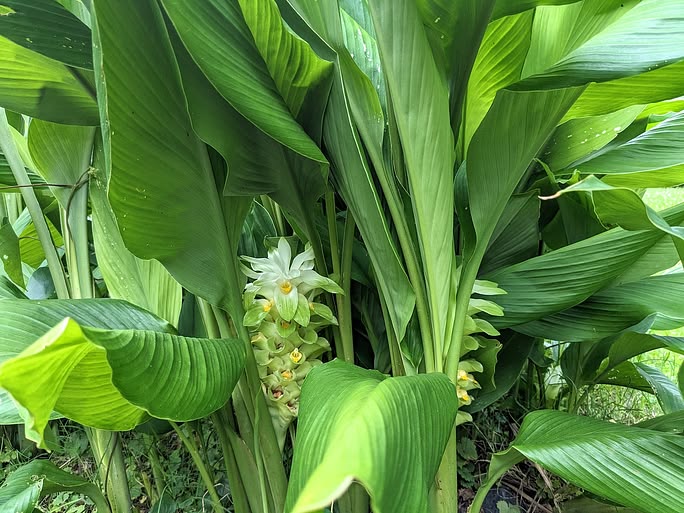
Perennial rhizomatous geophyte to about 1 m. Pseudostems arise from a fleshy, ringed primary rhizome that bears repeatedly branched lateral “fingers.” Internally the rhizome is deep orange-yellow. Leaves are large, oblong to lanceolate, distichous, up to about 1 m, dark green above and paler beneath, on sheathing petioles (typically 8–12 per shoot). Inflorescence is a terminal spike with pale yellow-white tubular flowers subtended by bracts; the plant is sterile and does not set viable seed. Reproduction is vegetative from rhizome pieces. Thought to be a cultigen originating in southwestern India, possibly involving hybridization involving wild turmeric (Curcuma aromatica) and related taxa. Grows in seasonally dry tropical biomes under cultivation; not known from truly wild populations. Kew lists IUCN status as Data Deficient.
Phytochemistry
Two dominant secondary-metabolite classes in the rhizome: diarylheptanoid curcuminoids (curcumin, demethoxycurcumin, bisdemethoxycurcumin), which supply the yellow pigment, and an essential oil (about 0.5–6%) rich in sesquiterpenes, especially ar-turmerone, α-turmerone, and β-turmerone (curlone), with α-zingiberene, β-sesquiphellandrene, and related bisabolane compounds. Leaf oil differs and is richer in monoterpenes. Curcuminoids are sensitive to light, oxygen, and pH. Oral curcumin has very low bioavailability (often cited as under 1% systemic exposure) unless formulated with piperine, lipids, or other delivery systems.
Western Traditional & Clinical Actions
Traditional European and modern herbal use centers on digestive complaints, mild biliary discomfort, and dyspepsia. Contemporary clinical interest focuses on anti-inflammatory and antioxidant effects, especially symptomatic relief in osteoarthritis and reduction of inflammatory markers. EMA/HMPC recognizes Curcumae longae rhizoma as a traditional herbal medicinal product for relief of digestive disturbances such as feelings of fullness, slow digestion, and flatulence.
Chinese Medicine Actions
Rhizome (jiang huang) is acrid and bitter, warm, entering the spleen and liver channels; it moves blood and qi, unblocks meridians, and relieves pain (chest and hypochondriac pain, dysmenorrhea, amenorrhea, trauma, bi syndrome). Tuberous material from C. longa used as one source of yu jin is treated as colder, linked to liver, heart, and lung, and used to move qi and blood, cool blood, and clear damp-heat jaundice. Recorded in Chinese materia medica from the Tang dynasty onward (Xin Xiu Ben Cao, 659 CE, and later works).
Traditional & Historical Uses
Used for several millennia in South Asia as spice, dye, and medicine. Ayurveda, Siddha, and Unani employ the rhizome for digestion, skin, wounds, and inflammatory conditions. In India it is also ritual and culinary (curries, haldi ceremonies). Southeast Asian, Middle Eastern, and later Chinese and Japanese traditions adopted it for food, dye, and medicine. Historically applied externally as a coloring and wound agent and internally as a bitter aromatic digestive.
Modern Pharmacological Evidence
Curcumin and related curcuminoids inhibit NF-κB and reduce TNF-α, IL-1β, IL-6, COX-2, and PGE2 in preclinical models; they also scavenge free radicals and up-regulate endogenous antioxidant enzymes. Turmerones add anti-inflammatory, antimicrobial, and neuroprotective signals and may synergize with curcuminoids. Additional reported activities include choleretic, gastroprotective, antimicrobial, and metabolic effects. Poor absorption, rapid metabolism, and rapid elimination limit translation unless bioavailability is improved.
Clinical Studies
Meta-analyses of randomized trials (through 2024–2025) report reductions in CRP, TNF-α, IL-6, and malondialdehyde, with improvements in some endothelial measures, after curcumin supplementation. Osteoarthritis trials often show better pain and function scores versus placebo; some compare favorably with NSAIDs for symptoms, though study quality varies. A 2025 umbrella review of intervention meta-analyses found signals for lipids, blood pressure, inflammation, musculoskeletal pain, ulcerative colitis, and quality of life, while noting weak methodology in many underlying reviews. A 2026 RCT of 1500 mg/day curcumin for 12 months in obese adults with type 2 diabetes reported lower inflammatory cytokines, hs-CRP, and glycemic indices versus placebo. Culinary turmeric doses are not equivalent to standardized curcuminoid extracts used in trials.
Preparations & Dosage
EMA traditional posology (adults): powdered rhizome 0.5–1 g, two to three times daily; infusion of 0.5–1 g in 150 ml water, two to three times daily; tincture (1:10) 0.5–1 ml three times daily; specified dry extracts in the ranges given in the EU monograph (for example DER 13–25:1 at 90–162 mg daily in divided doses). Clinical curcuminoid trials commonly use roughly 500–1500 mg/day of standardized extract, often with piperine or a lipid/micellar system. Golden milk and culinary use supply far lower curcuminoid doses.
Safety & Contraindications
Culinary amounts and traditional EU doses are generally well tolerated. Contraindicated in bile-duct obstruction; use caution with gallstones because of choleretic effects. Hypersensitivity is a contraindication. Not recommended in pregnancy, lactation, or under 18 years for medicinal use because of insufficient data. High-dose or highly bioavailable curcuminoid products have been linked to rare liver injury reports; traditional monograph doses have not shown this signal. Possible additive effects with anticoagulants and antiplatelet drugs; theoretical interactions via CYP and glucuronidation pathways (piperine further alters metabolism). Adulteration of powdered spice with lead chromate and fillers has been documented in some markets.
Cultivation & Harvest
Propagated only by rhizome setts. Requires tropical or subtropical heat (minimum about 18 °C), moisture, and well-drained loam or sand, partial shade to full sun. Planted in furrows or beds with organic matter; harvested when aerial growth senesces, typically 7–10 months after planting. Rhizomes are cured, boiled or steamed in some processing streams, dried, and polished. India is the largest producer, consumer, and exporter (on the order of three-quarters of world supply in recent seasons).
Commercial Products
Whole and ground spice, oleoresin, essential oil, and standardized curcuminoid extracts (commonly 95% curcuminoids). Branded bioavailability forms include Curcumin C3 Complex and BCM-95/Curcugreen, plus piperine (BioPerine), phytosome, micellar, and nanoparticle products. Also used as food color (curcumin E100), in cosmetics, and in traditional multi-herb formulas. Quality issues include species substitution within Curcuma and heavy-metal adulteration of cheap powder.
Ethnobotanical Curiosities
The name “terra merita” (worthy earth) underlies European “turmeric.” Rhizome paper was an early pH indicator (turns reddish in alkali). In Hindu practice turmeric marks auspiciousness and is central to wedding rituals. Hawaiian ʻōlena was used medicinally and ceremonially. Because the plant never sets seed, every cultivated clump is a vegetative clone of ancient selections.
Recent Research (2020–2026)
Work has shifted from crude powder toward formulated curcuminoids, multi-omics of Curcuma chemotypes, and headspace GC-MS discrimination of C. longa from C. aromatica, C. zedoaria, and other drug sources. Umbrella and meta-analytic reviews (2024–2025) support adjunctive effects on inflammation and oxidative stress while criticizing trial quality. Arthritis reviews (2026) emphasize NF-κB and cytokine modulation plus symptom gains in knee osteoarthritis. Longer RCTs in metabolic disease are appearing, but bioavailability and product standardization remain the main translational limits.
Conservation Status
IUCN Red List: Data Deficient (assessed 2019). Natural range is uncertain because the species is a cultigen from southwestern India, widely planted and naturalized, with little information on any truly wild populations. Recorded in numerous ex-situ collections. Trade pressure is on cultivated stock rather than wild harvest; related wild Curcuma species used as substitutes face more direct collection risk.
DIY Recipes
Digestive infusion: 0.5–1 g freshly grated or finely cut dried rhizome in 150 ml boiling water, steep 10–15 minutes, up to two or three times daily (traditional adult range). Culinary golden milk: simmer ½–1 tsp turmeric powder in milk or plant milk with a pinch of black pepper and fat (oil or ghee) for better curcuminoid dispersion; this is a food use, not a clinical dose. External paste of fresh rhizome with water or honey is a folk application for minor skin marks; avoid broken skin and stained fabric. Do not use medicinal doses if bile ducts are obstructed or if pregnant.
X (Twitter) Snapshot – 2020–2026
Public discussion clusters on culinary use, curcumin–piperine supplements, adulteration warnings (lead chromate in cheap powder), and farm-level posts from India on yield and the National Turmeric Board. Clinical claims on social platforms often outrun the evidence; regulatory and quality threads emphasize standardized extracts over raw spice for therapeutic intent.
Planting & Harvesting Reference Guide for Turmeric (Curcuma longa)
👈Planting & Harvesting Reference Guide:👇
This consolidates the planting and harvest details from the SPARK sections. Turmeric (Curcuma Longa) is a sterile cultigen. It does not set viable seed. Every new clump starts from a rhizome sett.
- Best Time for Planting
- In India and other tropical beds, plant at the start of the warm rainy season, when soil is warm and moist.
- Temperate gardens cannot rely on an early-spring outdoor sowing. Turmeric (Curcuma Longa) needs sustained heat, about 18 °C minimum, and fails in a cold winter outdoors. Use a greenhouse, a heated bed, or start setts indoors and move them out only after nights stay warm.
- Classical spice manuals do not fix a moon phase. A modern magical-minded choice, labeled as a choice and not as old canon, is a waxing moon. Fertile water signs are likewise a contemporary guess, not a recorded Turmeric (Curcuma Longa) rule.
- There is no pit-sowing and no seed from fresh fruit. Collect planting stock only from sound mother rhizomes or finger rhizomes of Turmeric (Curcuma Longa), about 25–30 g each in Indian field practice, at roughly 2.5 tonnes of seed rhizome per hectare on farms. Keep next year’s setts back before the rest is cured.
- Growing Conditions & Magical Minded Tips
- Site: tropical or subtropical heat, partial shade to full sun, moist but well-drained loam or sand. Waterlogging invites rhizome rot.
- Space in clumps or rows rather than as trees. Fingers and split mothers are set into furrows or beds with organic matter. Household clumps can sit at the garden edge.
- Mulch. Farm trials used pine needle, paddy straw, thatch grass, and tree-leaf mulches with farmyard manure. Broad-bed-and-furrow planting shed less soil and nutrient than flat beds.
- Feed with compost or farmyard manure. A Gujarat organic trial also tested vermicompost and ghanjivamrut. Conventional yards sometimes dip setts against rot and scale; organic practice uses approved biological dips and strict selection of clean stock.
- Agroforestry is optional: Himalayan trials grew Turmeric (Curcuma Longa) under Melia composita. Wider tree spacing favored the rhizome crop; tighter spacing stored more woody carbon.
- Magical-minded: whisper thanks to the clone and the bed, not a binding. Offer a pinch of the eventual harvest back to the soil. Do not plant a camphor-scented, mango-scented, or blue-black rhizome and call it Turmeric (Curcuma Longa).
- Best Time for Harvesting Rhizomes
- Seven to nine months after planting, by variety. Aromatic types often mature near seven months, intermediate near eight, late near nine. Some descriptions allow up to about ten months.
- Lift when leaves and stems brown and dry. That senescence is the practical and household ritual window.
- Waxing-to-full moon for potency is not fixed in the classical curing manuals. If you time by moon, call it a personal alignment, not a pharmacopoeial rule.
- There is no inner bark. The drug is the rhizome: round mother pieces and long fingers from the same plant.
- Sustainable & Magical Harvesting Methods
- Do not wildcraft. Kew records Turmeric (Curcuma Longa) as unknown in the wild. IUCN lists it Data Deficient because naturalized clumps cannot be separated cleanly from plantings. Harvest farms, gardens, and verified setts.
- Do not dig wild Curcuma cousins to fill an order. Yellow-orange flesh and a turmerone aroma favor Turmeric (Curcuma Longa). Camphor suggests Curcuma Aromatica or zedoary types. Raw-mango scent suggests Curcuma Amada. Blue-black flesh suggests Curcuma Caesia.
- Loosen soil and lift by hand or careful spade. Plough-lifting is the field method. Leave enough sound sett material to replant. This plant has no seed bank.
- Separate mother rhizomes from fingers and label them. Curcuminoid expression differs between those organs.
- Ask permission of the bed in plain speech. Sing if you wish. The recorded duty is replanting, not a silver blade or a bark quota.
- Post-Harvest Processing
- Clean off roots and soil. Cure mother and finger lots separately if you are following spice-yard practice.
- Boil or steam until soft, often 45–60 minutes, until a wooden skewer passes with little resistance, froth or white fumes appear, and the characteristic odor rises. Some yards use copper, earthen, or perforated vessels and reuse the cooking water for the next batch.
- Drain. Sun-dry on mats, bamboo, or a clean floor. Heap and cover at night so dew does not rewet the pile. Dry until hard, then polish if a market spice is wanted.
- Home scale can copy the sequence: simmer clean fingers until a skewer passes, drain, and dry until brittle. Store dark and airtight. Light and alkali fade the curcuminoids.
- A magical-minded store is a dark jar and a plain intention. No traditional moonstone charge is recorded. Reject brilliant uniform powder that does not stain and does not smell of turmerone. Lead chromate and metanil yellow are false yellows, not a harvest.
This guide is for quick reference. Ethical practice for Turmeric (Curcuma Longa) is disease-free setts, drainage, mulch, a full warm season, replanting, and an honest orange heart at the knife.
Healing Categories of Turmeric (Curcuma longa)
👈Turmeric (Curcuma Longa) fits best where a bitter, pungent, heating rhizome has actually been used: digestion and bile, blood and pain patterns, inflammatory joint comfort, skin and threshold rites, and the kitchen as daily medicine. It is a poor fit as a single cure-all:👇
Digestive and biliary. Best classical fit. Ayurveda, Commission E, ESCOP, and the EMA traditional monograph all place the rhizome with fullness, slow digestion, flatulence, and mild hepatobiliary complaint. The same choleretic action is why a blocked bile duct is a stop.
Blood-moving and gynecological patterns. Best East Asian fit. Jiang Huang is the warm rhizome for menstrual pain, amenorrhea, trauma, and bi syndrome. The colder tuber, as one source of Yu Jin, is a different category: constrained qi, blood heat, jaundice. Do not collapse them.
Inflammatory and musculoskeletal comfort. Best modern extract fit. Standardized curcuminoid trials, including CTRI/2017/02/007962 and CTRI/2023/07/055411, track knee pain, function, CRP, and TNF-α. Culinary teaspoons are not those doses.
Skin, wound, and external mark. Best household fit. Pastes for cuts, ulcers, and the Haldi glow are old. The stain is part of the medicine and part of the rite.
Metabolic and inflammatory tone. Secondary, still open. Longer curcumin trials in type 2 diabetes and lipid or endothelial markers exist. They are adjunct signals, not a monograph indication.
Ritual purification and threshold. A healing category in the cultures that kept the clone: wedding paste, abhishekam, ʻŌlena seawater, robe dye. Healing here includes the room and the social body.
Healing Categories
Digestive fire and bile. Turmeric (Curcuma Longa) is tikta and katu, light, dry, and heating, a Kapha-opposing rhizome used to wake Agni. European traditional use narrows that to dyspepsia: powder 0.5–1 g two or three times daily, or 1.5–3 g a day in the Commission E range, as tea, tincture, or equivalent. Stop if the duct is obstructed. Gallstones need a clinician. This is the category the official herbal books will defend without a stretch.
Blood, menses, and trauma. In Chinese practice the rhizome enters spleen and liver, moves qi and blood, and is given for chest and hypochondriac pain, menstrual obstruction, postpartum pain, and injury. Kampo notes keep that spleen-liver, acrid-bitter, warm profile. The repository should file Jiang Huang here, and file Yu Jin material from Turmeric (Curcuma Longa) under heat-clearing and jaundice, not under the same heading.
Joints and inflammatory biomarkers. Human evidence is strongest for curcuminoid extracts, not for the latte. Indian trials compared a bioavailable extract with paracetamol and a low-dose water-dispersible extract with placebo, and meta-analyses report gains on pain and WOMAC scores plus lower CRP and TNF-α in some pools. File this as symptom support beside, not instead of, diagnosis. Product name and percent curcuminoids belong on the label.
Skin and the visible mark. Fresh paste for minor skin complaints, wedding anointing, and the household half-hour glow are one continuous external use. Staining of cloth and skin is expected. Broken skin and adulterated powder are the limits. Lead chromate is not a topical.
Kitchen as maintenance. Curries, pickles, Okinawan tea, Moroccan Kharqoum, and golden milk with fat and pepper are the daily category. They deliver aroma and a modest pigment load. They do not reproduce a 500–1,500 mg curcuminoid trial. Food color INS 100(i) is the industrial cousin of this same yellow.
Threshold and spirit. Haldi, temple bath, havan grain, and Hawaiian sprinkle are healing acts aimed at purity, protection, and auspicious passage. Flag Manipura and Jupiter as contemporary correspondences. The attested act is the mark and the sprinkle.
Synergistic & Holistic Note
Turmeric (Curcuma Longa) rarely works as a lone hero in the old systems. In the cup it meets fat and black pepper, a pairing later pharmacology read as dispersion plus piperine. In the wedding paste it meets sandalwood. In the anthroposophic biliary drop it meets Chelidonium. In the field it meets mulch, drainage, and a sett left behind, because the plant has no seed. Holistic here means rhizome plus oil plus rite plus replanting, and a clear line between spice, traditional tea, and a branded extract. The orange heart at the knife is the first synergy test: if the color is false, nothing downstream is medicine.
✨ If You Only Read U.S. Consumer Pages ✨
U.S. consumer pages usually present Turmeric (Curcuma Longa) as a golden kitchen spice, a joint capsule, and a bioavailability note about black pepper. That picture is not empty. Culinary use is real, piperine does change curcumin exposure, and osteoarthritis trials are one of the better-documented human lanes. What those pages rarely hold is the rest of the record. They seldom say that the rhizome is a defined article in the European Pharmacopoeia, the USP supplement monograph, the Ayurvedic Pharmacopoeia of India, the Japanese Pharmacopoeia, and the Chinese Pharmacopoeia, where the rhizome (Jiang Huang) and the tuber (one source of Yu Jin) are not the same medicine. They seldom give the Commission E and EMA adult doses for dyspepsia, or the bile-duct contraindication that European herbal authorities treat as basic. They seldom name the Indian trial registries—CTRI/2017/02/007962 and CTRI/2023/07/055411—or the difference between a 0.5–1 g traditional powder dose and a 95 percent curcuminoid capsule. They seldom mention that India grows most of the crop, that a chromosome-scale genome exists, or that market surveys on six continents still find metanil yellow and lead chromate in powder. Reading only U.S. retail copy makes the plant look like a latte ingredient with a joint claim. Reading the global official and clinical record makes it look like a sterile cultigen, a ritual and culinary rhizome of long standing, a pharmacopoeial digestive drug, a source of registered food color, and the parent of a large extract-trial literature whose products are not interchangeable. Both pictures are part of the plant. The second is the one most shoppers never see.
Sources:
https://www.ema.europa.eu/en/medicines/herbal/curcumae-longae-rhizoma
https://doi.usp.org/USPNF/USPNF_M1126_01_01.html
https://pubmed.ncbi.nlm.nih.gov/33516238/
https://www.tandfonline.com/doi/full/10.1080/13880209.2025.2606229
https://www.kew.org/plants/turmeric
Globally: Where This Plant Is Studied
👈Global research, official texts, publishers, and human-trial data, rather than U.S.-consumer-page-limited:👇
Turmeric (Curcuma Longa) is a cultivated rhizome with official names in more than one medical system. The notes below follow the global record—pharmacopoeias, trial registries, and the laboratories that actually publish—rather than the retail page.
Where This Plant Is Studied
Turmeric (Curcuma Longa) is studied as a living crop, a pharmacopoeial drug, and a clinical extract across South Asia, East Asia, Southeast Asia, West Asia, Europe, and North America. The densest modern output comes from India, China, the United States, Iran, Thailand, Japan, Italy, and Australia. Leading institutional clusters include the Indian Institute of Science Education and Research Bhopal, which published the 2021 draft genome; Chinese groups that assembled the 2022 chromosome-scale genome and mapped curcumin biosynthesis and tuber formation; the Indian Institute of Technology Guwahati, which has synthesized the clinical-trial literature; Indian spice boards and food-technology institutes that work on curing, curcuminoid yield, and oleoresin; Thai and Iranian natural-product laboratories that profile oils and adulteration; Japanese Kampo and pharmacopoeial groups that still dispense the rhizome as a crude drug; and European pharmacognosy centers that supply the European Pharmacopoeia and the EMA assessment. Field research tracks cultivated clones in India—the country that grows most of the world’s supply—and in Bangladesh, China, Thailand, Indonesia, and smaller tropical plantings. Quality surveys now buy powder and supplements on six continents. The three main scientific lanes are genome and chemotype work, curcuminoid and turmerone chemistry, and human trials of standardized extracts. Turmeric (Curcuma Longa) is a multi-country pharmacognosy, agronomy, and traditional-medicine subject, not a single-market supplement story.
Sources:
https://www.nature.com/articles/s42003-021-02720-y
https://www.frontiersin.org/journals/plant-science/articles/10.3389/fpls.2022.1003835/full
https://pmc.ncbi.nlm.nih.gov/articles/PMC10111629/
https://www.tandfonline.com/doi/full/10.1080/13880209.2025.2606229
https://www.kew.org/plants/turmeric
Official Books That Name This Species
Turmeric (Curcuma Longa) is named, defined, and quality-tested in official national and regional books. These are legal or quasi-legal reference texts, not blog herbals. The European Pharmacopoeia monograph Curcumae longae rhizoma (Ph. Eur. 2543) is the identity standard cited by the European Union herbal monograph. The EMA/HMPC monograph on Curcuma longa L., rhizoma—revision adopted in 2018—gives the traditional indication of digestive disturbances such as fullness, slow digestion, and flatulence, and adult posology for powder, infusion, tincture, and specified dry extracts. The German Commission E monograph (1985, text 1990) approves the rhizome for dyspeptic conditions, requires not less than 3 percent dicinnamoylmethane derivatives calculated as curcumin and not less than 3 percent volatile oil, and sets an average daily dose of 1.5–3 g. The ESCOP monograph covers mild digestive and mild hepatobiliary complaints. The United States Pharmacopeia dietary-supplement monograph defines Turmeric as the dried rhizome of Curcuma longa L., also known as C. domestica Val., commonly called Curcuma, Haridra, and Indian saffron, with not less than 3.0 percent curcuminoids on the anhydrous basis, and supplies curcuminoid reference standards. The Ayurvedic Pharmacopoeia of India names Haridra. The Pharmacopoeia of the People’s Republic of China lists Jiang Huang from the rhizome of Turmeric (Curcuma Longa) and treats tuberous material of this species as one legal source of Yu Jin alongside other Curcuma species. The Japanese Pharmacopoeia lists Turmeric. WHO/JECFA monographs evaluate curcumin as food color INS 100(i), with an acceptable daily intake of 0–3 mg/kg body weight. These books specify identity, curcuminoid or oil minima, preparations, and, in the herbal monographs, contraindications such as bile-duct obstruction. That is a different class of naming from a retail product page.
Sources:
https://www.ema.europa.eu/en/documents/herbal-monograph/final-european-union-herbal-monograph-curcuma-longa-l-rhizoma-revision-1_en.pdf
https://www.ema.europa.eu/en/medicines/herbal/curcumae-longae-rhizoma
https://www.herbalgram.org/resources/commission-e-monographs/monograph-approved-herbs/turmeric-root/
https://doi.usp.org/USPNF/USPNF_M1126_01_01.html
https://apps.who.int/food-additives-contaminants-jecfa-database/Home/Chemical/638
https://dentomed.toyama-wakan.net/en/scientific_information_on_crude_drugs/Turmeric/SCC000002?w=1
https://link.springer.com/article/10.1186/s13020-025-01115-z
Who Publishes on It
Publication is global and split across spice chemistry, traditional-medicine reviews, formulation science, and clinical rheumatology and metabolism. An Indian review group at IIT Guwahati has noted on the order of 7,000 PubMed-indexed papers touching Turmeric and on the order of 20,000 touching curcumin, which is one constituent, not the whole rhizome. India leads agronomy, pharmacognosy, extract development, and a large share of registered osteoarthritis trials. China leads species-discrimination chemistry, Jiang Huang and Yu Jin pharmacology, and genome-scale work on tuber versus rhizome. The United States, Iran, Thailand, Italy, Australia, and Japan contribute high-visibility trials, oil analyses, and pharmacopoeial commentary. Journals that repeatedly carry the plant include Journal of Ethnopharmacology, Phytotherapy Research, Frontiers in Pharmacology, Frontiers in Plant Science, Plants, BMC Complementary Medicine and Therapies, and Journal of Pain Research. Publishers and official bodies include Springer Nature, Elsevier, Wiley, MDPI, Frontiers, the European Medicines Agency, the United States Pharmacopeia, the China Pharmacopoeia Commission, Japan’s pharmacopoeial authorities, AYUSH, JECFA/WHO, and the Therapeutic Goods Administration when the subject is safety signals. Industry laboratories behind standardized extracts such as Curcumin C3 Complex and BCM-95 sit beside university authors and should be read as sponsors as well as scientists. Consumer-health sites reprint fragments of this literature. They are not the original publishers.
Sources:
https://pmc.ncbi.nlm.nih.gov/articles/PMC10111629/
https://www.frontiersin.org/journals/pharmacology/articles/10.3389/fphar.2025.1601204/full
https://link.springer.com/article/10.1186/s12906-025-04951-6
https://pubmed.ncbi.nlm.nih.gov/38576215/
https://www.ema.europa.eu/en/documents/herbal-report/final-assessment-report-curcuma-longa-l-rhizoma-revision-1_en.pdf
Human Trials Tied to This Species
Human evidence for Turmeric (Curcuma Longa) is strongest for curcuminoid-standardized rhizome extracts in osteoarthritis and for inflammatory biomarkers, and thinner for the plain culinary powder. In India, a randomized non-inferiority trial compared bioavailable Turmeric extract (BCM-95, 500 mg twice daily) with paracetamol 650 mg three times daily for six weeks in knee osteoarthritis (CTRI/2017/02/007962). Completers numbered 71 and 73. WOMAC scores were judged equivalent within a preset margin, while CRP and TNF-α fell more in the extract arm, and mild adverse events were fewer with the extract (about 5.5 percent versus about 12.7 percent). A later Indian double-blind trial of a water-dispersible extract standardized to 60 percent curcuminoids, 250 mg once daily for 90 days, in mild-to-moderate knee osteoarthritis (CTRI/2023/07/055411) reported larger visual-analog and KOOS gains than placebo and lower hsCRP, TNF-α, IL-6, and IL-1β, with four mild adverse events. A 2024 umbrella meta-analysis of osteoarthritis meta-analyses reported reductions in visual-analog pain and in WOMAC pain, function, stiffness, and total scores. A 2025 systematic review of 21 randomized trials (1,705 people) in knee osteoarthritis found lower serum CRP and TNF-α with curcumin versus placebo, without a consistent difference in ESR, IL-1β, IL-6, or PGE2. A 2025 umbrella review of intervention meta-analyses found signals for lipids, blood pressure, inflammatory markers, musculoskeletal symptoms, and ulcerative colitis, and warned that many underlying reviews are methodologically weak. A 2026 randomized trial of 1,500 mg/day curcumin for 12 months in obese adults with type 2 diabetes reported lower cytokines, hsCRP, and glycemic indices versus placebo. The EMA assessment remains traditional-use for digestion, not a well-established-efficacy claim. Many trials use formulated curcuminoids rather than whole-rhizome tea, and some East Asian trials enroll mixed Curcuma drugs. They are species-adjacent evidence unless the paper identifies Curcuma Longa rhizome. Registry numbers and extract names matter more than the word turmeric on a label.
Sources:
https://pubmed.ncbi.nlm.nih.gov/33516238/
https://pubmed.ncbi.nlm.nih.gov/39882178/
https://pubmed.ncbi.nlm.nih.gov/38576215/
https://link.springer.com/article/10.1186/s12906-025-04951-6
https://www.frontiersin.org/journals/pharmacology/articles/10.3389/fphar.2025.1601204/full
https://www.mdpi.com/1422-0067/27/9/3854
https://www.ema.europa.eu/en/documents/herbal-monograph/final-european-union-herbal-monograph-curcuma-longa-l-rhizoma-revision-1_en.pdf

Part 1: Modern Medical Properties and Uses

Purpose: Highlights the plant’s scientific and medicinal properties, validating holistic healing with evidence-based data.
Contemporary Medical Applications of Turmeric (Curcuma longa)
👈Contemporary Medical Applications: Describes current clinical uses (e.g., capsules, tinctures) and delivery methods in modern medicine.👇
Contemporary Medical Applications:
- Turmeric rhizome is prepared in modern practice as powdered herbal substance, comminuted herb for infusion, hydroalcoholic tinctures, and dry extracts, and these forms are the ones recognized for adult oral use in the European Union herbal monograph on Curcuma longa L., rhizoma. The traditional indication is relief of digestive disturbances such as feelings of fullness, slow digestion, and flatulence, with use limited to adults and a recommendation to seek advice if symptoms last beyond two weeks.
- Posology in the revised EU monograph specifies powdered rhizome at 0.5–1 g two to three times daily, herbal tea from 0.5–1.0 g in 150 ml boiling water two to three times daily, tincture 1:10 at 0.5–1 ml three times daily, dry extract DER 13–25:1 at 90–162 mg daily in divided doses, dry extract DER 5.5–6.5:1 at 100–200 mg twice daily, and tincture 1:5 at 10 ml once daily or 5 ml in water three times daily. These ranges anchor clinical and pharmacy use of the whole rhizome rather than isolated curcumin alone.
- Standardized curcuminoid extracts, often labeled at about 95 percent curcuminoids and supplied in capsules or softgels, are the dominant delivery form in clinical research on joint comfort, inflammatory biomarkers, and metabolic markers. Doses in trials commonly fall between roughly 500 and 1500 mg of curcuminoids per day, frequently paired with piperine, phospholipids, or micellar systems because unmodified curcumin is poorly absorbed.
- Topical and oral combination products use turmeric oleoresin or essential oil alongside curcuminoids for musculoskeletal complaints and skin applications. Rhizome oil, rich in turmerones, is also sold as a distilled product for aromatic and adjunctive use, distinct from the yellow pigment fraction used as food color.
- In East Asian clinical materia medica practice, the rhizome (jiang huang) and the tuberous root portion associated with yu jin are dispensed as decoction pieces, powders, and prepared formulas for patterns involving qi and blood stagnation, menstrual pain, and trauma, while Western product lines more often sell a single rhizome extract for digestion or joint support.
- Veterinary and comparative-use literature describes oral turmeric or curcumin preparations in companion animals for inflammatory joint conditions, though dosing is extrapolated from human and laboratory work and product quality varies widely. Human over-the-counter products remain the best-documented commercial channel.
- Food-additive use of curcumin (INS 100i) as a color is regulated separately from medicinal rhizome products. JECFA has evaluated curcumin as a color, while herbal-medicine monographs evaluate the rhizome for digestive indications, so the same plant supplies both a culinary colorant and a traditional medicinal substance.
Sources: Contemporary Medical Applications
https://www.ema.europa.eu/en/medicines/herbal/curcumae-longae-rhizoma
https://www.ema.europa.eu/en/documents/herbal-monograph/final-european-union-herbal-monograph-curcuma-longa-l-rhizoma-revision-1_en.pdf
https://www.ema.europa.eu/en/documents/herbal-report/final-assessment-report-curcuma-longa-l-rhizoma-revision-1_en.pdf
https://link.springer.com/article/10.1186/s13020-025-01115-z
https://apps.who.int/food-additives-contaminants-jecfa-database/Home/Chemical/638
Pharmacology of Turmeric (Curcuma longa)
👈Pharmacology: Outlines key compounds and their mechanisms of action, driving therapeutic effects.👇
Pharmacology:
- Curcumin, the principal diarylheptanoid of the rhizome, interrupts inflammatory signaling at several nodes. It inhibits IκB kinase activity, limits phosphorylation and degradation of IκBα, and thereby reduces nuclear translocation of NF-κB, which lowers transcription of TNF-α, IL-1, IL-6, and other mediators. Parallel effects on COX-2, 5-LOX, and iNOS reduce prostaglandin and nitric-oxide tone in inflamed tissue.
- MAPK, JAK/STAT, and TLR4 pathways are additional targets described in cellular and animal work. Suppression of TLR4/NF-κB/AP-1 signaling has been linked to reduced intestinal inflammatory cytokines, while JAK2/STAT3 modulation is cited in models of epithelial inflammatory change. These multi-target actions distinguish curcumin from single-enzyme drugs.
- Antioxidant pharmacology includes direct radical scavenging and metal chelation, together with indirect support of endogenous defenses such as superoxide dismutase, catalase, and glutathione peroxidase. Binding interactions with KEAP1 and related redox sensors have been explored in docking and experimental studies, offering a mechanistic bridge between the yellow pigment and cellular stress responses.
- Turmerones from the essential oil contribute aromatic, anti-inflammatory, and experimental neuroprotective signals and can act alongside curcuminoids. Reviews of authenticated rhizome oil note that combining turmerones with curcuminoids may produce synergistic effects not seen with either fraction alone, which supports whole-rhizome preparations as pharmacologically broader than isolated curcumin.
- Bioavailability is the central pharmacokinetic constraint. Oral curcumin undergoes rapid conjugation and elimination, so systemic exposure from unmodified powder is low. Piperine inhibits glucuronidation and has been shown to raise curcumin exposure substantially; lipid, phytosome, and micellar formulations pursue the same goal by changing dissolution and first-pass handling.
- Choleretic and digestive actions of the rhizome, long used to justify the traditional indication, are attributed to both curcuminoids and volatile constituents such as turmerone and cineole, which increase bile flow in experimental settings. This pharmacology aligns with the monograph use for fullness and slow digestion, while also explaining the caution in biliary obstruction.
- Anticancer laboratory work describes effects on proliferation, apoptosis, and angiogenesis through NF-κB/VEGF, PI3K/Akt, and related pathways in cell and animal models. These findings remain preclinical for most tumor types and are best read as mechanistic maps rather than established treatment claims.
Sources: Pharmacology:
https://link.springer.com/article/10.1007/s10787-025-01932-6
https://www.frontiersin.org/journals/pharmacology/articles/10.3389/fphar.2025.1509045/full
https://pmc.ncbi.nlm.nih.gov/articles/PMC12405209/
https://pmc.ncbi.nlm.nih.gov/articles/PMC12954815/
https://pmc.ncbi.nlm.nih.gov/articles/PMC7823572/
Natural Medicine Studies / Turmeric (Curcuma longa)
👈Natural Medicine Studies: Summarizes recent research on efficacy, safety, or clinical outcomes from peer-reviewed studies.👇
Natural Medicine Studies:
- An umbrella meta-analysis of randomized trials through 2023 found that curcuminoid supplementation reduced visual analog scale pain and WOMAC pain, function, stiffness, and total scores in osteoarthritis, supporting shorter reliance on other symptom medicines in the pooled data. The authors framed the result as strong support for symptom relief rather than disease modification.
- A 2025 systematic review and meta-analysis of 21 randomized trials (1,705 participants) in knee osteoarthritis reported lower serum CRP and TNF-α with curcumin versus placebo, while ESR, IL-1β, IL-6, and PGE2 did not differ significantly. The biomarker signal was therefore selective, not uniform across every inflammatory marker.
- A 2024 meta-analysis of meta-analyses on inflammation, oxidative stress, and endothelial function reported reductions in CRP, TNF-α, IL-6, and malondialdehyde, with an increase in flow-mediated dilation. The authors suggested adjunctive value for inflammatory and vascular markers, with clearer effects at doses up to about 800 mg/day in shorter interventions.
- A 2025 critical umbrella review of intervention meta-analyses concluded that curcumin shows potentially favorable effects on lipids, blood pressure, inflammatory markers, musculoskeletal symptoms, ulcerative colitis, and quality of life, while stating that methodological quality of many included reviews remains limited and that conclusions for several diseases are still uncertain.
- A 2024 review of meta-analyses of randomized trials on chronic inflammatory metabolic disease found repeated signals for lower CRP, IL-6, and TNF-α, with additional associations for glucose-related and lipid measures. The pattern is consistent enough to justify continued trials, but product composition and bioavailability differed widely across studies.
- A 2026 randomized, double-blind, placebo-controlled trial of 1500 mg/day curcumin for 12 months in obese adults with type 2 diabetes reported lower pro-inflammatory cytokines, hs-CRP, and neutrophil-to-lymphocyte ratio, improved antioxidant enzyme status, and better fasting glucose, HbA1c, and HOMA-IR versus placebo. Longer trials of this kind are still uncommon.
- Safety summaries tied to traditional rhizome doses describe good tolerability, with bile-duct obstruction as the main contraindication and insufficient data in pregnancy, lactation, and under 18 years. Separate pharmacovigilance notes caution that highly bioavailable, high-dose curcuminoid products have been associated with rare liver-injury reports not described for monograph-range traditional preparations.
Sources: Natural Medicine Studies:
https://pubmed.ncbi.nlm.nih.gov/38576215/
https://link.springer.com/article/10.1186/s12906-025-04951-6
https://www.sciencedirect.com/science/article/abs/pii/S1098882324000613
https://www.frontiersin.org/journals/pharmacology/articles/10.3389/fphar.2025.1601204/full
https://www.mdpi.com/2072-6643/16/11/1728
https://www.mdpi.com/1422-0067/27/9/3854
https://www.ema.europa.eu/en/documents/herbal-monograph/final-european-union-herbal-monograph-curcuma-longa-l-rhizoma-revision-1_en.pdf
Chemistry of Turmeric (Curcuma longa)
👈Chemistry: Details active chemical constituents (e.g., alkaloids, flavonoids) and their healing roles.👇
Chemistry:
- The rhizome’s signature pigments are three diarylheptanoids: curcumin (diferuloylmethane), demethoxycurcumin, and bisdemethoxycurcumin. Together they account for the orange-yellow color and are the fraction standardized in most extracts. Typical powdered turmeric contains on the order of a few percent total curcuminoids, with cultivar, soil, and post-harvest handling shifting the exact yield.
- The volatile oil, commonly 0.5–6 percent of the rhizome, is dominated by bisabolane sesquiterpenes. Authenticated oils repeatedly show α-turmerone, ar-turmerone, and β-turmerone (curlone) as major constituents, accompanied by α-zingiberene, β-sesquiphellandrene, ar-curcumene, and smaller amounts of monoterpenes such as terpinolene and 1,8-cineole.
- Fresh and dried rhizomes do not share an identical oil profile. Hydrodistilled fresh oil is often rich in tumerone and curlone, while drying and solvent choice shift the balance toward ar-turmerone and oxidized sesquiterpenes. This chemistry explains why aroma and marker ratios can change between farm-fresh and market-dried material.
- Leaf and aerial oils differ from rhizome oil and are richer in monoterpenes such as α-phellandrene, terpinolene, and 1,8-cineole. Chemical fingerprinting by headspace GC-MS separates C. longa from C. aromatica, C. zedoaria, C. wenyujin, and other drug species, which is essential because several Curcuma rhizomes enter trade under overlapping common names.
- Minor bisabolane sesquiterpenes continue to be isolated from the rhizome, including novel turmerones reported from Chinese material and characterized by NMR and high-resolution mass spectrometry. These compounds expand the known terpenoid catalog beyond the three dominant turmerones used as quality markers.
- Non-volatile bulk constituents include starch, sugars, protein, fixed oil, and minerals. The medicinal and culinary value sits in the curcuminoid and sesquiterpene fractions, but the starch-rich matrix affects drying, milling, and the release of actives during infusion or extraction.
- Curcuminoids are chemically fragile. They degrade with light, alkaline pH, and oxygen, which is why protected packaging, controlled drying, and rapid extraction matter for both spice quality and clinical extracts. Adulteration with lead chromate or yellow fillers has been documented in some spice markets and is a chemical-quality problem distinct from natural constituent variation.
Sources: Chemistry:
https://pmc.ncbi.nlm.nih.gov/articles/PMC7823572/
https://pmc.ncbi.nlm.nih.gov/articles/PMC12954815/
https://www.mdpi.com/2223-7747/12/9/1785
https://link.springer.com/article/10.1007/s11418-022-01658-7
https://www.tandfonline.com/doi/full/10.1080/10286020.2017.1367769
https://www.phytojournal.com/archives/2026.v15.i5.16136/a-comprehensive-review-on-phytochemical-constituents-and-pharmacological-activities-of-curcuma-longa-l
https://www.kew.org/plants/turmeric
Functional Foods and Nutrition /Turmeric (Curcuma longa)
👈Functional Foods and Nutrition: Highlights dietary uses (e.g., teas, supplements) in modern health practices.👇
Functional Foods and Nutrition:
- Turmeric is a daily culinary spice across South Asia, Southeast Asia, and the Middle East, contributing color, aroma, and small amounts of curcuminoids and turmerones to curries, rice, lentils, and pickles. Culinary intake is far below the curcuminoid doses used in clinical trials, so food use and supplement use should not be treated as interchangeable.
- Golden-milk and similar fat-and-pepper preparations disperse ground rhizome in milk or plant milk with black pepper and a lipid. The fat aids dispersion of the lipophilic curcuminoids, and piperine from pepper is the same bioavailability partner studied in pharmacokinetic work, which is why this traditional pairing has a chemical rationale.
- Herbal infusions of 0.5–1 g comminuted rhizome in 150 ml water, taken two or three times daily, are the tea form listed in the EU traditional monograph for digestive complaints. Because curcuminoids are poorly water-soluble, an infusion delivers more aromatic oil and a modest pigment load than a concentrated extract.
- Curcumin is an authorized food color (INS 100(i), CI Natural Yellow 3) evaluated by JECFA, with an acceptable daily intake set at 0–3 mg/kg body weight on the basis of a rat multigeneration no-observed-effect level and a safety factor of 100. This regulatory identity is separate from the medicinal rhizome monograph.
- Oleoresin and essential oil are food ingredients as well as supplement raw materials. Oleoresin concentrates both color and aroma for processed foods, while distilled oil supplies the turmerone-rich flavor fraction used in seasoning blends. Processing method changes the ratio of curcuminoids to volatiles that reaches the plate.
- Nutritional composition of the rhizome includes carbohydrate (largely starch), protein, fixed oil, fiber, and minerals, with the bioactive diarylheptanoids and sesquiterpenes present as minor constituents by weight. Reviews describe the rhizome as both a culinary staple and a concentrated source of those minor constituents once extracted.
- Quality nutrition depends on identity and purity. Species substitution within Curcuma and deliberate bulking with yellow earth, talc, or lead chromate have been reported in spice trade, so culinary and functional-food use benefits from suppliers who test curcuminoid content and heavy metals rather than relying on color alone.
Sources: Functional Foods and Nutrition:
https://www.ema.europa.eu/en/documents/herbal-monograph/final-european-union-herbal-monograph-curcuma-longa-l-rhizoma-revision-1_en.pdf
https://apps.who.int/food-additives-contaminants-jecfa-database/Home/Chemical/638
https://www.inchem.org/documents/jecfa/jecmono/v06je29.htm
https://www.kew.org/plants/turmeric
https://pmc.ncbi.nlm.nih.gov/articles/PMC7823572/
https://www.phytojournal.com/archives/2026.v15.i5.16136/a-comprehensive-review-on-phytochemical-constituents-and-pharmacological-activities-of-curcuma-longa-l
Current Projects and Future Possibilities /Turmeric (Curcuma longa)
👈Current Projects and Future Possibilities: Notes ongoing research, clinical trials, or innovative medical applications.👇
Current Projects and Future Possibilities:
- Formulation science is the most active translational lane. Phytosome, micellar, nanoparticle, and piperine-combined products are being compared for systemic exposure, with the aim of delivering trial-range curcuminoid levels without relying solely on multi-gram crude powder. Indian manufacturers already supply branded extracts such as C3 Complex and BCM-95 into global nutraceutical lines.
- Chemotype mapping of Curcuma by headspace GC-MS and metabolomics is being used to separate C. longa from C. aromatica, C. wenyujin, C. kwangsiensis, and C. phaeocaulis, which matters because Chinese and Ayurvedic drug names cover more than one species. Better markers should reduce substitution in both research and commerce.
- Osteoarthritis and metabolic-inflammation programs continue to test longer exposures and synovial as well as serum biomarkers. The 2025 knee-osteoarthritis meta-analysis explicitly called for larger trials and synovial-fluid work after finding serum CRP and TNF-α reductions but inconsistent effects on other cytokines.
- Combination strategies pair curcuminoids with turmerone-rich oil, ginger constituents, or conventional care in symptom studies. Laboratory data already suggest synergy between curcuminoids and turmerones, and clinical programs are beginning to ask whether whole-rhizome fractions outperform isolated pigment.
- Agricultural and processing research in India, the dominant producer, focuses on yield, curcuminoid retention through drying, and value-added extraction under national initiatives such as the National Turmeric Board and SPICED schemes. Producing one tonne of 95 percent curcumin still requires on the order of 30–35 tonnes of powder, so extraction efficiency is an economic as well as a scientific target.
- Neuroinflammation, inflammatory bowel patterns, and endothelial function remain active preclinical-to-early-clinical themes, driven by NF-κB and oxidative-stress mechanisms already mapped in the pharmacology literature. These indications are promising research directions rather than established monograph uses.
- Conservation and identity work treats C. longa as a cultigen of uncertain wild status (IUCN Data Deficient) while documenting ex-situ holdings. Future supply security is therefore a cultivation and quality question more than a wild-harvest question, with related wild Curcuma species needing separate attention where they enter drug trade.
Sources: Current Projects and Future Possibilities:
https://www.frontiersin.org/journals/pharmacology/articles/10.3389/fphar.2025.1509045/full
https://link.springer.com/article/10.1007/s11418-022-01658-7
https://link.springer.com/article/10.1186/s12906-025-04951-6
https://www.niir.org/blog/india-curcumin-market/
https://www.iucnredlist.org/species/88308047/88308057
https://pmc.ncbi.nlm.nih.gov/articles/PMC12954815/
https://www.kew.org/plants/turmeric
Literary Mentions of Turmeric (Curcuma longa)
👈Literary Mentions: References modern medical texts or studies citing the plant’s therapeutic use.👇
Literary Mentions:
- Ayurvedic literature records the rhizome as Haridra. The Charaka Samhita and Sushruta Samhita, the foundational medical compilations of the early classical period, list it among digestive, skin, wound, and urinary-pattern remedies, and later nighantus repeat those indications. Integrative reviews map specific formula citations, including Haridradi preparations, back to those samhitas.
- The Atharvaveda is cited in modern historical reviews as an early textual witness to medicinal turmeric in the Indian subcontinent, with subsequent Ayurvedic use covering colds, abdominal fullness, jaundice, rheumatism, menstrual irregularity, ulcers, and external injuries. Use in India is often placed on a scale of millennia, with some reviews estimating roughly 4,000–6,000 years of cultural employment.
- Chinese literary record begins in the Tang dynasty. The Xin Xiu Ben Cao (Newly Revised Materia Medica, 659 CE) is cited as the first official mention after introduction to China, followed by Ri Hua-zi’s materia medica, the Bencao Tujing, and Li Shizhen’s Bencao Gangmu. Those works distinguish rhizome jiang huang, used for pain, trauma, and menstrual stagnation, from tuberous material used as a yu jin source.
- Japanese and Kampo sources carry the same rhizome into the modern pharmacopoeia. Contemporary crude-drug monographs list turmeric for gallbladder support, menstrual pain, hypochondriac pain, and bleeding patterns, with properties given as warm, acrid, and bitter, and meridian affinity to spleen and liver, continuing the Chinese textual line.
- European medical writing from the early modern period through nineteenth-century dispensatories describes the rhizome as radix curcumae or terra merita, distinguishing round and long tubers from the same plant and noting cultivation in Bengal and China. Eclectic and pharmacopoeial entries treat it as a coloring and aromatic root rather than as a newly discovered drug.
- Twentieth- and twenty-first-century monographs close the literary arc. WHO/JECFA evaluations from the 1970s onward assess turmeric and curcumin as food additives, the European HMPC monograph (original 2009, revision adopted 2018 and published later) fixes the traditional digestive indication, and 2024–2026 clinical reviews cite the same plant as a leading subject of inflammatory-biomarker trials.
- Across these texts the consistent thread is the rhizome’s dual identity as kitchen spice and medicinal root. Ancient South Asian and Chinese sources emphasize digestion, blood movement, skin, and pain; modern monographs and trial literature revisit digestion, inflammation, and joint symptoms with chemical names the older authors did not have.
Sources: Literary Mentions:
https://link.springer.com/article/10.1186/s13020-025-01115-z
https://www.researchgate.net/publication/393936685_HARIDRA_CURCUMA_LONGA_LINN_AN_INTEGRATIVE_REVIEW_OF_AYURVE-_DIC_WISDOM_AND_MODERN_PHARMACOLOGICAL_EVIDENCE
https://dentomed.toyama-wakan.net/en/scientific_information_on_crude_drugs/Turmeric/SCC000002?w=1
https://www.henriettes-herb.com/eclectic/pereira/curcuma-long.html
https://www.inchem.org/documents/jecfa/jecmono/v06je29.htm
https://www.ema.europa.eu/en/documents/herbal-monograph/final-european-union-herbal-monograph-curcuma-longa-l-rhizoma-revision-1_en.pdf
https://ayurveda.com/blog/the-ancient-ayurvedic-writings/

Part 2: Plant Knowledge Systems

Purpose: Validates plant-based healing through interdisciplinary scientific and cultural fields.
Ethnobotany of Turmeric (Curcuma longa)
👈Ethnobotany: Explores the plant’s traditional uses across cultures, linking indigenous knowledge to modern applications.👇
Ethnobotany:
- Across the Indian subcontinent, Turmeric (Haridra, Haldi) is both a kitchen staple and a ritual substance whose documented use reaches at least to the Vedic period, with later listings in the Agni Purana for jaundice, wounds, and hemorrhoids and in the Charaka and Sushruta compilations for digestive, skin, urinary, and inflammatory patterns. The same rhizome that colors dal and rice is ground into paste for the pre-wedding anointing of bride and groom, given in nuptial customs, and applied after birth, so the ethnobotanical record does not separate medicine from life-cycle ritual. Modern digestive monographs and joint-symptom trials revisit indications—fullness, slow digestion, inflammatory discomfort—that these older South Asian uses already named in different technical language.
- In the Tang dynasty the rhizome entered Chinese official materia medica. The Xin Xiu Ben Cao of 659 CE is cited as the first state pharmacopoeial mention, and later works including the Bencao Tujing and Li Shizhen’s Bencao Gangmu distinguish the warm rhizome Jiang Huang, used for chest and hypochondriac pain, menstrual pain, trauma, and bi syndrome, from colder tuberous material used as one source of Yu Jin for qi and blood movement and damp-heat jaundice. That textual split still structures East Asian dispensing: the same species supplies two drug parts with different thermal assignments, a distinction largely collapsed in Western single-extract products.
- Island and East Asian practice carried the plant beyond the mainland trade routes. Hawaiian ʻōlena was used by practitioners in both medicinal and ceremonial contexts. In Okinawa, Turmeric tea has been drunk for generations as a household tonic. Arab merchants are credited in historical reviews with moving the spice toward North Africa and Europe by the early medieval period; Moroccan cuisine has used Kharqoum since about the seventh century, and Moroccan women have combined it with other herbs in post-bath “herb warmer” mixtures taken internally for colds and fertility-related complaints. These regional forms—tea, paste, and spiced dishes—prefigure today’s infusion, topical paste, and food-format products.
- Southeast Asian names such as Kunyit mark the rhizome as dye, preservative, and wound-and-skin remedy as well as curry color. Ethnobotanical surveys describe early domestication in South Asia, probable cultivation in Odisha from remote antiquity, and a role as coloring agent, protective substance, and religious material long before it was a global commodity. The modern functional-food and textile-dye markets are continuous with that triad of color, protection, and ritual rather than a late invention.
- Trade also created a shadow ethnobotany of adulteration. Historical spice manuals record Turmeric as a colorant used to bulk mustard, and contemporary market surveys across several continents still find lead chromate, metanil yellow, and undeclared fillers in powdered spice. Ethnobotanical knowledge of the true rhizome—its orange interior, aromatic oil, and species identity—remains the practical counter to that commerce, which is why pharmacopoeias now specify minimum curcuminoid and volatile-oil content.
Sources: Ethnobotany:
https://link.springer.com/article/10.1186/s13020-025-01115-z
https://www.tandfonline.com/doi/full/10.1080/13880209.2025.2606229
https://irispublishers.com/oajaa/fulltext/turmeric-the-golden-spice-from-asia-to-africa.ID.000540.php
https://www.academia.edu/115491319/Ethnobotany_of_turmeric_Curcuma_longa_L_
https://www.kew.org/plants/turmeric
Plant Genomics of Turmeric (Curcuma longa)
👈Plant Genomics: Describes genetic studies of the plant, focusing on traits related to medicinal properties.👇
Plant Genomics:
- Turmeric has been sequenced. A 2021 draft genome in Communications Biology, built from 10x Genomics linked reads and Oxford Nanopore long reads plus leaf transcriptome data, assembled about 1.02 Gbp with roughly 70 percent repetitive sequence and 50,401 predicted coding genes, and placed Curcuma Longa among 16 other plant genomes. The assembly recovered the curcuminoid pathway genes CURS1, CURS2, CURS3, and diketide-CoA synthase, and reported positive selection and a functionally suggestive amino-acid change in phenylalanine ammonia-lyase, the entry enzyme from phenylalanine toward cinnamic acid.
- A 2022 chromosome-scale assembly in Frontiers in Plant Science used PacBio long reads and Hi-C to organize the genome into 21 pseudochromosomes totaling 1.11 Gb, with a scaffold N50 of 50.12 Mb and 49,612 protein-coding genes. Comparative analysis indicated that Turmeric and Ginger share a recent whole-genome duplication. Gene-family contraction pointed to transcription factors, phytohormone signaling, and plant–pathogen interaction genes as candidates in adaptation, which fits a sterile cultigen maintained by vegetative propagation under human selection.
- Transcriptomes from rhizome and tuber tissues in that chromosome-scale study identified 68 candidate genes for curcumin biosynthesis, centered on PAL, C4H, 4CL, HCT, CCOMT, DCS, and CURS. DCS and CURS, the enzymes that build the diarylheptanoid skeleton, sit in expanded gene families shared with Ginger. Expression differed between rhizome and tuber and across tuber developmental stages, offering a genomic explanation for why commercial “fingers” and round tubers are not chemically identical even on one plant.
- The same expression data tied tuber initiation to phytohormone and carbohydrate-metabolism genes, and interpreted higher or remodeled curcuminoid levels under stress as a defense-linked secondary-metabolite shift. For medicinal cultivation this is practical: genotype, organ (rhizome versus tuber), and environment can be read against a reference genome rather than only against color or bulk yield. Marker development for curcuminoid content and for distinguishing Curcuma Longa from Curcuma Aromatica, Curcuma Wenyujin, and other drug species is the direct downstream use of these assemblies.
- Because the crop is sterile and reproduced from rhizome setts, genomic diversity is the diversity of clonal lineages rather than of recombining wild populations. The two public assemblies therefore function as reference maps for landrace identification, adulterant detection, and breeding or selection aimed at stable CURS and DCS expression. Wild relatives remain less completely sequenced, so species-level drug authentication still pairs these genomes with chemical markers such as turmerone ratios.
Sources: Plant Genomics:
https://www.nature.com/articles/s42003-021-02720-y
https://www.frontiersin.org/journals/plant-science/articles/10.3389/fpls.2022.1003835/full
https://pubmed.ncbi.nlm.nih.gov/36226278/
Phytotherapy of Turmeric (Curcuma longa)
👈Phytotherapy: Details the plant’s use in clinical herbal medicine, including therapeutic protocols.👇
Phytotherapy:
- European phytotherapy protocols for Turmeric rhizome converge on dyspeptic and mild biliary complaints. The German Commission E monograph (published 1985, revised text 1990) approves the rhizome for dyspeptic conditions, requires not less than 3 percent dicinnamoylmethane derivatives calculated as curcumin and not less than 3 percent volatile oil, sets an average daily dose of 1.5–3 g of drug or equivalent preparations, and contraindicates bile-duct obstruction, with physician consultation if gallstones are present. It cites experimental choleretic action and additional evidence for cholecystokinetic and anti-inflammatory effects.
- The European Scientific Cooperative on Phytotherapy monograph aligns with symptomatic treatment of mild digestive and mild hepatobiliary complaints. The EMA/HMPC traditional monograph, the current regulatory reference for many EU products, specifies adult oral use for fullness, slow digestion, and flatulence, with powdered rhizome 0.5–1 g two to three times daily, infusion of 0.5–1 g in 150 ml water two to three times daily, tincture 1:10 at 0.5–1 ml three times daily, and defined dry-extract ranges. Use beyond two weeks of unchanged symptoms is referred onward; children and adolescents are excluded for lack of data.
- Clinical herbal practice separates culinary spice from a treatment course. A phytotherapy protocol for digestive discomfort typically uses a standardized rhizome preparation meeting pharmacopoeial minima, taken with food, and stops or seeks assessment if biliary colic, obstruction, or pregnancy is present. For musculoskeletal symptom support, practitioners more often use curcuminoid extracts in the ranges tested in osteoarthritis trials (commonly about 500–1500 mg/day of curcuminoids), sometimes with piperine or a lipid carrier, and track pain and function scores rather than expecting the culinary teaspoon to match trial exposure.
- East Asian phytotherapy keeps the two-drug model. Jiang Huang is prescribed in formulas for blood and qi stagnation patterns—menstrual pain, trauma, shoulder and arm bi—while Yu Jin from eligible Curcuma sources, including tuberous material of Curcuma Longa, is used where a colder, heat-clearing, jaundice-related action is wanted. Combination dispensing, not a single “anti-inflammatory” capsule, is the traditional protocol, and modern formula catalogs still list those pattern indications alongside the European dyspepsia dose.
- Safety counseling in phytotherapy practice follows the monographs: hypersensitivity is a contraindication, bile-duct obstruction is an absolute avoidance, gallstones require professional oversight, and pregnancy and lactation lack sufficient medicinal-use data. Gastrointestinal upset is the usual minor effect at traditional doses. Highly concentrated bioavailable curcuminoid products are counseled separately because rare liver-injury reports attach to that category rather than to Commission E–range rhizome doses.
Sources: Phytotherapy:
https://www.herbalgram.org/resources/commission-e-monographs/monograph-approved-herbs/turmeric-root/
https://www.altmeyers.org/en/naturopathy/curcumae-longae-rhizoma-143678
https://www.ema.europa.eu/en/documents/herbal-monograph/final-european-union-herbal-monograph-curcuma-longa-l-rhizoma-revision-1_en.pdf
https://www.ema.europa.eu/en/medicines/herbal/curcumae-longae-rhizoma
https://dentomed.toyama-wakan.net/en/scientific_information_on_crude_drugs/Turmeric/SCC000002?w=1
Ethnoecology of Turmeric (Curcuma longa)
👈Ethnoecology: Examines the plant’s ecological role in cultural practices and environmental interactions.👇
Ethnoecology:
- Turmeric is an obligate cultigen in ecological terms. Kew and the IUCN assessment describe it as unknown in truly wild populations, a sterile rhizomatous geophyte maintained by human planting of setts, with a probable origin as a selected hybrid involving wild Turmeric relatives in southwestern India. Its “habitat” is the seasonal tropical field, garden edge, and irrigated bed, not a self-sustaining forest population, so cultural practice is the ecological niche.
- In South and Southeast Asian agroecosystems the plant occupies the understory or partial-shade niche of smallholdings, rotated or intercropped with other rhizome crops, and harvested when aerial shoots senesce after roughly seven to ten months. India remains the center of that cultivated ecology, producing the large majority of world supply and thereby tying rural soil management, curing, and boiling or steaming of rhizomes to a global dye and medicine chain. Ex-situ collections hold the clones that fields might lose; BGCI has recorded the species in dozens of botanical gardens.
- Ritual ecology reinforces cultivation. Because wedding, postpartum, and temple uses require fresh or recently dried rhizome at predictable seasons, households and temple-adjacent gardens keep clumps even where spice income is secondary. The yellow paste on skin and cloth is an ecological trace of the curcuminoids, and the same chemistry made Turmeric paper an early alkali indicator in workshops. Color, ceremony, and field planting are one system.
- The ecological risk is not wild overharvest of Curcuma Longa itself, which IUCN lists as Data Deficient precisely because natural populations cannot be separated from naturalized plantings, but displacement and substitution. Related wild Curcuma species enter trade under overlapping names, and cheap powder is extended with mineral yellows. Sustaining the cultural uses depends on keeping clonal diversity in fields and on refusing substitutes that carry heavy metals into food and ritual paste.
Sources: Ethnoecology:
https://www.kew.org/plants/turmeric
https://www.iucnredlist.org/species/88308047/88308057
https://powo.science.kew.org/taxon/urn:lsid:ipni.org:names:796451-1/general-information
https://www.academia.edu/115491319/Ethnobotany_of_turmeric_Curcuma_longa_L_
https://irispublishers.com/oajaa/fulltext/turmeric-the-golden-spice-from-asia-to-africa.ID.000540.php
Anthroposophical Medicine of Turmeric (Curcuma longa)
👈Anthroposophical Medicine: Outlines the plant’s use in Steiner-inspired remedies, including preparation, studies, and dosage.👇
Anthroposophical Medicine:
- Anthroposophic pharmacy, developed by Rudolf Steiner and Ita Wegman and manufactured to the Anthroposophic Pharmaceutical Codex by firms such as Weleda and Wala, includes Turmeric mainly in combination rather than as a standalone polychrest with a large published Steiner lecture cycle. The clearest commercial example is Weleda’s Chelidonium/Curcuma preparation (marketed in some countries as Choleodoron), an oral drop combination of Chelidonium mother tincture and Turmeric mother tincture aimed at bile secretion, biliary dyskinesia, and disturbed bile elimination, reflecting the plant’s long choleretic association.
- Product guidance for that combination, as listed by compounding pharmacies, gives adults and children 12 and over 5–15 drops two to four times daily, and children 2–11 years 5–10 drops two to four times daily, diluted in water and preferably after meals, continued until symptoms settle, with a recommendation to review liver enzymes after about four weeks of use. These are manufacturer-style anthroposophic doses for the combination, not the EU rhizome-powder range, and they are intended to be individualized by a physician trained in the method.
- Preparation follows anthroposophic pharmaceutical practice: mother tinctures of the fresh or processed plant, sometimes rhythmical processing in the Wala tradition, and prescription beside, not instead of, conventional diagnosis. In this reading the rhizome’s warming color and bile-moving action are taken as expressions of a metabolic, digestive pole, paired with Greater Celandine when gallbladder rhythm is the therapeutic target. Independent clinical trials of the combination are sparse relative to curcuminoid osteoarthritis trials; the category rests on pharmaceutical tradition and the broader choleretic literature.
- Limited data attach to single-ingredient anthroposophic Turmeric monographs in the major English Steiner compilations. Where the plant appears, it is as a digestive and biliary remedy inside individualized treatment, consistent with Commission E and ESCOP indications, rather than as a remedy mapped to a detailed planetary or metal correspondence in widely cited public sources. Seekers will find more primary protocol detail in Weleda product information and prescriber handbooks than in general anthroposophic overviews.
Sources: Anthroposophical Medicine:
https://pharmacyloreto.com/chelidonium-curcuma-weleda-50ml
https://www.weleda.co.nz/magazine/health/anthroposophic-medicine
https://www.herbalgram.org/resources/commission-e-monographs/monograph-approved-herbs/turmeric-root/
https://thalira.com/blogs/quantum-codex/anthroposophic-medicine-guide

Part 3: Heritage and Practice

Purpose: Weaves historical and cultural heritage with practical guidance for medicinal use.
Historical and Cultural Significance of Turmeric (Curcuma longa)
👈Historical and Cultural Significance: Explores the plant’s role in historical and cultural medical practices.👇
Historical and Cultural Significance:
- Turmeric occupies a continuous cultural record in South Asia that later scholarship places on a scale of several millennia, with Vedic-period documentation and a listing in the Agni Purana for jaundice, wound healing, and hemorrhoids among other conditions. In Hindu life-cycle practice the rhizome is auspicious rather than merely culinary: paste anoints bride and groom before marriage, marks purification, and appears in postpartum and temple settings, so the yellow pigment functions as a social boundary between ordinary and ceremonial time. That same pigment became a workshop reagent—paper soaked in Turmeric darkens toward red in alkali—linking household ritual to early chemical observation. Arab trade is credited with carrying the spice toward North Africa by about the seventh century and toward Europe by the thirteenth, which is why Moroccan Kharqoum and European “terra merita” are historical extensions of an Indian cultigen, not independent domestications.
- Chinese state medicine received the plant in the Tang dynasty. The Xin Xiu Ben Cao of 659 CE is cited as the first official mention, after which Ri Hua-zi’s materia medica, the Bencao Tujing, and Li Shizhen’s Bencao Gangmu fixed Jiang Huang as a warm blood-moving rhizome for chest and hypochondriac pain, menstrual obstruction, trauma, and bi syndrome, while tuberous material entered the Yu Jin complex as a colder agent for qi stagnation and damp-heat jaundice. The cultural significance is taxonomic as well as therapeutic: one species was split into two drugs by plant part and thermal nature, a distinction still honored in East Asian pharmacies and largely flattened in global capsule trade. Japanese and Kampo lines inherited that split and retained Turmeric in the modern pharmacopoeia for gallbladder and menstrual patterns.
- Hawaiian ʻōlena and Okinawan Turmeric tea show island reinterpretations once the clone left the mainland. In Hawaiʻi the rhizome served medicinal and ceremonial roles; in Okinawa a simple tea became a household tonic over centuries. These are not minor footnotes. They demonstrate that wherever the sterile rhizome could be replanted, communities rebuilt a local practice around color, digestion, and protection without needing seed. European dispensatories of the nineteenth century, including Pereira’s account of round and long tubers from the same plant grown about Calcutta and in China, mark the point at which a ritual dye had also become a colonial commodity measured in pounds per acre.
- Colonial and modern commodity history added a less honored chapter. Turmeric was itself used to color and bulk mustard, a practice already called time-honored in a 1904 mustard-adulteration paper, and contemporary surveys still find lead chromate, metanil yellow, and fillers in powder on several continents. Cultural esteem for the golden rhizome therefore coexists with a market that counterfeits the color the culture values. Heritage guidance now includes identity and heavy-metal testing as part of respecting the plant, not as an external imposition on tradition.
Sources: Historical and Cultural Significance:
https://link.springer.com/article/10.1186/s13020-025-01115-z
https://www.tandfonline.com/doi/full/10.1080/13880209.2025.2606229
https://irispublishers.com/oajaa/fulltext/turmeric-the-golden-spice-from-asia-to-africa.ID.000540.php
https://www.henriettes-herb.com/eclectic/pereira/curcuma-long.html
https://www.kew.org/plants/turmeric
Indigenous and Traditional Systems /Turmeric (Curcuma longa)
👈Indigenous and Traditional Systems: Details its use in specific indigenous or traditional healing systems.👇
Indigenous and Traditional Systems:
- Ayurveda names the rhizome Haridra and places it among digestive, skin, wound, urinary, and inflammatory remedies in the Charaka Samhita and Sushruta Samhita, with later nighantus repeating and expanding those uses. Classical indications gathered in modern integrative reviews include common cold, stomachache, flatulence, indigestion, hepatic disorder, jaundice, gallstone patterns, rheumatism, irregular menstruation, foul ulcers, sprains, and external cuts. Siddha and Unani received the same rhizome under their own technical vocabularies and kept internal and external routes. The system-level point is pattern use: Turmeric is not a single “anti-inflammatory” but a warming, bitter, yellow drug matched to kapha- and pitta-related digestive and skin presentations, which is why formula context matters more than isolated pigment in those lineages.
- Traditional Chinese medicine, including Tibetan, Mongolian, and Dai extensions noted in contemporary reviews of classical catalogs, dispenses Jiang Huang and Huang Si Yu Jin as distinct medicines from Curcuma Longa. Jiang Huang is acrid, bitter, and warm, entering spleen and liver, and is used to move blood and qi, unblock menstruation, and ease traumatic swelling. Yu Jin from eligible sources is colder and is directed to liver, heart, and lung for constrained qi, blood heat, and jaundice. Kampo crude-drug notes preserve meridian tropism to spleen and liver, flavor acrid and bitter, and indications spanning gallbladder normalization, menstrual pain, hypochondriac pain, and certain bleeding patterns. A repository entry that collapses these into one Western extract loses the indigenous classification.
- Southeast Asian and Pacific practice treats Kunyit and ʻōlena as dye, food, and wound-and-skin medicine within village medicine rather than as imports from a printed pharmacopoeia. Moroccan traditional use, documented in regional food and women’s health descriptions, combines Turmeric with other herbs in mixtures taken after the bath for colds and fertility-related complaints, a Maghreb system parallel to, not derived from, Ayurvedic postpartum use. West and East African adoption followed medieval trade; local preparation tends to follow culinary and topical paste forms rather than a separate written canon comparable to the samhitas.
- European traditional herbalism, as fixed by Commission E and later by ESCOP and the HMPC, narrowed the broad Asian field to dyspepsia and mild biliary complaints, with a defined rhizome dose and a bile-duct contraindication. That narrowing is itself a traditional system—German and EU phytotherapy—not a negation of Ayurveda or Chinese medicine. Responsible practice names which system is being followed, because a Jiang Huang formula for menstrual pain and a Commission E tea for fullness are both traditional and are not the same protocol.
Sources: Indigenous and Traditional Systems:
https://www.researchgate.net/publication/393936685_HARIDRA_CURCUMA_LONGA_LINN_AN_INTEGRATIVE_REVIEW_OF_AYURVE-_DIC_WISDOM_AND_MODERN_PHARMACOLOGICAL_EVIDENCE
https://link.springer.com/article/10.1186/s13020-025-01115-z
https://dentomed.toyama-wakan.net/en/scientific_information_on_crude_drugs/Turmeric/SCC000002?w=1
https://www.herbalgram.org/resources/commission-e-monographs/monograph-approved-herbs/turmeric-root/
https://irispublishers.com/oajaa/fulltext/turmeric-the-golden-spice-from-asia-to-africa.ID.000540.php
Folklore and Culinary Traditions of Turmeric (Curcuma longa)
👈Folklore and Culinary Traditions: Highlights folklore, myths, and culinary uses tied to the plant.👇
Folklore and Culinary Traditions:
- Indian folklore treats Turmeric as protective and purifying. The Haldi ceremony paints bride and groom with paste, pregnant women receive rhizomes as gifts in some nuptial customs, and raw juice left on the skin for about half an hour is a household beauty practice said to leave the complexion bright. Mythic and legendary material assembled in ethnobotanical reviews ties the crop to pre-Indus cultural memory in India and to Odisha cultivation “from time immemorial,” with the plant cast as coloring agent, magical substance, and religious material before it was a measured export. These stories explain why wasting or adulterating the rhizome carries a social sting beyond food fraud.
- Culinary tradition is the main daily folklore. South Asian curries, lentil dishes, pickles, and rice use fresh or dried rhizome for color and a warm bitter aroma; Southeast Asian Kunyit pastes do the same; Moroccan cooking has included Kharqoum since early Arab introduction. Golden milk—rhizome simmered with fat and black pepper—is a modern household codification of an older instinct to pair the pigment with lipid and pungent spice. Okinawan Turmeric tea is the spare culinary form: hot water and rhizome as a tonic rather than a sauce.
- European kitchen use arrived later and stayed narrower, often as curry powder and cheese or mustard color, which is why “Indian saffron” became a trade nickname. The folk warning attached to that trade is practical: brilliant uniform yellow powder can be lead chromate or metanil yellow, whereas a broken finger of true Turmeric is orange inside, stains skin, and smells of turmerone. Culinary tradition and identification are the same skill.
Sources: Folklore and Culinary Traditions:
https://irispublishers.com/oajaa/fulltext/turmeric-the-golden-spice-from-asia-to-africa.ID.000540.php
https://www.academia.edu/115491319/Ethnobotany_of_turmeric_Curcuma_longa_L_
https://www.kew.org/plants/turmeric
https://www.tandfonline.com/doi/full/10.1080/13880209.2025.2606229
Identification and Characteristics of Turmeric (Curcuma longa)
👈Identification and Characteristics: Describes physical traits and identification markers for the plant.👇
Identification and Characteristics:
- Turmeric is a sterile perennial rhizomatous geophyte to about 1 m. Pseudostems arise in clumps from a ringed primary rhizome that bears cylindrical lateral fingers, often branched at nearly right angles. Leaves are oblong to lanceolate, distichous, up to about 1 m, dark green above and paler beneath, on sheathing petioles, typically eight to twelve per shoot. Flowers, when produced, are pale yellow-white in a bracted spike; seed is not a field character because the cultigen does not set viable fruit. The reliable medicinal marker is the cut rhizome: deep orange-yellow flesh, aromatic rather than camphoraceous or mango-like, bitter and pungent.
- Dried drug is sold as round mother rhizomes and long fingers, both from the same plant, externally yellowish to orange-brown and ringed, internally orange. Commission E quality expects not less than 3 percent dicinnamoylmethane derivatives calculated as curcumin and not less than 3 percent volatile oil. Powder that does not stain and does not smell of turmerone should be rejected. Microscopically, south Indian comparative work describes a thick cork, parenchymatous cortex with oil cells, scattered collateral bundles, and abundant oval to round starch grains.
- Look-alikes in the genus are the main field and market hazard. Curcuma Aromatica (wild Turmeric, Krishna Haridra) is darker, often camphoraceous, and strongly pungent. Curcuma Amada (mango ginger) is paler and smells of raw mango. Curcuma Zedoaria and Curcuma Caesia differ in mother-rhizome shape and, in the latter, a blue-black cut surface. A south Indian morpho-anatomical key separates Curcuma Longa by yellow rhizome and short internodes of the mother rhizome. Chemical fingerprints (curcuminoid trio plus ar-, α-, and β-turmerone) confirm what color and smell suggest.
Sources: Identification and Characteristics:
https://powo.science.kew.org/taxon/urn:lsid:ipni.org:names:796451-1/general-information
https://www.kew.org/plants/turmeric
https://www.nparks.gov.sg/florafaunaweb/flora/1/9/1904
https://www.herbalgram.org/resources/commission-e-monographs/monograph-approved-herbs/turmeric-root/
https://www.researchgate.net/publication/342832359_Morpho-anatomical_characterisation_of_the_rhizomes_of_ten_species_if_Curcuma_L_Zingiberaceae_from_South_India
https://www.wjpmr.com/download/article/141102025/1761904543.pdf
Wildcrafting /Turmeric (Curcuma longa)
👈Wildcrafting: Covers where to find, identification tips (including look-alikes), and esoteric/medicinal harvesting methods.👇
Wildcrafting:
- Wildcrafting of Turmeric, in the sense of gathering a self-sustaining wild population, is not a supported practice. Kew states that the plant is not found in the wild and is known only as a cultivated clone; the IUCN lists it Data Deficient because any “wild” clumps cannot be separated confidently from naturalized plantings derived from southwestern Indian cultigen stock. Harvest ethics therefore point to farms, gardens, and verified planting material, not to forest digging. Related wild Curcuma species that enter drug trade under overlapping names are a different conservation question and should not be taken as substitutes for Curcuma Longa.
- Where naturalized clumps are encountered in tropical Asia, identification still depends on the cut surface and aroma, not on leaf shape alone. Yellow-orange flesh and a turmerone aroma favor Turmeric; camphor odor favors Curcuma Aromatica or zedoary types; mango odor favors Curcuma Amada; blue-black flesh favors Curcuma Caesia. Esoteric or ritual harvesting traditions in India time collection to maturity of the aerial shoot and treat the mother rhizome and fingers as distinct offerings and drugs. Those customs assume a tended plot. Digging an unidentified Zingiberaceae rhizome for ceremony or medicine risks both misidentification and unnecessary harm to wild relatives.
- If garden clumps are lifted, the practical method matches farm harvest: wait until leaves brown, loosen soil, and separate sound fingers from rot. Leave enough sett material to replant, because the plant has no seed bank. Do not wildcraft powder from anonymous markets; adulteration with lead chromate is a documented harm that no traditional blessing removes. Medicinal harvesting for internal use should keep mother and finger lots labeled, since curcuminoid expression differs between those organs.
https://www.kew.org/plants/turmeric
https://www.iucnredlist.org/species/88308047/88308057
https://www.researchgate.net/publication/342832359_Morpho-anatomical_characterisation_of_the_rhizomes_of_ten_species_if_Curcuma_L_Zingiberaceae_from_South_India
https://www.tandfonline.com/doi/full/10.1080/13880209.2025.2606229
https://www.frontiersin.org/journals/plant-science/articles/10.3389/fpls.2022.1003835/full
Sources: Wildcrafting:
Cultivation Practices of Turmeric (Curcuma longa)
👈Cultivation Practices: Details growing methods for medicinal potency, including general cultivation.👇
Cultivation Practices:
- Turmeric is propagated only from rhizome setts. Karnataka spice guidance specifies whole or split mother rhizomes and finger rhizomes of about 25–30 g, at roughly 2.5 tonnes of seed rhizome per hectare, with fungicide and insecticide dips used in conventional systems against rot and scale before storage and again at sowing. Organic growers substitute approved biological dips and strict selection of disease-free setts, because rhizome rot is the crop’s main carry-over threat. Planting is timed to the warm rainy season in India; the crop wants tropical heat, moisture, and drainage, and fails outdoors in temperate winters below about 18 °C.
- Harvest falls at seven to nine months by variety, when leaves and stems brown. Clumps are ploughed or lifted by hand. Potency-oriented processing separates mother and finger rhizomes, cleans them, and cures by boiling or steaming for about 45–60 minutes until a wooden needle passes through and white fumes and the characteristic odor appear, then sun-dries on mats or floors, heaping and covering at night, and finally polishes. Curing gelatinizes starch, evens color, and stabilizes the spice; over-boiling or damp storage dulls aroma and invites mold. Quality is judged on curcumin content, odor, size, and form, not on weight alone.
- Reviews of production technology stress genotype, balanced nutrition, mulch, weed control, and drainage as the determinants of curcuminoid yield. India remains the production center, with major area in Andhra Pradesh, Maharashtra, Tamil Nadu, Kerala, Karnataka, Odisha, and West Bengal. For medicinal potency, growers keep planting stock from high-curcuminoid lines, avoid waterlogging, and dry rapidly out of dew. Greenhouse culture in temperate regions can maintain a clump for household tea but will not match tropical cured-rhizome chemistry without heat and a full season.
Sources: Cultivation Practices:
https://kssdb.karnataka.gov.in/50/turmeric/en
https://www.vishwaagrotech.com/blogs/news/guide-to-turmeric-farming-planting-care-and-harvesting-harvesting-and-preserving-methods
https://geneticsmr.com/index.php/gmr/article/view/4130
https://www.phytojournal.com/archives/2019.v8.i6.9987/comparision-of-physical-properties-of-turmeric-rhizomes-at-fresh-boiled-and-dried-conditions
https://www.rhs.org.uk/plants/5091/curcuma-longa/details
Biodynamic Farming /Turmeric (Curcuma longa)
👈Biodynamic Farming: Outlines biodynamic cultivation techniques specific to the plant.👇
Biodynamic Farming:
- A two-season Gujarat field trial on organic Turmeric tested farmyard manure, vermicompost, and ghanjivamrut against biodynamic preparations BD 500 (horn manure, 65 g/ha as a soil spray the day before planting and at 30 and 60 days) and BD 501 (horn silica, 2.5 g/ha as a foliar spray at 60, 90, and 120 days). The combined BD 500 plus BD 501 treatment raised curing percentage above the untreated control in the second year and in pooled results.
- Limited data exist for a full Demeter-certified Turmeric protocol in the major English literature. The published signal is that horn-manure and horn-silica sprays, laid over organic manures on loamy sand, can shift curing percentage, a processing-quality trait, rather than that biodynamics replaces sett selection or drainage. Ecological practice still begins with disease-free rhizomes, mulch, and avoidance of waterlogging.
- Biodynamic timing in the Steiner calendar is used by some spice growers alongside these sprays, but Turmeric-specific trials of sowing by constellation are not yet a stable public dataset. The Gujarat work is the concrete, searchable anchor for this subcategory.
Sources: Biodynamic Farming:
https://www.biochemjournal.com/special-issue/2025.v9.i11S.Q.6856/curcumin-enrichment-in-turmeric-curcuma-longa-l-under-organic-cultivation-using-organic-manures-and-biodynamic-practices
https://kssdb.karnataka.gov.in/50/turmeric/en
Preparation Methods of Turmeric (Curcuma longa)
👈Preparation Methods: Describes how to prepare the plant for medicinal or culinary use.👇
Preparation Methods:
- Fresh rhizome is scrubbed, not deeply peeled if the orange cortex is wanted, then grated for paste, pounded with salt and other spices for curry bases, or sliced thin for drying. Household golden milk simmers about half to one teaspoon of powder, or a small grated finger, in milk or plant milk with fat and a pinch of black pepper. Culinary doses color and flavor; they are not the Commission E daily range of 1.5–3 g of drug.
- Medicinal tea follows the EU traditional method: 0.5–1 g comminuted rhizome in 150 ml boiling water, steeped about 10–15 minutes, two or three times daily for adults. Tincture 1:10 is used at 0.5–1 ml three times daily in the same monograph. Because curcuminoids are poorly water-soluble, infusion extracts aroma and a modest pigment load; lipid or alcohol preparations carry more of the yellow fraction.
- Commercial curing boils or steams fingers until soft, sun-dries to a hard orange product, and polishes. Home dryers can copy the sequence at small scale—simmer clean fingers until a skewer passes, drain, and dry until brittle—then grind and store dark and airtight, since light and alkali fade curcuminoids. External paste of fresh rhizome with water or honey is a folk skin application; it stains cloth and skin and is kept off broken skin.
- Distilled oil and oleoresin are workshop preparations, not kitchen ones. Oil concentrates turmerones; oleoresin concentrates color and aroma together. Capsule extracts standardized near 95 percent curcuminoids are a third preparation class, often combined with piperine, and should be labeled so users do not confuse them with spice powder.
Sources: Preparation Methods:
https://www.ema.europa.eu/en/documents/herbal-monograph/final-european-union-herbal-monograph-curcuma-longa-l-rhizoma-revision-1_en.pdf
https://kssdb.karnataka.gov.in/50/turmeric/en
https://www.vishwaagrotech.com/blogs/news/guide-to-turmeric-farming-planting-care-and-harvesting-harvesting-and-preserving-methods
https://www.herbalgram.org/resources/commission-e-monographs/monograph-approved-herbs/turmeric-root/
https://pmc.ncbi.nlm.nih.gov/articles/PMC7823572/
Safety Precautions for Turmeric (Curcuma longa)
👈Safety Precautions: Lists plant-specific risks, including side effects or contraindications.👇
Safety Precautions:
- Do not use medicinal doses in bile-duct obstruction. Commission E and the EU monograph warn that Turmeric stimulates bile and can provoke colic if gallstones are present; gallstone use belongs with a clinician. Hypersensitivity to the rhizome is a contraindication.
- Pregnancy, lactation, and age under 18 lack sufficient medicinal-use data in the EU monograph, so those groups stay with culinary amounts unless a qualified practitioner directs otherwise. Gastrointestinal upset—nausea, loose stool, reflux, yellow stool—is the common minor effect and often resembles placebo rates in trials.
- Rare liver injury has been reported with medicinal Turmeric and curcumin products, especially higher-dose or enhanced-absorption forms; Australian and UK notices advise avoidance in existing liver disease and caution that dietary spice amounts have not shown this signal. Stop and seek care if jaundice, dark urine, or severe fatigue appears. Piperine raises curcumin exposure and may change the safety margin of concentrated products.
- Powder adulterated with lead chromate is a separate, serious hazard. Buy whole fingers or tested spice. Anticoagulant and antiplatelet drugs warrant professional advice because of possible additive effects. Traditional rhizome doses and high-bioavailability curcumin capsules are not interchangeable in risk.
Sources: Safety Precautions:
https://www.herbalgram.org/resources/commission-e-monographs/monograph-approved-herbs/turmeric-root/
https://www.ema.europa.eu/en/documents/herbal-monograph/final-european-union-herbal-monograph-curcuma-longa-l-rhizoma-revision-1_en.pdf
https://www.tga.gov.au/safety/safety-monitoring-and-information/safety-alerts/medicines-containing-turmeric-or-curcumin-risk-of-liver-injury
https://www.wmic.wales.nhs.uk/turmeric-potential-adverse-effects/
https://www.kew.org/plants/turmeric

Part 4: Spiritual Essence

Purpose: Explores the plant’s intrinsic spiritual and mythological essence in holistic healing.
Energetic Essence of Turmeric (Curcuma longa)
👈Energetic Essence: Describes the plant’s energetic signature (e.g., chakra connections), flower-essence properties, and vibrational-healing uses.👇
Energetic Essence:
- Ayurvedic pharmacology gives Turmeric (Haridra) a stable energetic signature that later spiritual readings still rely on. Classical attributes gathered in contemporary guides to the nighantu tradition describe the rhizome as tikta and katu (bitter and pungent), laghu and ruksha (light and dry), ushna in virya (heating potency), and katu in vipaka (pungent post-digestive taste). Read as a whole, that profile is a Kapha-opposing, Agni-supporting substance: it lightens heaviness, dries excess damp, and warms a sluggish digestive fire. Sanskrit names encode the same signature. Haridra is the everyday name; Nisha and Rajani both mean night, a hint that the golden drug was trusted in the dark hours of imbalance; Kanchani means golden; Varavarnini means the one that gives excellent color. Practitioners who work energetically with the plant therefore start from this classical map rather than from a modern invention: the rhizome is solar in color, heating in effect, and clarifying rather than sedating. It is not the same drug as Daruharidra (Berberis aristata), whose yellow wood shares a color and part of a name but not this virya profile. Internal medicinal use still follows the safety limits of the rhizome—bile-duct obstruction is avoided—while the energetic language explains why household practice reaches for Turmeric when a space or a body feels heavy, stagnant, or ritually unmarked.
- Hindu temple and household practice treats the same heat and color as a vibrational cleanser. Abhishekam accounts describe pouring or pasting Turmeric on the murti to bestow grace, protect against negativity, and raise the “spiritual vibration” of temple and devotee. The golden hue is read as purity, prosperity, and positive energy, especially in worship of Parvati, Durga, and Lakshmi, so the plant is aligned with Shakti rather than with a single male deity. Contemporary Hindu writings explicitly link that yellow to the solar plexus, Manipura, and claim it steadies emotion, supports confidence, and aids meditation by calming mental scatter. Burning Turmeric in havan, or using it as a simple incense, is said to cleanse a room. These claims sit in devotional literature, not in a controlled essence trial, but they are consistent enough across wedding, housewarming, and temple contexts to count as the living energetic doctrine of the plant in India: yellow marks a threshold, heat moves stagnation, and the offering binds household to deity. The Haldi ceremony makes the doctrine bodily. Paste of Turmeric, water or rose water, and often sandalwood is applied to bride and groom one or two days before vivaha; yellow is mangalya, the color of the rising sun, of Lakshmi, and of the wedding threads, and the smear is also an apotropaic against the evil eye before the couple enters public ritual.
- Hawaiian laʻau lapaʻau and the magical-herb record give a second, Pacific energetic use centered on purification rather than on nuptial auspiciousness. Polynesian voyagers carried ʻŌlena to Hawaiʻi. Priests sprinkled ʻŌlena-laced seawater, sometimes with a ti leaf, to purify space; healers mashed the rhizome for ear and sinus complaints; kapa makers dyed barkcloth from canary to mustard with thumb-sized roots. Scott Cunningham’s Encyclopedia of Magical Herbs (1985) records the folk name Olena and the power “Purification,” noting that salt water and Turmeric are mixed and sprinkled on an area to be cleared, and that the powder is scattered on a floor or about a circle for protection. Living Hawaiian cultural teaching, as offered by initiated practitioners such as Lani Kamauu Yamasaki, still frames ʻŌlena as a plant ancestor for protection, cleansing, and fortifying mana, including protocols for body and for safe space. The energetic gesture is the same across these sources: the rhizome does not decorate a rite after the fact; it is the substance that makes a place fit to enter. Limited data exist for a standardized Bach or FES flower essence of Turmeric. The plant is a rhizome cultigen and rarely flowers in a way that feeds the classical flower-essence pharmacies, so vibrational products under that name are modern and sparsely documented. The serious energetic tradition is the rhizome itself—paste, seawater infusion, havan offering—not a blossom elixir.
Sources: Energetic Essence:
https://artofvedas.com/pages/haridra-turmeric-ayurvedic-guide
https://www.hindu-blog.com/2025/04/symbolism-of-turmeric-abhishekam-in.html
https://www.hindu-blog.com/2013/12/spiritual-benefits-of-turmeric-in-hinduism.html
https://hindutva.online/haldi-ceremony-why-turmeric-plays-a-vital-role-in-hindu-weddings/
https://laniyamasaki.com/spiritual-uses-for-turmeric/
https://www.mauimagazine.net/pua-olena/
https://publicism.info/magic/books/herbs/405.html
Mythological Associations of Turmeric (Curcuma longa)
👈Mythological Associations: Highlights myths, legends, or symbolic meanings tied to the plant across cultures.👇
Mythological Associations:
- Indian mythic practice does not isolate Turmeric in a single pan-Indian creation story so much as it embeds the rhizome in the worship of the goddess and in the color of auspicious life. Devotional accounts tie it to Parvati, Durga, and Lakshmi: the golden paste is feminine power made visible, prosperity that can be smeared on stone and skin, and protection that precedes a threshold. Temple abhishekam in South India, prasadam colored with the rhizome, and the forehead mark drawn in Turmeric repeat that association every festival day. Vedic and later ritual notes cited in these same accounts place the plant in homas as a purifying and protective offering, so the mythic role is liturgical: the herb stands in for solar blessing and for Shakti’s presence when the deity is bathed. Wedding lore completes the myth. Haldi is not a beauty treatment that happens to be traditional; it is the moment the couple is dyed with mangalya before they cross into the married state. Regional names change, the paste recipe shifts toward sandalwood or rose water, and the gesture holds. Folklore also remembers Turmeric as once precious enough to serve like currency and as a household ward. Ethnobotanical reviews add a deeper legendary layer, arguing for cultural memory of the crop in India before and through the Indus horizon, cast as coloring agent, magical substance, and religious material. The seeker will not find one canonical “Turmeric myth” comparable to a single Puranic episode; the mythology is the repeated story of gold that purifies, of the goddess who receives yellow, and of the bride who must wear the sun before she is wed.
- Pacific narrative memory centers on the voyage and on hidden beauty. Maui Magazine’s account of ʻŌlena records that Polynesian voyagers brought the pungent herb to Hawaiʻi, that healers juiced the root for earache and sinus pain, and that priests used ʻŌlena in seawater for purification. Kapa dyed with the rhizome still appears on the Merrie Monarch stage. Designer Manaola Yap, coloring costume from plants he grew, reads the dormant winter clump as a symbol: hidden beauty seen only when the wind blows, a metaphor his family set in a song for the cryptic flower and for a reserved but precious person. That is a modern mythic reading rooted in an older horticultural fact—the cultigen dies back and returns from the rhizome—and it fits a plant that never sets seed. The treasure is underground. Cunningham’s note that Hawaiian magic uses Olena for purification sits beside this story rather than against it: the same clone that dyes the dancer’s kapa clears the space the dancer enters. Limited data exist for an extensive West African or European myth cycle. Moroccan culinary adoption after Arab trade made Kharqoum a kitchen presence, and women’s herb-warmer mixtures after the bath carry a protective, fertility-tinged use, but they do not constitute a deity myth on the scale of the Indian goddess association.
- Chinese and East Asian symbolic meaning is medical-cosmological more than narrative. Once the rhizome entered the Tang materia medica, Jiang Huang was warm, acrid, and bitter, a mover of blood and qi, while tuberous material assigned to Yu Jin was colder and linked to constrained heat and jaundice. Color still mattered—the yellow root signaled a substance that could clear and move—but the “myth” is the yin-yang assignment itself: one plant, two thermal stories, two destinies in the formula. Japanese Kampo inherited that symbolism without adding a popular folktale corpus comparable to Haldi. European “terra merita,” worthy earth, is a name-myth: medieval trade looked at the stained fingers and the costly dye and called the soil-colored rhizome worthy. Nineteenth-century dispensatories then measured it in pounds per acre, which is how a sacred Indian color became a colonial commodity while keeping, in the Latin nickname, a trace of esteem. Across these cultures the stable symbol is not a single god but a threshold substance: solar yellow, underground gold, a clarifier of skin, space, bile, and ritual status. Adulteration with mineral yellows is the shadow myth of the modern market—the false sun—and traditional practice answers it by breaking the finger and trusting only the orange heart of true Turmeric.
Sources: Mythological Associations:
https://www.hindu-blog.com/2025/04/symbolism-of-turmeric-abhishekam-in.html
https://www.hindu-blog.com/2013/12/spiritual-benefits-of-turmeric-in-hinduism.html
https://hindutva.online/haldi-ceremony-why-turmeric-plays-a-vital-role-in-hindu-weddings/
https://www.academia.edu/115491319/Ethnobotany_of_turmeric_Curcuma_longa_L_
https://www.mauimagazine.net/pua-olena/
https://publicism.info/magic/books/herbs/405.html
https://link.springer.com/article/10.1186/s13020-025-01115-z
https://www.henriettes-herb.com/eclectic/pereira/curcuma-long.html

Part 5: Esoteric Practices

Purpose: Details ritualistic and tradition-specific spiritual practices involving the plant.
Ritual and Ceremonial Uses for Turmeric (Curcuma longa)
👈Ritual and Ceremonial Uses: Explores the plant’s role in spiritual rituals or ceremonies across traditions.👇
Ritual and Ceremonial Uses:
- Hindu wedding ritual gives Turmeric its most public ceremony. In the Haldi rite, held one or two days before vivaha, family members apply a paste of Turmeric, water or rose water, and often sandalwood to the bride and the groom. Analytical accounts of the rite describe a triple charge: yellow is mangalya, the color of the rising sun, of Lakshmi, and of wedding threads and invitation strings; the paste is treated as cleansing for the skin before the couple is seen in public; and the smear is apotropaic, a household ward against the evil eye before the marriage proper. Regional names differ and the recipe shifts, but the sequence is stable. The rhizome is not a decoration added after the vow. It is the substance that marks the threshold into the married state. Gifts of whole rhizome to pregnant women in some nuptial customs extend the same logic from wedding to birth: the golden root accompanies a change of bodily and social status. Culinary and cosmetic effects are acknowledged inside the rite, yet the ceremonial frame is purity, fertility, and protection, not cuisine.
- Temple practice uses Turmeric as both bath and mark. Abhishekam descriptions from South Indian worship pour or paste the rhizome on the murti to invoke grace, protection from negativity, and an intensified sacred atmosphere for devotees. The same accounts place Turmeric in homas as a purifying offering cited back to Vedic ceremonial use, and in the preparation of prasadam and forehead symbols. Panchopachar sequence, as set out by ritual manuals in the Sanatan tradition, applies sandalwood paste first with the ring finger, then offers Haldi and kumkum at the deity’s feet, Haldi first, taken between thumb and ring finger. The order is doctrinal: sandal is applied, then the yellow and red powders, because the powders are treated as a stronger energy-principle than the paste and are not mixed into it at the moment of offering. Puja openings often present Turmeric to Ganesha and Gauri before other attentions. Married women offering Turmeric to Parvati is a specific prosperity rite; kumkum, a different red powder, is directed especially to Lakshmi and to the brow. Conflating the two substances erases the ceremony.
- Domestic and life-cycle rites outside the wedding repeat the threshold pattern on a smaller scale. Housewarmings and festivals use Turmeric to mark auspiciousness at a new threshold. A tilak of Turmeric on the forehead during worship is described in both devotional and astrological popular literature as a balancer of attention and a sign that the person has entered ritual time. Burning a little Turmeric in the havan fire, or using it as a simple incense, is prescribed in the same literature as a cleansing of the room rather than as a medicinal inhalation. These acts are brief, repeatable, and tied to the color: the stain itself is the trace that a rite occurred. Because commercial powder is sometimes adulterated with lead chromate, ceremonial use in living tradition increasingly prefers a broken finger of true Turmeric, whose orange interior and turmerone scent confirm identity before the paste touches skin or murti.
- Hawaiian ceremonial use is spatial purification rather than nuptial dyeing. Priests mixed ʻŌlena with seawater and sprinkled the area to be cleared, sometimes with a ti leaf. Cunningham’s record of Hawaiian magic preserves the same gesture: salt water and Turmeric sprinkled to purify, powder scattered on a floor or about a circle for protection. Kapa dyed with the rhizome clothed dancers and, by extension, sacred performance; Merrie Monarch costumes still carry that color and scent onto the stage. Living laʻau lapaʻau teaching presents ʻŌlena protocols for cleansing body and space and for fortifying mana, with the rhizome treated as a plant ancestor brought by voyagers, not as a later import. The ceremony is therefore a landing rite as much as a healing rite: the clone that traveled in the canoe clears the ground where it is replanted.
- Buddhist robe-dyeing is a related but distinct ceremonial craft. Early monastic instruction, as summarized in standard robe histories, had monks take discarded cloth and boil it with vegetable matter—tubers, bark, flowers, leaves—and spices such as Turmeric or saffron so that the rag became a uniform yellow-orange “saffron robe.” The point of the dye was renunciation made visible: cloth no longer desirable as lay dress. Theravada robes of Southeast Asia still occupy that spice-color range. Contemporary forest practice in Myanmar often uses concentrated bark dyes such as rosewood rather than kitchen Turmeric, and Thai robes are frequently lighter, so it is accurate to say Turmeric stands in the classical dye list and in the color theology of the robe, not that every modern kasaya is a Turmeric vat. The ceremonial meaning travels even when the pigment source changes: ochre marks the person who has left household color codes behind.
- Chinese and Kampo ritual use is thinner than the Indian record and sits inside medical liturgy more than public festival. Offering and decoction of Jiang Huang in formulas for pain, trauma, and menstrual stagnation carry the symbolic act of “moving” stagnation, which Taoist and temple medicine sometimes frame as clearing a blocked channel rather than only as a drug effect. Limited data exist for a standalone Turmeric festival in the Chinese festival calendar comparable to Haldi. The esoteric trace is the thermal story itself: warm rhizome versus colder tuber, two ceremonial roles for one species. European ritual adoption is later and mostly culinary-magical, not liturgical; “terra merita” names esteem, and scattered modern Western circles borrow the Hawaiian sprinkle or the Indian tilak without a continuous church rite.
Sources: Ritual and Ceremonial Uses:
https://hindutva.online/haldi-ceremony-why-turmeric-plays-a-vital-role-in-hindu-weddings/
https://www.hindu-blog.com/2025/04/symbolism-of-turmeric-abhishekam-in.html
https://www.sanatan.org/en/a/106842.html
https://timesofindia.indiatimes.com/religion/hindu-mythology/significance-of-turmeric-and-kumkum-in-puja-rituals-as-per-an-astrologer/articleshow/115425029.cms
https://www.mauimagazine.net/pua-olena/
https://publicism.info/magic/books/herbs/405.html
https://laniyamasaki.com/spiritual-uses-for-turmeric/
https://www.learnreligions.com/the-buddhas-robe-450083
https://insightmyanmar.org/burmadhammablog/2019/10/a-word-about-monastic-robes.html
Magical and Astrological Practices of Turmeric (Curcuma longa)
👈Magical and Astrological Practices: Describes uses in magical or astrological contexts, including planetary associations.👇
Magical and Astrological Practices:
- Indian electional and remedial astrology, as stated in popular Jyotish remedy guides, assigns Turmeric to Jupiter. The yellow color is read as Guru’s color, and the rhizome is treated as a sattvic household substitute when a yellow sapphire is unaffordable or inappropriate. Published remedy lists include tying a piece of Haldi root (Haldi ganth) on the wrist or neck to “strengthen” Jupiter’s auspiciousness; sprinkling Turmeric water to purify an object of worship; wearing a Turmeric tika for success and mental steadiness; and combining Turmeric with sandal in worship when a desired result is sought. The same guides recommend these measures especially where Jupiter is debilitated, combust, retrograde, or lord of the 1st, 4th, 5th, 9th, or 10th house. This is a living remedial craft, not a finding from a horoscope trial. It is internally consistent with the ritual uses above: the planet, the wedding color, and the tilak share one pigment. A separate popular strand links Turmeric with Vishnu’s blessing and kumkum with Mars, so the yellow powder and the red powder are not interchangeable talismans.
- Western medieval herbal astrology does not give Turmeric a classical Culpeper ruling in the 1653 Complete Herbal tables, which were built for European flora. Limited data therefore attach to a Sun-or-Jupiter assignment in the English astrological-herbal canon. Modern Western magical practice borrows instead from the Hawaiian and Indian records. Cunningham’s Encyclopedia of Magical Herbs lists Turmeric under the folk name Olena, power Purification, with two operations: salt water and rhizome sprinkled on an area to be cleared, and powder scattered on the floor or about a circle for protection. Those operations are apotropaic and spatial. They do not include love-compulsion, wealth spells, or planetary hours in the primary entry. Practitioners who add a solar correspondence are extending the Indian yellow-sun symbolism, not quoting Culpeper.
- Protective magic in household Hindu practice treats the mere presence of Turmeric as auspicious and sattvic. Remedy texts say the rhizome in the home is already a positive condition, that a forehead mark improves the state of mind, and that Turmeric water purifies implements before worship. The evil-eye logic of Haldi belongs here as magic rather than only as wedding custom: the paste is applied because the couple is about to be looked at by a crowd. Sprinkling, marking, and tying the root are the three repeatable techniques. None of them requires a complex altar. Identity of the material matters magically as well as chemically; a lead-chromate powder cannot carry the rite, because the rite assumes the true orange rhizome.
- Astrological timing in these sources is general rather than hourly. Guides speak of afflicted Jupiter and of auspicious events such as marriage, not of a unique Turmeric hour or a nakshatra monopoly. Some contemporary writers add a Manipura (solar-plexus) correspondence to the yellow pigment and claim the tilak balances chakras. That claim sits in devotional astrology blogs beside the Jupiter remedy; it is not a classical samhita statement. A careful reading keeps three layers apart: Ayurvedic virya (heating, Kapha-opposing), Jyotish remedial color (Jupiter, sattva, yellow sapphire substitute), and modern chakra language (Manipura). All three use the same rhizome and are not the same system.
- Talismanic objects are simple. The Haldi ganth tied on the body, the stained thread of a wedding invitation, the yellow cloth at a mandap, and the kapa dyed with ʻŌlena are pigments-as-charms. Hawaiian circle-scattering is the clearest “magical circle” use in the English-language record. Anthroposophic combination drops of Chelidonium and Turmeric for bile rhythm are a medical-esoteric cousin, not a planetary talisman; they belong to Weleda prescribing rather than to Jyotish. Limited data exist for Turmeric in Amish powwow manuals, in Solomonic grimoires, or in a fixed Western planetary hour table. Where those traditions use a yellow root, the documented chain runs through Indian Jupiter remedies and Hawaiian purification, and should be cited as such.
Magical and Astrological Practices:
- Indian electional and remedial astrology, as stated in popular Jyotish remedy guides, assigns Turmeric to Jupiter. The yellow color is read as Guru’s color, and the rhizome is treated as a sattvic household substitute when a yellow sapphire is unaffordable or inappropriate. Published remedy lists include tying a piece of Haldi root (Haldi ganth) on the wrist or neck to “strengthen” Jupiter’s auspiciousness; sprinkling Turmeric water to purify an object of worship; wearing a Turmeric tika for success and mental steadiness; and combining Turmeric with sandal in worship when a desired result is sought. The same guides recommend these measures especially where Jupiter is debilitated, combust, retrograde, or lord of the 1st, 4th, 5th, 9th, or 10th house. This is a living remedial craft, not a finding from a horoscope trial. It is internally consistent with the ritual uses above: the planet, the wedding color, and the tilak share one pigment. A separate popular strand links Turmeric with Vishnu’s blessing and kumkum with Mars, so the yellow powder and the red powder are not interchangeable talismans.
- Western medieval herbal astrology does not give Turmeric a classical Culpeper ruling in the 1653 Complete Herbal tables, which were built for European flora. Limited data therefore attach to a Sun-or-Jupiter assignment in the English astrological-herbal canon. Modern Western magical practice borrows instead from the Hawaiian and Indian records. Cunningham’s Encyclopedia of Magical Herbs lists Turmeric under the folk name Olena, power Purification, with two operations: salt water and rhizome sprinkled on an area to be cleared, and powder scattered on the floor or about a circle for protection. Those operations are apotropaic and spatial. They do not include love-compulsion, wealth spells, or planetary hours in the primary entry. Practitioners who add a solar correspondence are extending the Indian yellow-sun symbolism, not quoting Culpeper.
- Protective magic in household Hindu practice treats the mere presence of Turmeric as auspicious and sattvic. Remedy texts say the rhizome in the home is already a positive condition, that a forehead mark improves the state of mind, and that Turmeric water purifies implements before worship. The evil-eye logic of Haldi belongs here as magic rather than only as wedding custom: the paste is applied because the couple is about to be looked at by a crowd. Sprinkling, marking, and tying the root are the three repeatable techniques. None of them requires a complex altar. Identity of the material matters magically as well as chemically; a lead-chromate powder cannot carry the rite, because the rite assumes the true orange rhizome.
- Astrological timing in these sources is general rather than hourly. Guides speak of afflicted Jupiter and of auspicious events such as marriage, not of a unique Turmeric hour or a nakshatra monopoly. Some contemporary writers add a Manipura (solar-plexus) correspondence to the yellow pigment and claim the tilak balances chakras. That claim sits in devotional astrology blogs beside the Jupiter remedy; it is not a classical samhita statement. A careful reading keeps three layers apart: Ayurvedic virya (heating, Kapha-opposing), Jyotish remedial color (Jupiter, sattva, yellow sapphire substitute), and modern chakra language (Manipura). All three use the same rhizome and are not the same system.
- Talismanic objects are simple. The Haldi ganth tied on the body, the stained thread of a wedding invitation, the yellow cloth at a mandap, and the kapa dyed with ʻŌlena are pigments-as-charms. Hawaiian circle-scattering is the clearest “magical circle” use in the English-language record. Anthroposophic combination drops of Chelidonium and Turmeric for bile rhythm are a medical-esoteric cousin, not a planetary talisman; they belong to Weleda prescribing rather than to Jyotish. Limited data exist for Turmeric in Amish powwow manuals, in Solomonic grimoires, or in a fixed Western planetary hour table. Where those traditions use a yellow root, the documented chain runs through Indian Jupiter remedies and Hawaiian purification, and should be cited as such.
Sources: Magical and Astrological Practices:
https://www.astrocamp.com/turmeric-the-magic-herb.html
https://timesofindia.indiatimes.com/religion/hindu-mythology/significance-of-turmeric-and-kumkum-in-puja-rituals-as-per-an-astrologer/articleshow/115425029.cms
https://www.medievalastrologyguide.com/culpepers-planetary-herbal-table
https://publicism.info/magic/books/herbs/405.html
https://www.hindu-blog.com/2013/12/spiritual-benefits-of-turmeric-in-hinduism.html
https://hindutva.online/haldi-ceremony-why-turmeric-plays-a-vital-role-in-hindu-weddings/
https://pharmacyloreto.com/chelidonium-curcuma-weleda-50ml
Spiritual Tradition Mentions of Turmeric (Curcuma longa)
👈Spiritual Tradition Mentions: Highlights the use in specific spiritual traditions (e.g., Amish, Buddhist, Shamanic) relevant to the plant.👇
Spiritual Tradition Mentions:
- Hindu tradition is the deepest continuous spiritual home of Turmeric. Vedic ceremonial notes cited in temple essays, Ayurvedic naming (Haridra, Nisha, Kanchani), goddess worship of Parvati, Durga, and Lakshmi, Ganesha and Gauri openings, Haldi marriage, havan offering, and tilak practice form one field. The plant is sacred because it is used, not because a single myth installs it as a deity’s weapon. Shakta color theology prefers kumkum for the red energy-principle and still requires Haldi in the sequence before or beside it. Vaishnava popular teaching calls Turmeric a sign of Vishnu’s blessing. Both can be true in household practice without a sectarian exclusive claim. Siddha and Unani received the rhizome as medicine with less public ritual overlay; their spiritual mention is the physician’s use inside a God-centered medical cosmology, not a separate festival.
- Hawaiian spiritual tradition mentions ʻŌlena inside laʻau lapaʻau and priestly purification. Voyagers brought the rhizome; healers juiced it; priests laced seawater with it; kapa makers dyed with it; initiated teachers still present protocols for protection, cleansing, and mana, including the idea of moku mana, sacred energy centers of the body. The tradition is lineage-based. Public summaries and Cunningham’s encyclopedia entry record the sprinkle and the protective scatter; fuller administration belongs with practitioners who hold the teaching, not with a reconstructed Western spell. The dormant winter plant, praised in a family song as hidden beauty, is a spiritual image specific to Hawaiian horticulture of this clone.
- Buddhist tradition mentions Turmeric at the dye vat more than at the altar. Robe histories list Turmeric among the spices and tubers that turned rag cloth into the saffron robe, the visible sign of leaving lay life. Southeast Asian Theravada color still cites that spice range. Forest monasteries that now boil bark are continuing the ceremonial requirement of a non-lay dye, not necessarily the kitchen rhizome. Limited data exist for Turmeric as a tantric offering substance comparable to its role in Hindu puja. The honest mention is robe color, renunciation, and the shared South Asian respect for the golden root as medicine, which monks may use as food spice without making it a sacrament.
- Chinese spiritual-medical tradition mentions Jiang Huang and Yu Jin inside materia medica that temple physicians and Taoist-influenced herbalists actually dispense. The Xin Xiu Ben Cao of 659 CE is the textual threshold. Warm blood-moving rhizome and colder tuber are the symbolic pair. Tibetan, Mongolian, and Dai medical lines noted in modern reviews of classical catalogs also carry Curcuma drugs, so the plant is not only Han. There is no widely cited folk festival in which Turmeric is the sole sacred object. The spiritual mention is classification: color, temperature, and the act of moving stagnation.
- Modern integrative and anthroposophic mentions are recent and specific. Weleda’s Chelidonium/Curcuma drops (Choleodoron in some markets) place Turmeric mother tincture in an anthroposophic biliary medicine, prescribed individually beside conventional care. Western magical herbalism after Cunningham repeats the purification power. Jyotish websites export the Jupiter remedy to a global audience. Limited data exist for Amish, Native American, or Andean shamanic canons; Turmeric is a South Asian cultigen and a Pacific canoe plant, and those traditions should not be assigned a rite they do not document. African spiritual mention is mainly culinary and women’s post-bath herb mixtures in the Maghreb after medieval trade, a protective domestic practice rather than a priesthood of the rhizome. Across the documented traditions the shared esoteric act is marking or clearing a threshold—skin, murti, robe, floor, or circle—with the yellow underground sun of Turmeric.
Sources: Spiritual Tradition Mentions:
https://www.hindu-blog.com/2025/04/symbolism-of-turmeric-abhishekam-in.html
https://www.hindu-blog.com/2013/12/spiritual-benefits-of-turmeric-in-hinduism.html
https://www.sanatan.org/en/a/106842.html
https://hindutva.online/haldi-ceremony-why-turmeric-plays-a-vital-role-in-hindu-weddings/
https://laniyamasaki.com/spiritual-uses-for-turmeric/
https://www.mauimagazine.net/pua-olena/
https://www.learnreligions.com/the-buddhas-robe-450083
https://insightmyanmar.org/burmadhammablog/2019/10/a-word-about-monastic-robes.html
https://link.springer.com/article/10.1186/s13020-025-01115-z
https://pharmacyloreto.com/chelidonium-curcuma-weleda-50ml
https://publicism.info/magic/books/herbs/405.html
https://irispublishers.com/oajaa/fulltext/turmeric-the-golden-spice-from-asia-to-africa.ID.000540.php

Part 6: Ecological and Modern Applications

Purpose: Highlights the plant’s modern environmental and societal roles, emphasizing sustainability.
Modern Ecological Roles of Turmeric (Curcuma longa)
👈Modern Ecological Roles: Describes contributions to phytoremediation, carbon sequestration, soil health, or pollinator support.👇
Modern Ecological Roles:
- Turmeric is a sterile cultigen, so its ecological role is agricultural rather than wild-keystone. It does not maintain a free-living population, does not set seed, and is a weak pollinator plant: flowers, when they appear, are pale and infrequent, and reproduction is by rhizome setts. Limited data exist for Turmeric as a significant nectar source. Its field ecology is the ecology of a tended understory crop. In the mid-hills of the northwestern Himalaya, intercropping Turmeric under Melia composita at 8 m by 5 m and 8 m by 4 m stored substantial tree biomass and carbon density in the agroforestry stand (higher carbon density at the tighter spacing) while Turmeric yield and returns exceeded sole cropping. Vegetative mulches in that trial shifted curcumin percentage, finger weight, soil nutrients, and microbial measures. The carbon benefit is in the tree-crop system, not in the rhizome alone.
- Mulch and land-form trials on silt loam show a direct soil-conservation role. Broad-bed-and-furrow planting with pine-needle mulch suppressed weeds by roughly 58 to 70 percent depending on the comparison, cut soil and nitrogen-phosphorus-potassium losses, and improved water use and rhizome yield relative to flat beds without mulch. Paddy straw, thatch grass, and pine needle all beat bare soil. For a crop that wants moisture but rots in waterlogging, these configurations are the practical ecological service: less erosion, less nutrient leaching, fewer weed flushes, and a yield that does not require the same herbicide load. Organic manure plus biodynamic sprays has been tested in Gujarat for curing percentage, which ties soil practice to processing quality.
- Remediation data are laboratory and materials studies, not proof that a Turmeric field cleans a watershed. Powdered Curcuma Longa has been used as a biosorbent for aluminium, with reported removals above 90 percent under optimized pH, contact time, and dose. Turmeric embedded in poly(2-hydroxyethyl methacrylate) cryogel discs adsorbed copper, lead, and cadmium from synthetic wastewater, with mass affinity copper greater than lead greater than cadmium, and EDTA used to strip the metals. These trials treat the rhizome as a binding matrix for process water. They do not establish phytoremediation by living plants on contaminated soil. Spent marc from oleoresin extraction is the more realistic circular-economy stream: a starch-rich residue that can return to compost or animal feed trials if solvent residues are controlled.
- Ex-situ conservation is the species-level ecological safeguard. IUCN lists Turmeric as Data Deficient because naturalized plantings cannot be separated cleanly from any wild stock, and Kew describes it as unknown in the wild. Botanic gardens hold the clones. Related wild Curcuma species used as drug substitutes face collection pressure that Curcuma Longa itself, being wholly cultivated, does not. Sustainable practice is therefore disease-free sett selection, mulched beds, agroforestry where shade and carbon are wanted, and refusal of wild digging of look-alike species to fill a Turmeric order.
Sources: Modern Ecological Roles:
https://link.springer.com/article/10.1007/s10457-024-01001-x
https://www.sciencedirect.com/science/article/abs/pii/S0959652618334711
https://www.academia.edu/88680922/Adsorption_Study_of_Aluminium_onto_Curcuma_longa
https://hdl.handle.net/20.500.12451/6917
https://www.iucnredlist.org/species/88308047/88308057
https://www.kew.org/plants/turmeric
https://www.biochemjournal.com/special-issue/2025.v9.i11S.Q.6856/curcumin-enrichment-in-turmeric-curcuma-longa-l-under-organic-cultivation-using-organic-manures-and-biodynamic-practices
Contemporary Societal Uses of Turmeric (Curcuma longa)
👈Contemporary Societal Uses: Explores modern non-medicinal uses (e.g., cultural, industrial, or community applications).👇
Contemporary Societal Uses:
- The dominant non-medicinal use is color and flavor. Curcumin is food color INS 100(i), with a JECFA acceptable daily intake of 0–3 mg/kg body weight. United States rules list Turmeric and Turmeric oleoresin for food use; European rules list the extract as E100. Industry applies the oleoresin, which carries curcuminoids plus turmerones, to dairy, margarine, mustard, snack coatings, and ready meals as a yellow that replaces tartrazine-type synthetics. India remains the production center, and 2026 trade notes describe oleoresin plants shifting capacity toward Turmeric and curcumin as demand for natural pigments firms. Culinary culture—curry, pickles, golden milk, Moroccan Kharqoum—is the social base under that industrial layer.
- Textile, craft, and cosmetic uses continue the dye history. Hawaiian kapa and festival costume still take yellow from ʻŌlena. South Asian wedding cloth and invitation thread are dyed with the same rhizome used on the skin. Cosmetic lines put curcuminoid extracts into masks, brightening serums, and creams; the stain on skin that households already know is the industrial problem formulators have to manage. pH-indicator paper soaked in Turmeric, which reddens in alkali, is a small laboratory and teaching use continuous with older workshop practice. These uses need tested pigment: lead chromate and metanil yellow counterfeit the social color and are the main societal quality failure.
- Cultural society use has not been replaced by the capsule trade. Haldi ceremonies, temple abhishekam, forehead marks, and prasadam still consume rhizome as a ritual good. That demand is seasonal and local, and it keeps garden clumps in places where export spice is not the household aim. Global wellness drinks and lattes are a new social form of the same yellow sign, often at culinary rather than clinical doses. Veterinary feed-color and traditional animal pastes exist but are poorly standardized; limited data exist for a regulated veterinary color monograph comparable to human E100.
- Sustainability pressure sits on processing and identity, not on wild harvest of Turmeric. Boiling, sun-drying, and solvent extraction of oleoresin consume water, fuel, and solvent; marc and spent water are the waste stream to close. Agroforestry and mulch, already measured for yield and carbon in Himalayan trials, are the field-side response. National programs in India aimed at quality and value addition matter because one tonne of high-purity curcumin still takes on the order of thirty tonnes of powder, so inefficiency multiplies land and curing load. The societal role of Turmeric is therefore a cultivated color commons—food, cloth, rite, and classroom indicator—whose ecological cost is sett health, clean pigment, and honest species identity.
Sources: Contemporary Societal Uses:
https://apps.who.int/food-additives-contaminants-jecfa-database/Home/Chemical/638
https://mechotech.in/products/turmeric-oleoresin-extraction-plant
https://commodity-board.com/indian-chilli-under-pressure-as-oleoresin-processors-pivot-to-turmeric
https://www.mauimagazine.net/pua-olena/
https://www.kew.org/plants/turmeric
https://www.tandfonline.com/doi/full/10.1080/13880209.2025.2606229
https://link.springer.com/article/10.1007/s10457-024-01001-x
https://hindutva.online/haldi-ceremony-why-turmeric-plays-a-vital-role-in-hindu-weddings/

Part 7: Additional Information

Purpose: to include any information GLOBALLY…from ancient times to today that wasn’t included or relevant under the previous 6 categories. To ensure that the seeker can explore and discover for themselves every possible aspect of healing that this plant has to offer.
Additional Information About Turmeric (Curcuma longa)
👈Additional Information:👇
Material that did not sit cleanly in the earlier categories: trade grades, name traps, dye craft, spread dates, and the animal-feed box.
Trade Grades and Landraces
- Indian trade does not sell one anonymous root. Cured lots are sorted as fingers, rounds, splits, or unspecified, and named for place: Alleppey, Erode, Duggirala, Nizamabad, Rajapuri, Cuddappah. Alleppey finger, from Kerala, is the high-pigment export grade, often cited around 3.5–5.5 percent volatile oil and 4–7 percent curcumin, preferred in the United States as spice and color. Madras-type lots are leaner, nearer 2 percent oil and 2 percent curcumin, and have been the British preference in older trade notes. Bengal type was the dye preference inside India.
- Landraces named in spice handbooks include Duggirala, Tekurpet, Sugandham, Amalapuram, Lakadong, Rajapuri, Mydukur, and Wynad local. Alleppey, Wynad local, Lakadong, Edapalayam, and Thodupuzha are repeatedly flagged as curcumin-rich, some notes saying above 7 percent in selected cultivars. About sixty local cultivars have been counted in India. Agmark grades judge hardness, a metallic twang when a finger breaks, freedom from weevil and over-boiling, and limits on bulbs and defectives. That twang is a warehouse test, not a laboratory one.
- ASTA color units, moisture at or under about 10 percent, and curcumin percent are the modern export language layered on those place names. A repository that says only “Turmeric (Curcuma Longa)” without grade is correct botanically and incomplete commercially. Mother rhizomes and fingers from the same plant still differ, which is why yards cure them apart.
https://epgp.inflibnet.ac.in/epgpdata/uploads/epgp_content/S000015FT/P000077/M002898/ET/1500356833m28.pdf
https://varnyaexports.com/alleppey-finger-turmeric/
https://epdf.tips/handbook-of-herbs-and-spices7ae478b5dd4fcbf8c066897c5ba3828e478.html
Names That Are Not This Plant
- Daruharidra is not Turmeric (Curcuma Longa). The similar Sanskrit name belongs to Berberis aristata, a woody shrub with yellow inner bark and a different classical profile. Ayurveda did not confuse them. A shop label that equates the two is a name error, not a synonym.
- Curcuma domestica Valeton is a synonym of Turmeric (Curcuma Longa), not a second crop. Curcuma Aromatica is wild Turmeric, Krishna Haridra, camphor-leaning and not the cultigen. Curcuma Amada is mango ginger. Curcuma Zedoaria and Curcuma Caesia are further look-alikes, the last with a blue-black cut. Chinese Yu Jin is a multi-source drug: tuberous material of Turmeric (Curcuma Longa) is only one legal origin beside Curcuma Wenyujin, Curcuma Kwangsiensis, and related species.
- Terra merita, Indian saffron, and haldi are trade or household names for this rhizome. Saffron itself is Crocus sativus. The nickname records price and color, not identity.
https://artofvedas.com/pages/haridra-turmeric-ayurvedic-guide
https://www.kew.org/plants/turmeric
https://link.springer.com/article/10.1186/s13020-025-01115-z
Dye, Indicator, and Color Law
- Curcumin changes with pH. In acid it stays yellow. In base it turns bright red. That is why paper soaked in Turmeric (Curcuma Longa) was a workshop alkali test long before handheld meters. The same shift stains cloth and skin and fades in light and alkali, which is why ceremonial paste and stored powder both need darkness.
- The keto form is preferred in the solid. The enol form dominates in solution. That small chemical fact sits under the dye vat and the indicator strip. Bengal-type rhizome was the Indian dye preference. Hawaiian kapa and South Asian wedding thread use the same pigment as a craft color, not as a capsule.
- United States practice has split the plant by office: the food trade treats Turmeric (Curcuma Longa) as a spice, while FDA color rules also classify turmeric and turmeric oleoresin as colors. Europe lists the purified pigment as E100. JECFA’s acceptable daily intake for curcumin as a color is 0–3 mg/kg body weight. Those are color laws, not the EMA digestive monograph.
https://epgp.inflibnet.ac.in/epgpdata/uploads/epgp_content/S000015FT/P000077/M002898/ET/1500356833m28.pdf
https://apps.who.int/food-additives-contaminants-jecfa-database/Home/Chemical/638
https://www.mauimagazine.net/pua-olena/
Spread, Islands, and Dates
- Spice histories, citing Marco Polo’s era and later compilers, place a move toward China around 700 CE, West Africa in the thirteenth century, East Africa in the seventeenth, and Jamaica in 1783. Arab trade is the usual vector into North Africa and Europe. The plant arrived as setts, because Turmeric (Curcuma Longa) does not travel as seed.
- Polynesian voyagers carried ʻŌlena into Hawaiʻi earlier than the Atlantic introductions. Okinawa kept a tea. Morocco kept Kharqoum. Each landing rebuilt a local use—dye, tonic, paste, curry—without a wild population to return to. IUCN Data Deficient status follows from that: naturalized clumps and plantings cannot be cleanly separated.
- The Tang pharmacopoeia of 659 CE remains the Chinese official threshold. European dispensatories meet the plant later, as round and long tubers from Bengal and China, measured in pounds per acre. The chronology is cultivation and cargo, not discovery of a forest herb.
https://epdf.tips/handbook-of-herbs-and-spices7ae478b5dd4fcbf8c066897c5ba3828e478.html
https://www.mauimagazine.net/pua-olena/
https://www.iucnredlist.org/species/88308047/88308057
https://link.springer.com/article/10.1186/s13020-025-01115-z
Animal Feed and Veterinary Practice
- EFSA’s FEEDAP panel has assessed turmeric extract, oil, oleoresin, and tincture from Turmeric (Curcuma Longa) as sensory additives in feed and drinking water for all animal species, with maximum proposed levels that differ by product and species. Examples include turmeric extract at 15 mg/kg complete feed, essential oil at 20 mg/kg for most species and 80 mg/kg in veal-calf milk replacer, and tighter oleoresin caps for pigs, cattle, and fish than for chickens. The panel did not flag a consumer risk at those proposed levels.
- Farm and veterinary notes in India describe local use of the rhizome or curcumin for wounds, inflammation, and skin in animals. Those are practice reports, not a dosing monograph. Bioavailability is as limiting in animals as in people. A household paste on a cow is not the EFSA feed-additive table.
- The legal animal box in Europe is sensory additive, parallel to the human box of food color plus traditional herbal tea. It is not an approved veterinary new drug of the whole rhizome.
https://pmc.ncbi.nlm.nih.gov/articles/PMC7448085/
https://pashusandesh.com/Uses-of-Turmeric–Curcumin–in-animals
Small Facts Worth Keeping
- Good cured fingers are hard, close-grained, and break with a metallic twang. Over-boiling is a graded defect. Moisture and weevil are the storage enemies. Shelf life of export finger is often stated around 12–18 months if dry and dark.
- The United States imports Alleppey especially for color and spice. Britain’s older preference for Madras is a reminder that “best” depends on whether the buyer wants pigment or a milder curry yellow.
- National programs in India, including a Turmeric board and spice-development schemes, exist because one tonne of high-purity curcumin still consumes on the order of thirty tonnes of powder. That arithmetic is why grade, curing, and identity matter more than a new wild harvest. There is no wild harvest to expand.
https://epgp.inflibnet.ac.in/epgpdata/uploads/epgp_content/S000015FT/P000077/M002898/ET/1500356833m28.pdf
https://varnyaexports.com/alleppey-finger-turmeric/
https://www.kew.org/plants/turmeric

POEM THAT CAPTURES THIS PLANT’S ESSENCE AND HOLISTIC FREQUENCIES
👈A Spark Original:👇
Turmeric (Curcuma Longa)
Under the leaf-shade, where the rains decide, a sterile gold keeps house and will not seed. No wild wood claims it. Hands replant the side-roots, mother and finger, orange at the knife. Haridra in the night-name, Kanchani in the color, Jiang Huang when the blood is asked to move, ʻŌlena in the salt-wind, Kharqoum on the couscous board. One rhizome, several doors.
It does not flatter. Bitter, pungent, light and dry, a small heat for a heavy day. The wedding paste is not a cosmetic trick. It marks the threshold yellow before the crowd can look. Temple water takes the same stain. A robe was boiled to leave the lay color behind. Paper once reddened when the alkali arrived. The sun, in this plant, lives underground.
Break a finger. If the heart is dull, or smells of camphor, or of green mango, you are holding another cousin, not this one. True Turmeric (Curcuma Longa) stains the nail and tells the truth in turmerone. Powder can lie. Lead can wear a yellow coat. The cultigen cannot. It only repeats what the sett remembered.
Digestive fire, bile’s old errand, a warning at the blocked duct. Joints that ask for a measured extract, not a latte spoon. Curcumin is a lantern in the rhizome, not the whole house. Turmerones keep the rooms. Pepper may open a door. It does not build the house.
What is unique is not a miracle claim. It is a plant that never learned seed, and so learned people. Color for cloth, mark for a bride, drug for fullness, clone for a canoe, genome now read in twenty-one quiet chromosomes. Holistic here means nothing mystic-soft. It means the root, the rite, the dose, and the hand that knows which yellow is real.

A Page From The Herbal Grimore of SPARK

Purpose: You asked for the old ways—the whispers, the prayers, the cunning that our ancestors kept in cracked journals and moonlit gardens. We heard you.
👈✦ SPARK – The Living Spirit of Turmeric (Curcuma longa)✦👇
The clump does not announce itself with seed. Leaves rise like broad green oars, then brown, and the real sun is underground: a ringed mother rhizome and its fingers, orange at the knife, bitter on the tongue, staining whatever it blesses. Turmeric (Curcuma Longa) is a cultigen. People are its wild. Where it appears, a hand planted it, or a canoe did.
Names & Titles
Haridra, the common Sanskrit name. Nisha and Rajani, both “night,” as if the golden drug were trusted after dark. Kanchani, “golden.” Varavarnini, “she who gives excellent color.” Haldi in the wedding yard. Jiang Huang for the warm rhizome in Chinese books; Huang Si Yu Jin when the colder tuber is the drug. ʻŌlena in Hawaiian, the folk name Cunningham recorded as Olena. Kunyit in the Malay world. Kharqoum in Moroccan kitchens. Terra merita, “worthy earth,” in older European trade speech. Indian saffron, a merchant’s nickname, not a botanical identity. Jupiter’s yellow, in contemporary Jyotish remedy talk, is a later title, not a Vedic proper name.
Magickal Correspondences
Planet: Jupiter, in living Indian remedial astrology, where the yellow root is treated as a sattvic stand-in when yellow sapphire is not used. A solar reading is symbolic, drawn from wedding color (mangalya, the rising sun, Lakshmi), not from Culpeper. Nicholas Culpeper’s 1653 planetary table does not list Turmeric (Curcuma Longa). Element: fire in the sense of ushna virya, heating potency, in Ayurveda; water only in the Hawaiian seawater sprinkle. Zodiac: none traditionally recorded. A careful modern guess, flagged as such, is Sagittarius or Pisces by the Jupiter link, not an old electional rule. Gender: the living Hindu rite leans feminine—Parvati, Durga, Lakshmi—while the drug itself is not sexed in the samhitas. Chakra: Manipura is a contemporary devotional association with the yellow pigment, not a classical Ayurvedic seat. Deity: Parvati, Durga, Lakshmi, and in popular teaching a sign of Vishnu’s blessing; Ganesha and Gauri receive it at the opening of many pujas. Day and hour: none traditionally recorded. Thursday is the sensible Jupiter guess in modern folk craft, and should be labeled as a guess.
Folklore & Mythos
There is no single Puranic episode in which Turmeric (Curcuma Longa) is a god’s weapon. The myth is liturgical. In South Asian practice the rhizome is purity, prosperity, and protection made smearable. Ethnobotanical reviews place cultural memory of the crop deep in the subcontinent, as coloring agent, magical substance, and religious material, with Vedic-period documentation and a later Agni Purana listing for jaundice, wounds, and hemorrhoids. The Haldi ceremony, one or two days before vivaha, paints bride and groom so they cross a threshold already dyed with auspiciousness. Temple abhishekam bathes the murti in the same gold. Hawaiian memory is a voyage story: Polynesian canoes carried ʻŌlena; priests laced seawater with it; kapa took its yellow; a modern family song reads the winter-dormant clump as hidden beauty, seen only when the wind moves. Chinese myth, such as it is, is cosmological: after the Tang pharmacopoeia of 659 CE, the warm rhizome moves blood and the colder tuber clears constrained heat. Europe’s small myth is the name terra merita. Adulterated powder is the shadow tale: a false sun worn by lead chromate or metanil yellow.
Ritual Uses
Purification is the best-attested working. Hawaiian practice mixes ʻŌlena with seawater and sprinkles the ground, sometimes with a ti leaf. Cunningham, recording that as contemporary folk magic in 1985, adds scattering the powder on a floor or about a circle for protection. Hindu households sprinkle Turmeric (Curcuma Longa) water on objects of worship, offer the powder after sandalwood in panchopachar sequence, and burn a little in havan to clear a room. Protection sits in the Haldi paste itself, treated as a ward against the evil eye before a public rite, and in the tied Haldi ganth of Jyotish remedy lists. Prosperity is the goddess offering: married women offer the rhizome to Parvati; yellow cloth and invitation thread carry the same color. Love, in the strict sense of compulsion, is not traditionally recorded. The wedding use blesses a union already chosen. It does not bind a stranger. Dream work and spirit-contact evocation are not traditionally recorded for this species. Funerary use is indirect: early Buddhist robe dye lists include Turmeric (Curcuma Longa) among the tubers and spices that turned discarded cloth into the non-lay saffron robe, a rite of leaving household color, not a grave gift. Hex-breaking, where it appears, is the sprinkle and the mark, not a named uncrossing spell in a European grimoire.
Omens & Signs
None traditionally recorded as a formal omen catalog. Folk reading, stated as folk reading, treats a clump that fails to return after the leaves brown as a broken chain of care, because this plant has no seed bank. A gift of whole rhizome to a pregnant woman, in some Indian nuptial customs, is a blessing of continuity, not an omen of danger. Blooming is a poor sign to wait for: Turmeric (Curcuma Longa) is sterile and often does not set a showy fertile flower. A bird dropping a finger is not an attested portent. Sudden brilliant powder with no scent is the practical omen traders already fear: the yellow may not be the plant.
Seasonal Calendar
Agricultural time governs it. In India, setts go into warm, moist ground with the rainy season; harvest falls at seven to nine months, when leaves and stems brown. That browning is the ritual window for lifting, in farm custom and in household clumps alike. Moon phase for planting is not fixed in the classical spice manuals. A biodynamic trial in Gujarat timed horn manure before planting and at 30 and 60 days, and horn silica later. That is a modern agricultural rite, not a sabbat. Haldi is timed to the wedding, one or two days prior, not to a solar festival. No traditional Samhain or Yule use is recorded. Thursday offerings in Jyotish practice are a contemporary Jupiter timing.
Growing & Harvesting – The Magical Minded Way
Sing if you wish, but the old instruction is practical. Choose a sound finger or a piece of mother rhizome, about a thumb’s weight in small gardens, free of rot. Plant in heat, partial shade, and drainage. Turmeric (Curcuma Longa) will not forgive a cold temperate winter outdoors. Speak a plain asking, not a binding: the clone is already a debt to whoever kept it. At harvest, wait for brown leaves, loosen with a spade or the hand, and leave sett material to replant. Separate mother and finger; they are not chemically identical. Cure as the spice yards do if you want the hard golden drug: clean, boil or steam until a skewer passes and the odor rises, then dry out of dew, covered at night. Store dark. Light fades the pigment the rite depends on. Offer a pinch back to the bed. Do not dig wild look-alikes. Camphor scent is not this plant. Mango scent is not this plant. Blue-black flesh is not this plant.
Culinary & Medicinal – Traditional Only
Ayurveda uses Haridra for digestive heaviness, skin and wound pastes, menstrual irregularity, and inflammatory patterns, in formula, not as a lone miracle. Chinese tradition uses Jiang Huang for pain, trauma, and menstrual stagnation, and Yu Jin material where a colder, jaundice-related action is wanted. European traditional use, fixed by Commission E, is dyspepsia: 1.5–3 g of rhizome a day, or equivalent, as tea or powder. The EU traditional tea is 0.5–1 g in 150 ml water, two or three times daily, for adults. Golden milk is a household food: rhizome, fat, and black pepper. Okinawan Turmeric (Curcuma Longa) tea is the spare tonic. Moroccan herb-warmers after the bath mix it with other plants for colds and women’s complaints. External paste for the skin is folk, staining, and kept off broken skin. These are kitchen and wise-woman measures, not trial doses of a 95 percent extract.
Contraindications & Karma Notes
Do not push medicinal doses into a blocked bile duct. Gallstones belong with a clinician; the rhizome moves bile and can provoke colic. Pregnancy and lactation lack a traditional medicinal clearance in the European monograph; culinary amounts are the cautious line unless a qualified practitioner directs otherwise. Hypersensitivity ends the working. Lead-chromate powder is a physical harm and a spiritual fraud: do not offer a false sun to a deity or a bride. Magically, do not use the paste to bind a will. The Haldi rite marks a union already undertaken. Asking the plant, and leaving replanting stock, is the ethical minimum for a sterile clone. No spirit-debt ledger is recorded in the primary traditions. The debt that is recorded is agricultural: if you lift the clump and plant nothing back, the line ends.
Happiness Workings
The attested joy rites are ordinary and strong. A Haldi paste the day before a wedding, family hands on skin, yellow as mangalya. A pinch offered to Lakshmi or Parvati with a spoken thanks for the house. A cup of rhizome tea after a heavy meal, fat and pepper if you want the old pairing. A clean finger tied in cloth and kept in the kitchen, the Jyotish “presence is already auspicious” idea, used as a hearth charm rather than a compulsion. A seawater and ʻŌlena sprinkle at a threshold before guests, Hawaiian in origin, protection as a kind of gladness. None of these requires a new hex.
Invocations, Blessings & Calls
None traditionally recorded as a fixed European grimoire call. A short speaking piece in the spirit of the attested rites, offered as new and mindful, not as ancient canon:
“Turmeric (Curcuma Longa), worthy earth, night-named and golden, I ask the threshold clean. Stain the mark, not the will. Move what is heavy. Leave the blocked gate shut. As the canoe carried you, carry only what was asked.”
And a hearth line:
“Haldi on the hand, sun under the soil. This house keeps the true finger, not the false yellow.”
Sigils & Seals from Historical Sources
None recorded in the classical grimoires, Black Books, or Culpeper for Turmeric (Curcuma Longa). A mindful seal, if you make one, can be a ring for the mother rhizome, three short bars for the turmerones, and a single cut line for the knife that proves the orange heart. Draw it on paper stained with a drop of true juice, not with printer yellow. Do not claim it is from a seventeenth-century key of Solomon.
Frequency & Sound
No traditional hertz, solfeggio, or mantra-tone is recorded for this species. The sounds that belong to it are human and agricultural: the boil when white fumes and the rhizome odor rise, the pestle in a wedding paste, the Hawaiian song for the cryptic flower of ʻŌlena, and the Sanskrit names spoken as names. If you tone, tone the name Haridra or ʻŌlena. Do not invent a frequency and call it ancient.
Ancestral Whisper
“The gold you want is not in the flower. Break the finger. If it does not stain you, it is not ours.”
Prayer for the Land
For the beds that keep a sterile saint alive: guard the sett from rot, the powder from false color, the wild cousins from being dug to counterfeit this clone. Mulch the row. Leave a finger in the ground. Let the yellow that marks a bride and a murti be the yellow that grew here.
Future Wearable / Pouch Recipe
A small cloth pouch for hearth and personal wear, traditional in materials, new in assembly: one dried finger of Turmeric (Curcuma Longa), cracked so the orange shows; a pinch of sandalwood if the rite is Indian and prosperity-facing; a grain of salt if the rite is Hawaiian and for a threshold. Sew it. Wear it at the wedding week, or hang it in the kitchen. Replace it when the scent dies. Do not stuff it with lead-bright market powder. For a bitter digestive day, the old preparation remains the cup, not the pouch: 0.5–1 g of the true rhizome in hot water, adult use, and not if the bile duct is shut.
Sources:
https://www.hindu-blog.com/2025/04/symbolism-of-turmeric-abhishekam-in.html
https://www.hindu-blog.com/2013/12/spiritual-benefits-of-turmeric-in-hinduism.html
https://hindutva.online/haldi-ceremony-why-turmeric-plays-a-vital-role-in-hindu-weddings/
https://www.sanatan.org/en/a/106842.html
https://www.astrocamp.com/turmeric-the-magic-herb.html
https://publicism.info/magic/books/herbs/405.html
https://www.mauimagazine.net/pua-olena/
https://laniyamasaki.com/spiritual-uses-for-turmeric/
https://www.learnreligions.com/the-buddhas-robe-450083
https://artofvedas.com/pages/haridra-turmeric-ayurvedic-guide
https://www.herbalgram.org/resources/commission-e-monographs/monograph-approved-herbs/turmeric-root/
https://www.kew.org/plants/turmeric
https://link.springer.com/article/10.1186/s13020-025-01115-z
https://www.medievalastrologyguide.com/culpepers-planetary-herbal-table
After the Monograph: Products and Proof

The Commercial Harvest: This section sits after the botanical and clinical entry and asks what the market did with it. It separates same molecule, same pathway, and same traditional use, then lists the documented products, registrations, lawsuits, and funding notes, without inventing a global research budget:
👈Mechanisms, Marks, shared compounds and pathways, branded extracts, carriers, patent numbers, trial registries, and court dockets.:👇
Turmeric (Curcuma Longa) is a free rhizome that became a sellable product at the step after the kitchen. The pigments and the oil were already in the traditional preparation. The patents claim ratios, carriers, and uses.
The key compounds are three diarylheptanoids—curcumin, demethoxycurcumin, and bisdemethoxycurcumin—and an oil dominated by ar-turmerone, α-turmerone, and β-turmerone. In tissue the curcuminoids limit NF-κB activation, lower TNF-α, IL-1, and IL-6 in experimental systems, and downshift COX-2, 5-LOX, and iNOS. The oil adds aromatic and experimental anti-inflammatory signals and is the piece some branded extracts put back in.
Same molecule: other Curcuma rhizomes, including material used as Jiang Huang or Yu Jin, which can carry curcuminoids or related oils in different ratios. Same pathway: NSAIDs such as ibuprofen, naproxen, and diclofenac on COX and prostaglandins; aspirin and willow-bark salicin on the older COX line; boswellic acids from Boswellia on NF-κB and 5-LOX. Same traditional use only: Chelidonium and other bitters as cholagogues, which is why a Weleda drop pairs Chelidonium with Turmeric (Curcuma Longa). Piperine from black pepper is a partner, not a curcuminoid.
No new chemical entity from this plant has been approved as a drug. The patent estate is extract and dose form. Curcumin C3 Complex, Sabinsa / Sami Chemicals, is a fixed three-curcuminoid extract under US5861415A, granted 19 January 1999. BCM-95, also Curcugreen, Arjuna Natural, recombines curcuminoids with Turmeric (Curcuma Longa) oil; US8859020 covers a use claim in Alzheimer’s disease, and the firm has described a further European “composition for use in treatment” patent on the curcuminoid-plus-ar-turmerone mix. Meriva, Indena, is a phosphatidylcholine phytosome. Theracurmin, Theravalues, is a submicron colloidal dispersion. Longvida, Verdure Sciences, is a solid-lipid particle. NovaSOL and similar products are micelles. BioPerine, Sabinsa, is piperine from pepper, often paired with curcumin. US10945970, a curcuminoid-ratio patent, was challenged by Sabinsa in PGR2022-00015. Published bioavailability multiples versus plain powder run from about 7-fold to well over 100-fold, depending on product and baseline. Those figures disagree because the studies are not the same trial.
The free plant is a sterile cultigen, not a wild harvest. Farmers cure fingers by boiling or steaming and drying. Extractors standardize the pigment, or the pigment plus oil. A carrier or a pepper alkaloid is added. A trademark is filed. The clinical niche that stuck is knee comfort and inflammatory markers, not a hospital drug. Unpatentable throughout: the species, the curry, the Haldi paste, and the traditional 0.5–3 g rhizome dose.
Documented profit trail, not a global R&D total: CTRI/2017/02/007962, BCM-95 versus paracetamol in knee osteoarthritis; CTRI/2023/07/055411, a water-dispersible 60 percent curcuminoid extract, with authors employed by Nutriventia, a conflict the paper states. Sabinsa v. Herbakraft, D.N.J. 1:14-cv-04738, filed 30 July 2014, settled 31 May 2024, on US5861415A. Legal boxes differ by region. Europe: traditional herbal monograph for dyspepsia, plus food color E100. United States: USP supplement monograph and food use of turmeric and oleoresin, not an FDA new-drug approval. India: Ayurvedic pharmacopoeial herb and the main extract industry. China and Japan: crude-drug entries, Jiang Huang and Yu Jin kept distinct in Chinese practice. JECFA sets an acceptable daily intake for curcumin as a color, 0–3 mg/kg. Market sheets disagree and are estimates: one botanical-supplement series cites about USD 61.23 billion in 2024; another cites about USD 34.4 billion in 2025. A curcumin-market release cites about USD 80.63 billion in 2023. Those are sales guesses, not laboratory budgets.
Cancer use stayed experimental. Bioavailability claims that differ tenfold are a standing failure of comparison. Adulteration with lead chromate or metanil yellow makes cheap powder unsafe. The repository should refuse to flatten species substitutes, rhizome versus tuber, and culinary dose versus trial capsule. What a reader still cannot patent is the plant, the kitchen, and the old dose.
Sources:
https://pubchem.ncbi.nlm.nih.gov/patent/US-5861415-A
https://www.sabinsa.eu/press-release-1999/275-sabinsa-corporation-recieves-u-s-patent-on-curcumin-c3-complex
https://www.prnewswire.com/news-releases/us-patent-issued-for-bcm-95-curcumin-for-alzheimers-300001700.html
https://www.prnewswire.com/news-releases/arjuna-naturals-bcm-95-curcumin-granted-new-patent-300644354.html
https://pubmed.ncbi.nlm.nih.gov/33516238/
https://pubmed.ncbi.nlm.nih.gov/39882178/
https://www.patsnap.com/resources/blog/litigation/sabinsa-v-herbakraft-prakruti-curcumin-patent-infringement-patsnap/
https://www.ema.europa.eu/en/documents/herbal-monograph/final-european-union-herbal-monograph-curcuma-longa-l-rhizoma-revision-1_en.pdf
https://apps.who.int/food-additives-contaminants-jecfa-database/Home/Chemical/638
⚠️Placeholder for Pillar Page info…Coming Soon.⚠️
Comment Invitation Board

“Thank you for being here, however briefly or deeply you’ve chosen your visit (this time) to be.If this entry stirred something, leave a reply below, email your wildcrafting photos/stories to vitalspiritmedica@gmail.com, or follow us on X for more plant wisdom. The conversation is the living part of this work. We love hearing from you!”
“In Closing”
What this monograph has gathered is a single sterile clone wearing many true names. Haridra in the night-watch of Ayurveda. Haldi on the bride before the crowd. Jiang Huang when blood and qi are asked to move, and a colder tuber when the Chinese book wants Yu Jin. ʻŌlena in seawater, clearing a threshold. Terra merita, worthy earth, in the trade speech of Europe. The chemistry does not cancel the rite, and the rite does not replace the dose. Commission E and the European monograph still speak of fullness, slow digestion, and a bile duct that must not be blocked. The Indian registries still speak of measured extracts and knees. Curcumin is a lantern in the rhizome. Turmerones keep the rooms. Break the finger. If it does not stain, it is not Turmeric (Curcuma Longa).
Tags, Categories, & Image Resources
👈Tags & Categories:👇
Turmeric (Curcuma Longa), Haridra, Haldi, Jiang Huang, Yu Jin, ʻŌlena, Kunyit, Kharqoum, terra merita, Indian saffron, Zingiberaceae, sterile cultigen, rhizome, finger rhizome, mother rhizome, curcumin, curcuminoids, turmerones, essential oil, digestive and biliary, dyspepsia, choleretic, bile-duct caution, blood-moving, menstrual pain, trauma, bi syndrome, inflammatory and musculoskeletal, knee osteoarthritis, skin and external paste, kitchen medicine, food color, E100, ritual purification, Haldi ceremony, abhishekam, Hawaiian purification, threshold plants, Jupiter correspondence, Ayurveda, traditional Chinese medicine, Kampo, Commission E, European Pharmacopoeia, USP, planting from setts, harvest at leaf browning, curing and boiling, adulteration, lead chromate, look-alike Curcuma, agroforestry, biodynamic sprays, genome, CURS, DCS.
👈Image Sources & Links:👇
Turmeric (Curcuma longa)
GOOGLE /Turmeric (Curcuma longa)
WIKIPEDIA /Turmeric (Curcuma longa)
YANDEX /Turmeric (Curcuma longa)
🌿“From Root to Crown: Healing Body, Mind & Spirit.”🌿
✨Other Posts You Might Enjoy👇

Discover the Power of Plant Medicine: A Comprehensive Guide
Vital Spirit Medica’s Site Navigation Tool This Comprehensive guide on plant medicine serves as Vital Spirit Medica’s Site Navigation Tool, the central pillar and authoritative hub. Here you will find a detailed map that honors both ancient traditions and rigorous modern research. Every monograph in our repository connects back to this guide, creating a complete…
Keep reading
🌿 A ~ Z PLANT MONOGRAPHS ( by common name ) IN ALPHABETICAL ORDER 🌿
A / B / C / D / E / F / G / H / I / J / K / L / M / N / O / P / Q / R / S / T / U / V / W / X / Y / Z

Vital Spirit Medica’s A~Z Plant Repository
A Medicinal Plants Library Welcome, seekers and kindred spirits. 🌿For too long, the living wisdom of the plant world has been filtered through a marketplace that too often bends truth for profit. Names of respected herbalists are borrowed, traditional knowledge stretched or simplified, and potent remedies packaged into promises that rarely honor the full depth…
Keep reading

📚Coming Soon…Subscriber PDF Download Links for Your Favorite Monographs! Click this link for a sample.🖨️
🌿“Unlocking Nature’s Pharmacy: Science, Spirit & Self-Healing.”🌿





Leave a Reply