
A Comprehensive Herbal Monograph:
👈Note on This Monograph:👇
Note on This Monograph: This extensive entry uses the full 8-part structure, offering a deep, interdisciplinary exploration of Violet (Viola odorata)— weaving together modern scientific evidence, traditional and ethnobotanical wisdom, practical cultivation and preparation guidance, and its living spiritual essence. Drawing from clinical studies, historical texts, indigenous knowledge, and esoteric traditions, it serves as a comprehensive resource for holistic understanding and respectful relationship with this powerful plant ally. Please work with trained professionals for therapeutic applications.
“Our Commitment to Transparent Research”
Unlike many herbal resources that offer generalized information with little or no backing, we provide direct links to every source we reference. This allows you to verify claims, explore topics in greater depth, and trust that what you’re reading is grounded in both modern science and time-honored tradition.
Section-specific Sources lists
Most monographs include dedicated “Sources:” sections at the end of major topics (e.g., Sources: Phytotherapy, Sources: Historical and Cultural Significance, Sources: Pharmacology). These contain direct, clickable links to the original material. We created this level of transparency so the research can serve you. Here are some ways readers use our sourced monographs: Anyone seeking truth — Verify claims for yourself instead of taking information at face value. Students & Researchers — Use the references for papers, assignments, or deeper study. Herbalists & Practitioners — Cite sources when educating clients or in professional materials. Curious Explorers — Follow the links to read original studies or historical texts yourself. Writers & Educators — Reference our monographs (with attribution), knowing the information is traceable.

“At A Glance”
Today, Viola odorata is a great addition to holistic healing, valued for its anti-inflammatory, expectorant, and antioxidant properties. Modern research explores its potential in treating respiratory issues, skin disorders, and even cancer, while its phytochemicals, including cyclotides and flavonoids, attract scientific interest. This entry celebrates the violet’s enduring legacy, weaving together its historical, cultural, and modern significance without influence from pharmaceutical greed narratives, as per the repository’s ethos.

Provides an overview of key points.
A Synopsis for Violet (Viola odorata)
👈At A Glance:👇
Scientific Name: Viola odorata L.
Family: Violaceae
Common Names: Sweet violet, English violet, wood violet, common violet, garden violet, florist’s violet, March violet; (Unani/Ayurvedic) Banafsha / Banapsha; (French) Violette odorante
Viola odorata is the classic and best-fit species for a medicinal plant repository within Violaceae. It has the longest continuous Western, Unani, Ayurvedic, and Persian traditional use, commercial fragrance history, and modern research profile under the name “violet.” Related species (e.g., V. tricolor / heartsease or V. yedoensis / Zi Hua Di Ding) share some properties but are secondary.
Botanical Description
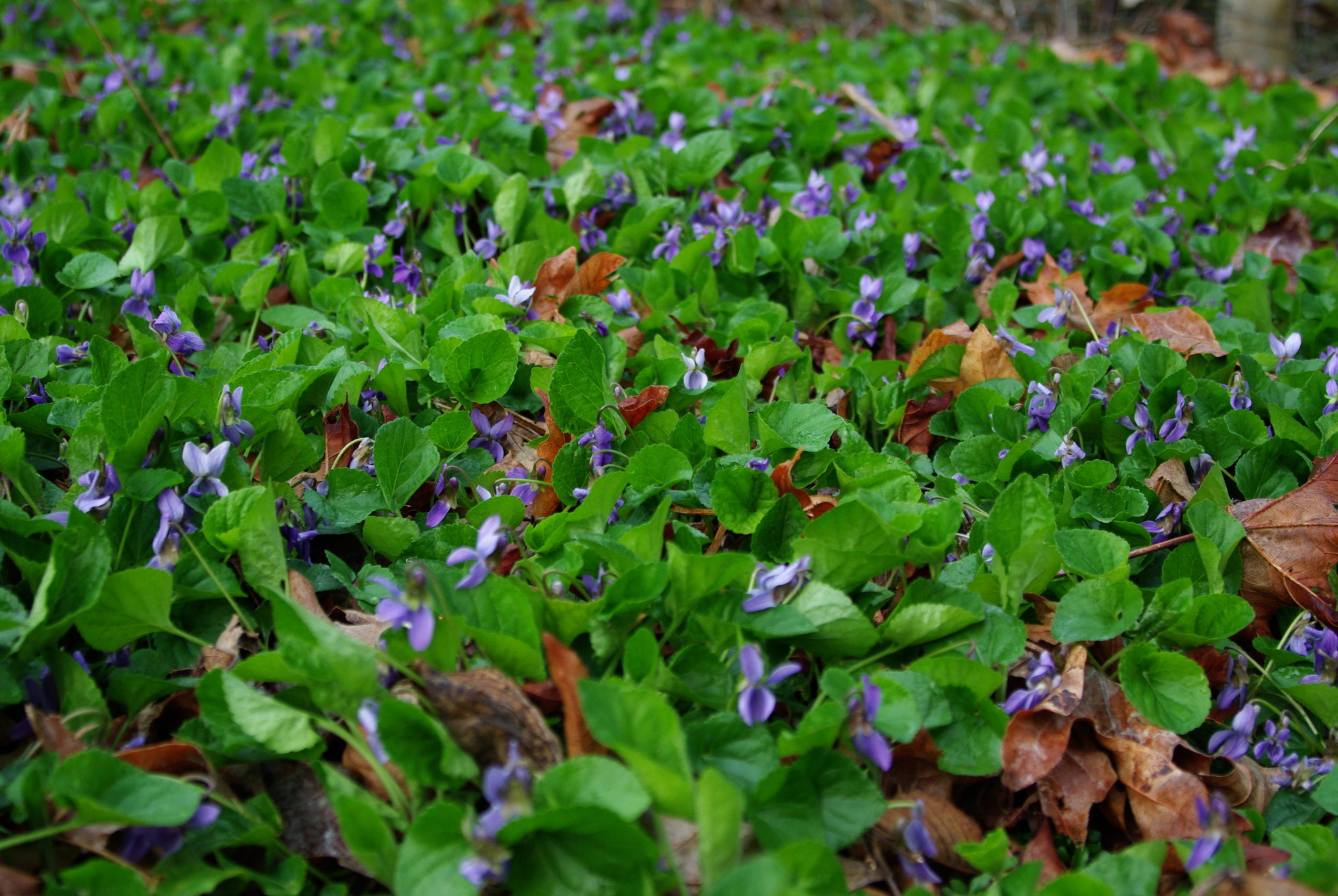
Perennial, acaulescent (stemless), stoloniferous herb, 4–15(–30) cm tall, forming mats via green, rooting stolons. Rhizome thick and fleshy. Leaves basal (and from stolons), in rosettes: ovate to orbicular or reniform, 1.5–7 × 1.5–5 cm, cordate base, crenate and ciliate margins, obtuse to rounded apex, puberulent, dark green; petioles 2–17(–20) cm, often with downward-pointing hairs; stipules lanceolate to linear-lanceolate, glandular-fimbriate. Peduncles 4–15 cm, puberulent. Flowers solitary, zygomorphic, 12–22 mm, sweetly fragrant; petals deep to pale blue-violet, pale blue, or white (often white-based), lateral petals bearded, lowest usually purple-veined with elongated spur 5–7 mm; style hooked. Also produces cleistogamous (closed, self-pollinating) flowers. Capsules ovoid, 5–8 mm, sometimes purple-flecked, puberulent; seeds brown, 3–4 mm, with elaiosome. 2n = 20. Native to Europe (south of Scandinavia), NW Africa, and W Asia to Iran; widely naturalized in temperate regions, gardens, lawns, roadsides, and wooded edges. Prefers moist, fertile, neutral-to-alkaline soils in partial shade. Flowers mainly January–May (temperate zones), sometimes with autumn flush.
Phytochemistry
Rich in flavonoids (e.g., rutin, viola-quercetin, 5,7-dihydroxy-3,6-dimethoxyflavone and related derivatives), phenolic compounds, saponins, mucilage/polysaccharides (galactose, glucose, galacturonic acid), alkaloids (including violin/odoratine, emetic), methyl salicylate and related salicylate compounds, tannins, coumarins, sterols (β-sitosterol), and volatile oils. Leaf essential oil features 2,6-nonadienal (“violet-leaf aldehyde”) and related alcohols; flower volatiles include ionones (α- and β-ionone), irones, and other terpenoids responsible for the characteristic scent. Notable cyclotides (stable cyclic cystine-knot peptides, e.g., cycloviolacins, vodo series) provide antimicrobial, insecticidal, and other bioactivities. High polyphenol and flavonoid content supports antioxidant capacity.
Western Traditional & Clinical Actions
Cooling, moistening, demulcent, expectorant, mild diaphoretic, diuretic, alterative/lymphatic, mild laxative, anti-inflammatory, nervine/sedative, emollient. Used for respiratory catarrh, dry/irritating coughs, bronchitis, sore throat; headaches, mild insomnia, nervous irritability; skin inflammations, eczema; urinary issues; historically for “hot” conditions and as a mild blood purifier. Clinical observations support expectorant and soothing effects on respiratory mucosa and mild calming actions.
Chinese Medicine Actions
V. odorata is primarily Western/Unani; Chinese “Zi Hua Di Ding” (Violae Herba) is typically V. yedoensis or related species (clears heat, detoxifies, cools blood, reduces swelling for sores, carbuncles, erysipelas, snake bites). Analogous properties attributed to V. odorata or closely related Viola spp.: cool, moist; clears heat and toxins, resolves swellings, cools blood, soothes cough from heat/phlegm, calms mind. Used similarly for heat-toxin patterns in skin and throat.
Traditional & Historical Uses
Documented since ancient Greece and Rome (Hippocrates, Dioscorides, Galen): cooling plaster for inflammations, eye/skin issues, heartburn; flowers for sore throat, epilepsy in children, melancholy-related lung issues. Medieval European monastic and folk use for coughs, fevers, headaches, skin sores, and as a gentle laxative/emollient. Unani/Persian (Banafsha): respiratory expectorant, antipyretic, sedative (violet oil as nasal drops for insomnia); Ayurveda for Pitta balance, coughs, fevers. South Asian syrups still used for sore throat and congestion. Historical cancer-pain relief (leaves as poultice or syrup, especially throat/tongue). Culinary: candied flowers, syrups, salads. Fragrance and cosmetic use from antiquity through Victorian era.
Modern Pharmacological Evidence
Antioxidant, anti-inflammatory (COX-2/NOS-2 modulation, lipoxygenase inhibition), antimicrobial, expectorant/demulcent, mild sedative/anxiolytic (serotonergic flavonoid effects), antihypertensive and antidyslipidemic (leaf extract), enzyme-inhibitory (cholinesterase, tyrosinase, etc.), and potential anticancer/cytotoxic activity (cyclotides and extracts). Mucilage and saponins support respiratory soothing; salicylates contribute mild analgesic/anti-inflammatory effects. Cyclotides show potent antifungal/insecticidal host-defense roles.
Clinical Studies
Multiple RCTs (especially Iranian traditional medicine) support V. odorata syrup (typically 5 mL twice daily) for improving sleep quality (PSQI/ISI scores) in menopausal women, patients with depression/OCD-related insomnia, and chronic insomnia; also reducing hot flashes/night sweats in menopause. Intranasal violet oil (almond/sesame base) improves sleep in chronic insomnia. Additional trials show benefits for restlessness and appetite in febrile children and potential supportive use in respiratory settings. Generally well-tolerated at studied doses.
Preparations & Dosage
- Infusion/tea: 2–3 g dried herb (flowers/leaves) per cup, 1–3× daily.
- Syrup (traditional flower-based): 5–15 mL/day divided (e.g., 5 mL 2–3×).
- Tincture (1:5 in ~25% alcohol): 2–5 mL (or up to 6–15 mL) 2–3× daily.
- Violet oil (nasal): traditional Iranian preparation for insomnia.
- Topical: leaf poultice or infused oil for skin.
Standardized commercial syrups often based on phenolic content. Avoid high doses of root (emetic).
Safety & Contraindications
Generally safe for healthy adults at recommended doses of aerial parts. Root high in saponins and emetic—avoid or use only under guidance. Caution with salicylate/aspirin allergy (contains methyl salicylate and related compounds); theoretical interaction with anticoagulants. Avoid in pregnancy/lactation (insufficient data; possible saponin effects). May cause mild nausea/vomiting at high doses. Diuretic action—monitor with relevant medications or kidney issues. Not for young children without professional advice (salicylate concerns re: Reye’s syndrome risk).
Cultivation & Harvest
Easy perennial for moist, humus-rich, well-drained soil in partial shade. Propagates by division, runners/stolons, or seed. Spreads readily. Harvest flowers early morning when fully open (for fragrance/syrup) and dry carefully in shade; leaves as needed. Sustainable hand-harvest preferred; cultivated widely for ornamental, culinary, and limited commercial use.
Commercial Products
Violet syrups (cough/respiratory, sleep), tinctures, leaf/flower extracts, violet leaf absolute and flower absolute/oil (perfumery—highly labor-intensive), homeopathic preparations, candied flowers, culinary syrups/liqueurs (e.g., Parfait Amour). Used in cosmetics for scent. Quality issues: possible substitution with other Viola spp.; some “violet” oils synthetic or adulterated.
Ethnobotanical Curiosities
Symbol of love, humility, and fertility (ancient Greece/Rome; Christian association with Virgin Mary). Legend linking name to nymph Io or Ionian nymphs; dedicated to Persephone. Temporary scent-receptor fatigue from β-ionone explained “one-smell” folklore. Used in garlands, as hangover remedy, and in monastic gardens. Candied violets and syrups as Victorian luxuries. Napoleon’s symbol. In some traditions, leaves for cancer pain when other remedies failed.
Recent Research (2020–2026)
Ongoing work on cyclotide isolation/characterization (leaves, petioles) for antimicrobial and bioactive potential; phytochemical profiling and anti-inflammatory/antioxidant mechanisms (COX-2/NOS-2); clinical RCTs confirming syrup benefits for menopause sleep, hot flashes, and pediatric restlessness; bioreactor cell culture for antimalarial/anticancer extracts; floral volatile characterization for fragrance breeding; endophyte and antimicrobial studies. Genome sequencing completed. Supports traditional respiratory, sleep, and anti-inflammatory uses with modern validation.
Conservation Status
IUCN Least Concern (LC) globally and in Europe (wide native + naturalized range, stable populations). Cultivated extensively; wild foraging can pressure local populations in some areas. Sustainable cultivation preferred over wild harvest.
DIY Recipes
Simple violet syrup: Fill a jar with fresh, pesticide-free violet flowers (calyx removed). Cover with just-boiled cooled water; steep 12–24 h. Strain; add equal weight sugar (or honey to taste). Gentle heat to dissolve if needed. Store refrigerated. Use for coughs, in beverages, or desserts.
Infusion: 1–2 tsp dried flowers/leaves per cup boiling water, steep 10 min covered.
Topical: Fresh leaf poultice for minor skin irritations.
X (Twitter) Snapshot – 2020–2026
Recent posts highlight traditional respiratory and sleep uses of syrup (including pediatric RCTs reducing restlessness), botanical medicinal overviews noting expectorant/antioxidant properties, wildflower observations, historical fragrance/culinary roles, and growing interest in herbal projects and conservation gardening. Advocacy appears for sustainable and traditional herbal knowledge.
Planting & Harvesting Reference Guide for Violet (Viola odorata)
👈Planting & Harvesting Reference Guide:👇
Viola Odorata – Planting & Harvesting Reference Guide
- Best Time for Planting
- Autumn (September–November) is ideal so roots establish with seasonal moisture before spring flowering; early spring (after hard frost risk passes) also works.
- During waxing moon phases, preferably in water signs (Cancer or Pisces) for root strength; Friday or Venus hours for magical alignment.
- Ideal location: moist, humus-rich, well-drained soil in partial to full shade or dappled light (woodland edges, under deciduous trees or hedges) that mimics native habitat; pH roughly 6–7.
- From seed: Sow outdoors in autumn for natural cold stratification (4–8+ weeks of cold-moist conditions required); or refrigerate seeds in slightly moist medium for 4–8 weeks before sowing. Lightly cover seeds; germination can take 6–8 weeks once conditions warm. Division of clumps or separation of rooting stolons is faster and more reliable than seed.
- Space plants 15–30 cm (6–12 inches) apart so they form a continuous ground cover via stolons.
- Growing Conditions & Magical Minded Tips
- Keep soil consistently moist but never waterlogged; apply organic mulch (leaf mold or compost) to retain moisture, cool roots, and suppress weeds.
- Lightly top-dress with compost in spring; avoid heavy synthetic fertilizers.
- Irrigate during dry spells, especially in the first season.
- Speak thanks to the plant and land spirits when setting roots; offer a drop of honey, a lock of hair, or simple gratitude.
- Divide every 2–4 years in autumn or after flowering to maintain vigor. Monitor for slugs, snails, or red spider mites in dry heat; provide shade and moisture as prevention.
- Select single-flowered, strongly scented forms for best fragrance and traditional use.
- Best Time for Harvesting
- Flowers: Early morning at peak bloom (late winter to spring, with possible autumn flush), on a dry, sunny day when fragrance is strongest.
- Leaves: As needed throughout the growing season, preferably young and tender.
- First spring bloom is traditionally the most potent for wish-work and protection.
- During waxing moon for increase and vitality; waning moon for release or calming work. Friday or Venus hour preferred for magical harvests.
- Sustainable & Magical Harvesting Methods
- Hand-pick only a portion of flowers and young leaves from established patches; leave plenty for bees, self-seeding, and plant recovery.
- Avoid roadsides, sprayed areas, or polluted sites. Confirm identification when plants are in bloom to avoid look-alikes.
- Prefer cultivated or abundant garden-escape populations over sensitive wild stands.
- Speak to the plant before taking: “Viola Odorata, humble heart of the edge, I ask only what you freely give.” Use fingers or a small dedicated knife.
- Invoke permission from the plant and land; leave an offering (honey, hair, or a small token).
- Roots are generally avoided or taken only in small quantity in autumn under expert guidance due to higher saponin content.
- Post-Harvest Processing
- Dry flowers and leaves slowly in shade or low airflow (never direct sun) to preserve color, fragrance, and compounds.
- Store dried material in cool, dark, tightly closed wooden or glass containers; label with harvest date and intention.
- Fresh flowers are best used immediately for syrups, oils, or candying to retain scent. Process leaves promptly for teas or poultices.
- Store with a clear intention for continued soothing and heart-easing qualities.
This guide consolidates planting and harvesting details mentioned across the SPARK sections for quick, practical reference. Always prioritize ethical, sustainable practices to honor Viola Odorata’s spirit and ensure its continued abundance.
Healing Categories of Violet (Viola odorata)
👈Violets: fit most strongly into the following healing categories, based on its traditional use, phytochemistry, clinical observations, and energetic profile:👇
Healing Categories for Viola Odorata
Respiratory System Support
Viola Odorata is classically employed as a demulcent and mild expectorant. Its mucilage soothes irritated mucous membranes of the throat and bronchi while supporting the easing of dry or spasmodic coughs. Traditional Unani and European syrups continue this use, and modern trials have examined the plant for cough duration in children and as an adjunct in respiratory discomfort.
Cooling & Demulcent Action
The plant’s cool, moist temperament addresses patterns of heat and dryness. It is used for feverish conditions, hot coughs, and inflamed tissues where a gentle, non-stimulating demulcent is preferred. This quality links its historical classification in humoral medicine with contemporary observations of anti-inflammatory and mucosal-soothing effects.
Sleep & Emotional Balance
Viola Odorata has long been associated with quieting restlessness and melancholy that settles in the chest. Iranian clinical work has specifically evaluated flower syrup for sleep quality during menopause. Flower-essence and traditional folk uses further emphasize its capacity to support emotional ease, grief processing, and a return to inner calm without sedation of a heavy character.
Women’s Health & Midlife Transition
Documented applications include support for menopausal hot flashes and sleep disturbance. The plant’s cooling and gently moistening profile aligns with traditional strategies for managing heat and dryness that can accompany this life stage, while its long record in Unani and European practice provides continuity for these uses.
Gentle Lymphatic & Skin Soothing
Leaves and flowers have been applied externally as emollients for minor inflammations and internally as a mild depurative. The same demulcent and flavonoid constituents that benefit mucous membranes contribute to a broader soothing action on the skin and a light support for lymphatic movement.
Dedicated Healing Categories Section
Viola Odorata occupies a precise place among cooling, moistening, and demulcent plants. Its primary clinical and traditional affinities center on the respiratory tract, where mucilage and mild expectorant properties ease dry cough and mucosal irritation; on the nervous and emotional system, where it supports restful sleep and the quieting of heart-centered grief or agitation; and on midlife women’s health, where recent trials have examined its value for hot flashes and sleep quality. Secondary affinities include gentle external emollient use and a mild depurative influence consistent with its historical classification as a cool, moist remedy.
These categories are not isolated. The same constituents—mucilage, flavonoids, and volatile ionones—that soothe bronchial membranes also contribute to the plant’s reputation for emotional cooling and sleep support. Unani practice as Banafsha and European syrup traditions supply the historical backbone; Iranian and other clinical studies supply contemporary documentation. Species integrity, plant-part distinction (flowers preferred for demulcent and aromatic work; leaves for broader use), and the difference between culinary and concentrated doses remain essential for accurate application.
Synergistic & Holistic Note
Viola Odorata works most coherently when its cooling, moistening nature is respected across systems rather than reduced to a single symptom. A traditional syrup that eases a dry cough may simultaneously support the sleep and emotional steadiness that often accompany prolonged respiratory irritation or menopausal change. Pairing the plant with other demulcents or gentle nervines can deepen this integrated action, while its mythological and energetic associations with the threshold of spring and the heart reinforce the same message of quiet return and measured coolness. The repository records both the measurable and the long-observed; the plant itself continues to offer the living example.
✨ If You Only Read U.S. Consumer Pages ✨
U.S. consumer pages usually flatten Viola Odorata (Sweet Violet) into three talking points: “pretty edible flower for cakes,” “old-fashioned cough syrup,” and “gentle, almost forgotten herb.” That is not false, but it is a small slice. Those pages rarely mention that the same species is named in historical European, French, British, and current Unani and Ayurvedic pharmacopoeias; that Iranian randomized trials have examined its syrup for menopausal sleep, hot flashes, and COVID-19 symptom support; that it remains a commercial source of leaf absolute for high-end perfumery; or that cyclotide research continues to map its cyclic peptides as a model system for plant defense compounds. They also rarely distinguish Viola Odorata from related Viola species used in Chinese or Tibetan traditions, or note its long presence in French confectionery (violettes de Toulouse) and liqueur traditions. Reading only U.S. retail copy makes the plant look like a decorative garden flower and occasional cough-syrup ingredient. Reading the global official and clinical record makes it look like a pharmacopoeial herb with continuous European and Unani use, a subject of modern Iranian clinical trials, a perfume and confectionery commodity, and a source of bioactive cyclotides. Both pictures matter. The second one is the one most American shoppers never see.
Sources:
https://www.herbalreality.com/herb/violets/
https://pubmed.ncbi.nlm.nih.gov/38177831/
https://www.unanimedworld.com/Articles/physicochemical-and-phyto-chemical-standardization-of-a-unani-drug-banafshah-(viola-odorata-linn.)
https://prosea.prota4u.org/view.aspx?id=1367
https://pmc.ncbi.nlm.nih.gov/articles/PMC13058574/
Globally: Where This Plant Is Studied
👈Global research, official texts, publishers, and human-trial data, rather than U.S.-consumer-page-limited:👇
Where This Plant Is Studied
Viola Odorata (Sweet Violet) is studied as a living research plant across Europe, West and South Asia, North Africa, and, to a lesser extent, North America—not as a U.S. wellness novelty. The densest modern scientific output has come from Iran, India, France, Germany, the United Kingdom, Turkey, and the United States. Leading institutional clusters include Mashhad University of Medical Sciences, Shiraz University of Medical Sciences, and Al-Zahra General Hospital in Iran; Indian Central Council for Research in Unani Medicine and related AYUSH-affiliated centers; French historical perfume and horticultural institutions in the Grasse and Toulouse regions; German and British herbal-pharmacognosy groups; and U.S. university horticulture and natural-products labs (for example, work on floral volatiles at institutions linked to the American Society for Horticultural Science). Field and quality research tracks wild and cultivated populations in southern and western Europe, the Balkans, Iran, Turkey, and North Africa—the same regions that still supply much of the world’s dried flowers, leaves, and leaf absolute for traditional medicine and perfumery. In short: the plant is a multi-country pharmacognosy, Unani/Persian medicine, perfume chemistry, cyclotide research, and traditional-medicine subject, not a single-market supplement story.
Sources:
https://link.springer.com/article/10.1007/s11325-023-02979-x
https://onlinelibrary.wiley.com/doi/10.1002/ptr.5909
https://www.sciencedirect.com/science/article/abs/pii/S2212958817301052
https://prosea.prota4u.org/view.aspx?id=1367
https://pmc.ncbi.nlm.nih.gov/articles/PMC13058574/
Official Books That Name This Species
Viola Odorata (Sweet Violet) is named, defined, and quality-tested in official national and regional pharmacopoeias and codices. These are legal or quasi-legal reference books, not blog herbals. Historically it has appeared in the British Pharmacopoeia and British Pharmaceutical Codex (leaves, petals, and Syrupus Violae), the French Codex (violet syrup), multiple European, Mexican, Chilean, and Venezuelan pharmacopoeias of the early twentieth century, the Unani Pharmacopoeia of India (as Banafsha / Viola odorata Linn.), and the Ayurvedic Pharmacopoeia of India (as Neelapushpa or related entries). The British Herbal Pharmacopoeia continues to indicate it for respiratory conditions such as pertussis and acute bronchitis. It is listed in the European Union CosIng database as Viola Odorata Oil (CAS 90147-36-7) for fragrance and tonic uses. Related Viola species (rather than Viola Odorata itself) appear in Chinese and Tibetan official texts under names such as Zi Hua Di Ding. These books specify identity, parts used (flowers, leaves, rhizome), preparations (syrup, infusion, oil), and traditional indications. That is a very different class of “naming” than a U.S. consumer page.
Sources:
https://www.herbdatanz.com/violet_picture_monograph.htm
https://www.henriettes-herb.com/eclectic/bpc1911/viola.html
https://www.unanimedworld.com/Articles/physicochemical-and-phyto-chemical-standardization-of-a-unani-drug-banafshah-(viola-odorata-linn.)
https://www.herbalreality.com/herb/violets/
https://link.springer.com/chapter/10.1007/978-3-030-16807-0_195
Who Publishes on It
Publication is global and split across several scholarly worlds. Iran and India lead recent paper volume on Viola Odorata pharmacology and clinical work; Europe (especially France, Germany, and the United Kingdom) contributes historical pharmacognosy, perfume chemistry, and cyclotide isolation; the United States contributes horticultural and volatile-profile studies. The journals that repeatedly carry the plant include Journal of Ethnopharmacology, Phytotherapy Research, Sleep and Breathing, Advances in Integrative Medicine, 3 Biotech, Journal of Biosciences, and HortScience. Publishers and official bodies include Elsevier, Springer Nature, Wiley, the European Medicines Agency (for related Viola monographs), AYUSH / Unani and Ayurvedic Pharmacopoeia commissions, and historical European pharmacopoeia commissions. Author clusters often sit in Iranian Persian-medicine and gynecology groups, Indian Unani standardization labs, French perfume-history and horticulture centers, and international cyclotide research groups working on Violaceae peptides. Consumer-health sites reprint fragments of this literature; they are not the original publishers.
Sources:
https://onlinelibrary.wiley.com/doi/10.1002/ptr.5909
https://pubmed.ncbi.nlm.nih.gov/38177831/
https://www.sciencedirect.com/science/article/abs/pii/S2212958824000351
https://link.springer.com/article/10.1007/s13205-021-02763-2
https://journals.ashs.org/hortsci/view/journals/hortsci/59/7/article-p974.xml
Human Trials Tied to This Species
Human evidence for Viola Odorata (Sweet Violet) is strongest around traditional syrup and oil preparations used for respiratory, menopausal, and febrile conditions. Iran has produced several randomized, triple-blind controlled trials: one assessing Viola Odorata syrup (5 mL twice daily for one month) on sleep quality in menopausal women (IRCT20180514039660N1), showing significant improvement in Pittsburgh Sleep Quality Index scores; a related trial on hot flashes and night sweats in menopausal women demonstrating reductions in frequency, intensity, and duration; and work on vaginal suppositories for menopausal vaginal atrophy. An Iranian double-blind trial evaluated add-on Viola Odorata syrup in outpatients with COVID-19, reporting faster recovery of cough, myalgia, headache, and diarrhea compared with placebo. A triple-blind trial of Viola Odorata oil (applied near the umbilicus) in febrile neutropenic children showed reduced temperature and lower rescue paracetamol use. Indian work includes a single-blind study of homeopathic Viola Odorata for chronic bronchitis (CTRI/2023/02/049490) and Unani standardization supporting clinical use as Banafsha. European historical and modern pharmacopoeial use centers on syrup for mild laxative and demulcent effects in children and respiratory complaints. Important caution: many trials use whole-plant syrup or oil rather than isolated constituents; results are species-specific to Viola Odorata and typically framed as complementary rather than stand-alone therapy.
Sources:
https://pubmed.ncbi.nlm.nih.gov/38177831/
https://www.sciencedirect.com/science/article/abs/pii/S2212958824000351
https://pubmed.ncbi.nlm.nih.gov/36535329/
https://doi.org/10.2174/1570163816666190620142256
https://trial.medpath.com/clinical-trial/e9f6322ab3c47bcd/ctri/2023/02/049490-viola-odorata-chronic-bronchitis-treatment-study

Part 1: Modern Medical Properties and Uses

Purpose: Highlights the plant’s scientific and medicinal properties, validating holistic healing with evidence-based data.
Contemporary Medical Applications of Violet (Viola odorata)
👈Contemporary Medical Applications: Describes current clinical uses (e.g., capsules, tinctures) and delivery methods in modern medicine.👇
Contemporary Medical Applications:
- Standardized Viola odorata flower syrup is administered orally at 5 mL twice daily for one month in clinical settings to improve sleep quality among menopausal women, with triple-blind randomized trials demonstrating significant reductions in Pittsburgh Sleep Quality Index scores from baseline values around 9.2 to 4.9 compared with placebo.
- Intranasal violet oil preparations, typically formulated with almond or sesame oil bases, are applied as drops (two to three per nostril) nightly for chronic insomnia, supported by double-blind trials showing superior improvements in Insomnia Severity Index and sleep quality metrics relative to almond oil or placebo controls.
- Vaginal suppositories containing Viola odorata extract are used over eight weeks to address menopausal vaginal atrophy, with triple-blind trials reporting statistically significant improvements in subjective symptoms, vaginal pH, and vaginal maturation index versus glycerine placebo.
- Traditional and modern herbal practice employs leaf and flower infusions or tinctures as expectorants and demulcents for respiratory catarrh, dry coughs, and throat irritation, with delivery via hot teas or liquid extracts standardized in some commercial products to phenolic content.
- Topical applications of leaf poultices or infused oils serve as emollients for minor skin inflammations and as supportive measures for localized discomfort, aligning with historical demulcent actions now explored in complementary respiratory and dermatological protocols.
- Homeopathic mother tinctures and dilutions of Viola odorata appear in European pharmacopeial and clinical contexts for neuralgic and respiratory presentations, administered in drop doses according to practitioner guidance.
- Commercial cough syrups combining Viola odorata with other expectorant herbs are marketed in South Asian and European markets for supportive management of bronchial irritation and hoarseness.
Sources: Contemporary Medical Applications
https://link.springer.com/article/10.1007/s11325-023-02979-x
https://pubmed.ncbi.nlm.nih.gov/38177831/
https://www.sciencedirect.com/science/article/pii/S2212958824000351
https://www.sciencedirect.com/science/article/abs/pii/S0378874117309777
https://www.sciencedirect.com/science/article/abs/pii/S221080332400023X
https://www.herbalreality.com/herb/violets/
https://drugs-about.com/ing/viola-odorata.html
Pharmacology of Violet (Viola odorata)
👈Pharmacology: Outlines key compounds and their mechanisms of action, driving therapeutic effects.👇
Pharmacology:
- Flavonoids including rutin, quercetin derivatives, and novel methoxyflavones isolated from aerial parts exert antioxidant and anti-inflammatory effects by scavenging free radicals and modulating pathways such as COX-2 and NOS-2 gene expression in LPS-induced models.
- Methyl salicylate and related salicylate esters contribute mild analgesic and antipyretic activity through prostaglandin synthesis inhibition, paralleling traditional use for headaches and febrile conditions while remaining present in lower concentrations than synthetic salicylates.
- Cyclotides—stable cyclic cystine-knot peptides such as cycloviolacins and vodo-series compounds—demonstrate antimicrobial, antifungal, and insecticidal mechanisms via membrane disruption and host-defense roles, with sequences confirmed by mass spectrometry and bioinformatics from leaves and petioles.
- Saponins and mucilage polysaccharides (rich in galactose and galacturonic acid) support expectorant and demulcent actions by irritating mild local responses that promote mucus clearance and coating irritated mucosa in respiratory tracts.
- Alkaloids such as odoratine and violin display hypotensive and emetic properties at higher doses, particularly concentrated in roots, while aerial-part extracts show dose-dependent reductions in mean arterial pressure and calcium-channel blocking activity in animal models.
- Phenolic compounds and anthocyanins contribute to overall antioxidant capacity measured by DPPH, ABTS, and ferric-reducing assays, with methanol extracts often showing highest activity linked to total phenol and flavonoid content.
- Serotonergic mechanisms underlie antidepressant-like effects of isolated flavonoids in forced-swim and tail-suspension tests, reversed by 5-HT antagonists and accompanied by elevated brain serotonin levels.
Sources: Pharmacology:
https://www.sciencedirect.com/science/article/abs/pii/S0367326X18306038
https://chemistry-europe.onlinelibrary.wiley.com/doi/10.1002/slct.202505548
https://link.springer.com/article/10.1007/s13205-021-02763-2
https://www.frontiersin.org/journals/plant-science/articles/10.3389/fpls.2018.01296/full
https://academic.oup.com/jpp/article/75/1/1/6648427
https://www.ijpsjournal.com/article/Viola+Odorata+Linn+Its+Phytochemistry+Traditional+Uses+Pharmacological+Activities+A+Comprehensive+Review
https://phytochem.nal.usda.gov/plant-viola-odorata
Natural Medicine Studies / Violet (Viola odorata)
👈Natural Medicine Studies: Summarizes recent research on efficacy, safety, or clinical outcomes from peer-reviewed studies.👇
Natural Medicine Studies:
- A 2024 triple-blind randomized controlled trial of 84 menopausal women found 5 mL Viola odorata syrup twice daily for one month significantly improved sleep quality (PSQI) and reduced hot-flash frequency, intensity, and duration versus placebo, with effects emerging by the second week.
- Meta-analyses and systematic reviews of insomnia trials (including oral syrup and intranasal oil) report greater improvements in total PSQI, subjective sleep quality, sleep duration, and ISI scores with Viola extracts compared with placebo, based on five trials totaling over 200 patients.
- Leaf extracts demonstrate antihypertensive and antidyslipidemic activity in animal models, lowering mean arterial pressure dose-dependently and reducing serum cholesterol and triglycerides in dyslipidemia paradigms through calcium-channel blockade and other mechanisms.
- In vitro and ex vivo studies confirm anti-inflammatory actions via suppression of LPS-induced COX-2 and NOS-2 expression, alongside enzyme inhibition of cholinesterases, tyrosinase, α-glucosidase, and α-amylase by methanol extracts rich in phenols and flavonoids.
- Antimicrobial evaluations of commercial violet oils and extracts show activity against respiratory and skin pathogens including Cutibacterium acnes and Candida albicans, with synergistic effects observed when combined with other essential oils.
- Pediatric and adult observational data plus small trials support traditional use for cough, restlessness in febrile viral illness, and mild sedation without serious adverse events at studied doses.
- Safety assessments in clinical trials report mild, transient effects (occasional post-nasal drip or throat sensation with oil) and no significant toxicity at recommended aerial-part doses.
Sources: Natural Medicine Studies:
https://link.springer.com/article/10.1007/s11325-023-02979-x
https://www.sciencedirect.com/science/article/pii/S2212958824000351
https://www.frontiersin.org/journals/neurology/articles/10.3389/fneur.2022.730311/full
https://www.academia.edu/90622473/Studies_on_the_antihypertensive_and_antidyslipidemic_activities_of_Viola_odorata_leaves_extract
https://pmc.ncbi.nlm.nih.gov/articles/PMC9958603/
https://pubmed.ncbi.nlm.nih.gov/32073874/
https://www.sciencedirect.com/science/article/abs/pii/S2212958817301052
Chemistry of Violet (Viola odorata)
👈Chemistry: Details active chemical constituents (e.g., alkaloids, flavonoids) and their healing roles.👇
Chemistry:
- Primary flavonoids identified include rutin (quercetin-3-O-rutinoside), viola-quercitrin, kaempferol glycosides, and three novel methoxyflavones (5,7-dihydroxy-3,6-dimethoxyflavone; 5,7,4′-trihydroxy-3′,5′-dimethoxyflavone; 5,7,4′-trihydroxy-3′-methoxyflavone) isolated from whole plant.
- Volatile oil constituents feature ionones (α- and β-ionone) and irones responsible for characteristic scent, plus 2,6-nonadienal (“violet-leaf aldehyde”), 2,6-nonadienol, methyl salicylate, benzyl alcohol, and eugenol in leaves and flowers.
- Cyclotides comprise a diverse suite of 30+ head-to-tail cyclic peptides (28–37 amino acids) with cystine-knot motif; novel sequences such as vodo M, vodo N, violacin A, and cycloviolacins have been sequenced by MS/MS and transcriptomics from leaves, petioles, and roots.
- Phenolic acids, tannins, coumarins, sterols (β-sitosterol), and saponins are present, with total phenolic content highest in aqueous or methanol extracts (up to ~104 μg GAE/mg in some flower extracts).
- Mucilage polysaccharides rich in galactose, glucose, and galacturonic acid contribute to demulcent properties; roots additionally contain gaultherin (methyl salicylate glycoside) and higher saponin levels.
- Alkaloids include odoratine (hypotensive) and violin (emetic), quantified mainly in roots and rhizomes; anthocyanins such as cyanin occur in flowers.
- GC-MS and HPLC profiles confirm additional compounds including diethyl phthalate, aliphatic alcohols, and fatty acid esters, with seasonal and geographic variation documented in Indian and European samples.
Sources: Chemistry:
https://www.sciencedirect.com/science/article/abs/pii/S0367326X18306038
https://link.springer.com/article/10.1007/s13205-021-02763-2
https://link.springer.com/article/10.1007/s12038-022-00283-6
https://phytochem.nal.usda.gov/plant-viola-odorata
https://prosea.prota4u.org/view.aspx?id=1367
https://pubs.acs.org/doi/10.1021/acs.jnatprod.6b01004
https://pmc.ncbi.nlm.nih.gov/articles/PMC1635437
Functional Foods and Nutrition / Violet (Viola odorata)
👈Functional Foods and Nutrition: Highlights dietary uses (e.g., teas, supplements) in modern health practices.👇
Functional Foods and Nutrition:
- Fresh flowers and young leaves are consumed raw in salads or as garnishes, providing vitamin C, calcium, magnesium, and antioxidants; leaves thicken soups similarly to okra when cooked.
- Candied violet flowers and flower syrups serve as traditional confections and flavorings for desserts, beverages, and ice cream, preserving the characteristic color and mild perfume.
- Infusions of leaves and flowers yield mild, pleasant teas used historically and currently as gentle daily tonics or respiratory soothers, with phenolic content supporting antioxidant intake.
- Nutritional analyses of Viola species indicate protein, phenolic compounds (131–385 mg GAE/100 g in related studies), flavonoids, fatty acids, and minerals, with enzyme-inhibitory potential against α-glucosidase and lipase relevant to metabolic health.
- Culinary extracts and absolute from leaves flavor sweets, baked goods, and ice cream; the plant is recognized among edible wild flowers with documented proximate composition supporting functional-food applications.
- Commercial violet syrups standardized to gallic-acid equivalents function as both medicinal and culinary products, especially in South Asian markets for throat and cough support.
- Limited quantitative macronutrient data exist specifically for V. odorata leaves versus related pansy species, yet traditional use and phytochemical richness support inclusion in diverse diets as a low-calorie, bioactive garnish or infusion.
Sources: Functional Foods and Nutrition:
https://diynatural.com/violets-edible-flowers-viola-odorata/
https://practicalplants.org/wiki/Viola_odorata
https://www.sciencedirect.com/science/chapter/edited-volume/abs/pii/B9780443137693000182
https://pmc.ncbi.nlm.nih.gov/articles/PMC10630019/
https://hrcak.srce.hr/en/clanak/505478
https://papers.ssrn.com/sol3/papers.cfm?abstract_id=5047069
https://www.herbalreality.com/herb/violets/
Current Projects and Future Possibilities / Violet (Viola odorata)
👈Current Projects and Future Possibilities: Notes ongoing research, clinical trials, or innovative medical applications.👇
Current Projects and Future Possibilities:
- Bioreactor-based plant-cell suspension cultures of Viola odorata have been optimized for sustainable biomass production, achieving up to 32.2 g dry weight per liter in fed-batch stirred-tank systems, with metabolite profiles and bioactivities comparable to wild plant extracts.
- Fed-batch cultivated biomass extracts demonstrate in vitro cytotoxicity against colon carcinoma cells, anti-inflammatory effects, and up to 80% inhibition of malarial parasite growth, plus in vivo antiplasmodial activity when combined with artesunate, opening pathways for standardized production of antimalarial and anticancer leads.
- Ongoing peptidomic and transcriptomic work continues to catalog novel cyclotides from leaves, petioles, and roots for potential pharmaceutical scaffolding in antimicrobial and insecticidal applications.
- Floral volatile profiling across cultivars and developmental stages supports fragrance-focused breeding programs to enhance ionone yields for natural perfume and flavor industries while conserving wild populations.
- Clinical exploration of vaginal suppositories and expanded menopause-symptom trials, alongside pediatric respiratory studies, aims to formalize dosing and expand evidence for gynecological and childhood uses.
- Integration of endophyte research and antimicrobial combinations with nanoparticles points toward novel oral-health and topical formulations.
- Genome sequencing completed in 2026 provides a foundation for metabolic engineering and conservation genomics.
Sources: Current Projects and Future Possibilities:
https://www.frontiersin.org/journals/bioengineering-and-biotechnology/articles/10.3389/fbioe.2025.1528570/full
https://link.springer.com/article/10.1007/s11240-024-02829-y
https://journals.ashs.org/view/journals/hortsci/59/7/article-p974.xml
https://wellcomeopenresearch.org/articles/11-177/pdf
https://www.sciencedirect.com/science/article/abs/pii/S221080332400023X
https://link.springer.com/article/10.1007/s13205-021-02763-2
https://pubmed.ncbi.nlm.nih.gov/39944222/
Literary Mentions of Violet (Viola odorata)
👈Literary Mentions: References modern medical texts or studies citing the plant’s therapeutic use.👇
Literary Mentions:
- Dioscorides (1st century CE) described violet as a cooling medicine for inflammations of the skin and eyes, heartburn, and as a plaster for anal prolapse, with flowers indicated for sore throats and childhood epilepsy.
- Galen recommended violet preparations, including wine infusions with liquorice, to address melancholy-associated respiratory distress and to soothe the mind while healing the lungs.
- Medieval European herbals, including the School of Salerno and works by Hildegard and Bock, list violet for hot diseases, headaches, epilepsy, and as a mild laxative or blood purifier, with monastic gardens cultivating it for these purposes.
- Unani and Persian texts refer to Banafsha as an expectorant, antipyretic, and sedative, with violet oil used nasally for insomnia and syrups for cough and fever; Ayurvedic sources note its cooling (Sheet Virya) action for Pitta imbalances.
- Nineteenth- and early-twentieth-century pharmacopeias (French Codex, various European and Mexican) officially recognized violet flower syrup as a demulcent and expectorant for coughs and hoarseness.
- Modern monographs such as those in PROSEA and contemporary reviews cite continuous traditional use across Greco-Arabic, European, and South Asian systems for respiratory, dermatological, and nervine conditions.
- Shakespeare and other literary sources reference violets for their fragrance and symbolic humility, while herbal texts from Gerard to modern ethnobotanical surveys document culinary and medicinal continuity.
Sources: Literary Mentions:
https://www.herbalreality.com/herb/violets/
https://www.medicinetraditions.com/viola-violet-pro/
https://prosea.prota4u.org/view.aspx?id=1367
https://www.henriettes-herb.com/eclectic/madaus/viola-odor.html
https://www.sciencedirect.com/science/article/abs/pii/S2212958817301052
https://www.ijpsjournal.com/article/Viola+Odorata+Linn+Its+Phytochemistry+Traditional+Uses+Pharmacological+Activities+A+Comprehensive+Review
https://link.springer.com/chapter/10.1007/978-3-030-16807-0_195

Part 2: Plant Knowledge Systems

Purpose: Validates plant-based healing through interdisciplinary scientific and cultural fields.
Ethnobotany of Violet (Viola odorata)
👈Ethnobotany: Explores the plant’s traditional uses across cultures, linking indigenous knowledge to modern applications.👇
Ethnobotany:
- Across Greco-Roman, Medieval European, Unani, Ayurvedic, Persian, and South Asian systems, Viola Odorata (Sweet Violet or Banafsha) has served for centuries as a cooling, moistening expectorant and demulcent for coughs, bronchitis, sore throats, and febrile conditions, with modern clinical trials of its syrup now validating improvements in sleep quality and reduction of menopausal hot flashes.
- Ancient Greek and Roman physicians including Hippocrates, Dioscorides, and Galen employed Viola Odorata flowers and leaves as plasters for skin and eye inflammations, for heartburn, and as wine infusions to soothe melancholy-related respiratory distress, practices that parallel contemporary use of infusions and syrups for respiratory catarrh and mild sedation.
- In Unani and Traditional Persian Medicine, Viola Odorata is valued as an antipyretic, expectorant, and nervine, with violet oil administered nasally for insomnia and Sharbat Banafsha syrup still widely used in South Asia for dry coughs and congestion, linking directly to recent randomized trials confirming its efficacy for menopausal sleep and vasomotor symptoms.
- Ayurvedic texts classify Viola Odorata as Sheet Virya (cold potency) for balancing Pitta, employing it in formulations for inflammatory and febrile states, while European folk herbalists used leaf poultices for boils, ulcers, and skin conditions and flower syrups for whooping cough and children’s respiratory complaints.
- In various global traditions from India to Europe and the Middle East, Viola Odorata seeds and roots were applied as purgatives or for scorpion stings, and aerial parts for cancer-related throat pain or as a blood purifier, with ongoing phytochemical research on its cyclotides and flavonoids exploring these historical claims through modern mechanisms of anti-inflammatory and cytotoxic activity.
Sources: Ethnobotany:
https://www.medicinetraditions.com/viola-violet-pro/
https://www.herbalreality.com/herb/violets/
https://prosea.prota4u.org/view.aspx?id=1367
https://www.ijpsjournal.com/article/Viola+Odorata+Linn+Its+Phytochemistry+Traditional+Uses+Pharmacological+Activities+A+Comprehensive+Review
https://www.sciencedirect.com/science/article/abs/pii/S2212958817301052
https://link.springer.com/chapter/10.1007/978-3-030-16807-0_195
https://phytochem.nal.usda.gov/ethnobotanical-plant-viola-odorata
Plant Genomics of Violet (Viola odorata)
👈Plant Genomics: Describes genetic studies of the plant, focusing on traits related to medicinal properties.👇
Plant Genomics:
- The genome of Viola Odorata has been fully sequenced and assembled as part of the Darwin Tree of Life project, yielding a high-quality reference assembly of 698.62 megabases scaffolded into 10 chromosomal pseudomolecules with 99.9% completeness, 34,902 annotated protein-coding genes, a 482.11 kb mitochondrial genome, and a 158.28 kb plastid genome.
- Generated using Pacific Biosciences HiFi long reads and released openly under accession PRJEB69496, this 2026 assembly meets the highest international standards for reference genomes (QV 59.0, EBP 6.C.Q59) and provides a foundational resource for comparative studies within Violaceae and for identifying genes involved in the biosynthesis of medicinal cyclotides, flavonoids, and volatile ionones.
- The chromosomal-level assembly enables future investigations into the genetic basis of Viola Odorata’s characteristic fragrance, its production of stable cyclic peptides with antimicrobial properties, and potential metabolic engineering pathways for sustainable production of its bioactive compounds via plant cell cultures.
- Annotation data available through Ensembl Plants and the European Nucleotide Archive support ongoing research into gene families responsible for the plant’s anti-inflammatory and antioxidant metabolites, facilitating targeted breeding or synthetic biology approaches while aiding conservation of this widely naturalized yet culturally significant species.
- Limited data exist on population-level genomic diversity or specific pharmacogenomic associations linking Viola Odorata variants to medicinal efficacy, though the reference genome now positions the species for such studies in the context of traditional use across temperate Eurasia.
Sources: Plant Genomics:
https://wellcomeopenresearch.org/articles/11-177
https://dx.doi.org/10.12688/wellcomeopenres.26151.1
https://europepmc.org/article/pmc/pmc13058574
https://pmc.ncbi.nlm.nih.gov/articles/PMC13058574/
https://plantgenome.uga.edu/genome-by-species/Vodo
https://kew.iro.bl.uk/concern/articles/b422ab0b-399a-4c2c-97dd-ffdf5da864e7
Phytotherapy of Violet (Viola odorata)
👈Phytotherapy: Details the plant’s use in clinical herbal medicine, including therapeutic protocols.👇
Phytotherapy:
- In clinical herbal practice, Viola Odorata flower syrup is protocolized at 5 mL twice daily for one month to address menopausal sleep disturbances and hot flashes, with triple-blind randomized controlled trials demonstrating significant improvements in Pittsburgh Sleep Quality Index scores and reductions in hot-flash frequency, intensity, and duration compared with placebo.
- Intranasal administration of Viola Odorata oil (almond- or sesame-oil base, typically two to three drops per nostril nightly) is employed in Traditional Persian and modern phytotherapeutic protocols for chronic insomnia, supported by double-blind trials showing superior effects on sleep quality and Insomnia Severity Index scores relative to controls.
- Leaf and flower infusions or tinctures of Viola Odorata are used as demulcent expectorants in respiratory phytotherapy for dry coughs, bronchitis, and throat irritation, with historical and contemporary protocols recommending 2–3 g dried herb per cup of hot water or 2–5 mL of 1:5 tincture two to three times daily.
- Vaginal suppositories of Viola Odorata extract have been investigated in phytotherapeutic trials for menopausal vaginal atrophy over eight weeks, yielding significant improvements in symptoms, vaginal pH, and maturation index, offering a plant-based option within integrative gynecological care.
- Standardized commercial and practitioner-prepared preparations of Viola Odorata, often combined with complementary expectorants, continue in European and South Asian phytotherapy for pediatric and adult respiratory support, with clinical observations confirming mild sedative and anti-inflammatory benefits without major adverse events at recommended aerial-part doses.
Sources: Phytotherapy:
https://link.springer.com/article/10.1007/s11325-023-02979-x
https://www.sciencedirect.com/science/article/pii/S2212958824000351
https://www.sciencedirect.com/science/article/abs/pii/S0378874117309777
https://www.frontiersin.org/journals/neurology/articles/10.3389/fneur.2022.730311/full
https://www.herbalreality.com/herb/violets/
https://pubmed.ncbi.nlm.nih.gov/32073874/
Ethnoecology of Violet (Viola odorata)
👈Ethnoecology: Examines the plant’s ecological role in cultural practices and environmental interactions.👇
Ethnoecology:
- Viola Odorata thrives in the moist, partially shaded habitats of temperate Eurasian woodlands, hedgerows, and woodland edges, where its stoloniferous growth and fragrant early-spring flowers have long integrated it into human cultural landscapes as both a foraged wild resource and a cultivated garden plant near dwellings and monastic sites.
- Cultural practices across Europe and the Middle East have sustained Viola Odorata through centuries of garden cultivation for perfume, culinary candying, and medicinal harvest, with historical commercial production in regions such as southern France and England linking ecological preference for fertile, base-rich soils to human-modified environments like parks, lawns, and roadsides where it naturalizes as a garden escape.
- In South Asian and Middle Eastern ethnoecological contexts, Viola Odorata (Banafsha) is gathered from wild or semi-cultivated temperate zones for local markets as dried flowers and aerial parts, supporting traditional respiratory and febrile remedies while its presence in higher-altitude or moist microhabitats reflects adaptation that has enabled wide naturalization beyond its native range.
- Foraging traditions in temperate regions treat Viola Odorata as an early-season wild edible and medicinal, with sustainable hand-harvesting of flowers and leaves reinforcing cultural knowledge of its ecological role as a ground-cover plant that supports pollinators and indicates moist, fertile soils, though over-collection in some areas has contributed to local declines.
- The plant’s dual status as native woodland species and widely naturalized ornamental has embedded it in cultural ecology from ancient Greek and Roman garlands to Victorian perfume gardens and modern conservation-aware foraging, illustrating how human practices have both expanded and sometimes pressured its temperate ecological niche.
Sources: Ethnoecology:
https://bsbi.org/in-your-area/local-botany/co-fermanagh/fermanagh-species-accounts/viola-odorata-l
https://antropocene.it/en/2023/01/10/viola-odorata-2/
https://www.herbalreality.com/herb/violets/
https://practicalplants.org/wiki/Viola_odorata
https://prosea.prota4u.org/view.aspx?id=1367
https://hrcak.srce.hr/en/clanak/505478
Anthroposophical Medicine of Violet (Viola odorata)
👈Anthroposophical Medicine: Outlines the plant’s use in Steiner-inspired remedies, including preparation, studies, and dosage.👇
Anthroposophical Medicine:
- Limited data exist on formalized Anthroposophical protocols specifically for Viola Odorata; however, Rudolf Steiner recommended warm baths incorporating a decoction of Viola Odorata (violet) flowers combined with elderflower, chamomile, juniper shoots, and wheat bran for a case of stubborn facial and chest eczema, reflecting the system’s use of plant remedies to address skin conditions through rhythmic and warmth-related processes.
- In Anthroposophical perspectives on the senses, Steiner described the violet’s intense fragrance as connected to Mercury influences and the cosmic healing qualities of scent, positioning Viola Odorata within broader contemplations of plant odors that mediate between the etheric and astral realms, though clinical dosage and preparation details remain sparse beyond traditional herbal infusions.
- Anthroposophical medicine, which integrates plant preparations with spiritual-scientific insights into the fourfold human being, generally employs Viola Odorata-like cooling and demulcent herbs for respiratory and inflammatory patterns, yet specific studies, standardized potentized preparations, or dosage guidelines unique to Steiner’s indications for this species are not extensively documented in accessible literature.
- Homeopathic and related holistic traditions overlapping with Anthroposophical practice use fresh-plant tinctures of Viola Odorata for neuralgic, respiratory, and children’s cough presentations, with clinical pictures emphasizing right-sided shoulder pains and dry coughs, but these draw more from classical proving than from Steiner’s direct lectures.
- Overall, while Viola Odorata aligns thematically with Anthroposophical emphases on plant rhythms, fragrance, and cooling actions for heat-related or skin conditions, dedicated research or proprietary Weleda-style preparations focused on this species remain limited, directing practitioners toward individualized formulations based on broader Viola or demulcent plant principles.
Sources: Anthroposophical Medicine:
https://www.agribionotizie.it/lelemento-scientifico-spirituale-delle-viole/
https://www.henriettes-herb.com/eclectic/madaus/viola-odor.html
https://www.iqhomeopathy.com/materia-medica/viola-odorata/
https://steinerhealth.org/anthroposophic-medicine/
https://wn.rudolfsteinerelib.org/Lectures/GA348/English/AP1981/19221216a01.html
https://www.similia.io/en/materia-medica/hering/viol-o

Part 3: Heritage and Practice

Purpose: Weaves historical and cultural heritage with practical guidance for medicinal use.
Historical and Cultural Significance of Violet (Viola odorata)
👈Historical and Cultural Significance: Explores the plant’s role in historical and cultural medical practices.👇
Historical and Cultural Significance:
- Viola Odorata, known as Sweet Violet, has held a prominent place in European cultural and medicinal heritage since antiquity, appearing in the writings of Hippocrates, Dioscorides, and Galen as a cooling remedy for inflammations, respiratory complaints, and melancholy, and later cultivated extensively in monastic gardens throughout the Middle Ages for both healing and symbolic purposes.
- In classical Greece and Rome, Viola Odorata featured in garlands, perfumes, and wines, symbolizing humility, love, and fertility, while its association with deities such as Aphrodite, Io, and Persephone embedded it in mythological narratives that linked the flower to spring renewal, the underworld, and emotional healing.
- During the Victorian era and earlier commercial periods in France and England, Viola Odorata was cultivated on a large scale for its fragrance in perfumery, for cut flowers, and for culinary confections such as candied violets and syrups, reflecting its dual role as a luxury item and a practical household medicine for coughs and skin conditions.
- Literary and artistic traditions, including references by Shakespeare and its status as a symbol of the House of Bonaparte (linked to Napoleon and Josephine), underscore Viola Odorata’s enduring cultural resonance as a flower of modesty, romance, and quiet resilience across centuries of European history.
- From ancient pharmacopoeias to modern herbal monographs, Viola Odorata’s continuous documentation in European, Unani, and related systems illustrates a heritage of practical use for respiratory, dermatological, and nervine support that bridges classical texts with contemporary clinical interest in its syrups and oils.
Sources: Historical and Cultural Significance:
https://www.herbalreality.com/herb/violets/
https://www.woodlandtrust.org.uk/trees-woods-and-wildlife/plants/wild-flowers/sweet-violet/
https://www.henriettes-herb.com/eclectic/madaus/viola-odor.html
https://www.medicinetraditions.com/viola-violet-pro/
https://hrcak.srce.hr/en/clanak/86101
https://annafranklinhearthwitch.wordpress.com/2022/03/19/violets-lore-magic-healing-food/
Indigenous and Traditional Systems / Violet (Viola odorata)
👈Indigenous and Traditional Systems: Details its use in specific indigenous or traditional healing systems.👇
Indigenous and Traditional Systems:
- In Unani and Traditional Persian Medicine, Viola Odorata (Banafsha) is a cornerstone expectorant, antipyretic, and sedative, prepared as syrups for coughs and fevers or as nasal oil for insomnia, with its cooling nature used to moderate heat and support respiratory and nervous balance across Middle Eastern and South Asian practices.
- Ayurvedic traditions classify Viola Odorata as Sheet Virya (cold potency) for balancing Pitta dosha, employing it in formulations for inflammatory conditions, febrile states, and respiratory congestion, while South Asian markets continue to supply dried flowers and aerial parts for Sharbat Banafsha syrups still used for sore throats and dry coughs.
- Greco-Arab and medieval European systems, building on Greek foundations, applied Viola Odorata leaves as emollient poultices for skin sores and inflammations and flowers as syrups or infusions for whooping cough, epilepsy in children, and blood-purifying actions, integrating it into monastic and folk materia medica.
- In various European folk traditions from Britain to the Continent, Viola Odorata served as a mild laxative for infants, a demulcent for bronchial issues, and a topical for headaches or hemorrhoids, with parallel uses documented in Indian bazaars where the whole plant is sold as a diaphoretic infusion for fevers.
- Limited data exist on direct indigenous North American or other non-Eurasian systems specifically for Viola Odorata (as opposed to native Viola species), though related violets appear in some Ojibwe and other practices as edible and medicinal plants, highlighting the species’ primary rootedness in Eurasian traditional systems.
Sources: Indigenous and Traditional Systems:
https://www.ijpsjournal.com/article/Viola+Odorata+Linn+Its+Phytochemistry+Traditional+Uses+Pharmacological+Activities+A+Comprehensive+Review
https://www.sciencedirect.com/science/article/abs/pii/S2212958817301052
https://link.springer.com/chapter/10.1007/978-3-030-16807-0_195
https://prosea.prota4u.org/view.aspx?id=1367
https://www.medicinetraditions.com/viola-violet-pro/
https://extension.umn.edu/weeds/wild-violet
Folklore and Culinary Traditions of Violet (Viola odorata)
👈Folklore and Culinary Traditions: Highlights folklore, myths, and culinary uses tied to the plant.👇
Folklore and Culinary Traditions:
- Folklore surrounding Viola Odorata includes the Greek myth of Io, whose tears became violets after Zeus transformed her into a heifer, and associations with Persephone, who was gathering violets when abducted by Hades, linking the flower to themes of spring, fertility, humility, and the boundary between life and the underworld.
- A popular legend claims that the scent of Sweet Violet can only be smelled once because it temporarily desensitizes receptors (due to beta-ionone), while other traditions hold that the first violet of the year protects against illness or the evil eye, and the flower symbolizes modesty in Christian and chivalric contexts.
- Culinary traditions feature Viola Odorata flowers candied or crystallized for cake decorations, infused into syrups for coughs and beverages (including French violettes de Toulouse and historical Roman violet wine), and added fresh to salads, desserts, and vinegars, with young leaves used as a mild thickening agent in soups similar to okra.
- In medieval and Renaissance European cooking, Viola Odorata appeared in puddings, conserves, and spiced wines, while modern foraging and gourmet practices revive its use as an edible garnish and flavoring that combines aesthetic appeal with mild nutritional and demulcent benefits.
- Magical and folk associations connect Viola Odorata to Venus, love, and prophetic or otherworldly contact (such as violet tea at twilight), alongside practical household uses as a natural deodorant and perfume ingredient dating to classical and medieval periods.
Sources: Folklore and Culinary Traditions:
https://www.woodlandtrust.org.uk/trees-woods-and-wildlife/plants/wild-flowers/sweet-violet/
https://annafranklinhearthwitch.wordpress.com/2022/03/19/violets-lore-magic-healing-food/
https://www.eatweeds.co.uk/sweet-violet-viola-odorata
https://uaorganic.com/en/edible-flowers/viola/
https://practicalplants.org/wiki/Viola_odorata
https://margauxcrump.com/Viriditas-Viola-odorata
Identification and Characteristics of Violet (Viola odorata)
👈Identification and Characteristics: Describes physical traits and identification markers for the plant.👇
Identification and Characteristics:
- Viola Odorata is a low-growing, perennial, acaulescent herb reaching 4–15 cm, spreading by green rooting stolons and forming basal rosettes of heart-shaped to reniform, crenate-margined, puberulent leaves with downward-pointing hairs on petioles and a thick fleshy rhizome.
- The fragrant, zygomorphic flowers are typically deep violet, pale blue, or white, 12–22 mm across, with bearded lateral petals, a purple-veined lowest petal, and an elongated spur of 5–7 mm; it also produces inconspicuous cleistogamous flowers later in the season, and the hooked style is a diagnostic feature.
- Capsules are ovoid, 5–8 mm, often purple-flecked and hairy, containing brown seeds with elaiosomes that attract ants; flowering occurs mainly in late winter to spring (January–May in temperate zones), with a possible autumn flush, and the plant prefers moist, shaded or semi-shaded habitats.
- Distinguishing traits include the sweet fragrance (stronger than most other violets), stoloniferous habit, and basal leaf arrangement, separating it from stem-bearing or non-fragrant relatives such as Viola Tricolor or native North American species.
- Hybridization and cultivar variation can complicate identification in gardens, but the combination of scent, stolon growth, and flower morphology reliably identifies wild or escaped Viola Odorata in suitable temperate environments.
Sources: Identification and Characteristics:
https://floranorthamerica.org/Viola_odorata
https://antropocene.it/en/2023/01/10/viola-odorata-2/
https://bsbi.org/in-your-area/local-botany/co-fermanagh/fermanagh-species-accounts/viola-odorata-l
https://plants.ces.ncsu.edu/plants/viola-odorata/
https://www.bgflora.eu/Viola%20odorata%20L._EN.html
Wildcrafting / Violet (Viola odorata)
👈Wildcrafting: Covers where to find, identification tips (including look-alikes), and esoteric/medicinal harvesting methods.👇
Wildcrafting:
- Viola Odorata is commonly found in temperate Eurasian woodlands, hedgerows, shady banks, roadsides, parks, and garden edges on moist, fertile, often calcareous soils, where it naturalizes readily near human habitation and can be ethically harvested from abundant garden-escape populations.
- Identification tips emphasize the fragrant purple or white flowers with spurs, heart-shaped basal leaves with crenate edges and downward hairs, and stoloniferous growth; beginners should harvest only when in bloom to avoid confusing leaves with toxic look-alikes such as Lesser Celandine (yellow flowers, Ranunculaceae) or Garlic Mustard (garlicky smell, toothed leaves).
- Sustainable wildcrafting practices involve hand-picking only a portion of flowers and young leaves from established patches, avoiding roadsides or sprayed areas, leaving enough for pollinators and plant recovery, and prioritizing cultivated or abundant non-native populations over sensitive native violet species.
- Medicinal harvesting focuses on fresh flowers for syrups and fragrance (collected early morning) and leaves for teas or poultices, with roots generally avoided due to higher saponin and emetic content; drying should occur in shade to preserve color and compounds.
- Ethical considerations include confirming land permission, monitoring local abundance (as over-picking has reduced some wild stands), and distinguishing Viola Odorata from similar but less fragrant or differently used Viola species to ensure appropriate traditional applications.
Sources: Wildcrafting:
https://www.woodlandtrust.org.uk/trees-woods-and-wildlife/plants/wild-flowers/sweet-violet/
https://kootenaywildcrafting.com/products/wild-violets-a-complete-foraging-usage-guide
https://unrulygardening.com/foraging-violets/
https://www.herbalremediesadvice.org/wildcrafting-edible-violets.html
https://extension.umn.edu/weeds/wild-violet
https://homesteadingetc.com/foraging-for-wild-violets/
Cultivation Practices of Violet (Viola odorata)
👈Cultivation Practices: Details growing methods for medicinal potency, including general cultivation.👇
Cultivation Practices:
- Viola Odorata thrives in moist, humus-rich, well-drained soils in partial shade or dappled light, mimicking its woodland edge habitat, and is readily propagated by division of clumps, separation of rooting stolons, or seed (which benefits from cold stratification as a cold-germinator).
- Plants are spaced about 30 cm apart for ground cover, watered regularly to prevent drying, and divided every two to four years in summer or autumn to maintain vigor and flowering; older plants can be replaced after four to five years for optimal production.
- Cultivation for medicinal potency emphasizes organic, pesticide-free conditions, harvesting flowers at peak bloom in the morning for maximum fragrance and compounds, and leaves as needed, with commercial-scale production historically occurring in regions like southern France for essential oils and syrups.
- Container or garden planting suits temperate zones (hardy to USDA zones 4–8), with mulching to retain moisture and protection from full sun or waterlogging; cultivars selected for strong scent (single-flowered forms preferred over doubles) enhance both ornamental and medicinal value.
- In vitro and cell-culture methods are emerging for sustainable biomass production, but traditional garden cultivation remains the primary practical approach for home or small-scale medicinal use.
Sources: Cultivation Practices:
https://antropocene.it/en/2023/01/10/viola-odorata-2/
https://practicalplants.org/wiki/Viola_odorata
https://prosea.prota4u.org/view.aspx?id=1368
https://plants.ces.ncsu.edu/plants/viola-odorata/
https://deavita.com/gartengestaltung-pflege/pflanzen/duftveilchen
Biodynamic Farming / Violet (Viola odorata)
👈Biodynamic Farming: Outlines biodynamic cultivation techniques specific to the plant.👇
Biodynamic Farming:
- Limited data exist on specific biodynamic protocols tailored to Viola Odorata; however, the plant’s preference for living, humus-rich soils and partial shade aligns with Steiner’s principles of treating the farm as a self-sustaining organism and timing activities with cosmic rhythms.
- General biodynamic practices applicable to Viola Odorata include the use of preparations such as horn manure (500) to enhance soil vitality and root development, compost preparations for fertility, and avoidance of synthetic inputs to support the plant’s natural fragrance and medicinal compounds.
- Cultivation within a biodynamic garden or farm would emphasize integration with other plants, livestock-derived compost, and rhythmic sowing or harvesting (for example, in accordance with lunar calendars) to foster etheric forces associated with the plant’s delicate scent and cooling qualities.
- As a low-growing perennial suited to underplanting and ground cover, Viola Odorata fits biodynamic polycultures that build soil health and biodiversity, though dedicated studies on its response to specific preparations remain sparse.
- Practitioners may adapt Steiner’s Agricultural Course methods for home or small-scale production of Viola Odorata, focusing on closed-loop fertility and cosmic-terrestrial balance to potentially enhance the vitality of its flowers and leaves for medicinal use.
Sources: Biodynamic Farming:
https://en.wikipedia.org/wiki/Biodynamic_agriculture
https://thalira.com/blogs/quantum-codex/biodynamic-agriculture-guide
https://www.winewithseth.com/winewiki/biodynamic-farming-steiner-demeter/
https://www.roots-iapc.org/en/article/biodynamic-agriculture/
Preparation Methods of Violet (Viola odorata)
👈Preparation Methods: Describes how to prepare the plant for medicinal or culinary use.👇
Preparation Methods:
- Fresh Viola Odorata flowers (calyx removed) are steeped in just-boiled water for 12–24 hours, then strained and combined with equal parts sugar or honey to create traditional violet syrup for coughs, beverages, or desserts, stored refrigerated.
- Infusions or teas are prepared from 2–3 g dried flowers and leaves per cup of boiling water, steeped covered for 10 minutes, and taken hot one to three times daily as a demulcent expectorant or mild tonic.
- Tinctures (typically 1:5 in 25% alcohol from fresh or dried aerial parts) are dosed at 2–5 mL two to three times daily, while leaf poultices or infused oils provide topical emollient applications for skin irritations.
- Candied or crystallized flowers are made by coating fresh blooms with egg white or gum arabic and sugar, dried for decorative and edible use on cakes; leaves may be steamed or added fresh to soups and salads.
- Violet oil for nasal use (traditional Persian style) involves macerating flowers in almond or sesame oil, and careful shade-drying of flowers preserves color and compounds for later preparations, with roots generally reserved for specialized, lower-dose uses due to emetic potential.
Sources: Preparation Methods:
https://www.herbalreality.com/herb/violets/
https://diynatural.com/violets-edible-flowers-viola-odorata/
https://practicalplants.org/wiki/Viola_odorata
https://www.medicinetraditions.com/viola-violet-pro/
https://www.ecoparent.ca/eco-wellness/holistic-properties-and-uses-sweet-violet
Safety Precautions for Violet (Viola odorata)
👈Safety Precautions: Lists plant-specific risks, including side effects or contraindications.👇
Safety Precautions:
- Aerial parts of Viola Odorata are generally considered safe for healthy adults at recommended doses, but roots contain higher levels of saponins and the alkaloid violin, which can act as strong emetics and should be avoided or used only under expert guidance.
- Individuals with known salicylate or aspirin allergy should avoid Viola Odorata due to its content of methyl salicylate and related compounds, and caution is advised with anticoagulant medications because of potential additive effects.
- Use is best avoided during pregnancy and lactation due to insufficient safety data and possible saponin content; high doses may cause nausea or vomiting in sensitive individuals.
- Children under 12 should use preparations only under professional supervision because of salicylate-related concerns (theoretical Reye’s syndrome risk analogous to aspirin), and diuretic effects warrant monitoring in those with kidney issues or on related medications.
- When wildcrafting, confirm identification to avoid toxic look-alikes, harvest from clean sites free of pesticides, and start with small amounts to assess individual tolerance; commercial products should be verified for purity to prevent substitution with other Viola species.
Sources: Safety Precautions:
https://www.botanical-online.com/en/medicinal-plants/violet-contraindications
https://www.herbalreality.com/herb/violets/
https://vitalibrary.com/sweet-violet-extract-benefits/
https://pfaf.org/user/Plant.aspx?LatinName=Viola_odorata
https://www.botanical-online.com/plantas-medicinales/violeta-toxicidad

Part 4: Spiritual Essence

Purpose: Explores the plant’s intrinsic spiritual and mythological essence in holistic healing.
Energetic Essence of Violet (Viola odorata)
👈Energetic Essence: Describes the plant’s energetic signature (e.g., chakra connections), flower-essence properties, and vibrational-healing uses.👇
Energetic Essence:
- The energetic signature of Viola Odorata is classically cool, moist, and sweet, aligning with its traditional use to soothe heat, dryness, and emotional stagnation while supporting the heart and lungs; modern flower essence practitioners describe Sweet Violet essence as promoting peace, serenity, upliftment, and spiritual expansion, often linking its violet hue to the crown chakra and Divine Mother energies that gently fill and balance the energy centers with a sense of joyful lightness and grounding.
- Flower essence traditions, including those from the Flower Essence Society, attribute to Viola Odorata the positive qualities of delicate, highly perceptive sensitivity and an elevated spiritual perspective that remains socially responsive yet self-contained, helping to address patterns of profound shyness, cool aloofness, or fear of being submerged in groups by fostering inner security and quiet self-possession without isolation.
- Vibrational and aromatherapeutic accounts of Viola Odorata leaf absolute emphasize its role in smoothing “raggedy” edges of the etheric field after shock or trauma, comforting the high heart and body of love, and painting purple tones of sovereignty, wisdom, and ancient soul memory into the aura, thereby supporting the processing of deep-seated or epigenetic trauma while restoring confidence, gentleness, and centeredness.
- In holistic and anthroposophical-inspired views, the ephemeral yet recurring fragrance of Viola Odorata—temporarily desensitizing then renewing the sense of smell—mirrors themes of emotional release and renewal, with its heart-shaped leaves and cooling action serving as a Doctrine of Signatures marker for lymphatic and emotional heart support, aiding transitions from winter stagnation to spring vitality on both physical and subtle levels.
- Limited formal clinical data exist on specific chakra or vibrational protocols unique to Viola Odorata beyond traditional herbal energetics and contemporary flower essence descriptions, yet practitioners consistently report its gentle capacity to strengthen the emotional heart, ease grief or anger, and facilitate a serene connection between earthly presence and higher spiritual awareness.
Sources: Energetic Essence:
https://www.flowersforhealing.com/product/sweet-violet/
https://www.rebeccasherbs.com/products/single-flower-essence-violet
https://www.herbalreality.com/herb/violets/
https://www.ecoparent.ca/eco-wellness/holistic-properties-and-uses-sweet-violet
https://www.stillpointaromatics.com/essential-oils/violet-leaf-viola-odorata-absolute-essential-oil
https://www.learningherbs.com/blog/violet-uses
https://worldsensorium.com/viriditas-musings-on-magical-plants/
Mythological Associations of Violet (Viola odorata)
👈Mythological Associations: Highlights myths, legends, or symbolic meanings tied to the plant across cultures.👇
Mythological Associations:
- In Greek mythology, Viola Odorata is intimately linked to the nymph Io, whom Zeus transformed into a white heifer to conceal her from Hera; violets were said to spring from her tears or to have been created as food for her, giving the flower its name “ion” and associating it with divine protection, transformation, and the city of Athens, which was sometimes called the violet-crowned city.
- The flower is also tied to Persephone, who was gathering violets (along with narcissus and roses) when abducted by Hades, thereby connecting Viola Odorata to the seasonal cycle of spring renewal and winter descent, to the boundary between the living and the dead, and to dual themes of joyful emergence and underworld mystery that persist in folklore about the first violet of the year offering protection or signaling transitions.
- Across Greco-Roman traditions, Viola Odorata was sacred to Aphrodite/Venus, symbolizing love, passion, beauty, and fertility, with its heart-shaped leaves and seductive yet modest scent supporting its use in garlands, love charms, and offerings; this Venusian alignment continues in magical correspondences that associate the plant with the planet Venus, the element of water, and powers of love, protection, luck, and peace.
- In Christian and medieval symbolism, Viola Odorata represents humility, modesty, and purity, frequently depicted as a flower of the Virgin Mary in art and gardens, while Victorian language-of-flowers codes and literary traditions (including Shakespeare) reinforced its meanings of faithfulness, remembrance, and quiet virtue, sometimes extending to associations with death or the afterlife when worn at funerals.
- Additional cultural layers include Celtic links to the fairy realm (violets growing where fairies danced), Persian associations with spring renewal and Nowruz, and the flower’s later adoption as a subtle emblem of identity and love within certain communities, illustrating a global tapestry of meanings that span celebration, mourning, divine connection, and personal transformation from ancient Mediterranean myths to modern symbolic use.
Sources: Mythological Associations:
https://annafranklinhearthwitch.wordpress.com/2022/03/19/violets-lore-magic-healing-food/
https://www.woodlandtrust.org.uk/trees-woods-and-wildlife/plants/wild-flowers/sweet-violet/
https://worldsensorium.com/viriditas-musings-on-magical-plants/
https://biologyinsights.com/violet-flower-meaning-symbolism-and-cultural-history/
https://thursd.com/articles/viola-flower-meaning
https://ebrary.net/28164/environment/violet
https://vitalspiritmedica.com/2025/05/02/violet-health-benefits/

Part 5: Esoteric Practices

Purpose: Details ritualistic and tradition-specific spiritual practices involving the plant.
Ritual and Ceremonial Uses for Violet (Viola odorata)
👈Ritual and Ceremonial Uses: Explores the plant’s role in spiritual rituals or ceremonies across traditions.👇
Ritual and Ceremonial Uses:
- In ancient Greek and Roman ceremonial contexts, Viola Odorata flowers were woven into garlands and chaplets worn at banquets and festivals to honor Aphrodite and to calm tempers or induce restful sleep, while their placement on graves and use in funeral offerings connected the plant to rites marking transitions between the living and the dead, reflecting Persephone’s gathering of violets at the moment of her abduction.
- Medieval and folk European practices incorporated Viola Odorata into spring equinox (Ostara) decorations, chaplets, and ritual drinks such as violet wine, as well as into funeral flowers and grave plantings to signify renewal from death, with the first violet of the year carried as a protective amulet against illness or the evil eye.
- In European folk magic and later Wiccan or pagan ceremonies, Viola Odorata petals and leaves are scattered on altars, infused into waters for space purification, or fashioned into floral crowns and incense blends for love, protection, and psychic work, particularly during Beltane or Venus-aligned rituals that invoke goddesses of love and spring.
- Traditional Persian and Unani ceremonial or household uses of Viola Odorata (Banafsha) as nasal oil or syrup extend into practices supporting emotional balance and sleep, sometimes framed as rituals for calming grief or anger, while Ayurvedic contexts include the flowers in formulations and offerings that balance heat and support clarity during seasonal transitions.
- Hoodoo and African diasporic traditions employ dried Viola Odorata flowers in mojo bags or charm pouches combined with rose petals, lodestone, and oils for love attraction or spiritual protection, with the plant carried or placed in the home to clear “heaviness” and invite harmonious energy.
- In Christian and monastic ceremonial life, Viola Odorata appeared in gardens dedicated to the Virgin Mary and in processional or decorative uses symbolizing humility, while modern flower-essence and altar practices continue to employ the plant for rituals of serenity, heart-opening, and spiritual expansion.
- Celtic-inspired and fairy-realm offerings involve leaving Viola Odorata flowers with milk and honey in gardens or woodlands as gifts to the “Good Folk,” and the plant is planted or used in incenses for vegetation deities and death-and-rebirth cycles.
- Limited data exist on highly formalized large-scale temple ceremonies unique to Viola Odorata beyond these folk, Greco-Roman, and contemporary pagan applications, yet its consistent presence in protective, love, and transitional rites across centuries underscores its ceremonial versatility.
Sources: Ritual and Ceremonial Uses:
https://publicism.info/magic/books/herbs/414.html
https://annafranklinhearthwitch.wordpress.com/2022/03/19/violets-lore-magic-healing-food/
https://worldsensorium.com/viriditas-musings-on-magical-plants/
https://vitalspiritmedica.com/2025/05/02/violet-health-benefits/
https://witchyhour.com/blogs/herbal-magic/herba-violae-benefits
https://www.herbalreality.com/herb/violets/
Magical and Astrological Practices of Violet (Viola odorata)
👈Magical and Astrological Practices: Describes uses in magical or astrological contexts, including planetary associations.👇
Magical and Astrological Practices:
- Classical magical correspondences assign Viola Odorata to the planet Venus, the element of Water, and feminine gender, with powers of protection, luck, love, lust, wishes, peace, and healing; carrying the flowers is said to guard against wicked spirits and change fortune, while mixing them with lavender creates a love stimulant, and gathering the first spring violet grants a dearest wish.
- Agrippa’s natural magic records a suffumigation using Viola Odorata roots (with linseed, fleabane, and parsley) to induce prophetic vision and divine inspiration, while ancient Greek practice of wearing violet chaplets calmed tempers, and green sachets of leaves were used to protect healing wounds from evil influences.
- In modern magical practice, Viola Odorata is employed in love spells, charm bags, dream pillows, and incense for Venusian work, often timed to Fridays or Venus planetary hours, and associated with signs such as Taurus and Libra for harmony and emotional connection, or Pisces for intuition; its five-petaled form is sometimes linked to Venus’s orbital pentagram.
- Feng Shui interpretations place Sweet Violet in the Southwest (Earth element, Kun energy) to promote stability, nourishment, and harmonious relationships, while magical herbalism uses the plant in protection amulets, peace-making rituals, and baths to cool fiery emotions or support emotional heart healing.
- Folk and contemporary witchcraft incorporate Viola Odorata into Ostara and handfasting rites, funeral incenses, and twilight workings for Otherworld contact, with the plant’s dual above-ground and cleistogamous flowering symbolizing both outward love and inner marriage or self-connection under Venusian influence.
- Nicholas Culpeper and later astrological herbalists described Viola Odorata as cooling and moist, suited to moderating anger and strengthening the heart, aligning with Venusian themes of beauty, compassion, and reconciliation that continue in modern Venus-spell substitutions and beauty or love elixirs.
- Limited data exist on highly specialized planetary hour charts or advanced astrological dignities unique to Viola Odorata beyond standard Venus/Water attributions, yet its consistent use in love, protection, and transitional magic across European grimoires and modern practice affirms its enduring planetary resonance.
Sources: Magical and Astrological Practices:
https://publicism.info/magic/books/herbs/414.html
https://annafranklinhearthwitch.wordpress.com/2022/03/19/violets-lore-magic-healing-food/
https://worldsensorium.com/viriditas-musings-on-magical-plants/
https://www.crystalwind.ca/medicine-wheel-plants/sweet-violet
https://teenwitch.com/herbs/violet.html
https://www.alchemy-works.com/planets_venus.html
https://www.thehoodwitch.com/blog/2019/6/24/violet-cunning-flower-magick-for-cancer-season
https://www.picturethisai.com/fengshui/Viola_odorata.html
Spiritual Tradition Mentions of Violet (Viola odorata)
👈Spiritual Tradition Mentions: Highlights the use in specific spiritual traditions (e.g., Amish, Buddhist, Shamanic) relevant to the plant.👇
Spiritual Tradition Mentions:
- In Greco-Roman and Hellenistic traditions, Viola Odorata was offered to Aphrodite and linked to Persephone’s myth, appearing in love charms, banquets, and underworld-boundary rites that honored both fertility and seasonal death-and-return.
- Celtic and European folk-spiritual practices associate Viola Odorata with the fairy realm, using it in offerings of flowers, milk, and honey to the “Good Folk” and as protective charms against enchantment, with the plant believed to mark places where fairies danced or to serve as portals between worlds.
- Christian and monastic spiritual life incorporated Viola Odorata into gardens and iconography of the Virgin Mary as a symbol of humility and purity, with the flower used in decorative and contemplative settings that emphasized modesty and divine grace.
- In Hoodoo and African-American conjure traditions, Viola Odorata appears in love and protection mojos, often combined with other Venusian or protective items, and is carried or used in home workings to clear spiritual heaviness and attract harmonious relationships.
- Persian and Unani spiritual-medicinal contexts employ Viola Odorata (Banafsha) oil and syrups within practices that support emotional balance, sleep, and the moderation of heat or grief, reflecting a tradition that integrates the plant’s cooling nature into broader systems of temperamental and spiritual harmony.
- Ayurvedic and related South Asian spiritual frameworks include Viola Odorata flowers in formulations and ritual contexts for balancing Pitta and supporting clarity, while limited but present references appear in Tibetan and related systems through related Viola species used for similar cooling and clearing purposes.
- Modern Wiccan, pagan, and flower-essence spiritual practices continue to employ Viola Odorata in altar offerings, purification waters, and essence work for heart-opening, serenity, and connection to Divine Mother or Venusian energies, bridging ancient myth with contemporary personal ritual.
- Limited data exist on formalized roles for Viola Odorata in Buddhist, Amish, or specific indigenous North American shamanic systems (as distinct from related native violets), yet its widespread presence in European, Mediterranean, Persian, and diasporic folk-spiritual traditions demonstrates a broad, enduring engagement across diverse spiritual lineages.
Sources: Spiritual Tradition Mentions:
https://vitalspiritmedica.com/2025/05/02/violet-health-benefits/
https://annafranklinhearthwitch.wordpress.com/2022/03/19/violets-lore-magic-healing-food/
https://worldsensorium.com/viriditas-musings-on-magical-plants/
https://www.medicinetraditions.com/viola-violet-pro/
https://www.wisdomlib.org/concept/viola-odorata
https://www.brigittemars.com/articles/herbs-of-the-faerie-realm
https://witchyhour.com/blogs/herbal-magic/herba-violae-benefits

Part 6: Ecological and Modern Applications

Purpose: Highlights the plant’s modern environmental and societal roles, emphasizing sustainability.
Modern Ecological Roles of Violet (Viola odorata)
👈Modern Ecological Roles: Describes contributions to phytoremediation, carbon sequestration, soil health, or pollinator support.👇
Modern Ecological Roles:
- Viola Odorata functions as an early-spring nectar and pollen source for emerging pollinators, including solitary bees, bumblebees, and hoverflies, providing critical resources when few other plants are in bloom and thereby supporting insect populations at the end of winter dormancy in temperate woodlands, hedgerows, and shaded margins.
- The plant’s mat-forming habit, produced by creeping stolons and fibrous roots, contributes to soil stabilization on banks and woodland edges, reducing surface erosion while its leaves serve as a host plant for fritillary butterfly larvae and its seeds are dispersed by ants attracted to lipid-rich elaiosomes, integrating it into local food webs and myrmecochorous networks.
- As a shade-tolerant pioneer and ground-cover species, Viola Odorata helps structure understory communities in moist, semi-shaded habitats, indicating relatively healthy forest-edge and hedgerow ecosystems, though local declines can occur where habitat is lost to urbanization or intensive land use.
- Limited data exist on direct phytoremediation capacity or measurable carbon-sequestration rates specific to Viola Odorata itself (in contrast to some related Viola cultivars studied for heavy-metal tolerance), yet its dense, low-growing cover and contribution to soil microbial communities and pollinator networks represent modest but positive ecological services in temperate landscapes.
- IUCN assessments list Viola Odorata as Least Concern across its broad European and introduced range, reflecting its adaptability and widespread naturalization, while cultivation and garden escapes further expand its presence without evidence of major invasive dominance in most regions.
Sources: Modern Ecological Roles:
https://www.conservation-nature.fr/plante/viola-odorata/
https://gardenish.co/plants/viola-odorata/
https://plants.ces.ncsu.edu/plants/viola-odorata/
https://floranorthamerica.org/Viola_odorata
https://www.iucnredlist.org/species/203495/2766319
https://bsbi.org/in-your-area/local-botany/co-fermanagh/fermanagh-species-accounts/viola-odorata-l
Contemporary Societal Uses of Violet (Viola odorata)
👈Contemporary Societal Uses: Explores modern non-medicinal uses (e.g., cultural, industrial, or community applications).👇
Contemporary Societal Uses:
- Viola Odorata has been cultivated for more than two millennia for its fragrance, with commercial production historically centered in southern France for essential oils and absolutes used in high-end perfumes, soaps, and toiletries; violet-leaf absolute remains a valued ingredient in modern perfumery for its green, powdery notes even as synthetic ionones largely replaced costly floral extracts.
- Culinary applications continue in confectionery and gastronomy, where candied or crystallized flowers decorate cakes and desserts (notably the traditional violettes de Toulouse), and flowers are infused into syrups, liqueurs such as parfait amour, vinegars, and salads, while young leaves serve as a mild green in soups or salads.
- Ornamental horticulture employs Viola Odorata and its cultivars as low-maintenance ground covers, border plants, and early-spring bloomers in shade gardens, woodland edges, and pollinator plantings, valued for fragrance, deer resistance, and ability to naturalize in temperate landscapes.
- Industrial and commercial trade includes dried flowers and aerial parts sold in South Asian markets for traditional preparations, while small-scale essential-oil and extract production persists for cosmetics and flavorings; cell-culture and bioreactor methods are under exploration to meet demand for biomass without heavy wild harvest.
- Beyond direct products, Viola Odorata retains cultural significance in language-of-flowers symbolism, literary references, and garden heritage, supporting niche tourism, heritage plant sales, and sustainable home-scale cultivation that reduces pressure on wild populations in some regions.
Sources: Contemporary Societal Uses:
https://floranorthamerica.org/Viola_odorata
https://prosea.prota4u.org/view.aspx?id=1367
https://www.aujardin.info/plantes/viola-odorata.php
https://pmc.ncbi.nlm.nih.gov/articles/PMC13058574/
https://journals.ashs.org/downloadpdf/view/journals/hortsci/59/7/article-p974.pdf
https://www.snhf.org/fiche-plante/violettes-odorantes/

Part 7: Additional Information

Purpose: to include any information GLOBALLY…from ancient times to today that wasn’t included or relevant under the previous 6 categories. To ensure that the seeker can explore and discover for themselves every possible aspect of healing that this plant has to offer.
Additional Information About Violet (Viola odorata)
👈Additional Information:👇
Etymology and Linguistic Notes:
- The genus name Viola derives from the Greek “ion” (ἴον), linked in antiquity to the nymph Io or Ionian nymphs, while the specific epithet Odorata means “perfumed” or “odorous,” reflecting the plant’s characteristic fragrance known since classical times.
- Ancient authors such as Theophrastus and Dioscorides referred to it as ion melan or viola nigra/purpurea, distinguishing it from related white or yellow-flowered plants, and the city of Athens was poetically called the “violet-crowned city.”
- The German “Veilchen” and similar European terms entered later languages as borrowings from Latin Viola, while Persian/Unani “Banafsha,” Chinese “Zi Hua Di Ding” (for related species), and other regional names highlight its long intercultural medicinal presence.
- Limited data exist on unique indigenous linguistic systems outside Eurasia for this specific species, yet its classical naming continues to anchor botanical and herbal literature worldwide.
https://antropocene.it/en/2023/01/10/viola-odorata-2/
https://www.henriettes-herb.com/eclectic/madaus/viola-odor.html
https://www.henriettes-herb.com/eclectic/woodville/viola.html
Homeopathic Applications:
- In homeopathic materia medica, Viola Odorata (prepared as a tincture of the fresh flowering plant) is noted for actions on the ear, right-sided upper extremities, neuralgias, spasmodic dry coughs, and nervous or hysterical states, with keynotes including aversion to music (especially violin), burning forehead, and right-wrist rheumatism.
- Provers and clinicians including Hahnemann, Gross, Stapf, and later writers such as Boericke and Clarke describe it for whooping cough, otorrhoea, supra-orbital neuralgia, and certain children’s ailments, often in dark-haired or sensitive constitutions, with symptoms worse from cool air.
- It has been compared to remedies such as Pulsatilla, Sepia, and Ipecacuanha, and used locally for uterine fibroid pain or as an external application for stings in some historical accounts.
- Dose ranges typically from first to sixth potency; while classical proving data exist from the 19th century, modern clinical confirmation remains largely within homeopathic practice rather than large-scale trials.
http://www.homeoint.org/books/boericmm/v/viol-o.htm
https://homeopathybooks.in/dictionary-of-practical-materia-medica-by-j-h-clarke/viola-odorata-4/
https://www.iqhomeopathy.com/materia-medica/viola-odorata/
https://homeopathy.medsmedia.com/viola-odorata-its-uses-and-indications/
Chemical Indicator and Historical Laboratory Uses:
- Infusions or syrup of Viola Odorata flowers have long served as a natural color indicator, turning red in the presence of acids and green with alkalis, a property noted by early chemists and herbalists including Robert Boyle with “syrup of violets” and recorded in 18th- and 19th-century pharmacopoeias.
- This anthocyanin-based reaction made the plant useful in simple chemical inquiries and contributed to early litmus-type testing, while the flowers’ pigment was also extracted for dyes and confectionery coloring.
- The odor is lost on drying, and careful collection of fresh, fully expanded flowers (sepals removed) was required to retain both color and fragrance for such uses.
- Limited modern analytical data expand on this beyond historical accounts, yet the plant remains a classic example of a floral pH indicator in educational and historical chemistry contexts.
https://www.henriettes-herb.com/eclectic/woodville/viola.html
https://www.herbdatanz.com/violet_picture_monograph.htm
https://link.springer.com/article/10.1057/s41280-025-00371-4
Literary, Artistic, and Commercial Heritage Mentions:
- Viola Odorata appears in classical literature from Homer, Sappho, Theophrastus, Virgil, and Pliny, and later in Shakespeare (including Twelfth Night’s violet-bank imagery), Keats, and other poets who praised its fragrance as among the sweetest in the air.
- It served as the emblem of the House of Bonaparte; Napoleon and Josephine cultivated it at Malmaison, and pressed flowers from her grave were found in his locket.
- Commercial cultivation for cut flowers, buttonholes, and perfume flourished in 19th-century France and England (notably Middlesex market gardens), with Parma violets and other cultivars selected for double blooms and intense scent, supporting a significant horticultural trade.
- In Renaissance and early-modern recipe books and essays (including Francis Bacon’s “Of Gardens”), the violet is singled out for its ability to perfume the air more effectively than when held close, linking scent, music, and melancholy in period thought.
https://ebrary.net/28164/environment/violet
https://recipes.hypotheses.org/1904
https://www.motherearthliving.com/gardening/plant-profile/Sweet-Violets/
https://bsbi.org/in-your-area/local-botany/co-fermanagh/fermanagh-species-accounts/viola-odorata-l
Genomic Sequencing and Cyclotide Research Updates:
- A high-quality genome assembly of Viola Odorata (approximately 699 Mb, largely scaffolded into 10 chromosomal pseudomolecules, with annotated mitochondrial and plastid genomes) was published in 2026, identifying nearly 35,000 protein-coding genes and confirming high heterozygosity and repeat content.
- Ongoing peptidomic and transcriptomic studies continue to isolate and characterize cyclotides from leaves, petioles, and other tissues of Viola Odorata, revealing both known and putative novel sequences (Möbius and bracelet types) with potential antimicrobial, cytotoxic, insecticidal, and other bioactivities.
- Computational docking work has explored Viola Odorata cyclotides (including kalata B1 and others) as potential inhibitors of bacterial targets such as Streptococcus pneumoniae neuraminidase, while recent reviews (2021–2024) document continued discovery of cyclotides across Violaceae, with Viola Odorata remaining a model species.
- These advances support sustainable research into the plant’s cyclic peptides without relying solely on wild harvest, though full functional characterization of many novel sequences remains ongoing.
https://pmc.ncbi.nlm.nih.gov/articles/PMC13058574/
https://link.springer.com/article/10.1007/s13205-021-02763-2
https://link.springer.com/article/10.1007/s12038-022-00283-6
https://link.springer.com/article/10.1007/s11030-025-11224-4
https://scienceasia.org/2025.51S.n1/scias51S_2025s009.pdf
Miscellaneous Historical and Regional Notes:
- In various European folk pharmacopoeias, Viola Odorata was applied as an eye wash, mouthwash, or foot bath for insomnia, and recommended for heart weakness, intermittent fevers, or rheumatism of small joints; Danish and Lithuanian uses included external poultices for gouty nodules and internal remedies for whooping cough.
- Seeds were traditionally regarded as diuretic for gravelly complaints, and the whole dried plant appeared in Indian bazaars as a diaphoretic infusion for fevers.
- Related Viola species (rather than Viola Odorata itself) appear in Chinese traditional drug markets under names such as Tzu-hua-ti-ling for skin and inflammatory conditions, illustrating the broader genus’s reach.
- Limited data exist on extensive veterinary protocols specific to Viola Odorata, though historical external uses for stings and the plant’s general demulcent qualities suggest occasional folk application in animal care parallel to human remedies.
https://www.henriettes-herb.com/eclectic/madaus/viola-odor.html
https://www.herbdatanz.com/violet_picture_monograph.htm
https://www.medicinetraditions.com/viola-violet-pro/

POEM THAT CAPTURES THIS PLANT’S ESSENCE AND HOLISTIC FREQUENCIES
👈A Spark Original:👇
Sweet Violet
Viola Odorata rises from the damp edge of winter,
heart-shaped leaves pressed low against the earth
as if listening for the first thaw.
Its purple throat opens before most bees have stirred,
offering nectar that is both gift and brief deception—
the ionone that closes the nose after one breath
so the scent must be sought again, and again,
like memory that refuses to stay fixed.
Sweet Violet does not shout.
It cools what has burned too long:
the dry cough that scrapes the night,
the flush that climbs the neck in middle years,
the grief that sits heavy behind the sternum.
Mucilage softens the airway; flavonoids quiet the heat;
the whole plant, taken as syrup or oil,
asks the body to remember moisture and ease.
Under Venus it keeps company with Aphrodite and with Persephone,
the flower gathered at the moment of descent
and the flower that returns when the ground softens.
It knows the border between sleep and waking,
between the visible bloom and the closed, self-fertile flower
that never sees the sun yet still sets seed.
In that double life it teaches a quiet sovereignty—
present to others, yet never dissolved by them.
When the first Sweet Violet is carried in a pocket
or laid on an altar at the equinox,
it does not promise protection through force.
It simply occupies the space between worlds
with a fragrance that vanishes and returns,
cooling the fever of the heart
and leaving the crown open to whatever light
is willing to enter without being named.

A Page From The Herbal Grimore of SPARK

Purpose: You asked for the old ways—the whispers, the prayers, the cunning that our ancestors kept in cracked journals and moonlit gardens. We heard you.
👈✦ SPARK – The Living Spirit of Violet (Viola odorata)✦👇
Names & Titles
Sweet Violet, English Violet, Wood Violet, March Violet, Florist’s Violet, Blue Violet, Violette de Mars, Banafsha (Unani), Ion Melan (classical Greek). In older herbals it is simply Viola, the humble sister of the rose.
Magickal Correspondences
Planet: Venus
Element: Water
Zodiac: Taurus and Libra (Venus-ruled), with a secondary note of Pisces for its dreamy, transitional nature
Gender: Feminine
Chakra: Heart, with a gentle opening toward the crown
Deity associations: Aphrodite/Venus, Persephone, Io
Day & Hour: Friday, Venus hour
Folklore & Mythos
In classical Greek telling, Viola Odorata springs from the tears of Io after Zeus transformed her into a heifer to hide her from Hera, or was created as fragrant food for her. Persephone was gathering violets when Hades carried her to the underworld, so the flower walks the border between spring’s return and winter’s descent. Aphrodite was called violet-crowned; the bloom was woven into garlands for banquets and offered at her altars. Medieval and Victorian floriography later assigned it humility and faithfulness. Celtic folk memory places it where the Good Folk dance. These strands are attested in classical texts, herbals, and ethnographic notes; modern poetic elaborations of “fairy portals” are contemporary folk magic.
Ritual Uses
Carried flowers protect against “wykked sperytis” and shift luck (Cunningham, drawing on older lore). The first Sweet Violet of spring, kept in a pouch, grants a dearest wish and guards the bearer for the year. Mixed with lavender it becomes a love and lust stimulant. Chaplets of the flowers calm temper and ease headache; leaves in a green sachet aid healing wounds and keep ill influence from them. Agrippa records a suffumigation of the roots (with linseed, fleabane, and parsley) for prophetic sight. Use in Ostara decorations and funeral flowers marks the cycle of descent and return. Violet wine or syrup appears in handfasting and equinox rites. Modern practice adds it to altar waters for purification and to dream pillows for gentle heart-work; these latter uses are contemporary folk magic.
Omens & Signs
The sudden appearance of a thriving patch of Viola Odorata near a doorway or path is traditionally read as a quiet blessing of protection and coming ease. Finding the first bloom of the season while dew is still on it is an omen of granted wishes and shielding from the evil eye. A plant that withers overnight without cause may signal neglected grief or a need to cool an overheated situation. None of these omens are rigidly codified beyond European folk notes; treat them as living conversation with the land.
Seasonal Calendar
Plant or divide in autumn or early spring under a waxing moon. Harvest flowers at dawn on a Friday in late winter or early spring, before the sun is high. The first bloom is the strongest for wish-work. Offerings are best at the spring equinox or on Venus days. Leave a portion of every patch for the bees and for the plant’s own return.
Growing & Harvesting – The Magical Minded Way
Speak to the plant before you take from it: “Viola Odorata, humble heart of the edge, I ask only what you freely give.” Use fingers or a small knife dedicated to Venus. Harvest under a waxing or full moon for increase, or a waning moon for release of sorrow. Leave a drop of honey or a lock of hair as offering. Dry flowers in shade so color and subtle fragrance remain; store in a wooden box lined with paper, never plastic. Roots, if taken at all, are gathered in autumn with extra care and never in quantity.
Culinary & Medicinal – Traditional Only
Traditional violet syrup: fresh flowers (calyx removed) steeped in boiling water overnight, strained, and combined with equal weight of sugar or honey; used for coughs, as a gentle laxative for children, and to color and flavor drinks. Violet wine was made by the Romans and medieval cooks. Young leaves were added to soups and salads for their mild thickening and cooling quality. Culpeper and earlier writers recommend the flowers for lung complaints and the leaves as emollient poultices. These are the old-world preparations; modern trials are set aside here.
Contraindications & Karma Notes
Roots are emetic in quantity and should not be taken casually. Avoid if sensitive to salicylates. Do not use in pregnancy without experienced guidance. Magically, never use the plant to bind another’s will; its spirit is one of free offering. Ask before harvesting from any wild stand, and leave more than you take. Over-picking has reduced some wild populations; cultivation honors the plant.
Happiness Workings
Carry the first Sweet Violet of spring in a small cloth pouch for a year of protection and lifted spirits. Make a simple tea of flowers and drink at twilight to ease melancholy. Place a few blooms on an altar with a purple candle on a Friday to invite gentle joy and heart-ease. A bath with a handful of flowers and a drop of lavender cools emotional heat and restores quiet gladness.
Invocations, Blessings & Calls
“Viola Odorata, violet-crowned and cool,
Child of Io’s tears and Persephone’s hand,
Open the heart that has grown too tight,
Cool the fire that has burned too long,
And teach the breath to return to ease.”
Sigils & Seals from Historical Sources
None traditionally recorded in major grimoires for Viola Odorata itself. A simple personal seal may be drawn as a five-petaled flower with a heart at its center, inked on paper with violet ink or the plant’s own pigment, and charged under a Friday moon. Create mindfully and with the plant’s permission.
Frequency & Sound
The plant resonates with soft, high tones—flute, light harp, or the gentle hum of bees. Its ephemeral scent that vanishes then returns mirrors a musical phrase that must be heard twice to be fully known.
Ancestral Whisper
“The first violet you find, keep it close; it will keep the ill wind from your door.”
Prayer for the Land
Viola Odorata, low and listening,
Guard the damp edges and the quiet banks.
May your roots hold the soil,
Your flowers feed the early bees,
And your cool breath remind us
To take only what is freely given
And to leave the rest in peace.
Future Wearable / Pouch Recipe
For heart-ease and gentle protection: a small green or purple cloth pouch containing dried flowers of Viola Odorata, a pinch of lavender, and a small heart-shaped stone. Carry or place under the pillow. Refresh each spring with the first bloom you find.
Sources
https://publicism.info/magic/books/herbs/414.html
https://annafranklinhearthwitch.wordpress.com/2022/03/19/violets-lore-magic-healing-food/
https://worldsensorium.com/viriditas-musings-on-magical-plants/
https://www.herbalreality.com/herb/violets/
https://practicalplants.org/wiki/Viola_odorata
After the Monograph: Products and Proof

The Commercial Harvest: This section sits after the botanical and clinical entry and asks what the market did with it. It separates same molecule, same pathway, and same traditional use, then lists the documented products, registrations, lawsuits, and funding notes, without inventing a global research budget:
👈Mechanisms, Marks, shared compounds and pathways, branded extracts, carriers, patent numbers, trial registries, and court dockets:👇
After the Monograph: Products and Proof
The Commercial Harvest
Key compounds in Viola Odorata include mucilage polysaccharides (demulcent, soothing to mucous membranes), flavonoids such as rutin and violanthin (anti-inflammatory, antioxidant), methyl salicylate and related phenolics (mild analgesic, cooling), ionones (fragrance; beta-ionone temporarily desensitizes olfactory receptors), saponins (expectorant), and cyclotides (cyclic cystine-knot peptides with antimicrobial, cytotoxic, and membrane-disrupting activities documented in laboratory studies).
Shared molecules or pathways appear in other plants and medicines. Methyl salicylate links to willow (Salix) and meadowsweet via salicylate pathways used in traditional anti-inflammatory and fever-reducing practices (same pathway). Mucilage and demulcent action parallel marshmallow (Althaea) and slippery elm for respiratory and mucosal soothing (same traditional use and pathway). Cyclotides occur across Violaceae and some Rubiaceae; research explores them as scaffolds for peptide drugs, but no approved pharmaceutical shares an identical Viola Odorata-derived cyclotide as an active ingredient (same molecule class only in research contexts).
No new chemical entity derived from Viola Odorata has been approved as a modern drug. Patented or proprietary products are limited. Commercial items include traditional Unani syrups such as Sharbat-e-Banafsha or Banafsheh Syrup (aqueous flower extract with sugar or brown sugar) from firms including Qarshi Industries (Pakistan), Hamdard, Dehlvi, and Barij Essence Pharmaceutical Company (Iran; production license referenced in trial publications). These are standardized traditional preparations rather than novel patented molecules. Cosmetic extracts appear under INCI name Viola Odorata Extract (CAS 90147-36-7), supplied by companies such as CONIUNCTA (glycerin or glycol carriers, adaptive vacuum extraction) for fragrance and skin-conditioning uses. Violet leaf absolute remains a perfumery ingredient, though synthetic ionones largely replaced costly floral extracts historically. No granted patents for novel drug molecules from the plant were identified in public searches; cyclotide isolation papers are academic.
The free plant becomes a sellable product through cultivation or wild collection of flowers and aerial parts (especially in South Asia and Europe), drying, aqueous or hydroalcoholic extraction, combination with sugar carriers for syrups, or solvent extraction for absolutes and cosmetic ingredients, followed by trademarking of traditional formulations (e.g., Banafsheh Syrup) and positioning in respiratory or seasonal wellness niches. The species itself, simple infusions, and kitchen-scale syrups remain unpatentable.
Documented human trials include Iranian randomized studies of Viola Odorata syrup (IRCT20180514039660N1 for menopausal sleep quality; related work on hot flashes; COVID-19 add-on trial using Barij Essence Banafsheh Syrup) and a fever trial with oil in children. Indian Unani and homeopathic studies exist (e.g., CTRI entries for bronchitis). No major court cases with public docket numbers involving the plant were identified. Regulatory status: traditional herbal use in Unani Pharmacopoeia of India and historical European codices (French Codex, British Pharmaceutical Codex syrup); EU CosIng listing for cosmetic extract; food and confectionery use (candied flowers, syrups); dietary supplement or traditional medicine status elsewhere. No FDA botanical drug approval.
Readers cannot patent the species, ordinary culinary or traditional syrup doses, or the plant’s natural occurrence. Trials and product development have been funded primarily by university and traditional-medicine institutes in Iran (Mashhad, Isfahan) and India (Unani councils), with some commercial involvement by extract or syrup manufacturers such as Barij Essence; papers note institutional affiliations without major undisclosed conflicts in the sources reviewed. Traditional preparations already contained the mucilage, flavonoids, and volatile components later characterized in research; cyclotides represent a more recent research focus rather than the claimed novelty of historical syrups.
Primary legal boxes: traditional herbal/Unani medicine in India, Pakistan, and Iran; cosmetic ingredient in the EU; historical pharmacopoeial syrup in Europe; food flavor and confection in France and elsewhere; supplement elsewhere. Cancer-related laboratory work on cyclotides remains experimental. Species substitution with other Viola is a documented quality risk in some markets. Culinary flower doses differ from concentrated syrup trial doses.
Sources
https://www.sciencedirect.com/science/article/pii/S0378874122010972
https://pubmed.ncbi.nlm.nih.gov/38177831/
https://coniuncta.com/en/products/violet-extract
https://oladoc.com/pharmacy/medicine/qarshi-sharbat-e-banafsha-liquid-240ml
https://link.springer.com/article/10.1007/s13205-021-02763-2
https://pmc.ncbi.nlm.nih.gov/articles/PMC8039081/
https://www.herbalreality.com/herb/violets/
https://prosea.prota4u.org/view.aspx?id=1367
Comment Invitation Board

“Thank you for being here, however briefly or deeply you’ve chosen your visit (this time) to be.If this entry stirred something, leave a reply below, email your wildcrafting photos/stories to vitalspiritmedica@gmail.com, or follow us on X for more plant wisdom. The conversation is the living part of this work. We love hearing from you!”
“In Closing”
What remains after the monograph is the plant that still grows low and listens. Viola Odorata cools the heat that gathers in the chest—whether the dry cough of tradition, the flush recorded in modern trials, or the older melancholy that Galen once met with spiced violet wine. Its heart-shaped leaves and dual flowers (one open to the world, one closed and self-sufficient) mirror the double life it has always kept: visible garland and unseen seed. From Io’s tears to the Unani sharbat, from European codices to the cyclotide papers of this century, the same modest perennial has supplied demulcent care without surrendering its identity. The repository keeps the record; the plant keeps the edge of the wood, the first purple note of returning light, and the invitation to take only what is freely given.
Tags, Categories, & Image Resources
👈Tags & Categories:👇
Viola Odorata, Sweet Violet, Banafsha, English Violet, Wood Violet, March Violet, Florist’s Violet, Violaceae, demulcent, expectorant, cooling herb, moistening herb, respiratory support, dry cough, bronchitis, throat soothing, menopausal support, hot flashes, sleep quality, insomnia, emotional balance, grief support, heart-centered calm, melancholy, Unani medicine, traditional syrup, Sharbat-e-Banafsha, Banafsheh Syrup, European herbal tradition, French Codex, British Pharmaceutical Codex, mucilage, flavonoids, rutin, methyl salicylate, ionones, beta-ionone, ephemeral scent, olfactory adaptation, cyclotides, cyclic peptides, saponins, Persephone, Io, Aphrodite, Venus, spring threshold, underworld mythology, first bloom custom, wish tradition, protection charm, heart-shaped leaves, dual flowering, cleistogamous flowers, ground cover, partial shade perennial, moist soil, sustainable harvesting, flower essence, Venusian plant, water element, feminine plant, crown and heart chakra, cosmetic extract, violet leaf absolute, confectionery use, candied violets, Iranian clinical trials, Unani Pharmacopoeia, historical pharmacopoeia, gentle laxative, antipyretic, skin emollient, lymphatic support, cooling demulcent category, respiratory system category, women’s health category, sleep and nervous system category, emotional heart category.
👈Image Sources & Links:👇
Violet (Viola odorata)
GOOGLE / Violet (Viola odorata)
WIKIPEDIA / Violet (Viola odorata)
YANDEX / Violet (Viola odorata)
🌿“From Root to Crown: Healing Body, Mind & Spirit.”🌿
✨Other Posts You Might Enjoy👇

Discover the Power of Plant Medicine: A Comprehensive Guide
Vital Spirit Medica’s Site Navigation Tool This Comprehensive guide on plant medicine serves as Vital Spirit Medica’s Site Navigation Tool, the central pillar and authoritative hub. Here you will find a detailed map that honors both ancient traditions and rigorous modern research. Every monograph in our repository connects back to this guide, creating a complete…
Keep reading
🌿 A ~ Z PLANT MONOGRAPHS ( by common name ) IN ALPHABETICAL ORDER 🌿
A / B / C / D / E / F / G / H / I / J / K / L / M / N / O / P / Q / R / S / T / U / V / W / X / Y / Z

Vital Spirit Medica’s A~Z Plant Repository
A Medicinal Plants Library Welcome, seekers and kindred spirits. 🌿For too long, the living wisdom of the plant world has been filtered through a marketplace that too often bends truth for profit. Names of respected herbalists are borrowed, traditional knowledge stretched or simplified, and potent remedies packaged into promises that rarely honor the full depth…
Keep reading

📚Coming Soon…Subscriber PDF Download Links for Your Favorite Monographs! Click this link for a sample.🖨️
🌿“Unlocking Nature’s Pharmacy: Science, Spirit & Self-Healing.”🌿




Leave a Reply