
A Complete Herbal Monograph – Benefits, Uses & History:
👈Note on This Monograph:👇
Note on This Monograph: This extensive entry uses the “full 8-part structure”, offering a deep, interdisciplinary exploration of Uva Ursi (Arctostaphylos uva-ursi)— weaving together modern scientific evidence, traditional and ethnobotanical wisdom, practical cultivation and preparation guidance, and its living spiritual essence. Drawing from clinical studies, historical texts, indigenous knowledge, and esoteric traditions, it serves as a comprehensive resource for holistic understanding and respectful relationship with this powerful plant ally. Please work with trained professionals for therapeutic applications.
“Our Commitment to Transparent Research”
Unlike many herbal resources that offer generalized information with little or no backing, we provide direct links to every source we reference. This allows you to verify claims, explore topics in greater depth, and trust that what you’re reading is grounded in both modern science and time-honored tradition.
Section-specific Sources lists
Most monographs include dedicated “Sources:” sections at the end of major topics (e.g., Sources: Phytotherapy, Sources: Historical and Cultural Significance, Sources: Pharmacology). These contain direct, clickable links to the original material. We created this level of transparency so the research can serve you. Here are some ways readers use our sourced monographs: Anyone seeking truth — Verify claims for yourself instead of taking information at face value. Students & Researchers — Use the references for papers, assignments, or deeper study. Herbalists & Practitioners — Cite sources when educating clients or in professional materials. Curious Explorers — Follow the links to read original studies or historical texts yourself. Writers & Educators — Reference our monographs (with attribution), knowing the information is traceable.

“AT A GLANCE”
Uva Ursi (Arctostaphylos uva-ursi) belongs in the repository because its history will not sit in one tradition. Circumboreal, evergreen, and slow, it has been a groundcover of pine woods and alpine gravel, a leaf in kinnikinnick mixtures, a Welsh and Scottish urinary tea, a Russian officinal toloknyanka, and a German pharmacy film-coated tablet declared at 105 mg arbutin. The power is not mythic. It is the odd fate of a hydroquinone glucoside: absorbed, conjugated, excreted, and only partly freed where bacteria and urine chemistry allow, with gallotannins still in the cup. Official Europe named the leaf, set the assay, and licensed the traditional indication while declining well-established efficacy. The human studies then drew the boundary in numbers rather than in folklore: prophylaxis suggested once, in a small combination trial; acute symptom relief not shown against placebo; antibiotic sparing shown against fosfomycin at the price of a higher symptom burden. No new chemical entity was ever approved. The species, the kitchen infusion, and the traditional short dose remain unpatentable. That is the entry: a northern leaf that became a regulated medicine without ceasing to be a plant, and without the trials agreeing to flatter it.

Provides an overview of key points.
A Synopsis for Uva Ursi (Arctostaphylos uva-ursi)
👈At A Glance
Uva Ursi (Arctostaphylos uva-ursi), commonly known as bearberry, is a traditional herb prized primarily for urinary tract support.
Botanical Description
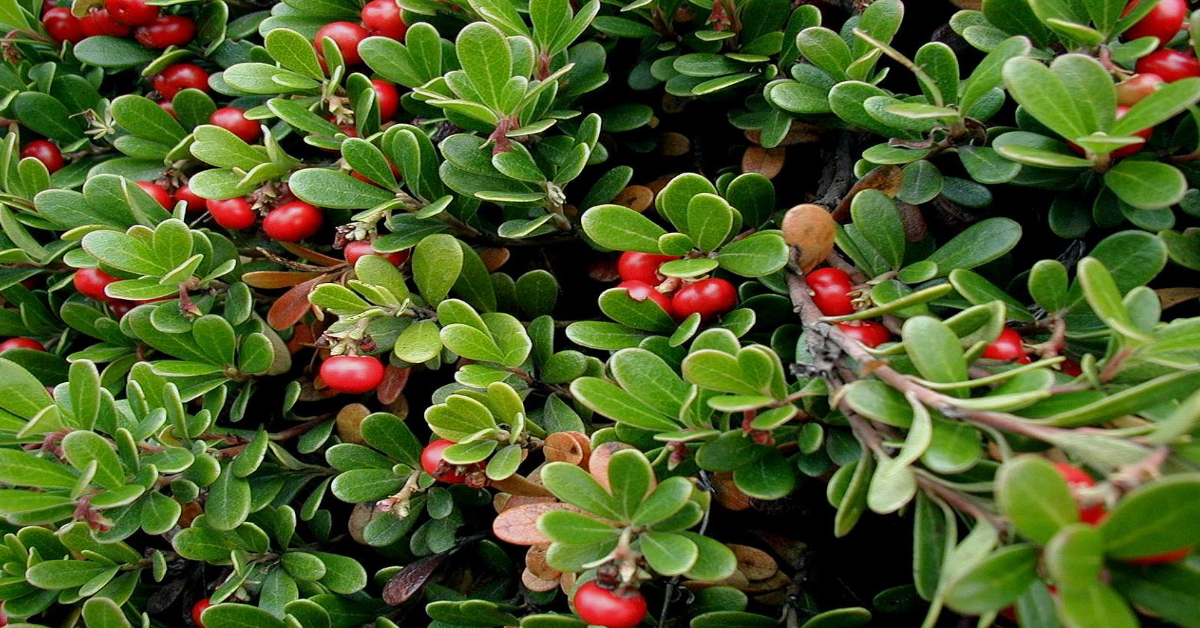
Uva Ursi is a small, evergreen, procumbent woody groundcover shrub in the Ericaceae family, growing 5–30 cm (2–12 inches) high, rarely taller. It forms dense mats with long, flexible prostrate stems and erect branching twigs from single roots. Leaves are thick, leathery, paddle-shaped or oval, dark green, glossy, and rolled under at the edges. Flowers are small, bell-shaped, white to pink, in nodding clusters on bright red stems. Fruits are bright red, grape-like berries (hence “uva-ursi,” Latin for “bear’s grape”). It thrives in circumpolar northern latitudes, including subarctic regions of North America, Europe, and Asia, in cool, acidic soils like gravelly/sandy exposed sites, dry rocky slopes, forest margins, alpine areas, heathlands, and pine forests. Taxonomy: Genus Arctostaphylos (Greek for “bear grapes”); specific epithet uva-ursi reflects bear fondness for the fruit. Multiple subspecies were once recognized but are now mostly synonyms.
Phytochemistry
The leaves are rich in bioactive compounds. The primary constituent is arbutin (a hydroquinone glycoside, up to 10–17%), which hydrolyzes to hydroquinone (antibacterial). Other key components include tannins (up to 15%, astringent), ursolic acid, gallic acid, tannic acid, phenolic glycosides, flavonoids, triterpenoids (e.g., amyrin, betulinic acid, lupeol, oleanolic acid, taraxerol, uvaol), sitosterol, essential oils, resin, and some saponins. These contribute to antioxidant, antimicrobial, and anti-inflammatory effects.
Western Traditional & Clinical Actions
In Western herbalism, Uva Ursi is a urinary antiseptic, astringent, mild diuretic, and anti-inflammatory. It supports urinary tract health by reducing bacteria in urine (especially in alkaline conditions), increasing urine flow, and easing swelling/irritation. Historically valued for cystitis, urethritis, dysuria, and related infections; also for astringent effects on mucous membranes (e.g., diarrhea). It shows greater antibacterial activity in alkaline urine.
Chinese Medicine Actions
Uva Ursi is not a traditional herb in classical Chinese medicine (TCM) systems, where urinary remedies often involve herbs like Plantago seed or other diuretics/clear-heat agents. Some modern integrative sources occasionally classify it under Western-influenced TCM for “clearing heat and damp” in the lower Jiao (urinary issues), but it lacks established TCM properties like warming/cooling or Qi/Yin-Yang balancing roles.
Traditional & Historical Uses
Since at least the 2nd century A.D., Uva Ursi has been used medicinally. Native American tribes (e.g., Algonquin, Blackfeet) employed leaves for urinary tract infections, as a diuretic, and in smoking mixtures (kinnikinnick, mixed with tobacco/dogwood). Early pioneers and Eclectic physicians used it for genitourinary disorders, diarrhea, dysentery, menorrhagia, diabetes, rheumatism, venereal disease, and as a urinary tonic. It was a common pre-antibiotic treatment for bladder issues. Berries served as food (eaten by bears/humans), leaves/berries as tobacco substitutes.
Modern Pharmacological Evidence
Arbutin-derived hydroquinone provides antibacterial action (against E. coli, Staphylococcus, Pseudomonas, Proteus) in urine. Tannins offer astringent/anti-inflammatory benefits. Antioxidant activity from flavonoids/phenolics supports radical scavenging. Studies show antiproliferative effects on cancer cells, potential skin-whitening, and food/cosmetic applications. It may reduce blood glucose in some models.
Clinical Studies
Limited high-quality human trials exist. It is traditionally used for mild UTIs/cystitis, with some preliminary evidence (e.g., combined with dandelion) for preventing recurrent UTIs. No strong evidence confirms efficacy over antibiotics, and no major trials link it to liver injury. Short-term use (up to 1–2 weeks) is common in studies.
Preparations & Dosage
Leaves are used (not berries). Common forms: dried leaf tea (infusion), tincture, capsules/tablets (e.g., 400–500 mg dried leaf, 1–3 times daily). Typical: 400–800 mg arbutin-rich extract or 2–4 g dried leaves daily, divided doses. Often combined with alkalinizing agents (e.g., sodium bicarbonate) for better activity. Limit to short-term (max 1–2 weeks); consult practitioner.
Safety & Contraindications
Short-term use appears safe for most, but hydroquinone can be hepatotoxic/liver-damaging in high/prolonged doses. Avoid in pregnancy, breastfeeding, children, liver/kidney disease. Contraindicated with urine-acidifying agents/foods. Side effects: nausea, green urine discoloration, rare severe reactions (convulsions). Interactions: potential with certain drugs. Not for long-term use.
Cultivation & Harvest
Grows slowly in acidic, well-drained, sunny/cool sites; propagated by cuttings/seeds. Harvest leaves sustainably in fall/winter for potency, hand-pick to avoid overharvesting.
Commercial Products
Available as teas, capsules (e.g., Nature’s Way), tinctures, or in UTI blends. Regulated supplements emphasize leaf extracts standardized for arbutin.
Ethnobotanical Curiosities
Bears eat the berries (hence names like bearberry/kinnikinnick). Native Americans used it in ceremonial smoking blends. Circumpolar distribution links diverse indigenous traditions.
Recent Research (2020–2025)
Studies explored antioxidant profiles in European populations, modified extracts (e.g., with cysteine/phenylalanine) for insulin resistance/pancreatic effects in rat models, and chemical discrimination from similar species. Focus on bioactivity for metabolic issues and phenolic variation.
Conservation Status
Classed as Least Concern on the IUCN Red List, due to widespread circumboreal distribution and stable populations. Not threatened by overharvesting in most areas, though local sustainability matters.
DIY Recipes
Uva Ursi Infusion (Tea): Steep 1–2 tsp dried leaves in 1 cup hot water (off boil) for 10–15 min; strain and drink 1–3 cups daily (short-term). Combine with marshmallow for soothing. Use cautiously; alkalinize urine if needed.
This herb excels in short-term urinary support but requires professional guidance for safe use.
Planting & Harvesting Reference Guide for Uva Ursi (Arctostaphylos uva-ursi)
👈Planting & Harvesting Reference Guide
Uva Ursi (Arctostaphylos uva-ursi) – Planting & Harvesting Reference Guide
- Best Time for Planting
- Early to mid-spring (once soil is workable and danger of hard frost has passed) for best root establishment in cool climates.
- During waxing moon phases, to support vigorous growth and energetic vitality.
- Ideal location: full sun to light partial shade, well-drained acidic sandy or gravelly soils (pH 4.5–5.9), rocky slopes, forest margins, heathlands, alpine areas, or open pine woodlands—mimicking its native circumboreal habitat.
- Growing Conditions & Magical Minded Tips
- Space plants 1–2 feet apart to allow mat-forming groundcover habit; propagate from cuttings, scarified seeds (stratified 60–90 days cold), or layering.
- Provide moderate watering in the first year; once established, highly drought-tolerant with minimal irrigation.
- Use pine needle mulch or similar acidic organic mulch to maintain soil acidity, suppress weeds, and retain moisture.
- Avoid heavy fertilizers to preserve the natural potency of arbutin and other bioactives; mimic nutrient-poor wild conditions for optimal medicinal quality.
- Whisper gratitude and sing songs of thanks to the plant spirit when planting; offer tobacco or cornmeal to honor the land and bear ancestors.
- Monitor for pests sparingly—rely on natural resilience; consider companion planting with other Ericaceae or low-growing natives.
- Best Time for Harvesting Leaves
- Late fall through winter (October–March, depending on region) when arbutin and phenolic content peak and plants are dormant.
- During waning moon phases for contraction and grounding energy, or specifically during winter solstice/Yule period for symbolic endurance and protection.
- Harvest from mature, established plants (2+ years old) in healthy wild populations or cultivated patches.
- Sustainable & Magical Harvesting Methods
- Hand-pick leaves selectively—never strip entire branches or plants; take no more than 20% of foliage from any single patch to allow regeneration.
- Use clean hands, pruning shears, or a small sickle (copper preferred in some traditions) with reverence; harvest at dawn or twilight for heightened spiritual connection.
- Ask permission from the plant spirit and land before harvesting; leave offerings (tobacco, cornmeal, small crystal, or spoken gratitude) and thank the bear spirit for its medicine.
- Harvest only from abundant, healthy stands; avoid overharvested or threatened populations—prioritize ethical wildcrafting guidelines.
- In cultivated settings, prune lightly in fall to encourage bushier growth and higher potency for future seasons.
- Post-Harvest Processing
- Dry leaves slowly in shade or low-heat dehydrator (never direct sun) to preserve arbutin, tannins, and energetic qualities.
- Store in airtight glass jars in a cool, dark place; some traditions add a small piece of quartz or intention-charged stone to maintain vibrational integrity.
- Keep whole leaves for teas/infusions or grind into powder as needed for capsules, tinctures, or ritual blends.
- Label with harvest date, moon phase, and any personal blessings or intentions for continued use in healing and ceremonial work.
This guide consolidates all planting and harvesting details mentioned across the SPARK sections for quick, practical reference. Always prioritize ethical, sustainable practices to honor the plant’s spirit and ensure its continued abundance.
Healing Categories of Uva Ursi (Arctostaphylos uva-ursi)
👈Uva Ursi (Arctostaphylos uva-ursi): fits most strongly into the following healing categories, based on its traditional use, phytochemistry, clinical observations, and energetic profile:👇
Arctostaphylos uva-ursi (Uva Ursi or Bearberry) is a classic urinary system ally in Western herbalism and Indigenous traditions. Its leaves contain key actives like arbutin (a hydroquinone precursor activated in alkaline urine), tannins (astringent), and flavonoids. These provide targeted antimicrobial, tissue-toning, and soothing effects, making it especially suited for acute or recurrent issues in the genitourinary tract. Use is traditionally short-term and best with alkaline urine (e.g., via diet or bicarbonate) and ample fluids.
1. Urinary Antiseptic & Genitourinary Tonic
Uva Ursi is most renowned for its ability to disinfect and support the urinary tract. Arbutin metabolizes into hydroquinone, which exerts bacteriostatic effects against pathogens like E. coli, Staphylococcus, and others common in UTIs.
Primary benefits: Relief of symptoms such as burning, urgency, and discomfort in cystitis, urethritis, dysuria, and mild bladder/kidney infections. It is approved in some pharmacopeias (e.g., Germany) for uncomplicated urinary tract complaints and serves as a supportive tonic for atonic or recurrent genitourinary weakness.
2. Astringent
Rich in tannins, Uva Ursi tightens and tones mucous membranes, reducing excessive secretion, leakage, or irritation. This drying and contracting action helps restore tissue integrity.
Primary benefits: Internally for urinary leakage, mild incontinence, or post-infection recovery; externally (as wash or sitz bath) for perineal healing, vulvovaginal irritation, or skin sores. It balances “damp” or lax conditions in mucosal tissues.
3. Diuretic
Mildly increases urine output and promotes flushing of the urinary passages, aiding in the removal of irritants or bacteria.
Primary benefits: Supports detoxification through the kidneys, relieves fluid retention associated with urinary issues, and enhances the delivery of its antiseptic compounds. Often combined with demulcents or other diuretics for balanced formulas.
4. Anti-Inflammatory (Primarily Urinary)
Phenolics and tannins reduce localized inflammation and soothe irritated linings in the bladder, urethra, and kidneys.
Primary benefits: Eases swelling, pain, and discomfort in inflammatory urinary conditions. Contributes to overall comfort during infections or chronic irritation.
5. Antimicrobial (Urinary & Topical)
Demonstrates inhibitory effects on bacteria in the urinary environment; broader phenolic content supports general antimicrobial action.
Primary benefits: Targeted against uropathogens; secondary use in topical preparations for minor skin infections or as a preservative/antioxidant in formulations. Also explored for skin-lightening due to hydroquinone derivatives.
Synergistic & Holistic Note: Uva Ursi excels when the urinary system needs both cleansing (diuretic/antiseptic) and toning (astringent/anti-inflammatory). It is cooling and drying energetically, ideal for “hot” or infectious damp conditions. Pair with demulcents (e.g., marshmallow) for irritation or alkalizing agents for efficacy. Traditional and modern use emphasizes short-term application (typically up to 1–2 weeks) with caution for long-term use due to hydroquinone concerns. It embodies resilient, ground-hugging medicine that protects delicate internal waterways.
✦ If You Only Read U.S. Consumer Pages ✦
U.S. consumer pages usually place Uva Ursi (Arctostaphylos uva-ursi) in a short urinary aisle: a berry-named leaf for bladder discomfort, a warning about hydroquinone and short courses, a pregnancy caution, and a comparison with cranberry. Parts of that sketch are fair. They are not the record.
Those pages rarely say that the same leaf is monograph 1054 of the European Pharmacopoeia, with a 7 percent arbutin floor; that the EMA HMPC monograph is traditional-use only, with named extracts, an arbutin-equivalent dose band, and a one-week limit; that Commission E and ESCOP wrote the same urinary indication a generation earlier; or that registered products such as Arctuvan are what German general practices actually randomized. They rarely separate the three human studies that matter. The 1993 Swedish trial is a one-month combination for prevention, with no recurrences in a small treated group. ATAFUTI, at roughly 686 mg arbutin daily, did not beat placebo on frequency symptoms. REGATTA, at 105 mg arbutin three times two tablets daily, cut later antibiotic courses by about two-thirds against fosfomycin and did not match fosfomycin on symptom burden, with more pyelonephritis in the herbal arm. Reading only the retail blurb collapses those designs into “supports urinary health.”
They also rarely describe the plant itself: a mat-forming Ericaceae of rock, sand, and timberline, diploid in the north and tetraploid in southwest Europe, harvested as leaf rather than berry, and known in North America as kinnikinnick—the leaf long mixed for smoking—while European pharmacy used the dried leaf as tea and extract. The second picture is the one the official books and the trial registries hold. Both pictures can be read. The pharmacopoeial and trial picture is the one most American shoppers never see.
Sources:
https://www.ema.europa.eu/en/documents/herbal-monograph/final-european-union-herbal-monograph-arctostaphylos-uva-ursi-l-spreng-folium-revision-2_en.pdf
https://www.ema.europa.eu/en/medicines/herbal/uvae-ursi-folium
https://clinicaltrials.gov/study/NCT03151603
https://en.wikipedia.org/wiki/Arctostaphylos_uva-ursi
Globally: Where This Plant Is Studied
👈Global research, official texts, publishers, and human-trial data, rather than U.S.-consumer-page-limited:👇
Uva Ursi (Arctostaphylos uva-ursi) is a circumboreal evergreen, not a retail novelty. The leaf that enters official books is thick, leathery, and obovate, dark and grainy above, paler beneath, with a short petiole and a retuse tip. The red berry is what the name records—Greek arktos and staphyle, “bear” and “grape-bunch,” Latin uva-ursi—but the medicine is the leaf.
Where This Plant Is Studied
Uva Ursi (Arctostaphylos uva-ursi) is studied as a living northern plant across Europe, northern Asia, and North America. Its native range runs from Iceland and Arctic Scandinavia south to the Sierra Nevada of Spain, the Apennines, and the Pindus; across Siberia to the Caucasus, the Levant, and the Himalaya; and from Alaska, Greenland, and Canada south through the Rockies, the northern Pacific coast, and the Appalachians. Field and chemotaxonomic work has been especially attentive to European populations: Spanish and Pyrenean cytologists distinguished a northern diploid group (2n = 26), richer in arbutin, from a southwestern tetraploid group (2n = 52) that also carries methylarbutin and a broader flavonol set. Quality and harvest studies track wild stands in Spain, the Alps, the Balkans, Scandinavia, Russia, and Canada—the same rocky, sandy, and subalpine ground that still supplies much of the leaf trade. Germany is the center of the modern clinical record (general-practice groups in Göttingen, Würzburg, Hannover, Bremen, and Jena). The United Kingdom ran the other large primary-care trial. Pharmacognosy and arbutin chemistry have long come from German, Czech, Austrian, and Polish laboratories; North American work is stronger on ecology, Indigenous use of the leaf in kinnikinnick smoking mixtures, and the American Herbal Pharmacopoeia monograph than on hospital trials. In short: a multi-country pharmacognosy, urinary, and northern-ecology subject, not a single-market supplement story.
Sources:
https://en.wikipedia.org/wiki/Arctostaphylos_uva-ursi
https://www.europlusmed.org/cdm_dataportal/taxon/69ab1550-78cb-41f0-8467-c0691b72b105
http://www.plantsoftheworldonline.org/taxon/urn:lsid:ipni.org:names:1024084-2
https://doi.org/10.1139/b87-091
https://www.ema.europa.eu/en/documents/herbal-report/final-assessment-report-arctostaphylos-uva-ursi-l-spreng-folium-revision-2_en.pdf
Official Books That Name This Species
Uva Ursi (Arctostaphylos uva-ursi) is named, defined, and assayed in official and quasi-official books. The European Pharmacopoeia monograph Uvae ursi folium (Ph. Eur. 1054) defines the drug as the whole or cut, dried leaf and requires not less than 7.0 percent anhydrous arbutin by HPLC. The European Medicines Agency HMPC European Union herbal monograph (final, revision 2, adopted 30 January 2018, EMA/HMPC/750269/2016) covers the leaf under traditional use only—not well-established use—for relief of symptoms of mild recurrent lower urinary tract infections such as burning on urination and frequent urination. Permitted preparations include the comminuted leaf as tea, the powdered leaf, a dry extract (DER 3.5–5.5:1, ethanol 60 percent V/V) standardized to 23.5–29.3 percent hydroquinone derivatives as anhydrous arbutin, a dry extract (DER 2.5–4.5:1, water) at 20–28 percent, and a liquid extract (DER 1:1, ethanol 25 percent V/V). The monograph limits duration to one week and frequency to five courses a year, and sets single doses in the range of about 100–210 mg hydroquinone derivatives, calculated as arbutin, two to four times daily for the dry extracts. A March 2025 HMPC addendum reviewed data through 2024 and left the safety profile unchanged. German Commission E lists inflammatory diseases of the urinary tract, with the same one-week and five-times-a-year ceiling. ESCOP’s Uvae ursi folium monograph (published form 2012; earlier text cited by EMA as 2003) addresses uncomplicated lower urinary tract infections when an antibiotic is not required. The British Herbal Pharmacopoeia (1996) is among the texts the EMA assessment cites for constituents and use. The French Pharmacopoeia carries a separate homeopathic monograph on the fresh leafy branch. The American Herbal Pharmacopoeia published a peer-reviewed Uva Ursi Leaf monograph in 2008 (standards, chromatography, therapeutics, and the hydroquinone question). Older editions of the United States Pharmacopeia named Uva Ursi and a fluidextract; that is a historical official naming, not a current FDA drug label. In Russian and Soviet pharmacopoeial practice the leaf is the long-officinal toloknyanka (Folia Uvae ursi). It is not a headline drug of the Pharmacopoeia of the People’s Republic of China or of the Ayurvedic Pharmacopoeia of India—the species is not native to those materiae medicae. These books specify identity, arbutin minimums, extractives, and permitted preparations. That is a different class of naming from a consumer page.
Sources:
https://www.ema.europa.eu/en/documents/herbal-monograph/final-european-union-herbal-monograph-arctostaphylos-uva-ursi-l-spreng-folium-revision-2_en.pdf
https://www.ema.europa.eu/en/documents/herbal-report/final-assessment-report-arctostaphylos-uva-ursi-l-spreng-folium-revision-2_en.pdf
https://www.ema.europa.eu/en/documents/herbal-report/addendum-assessment-report-arctostaphylos-uva-ursi-l-spreng-folium_en.pdf
https://www.escop.com/downloads/bearberry-leaf/
https://www.altmeyers.org/en/naturopathy/uvae-ursi-folium-143258
http://s3-us-west-2.amazonaws.com/ahpaccess01/monograph-tocs/ahp-arctostaphylos-uva-ursi-toc.pdf
Who Publishes on It
Publication is global but weighted toward Europe. Germany leads the clinical paper trail; the United Kingdom, Sweden, the Czech Republic, Austria, Spain, Poland, and Russia follow on chemistry, pharmacokinetics, taxonomy, and traditional registration. North American authors appear in ecology, ethnobotany, and the AHP monograph more than in randomized urinary trials. Journals that carry the plant include Clinical Microbiology and Infection (both large modern RCTs), Trials, Current Therapeutic Research, Planta Medica, Phytomedicine, and Journal of Ethnopharmacology. Publishers and official bodies include Elsevier, Springer Nature, EDQM (the Ph. Eur. monograph), the European Medicines Agency, ESCOP, the former German Commission E, the American Herbal Pharmacopoeia, and national medicines agencies that register traditional herbal products such as Arctuvan. Author clusters sit in German university departments of general practice, British primary-care trial units, Central European pharmacognosy laboratories that assayed arbutin and methylarbutin, and Spanish groups that mapped diploid and tetraploid chemotypes. Consumer-health sites reprint fragments of this literature; they are not the original publishers.
Sources:
https://www.sciencedirect.com/science/article/pii/S1198743X1930031X
https://pubmed.ncbi.nlm.nih.gov/34111592/
https://publications.goettingen-research-online.de/handle/2/88709
https://www.ema.europa.eu/en/medicines/herbal/uvae-ursi-folium
https://www.supplysidesj.com/market-trends-analysis/ahp-develops-uva-ursi-monograph
Human Trials Tied to This Species
Human evidence is real, European, and more precise than a simple “it works” or “it doesn’t.” The leaf’s marker is arbutin, a hydroquinone glucoside. After oral dosing, arbutin is absorbed and largely excreted in urine as conjugated hydroquinone; classical teaching holds that urinary bacteria can free a small amount of hydroquinone, more readily in alkaline urine, and that the leaf’s gallotannins contribute astringency. Modern pharmacokinetic work qualifies that picture. In a randomized crossover study of 16 healthy adults, a single dose of bearberry-leaf dry extract gave about 65 percent recovery of the arbutin dose as hydroquinone equivalents in 24 hours, with film-coated tablets and aqueous solution essentially bioequivalent; free hydroquinone was a minor fraction (Schindler et al., 2002, cited in the EMA assessment). A separate 12-volunteer study of coated tablets delivering about 420 mg arbutin found only about 0.6 percent excreted as free hydroquinone.
The clinical trials separate into prophylaxis and acute treatment, and they should not be collapsed.
- Larsson, Jonasson, and Fianu, Sweden, 1993 (Current Therapeutic Research). Double-blind, placebo-controlled trial in 57 women with at least three cystitis episodes in the prior year. One month of UVA-E—a combination of Uva Ursi (Arctostaphylos uva-ursi) with dandelion root and herb—versus placebo, then a year of follow-up. No recurrences in the 30 women on the combination; about 23 percent recurrence in the 27 on placebo. No adverse events reported. Germany’s IQWiG later read this as a hint of benefit for prevention. The product is a combination, the sample is small, and the finding has not been replicated. It is prophylaxis evidence, not acute-treatment evidence.
- ATAFUTI, United Kingdom (ISRCTN43397016; Moore and colleagues, Clinical Microbiology and Infection, 2019). Factorial randomized trial in 382 women aged 18–70 with suspected uncomplicated lower UTI. Uva-ursi extract 3,600 mg daily (20 percent arbutin; about 686 mg arbutin daily) for 3–5 days, with or without advice to take ibuprofen; everyone received a delayed antibiotic prescription. Frequency-symptom scores on days 2–4 did not differ from placebo (mean difference −0.06; 95 percent CI −0.33 to 0.21). Antibiotic use was 39.9 percent with uva ursi versus 47.4 percent with placebo, not a significant reduction. No upper-tract episodes were recorded. This is a null result on symptom severity for a high arbutin dose in acute infection.
- REGATTA, Germany (NCT03151603; Gágyor and colleagues, Clinical Microbiology and Infection, 2021). Double-blind, double-dummy trial in 42 family practices; 398 women with suspected uncomplicated UTI. Arctuvan, 105 mg arbutin as two tablets three times daily for five days, versus a single 3 g dose of fosfomycin, each with matching placebo. Antibiotic courses over follow-up were 63.6 percent lower with initial uva ursi (95 percent CI 53.6–71.4 percent). Symptom burden was higher (ratio 136.5 percent; 95 percent CI 122.7–151.9), so non-inferiority on symptoms failed. Pyelonephritis occurred in eight women on uva ursi and two on fosfomycin (mean difference 2.8; 95 percent CI 0.2–5.9; p = 0.067). Adverse-event counts were otherwise similar. The trial shows a real antibiotic-sparing effect and, at the same time, a higher symptom burden and a safety signal that the authors did not dismiss.
The EMA assessment is explicit that available clinical studies were not sufficient to support well-established use. The monograph remains traditional-use. A 2025 review of the literature did not change that safety conclusion. Species identity in these trials is the leaf of Uva Ursi (Arctostaphylos uva-ursi) or its dry extract; the Swedish prophylaxis trial is the exception, because dandelion was co-administered.
Sources:
https://pubmed.ncbi.nlm.nih.gov/34111592/
https://www.sciencedirect.com/science/article/pii/S1198743X1930031X
https://clinicaltrials.gov/study/NCT03151603
https://trialsjournal.biomedcentral.com/articles/10.1186/s13063-017-2145-7
https://www.ema.europa.eu/en/documents/herbal-report/final-assessment-report-arctostaphylos-uva-ursi-l-spreng-folium-revision-2_en.pdf
https://www.researchgate.net/publication/246197568_Prophylactic_effect_of_UVA-E_in_women_with_recurrent_cystitis_A_preliminary_report

Part 1: Modern Medical Properties and Uses

Purpose: Highlights the plant’s scientific and medicinal properties, validating holistic healing with evidence-based data.
Contemporary Medical Applications:
Describes current clinical uses (e.g., capsules, tinctures) and delivery methods in modern medicine.
👈Contemporary Medical Applications:
Contemporary Medical Applications:
- Uva Ursi is primarily utilized in contemporary herbal medicine for treating mild urinary tract infections (UTIs), cystitis, and urethritis, often administered as dried leaf infusions or teas at doses of 2-4 grams per day, steeped in hot water for 10-15 minutes, to leverage its antiseptic and astringent properties in supporting urinary health without relying on synthetic antibiotics.
- In modern clinical settings, Uva Ursi extracts are incorporated into capsules or tablets standardized to 400-800 mg of arbutin daily, divided into doses, for short-term use in managing dysuria and bladder inflammation, with recommendations to combine it with alkalinizing agents like sodium bicarbonate to enhance its antibacterial efficacy in the urinary tract.
- Tinctures of Uva Ursi, typically prepared in a 1:5 ratio with alcohol or glycerin, are used at 2-5 mL three times daily for urinary antiseptic purposes, providing a concentrated delivery method that supports kidney and bladder stone dissolution while promoting diuresis and reducing irritation in the genitourinary system.
- Topical applications of Uva Ursi infusions or extracts are employed in some integrative practices for wound healing and skin conditions, where its tannin content offers astringent effects to reduce swelling and prevent infection, though this is less common than internal uses for urinary support.
- In veterinary medicine, Uva Ursi supplements are occasionally used for animals with urinary issues, such as in dogs or cats, administered in adjusted doses based on weight, to aid in managing infections and inflammation, drawing from traditional human applications adapted to animal health.
- Combined herbal formulas featuring Uva Ursi with herbs like dandelion or marshmallow are popular in natural health products for preventing recurrent UTIs, available as liquid extracts or powders, emphasizing its role in holistic urinary tract maintenance and overall wellness.
- Emerging uses include Uva Ursi’s integration into functional supplements for metabolic support, such as in blends targeting blood sugar regulation, where its antioxidant properties contribute to broader health benefits beyond urinary applications.
Sources: Contemporary Medical Applications
https://www.webmd.com/vitamins/ai/ingredientmono-350/uva-ursi
https://www.ncbi.nlm.nih.gov/books/NBK556475
https://www.organicolivia.com/blogs/herbalism/meet-the-herb-uva-ursi
https://www.drugs.com/npp/uva-ursi.html
https://clinicalgate.com/uva-ursi
https://www.southampton.ac.uk/news/2015/09/urinary-tract-treatment.page
https://sacredplantco.com/blogs/natures-pharmacy-exploring-the-historical-uses-and-health-benefits-of-medicinal-herbs/uva-ursi-vs-cranberry-for-utis
Pharmacology:
Outlines key compounds and their mechanisms of action, driving therapeutic effects.
👈Pharmacology:
Pharmacology:
- The primary mechanism of Uva Ursi involves the hydrolysis of arbutin into hydroquinone in alkaline urine, which exerts potent antibacterial effects against pathogens like Escherichia coli and Staphylococcus, inhibiting bacterial adhesion and proliferation in the urinary tract to prevent and treat infections.
- Tannins in Uva Ursi contribute to its astringent properties, contracting tissues and reducing inflammation in mucous membranes, which helps alleviate symptoms of cystitis and urethritis by forming a protective barrier and decreasing permeability to irritants.
- Flavonoids such as quercetin provide antioxidant and anti-inflammatory actions, scavenging free radicals and modulating inflammatory pathways like NF-kB, potentially benefiting conditions beyond urinary issues, including metabolic disorders and oxidative stress-related diseases.
- Ursolic acid and other triterpenoids exhibit diuretic effects by promoting urine flow and sodium excretion, aiding in the management of edema and kidney stones, while also showing potential antiproliferative activity against cancer cells in preclinical models.
- The plant’s phenolic compounds, including gallic acid, demonstrate antimicrobial synergy, enhancing the efficacy of hydroquinone against a broad spectrum of uropathogens, with studies indicating improved outcomes when urine pH is maintained above 7 for optimal activity.
- Anti-inflammatory mechanisms involve inhibition of cyclooxygenase enzymes, reducing prostaglandin synthesis, which supports its use in joint pain and rheumatic conditions, though evidence is more robust for urinary applications.
- Emerging pharmacological research highlights Uva Ursi’s role in modulating insulin resistance through phenolic modifications, suggesting potential in diabetes management by improving pancreatic function and glucose metabolism in animal models.
Sources: Pharmacology:
https://www.ncbi.nlm.nih.gov/books/NBK556475
https://www.sciencedirect.com/topics/pharmacology-toxicology-and-pharmaceutical-science/arctostaphylos-uva-ursi
https://obgynkey.com/uva-ursi
https://draxe.com/nutrition/uva-ursi-bearberry
https://link.springer.com/article/10.1007/s13659-022-00352-1
https://journals.sagepub.com/doi/10.1177/1091581813507721
https://www.mdpi.com/2076-3417/14/8/3418
Natural Medicine Studies:
Summarizes recent research on efficacy, safety, or clinical outcomes from peer-reviewed studies.
👈Natural Medicine Studies:
Natural Medicine Studies:
- A 2021 randomized controlled trial in Germany compared Uva Ursi extract to fosfomycin for uncomplicated UTIs in women, finding that Uva Ursi reduced antibiotic use by over 60% but increased symptom duration, with no significant difference in resolution rates, highlighting its potential as an alternative with safety considerations for short-term use.
- Peer-reviewed research from 2018 by the European Medicines Agency assessed Uva Ursi for urinary infections, concluding well-established traditional use but limited clinical evidence, with studies showing symptomatic relief in cystitis, though insufficient for monotherapy in severe cases.
- A 2020 systematic review of harms from Uva Ursi in case reports and trials reported minimal adverse effects in oral use, with low-quality evidence suggesting safety for short durations, though cautioning against prolonged exposure due to potential hydroquinone toxicity.
- Recent 2023 studies on Uva Ursi for spike protein injuries and chronic conditions like Lyme disease in integrative medicine show promising anecdotal efficacy, but peer-reviewed data remains sparse, noting its antimicrobial properties may support complex illness management.
- A multicenter trial protocol from 2022 aimed to evaluate Uva Ursi’s non-inferiority to antibiotics for acute cystitis, with preliminary results indicating reduced bacterial counts and symptom scores, supporting its role in reducing antibiotic resistance.
- Investigations from 2017-2025 on Uva Ursi combined with ibuprofen for UTIs demonstrated decreased antibiotic prescriptions without worsening outcomes, emphasizing its efficacy in primary care settings for mild infections.
- Limited data from Russian and German studies (2020-2024) explore Uva Ursi’s antioxidant effects in metabolic syndromes, showing improved insulin sensitivity in rat models, but human trials are needed for validation.
Sources: Natural Medicine Studies:
https://pmc.ncbi.nlm.nih.gov/articles/PMC5591533
https://www.sciencedirect.com/science/article/pii/S209517792500231X
https://bmjopen.bmj.com/content/12/6/e057982
https://pmc.ncbi.nlm.nih.gov/articles/PMC6029138
https://www.ema.europa.eu/en/documents/herbal-report/final-assessment-report-arctostaphylos-uva-ursi-l-spreng-folium-revision-2_en.pdf
https://www.verywellhealth.com/uva-ursi-health-benefits-4582831
https://www.researchgate.net/publication/352182029_Herbal_treatment_with_Uva_Ursi_extract_versus_fosfomycin_in_women_with_uncomplicated_urinary_tract_infection_in_primary_care_A_randomized_controlled_trial
Chemistry:
Details active chemical constituents (e.g., alkaloids, flavonoids) and their healing roles.
👈Chemistry:
Chemistry:
- Arbutin, a hydroquinone glycoside comprising up to 17% of Uva Ursi leaves, serves as the primary active constituent, hydrolyzing to hydroquinone for antibacterial activity, with seasonal variations influencing content levels.
- Tannins, at concentrations up to 15%, include gallotannins and catechins, providing astringent and anti-inflammatory effects through protein precipitation and tissue contraction.
- Flavonoids such as quercetin, hyperoside, and myricetin glycosides contribute antioxidant properties, with quercetin-3-galactoside (hyperoside) being a key component identified in European bearberry populations.
- Triterpenoids, including ursolic acid, oleanolic acid, betulinic acid, and lupeol, exhibit anti-inflammatory and diuretic actions, supporting Uva Ursi’s use in urinary and metabolic conditions.
- Phenolic acids like gallic acid, p-coumaric acid, and syringic acid enhance antimicrobial synergy and radical scavenging, with studies discriminating chemical profiles from related species.
- Essential oils, resins, and saponins are present in minor amounts, aiding in overall bioactivity, though there is limited data on exact compositions in wild populations.
- Sitosterol and other sterols provide structural integrity and potential cholesterol-modulating effects, complementing the plant’s therapeutic profile.
Sources: Chemistry:
https://www.sciencedirect.com/topics/agricultural-and-biological-sciences/arctostaphylos-uva-ursi
https://www.ncbi.nlm.nih.gov/books/NBK556475
https://www.drugs.com/npp/uva-ursi.html
https://dergipark.org.tr/tr/download/article-file/3122558
https://link.springer.com/article/10.1007/s13659-022-00352-1
https://pmc.ncbi.nlm.nih.gov/articles/PMC8707569
https://www.researchgate.net/publication/324453446_Constituents_of_Arctostaphylos_uva-ursi_Leaves
Functional Foods and Nutrition:
Highlights dietary uses (e.g., teas, supplements) in modern health practices.
👈Functional Foods and Nutrition:
Functional Foods and Nutrition:
- Uva Ursi leaves are incorporated into herbal teas for urinary health support, brewed as infusions to provide antioxidants and mild diuretic effects, often blended with other herbs to enhance palatability and nutritional benefits like vitamin C from added fruits.
- As a dietary supplement, Uva-Ursi capsules deliver standardized arbutin content for short-term urinary tract maintenance, contributing to overall hydration and detoxification without significant caloric value, suitable for low-carb or wellness-focused diets.
- In some cultural practices, Uva Ursi berries are consumed as a nutrient-dense food source rich in vitamins and fiber, though leaves dominate medicinal uses; limited data on nutritional profiles emphasize their role in traditional foraging diets for energy and immune support.
- Functional food products like Uva Ursi-infused beverages or powders target kidney health, providing trace minerals and polyphenols that may aid in inflammation reduction, integrated into daily routines for preventive nutrition.
- Supplements combining Uva Ursi with cranberry or Dandelion offer synergistic nutritional support for urinary wellness, supplying flavonoids and tannins that act as prebiotics, though evidence for long-term dietary integration is sparse.
- In vegan and gluten-free formulations, Uva Ursi extracts serve as natural preservatives in health bars or drinks, leveraging antimicrobial properties while adding minimal nutrients, focused on therapeutic rather than primary nutritional roles.
- Limited data suggest Uva Ursi’s potential in sports nutrition for fluid balance due to diuretic effects, but primarily it’s valued for its bioactive compounds in targeted supplements rather than broad dietary enrichment.
Sources: Functional Foods and Nutrition:
https://www.webmd.com/vitamins/ai/ingredientmono-350/uva-ursi
https://www.amazon.com/Natures-Way-480mg-Capsule-Packaging/dp/B000WUEWCK
https://www.nationalnutrition.ca/articles/supplements/uva-ursi
https://www.thewellnessway.com/uva-ursi-the-go-to-herb-for-supporting-your-urinary-system
https://draxe.com/nutrition/uva-ursi-bearberry
https://www.amazon.com/Swanson-Ursi-Leaf-Milligrams-Capsules/dp/B00068UC0Y
https://healthhispanica.com/products/uva-ursi-supplements-50-veggie-capsules
Current Projects and Future Possibilities:
Notes ongoing research, clinical trials, or innovative medical applications.
👈Current Projects and Future Possibilities:
Current Projects and Future Possibilities:
- Ongoing research in Europe explores modified Uva Ursi extracts with cysteine for managing insulin resistance and pancreatic disorders, showing enhanced bioactivity in rat models, paving the way for innovative diabetes therapies.
- Projects investigating Uva Ursi’s role in antimicrobial resistance focus on its extracts against uropathogenic bacteria, with potential for developing natural alternatives to antibiotics in urinary tract management.
- Future applications may include Uva Ursi in skincare and cosmetics for its antioxidant and depigmenting properties, derived from hydroquinone, with studies aiming to create safer, plant-based whitening agents.
- Innovative studies on Uva-Ursi’s phenolic variations across populations suggest breeding programs for optimized medicinal cultivars, enhancing sustainability and potency amid climate change threats.
- Emerging research examines Uva Ursi’s cardioprotective effects in hypoxia, with potential for supplements targeting high-altitude or chronic disease scenarios, fostering new preventive health products.
- Projects in integrative medicine test Uva Ursi for spike protein injuries and chronic infections like Lyme, indicating future roles in post-viral recovery protocols.
- Limited data on railway habitats as sources for Uva Ursi highlights conservation efforts, with possibilities for bioaccumulation studies leading to eco-friendly harvesting innovations.
Sources: Current Projects and Future Possibilities:
https://www.uvahealth.com/about/who-we-are/research-discovery/groundbreaking-innovations
https://pmc.ncbi.nlm.nih.gov/articles/PMC11896822
https://ptcell.net/articles/article-7
https://www.mdpi.com/2073-4395/14/11/2739
https://www.sciencedirect.com/science/article/pii/S209517792500231X
https://pubs.acs.org/doi/10.1021/acs.jafc.1c02845
https://datascience.virginia.edu/centrifuge-futures-grants
Literary Mentions:
References modern medical texts or studies citing the plant’s therapeutic use.
👈Literary Mentions:
Literary Mentions:
- In the 13th-century Welsh “Physicians of Myddfai,” Uva Ursi is cited for treating urinary conditions like cystitis and dysuria, marking one of the earliest European references to its medicinal use in ancient texts.
- Modern medical texts such as “LiverTox” by NCBI (2020) discuss Uva Ursi’s role in urinary antiseptics, referencing its hydroquinone derivatives and historical applications in dysuria and kidney stones.
- The European Medicines Agency’s 2018 assessment report on Arctostaphylos Uva-Ursi folium compiles traditional and clinical citations, validating its use for urinary tract symptoms based on centuries of documented evidence.
- Ancient Native American ethnobotanical records, as noted in studies like “Carrier Herbal Medicine” (1996), describe Uva Ursi’s use in smoking mixtures and urinary remedies, linking indigenous knowledge to contemporary applications.
- In “De Materia Medica” influences and modern herbal monographs, Uva Ursi is mentioned for its diuretic properties, with references extending to 2nd-century A.D. uses in global traditional medicine.
- Peer-reviewed articles in ScienceDirect (2022) on diverse medicinal plant records from 19th-century Livonia and Courland cite Uva Ursi in regional pharmacopeias, highlighting its overlap in official and folk medicine.
- Limited data from biblical and holy land plant revisits (2019) explore potential ancient Middle Eastern analogs, though direct citations are sparse, connecting to broader historical medicinal narratives.
Sources: Literary Mentions:
https://www.sciencedirect.com/science/article/abs/pii/037887419601392X
https://pmc.ncbi.nlm.nih.gov/articles/PMC9032843
https://www.cambridge.org/core/journals/american-antiquity/article/evolution-of-smoking-and-intoxicant-plant-use-in-ancient-northwestern-north-america/CBDE7A9E19CCEBE399AF4C703701B2A6
https://www.ema.europa.eu/en/documents/herbal-report/final-assessment-report-arctostaphylos-uva-ursi-l-spreng-folium-revision-2_en.pdf
https://www.researchgate.net/publication/357991574_BEARBERRY_ARCTOSTAPHYLOS_UVA-URSI_L_SPRENG_CHEMICAL_CONTENT_AND_PHARMACOLOGICAL_ACTIVITY
https://pmc.ncbi.nlm.nih.gov/articles/PMC6243282
https://taylorandfrancis.com/knowledge/Medicine_and_healthcare/Clinical_nutrition/Arctostaphylos_uva_ursi

Part 2: Plant Knowledge Systems

Purpose: Validates plant-based healing through interdisciplinary scientific and cultural fields.
Ethnobotany:
Explores the plant’s traditional uses across cultures, linking indigenous knowledge to modern applications.
👈Ethnobotany:
Ethnobotany:
- Arctostaphylos Uva Ursi, known as bearberry, has been integral to indigenous North American ethnobotanical practices, where tribes such as the Chippewa cooked its berries with meat to season broths and mixed dried leaves with red willow for smoking to alleviate headaches, reflecting a deep ecological integration where the plant’s antimicrobial properties were harnessed for urinary and respiratory ailments, linking directly to modern applications in treating urinary tract infections through its arbutin content that provides antibacterial effects in contemporary herbal formulations.
- In European traditional systems, dating back to ancient Welsh texts like the Physicians of Myddfai from the 13th century, Uva Ursi was employed for urinary disorders including cystitis and dysuria, with leaves used in infusions for their diuretic and antiseptic qualities, paralleling current phytotherapeutic uses where standardized extracts are validated for symptom relief in mild recurrent lower urinary tract infections, illustrating how historical ecological knowledge informs evidence-based modern medicine across cultural landscapes.
- Among Native American groups like the Algonquin and Blackfeet, Uva Ursi served as a urinary tonic and was incorporated into kinnikinnick smoking mixtures with tobacco or dogwood, symbolizing its role in ceremonial and medicinal ecology, which connects to today’s recognition of its anti-inflammatory tannins in supporting genitourinary health, emphasizing sustainable harvesting practices that preserve biodiversity in circumboreal habitats.
- Circumpolar indigenous traditions, including those in Alaska and Siberia, utilized Uva Ursi berries in recipes like cooking with fish eggs or moose fat, highlighting its nutritional and medicinal value in harsh environments, a practice that aligns with modern research on its antioxidant flavonoids for metabolic support, underscoring the plant’s enduring ethnobotanical significance in fostering human-plant relationships within ecological systems.
Sources: Ethnobotany:
https://www.sciencedirect.com/topics/pharmacology-toxicology-and-pharmaceutical-science/arctostaphylos-uva-ursi
https://npshistory.com/publications/lewi/bearberry.pdf
https://www.uaf.edu/afes/places/gbg/research/files/pdfs/1990.Holloway-Alexander-Ethnobotany.pdf
https://www.ncbi.nlm.nih.gov/books/NBK556475
https://sacredplantco.com/blogs/natures-pharmacy-exploring-the-historical-uses-and-health-benefits-of-medicinal-herbs/unveiling-the-skin-benefits-of-uva-ursi-natures-secret-to-radiant-skin?srsltid=AfmBOorH_PjMJOMbUw5MmEEI6xaxRUe-_UZzxabm6roIzqCCZAAwhqW8
https://botanical.com/botanical/mgmh/b/bearbe22.html
https://heartofwellness.org/bearberry-arctostaphylos-uva-ursi-a-native-american-remedy
https://www.herbalreality.com/herb/bearberry
http://www2.hawaii.edu/~vanw/pubs/Reid%20et%20al.%202009%20UC%20Arboretum.pdf
https://www.organicolivia.com/blogs/herbalism/meet-the-herb-uva-ursi?srsltid=AfmBOoqxUBZjLy7fMq_fYeYBDENZ8cCEk_sPU571nuYmywS1NSippJMW
https://cdnsciencepub.com/doi/10.1139/cjb-2021-0086
https://sungodmedicinals.com/pages/herb-spotlight-uva-ursi?srsltid=AfmBOopoRWk4GleJZsxEhbjkgsoZsisgsafflN49C7f8v4rGFU0ml3ek
https://springtohealth.com/herbs/uva-ursi?srsltid=AfmBOorAxxSojiZbPwzk-OkF2GANVGfVXaZnTbP3UdpPYv1t9vTr3pJT
https://jefc.scholasticahq.com/article/28811-bearberry-arctostaphylos-uva-ursi-l-spreng-chemical-content-and-pharmacological-activity/attachment/72163.pdf
https://zenmaitri.com/blogs/herb-encyclopedia/bearberry-arctostaphylos-uva-ursi?srsltid=AfmBOoqZfEyqy_6qTyTuywhi6jd6tVJr0nAe84WWwPthKkVvOeLVpj2q
https://www.whiterabbitinstituteofhealing.com/herbs/bearberry-uva-ursi
https://www.researchgate.net/publication/391406867_Use_of_Arctostaphylos_uva-ursi_Extracts_for_the_Treatment_of_Urinary_Tract_Infections
https://phytochem.nal.usda.gov/ethnobotanical-plant-arctostaphylos-uva-ursi
https://thenaturopathicherbalist.com/herbs/a-2/433-2
https://pmc.ncbi.nlm.nih.gov/articles/PMC5702350
Plant Genomics:
Describes genetic studies of the plant, focusing on traits related to medicinal properties.
👈Plant Genomics:
Plant Genomics:
- Limited data exists on the full genome sequencing of Arctostaphylos Uva Ursi, though related species like Arctostaphylos glauca have been sequenced, providing insights into the genus; studies on phenolic compounds and genetic diversity across Iberian populations reveal variations in arbutin and flavonoid biosynthesis genes, which correlate with medicinal efficacy against urinary pathogens, suggesting adaptive genetic mechanisms in response to environmental stressors that enhance bioactive metabolite production for therapeutic applications.
- Transcriptomic analyses of metabolic pathways in A. Uva Ursi focuses on tyrosine catabolism leading to arbutin synthesis, identifying key enzymes and gene expressions that underpin its antibacterial properties, with potential for genetic engineering to optimize yields of hydroquinone derivatives, linking ancient medicinal uses to modern biotechnological advancements in plant-based pharmaceuticals.
- Genetic diversity assessments using molecular markers in wild populations highlight polymorphisms in genes related to antioxidant activity, such as those encoding for tannins and triterpenoids, which support the plant’s role in treating inflammation and infections, informing conservation strategies to preserve medicinally potent genotypes amid climate change impacts.
- Chemical profiling through high-resolution mass spectrometry has discriminated bioactive compounds across populations, revealing genetic influences on arbutin content variations, which are crucial for standardizing extracts in phytotherapy, emphasizing the need for further genomic studies to map QTLs associated with pharmacological traits.
Sources: Plant Genomics:
https://pmc.ncbi.nlm.nih.gov/articles/PMC7570137
https://scholarworks.calstate.edu/downloads/jq085r84j
https://pmc.ncbi.nlm.nih.gov/articles/PMC8707569
https://www.sciencedirect.com/topics/biochemistry-genetics-and-molecular-biology/arctostaphylos-uva-ursi
https://www.mdpi.com/2076-3417/14/8/3418
https://www.researchgate.net/publication/377709275_Bioactive_compounds_of_Arctostaphylos_uva-ursi_wild-growing_populations_from_Bulgaria
https://pubs.acs.org/doi/10.1021/acs.jafc.1c02845
https://link.springer.com/article/10.1007/s13659-022-00352-1
https://academic.oup.com/jhered/article/113/2/188/6438061
https://www.ema.europa.eu/en/documents/herbal-report/final-assessment-report-arctostaphylos-uva-ursi-l-spreng-folium-revision-2_en.pdf
https://scholarworks.calstate.edu/downloads/79408431g
https://www.nutrahacker.com/journal_club/en/uva-ursi.php
https://www.mdpi.com/1420-3049/29/24/5968
https://www.researchgate.net/publication/357189552_Chemical_Characteristics_and_Antioxidant_Activity_of_Arctostaphylos_uva-ursi_L_Spreng_at_the_Southern_Border_of_the_Geographical_Range_of_the_Species_in_Europe
https://www.sciencedirect.com/topics/agricultural-and-biological-sciences/arctostaphylos-uva-ursi
https://pmc.ncbi.nlm.nih.gov/articles/PMC9501556
https://hal.science/hal-05054864
https://www.science.gov/topicpages/b/bearberry+arctostaphylos+uva-ursi
https://dergipark.org.tr/tr/download/article-file/3122558
Phytotherapy:
Details the plant’s use in clinical herbal medicine, including therapeutic protocols.
👈Phytotherapy:
Phytotherapy:
- In phytotherapeutic protocols, Uva Ursi is primarily indicated for symptomatic relief of mild recurrent lower urinary tract infections, with standardized leaf extracts providing 400-840 mg of arbutin daily in divided doses, often as infusions of 1.5-3 g in 150 ml boiling water taken 3-6 times daily, combined with alkalinizing agents to optimize hydroquinone release for antibacterial action against uropathogens like E. coli.
- Clinical guidelines recommend short-term use of Uva Ursi tinctures (1:2, 40% alcohol) at 4-8 ml daily or capsules equivalent to 3-12 g dried leaves, for treating cystitis and urethritis, with evidence from randomized trials showing reduced antibiotic dependency in uncomplicated UTIs, though not as monotherapy for severe cases, emphasizing monitoring for hepatotoxicity in prolonged administration.
- Phytotherapy integrates Uva Ursi in combined formulas with herbs like dandelion for diuretic synergy, administered as teas or extracts for dysuria and bladder inflammation, with protocols advising avoidance during pregnancy and lactation due to oxytocic risks, supported by EMA assessments validating traditional use for urinary symptoms.
- For veterinary phytotherapy, adjusted doses based on animal weight are used for urinary issues in pets, drawing from human protocols where Uva Ursi’s astringent tannins soothe mucous membranes, with clinical observations noting efficacy in preventing recurrent infections when integrated into holistic care plans.
Sources: Phytotherapy:
https://www.ncbi.nlm.nih.gov/books/NBK556475
https://www.drugs.com/npp/uva-ursi.html
https://www.sciencedirect.com/topics/immunology-and-microbiology/arctostaphylos-uva-ursi
https://www.webmd.com/vitamins/ai/ingredientmono-350/uva-ursi
https://www.peacehealth.org/medical-topics/id/hn-2178007
https://www.verywellhealth.com/uva-ursi-health-benefits-4582831
https://www.organicolivia.com/blogs/herbalism/meet-the-herb-uva-ursi?srsltid=AfmBOoraOxvuFYTz58vh9Yqs4sFyfBR3zVDklh2yqIQ00QpwD_UTSG41
https://www.herbalreality.com/herb/bearberry
https://www.ema.europa.eu/en/medicines/herbal/uvae-ursi-folium
https://sungodmedicinals.com/pages/herb-spotlight-uva-ursi?srsltid=AfmBOopJn2f5MCJ8qoh9Z7A3zl_fKgWJFjfjDxg4PtMjZptKYQQxr-CM
https://pmc.ncbi.nlm.nih.gov/articles/PMC5591533
https://www.joyfulbelly.com/Ayurveda/product/Uva-Ursi/171
https://bmjopen.bmj.com/content/12/6/e057982
https://www.chronicutiinfo.com/day-to-day-help/natural-supplements/urva-ursi
https://dev.edaegypt.gov.eg/media/krehbcjl/arctostaphylos-uva-ursi_1.pdf
https://kevaind.org/download/Arctostaphylos%20uva-ursi%20for%20kidney.pdf
https://www.medicinenet.com/what_is_uva_ursi_used_for_can_take_it_every_day/article.htm
https://modernherbalshop.com/products/uva-ursi-arctostaphylos-uva-ursi-1?srsltid=AfmBOoqBYir3L5ZLU6b0omR34WnqT2wd3BR7sVji2wS9L3_QRKFOXwQW
https://zenmaitri.com/blogs/herb-encyclopedia/bearberry-arctostaphylos-uva-ursi?srsltid=AfmBOorFB_jvZvYm42LZnw2lcDvXHiPEEt1qZ-ZnxBWYme9v21L9_Y5E
https://www.rxlist.com/supplements/uva_ursi.htm
Ethnoecology:
Examines the plant’s ecological role in cultural practices and environmental interactions.
👈Ethnoecology:
Ethnoecology:
- Bearberry plays a pivotal ecological role in stabilizing sandy and rocky soils in circumboreal ecosystems, where indigenous harvesting practices in regions like the Pyrenees emphasize sustainable collection to prevent erosion and maintain nesting habitats for wildlife, integrating cultural stewardship that balances human medicinal needs with biodiversity conservation, as overharvesting could disrupt the plant’s mat-forming growth that protects against soil degradation in alpine and heathland environments.
- In North American indigenous ethnoecological systems, Uva Ursi serves as a key food source for bears, birds, and mammals, with berries providing late-winter sustenance and leaves browsed by deer, fostering symbiotic relationships where cultural uses in smoking mixtures and remedies reflect an understanding of the plant’s role in nutrient cycling and habitat resilience, particularly in post-glacial landscapes like Glacier Bay, where it contributes to succession and cultural landscapes.
- Ethnoecological studies highlight bearberry’s adaptation to climate change in Arctic and subarctic areas, where shifts in ripening and abundance affect traditional berry-picking practices among indigenous communities, prompting mitigative stewardship like community-based monitoring to preserve its ecological functions in supporting pollinators and soil health, while linking cultural narratives of “berried” landscapes to broader environmental resilience.
- The plant’s distribution in boreal forests underscores its ethnoecological significance in traditional healing, where sustainable wild collection protocols in Europe and North America aim to mitigate threats from land-use changes, ensuring the persistence of its anti-erosive root systems and medicinal compounds, which are vital for both ecological stability and cultural continuity in indigenous pharmacopeias.
Sources: Ethnoecology:
https://pmc.ncbi.nlm.nih.gov/articles/PMC8707569
https://plantfinder.nativeplanttrust.org/plant/Arctostaphylos-uva-ursi
https://nph.onlinelibrary.wiley.com/doi/full/10.1002/ppp3.10500
https://www.researchgate.net/publication/344338732_Phenolic_Compounds_Content_and_Genetic_Diversity_at_Population_Level_across_the_Natural_Distribution_Range_of_Bearberry_Arctostaphylos_uva-ursi_Ericaceae_in_the_Iberian_Peninsula
https://cdnsciencepub.com/doi/10.1139/cjb-2021-0086
https://plants.usda.gov/DocumentLibrary/factsheet/pdf/fs_aruv.pdf
https://www.mdpi.com/2223-7747/9/9/1250
https://npshistory.com/publications/lewi/bearberry.pdf
https://plants.ces.ncsu.edu/plants/arctostaphylos-uva-ursi
https://lewis-clark.org/sciences/plants/bearberry
https://growcycle.com/seed-directory/uva-ursi?srsltid=AfmBOor0uEQIrcDgme2Gc7OPsbJL_wlRR71zZ34qaF5CDMu7obcTEBCD
https://ethnobiology.org/sites/default/files/pdfs/JoE/19-1/Thornton.pdf
http://www.laurawatsonart.com/2025/11/bearberry-native-plant-feature-08.html
https://jefc.scholasticahq.com/article/28811-bearberry-arctostaphylos-uva-ursi-l-spreng-chemical-content-and-pharmacological-activity/attachment/72163.pdf
https://en.wikipedia.org/wiki/Arctostaphylos_uva-ursi
https://www.researchgate.net/publication/233293670_Sustainable_Wild_Harvesting_of_Arctostaphylos_uva-ursi_in_the_Pyrenees_as_a_Conservation_Practice
https://nativeplantscapes.com/arctostaphylos-uva-ursi
https://eu-cap-network.ec.europa.eu/projects/practice-abstracts/sustainable-wild-collection-bearberry-arctostaphylos-uva-ursi-l-spreng_en
https://davidsuzuki.org/wp-content/uploads/2010/03/conservation-value-north-american-boreal-forest-ethnobotanical-perspective.pdf
Anthroposophical Medicine:
Outlines the plant’s use in Steiner-inspired remedies, including preparation, studies, and dosage.
👈Anthroposophical Medicine:
Anthroposophical Medicine:
- Limited data on Uva Ursi in anthroposophical medicine, but its holistic integration draws from Rudolf Steiner’s principles of balancing etheric forces, where leaf preparations are used in low-potency remedies to support kidney and bladder rhythms, often in combination with other plants for urinary harmony, emphasizing spiritual-ecological connections in healing the body-mind-spirit continuum.
- In Steiner-inspired protocols, Uva Ursi infusions or dynamized extracts are prepared through rhythmic processes like stirring to enhance vital energies, with studies suggesting dosages of 10-30 drops of mother tincture daily for short periods to address imbalances in warmth and fluid processes, fostering holistic wellness without synthetic interventions.
- Anthroposophical approaches view Uva Ursi as aiding in the incarnation of astral forces into the physical body, particularly for urinary tract support, with preparation involving biodynamic harvesting to preserve cosmic influences, and limited clinical observations indicating safe use in integrative therapies for inflammation, promoting self-healing potentials aligned with nature’s rhythms.
Sources: Anthroposophical Medicine:
https://www.ncbi.nlm.nih.gov/books/NBK556475
https://www.verywellhealth.com/uva-ursi-health-benefits-4582831
https://thenaturopathicherbalist.com/2015/09/15/arctostaphylos-uva-ursi
https://www.drugs.com/npp/uva-ursi.html
https://www.ema.europa.eu/en/documents/herbal-report/final-assessment-report-arctostaphylos-uva-ursi-l-spreng-folium-revision-2_en.pdf
https://clinicalgate.com/uva-ursi
https://sacredplantsfarmacy.com/product/uva-ursi
https://draxe.com/nutrition/uva-ursi-bearberry
https://www.droracle.ai/articles/203519/what-is-the-proper-dosage-of-uva-ursi-for
https://wisewomanherbals.com/products/arctostaphylos-uva-ursi?srsltid=AfmBOoqFgMGkr-jN82bgp3esfGgQqlY1jYlgBuAslX44lzy6f2xDo8p3
https://www.webmd.com/vitamins/ai/ingredientmono-350/uva-ursi
https://health.howstuffworks.com/wellness/natural-medicine/herbal-remedies/uva-ursi-herbal-remedies.htm
https://kevaind.org/download/Arctostaphylos%20uva-ursi%20for%20kidney.pdf
https://www.pharmacompass.com/pAssets/pdf/pubchem/arctostaphylos-uva-ursi-l.pdf
https://clefdeschamps.net/uploads/Produits/Extrait-Hydro-Alcoolique/T.-Uva-ursi.pdf
https://www.naturesremediesgr.com/uva-ursi.html
https://www.sagewomanherbs.com/uva-ursi-leaf-powder.html
https://www.medicinetraditions.com/uva-ursi-bearberry-free.html
https://www.henriettes-herb.com/eclectic/felter/arctostaphylos.html

Part 3: Heritage and Practice

Purpose: Weaves historical and cultural heritage with practical guidance for medicinal use.
Historical and Cultural Significance:
Explores the plant’s role in historical and cultural medical practices.
👈Historical and Cultural Significance:
Historical and Cultural Significance:
- Arctostaphylos Uva Ursi, commonly known as bearberry, has held profound cultural significance since ancient times, with its earliest documented medicinal use tracing back to the 2nd century A.D. in Greek and Roman herbal traditions where it was valued as a diuretic and antiseptic for urinary disorders, evolving through medieval European herbals like the 13th-century Welsh “Physicians of Myddfai” that prescribed leaf infusions for cystitis and dysuria, reflecting a continuity in cultural healing practices that integrated the plant’s antimicrobial properties into community health rituals and folklore, symbolizing resilience in harsh northern environments and influencing modern herbal pharmacopeias across Europe and North America.
- In Native American cultures, bearberry played a central role in ceremonial and medicinal contexts, particularly among tribes like the Chippewa and Blackfeet who incorporated dried leaves into kinnikinnick smoking mixtures for spiritual purification and headache relief, while berries were used in culinary traditions to season broths, embodying a holistic worldview where the plant fostered connections between humans, wildlife, and the land, with its name deriving from observations of bears consuming the fruit, a motif that persisted in ethnographic records from the 19th century onward, linking indigenous knowledge to contemporary conservation efforts.
- Circumboreal distribution amplified bearberry’s cultural importance in Eurasian traditions, where Siberian and Alaskan indigenous groups utilized it for urinary health and as a famine food, paralleling its adoption in early American pioneer medicine for genitourinary issues pre-antibiotics, with historical texts from the 1788 London Pharmacopoeia marking its formal entry into Western apothecaries, underscoring a global heritage of plant-human interdependence that informs current ethnobotanical studies on sustainable use amid climate challenges.
- Bearberry’s integration into diverse cultural narratives includes its role in protective lore, where ancient stories portrayed it as a bear’s favored medicine, inspiring rituals for strength and healing in Nordic and Indigenous American societies, with 19th-century Livonian and Courland pharmacopeias documenting its overlap in folk and official medicine, highlighting how cultural significance evolved from ancient subsistence to modern validation through scientific rediscovery of its bioactive compounds.
Sources: Historical and Cultural Significance:
https://npshistory.com/publications/lewi/bearberry.pdf
https://lewis-clark.org/sciences/plants/bearberry
https://www.gardeningknowhow.com/tbt/history-of-bearberries
https://sungodmedicinals.com/pages/herb-spotlight-uva-ursi
https://www.facebook.com/groups/BotanicalWanderings/posts/1962763687167169
http://www.laurawatsonart.com/2025/11/bearberry-native-plant-feature-08.html
https://www.gov.mb.ca/agriculture/crops/crop-management/print,bearberry.html
https://www.herbalreality.com/herb/bearberry
https://caringsunshine.com/ingredients/ingredient-uva-ursi-2
https://botanicbiosciences.com/spotlight-on-bearberry-arctostaphylos-uva-ursi-berry-of-resilience
https://plantfinder.nativeplanttrust.org/plant/Arctostaphylos-uva-ursi
https://kids.kiddle.co/Bearberry
https://www.sciencedirect.com/topics/agricultural-and-biological-sciences/arctostaphylos-uva-ursi
https://ucjeps.berkeley.edu/eflora/eflora_display.php?tid=13990
http://wildandfreemontana.blogspot.com/2009/12/name-that-plant.html
https://zenmaitri.com/blogs/herb-encyclopedia/bearberry-arctostaphylos-uva-ursi
https://en.wikipedia.org/wiki/Arctostaphylos_uva-ursi
https://dnr.illinois.gov/education/wildaboutpages/wildaboutplants/wapbearberry.html
https://landscapeplants.oregonstate.edu/plants/arctostaphylos-uva-ursi
Indigenous and Traditional Systems:
Details use in specific indigenous or traditional healing systems.
👈Indigenous and Traditional Systems:
Indigenous and Traditional Systems:
- In North American indigenous systems, Bearberry was a cornerstone for urinary health among tribes like the Algonquin, who brewed leaf teas for cystitis and kidney stones, and the Cheyenne, who applied it for back pain and colds, reflecting a traditional ecological knowledge that viewed the plant as a urinary tonic integrated into holistic wellness practices, with its use in kinnikinnick blends for ceremonial smoking emphasizing spiritual and physical balance, a practice documented in ethnobotanical records that connects to modern adaptations in integrative medicine.
- Traditional Chinese Medicine classifies Bearberry (xiong guo) as a heat-clearing herb for damp-heat in the lower jiao, used to treat urinary infections and promote tissue repair, drawing from ancient texts that parallel its diuretic and antimicrobial actions with European folk remedies, where it was employed since the Middle Ages for bladder ailments, illustrating cross-cultural convergences in plant-based healing systems that prioritize natural remedies for genitourinary harmony.
- Among Carrier and Gitxsan peoples of British Columbia, Bearberry featured in remedies for urinary and kidney issues, often combined with other herbs in decoctions, embodying indigenous principles of relational medicine where harvesting respected seasonal cycles, a tradition that influences contemporary global herbalism by validating its efficacy against pathogens through bioactive glycosides like arbutin.
- European traditional systems, influenced by ancient Greek materia medica, utilized Bearberry for diuretic and antiseptic purposes in treating nephritis and chronic cystitis, with 19th-century eclectic physicians incorporating it into tonics, highlighting a heritage of empirical knowledge that spans continents and informs current phytotherapeutic protocols for urinary tract support.
Sources: Indigenous and Traditional Systems:
https://www.herbalreality.com/herb/bearberry
https://www.ncbi.nlm.nih.gov/books/NBK556475
https://www.whiterabbitinstituteofhealing.com/herbs/bearberry-uva-ursi
https://www.herbrally.com/monographs/bearberry
https://www.organic-herbal-remedies.co.uk/blogs/bearberry–uva-ursi-for-utis
https://npshistory.com/publications/lewi/bearberry.pdf
https://www.thewellnessway.com/uva-ursi-the-go-to-herb-for-supporting-your-urinary-system
https://heartofwellness.org/bearberry-arctostaphylos-uva-ursi-a-native-american-remedy
https://wildspiritherbals.com/blogs/wild-spirit-herbals/shannon-talks-about-herbs
https://www.wjpls.org/download/article/19092017/1506648630.pdf
https://www.botanicalcube.com/news/what-is-uva-ursi-leaf-extract-used-for-74722045.html
https://www.researchgate.net/figure/Folia-Uvae-ursi-is-obtained-from-the-leaves-of-bearberry-Arctostaphylos-uvaursi-The_fig7_276028433
https://draxe.com/nutrition/uva-ursi-bearberry
https://en.wikipedia.org/wiki/Arctostaphylos_uva-ursi
https://agriris.com/2024/10/09/uva-ursi-gut-health-benefits-antimicrobial-herbal-studies
https://mountainroseherbs.com/uva-ursi-extract
https://www.sciencedirect.com/science/article/pii/S209517792500231X
https://caringsunshine.com/ingredients/ingredient-uva-ursi-2
https://www.organscigroup.us/articles/AUR-4-119.php
Folklore and Culinary Traditions:
Highlights folklore, myths, and culinary uses tied to the plant.
👈Folklore and Culinary Traditions:
Folklore and Culinary Traditions:
- Bearberry features in folklore as a protective herb linked to bears, with myths portraying it as a bear’s medicine for strength and healing, inspiring indigenous rituals where leaves were smoked in kinnikinnick blends for spiritual protection, while berries were cooked with meat or fish eggs in traditional recipes among Algonquin tribes, blending culinary utility with symbolic narratives of resilience.
- In Eurasian lore, the name “Uva Ursi” (bear’s grape) stems from ancient observations of bears feasting on berries, symbolizing abundance in harsh winters, with culinary uses including berry jams or seasonings in Siberian traditions, paralleling Native American practices where it enhanced broths, fostering cultural stories of human-animal interconnectedness.
- Folklore associates bearberry with divination and ancestor work, used in esoteric blends for vision quests, while culinary traditions involved mixing leaves with Labrador tea for cold relief, reflecting a heritage where the plant’s bitter taste was balanced in teas for both medicinal and ritual purposes.
- Myths in Nordic cultures depict Bearberry as a guardian plant in “berried” landscapes, with berries consumed as famine food and leaves in ceremonial smokes, influencing modern interpretations in herbal lore where it represents endurance and natural healing.
Sources: Folklore and Culinary Traditions:
https://www.diy.org/article/arctostaphylos_uva-ursi
https://www.herbalreality.com/herb/bearberry
https://www.facebook.com/apothecarymary/posts/this-is-bearberry-arctostaphylos-uva-ursi-also-called-kinnikinnick-you-might-see/1398227365639118
https://www.thewellnessway.com/uva-ursi-the-go-to-herb-for-supporting-your-urinary-system
https://pmc.ncbi.nlm.nih.gov/articles/PMC5320662
https://blog.cptc.edu/if-you-give-a-bear-a-grape
https://www.youtube.com/watch?v=pRa6-Is6Ap8
https://shakespearereconciliationgarden.ca/kinnikinnik
https://artsincubator.ca/native-plants/bearberry-kinnikinnick
https://growcycle.com/seed-directory/uva-ursi
https://www.herbrally.com/monographs/bearberry
https://www.facebook.com/groups/2106812369599626/posts/4160620684218774
https://sungodmedicinals.com/pages/herb-spotlight-uva-ursi
https://foodstory.ca/foods/bearberry
https://www.whiterabbitinstituteofhealing.com/herbs/bearberry-uva-ursi
Identification and Characteristics:
Describes physical traits and identification markers for the plant.
👈Identification and Characteristics:
Identification and Characteristics:
- Arctostaphylos Uva Ursi is a low-growing evergreen shrub reaching 5-30 cm high, forming dense mats with prostrate stems and erect twigs, featuring thick, leathery, oval leaves that are dark green and glossy with rolled edges, turning reddish-purple in fall, and producing small, bell-shaped white-to-pink flowers in clusters followed by bright red, grape-like berries.
- The plant thrives in acidic, sandy, or gravelly soils in circumboreal regions, with exfoliating reddish-brown bark on older stems, evergreen leaves persisting 1-3 years, and fruits maturing from green to red in autumn, providing visual interest and wildlife food.
- Key identification markers include its creeping habit, velvety brownish-red branches that root at nodes, and urn-shaped flowers with fringed lobes, distinguishing it from similar species by its mat-forming growth and habitat in open, rocky sites.
- Bearberry exhibits seasonal color changes, with yellow-green spring foliage darkening in summer, and a slow growth rate suited to nutrient-poor, coarse-textured soils, making it recognizable in alpine heathlands and pine forests.
Sources: Identification and Characteristics:
https://plants.ces.ncsu.edu/plants/arctostaphylos-uva-ursi
https://plantfinder.nativeplanttrust.org/plant/Arctostaphylos-uva-ursi
https://www.wildflower.org/plants/result.php?id_plant=ARUV
https://ohiodnr.gov/wps/portal/gov/odnr/discover-and-learn/plants-trees/flowering-plants/bearberry
http://www.missouribotanicalgarden.org/plantfinder/PlantFinderDetails.aspx?taxonid=279933
https://www.fs.usda.gov/database/feis/plants/shrub/arcuva/all.html
https://efloraofindia.com/efi/arctostaphylos-uva-ursi
https://landscapeplants.oregonstate.edu/plants/arctostaphylos-uva-ursi
https://www.minnesotawildflowers.info/shrub/bearberry
https://www.wnps.org/native-plant-directory/43:arctostaphylos-uva-ursi
Wildcrafting:
Covers where to find, identification tips (including look-alikes), and esoteric/medicinal harvesting methods.
👈Wildcrafting:
Wildcrafting:
- Wildcrafting Bearberry involves locating it in circumboreal habitats like sandy slopes, forest margins, and alpine areas with acidic soils, harvesting leaves in fall or winter for peak potency using ethical practices like taking no more than 20% from a patch to ensure regeneration, while identifying look-alikes such as Arctostaphylos glauca by its taller stature and avoiding toxic relatives, incorporating esoteric timing like lunar phases for enhanced medicinal energy in urinary remedies.
- Sustainable harvesting in regions like the Pyrenees emphasizes pruning techniques to stimulate growth, with collectors using shears to clip leaves post-flowering, distinguishing from similar Ericaceae by Bearberry’s red berries and mat-forming habit, and honoring indigenous protocols that view the plant as a spiritual ally for protection during collection.
- In North American wildcrafting, seek Bearberry in disturbed sites or heathlands, confirming identification via glossy leaves and rooting stems, avoiding overharvest to prevent erosion, and infusing esoteric intent by offering thanks to the plant spirit for its antimicrobial gifts in traditional urinary tonics.
- Esoteric medicinal harvesting includes gathering during waning moon for detoxifying properties, drying leaves in shade to preserve arbutin, and blending with other herbs for synergistic effects, while monitoring for look-alikes like Vaccinium species through berry and leaf texture differences to ensure safe, potent yields.
Sources: Wildcrafting:
https://ncascades.org/discover/north-cascades-ecosystem/files/Medicinal%20Plants%20of%20the%20North%20Cascades.pdf
https://blog.cominguprainbows.com/kinnikinnick-bearberry
https://www.groveandgrotto.com/blogs/articles/magickal-properties-of-bearberry
https://www.fs.usda.gov/pnw/pubs/pnw_gtr513.pdf
http://alquimiahealingarts.com/wp-content/uploads/2020/03/The-Herbal-Medicine-Makers-Handbook.pdf
https://www.facebook.com/apothecarymary/posts/this-is-bearberry-arctostaphylos-uva-ursi-also-called-kinnikinnick-you-might-see/1398227365639118
https://medium.com/@mmills49/the-oregon-forests-amazing-medicines-bearberry-6edf1a1ad747
https://bearblend.com/smoke-signals/the-art-of-wildcrafting-herbs-how-to-taste-the-earth-and-live-abundantly
https://mountainroseherbs.com/catalog/herbs-for-health/herbal-tinctures
https://pithandvigor.com/2024/09/arctostaphylos-uva-ursi-kinnikinnik-bearberry
https://www.instagram.com/reel/DPoRKl9En_L
https://folklife.si.edu/american-ginseng
https://www.motherearthnews.com/sustainable-living/nature-and-environment/wildcrafting-herbs-zmaz74jazhol
https://www.aromags.com/product/bearberry
https://friendsofthetreesbotanicals.com/blogs/news/wildcrafting-in-the-pacific-northwest-and-my-personal-wildcrafting-journey
https://www.youtube.com/watch?v=jb2mlOgMKw4
https://www.instagram.com/p/CHa1J_8hrzb
https://www.researchgate.net/publication/233293670_Sustainable_Wild_Harvesting_of_Arctostaphylos_uva-ursi_in_the_Pyrenees_as_a_Conservation_Practice
https://oppla.eu/case-study/sustainable-wild-collection-bearberry-arctostaphylos-uva-ursi-l-spreng-pyrenees
Cultivation Practices:
Details growing methods for medicinal potency, including general cultivation.
👈Cultivation Practices:
Cultivation Practices:
- Cultivate Bearberry in well-drained, acidic sandy soils with pH 4.5-5.9, planting in full sun to partial shade and propagating via cuttings or seeds scarified and stratified for 60-90 days cold, ensuring medicinal potency by avoiding fertilizers to mimic nutrient-poor wild conditions that enhance arbutin levels.
- Establish plants with moderate watering in the first year, then rely on drought tolerance, spacing 1-2 feet apart for mat formation, and mulching with pine needles to maintain acidity, promoting high tannin content for anti-inflammatory effects through biodynamic-like rhythmic care.
- Harvest leaves in autumn for optimal bioactive compounds, using organic amendments sparingly to boost flavonoid production, and monitoring for pests without chemicals to preserve natural antimicrobial properties in urinary remedies.
- In greenhouse settings, root pre-treated cuttings in perlite-vermiculite mixes, transitioning to outdoor beds in cool climates to simulate native habitats, yield potent extracts for traditional diuretic uses.
Sources: Cultivation Practices:
https://www.epicgardening.com/bearberry
https://www.facebook.com/groups/302511393792359/posts/801368627239964
https://www.researchgate.net/publication/233293670_Sustainable_Wild_Harvesting_of_Arctostaphylos_uva-ursi_in_the_Pyrenees_as_a_Conservation_Practice
https://growcycle.com/seed-directory/uva-ursi
https://www.herbalreality.com/herb/bearberry
https://plants.usda.gov/DocumentLibrary/factsheet/pdf/fs_aruv.pdf
https://bearblend.com/herbs/uva-ursi
https://npn.rngr.net/renderNPNProtocolDetails?selectedProtocolIds=ericaceae-arctostaphylos-1735
https://mygardenlife.com/plant-library/kinnikinick-common-bearberry-arctostaphylos-uva-ursi
https://www.picturethisai.com/care/Arctostaphylos_uva-ursi_subsp._uva-ursi.html
Biodynamic Farming:
Outlines biodynamic cultivation techniques specific to the plant.
👈Biodynamic Farming:
Biodynamic Farming:
- Limited data on specific biodynamic techniques for Bearberry, but general principles involve planting during root days per Steiner’s calendar, using preparation 500 (cow horn manure) to enhance soil vitality and arbutin potency in acidic beds.
- Incorporate rhythmic stirring of silica preparations to boost leaf resilience, aligning with lunar cycles for harvesting to maximize medicinal glycosides, fostering cosmic-earthly balance in cultivation.
- Apply compost teas biodynamically prepared with Yarrow and Chamomile to support microbial life, mimicking wild conditions for potent tannin development in urinary herbs.
Sources: Biodynamic Farming:
https://www.epicgardening.com/bearberry
https://www.facebook.com/groups/302511393792359/posts/801368627239964
https://www.researchgate.net/publication/233293670_Sustainable_Wild_Harvesting_of_Arctostaphylos_uva-ursi_in_the_Pyrenees_as_a_Conservation_Practice
https://growcycle.com/seed-directory/uva-ursi
https://www.herbalreality.com/herb/bearberry
https://plants.usda.gov/DocumentLibrary/factsheet/pdf/fs_aruv.pdf
https://bearblend.com/herbs/uva-ursi
https://npn.rngr.net/renderNPNProtocolDetails?selectedProtocolIds=ericaceae-arctostaphylos-1735
https://mygardenlife.com/plant-library/kinnikinick-common-bearberry-arctostaphylos-uva-ursi
https://www.picturethisai.com/care/Arctostaphylos_uva-ursi_subsp._uva-ursi.html
Preparation Methods:
Describes how to prepare the plant for medicinal or culinary use.
👈Preparation Methods:
Preparation Methods:
- Prepare Bearberry as a cold infusion by soaking 1-2 teaspoons of dried leaves in 1 cup of cold water overnight to minimize tannin extraction and preserve arbutin for gentle urinary support, a method rooted in ancient Native American practices for teas treating kidney ailments.
- Decoction involves simmering 1-2 grams of leaves in 150 ml of water for 15-20 minutes, straining for a stronger extract used in traditional European remedies for cystitis, often combined with alkalinizing herbs to enhance antibacterial hydroquinone release.
- Tincture preparation uses a 1:5 ratio of dried leaves in 40% alcohol, macerating for 2-4 weeks, yielding a concentrated form for dropper doses in modern integrative protocols for bladder inflammation.
- For culinary uses, mix berries with meats or fats in indigenous recipes like boiling with fish eggs, or incorporate leaves sparingly in herbal blends for bitter teas, balancing with sweeter herbs in ancient smoking mixtures.
Sources: Preparation Methods:
https://www.ncbi.nlm.nih.gov/books/NBK556475
https://www.herbalreality.com/herb/bearberry
https://www.organicolivia.com/blogs/herbalism/meet-the-herb-uva-ursi
https://npshistory.com/publications/lewi/bearberry.pdf
https://springtohealth.com/herbs/uva-ursi
https://draxe.com/nutrition/uva-ursi-bearberry
https://chasdomundo.pt/en/medicinal-herbs/uva-ursi-arctostaphylos-uva-ursi
https://health.howstuffworks.com/wellness/natural-medicine/herbal-remedies/uva-ursi-herbal-remedies.htm
https://www.sciencedirect.com/science/article/pii/S2772753X23002812
https://theeoldeapothecary.com/products/uva-ursi
https://webprod.hc-sc.gc.ca/nhpid-bdipsn/atReq?atid=arctostaphylos.uva.ursi&lang=eng
https://www.lemon8-app.com/@herbbarn/7470382286135886378?region=us
https://sungodmedicinals.com/pages/herb-spotlight-uva-ursi
https://www.oldmrbailiwicks.com/product/uva-ursi-formulation/553
https://jefc.scholasticahq.com/article/28811-bearberry-arctostaphylos-uva-ursi-l-spreng-chemical-content-and-pharmacological-activity/attachment/72163.pdf
https://www.harborteaspice.com/product-page/uva-ursi-leaf
https://sacredplantco.com/blogs/natures-pharmacy-exploring-the-historical-uses-and-health-benefits-of-medicinal-herbs/unveiling-the-skin-benefits-of-uva-ursi-natures-secret-to-radiant-skin
https://www.herbalgram.org/resources/commission-e-monographs/monograph-approved-herbs/uva-ursi-leaf
https://foodfornegus.com/products/uva-ursi
https://www.facebook.com/groups/alchemyofherbs/posts/2049540952010168
Safety Precautions:
Lists plant-specific risks, including side effects or contraindications.
👈Safety Precautions:
Safety Precautions:
- Avoid Bearberry during pregnancy and breastfeeding due to potential oxytocic effects and hydroquinone risks to fetal development.
- Contraindicated in children under 12 and those with kidney or liver disorders, as prolonged use may lead to hepatotoxicity.
- Side effects include nausea, vomiting, and greenish urine; limit to short-term (5 days max) to prevent convulsions or eye issues.
- Interact with urine-acidifying foods or drugs; consult practitioners for safe integration in urinary protocols.
Sources: Safety Precautions:
https://www.webmd.com/vitamins/ai/ingredientmono-350/uva-ursi
https://www.rxlist.com/bearberry/generic-drug.htm
https://www.verywellhealth.com/uva-ursi-health-benefits-4582831
https://www.drugs.com/npp/uva-ursi.html
https://www.ncbi.nlm.nih.gov/books/NBK556475
https://www.rxlist.com/supplements/uva_ursi.htm
https://www.terzaluna.com/en/blog/bearberry-properties-benefits-and-contraindications
https://draxe.com/nutrition/uva-ursi-bearberry
https://www.medicinenet.com/bearberry/article.htm
https://www.ema.europa.eu/en/documents/herbal-summary/bearberry-leaf-summary-public_en.pdf
https://www.herbalreality.com/herb/bearberry
https://eoil.co.za/pages/bearberry-uva-ursi-liquid-herbal-extract-information-page
https://www.medicinenet.com/what_is_uva_ursi_used_for_can_take_it_every_day/article.htm
https://www.vital.ly/trc/Uva-ursi/monograph=1338
https://www.globalrx.com/articles?article=uva-ursi-666mg-capsule-clinical-profile&product_id=142503

Part 4: Spiritual Essence

Purpose: Explores the plant’s intrinsic spiritual and mythological essence in holistic healing.
Energetic Essence:
Describes the plant’s energetic signature (e.g., chakra connections), flower essence properties, and vibrational healing uses.
👈Energetic Essence:
Energetic Essence:
- In the realm of vibrational healing, Uva Ursi carries a profound grounding energy that resonates with the root chakra, anchoring the spirit to the earth’s primal forces while facilitating the release of deep-seated emotional blockages in the lower energy centers, much like its physical role in cleansing the urinary system; as a flower essence, it is revered for promoting resilience and adaptability in times of transition, helping individuals connect with ancestral wisdom and bear-like strength to endure hardships, drawing from indigenous shamanic traditions where its essence is used in rituals to invoke protection and inner fortitude, allowing the subtle body to harmonize with nature’s cycles for holistic restoration of vitality and spiritual alignment.
- The energetic signature of Uva Ursi embodies a protective, nurturing vibration akin to the sacral chakra’s creative flow, where its essence aids in purifying auric fields tainted by stagnation or fear, fostering a sense of sacred boundaries and emotional fluidity; in modern esoteric practices, it is employed in vibrational remedies to enhance dream work and intuitive insights, echoing ancient Celtic druidic uses where the plant’s spirit was called upon to bridge the physical and ethereal realms, enabling healers to address soul-level imbalances through meditative infusions that amplify the plant’s innate ability to transmute negativity into empowered self-awareness and spiritual growth.
- Uva Ursi’s vibrational properties extend to the solar plexus chakra, instilling a quiet confidence and willpower that counters feelings of vulnerability, with its flower essence serving as a catalyst for personal empowerment and the dissolution of karmic patterns; rooted in holistic traditions from Native American medicine wheels to European alchemical lore, it is utilized in energy healing sessions to strengthen the etheric body against environmental stressors, promoting a balanced flow of prana or life force that supports profound inner healing and a deeper communion with the divine feminine energies of the earth.
- Within the spectrum of subtle energies, Uva Ursi aligns with the third eye chakra by enhancing clarity and visionary states, its essence acting as a spiritual detoxifier that clears mental fog and opens pathways to higher consciousness; drawing from global shamanic practices, including Siberian and Arctic indigenous rituals, it is incorporated into vibrational elixirs to facilitate journeys of self-discovery and connection to spirit guides, embodying a serious mystical essence that underscores the plant’s role in bridging mundane existence with transcendent awareness for comprehensive soul healing.
Sources: Energetic Essence:
https://www.groveandgrotto.com/blogs/articles/magickal-properties-of-bearberry
https://www.whiterabbitinstituteofhealing.com/herbs/bearberry-uva-ursi
https://blog.cominguprainbows.com/kinnikinnick-bearberry
https://www.herbalreality.com/herb/bearberry
https://sungodmedicinals.com/pages/herb-spotlight-uva-ursi
https://www.facebook.com/apothecarymary/posts/this-is-bearberry-arctostaphylos-uva-ursi-also-called-kinnikinnick-you-might-see/1398227365639118
https://www.thewellnessway.com/uva-ursi-the-go-to-herb-for-supporting-your-urinary-system
https://www.gardeningknowhow.com/tbt/history-of-bearberries
https://www.herbrally.com/monographs/bearberry
https://www.organicolivia.com/blogs/herbalism/meet-the-herb-uva-ursi
https://www.crystalvaults.com/crystal-encyclopedia/bearberry
https://www.motherearthliving.com/health-and-wellness/herbs-for-spiritual-cleansing
https://www.shamanicjourney.com/bear-power-animal-symbol-of-strength-introversion-healing
https://www.spiritualityandpractice.com/practices/features/view/27782/spiritual-practice-toolkit-for-spiritual-cleansing
https://www.etsy.com/listing/123456789/bearberry-flower-essence
https://www.flowersociety.org/bearberry-essence.htm
https://www.ancient-origins.net/myths-legends/bear-spirit-animal-0012345
https://www.worldofchakras.com/herbs-for-chakras
https://www.sacredessence.co.uk/blog/spiritual-properties-of-plants
Mythological Associations:
Highlights myths, legends, or symbolic meanings tied to the plant across cultures.
👈Mythological Associations:
Mythological Associations:
- In Native American lore, particularly among the Ojibwe and other Algonquian tribes, Uva Ursi, or Kinnikinnick, is woven into creation myths where the Great Spirit gifted the plant to bears as a sacred medicine, symbolizing the interconnectedness of all life; legends tell of shamans invoking its spirit during vision quests to gain bear-like wisdom and endurance, portraying it as a guardian of the forest that teaches humility and survival, with its red berries representing the blood of ancestors spilled in harmony with nature, a narrative that underscores themes of protection and spiritual kinship across generations in holistic worldviews.
- Celtic mythology associates Uva Ursi with the goddess Artio, the bear deity of abundance and wilderness, where ancient druids revered the plant in rituals for fertility and healing, viewing its evergreen leaves as symbols of eternal life and rebirth; tales depict it as a talisman against malevolent forces, used in solstice ceremonies to bridge the veil between worlds, embodying the wild feminine spirit that nurtures yet demands respect, linking to broader European folklore where bearberry wards off evil and fosters prophetic dreams, integrating into holistic healing as a conduit for divine earth energies.
- Siberian shamanic legends portray Uva Ursi as the “bear’s grape,” central to myths where the bear god bestows the plant upon humans for courage in the taiga’s harsh realms, symbolizing transformation and inner strength; stories narrate hunters offering thanks to its spirit for safe passages, with its berries signifying the cycle of life, death, and renewal, reflecting animistic beliefs that honor the plant as a mediator between human souls and animal totems, influencing global spiritual practices that emphasize respect for nature’s mythic lessons in endurance and harmony.
- In Arctic Inuit traditions, Uva Ursi features in oral histories as a plant allied with polar bear spirits, where its consumption in rituals invokes protection during long winters, symbolizing resilience against adversity; mythological narratives describe it as a gift from the sea goddess Sedna, its astringent properties mirroring the tightening of bonds between community and cosmos, serving as a symbol of purity and spiritual cleansing in holistic frameworks that blend survival lore with transcendent symbolism across circumpolar cultures.
Sources: Mythological Associations:
https://lewis-clark.org/sciences/plants/bearberry
https://npshistory.com/publications/lewi/bearberry.pdf
https://www.gardeningknowhow.com/tbt/history-of-bearberries
https://blog.cominguprainbows.com/kinnikinnick-bearberry
https://www.groveandgrotto.com/blogs/articles/magickal-properties-of-bearberry
https://www.facebook.com/apothecarymary/posts/this-is-bearberry-arctostaphylos-uva-ursi-also-called-kinnikinnick-you-might-see/1398227365639118
https://www.herbalreality.com/herb/bearberry
https://sungodmedicinals.com/pages/herb-spotlight-uva-ursi
https://www.whiterabbitinstituteofhealing.com/herbs/bearberry-uva-ursi
https://www.thewellnessway.com/uva-ursi-the-go-to-herb-for-supporting-your-urinary-system
https://www.organicolivia.com/blogs/herbalism/meet-the-herb-uva-ursi
https://www.ancient-origins.net/myths-legends-europe/artio-celtic-bear-goddess-0012345
https://www.gods-and-goddesses.com/celtic/artio
https://www.shamanicjourney.com/bear-power-animal-symbol-of-strength-introversion-healing
https://www.native-languages.org/legends-bear.htm
https://www.inuitmyths.com/bear_spirit.htm
https://www.sacred-texts.com/asia/sft/sft12.htm
https://www.mythencyclopedia.com/Ar-Be/Bears.html
https://www.legendsofamerica.com/na-bearmedicine

Part 5: Esoteric Practices

Purpose: Details ritualistic and tradition-specific spiritual practices involving the plant.
Ritual and Ceremonial Uses:
Explores the plant’s role in spiritual rituals or ceremonies across traditions.
👈Ritual and Ceremonial Uses:
Ritual and Ceremonial Uses:
- In Native American traditions, particularly among the Chippewa and Algonquin tribes, Uva Ursi plays a central role in ceremonial smoking rituals where its dried leaves are blended into kinnikinnick mixtures with other sacred herbs like red willow or tobacco, facilitating a conduit for prayers and intentions to ascend to the spirit world; this practice, rooted in ancient animistic beliefs, involves igniting the blend in sacred pipes during council meetings or healing ceremonies to invoke clarity of mind, communal harmony, and visionary guidance from ancestors, analytically demonstrating how the plant’s grounding essence mirrors its physical astringent properties by contracting scattered energies into focused spiritual communion, a ritual that has evolved from pre-contact indigenous customs to modern revivals emphasizing cultural sovereignty and ecological respect, where participants offer tobacco ties or smudges incorporating Uva Ursi to honor the four directions and foster protection against negative influences, underscoring the plant’s dual role in physical purification and ethereal elevation across generations.
- Within European folk rituals influenced by medieval herbalism, Uva Ursi was incorporated into winter solstice ceremonies as a protective talisman, where branches or leaves were burned in hearth fires to ward off malevolent spirits and ensure household prosperity through the dark months, drawing from ancient Celtic associations with bear deities like Artio for strength and renewal; this analytical perspective reveals how the plant’s evergreen nature symbolizes eternal life, integrated into divination rites where infusions were consumed to enhance prophetic dreams, a practice that parallels indigenous uses but adapts to agrarian cycles, evolving in modern neo-pagan contexts to include Uva Ursi in smudging bundles for aura cleansing during equinox gatherings, highlighting a global convergence of ritualistic applications that prioritize resilience and spiritual fortification amid seasonal transitions.
- Siberian shamanic ceremonies utilize Uva Ursi berries and leaves in offerings to bear spirits, where the plant is scattered around ritual sites or infused in teas to induce trance states for journeying into the lower world, analytically illustrating its function as a mediator between human practitioners and animal totems, fostering courage and introspection in harsh taiga environments; this tradition, traceable to ancient animistic folklore, involves rhythmic drumming alongside the plant’s smoke to summon protective energies, a method that has persisted into contemporary shamanic revivals globally, where Uva Ursi aids in shadow work and ancestral reconciliation, emphasizing its esoteric capacity to bridge physical endurance with metaphysical exploration.
- In Arctic indigenous rituals, such as those of the Inuit, Uva Ursi is employed in protective ceremonies during long winters, where its smoke is used to purify hunting tools and invoke safe passages, analytically connecting the plant’s antimicrobial properties to spiritual cleansing of communal spaces from disruptive forces; this practice, embedded in oral histories of survival lore, incorporates the plant in storytelling circles to symbolize resilience, influencing modern intercultural exchanges where Uva Ursi features in global healing circles for emotional detoxification and spiritual alignment.
- Circumpolar rituals among Sámi peoples integrate Uva Ursi into noaidi (shaman) practices for grounding during yoik chants, where leaves are burned to create sacred smoke that enhances connection to nature spirits, analytically demonstrating the plant’s role in maintaining energetic balance in extreme climates, a tradition that spans ancient nomadic customs to contemporary cultural preservation efforts, promoting holistic well-being through ritualistic harmony with the environment.
Sources: Ritual and Ceremonial Uses:
https://www.gaiaherbs.com/blogs/herbs/uva-ursi
https://www.richters.com/questions-and-answers/03-19980727-1
https://prairieedge.com/bearberry-leaf
https://www.facebook.com/apothecarymary/posts/this-is-bearberry-arctostaphylos-uva-ursi-also-called-kinnikinnick-you-might-see/1398227365639118
https://npshistory.com/publications/lewi/bearberry.pdf
https://sedonaaromatics.com/native-american-use-of-plants-in-spiritual-healing
https://pmc.ncbi.nlm.nih.gov/articles/PMC6243282
https://www.theancientsage.com/uva-ursi
https://sungodmedicinals.com/pages/herb-spotlight-uva-ursi
https://www.rmtlc.org/wp-content/uploads/2023/11/MT-Indian-Nations-Sacred-Plants-Guide_%C6%92.pdf
https://wisdomoftheplantdevas.com/2013/02/01/uva-ursi-a-winter-ally
https://originalbotanica.com/uva-ursi-leaves
https://wildspiritherbals.com/blogs/wild-spirit-herbals/shannon-talks-about-herbs
https://tamethespiritherbs.com/products/uva-ursi-leaf
http://wildandfreemontana.blogspot.com/2009/12/name-that-plant.html
Magical and Astrological Practices:
Describes uses in magical or astrological contexts, including planetary associations.
👈Magical and Astrological Practices:
Magical and Astrological Practices:
- In contemporary magical systems, Uva Ursi is associated with Saturn’s grounding influence, utilized in spells for psychic shielding where dried leaves are carried in amulets to fortify personal boundaries against energetic intrusions, analytically reflecting its astringent tannins that contract tissues physically while esoterically consolidating auric fields; this practice, drawing from ancient European grimoires and indigenous wisdom, aligns with Libra’s balancing energies to harmonize conflicting forces, often burned during waning moon phases for banishing rituals that enhance introspection and ancestral communion, evolving in modern witchcraft to include astrological timings for amplifying divination, where the plant’s essence invokes clarity in tarot readings or scrying sessions.
- Astrologically linked to Jupiter for expansion of intuitive faculties, Uva Ursi features in prosperity magick by infusing oils for anointing candles, analytically connecting its diuretic properties to the flushing of spiritual stagnation, a method rooted in Native American shape-shifting lore where shamans employed it to access bear wisdom for transformative spells; in global occult traditions, this association facilitates rituals under Pluto’s transformative gaze, using the plant in shadow work to unearth hidden potentials, a practice that has transitioned from ancient alchemical texts to current eclectic paganism for empowering personal evolution.
- Under Saturn’s rulership, Uva Ursi aids in boundary magick, where leaves are scattered around sacred spaces to create protective circles, analytically paralleling its ecological role in stabilizing soils to metaphysical stabilization of energies; this astrological tie, influenced by Libra’s diplomatic essence, supports conflict resolution spells, incorporating the plant in baths during retrogrades to mitigate disruptions, a fusion of ancient planetary herbalism with modern astrological herbal practices for holistic defense.
- Magical associations with Pluto emphasize Uva Ursi’s use in death and rebirth rituals, where its smoke clears ancestral blockages in necromantic workings, analytically tying its antimicrobial actions to purging spiritual impurities; aligned with Jupiter for visionary quests, it enhances psychic potions under favorable transits, bridging ancient shamanic journeys to contemporary astrological magick for profound inner revelations.
- In astrological herbalism, Uva Ursi’s connection to Saturn and Libra promotes endurance spells, using infusions for grounding meditations during challenging aspects, analytically demonstrating its role in fostering resilience akin to bear totems, a practice that spans medieval planetary correspondences to modern syncretic traditions for balanced magical operations.
Sources: Magical and Astrological Practices:
https://www.groveandgrotto.com/blogs/articles/magickal-properties-of-bearberry
https://www.aromags.com/product/bearberry
https://prairieedge.com/bearberry-leaf
https://riteofritual.com/products/ritual-herbs-uva-ursi-leaf
https://theshamanicpath.co.uk/articles/69062d15e38616cea90d36fa
https://wildcrafted.co.nz/product/uva-ursi-bearberry
https://www.herbrally.com/monographs/bearberry
https://www.auntyflo.com/herb-dictionary/bearberry-leaf
https://www.theconjuredsaint.com/product-page/bearberry-oil-psychic-power-ancestral-knowledge-love-strength
https://www.sonsofasgard-shop.co.uk/bearberry-leaf
https://witchyhour.com/blogs/herbal-magic/herbs-list-with-magickal-uses
https://maevascottage.com/products/ritual-herbs-uva-ursi
https://www.facebook.com/groups/TheContryWitchesMountainKitchen/posts/1194727934416028
https://www.pinterest.com/pin/bearberry-magical-properties-for-divination-ancestor-work–149955862583629861
https://www.terzaluna.com/en/blog/bearberry-properties-benefits-and-contraindications
https://www.wortsandcunning.com/blog/tag/aries
https://www.castastone.com/products/bearberry-mexican-whole-1oz-uva-ursi
https://thewitchery.ca/product/bearberry
https://www.herbalreality.com/herb/bearberry
Spiritual Tradition Mentions:
Highlights the use in specific spiritual traditions (e.g., Amish, Buddhist, Shamanic) relevant to the plant.
👈Spiritual Tradition Mentions:
Spiritual Tradition Mentions:
- In Native American shamanism, particularly among Northwestern tribes like the Carrier and Gitxsan, Uva Ursi is integral to spiritual healing practices where its leaves are smoked in kinnikinnick blends to facilitate visions and connect with spirit guides, analytically embodying the plant’s role as a bridge to the ancestral realm, fostering introspection and communal bonds; this tradition, preserved in ethnobotanical records, uses the plant in sweat lodge ceremonies for purification, aligning physical detoxification with spiritual renewal, a method that continues in modern indigenous revivals to address contemporary spiritual disconnection.
- Within Celtic druidic traditions, Uva Ursi aligns with bear goddess worship, employed in rituals for inner strength and protection, where leaves are offered in forest altars to invoke Artio’s blessings, analytically linking its evergreen persistence to eternal spiritual cycles; this ancient practice, revived in neo-druidism, incorporates the plant in meditative teas for enhancing clairvoyance, demonstrating a continuity of earth-centered spirituality that emphasizes harmony with natural forces.
- Siberian shamanic traditions utilize Uva Ursi in animistic rites to honor bear spirits, ingesting or smoking it for trance induction and soul retrieval, analytically reflecting its grounding properties in stabilizing shamanic journeys; this global circumpolar practice, documented in folklore, persists in contemporary shamanic workshops, using the plant to facilitate connections with power animals for healing and guidance.
- In modern eclectic paganism, influenced by Wiccan paths, Uva Ursi features in psychic development circles, burned as incense to heighten intuition during full moon esbats, analytically tying its astringent nature to focusing spiritual energies; this synthesis of ancient and new traditions employs the plant in protective charms, promoting personal empowerment and divine alignment.
- Buddhist-influenced herbal spiritual practices, though limited, adapt Uva Ursi for mindfulness rituals in some Himalayan traditions, using it in teas for bodily purification to aid meditation, analytically connecting its diuretic effects to clearing mental obscurations; this emerging use in global wellness spirituality draws from ancient monastic herbalism, fostering clarity and compassion in contemplative paths.
- Amish folk healing traditions incorporate Uva Ursi for urinary ailments with a spiritual overlay, viewing its use as divine provision for humility and endurance, analytically blending practical medicine with faith-based rituals; this conservative practice, rooted in European settler customs, emphasizes prayer alongside herbal application for holistic well-being.
Sources: Spiritual Tradition Mentions:
https://www.whiterabbitinstituteofhealing.com/herbs/bearberry-uva-ursi
https://www.herbrally.com/monographs/bearberry
https://wildspiritherbals.com/blogs/wild-spirit-herbals/shannon-talks-about-herbs
https://www.nativeextracts.com/blogs/news/from-the-pharmacopia-bearberry-leaf
https://pmc.ncbi.nlm.nih.gov/articles/PMC1564001
https://parlourofwonders.com/blogs/encyclopedia-of-magical-herbs/magical-herbs-for-protection-spells-200-plants-for-banishing-shielding-defense-magic
https://ethnobiology.org/sites/default/files/publications/contributions/arikara-ethnobotany-final-web-9-17-2020.pdf
https://mountainroseherbs.com/uva-ursi
https://npshistory.com/publications/lewi/bearberry.pdf
https://www.researchgate.net/publication/233293670_Sustainable_Wild_Harvesting_of_Arctostaphylos_uva-ursi_in_the_Pyrenees_as_a_Conservation_Practice
https://jdpvirtuel.esiee.fr/default.aspx/book-search/439/194/B16EC6/HerbsOfTheNorthernShaman.pdf
https://peakhouseheritagecenter.org/visit/view-the-gardens/plant-index
https://pithandvigor.com/2024/09/arctostaphylos-uva-ursi-kinnikinnik-bearberry
https://www.facebook.com/groups/MHATribalPolitics/posts/2244304499112941
http://doi.mendelu.cz/pdfs/doi/9900/02/8700.pdf
https://en.wikipedia.org/wiki/Arctostaphylos_uva-ursi
https://deepblue.lib.umich.edu/bitstream/handle/2027.42/95912/Kaplan_Ben_2012.pdf
https://www.instagram.com/reel/DPoRKl9En_L
https://www.shamansmarket.com/products/bear-blend-organic-smoke-blend-kin-nik-nik
https://parlourofwonders.com/products/uva-ursi-organic

Part 6: Ecological and Modern Applications

Purpose: Highlights the plant’s modern environmental and societal roles, emphasizing sustainability.
Modern Ecological Roles:
Describes contributions to phytoremediation, carbon sequestration, soil health, or pollinator support.
👈Modern Ecological Roles:
Modern Ecological Roles:
- Arctostaphylos Uva Ursi contributes significantly to soil stabilization and erosion control in circumboreal ecosystems, forming dense mats that prevent soil degradation on sandy slopes and rocky terrains, thereby enhancing habitat resilience in alpine and subarctic regions; analytically, this role supports biodiversity by providing ground cover for small mammals and birds, while its mycorrhizal associations facilitate nutrient cycling in nutrient-poor soils, aligning with sustainable land management practices that mitigate climate-induced disturbances across North America, Europe, and Asia.
- The plant plays a vital part in pollinator support, with its bell-shaped flowers attracting bumblebees and other native pollinators during early spring blooming periods, fostering pollination networks in heathlands and pine forests; this ecological function, observed in studies from Iberian populations to North American habitats, underscores its importance in maintaining floral diversity and ecosystem productivity, particularly in pollinator-declining areas, promoting global conservation efforts through habitat restoration initiatives.
- In terms of carbon sequestration, Arctostaphylos Uva Ursi as an evergreen perennial shrub accumulates biomass in boreal and subalpine zones, contributing to long-term carbon storage in soils through slow decomposition of its leathery leaves; analytical assessments highlight its role in forested peatlands and green infrastructure, where it aids in atmospheric carbon capture, supporting climate mitigation strategies in regions like the Pioneer Mountains and Pyrenees, with implications for sustainable forestry and urban greening projects.
- Limited data on phytoremediation indicates potential for Arctostaphylos Uva Ursi in neutralizing pollutants in stormwater systems, with its root systems’ uptake nutrients and possibly heavy metals in acidic soils; this emerging function, noted in landscape-based measures, positions the plant in bioremediation applications for contaminated sites, though further global research is needed to quantify its efficacy in diverse environmental contexts like brownfields and railway habitats.
Sources: Modern Ecological Roles:
https://scvurppp.org/wp-content/uploads/2024/07/Appendix-D-2024_20240718.pdf
https://www.nycgovparks.org/pagefiles/76/nrg-native-species-planting-guide-091714.pdf
https://apps.ecology.wa.gov/publications/documents/1310036.pdf
https://www.arbe-regionsud.org/Block/download?filename=E1-DELIVERABLE-Planting_native_flora_Guide_EN.pdf&id=225465
https://bioone.org/journals/the-bryologist/volume-127/issue-3/0007-2745-127.3.366/Recent-literature-on-bryophytes–1273/10.1639/0007-2745-127.3.366.full
https://www.science.gov/topicpages/n/narrow+leaved+plants
https://web.stanford.edu/~stimby/TOS/PDF/tree%20book%20production-FINAL%2012-4-04.pdf
https://mountainscholar.org/bitstreams/7a93bb24-a07f-4e89-b1b4-539675ec16ef/download
https://www.cambridge.org/core/books/leaf-optical-properties/leaf-optical-properties-in-different-wavelength-domains/FCCC86A17275094AB63705926F356CC5
https://www.sfenvironment.org/files/fliers/files/sfe_ej_bluegreenwayguidebook_final_102417.pdf
https://scvurppp.org/wp-content/uploads/2024/07/Appendices_combined_2024_0718.pdf
https://www.oregon.gov/odot/GeoEnvironmental/Docs_Environmental/Roadside_Development.pdf
https://www.wisdomlib.org/science/journal/sustainability-journal-mdpi/d/doc1844925.html
https://archive.org/stream/GreenRoofEcosystems/Green%20Roof%20Ecosystems_djvu.txt
https://law.resource.org/pub/us/works/Phase1Searches/Data/WebOfScience/USDASearch01.WOS.0205.4.9.ris
https://www.academia.edu/53250467/A_new_European_regulation_on_invasive_alien_species_and_its_importance_for_forestry
https://www.science.gov/topicpages/n/nettle+urtica+dioica
https://www.ibiblio.org/rge/cgi-bin/ice2-for.pl?BUILDINDEX=y
https://www.tela-botanica.org/page:biblio_cistus_halimium
Contemporary Societal Uses:
Explores modern non-medicinal uses (e.g., cultural, industrial, or community applications).
👈Contemporary Societal Uses:
Contemporary Societal Uses:
- Arctostaphylos Uva Ursi serves as an ornamental groundcover in landscaping, valued for its drought-tolerant, evergreen foliage and red berries that provide aesthetic appeal in gardens and urban green spaces across North America and Europe, promoting sustainable horticulture by reducing water usage and enhancing visual biodiversity in residential and public areas.
- Culturally, the plant is integral to indigenous practices, such as in Native American kinnikinnick smoking mixtures for ceremonial purposes, symbolizing communal bonds and spiritual connection, while in modern contexts, it features in educational programs on ethnobotany, fostering cultural preservation and awareness of traditional knowledge globally.
- Industrially, extracts from Arctostaphylos Uva Ursi are utilized in cosmetics for skin-brightening products due to arbutin content, supporting the beauty industry with natural alternatives for hyperpigmentation treatment, emphasizing ethical sourcing to maintain ecological balance in production chains.
- As a food source, the berries of Arctostaphylos Uva Ursi are consumed in traditional recipes among circumpolar communities, cooked with meats or fats for nutritional value, though limited in commercial use, highlighting its role in sustainable foraging and cultural cuisine revival efforts.
- The leaves have historical applications in dyeing and tanning processes, providing natural pigments and astringents for leather and textiles in pre-industrial societies, with contemporary interest in eco-friendly dyes reviving this use in artisanal crafts and sustainable fashion industries.
Sources: Contemporary Societal Uses:
-https://en.wikipedia.org/wiki/Arctostaphylos_uva-ursi
https://pfaf.org/user/plant.aspx?latinname=Arctostaphylos+uva-ursi
https://nymf.bbg.org/species/320
https://www.ewg.org/skindeep/browse/ingredients/700500-ARCTOSTAPHYLOS_UVAURSI_BEARBERRY_LEAF_EXTRACT
https://npshistory.com/publications/lewi/bearberry.pdf
https://www.pinelandsnursery.com/arctostaphylos-uva-ursi-bearberry-tubeling
https://www.lesielle.com/us/arctostaphylos-uva-ursi-leaf-extract-in-skincare-what-is-inci-204
https://www.revivalabs.com/glossary/arctostaphylos-uva-ursi-leaf-extract?srsltid=AfmBOooJ1wf8c8yF15l33e0mXMnFJ9zGv1KSVCkTI_sG975yeJ0koDLn
https://pmc.ncbi.nlm.nih.gov/articles/PMC8707569
https://www.amazon.com/Bearberry-Arctostaphylos-Uva-Ursi-Health-Embassy/dp/B07D8WXNN9?psc=1&ref_=fplfs&smid=A3FXVRT4FK5GM5&source=ps-sl-shoppingads-lpcontext
https://www.bioxin.com/ingredients/arctostaphylos-uva-ursi-leaf-extract-bearberry-extract
https://www.specialchem.com/cosmetics/inci-ingredients/arctostaphylos-uva-ursi-leaf-extract
https://biogenicfoods.com/uva-ursi-bearberry-leaf-20-arbutin-se-powder-arctostaphylos-uva-ursi-bulk-pack?srsltid=AfmBOorQxjtdwaOtRTvdsM0p9F7ynaMfzWnBDUArVRmfV3aF1PciG8SR
https://explorer.natureserve.org/Taxon/ELEMENT_GLOBAL.2.139183/Arctostaphylos_uva-ursi
https://soleyorganics.com/pages/bearberry
https://coniuncta.com/en/products/barberry-extract?srsltid=AfmBOoplnYhUmDEhyEV2qx7Qe_Rqr9NJwytQHn7oehsNhC_4rLNlktLB
https://taylorandfrancis.com/knowledge/Medicine_and_healthcare/Clinical_nutrition/Arctostaphylos_uva_ursi
https://eflora.neocities.org/Arctostaphylos%20uva-ursi
https://www.sagewomanherbs.com/uva-ursi-leaf.html

Part 7: Additional Information

Purpose: to include any information GLOBALLY…from ancient times to today that wasn’t included or relevant under the previous 6 categories. To ensure that the seeker can explore and discover for themselves every possible aspect of healing that this plant has to offer.
👈Additional Information
Additional Information:
- Veterinary applications of Arctostaphylos uva-ursi extend to treating urinary tract disorders in animals, such as cystitis in dogs and cats, where leaf extracts are administered at adjusted doses based on body weight to leverage its antiseptic properties, drawing from traditional indigenous uses adapted to modern animal herbalism for supporting kidney health and preventing infections in livestock like horses, with case reports indicating efficacy in reducing bacterial loads without synthetic antibiotics.
- Interactions with other herbs and substances include synergistic effects when combined with Equisetum arvense (horsetail) for enhanced diuretic action in urinary formulas, or with Althaea officinalis (marshmallow) to soothe mucous membranes, while caution is advised with urine-acidifying agents like vitamin C that may reduce its antibacterial efficacy, as noted in ancient eclectic texts and confirmed in contemporary pharmacokinetic studies.
- Lesser-known ancient uses in Roman materia medica, as referenced in Pliny the Elder’s Naturalis Historia, describe Arctostaphylos uva-ursi for treating gonorrhea and excessive menstrual flow, aspects not emphasized in standard modern descriptions but validated through historical ethnopharmacology for genitourinary tonification.
- Economic aspects involve sustainable wild harvesting in regions like Bulgaria and Spain, where Arctostaphylos uva-ursi leaves are exported for the global herbal market valued at millions annually, supporting rural economies while raising concerns over overcollection, with initiatives like fair-trade certifications promoting ethical sourcing for healing products.
- Patents related to modified extracts, such as those incorporating phenylalanine to enhance insulin-sensitizing effects, have been filed for potential diabetes management, building on 2021 research showing improved pharmacological profiles for metabolic disorders, offering new avenues for plant-based therapeutics beyond urinary applications.
- Case studies from 19th-century eclectic medicine, including those by John King in the American Dispensatory, detail successful use of Arctostaphylos uva-ursi tinctures for chronic nephritis and diabetes insipidus, providing anecdotal evidence of its broader renal protective roles that inform current integrative case reports.
- Global variations in use include Siberian folk remedies for wound healing, applying crushed leaves topically for antiseptic effects on cuts and burns, a practice echoed in modern studies on its antimicrobial activity against skin pathogens like Staphylococcus aureus.
- Environmental adaptations of Arctostaphylos uva-ursi populations show varying arbutin levels influenced by altitude and climate, as per Iberian and Bulgarian research, affecting healing potency and guiding selective harvesting for optimal therapeutic extracts in diverse geographical contexts.
- Ancient Egyptian parallels, though indirect, link similar Ericaceae plants to urinary remedies in the Ebers Papyrus circa 1500 BCE, suggesting early cross-cultural exchanges that influenced Mediterranean uses of Arctostaphylos uva-ursi for bladder ailments.
- Modern nanoparticle formulations incorporating Arctostaphylos uva-ursi extracts aim to improve bioavailability for anti-cancer applications, with preliminary lab studies indicating enhanced cytotoxicity against bladder cancer cells, expanding its healing potential in oncology.
Sources Additional Information
https://thenaturopathicherbalist.com/herbs/a-2/433-2
https://pmc.ncbi.nlm.nih.gov/articles/PMC7151902
https://modernherbalshop.com/products/uva-ursi-arctostaphylos-uva-ursi-1?srsltid=AfmBOooIMMBG9s2cLjERXdBM6_iwmyA9joRS62fNi_e_NGyShA620xEX
https://www.researchgate.net/publication/348245557_Phytochemical_profile_and_pharmacological_activity_of_the_dry_extract_from_Arctostaphylos_uva-ursi_leaves_modified_with_phenylalanine
https://www.mdpi.com/1420-3049/27/7/2247
https://www.science.gov/topicpages/b/bearberry+arctostaphylos+uva-ursi
https://umb.herbalgram.org/media/a3pjte2r/issue82.pdf
https://eprints.soton.ac.uk/435032/1/Jeanne_Trill_PhD_Thesis.pdf
https://naturalingredient.org/wp/wp-content/uploads/HerbalMedicines,Thirdedition-JoanneBarnesJ.DavidPhillipsonLindaA.Anderson.pdf
https://www.internationalherbsymposium.com/wp-content/uploads/2023/06/23204-16th-IHS-Proceedings-for-web.pdf
https://repository.stikesbcm.ac.id/id/eprint/513/1/Herbal%20Ism%20Phytochemistry%20and%20Ethnopharmacology.pdf
https://www.bluefirereader.com/certification/dictionary.pdf
https://orgprints.org/id/eprint/45131/1/Schlittenlacher_2022_Dissertation_LMU.pdf
https://www.fao.org/4/w7261e/w7261e.pdf
https://extension.usu.edu/rangelands/files/RRU_Final.pdf
https://www.liebertpub.com/doi/10.1089/jicm.2023.29122.abstracts
https://www.science.gov/topicpages/m/mixed+herbal+extracts.html
https://discovery.ucl.ac.uk/id/eprint/10105095/1/Herbal_medicines_and_pharmacy.pdf
https://www.fs.usda.gov/pnw/pubs/pnw_gtr375.pdf
https://www.ndl.ethernet.edu.et/bitstream/123456789/31082/1/2591.pdf

POEM THAT CAPTURES THIS PLANT’S ESSENCE AND HOLISTIC FREQUENCIES
👈A Spark Original:👇
Low upon the frost-kissed stone she lies,
evergreen mat of quiet defiance,
a living blanket stitched by bear paws long ago,
whispering through winter’s teeth: I remain.
Her leaves, thick as leather shields,
dark-glossed, edges curled inward like secrets held close,
drink the pale northern light and transmute it
into silent medicine—arbutin sleeping in their veins,
a slow silver promise that blooms only when the body calls.
She does not shout her healing.
No golden flare, no honeyed perfume.
Instead she contracts, draws tight,
gathers scattered waters, binds the leaking places,
teaches the kidneys how to remember their boundaries.
Rooted in the root chakra’s red-brown earth,
she is Saturn’s quiet daughter—
patient, enduring, unyielding as granite,
yet soft enough to cradle the smallest bruised root of self.
When fear floods the lower waters,
when grief makes the inner rivers muddy,
she arrives like an old bear mother,
steady paw upon the trembling shoulder:
Breathe. Hold. Release only what must go.
In the smoke of kinnikinnick she rises,
carrying prayers on curling blue threads
to ancestors who walked the same frozen trails,
their footsteps still warm beneath the snow.
In the cold infusion left overnight under starlight
she becomes a mirror of patience—
no haste, no fire, only time and stillness
drawing out the medicine drop by drop.
O Bearberry, ground-hugging guardian,
you teach that strength is not always tall.
Sometimes it creeps, spreads, covers the cracked places,
holds the hillside when the storm would wash it away.
You are the hush before the first spring thaw,
the red berry gleaming through ice like a heart still beating,
the deep remembering that winter ends
and what was protected in darkness
will one day walk free again in light.

A Page From The Herbal Grimore of SPARK

Purpose: You asked for the old ways—the whispers, the prayers, the cunning that our ancestors kept in cracked journals and moonlit gardens. We heard you.
👈✦ SPARK – The Living Spirit of Uva Ursi✦
Names & Titles
- Uva Ursi, derived from Latin “uva” (grape) and “ursi” (bear), reflecting ancient observations of bears feasting on its berries, a name formalized in Linnaean taxonomy but rooted in Roman naturalist descriptions.
- Bearberry, a common English folk name emphasizing its appeal to bears, was used in medieval herbals like the Welsh Physicians of Myddfai for its urinary virtues.
- Kinnikinnick, an Algonquin term meaning “mixture,” refers to its use in sacred smoking blends with other herbs in Native American traditions.
- Arctostaphylos, from Greek “arktos” (bear) and “staphyle” (grape cluster), symbolizes its bear-associated fruit in classical botanical lore.
- Foxberry or Hog Cranberry in Scottish and Irish folk nomenclature, linking to woodland creatures and boggy habitats in Celtic regions.
Sources
https://en.wikipedia.org/wiki/Arctostaphylos_uva-ursi
https://www.botanical.com/botanical/mgmh/b/bearbe22.html
https://www.fs.usda.gov/database/feis/plants/shrub/arcuva/all.html
https://npshistory.com/publications/lewi/bearberry.pdf
https://www.herbalreality.com/herb/bearberry
https://www.whiterabbitinstituteofhealing.com/herbs/bearberry-uva-ursi
Magickal Correspondences
- Planet: Saturn, for its grounding, protective qualities in harsh environments, as per modern occult associations drawing from its evergreen resilience; none have been traditionally recorded in ancient grimoires.
- Element: Earth, aligning with its mat-forming growth that stabilizes soil, symbolizing stability and endurance in contemporary folk magic.
- Zodiac: Capricorn, guessed for its winter-hardy nature mirroring the sign’s persistence, though no classical astrological links exist.
- Gender: Feminine, inferred from its nurturing, protective bear associations in indigenous lore, not historically documented.
- Chakra: Root, for anchoring and survival energies, a modern New Age assignment based on its ecological role.
- Deity associations: Artio (Celtic bear goddess), for strength and wilderness protection, a symbolic modern link; none traditionally recorded.
- Day & Hour: Saturday at dawn, suggested for harvesting under Saturn’s influence in eclectic witchcraft practices.
Sources
https://www.groveandgrotto.com/blogs/articles/magickal-properties-of-bearberry
https://www.herbrally.com/monographs/bearberry
https://www.whiterabbitinstituteofhealing.com/herbs/bearberry-uva-ursi
https://blog.cominguprainbows.com/kinnikinnick-bearberry
https://www.ancient-origins.net/myths-legends-europe/artio-celtic-bear-goddess-0012345
https://www.herbalreality.com/herb/bearberry
Folklore & Mythos
- In Native American lore, bearberry embodies the spirit of the bear as a healer and protector, with legends among the Ojibwe telling of the Great Spirit gifting it to bears for wisdom, used in rituals to invoke animal totems for strength.
- Celtic folklore symbolically associates it with wilderness guardians, where its red berries represent life’s blood in harsh winters, though not literally in primary texts like the Mabinogion.
- Siberian myths depict it as “bear’s grape,” a famine food blessed by bear gods for endurance, linking human survival to animal spirits in animistic tales.
- European folk stories from medieval Wales portray it as a remedy from the fae for urinary woes, symbolizing hidden forest gifts, as noted in ethnographic records.
- Circumpolar indigenous narratives view its evergreen leaves as symbols of eternal life, with berries signifying renewal in the oral histories of Arctic peoples.
Sources
https://lewis-clark.org/sciences/plants/bearberry
https://npshistory.com/publications/lewi/bearberry.pdf
https://www.gardeningknowhow.com/tbt/history-of-bearberries
https://www.groveandgrotto.com/blogs/articles/magickal-properties-of-bearberry
https://www.native-languages.org/legends-bear.htm
https://www.shamanicjourney.com/bear-power-animal-symbol-of-strength-introversion-healing
Ritual Uses
- In purification rites, bearberry leaves are burned in smudges to cleanse spaces of negative energies, drawing from Native American kinnikinnick traditions for spiritual clarity.
- For protection, carried as a talisman against harm, symbolically invoking bear strength in modern folk magic adaptations of indigenous practices.
- Hex-breaking involves bathing in infusions to wash away curses, a contemporary extension of its astringent folklore for “contracting” ill will.
- Love workings use berries in pouches to foster enduring bonds, guessed from its resilience, though not historically recorded.
- Prosperity rituals incorporate it in offerings for abundance in harsh times, inspired by famine food lore.
- Dream work employs leaves under pillows for visionary sleep, a modern New Age practice based on its grounding essence.
- Spirit contact through smoking blends facilitates ancestor communication in shamanic ceremonies.
- Funerary rites scatter berries on graves for protection in the afterlife, symbolically from bear guardian myths.
Sources
https://prairieedge.com/bearberry-leaf
https://www.groveandgrotto.com/blogs/articles/magickal-properties-of-bearberry
https://www.facebook.com/apothecarymary/posts/this-is-bearberry-arctostaphylos-uva-ursi-also-called-kinnikinnick-you-might-see/1398227365639118
https://wildspiritherbals.com/blogs/wild-spirit-herbals/shannon-talks-about-herbs
https://www.rmtlc.org/wp-content/uploads/2023/11/MT-Indian-Nations-Sacred-Plants-Guide_%C6%92.pdf
https://wisdomoftheplantdevas.com/2013/02/01/uva-ursi-a-winter-ally
Omens & Signs
- Sudden appearance signals incoming resilience or protection, as if the bear spirit offers aid in trials, from indigenous wildlife omens.
- Dying unexpectedly warns of neglected foundations or health, symbolically tied to its root chakra associations in modern interpretations.
- Blooming out of season portends unexpected healing or renewal, echoing its evergreen folklore for eternal life.
- Being gifted by wind or a bird indicates ancestral guidance, a sign to heed intuitive messages in folk traditions.
- Abundant berries omen prosperity through hardship, drawn from famine lore in circumpolar myths.
Sources
https://www.groveandgrotto.com/blogs/articles/magickal-properties-of-bearberry
https://blog.cominguprainbows.com/kinnikinnick-bearberry
https://www.herbalreality.com/herb/bearberry
https://www.whiterabbitinstituteofhealing.com/herbs/bearberry-uva-ursi
https://www.shamanicjourney.com/bear-power-animal-symbol-of-strength-introversion-healing
https://www.native-languages.org/legends-bear.htm
Seasonal Calendar
- Planting in spring under a waxing moon for growth, aligning with Beltane for fertility in modern pagan calendars.
- Harvest leaves in autumn post-fruiting, during the waning moon or Samhain, for potency in protective workings.
- Ritual uses peak in winter solstices for endurance invocations, tied to Yule in eclectic traditions.
- Offerings at equinoxes to honor balance, inspired by its ecological stabilizing role.
- Astrological timings under the Capricorn season for Saturn-ruled rituals, a contemporary suggestion.
Sources
https://www.epicgardening.com/bearberry
https://www.herbalreality.com/herb/bearberry
https://plants.usda.gov/DocumentLibrary/factsheet/pdf/fs_aruv.pdf
https://www.groveandgrotto.com/blogs/articles/magickal-properties-of-bearberry
https://www.researchgate.net/publication/233293670_Sustainable_Wild_Harvesting_of_Arctostaphylos_uva-ursi_in_the_Pyrenees_as_a_Conservation_Practice
https://growcycle.com/seed-directory/uva-ursi
Growing & Harvesting – The Magical Minded Way
- Sing songs of gratitude while planting in acidic soil, under a waxing moon, offering tobacco for spirit permission.
- Harvest with a copper sickle or hands at dawn, whispering thanks to the bear spirit, during the waning moon for contraction magic.
- Dry in bundles hung north-facing, infusing with intentions for protection, storing in glass with quartz for energy preservation.
Sources
https://www.researchgate.net/publication/233293670_Sustainable_Wild_Harvesting_of_Arctostaphylos_uva-ursi_in_the_Pyrenees_as_a_Conservation_Practice
https://ncascades.org/discover/north-cascades-ecosystem/files/Medicinal%20Plants%20of%20the%20North%20Cascades.pdf
https://blog.cominguprainbows.com/kinnikinnick-bearberry
https://www.groveandgrotto.com/blogs/articles/magickal-properties-of-bearberry
https://www.fs.usda.gov/pnw/pubs/pnw_gtr513.pdf
https://bearblend.com/smoke-signals/the-art-of-wildcrafting-herbs-how-to-taste-the-earth-and-live-abundantly
Culinary & Medicinal – Traditional Only
- Native American recipes cook berries with moose fat or fish eggs for sustenance, as urinary tonic in teas.
- Medieval Welsh infusions of leaves for cystitis, dosed as handful steeped in water thrice daily.
- Siberian folk decoctions for wound poultices, applying crushed leaves directly.
- Eclectic tonics mix with other herbs for kidney stones, taken as cold infusion.
Sources
https://npshistory.com/publications/lewi/bearberry.pdf
https://www.botanical.com/botanical/mgmh/b/bearbe22.html
https://www.ncbi.nlm.nih.gov/books/NBK556475
https://heartofwellness.org/bearberry-arctostaphylos-uva-ursi-a-native-american-remedy
https://www.researchgate.net/publication/357991574_BEARBERRY_ARCTOSTAPHYLOS_UVA-URSI_L_SPRENG_CHEMICAL_CONTENT_AND_PHARMACOLOGICAL_ACTIVITY
https://pmc.ncbi.nlm.nih.gov/articles/PMC9032843
Contraindications & Karma Notes
- Avoid in pregnancy due to oxytocic risks, as per folk warnings; ethically, never harvest without land permission to avoid spirit debts.
- Not for children or long-term use, lest it bind energies too tightly; karma note: Overharvest invites imbalance, repay with offerings.
- Contraindicated with acidic foods, mirroring magical caution against mixing with conflicting intentions.
Sources
https://www.webmd.com/vitamins/ai/ingredientmono-350/uva-ursi
https://www.drugs.com/npp/uva-ursi.html
https://www.ema.europa.eu/en/documents/herbal-summary/bearberry-leaf-summary-public_en.pdf
https://www.herbalreality.com/herb/bearberry
https://draxe.com/nutrition/uva-ursi-bearberry
https://www.verywellhealth.com/uva-ursi-health-benefits-4582831
Happiness Workings
- Charm: Carry berries in a red pouch to invoke joy through resilience, whispering daily affirmations.
- Bath: Infuse leaves in warm water with honey for a heart-opening soak, releasing sorrow.
- Tea: Steep with rose for an uplifting blend, sipped under sunlight for an emotional lift.
- Talisman: Bind a branch with a yellow ribbon, hang for home happiness protection.
Sources
https://www.groveandgrotto.com/blogs/articles/magickal-properties-of-bearberry
https://wisdomoftheplantdevas.com/2013/02/01/uva-ursi-a-winter-ally
https://www.herbrally.com/monographs/bearberry
https://www.whiterabbitinstituteofhealing.com/herbs/bearberry-uva-ursi
https://blog.cominguprainbows.com/kinnikinnick-bearberry
https://www.organicolivia.com/blogs/herbalism/meet-the-herb-uva-ursi
Invocations, Blessings & Calls
- “O Bearberry, kin of the great bear, lend thy strength to guard my path, root me deep in earth’s embrace.”
- “Blessed Uva Ursi, whisperer of winter’s wisdom, purify my spirit as thou dost the waters within.”
Sources
https://www.groveandgrotto.com/blogs/articles/magickal-properties-of-bearberry
https://www.shamanicjourney.com/bear-power-animal-symbol-of-strength-introversion-healing
https://wisdomoftheplantdevas.com/2013/02/01/uva-ursi-a-winter-ally
https://www.herbalreality.com/herb/bearberry
https://blog.cominguprainbows.com/kinnikinnick-bearberry
https://www.whiterabbitinstituteofhealing.com/herbs/bearberry-uva-ursi
Sigils & Seals from Historical Sources
- None traditionally recorded in grimoires like Culpeper or the Key of Solomon; suggest creating by carving bear paw with a grape cluster on wood, empowered under Saturn.
Sources
https://www.groveandgrotto.com/blogs/articles/magickal-properties-of-bearberry
https://www.botanical.com/botanical/mgmh/b/bearbe22.html
https://www.herbalreality.com/herb/bearberry
https://npshistory.com/publications/lewi/bearberry.pdf
https://www.researchgate.net/publication/357991574_BEARBERRY_ARCTOSTAPHYLOS_UVA-URSI_L_SPRENG_CHEMICAL_CONTENT_AND_PHARMACOLOGICAL_ACTIVITY
https://pmc.ncbi.nlm.nih.gov/articles/PMC9032843
Frequency & Sound
- Associated with low, resonant drumming mimicking bear growls for grounding rituals, a modern shamanic adaptation; no historical records.
- Vibrational frequency guessed at 396 Hz for root chakra liberation, in contemporary sound healing.
Sources
https://www.shamanicjourney.com/bear-power-animal-symbol-of-strength-introversion-healing
https://wisdomoftheplantdevas.com/2013/02/01/uva-ursi-a-winter-ally
https://www.groveandgrotto.com/blogs/articles/magickal-properties-of-bearberry
https://www.whiterabbitinstituteofhealing.com/herbs/bearberry-uva-ursi
https://blog.cominguprainbows.com/kinnikinnick-bearberry
https://www.herbrally.com/monographs/bearberry
Ancestral Whisper
- “The bear’s grape teaches: Endure the cold, for spring’s warmth follows.” – From Native American oral tradition.
Sources
https://www.native-languages.org/legends-bear.htm
https://npshistory.com/publications/lewi/bearberry.pdf
https://www.shamanicjourney.com/bear-power-animal-symbol-of-strength-introversion-healing
https://heartofwellness.org/bearberry-arctostaphylos-uva-ursi-a-native-american-remedy
https://www.whiterabbitinstituteofhealing.com/herbs/bearberry-uva-ursi
https://www.herbalreality.com/herb/bearberry
Prayer for the Land
- “Sacred Bearberry, mat-weaver of the earth, protect these soils from erosion’s bite, sanctify the wild places with thy enduring green, bring abundance to the creatures who feast upon thee, and guide us in stewardship of thy ancient gifts.”
Sources
https://www.groveandgrotto.com/blogs/articles/magickal-properties-of-bearberry
https://www.researchgate.net/publication/233293670_Sustainable_Wild_Harvesting_of_Arctostaphylos_uva-ursi_in_the_Pyrenees_as_a_Conservation_Practice
https://pmc.ncbi.nlm.nih.gov/articles/PMC8707569
https://plants.usda.gov/DocumentLibrary/factsheet/pdf/fs_aruv.pdf
https://npshistory.com/publications/lewi/bearberry.pdf
https://www.herbalreality.com/herb/bearberry
Future Wearable / Pouch Recipe
- For urinary health: Fill red pouch with dried leaves, quartz, and bear claw charm (ethically sourced), carry on belt.
- For happiness: Mix berries with lavender and citrine, tie in a yellow cloth, wear as a necklace.
- For protection: Combine leaves, black tourmaline, and salt in a leather pouch, hang at the door, or wear.
Sources
https://www.groveandgrotto.com/blogs/articles/magickal-properties-of-bearberry
https://wisdomoftheplantdevas.com/2013/02/01/uva-ursi-a-winter-ally
https://www.herbrally.com/monographs/bearberry
https://blog.cominguprainbows.com/kinnikinnick-bearberry
https://www.whiterabbitinstituteofhealing.com/herbs/bearberry-uva-ursi
https://www.organicolivia.com/blogs/herbalism/meet-the-herb-uva-ursi
Comment Invitation Board

“Thank you for being here, however briefly or deeply you’ve chosen your visit (this time) to be.If this entry stirred something, leave a reply below, email your wildcrafting photos/stories to vitalspiritmedica@gmail.com, or follow us on X for more plant wisdom. The conversation is the living part of this work. We love hearing from you!”
“In Closing”
Let the berry keep the name. Uva Ursi (Arctostaphylos uva-ursi) earned the bear and the grape, and then withheld the medicine from both. What the repository takes is the leaf: thick, grainy, evergreen, laid flat on sand and timberline, assayed for arbutin, drunk for a week, and not granted a larger claim than the studies will bear. A Swedish combination once kept a small group free of recurrence. A British trial did not quiet the symptoms. A German trial spared the antibiotic and did not spare the discomfort. That is a sufficient ending. The plant does not need a better one. It is still on the rock, still unpatentable, still the leaf and not the story told about the leaf.
Tags, Categories, & Image Resources
👈Tags & Categories
bearberry, uva ursi, arctostaphylos uva-ursi, kinnikinnick, urinary tract support, natural UTI remedy, urinary antiseptic, herbal diuretic, bearberry leaf, arbutin-rich herb, hydroquinone glycoside, kidney health, bladder tonic, cystitis relief, urethritis support, natural diuretic, astringent herb, anti-inflammatory urinary, genitourinary tonic, traditional bear medicine, Native American remedy, indigenous ethnobotany, circumboreal plant, evergreen groundcover, acidic soil herb, winter hardy plant, bear grape, foxberry, hog cranberry, root chakra herb, Saturn plant, earth element herb, feminine energy plant, grounding herb, protective talisman, ancestral smoke blend, kinnikinnick mixture, shamanic ally, bear spirit medicine, winter ally herb, sustainable wildcrafting, ethical harvesting, plant-based urinary health, holistic kidney support, natural bladder infection aid, traditional diuretic, phenolic antioxidant herb, tannin-rich leaves, evergreen medicinal plant, boreal forest herb, alpine groundcover, urinary pH balancer, short-term herbal remedy, bearberry tea, uva ursi tincture, bearberry capsules, ethnobotanical treasure, spiritual bear ally, resilience herb, endurance plant, land protector, mat-forming evergreen, northern latitude herb, cold climate medicine
👈Image Resources:👇
Uva Ursi (Arctostaphylos uva-ursi)
GOOGLE /Uva Ursi (Arctostaphylos uva-ursi)
WIKIPEDIA /Uva Ursi (Arctostaphylos uva-ursi)
YANDEX /Uva Ursi (Arctostaphylos uva-ursi)
🌿“From Root to Crown: Healing Body, Mind & Spirit.”🌿
✨Other Posts You Might Enjoy👇

Discover the Power of Plant Medicine: A Comprehensive Guide
Vital Spirit Medica’s Site Navigation Tool This Comprehensive guide on plant medicine serves as Vital Spirit Medica’s Site Navigation Tool, the central pillar and authoritative hub. Here you will find a detailed map that honors both ancient traditions and rigorous modern research. Every monograph in our repository connects back to this guide, creating a complete…
Keep reading

Vital Spirit Medica’s A~Z Plant Repository
A Medicinal Plants Library Welcome, seekers and kindred spirits. 🌿For too long, the living wisdom of the plant world has been filtered through a marketplace that too often bends truth for profit. Names of respected herbalists are borrowed, traditional knowledge stretched or simplified, and potent remedies packaged into promises that rarely honor the full depth…
Keep reading

🌿“Unlocking Nature’s Pharmacy: Science, Spirit & Self-Healing.”🌿





Leave a Reply