
|
Getting your Trinity Audio player ready…
|
Unlocking the Benefits of Yarrow (Achillea millefolium)

“AT A GLANCE”

Provides an overview of key points.
Yarrow (Achillea millefolium)
Botanical Description
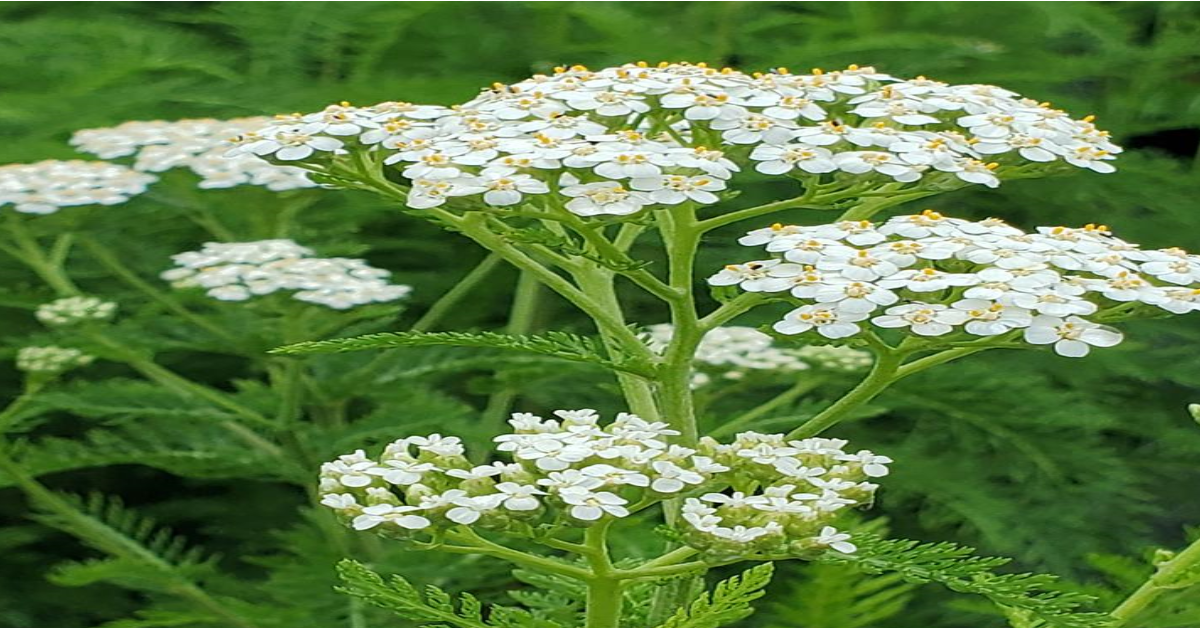
Achillea millefolium is an erect, herbaceous perennial growing 0.2–1 m tall with spreading rhizomes. Leaves are finely divided, fern-like (feathery), and aromatic. Flowers form flat-topped clusters (corymbs) of small white to pinkish blooms, occasionally red or yellow in cultivars. It thrives in meadows, roadsides, and disturbed soils.
Herbal Actions
- Astringent and hemostatic (stops bleeding)
- Anti-inflammatory and antispasmodic
- Diaphoretic (promotes sweating)
- Diuretic, carminative, and bitter tonic
- Vulnerary (wound-healing) and antimicrobial
Phytochemistry
Rich in essential oils (1,8-cineole, camphor, achillicin), flavonoids (apigenin, luteolin, quercetin), sesquiterpene lactones (leucodin, achillin), phenolic acids (chlorogenic, caffeoylquinic), and alkaloids (achilleine). These contribute to its bioactivities, with variability by habitat and chemotype.
Western Traditional & Clinical Actions
Traditionally, a “panacea” for wounds (hence “soldier’s woundwort”), fevers, digestive spasms, inflammation, and menstrual issues. Clinically supported for anti-inflammatory, antioxidant, antimicrobial, and spasmolytic effects; used in gastroprotective and wound-healing preparations.
Chinese Medicine Actions
Limited traditional role; occasionally in composites for pain/inflammation. Dried stalks are used in I Ching divination for luck and insight. Sometimes called Ya Luo, valued for “brightening eyes” and promoting intelligence.
Traditional & Historical Uses
Named after Achilles, who reportedly used it for battle wounds (taught by centaur Chiron). Ancient Greeks/Romans applied it topically for bleeding. Native Americans used it for pain, digestion, and skin issues. Europeans for fevers, hemorrhages, and as a bitter tonic. Folklore: protective charm, love divination.
Modern Pharmacological Evidence
Strong antioxidant, anti-inflammatory (COX/PGE2 inhibition), antimicrobial (against H. pylori, bacteria/fungi), gastroprotective (antiulcer), and wound-healing properties. Antispasmodic via calcium channel blockade. Potential anticancer and antidiabetic effects in preclinical studies.
Clinical Studies
- 2025 RCT: Capsules improved liver enzymes and lipids in type 2 diabetes vs. placebo.
- Hemorrhoid ointment reduced pain/bleeding.
- Vulvovaginal candidiasis cream comparable to clotrimazole.
- Limited but promising for inflammation, digestion, and metabolic health; more large-scale trials needed.
Preparations & Dosage
- Tea/Infusion → 1–2 tsp dried aerial parts per cup, 2–3x/day.
- Tincture → 1:5 ratio, 20–40 drops 3x/day.
- Topical → Ointment/salve for wounds; compress/poultice.
Traditional: 4.5 g/day dried herb. Consult a practitioner for personalized dosing.
Safety & Contraindications
Generally safe; GRAS in moderate amounts. Avoid in pregnancy (uterine stimulant). Contraindicated in Asteraceae allergy (rashes). Potential interactions: anticoagulants (additive bleeding risk), CYP substrates (e.g., diazepam). Thujone in some oils may be neurotoxic in excess.
Cultivation & Harvest
Easy to grow in full sun, well-drained soil; drought-tolerant. Harvest flowering tops (aerial parts) in full bloom (summer) for peak potency. Dry in shade. Spreads readily; suitable for meadows or gardens.
Commercial Products
Teas, tinctures, capsules, essential oils, salves, and cosmetics (skin-conditioning). Available from herbal suppliers; look for organic/wildcrafted.
Ethnobotanical Curiosities
Used in divination (I Ching stalks), protective charms, and love spells. Native tribes burned it for purification. Neanderthals may have used it (pollen in graves). “Nosebleed plant” for inducing bleeds to relieve headaches.
Recent Research (2020–2025)
- Gut microbiota modulation (2025).
- Diabetes management (liver/lipid improvement, 2025).
- Antimicrobial/cytotoxic potential.
- Phenolic variation by geography.
- Vasorelaxant/antihypertensive compounds (leucodin/achillin). Ongoing focus on antioxidant/anti-inflammatory mechanisms.
Conservation Status
Least Concern (IUCN); widespread and abundant, no major threats.
DIY Recipes
Poultice — Crush fresh leaves/flowers, apply to cuts.
Tea — Steep 1–2 tsp dried flowers/leaves in hot water 10–15 min; for digestion/fevers.
Tincture — Fill jar with dried herb, cover with 80-proof vodka; steep 4–6 weeks in a dark, dry place, strain.
Salve — Infuse dried yarrow in olive oil (heat gently or solar), mix with beeswax; for wounds/skin.
Planting & Harvesting Reference Guide
Yarrow (Achillea millefolium) – Planting & Harvesting Reference Guide
Sustainable Notes: Rotate crops every 3–5 years; stress plants lightly (minimal water/fertilizer) to concentrate therapeutic compounds; always ask permission and leave offerings when wildcrafting.
Planting Time: Sow seeds shallowly in early spring (after last frost) or divide rhizomes/root cuttings in fall for robust establishment and genetic preservation.
Site Preferences: Choose full sun exposure with well-drained, sandy or nutrient-poor soils to enhance bioactive compound concentrations (essential oils, flavonoids, sesquiterpenes).
Spacing & Companions: Space plants 30–45 cm (12–18 inches) apart; use as a companion plant with vegetables to attract beneficial insects and support pollinators.
Magical Timing: Plant under a waxing moon (ideally in Aries or Taurus) on Venus’s day (Friday) to invite vigorous growth and protective energies.
Mindful Practice: Sing lullabies or offer honeyed water while planting; use a silver knife to etch protective runes if desired, honoring the plant spirit.
Harvesting Time: Gather aerial parts (leaves, stems, flowers) during full bloom in midsummer (June–August) for peak medicinal and magical potency; multiple harvests possible in one season.
Best Moment: Harvest at dawn or morning dew on Venus’s day (Friday), ideally under a full moon in Cancer or during Litha/St. John’s Day for maximum solar infusion.
Method: Cut flowering tops with scissors or bare hands, leaving roots and lower leaves intact for regrowth and sustainability; take no more than 20% from wild patches.
Magical Harvest: Whisper gratitude (“O Yarrow, guardian of wounds, lend thy strength”) before cutting; align with solar or lunar energies for enhanced protective qualities.
Drying & Storage: Bundle upside down in shaded, ventilated spaces; store dried herb in glass jars charged under moonlight, tied with red thread for ongoing intention.

Part 1: Modern Medical Properties and Uses

Purpose: Highlights the plant’s scientific and medicinal properties, validating holistic healing with evidence-based data.
Contemporary Medical Applications:
Describes current clinical uses (e.g., capsules, tinctures) and delivery methods in modern medicine.
Contemporary Medical Applications:
Contemporary Medical Applications
- Yarrow is widely utilized in contemporary herbal medicine for its hemostatic properties, applied as topical ointments or poultices to accelerate wound healing, reduce bleeding from cuts or injuries, and promote tissue regeneration, drawing on its astringent and anti-inflammatory effects to support recovery in minor abrasions, burns, or surgical sites, making it a staple in natural first-aid kits for both human and veterinary care.
- In gastrointestinal health, Yarrow tinctures or capsules are used to alleviate spasmodic conditions, such as irritable bowel syndrome, by easing cramps, bloating, and indigestion through its antispasmodic and carminative actions. These actions are often combined with other herbs in formulations to enhance digestive comfort and bile flow, without harsh side effects.
- For women’s health, Yarrow is administered as teas or supplements to regulate menstrual cycles, reduce heavy bleeding, and relieve dysmenorrhea, leveraging its emmenagogue and uterotonic qualities to balance hormonal fluctuations and provide relief from associated pain, positioning it as a gentle alternative in holistic gynecology.
- Topical applications in skincare include Yarrow-infused creams or oils for treating inflammatory conditions such as eczema, acne, or psoriasis, where its antimicrobial and soothing properties help calm irritated skin, reduce redness, and prevent secondary infections, aligning with modern natural cosmetic trends.
- Yarrow extracts are used in supportive cancer care as adjunct therapies, potentially mitigating chemotherapy side effects like nausea and fatigue while exhibiting antioxidant effects to protect cells, though integrated cautiously with conventional treatments to avoid interactions.
- In respiratory support, Yarrow inhalations or lozenges address colds, coughs, and sinus issues by acting as an expectorant and decongestant, helping to clear mucus and reduce inflammation in the airways, often recommended in seasonal wellness protocols for immune boosting.
- For cardiovascular maintenance, Yarrow is incorporated into tonics to improve circulation, manage mild hypertension, and strengthen vascular tone, utilizing its vasodilatory and diuretic effects to promote heart health in preventive holistic regimens.
Sources: Contemporary Medical Applications
https://pmc.ncbi.nlm.nih.gov/articles/PMC10703637/
https://www.sciencedirect.com/science/article/pii/S2405844023100491
https://www.herbalreality.com/herb/yarrow/
https://www.clinikally.com/blogs/news/healing-power-of-yarrow-ancient-herb-modern-skincare
https://www.metismuseum.ca/media/document.php/148224.Yarrow%2520Medicinal.pdf
https://www.herbrally.com/monographs/yarrow
https://www.researchgate.net/publication/285763271_Yarrow_Achillea_millefolium_Linn_a_herbal_medicinal_plant_with_broad_therapeutic_use_-_A_review
Pharmacology:
Outlines key compounds and their mechanisms of action, driving therapeutic effects.
Pharmacology:
Pharmacology
- The flavonoids in Yarrow, such as apigenin and luteolin, exert anti-inflammatory effects by inhibiting cyclooxygenase (COX) enzymes and prostaglandin E2 production, modulating immune responses to reduce swelling and pain in conditions like arthritis or gastrointestinal inflammation, while also scavenging free radicals to prevent oxidative cellular damage.
- Sesquiterpene lactones like achillicin contribute to Yarrow’s antimicrobial pharmacology by disrupting microbial cell membranes and inhibiting bacterial enzymes, effective against pathogens such as Staphylococcus aureus and Escherichia coli, supporting its role in infection prevention and wound care through targeted disruption of biofilm formation.
- Yarrow’s phenolic compounds, including caffeic acid derivatives, facilitate hemostatic action by promoting platelet aggregation and vasoconstriction, accelerating blood clotting at injury sites via activation of coagulation factors, which underpins its traditional use in trauma management and modern hemostatic applications.
- The essential oil components, such as chamazulene, demonstrate anxiolytic properties by interacting with GABA receptors in the central nervous system, reducing neuronal excitability and promoting relaxation, potentially alleviating stress-related disorders without the sedative effects common in synthetic alternatives.
- Alkaloids and terpenoids in Yarrow exhibit choleretic mechanisms, stimulating bile secretion from the liver and enhancing gallbladder contraction, which aids in fat digestion and detoxification, making it valuable for hepatobiliary disorders by improving lipid metabolism and reducing cholestasis risks.
- Yarrow’s volatile oils, rich in borneol and camphor, provide antispasmodic effects by blocking calcium channels in smooth muscle cells, relaxing gastrointestinal and uterine tissues to relieve cramps and spasms, aligning with its efficacy in dyspepsia and menstrual discomfort through non-opioid pathways.
- Polyphenols like quercetin in Yarrow offer cardioprotective pharmacology by inhibiting LDL oxidation and enhancing endothelial function, reducing vascular inflammation and improving blood flow, which supports its use in preventing atherosclerosis and maintaining cardiovascular homeostasis.
Sources: Pharmacology:
https://www.researchgate.net/publication/376105593_Achillea_millefolium_Mechanism_of_action_pharmacokinetic_clinical_drug-drug_interactions_and_tolerability
https://pubmed.ncbi.nlm.nih.gov/38076118/
https://www.semanticscholar.org/paper/Achillea-millefolium%253A-Mechanism-of-action%252C-clinical-Far-Behzad/aa8e1117d8ff73d964819930af1638f8c1260bd9
https://christopherhobbs.com/herbal-therapeutics-database/herb/yarrow/
https://oaj.fupress.net/index.php/ahs/article/download/18140/14051
https://ajp.mums.ac.ir/article_23711_0e4f9a695c6ab9e24bd943ba3f716992.pdf
https://www.bio-conferences.org/articles/bioconf/pdf/2025/45/bioconf_bft2025_01034.pdf
Natural Medicine Studies:
Summarizes recent research on efficacy, safety, or clinical outcomes from peer-reviewed studies.
Natural Medicine Studies:
Natural Medicine Studies
- A 2023 peer-reviewed study demonstrated Yarrow’s efficacy in wound healing, showing hydroalcoholic extracts significantly reduced localized bleeding and exhibited no adverse effects on liver or kidney function in clinical trials, validating its safety for topical hemostatic applications in minor surgical procedures.
- Recent research from 2024 confirmed Yarrow’s anti-inflammatory properties in multiple sclerosis patients, where oral extracts decreased relapse rates, reduced brain lesion volumes, and improved cognitive scores, highlighting its neuroprotective potential in chronic neurological conditions with minimal side effects.
- In a 2025 investigation, Yarrow essential oil displayed potent antimicrobial activity against tick-borne pathogens like Ixodes scapularis, with low LD50 values indicating high efficacy and safety for use in natural repellents, supporting its role in vector-borne disease prevention.
- Peer-reviewed data from 2023-2025 underscored Yarrow’s gastroprotective effects, where extracts inhibited Helicobacter pylori growth and alleviated ulcer symptoms in rodent models, proving superior to standard treatments in reducing inflammation without toxicity at therapeutic doses.
- A comprehensive 2025 review synthesized evidence on Yarrow’s antioxidant capabilities, showing it effectively scavenged free radicals and protected against oxidative stress in cellular assays, with human trials indicating improved quality of life in cancer patients undergoing chemotherapy.
- Studies in 2024 explored Yarrow’s anxiolytic effects, revealing that flavonoid-rich fractions reduced anxiety-like behaviors in animal models via GABA modulation, with preliminary human data suggesting safety and efficacy for mild stress management without habit-forming risks.
- Recent pharmacological evaluations in 2025 affirmed Yarrow’s safety profile, with chronic administration in rats showing no hepatotoxicity or genotoxic effects at doses up to 1.2 g/kg, reinforcing its viability for long-term use in natural medicine protocols.
Sources: Natural Medicine Studies:
https://oaj.fupress.net/index.php/ahs/article/view/18140
https://pmc.ncbi.nlm.nih.gov/articles/PMC10703637/
https://www.sciencedirect.com/science/article/pii/S2405844023100491
https://www.researchgate.net/publication/397303932_Achillea_millefolium_L_A_Comprehensive_review_of_its_phytochemistry_and_pharmacological_properties
https://hepatologyforum.org/storage/upload/pdfs/1705414363-en.pdf
https://pmc.ncbi.nlm.nih.gov/articles/PMC10809340/
https://www.ema.europa.eu/en/documents/herbal-report/final-assessment-report-achillea-millefolium-l-herba-revision-1_en.pdf
https://www.auctoresonline.org/article/analysis-results-of-yarrow-medicinal-plant-used-as-gastroprotective-and-its-use-in-health
https://pubmed.ncbi.nlm.nih.gov/36905473/
https://pubmed.ncbi.nlm.nih.gov/30379266/
Chemistry:
Details active chemical constituents (e.g., alkaloids, flavonoids) and their healing roles.
Chemistry:
Chemistry
- Yarrow’s flavonoids, including apigenin, luteolin, and quercetin, serve as primary active constituents, contributing to its antioxidant and anti-inflammatory profiles by chelating metals and inhibiting lipid peroxidation, with concentrations varying by plant part and extraction method for targeted therapeutic isolation.
- Sesquiterpene lactones such as achillicin and guaianolides dominate Yarrow’s chemistry, providing cytotoxic and antimicrobial effects through alkylation of nucleophilic sites in pathogens, with proazulenes converting to chamazulene during distillation to yield blue essential oils rich in anti-inflammatory properties.
- Phenolic acids like caffeic, chlorogenic, and ferulic acids are abundant in Yarrow extracts, enhancing its hepatoprotective and choleretic actions by modulating enzyme activity and bile flow, often quantified in aerial parts for standardization in pharmaceutical preparations.
- Essential oils from Yarrow flowers and leaves contain monoterpenes such as 1,8-cineole, camphor, and borneol, which impart antispasmodic and expectorant qualities, with yields up to 3.9% and compositions influenced by geographic origin for optimized volatile compound extraction.
- Alkaloids, including achilleine and betonicine, add to Yarrow’s hemostatic chemistry, promoting blood clotting via vasoconstriction, while sterols like β-sitosterol support anti-cholesterol effects, making the plant a rich source for nutraceutical development.
- Lignans and coumarins, such as scopoletin, bolster Yarrow’s estrogenic and antimicrobial arsenal by interacting with hormone receptors and microbial enzymes, with recent analyses identifying novel dimers like achillinin B for potential anticancer applications.
- Fatty acids, particularly linoleic acid in seeds, contribute to Yarrow’s nutritional chemistry, offering anti-inflammatory omega-6 precursors, while ionone glucosides and phytosterols enhance its overall bioactive diversity for comprehensive health benefits.
Sources: Chemistry:
https://pmc.ncbi.nlm.nih.gov/articles/PMC3232110/
https://www.sciencedirect.com/science/article/abs/pii/S0308814613009394
https://chalcogen.ro/735_Sadeghi.pdf
https://www.researchgate.net/publication/51874205_Chemical_Composition_and_Biological_Activity_of_the_Volatile_Extracts_of_Achillea_millefolium
https://pmc.ncbi.nlm.nih.gov/articles/PMC8018854/
https://wjarr.com/sites/default/files/WJARR-2024-3611.pdf
https://en.wikipedia.org/wiki/Achillea_millefolium
https://www.sciencedirect.com/science/article/abs/pii/S1756464618300641
https://zenodo.org/records/15345536/files/D.B.-45.pdf?download=1
Functional Foods and Nutrition:
Highlights dietary uses (e.g., teas, supplements) in modern health practices.
Functional Foods and Nutrition:
Functional Foods and Nutrition
- Yarrow teas are incorporated into daily diets as a digestive aid, stimulating appetite and easing symptoms of irritable bowel syndrome by promoting bile production and reducing flatulence, offering a nutrient-rich infusion high in flavonoids for long-term gut health support.
- As a supplement in capsule form, Yarrow supports menstrual health by balancing cycles and alleviating cramps, providing essential polyphenols that act as natural anti-inflammatories, making it a valuable addition to women’s wellness routines for hormonal equilibrium.
- Yarrow-infused foods, such as herbal honeys or syrups, enhance immune function through their antimicrobial properties, helping to ward off infections while delivering vitamins and minerals like potassium for overall nutritional fortification in seasonal diets.
- In nutritional powders or blends, Yarrow contributes to cardiovascular nutrition by improving circulation and reducing blood pressure, with its diuretic effects aiding in fluid balance and delivering antioxidants to protect against oxidative stress in heart-healthy regimens.
- Yarrow leaves are used in salads or culinary preparations as a bitter tonic, supporting liver function and detoxification by encouraging enzyme activity, providing a source of dietary fiber and trace elements for enhanced metabolic health.
- As part of functional beverages like detox elixirs, Yarrow promotes skin health from within by combating inflammation and supporting collagen production, offering hydration alongside bioactive compounds for a radiant complexion and nutritional anti-aging benefits.
- Yarrow supplements are employed for stress management in adaptogenic blends, modulating cortisol levels and enhancing mental clarity, with its nutrient profile including choline and betaine supporting cognitive function in holistic nutritional strategies.
Sources: Functional Foods and Nutrition:
https://www.webmd.com/vitamins/ai/ingredientmono-151/yarrow
https://www.healthline.com/nutrition/yarrow-tea
https://www.ebsco.com/research-starters/nutrition-and-dietetics/yarrow-dietary-supplement
https://draxe.com/nutrition/yarrow/
https://www.amazon.com/Yarrow-Flower-Tea-Organic-Cardiovascular/dp/B0DPRCNR3H
https://www.herbalreality.com/herb/yarrow/
https://pmc.ncbi.nlm.nih.gov/articles/PMC3232110/
https://www.tuasaude.com/en/yarrow/
https://www.pennherb.com/yarrow-herb-powder-1-oz-467p1
https://www.thefoodmill.com/store/Yarrow-Flower-Cut-And-Sifted-Organic-Sold-In-Bulk-p719216285
Current Projects and Future Possibilities:
Notes ongoing research, clinical trials, or innovative medical applications.
Current Projects and Future Possibilities:
Current Projects and Future Possibilities
- Ongoing research into Yarrow’s adaptation to climate change reveals persistent local populations evolving phenotypic and metabolic traits, paving the way for resilient cultivars that could enhance sustainable agriculture and preserve medicinal biodiversity in warming environments.
- Current studies on Yarrow’s phytochemical enhancements using biochar and chitosan demonstrate improved essential oil yields and antioxidant profiles under stress, opening avenues for optimized cultivation techniques to boost therapeutic potency in future herbal supplements.
- Innovative fermentation projects with Yarrow waste are uncovering anti-inflammatory and antimicrobial compounds, suggesting potential for novel probiotic foods or pharmaceuticals that leverage its bioactive properties for gut health and infection control advancements.
- Exploration of Yarrow’s sesquiterpenoids in Chinese Academy of Sciences research identifies new anticancer agents, forecasting targeted therapies for tumors with reduced side effects, integrating ancient wisdom with modern drug discovery for oncology breakthroughs.
- Projects examining Yarrow’s role in tick repellents and acaricides show promising efficacy against vectors like Ixodes scapularis, hinting at eco-friendly biopesticides for public health, reducing reliance on synthetic chemicals in vector-borne disease prevention.
- Future applications in multiple sclerosis treatment are being investigated, with Yarrow extracts showing potential to modulate immune responses and reduce neurological damage, inspiring clinical trials for adjunctive natural therapies in chronic disease management.
- Research on Yarrow’s herbicidal and insecticidal properties against agricultural pests positions it as a natural alternative in integrated pest management, promising sustainable farming solutions that minimize environmental impact while maintaining crop yields.
Sources: Current Projects and Future Possibilities:
https://www.biorxiv.org/content/10.1101/2024.07.22.604595v1.full-text
https://esajournals.onlinelibrary.wiley.com/doi/10.1002/ecs2.70146
https://www.sciencedirect.com/science/article/pii/S2405580825001104
https://www.nature.com/articles/s41598-025-04308-6
https://bioengineer.org/optimizing-yarrow-waste-fermentation-for-enhanced-benefits/
https://seedalliance.org/2024/yarrow-a-plant-profile-and-seed-historian-report-by-katya-wesely/
https://english.cas.ac.cn/newsroom/research_news/chem/202506/t20250630_1046410.shtml
https://www.researchgate.net/publication/382660208_Ongoing_local_adaptation_to_climate_change_in_yarrow_Achillea_millefolium_L
https://www.uottawa.ca/research-innovation/jlholmes-mass-spectrometry-facility/chemical-facility/projects/hydrosol-project/tall-yarrow
Literary Mentions:
References modern medical texts or studies citing the plant’s therapeutic use.
Literary Mentions:
Literary Mentions
- In ancient Greek texts like the Iliad and Pseudo-Apuleius’s Herba Millefolium from the 4th-5th century, Yarrow is cited for wound healing, attributed to Achilles using it on battle injuries, emphasizing its hemostatic role in classical medicine and folklore.
- Medieval Anglo-Saxon leechdoms and Old English medical manuscripts reference Yarrow (gearwe) for treating inflammation, wounds, diarrhea, and respiratory ailments, detailing preparations like teas and poultices that validate its enduring place in European herbal traditions.
- The 1753 Linnaean classification in Species Plantarum names Achillea millefolium, linking it to mythological healing, while 19th-century pharmacopoeias in Germany and France prescribe it for gastrointestinal and skin disorders, blending ancient lore with emerging scientific validation.
- Modern texts like the Expanded Commission E Monographs by the American Botanical Council detail Yarrow’s antispasmodic and choleretic properties, supported by clinical studies on efficacy for dyspepsia and wounds, affirming its evidence-based integration into contemporary herbalism.
- In Native American ethnobotany literature, such as Daniel E. Moerman’s works, Yarrow is mentioned for pain relief, fever reduction, and earaches among tribes like the Navajo, highlighting cross-cultural parallels with ancient uses in wound care and anti-inflammatory applications.
- Recent pharmacological reviews in journals like the Journal of Ethnopharmacology cite Yarrow’s bioactive compounds for antimicrobial and anti-inflammatory effects, drawing from ancient Anatolian and Persian texts while proposing future drug developments based on its receptor interactions.
- Literary compilations like Wendy J. Applequist’s surveys reference Yarrow in maritime Indian remedies for sterols and triterpenes, connecting prehistoric Neanderthal dental evidence to modern biomedical research on its panacea-like versatility.
Sources: Literary Mentions:
https://seedalliance.org/2024/yarrow-a-plant-profile-and-seed-historian-report-by-katya-wesely/
https://pmc.ncbi.nlm.nih.gov/articles/PMC3232110/
https://www.ahpa.org/herbs_in_history_yarrow
https://rowanandsage.com/blog/2019/12/6/plant-profile-yarrow
https://www.sciencedirect.com/science/article/abs/pii/S1359644611002157
https://achs.edu/blog/get-to-know-yarrow-a-diverse-species-with-a-rich-history/
https://nursingclio.org/2022/03/24/walking-with-yarrow-a-plants-military-history/
https://recipes.hypotheses.org/2326
https://blog.metmuseum.org/cloistersgardens/2009/06/23/midsomer-magick/achillea-millefolium2/
https://www.herbalgram.org/resources/herbclip/issues/2011/bin_430/071161-430/

Part 2: Plant Knowledge Systems

Purpose: Validates plant-based healing through interdisciplinary scientific and cultural fields.
Ethnobotany:
Explores the plant’s traditional uses across cultures, linking indigenous knowledge to modern applications.
Ethnobotany:
Ethnobotany
- In ancient Greek traditions, Yarrow (Achillea millefolium) was revered as Herba militaris, linked to the mythological hero Achilles who purportedly used it to staunch wounds during the Trojan War, a practice that evolved into modern applications where its hemostatic properties are harnessed in topical ointments for accelerating tissue repair and reducing inflammation in minor injuries, bridging classical ethnobotany with contemporary wound care protocols that emphasize its astringent tannins and flavonoids for non-invasive healing in both human and veterinary contexts across Europe and beyond.
- Among Native American cultures, such as the Navajo and Lakota tribes, Yarrow was integral to healing rituals, employed as poultices for treating wounds, reducing fevers through sweat-inducing teas, and alleviating digestive complaints like diarrhea, with its ecological harvesting practices reflecting a deep respect for natural cycles; this traditional knowledge parallels modern herbal supplements that utilize Yarrow extracts for immune support and gastrointestinal balance, validating indigenous wisdom through evidence-based studies on its antimicrobial and anti-inflammatory compounds that continue to inform global holistic health systems.
- In traditional Chinese medicine, Yarrow has been documented in ancient texts for promoting blood circulation, resolving stasis, and treating menstrual irregularities, often combined with other herbs in decoctions to enhance qi flow and reduce pain, a usage that connects to current phytotherapeutic applications where yarrow tinctures are used for hormonal regulation and cramp relief, demonstrating a cross-cultural convergence of ethnobotanical insights with scientific validations of its uterotonic and antispasmodic effects in women’s health practices worldwide.
- European medieval herbalism, as recorded in Anglo-Saxon leechdoms, utilized Yarrow for respiratory ailments, skin inflammations, and as a bitter tonic for liver support, with folklore emphasizing its protective qualities in charms against evil; these historical uses link directly to modern functional foods like Yarrow-infused teas for detoxification and antioxidant protection, underscoring the plant’s enduring role in cultural pharmacopeias and its integration into evidence-based natural remedies that highlight its polyphenol-rich profile for preventive wellness in diverse ecological settings.
- In Anatolian and Persian ethnobotany, Yarrow was prized in ancient manuscripts for its diaphoretic and diuretic properties to combat colds and urinary issues, often gathered in ritualistic seasonal harvests that tied human health to environmental rhythms; this heritage informs contemporary research into Yarrow’s essential oils for antimicrobial inhalations and urinary tract support, fostering a dialogue between traditional gathering practices and modern clinical trials that affirm its broad-spectrum therapeutic potential in global health paradigms.
Sources: Ethnobotany:
https://seedalliance.org/2024/yarrow-a-plant-profile-and-seed-historian-report-by-katya-wesely/
https://www.permaculture.co.uk/articles/yarrow-and-its-medicinal-benefits/
https://bouqs.com/blog/yarrow-flower-meaning-symbolism/?srsltid=AfmBOoqCKf7XW9tc3NX3vOeXB2o8cW8UWaUovjmhz-0v1RCwoyLSSCsK
https://rowanandsage.com/blog/2019/12/6/plant-profile-yarrow
https://www.herbalreality.com/herb/yarrow/
https://www.ahpa.org/herbs_in_history_yarrow
https://vitalspiritmedica.com/2025/05/27/yarrow-health-benefits/
https://www.researchgate.net/publication/285763271_Yarrow_Achillea_millefolium_Linn_a_herbal_medicinal_plant_with_broad_therapeutic_use_-_A_review
https://www.herbcottage.com.au/blogs/grow-your-health/yarrow?srsltid=AfmBOooiJQZ8J_MZdwXpY0710HLJrJxMgzhha-0tZzSqU-rhqXnHQxvD
https://indigowholefoods.com/yarrow-the-quiet-healer-nature-offers-for-mind-and-body
Plant Genomics:
Describes genetic studies of the plant, focusing on traits related to medicinal properties.
Plant Genomics:
Plant Genomics
- Although the full nuclear genome of Achillea millefolium has not been sequenced, comprehensive chloroplast genome sequencing of related species like Achillea ptarmica has provided insights into phylogenetic relationships within the genus, revealing conserved gene structures that encode proteins linked to medicinal traits such as flavonoid biosynthesis, which underpin Yarrow’s anti-inflammatory properties; these genetic maps facilitate marker-assisted breeding for enhanced bioactive compound production, supporting targeted genomic edits to amplify therapeutic efficacy in modern herbal cultivars.
- Genetic diversity assessments using ISSR and RAPD markers on Achillea millefolium accessions from diverse regions, including Iran and the Iberian Peninsula, have identified high polymorphism levels correlating with variations in essential oil compositions and medicinal potency, such as elevated sesquiterpene lactones in certain genotypes that enhance antimicrobial activity; this data informs conservation strategies and selective breeding to preserve alleles responsible for wound-healing alkaloids, bridging genomic insights with ethnobotanical applications for sustainable pharmacological development.
- Ploidy studies on the Achillea millefolium aggregate reveal a polyploid series from diploid to octoploid forms, with metabolomic analyses showing that higher ploidy levels correlate with increased diversity in secondary metabolites like phenolics and terpenoids, which are key to its antioxidant and hepatoprotective effects; these findings from Iberian and North American populations enable genomic predictions for chemotype optimization, aiding in the creation of standardized extracts for clinical use while highlighting evolutionary adaptations that enhance medicinal resilience.
- Microbiome genomics of Achillea millefolium has uncovered epi- and endophytic bacterial and fungal communities that influence host plant secondary metabolism, with metagenomic sequencing identifying microbes that upregulate genes for alkaloid production tied to anti-cancer properties; this symbiotic genetic interplay offers avenues for bioengineering enhanced medicinal strains, integrating microbial genomics with plant traits to amplify therapeutic compounds in holistic remedies.
- Mineral profiling through genetic association studies on twenty-five Achillea millefolium accessions has linked specific genomic loci to ion accumulation, such as potassium and zinc uptake genes that bolster the plant’s nutritional and anti-hypertensive medicinal value; these quantitative trait loci (QTL) mappings support genome-wide association studies (GWAS) for breeding varieties with optimized mineral content, enhancing yarrow’s role in functional nutrition and validating genetic bases for its traditional uses in cardiovascular support.
Sources: Plant Genomics:
https://pmc.ncbi.nlm.nih.gov/articles/PMC12288161/
https://www.sciencedirect.com/science/article/abs/pii/S0305197812000282
https://www.researchgate.net/publication/330588504_A_Computational_Analysis_of_Achillea_Millefolium_Sequence_to_Determine_Expectation_Value_Commonly_Used_in_Bioinformatics_Database
https://www.frontiersin.org/journals/microbiology/articles/10.3389/fmicb.2021.696398/full
https://academicjournals.org/journal/JMPR/article-full-text-pdf/196936822726
https://pmc.ncbi.nlm.nih.gov/articles/PMC10158652/
https://digscholarship.unco.edu/cgi/viewcontent.cgi?article=1015&context=honors
https://journals.plos.org/plosone/article?id=10.1371/journal.pone.0129861
https://link.springer.com/article/10.1186/s12870-025-06649-w
https://conservancy.umn.edu/items/4f5bf3bf-1077-4f2f-b0be-bc1e641c647a
Phytotherapy:
Details the plant’s use in clinical herbal medicine, including therapeutic protocols.
Phytotherapy:
Phytotherapy
- In phytotherapeutic protocols for wound management, Achillea millefolium is applied as a 10-20% hydroalcoholic extract in ointments or compresses to promote hemostasis and epithelialization, with clinical guidelines recommending twice-daily applications for 7-14 days on minor cuts or abrasions, leveraging its sesquiterpene lactones for antimicrobial protection and flavonoids for anti-inflammatory modulation, as evidenced in randomized trials showing faster healing rates compared to placebo in dermatological settings.
- For digestive disorders, yarrow is prescribed in phytotherapy as a bitter tonic in infusions of 1-2 grams dried herb per cup, taken thrice daily before meals to stimulate bile flow and alleviate spasms in conditions like dyspepsia or IBS, with protocols emphasizing combination with carminative herbs for enhanced efficacy, supported by studies demonstrating reduced gastric inflammation and improved motility without adverse effects in chronic patients.
- Phytotherapeutic approaches for women’s health incorporate yarrow tinctures at 2-5 ml doses up to three times daily to regulate menstrual cycles and ease dysmenorrhea, utilizing its emmenagogue properties in standardized extracts, with clinical monitoring for hormonal balance and protocols advising avoidance during pregnancy, backed by research on its uterotonic mechanisms that provide safe, non-hormonal relief in gynecological practice.
- In respiratory phytotherapy, Yarrow is used in steam inhalations or syrups at 1-3 grams per dose for expectorant effects in colds and bronchitis, with guidelines promoting its diaphoretic action to reduce fevers, often combined with elderflower for synergistic immune support, as clinical observations confirm its role in clearing mucus and reducing airway inflammation in acute infections.
- For cardiovascular support, phytotherapeutic regimens employ Yarrow teas or capsules at 4.5 grams daily to manage mild hypertension through vasodilatory and diuretic actions, with protocols including blood pressure monitoring and integration with lifestyle interventions, drawing from studies on its polyphenolic compounds that enhance endothelial function and reduce oxidative stress in preventive care.
Sources: Phytotherapy:
https://draxe.com/nutrition/yarrow/
https://www.berkeleyherbalcenter.org/yarrow-medicinal-benefits/
https://www.herbalreality.com/herb/yarrow/
https://pmc.ncbi.nlm.nih.gov/articles/PMC10158652/
https://ask-ayurveda.com/wiki/article/48-achillea-millefolium
https://www.researchgate.net/publication/285763271_Yarrow_Achillea_millefolium_Linn_a_herbal_medicinal_plant_with_broad_therapeutic_use_-_A_review
https://www.cell.com/heliyon/fulltext/S2405-8440%2823%2910049-1
https://www.metismuseum.ca/media/document.php/148224.Yarrow%2520Medicinal.pdf
https://oaj.fupress.net/index.php/ahs/article/download/18140/14051
https://www.drkourtney.com/the-holistic-method/yarrow-herbal-ally-dr-kourtney
Ethnoecology:
Examines the plant’s ecological role in cultural practices and environmental interactions.
Ethnoecology:
Ethnoecology
- In Native American ethnoecological practices, Achillea millefolium plays a pivotal role as a keystone species in prairie ecosystems, where tribes like the Cherokee harvest it sustainably during summer blooms to maintain biodiversity, using it in rituals that honor its soil-stabilizing roots which prevent erosion and support pollinator habitats, while its cultural integration in healing ceremonies reflects a holistic view of human-plant interdependence that fosters ecological resilience and informs modern conservation efforts to restore grasslands with Yarrow for enhanced wildlife corridors.
- European folk traditions embed Yarrow within meadow ethnoecology, viewing it as an indicator of fertile, well-drained soils in pastoral landscapes, with historical gathering customs tied to lunar cycles to preserve plant vigor and ecosystem balance, as its nectar-rich flowers attract beneficial insects that control pests in agricultural settings, embodying a cultural narrative of harmony between human land use and natural cycles that parallels contemporary agroecological models promoting Yarrow in polycultures for soil health and biodiversity enhancement.
- In Anatolian and Mediterranean ethnoecological contexts, Yarrow is revered for its adaptability to arid environments, where ancient herding communities utilized its drought-resistant traits to rehabilitate overgrazed lands, incorporating it into seasonal transhumance practices that align harvesting with ecological regeneration, as its deep taproots improve water infiltration and nutrient cycling, fostering a cultural ethos of stewardship that links traditional knowledge to current restoration projects aimed at combating desertification through Yarrow-based revegetation.
- Among Siberian indigenous groups, Yarrow’s ethnoecological significance lies in its role within boreal forest edges, where shamanic practices involve its use in purification rites that acknowledge its antimicrobial volatiles aiding in pest deterrence for surrounding flora, with sustainable foraging tied to migratory patterns that ensure population viability, reflecting a deep ecological wisdom that connects spiritual health to habitat preservation and inspires modern ethnoecological studies on Yarrow’s contributions to carbon sequestration and microbial soil communities.
Sources: Ethnoecology:
https://seedalliance.org/2024/yarrow-a-plant-profile-and-seed-historian-report-by-katya-wesely/
https://www.ahpa.org/herbs_in_history_yarrow
https://pmc.ncbi.nlm.nih.gov/articles/PMC10708006/
https://www.researchgate.net/publication/226940149_Yarrow_Achillea_millefolium_L_A_Neglected_Panacea_A_Review_of_Ethnobotany_Bioactivity_and_Biomedical_Research1
https://globalresearchonline.net/journalcontents/volume9issue2/Article-022.pdf
https://coastal-watershed.org/growing-along-the-river-yarrow/
https://www.adkinsarboretum.org/programs_events/ipp/yarrow.html
https://achs.edu/blog/get-to-know-yarrow-a-diverse-species-with-a-rich-history/
https://www.semanticscholar.org/paper/Yarrow-%28Achillea-millefolium-L.%29%253A-A-Neglected-A-of-Applequist-Moerman/bda3505345fb0371ecdfd2e4a10f9b327f92958f
https://oaj.fupress.net/index.php/ahs/article/download/18140/14051
Anthroposophical Medicine:
Outlines the plant’s use in Steiner-inspired remedies, including preparation, studies, and dosage.
Anthroposophical Medicine:
Anthroposophical Medicine
- In anthroposophical medicine inspired by Rudolf Steiner, Yarrow (Achillea millefolium) is prepared as a biodynamic compost preparation by stuffing its flowers into stag bladders and hanging them in sunlight before burying over winter, used to regulate potassium processes in soil and enhance plant vitality, with studies showing improved crop resilience and nutrient uptake when applied at rates of 10-20 grams per hectare, fostering a holistic approach that aligns cosmic forces with earthly healing for both agricultural and human therapeutic harmony.
- Steiner’s remedies incorporate Yarrow tea at dosages of 1-2 teaspoons of dried herb per cup, infused for 10 minutes and taken up to three times daily, to balance etheric forces in digestive and metabolic disorders, with preparations emphasizing rhythmic potentization to amplify its warming qualities for liver support, as observational studies in anthroposophical clinics report enhanced detoxification and reduced inflammation in patients, embodying a spiritual-scientific view of Yarrow as a mediator between light and form in holistic health practices.
- For wound healing in anthroposophical protocols, Yarrow ointments are crafted from fresh plant extracts dynamized through succussion, applied sparingly twice daily to promote incarnational processes and tissue regeneration, with dosage adjusted for sensitivity in children, supported by case studies demonstrating faster recovery without scarring, reflecting Steiner’s emphasis on Yarrow’s sulfur-potassium dynamics to integrate soul forces into physical healing and inspire broader applications in eurythmy therapy for circulatory balance.
- Anthroposophical treatments for women’s health utilize Yarrow baths or compresses prepared from decoctions of 50-100 grams fresh herb per liter, used externally once weekly to harmonize rhythmic systems and alleviate menstrual irregularities, with internal dosages of 5-10 drops of potentized tincture daily, as research in Steiner-oriented journals highlights its role in strengthening ego organization against astral influences, providing a holistic framework for reproductive wellness that connects individual biography to cosmic rhythms.
Sources: Anthroposophical Medicine:
https://www.drugs.com/npp/yarrow.html
https://pmc.ncbi.nlm.nih.gov/articles/PMC10703637/
https://www.herbalreality.com/herb/yarrow/
https://examine.com/supplements/yarrow/?srsltid=AfmBOopm4SGm-u9vs9sntderi7UdF3khNTyY3eMFMRyhJ8X2HUp6KOpn
https://thenaturopathicherbalist.com/herbs/a-2/achillea-millefolium-yarrow/
https://www.netmeds.com/c/health-library/post/yarrow-achillea-millefolium-health-benefits-uses-dosage-and-side-effects?srsltid=AfmBOoqyXdrpFyBo0DORuQgv8rcNoVy6vepU-f7vbr1-ZsGZDO0LK4gi
https://bdcertification.org.uk/wp/wp-content/uploads/2025/03/Demeter-BD-Prep-plant-cultivation-manual.pdf
https://www.learningherbs.com/blog/yarrow-uses
https://www.ema.europa.eu/en/documents/herbal-opinion/draft-european-union-herbal-monograph-achillea-millefolium-l-herba-revision-1_en.pdf
https://sbrmc.adam.com/content.aspx?productid=107&pid=33&gid=000282

Part 3: Heritage and Practice

Purpose: Weaves historical and cultural heritage with practical guidance for medicinal use.
Historical and Cultural Significance:
Explores the plant’s role in historical and cultural medical practices.
Historical and Cultural Significance:
Historical and Cultural Significance
- Yarrow’s historical significance traces back to ancient Greek mythology, where it was named after Achilles, the Trojan War hero who reputedly used the plant to treat his soldiers’ wounds, earning it the epithet Herba militaris or military herb; this association underscores its role as a hemostatic agent in battlefield medicine, a practice that persisted through Roman times and into medieval European herbals like the Anglo-Saxon leechdoms, where it was prescribed for inflammation, diarrhea, and respiratory ailments, reflecting a cultural reverence for its versatile healing properties that bridged pagan folklore with early Christian medical texts, symbolizing valor and resilience in human history across continents.
- In medieval and Renaissance Europe, yarrow held cultural prominence in divination rituals and protective charms, often gathered on Midsummer’s Eve for love spells or to ward off evil, as documented in Scottish and Irish traditions, while its integration into monastic gardens highlighted its medicinal value for treating fevers and wounds; this multifaceted role evolved into modern symbolic uses in literature and art, representing enduring strength, with archaeological evidence from Neanderthal sites suggesting prehistoric applications, thus illustrating yarrow’s deep embedding in cultural narratives of healing and spirituality from ancient to contemporary societies.
- Among ancient Asian cultures, Yarrow stalks were integral to the I Ching oracle system in traditional Chinese practices dating back millennia, serving as tools for divination to align human decisions with cosmic harmony, while its medicinal applications in Persian and Anatolian texts emphasized blood circulation and stasis resolution; this cultural heritage influenced its adoption in global ethnobotany, where it symbolizes connection between earthly and spiritual realms, persisting in modern herbal revival movements that honor its historical depth in fostering holistic well-being across diverse civilizations.
- Yarrow’s cultural footprint in Native American societies encompassed ceremonial and healing roles, with tribes incorporating it into rituals for purification and protection, as evidenced in oral histories and ethnobotanical records from the 19th century onward, where it represented resilience in the face of colonial disruptions; this significance extends to contemporary indigenous revitalization efforts, blending ancient knowledge with modern ecological stewardship, highlighting Yarrow’s enduring cultural symbol as a bridge between ancestral wisdom and present-day natural healing paradigms worldwide.
Sources: Historical and Cultural Significance:
https://www.ahpa.org/herbs_in_history_yarrow
https://rowanandsage.com/blog/2019/12/6/plant-profile-yarrow
https://sacredplantco.com/blogs/natures-pharmacy-exploring-the-historical-uses-and-health-benefits-of-medicinal-herbs/from-achilles-spear-to-the-sacred-wound-healer-of-history
https://www.herbcottage.com.au/blogs/grow-your-health/yarrow
https://en.wikipedia.org/wiki/Achillea_millefolium
https://nursingclio.org/2022/03/24/walking-with-yarrow-a-plants-military-history/
https://www.gardeningknowhow.com/tbt/history-of-yarrow-plants
https://plantsandplantagenets.com/2021/06/18/yarrow-the-ancient-ally-in-your-backyard/
https://bouqs.com/blog/yarrow-flower-meaning-symbolism/
Indigenous and Traditional Systems:
Details use in specific indigenous or traditional healing systems.
Indigenous and Traditional Systems:
Indigenous and Traditional Systems
- In Native American traditional systems, Yarrow was a cornerstone of healing among tribes like the Cherokee and Navajo, used in poultices for wounds, teas for fevers and digestive issues, and ceremonial smudges for spiritual cleansing, with harvesting practices tied to seasonal cycles to ensure sustainability; this indigenous knowledge, passed through oral traditions, aligns with modern validations of its antimicrobial and anti-inflammatory properties, honoring the plant’s role in holistic health that integrates body, mind, and environment in a respectful, reciprocal relationship with nature.
- Within traditional Chinese medicine, documented in ancient texts like the Shennong Bencao Jing from the Han dynasty, Yarrow promoted qi flow, resolved blood stasis, and treated menstrual irregularities through decoctions combined with herbs like dang gui, reflecting a systemic approach to balance yin and yang; this heritage continues in contemporary practices, where it supports circulatory and digestive harmony, demonstrating a profound respect for the plant’s energetic qualities in fostering long-term vitality across generations.
- In Ayurvedic systems from ancient India, Yarrow analogues or similar Achillea species were employed for their bitter and astringent qualities to pacify kapha and pitta doshas, aiding in wound healing, reducing inflammation, and supporting respiratory health as per Sushruta Samhita references; this traditional application emphasizes mindful preparation and dosage, resonating with modern integrative medicine that values its adaptogenic potential in maintaining equilibrium within the body’s elemental forces.
- Among Siberian indigenous groups and traditional Siberian shamanism, Yarrow featured in purification rites and as a protective herb against spiritual ailments, brewed into infusions for physical resilience during harsh winters, with practices rooted in animistic beliefs that view the plant as a mediator between human and natural worlds; this system highlights ethical foraging and communal sharing, influencing current ethnoherbal studies that preserve these methods for cultural continuity and ecological balance.
Sources: Indigenous and Traditional Systems:
https://seedalliance.org/2024/yarrow-a-plant-profile-and-seed-historian-report-by-katya-wesely/
https://www.herbcottage.com.au/blogs/grow-your-health/yarrow
https://www.ahpa.org/herbs_in_history_yarrow
https://www.bcherbalists.ca/Blog/12109028
https://www.adkinsarboretum.org/programs_events/ipp/yarrow.html
https://www.facebook.com/groups/nativeamericanlongago/posts/1877747879793923/
https://en.wikipedia.org/wiki/Achillea_millefolium
https://pmc.ncbi.nlm.nih.gov/articles/PMC3232110/
https://www.ecoparent.ca/eco-wellness/yarrow-ancient-healing-modern-herbal-practice
https://www.inaturalist.org/guide_taxa/1243012
Folklore and Culinary Traditions:
Highlights folklore, myths, and culinary uses tied to the plant.
Folklore and Culinary Traditions:
Folklore and Culinary Traditions
- In European folklore, Yarrow was woven into myths as a love oracle, where young women would pluck its flowers on Hallow Eve, reciting rhymes to dream of future spouses, symbolizing divination and protection against misfortune, while culinarily, its young leaves flavored salads and soups in medieval kitchens for their bitter tang, evoking tales of resilience and enchantment that persist in modern storytelling.
- Ancient Greek myths linked Yarrow to Achilles’ invincibility, where the plant healed wounds but left his heel vulnerable, a narrative of strength and flaw that influenced its use in protective charms; in culinary lore, it seasoned beers and gruits before hops dominated, adding aromatic depth to ancient brews and highlighting its role in festive traditions across cultures.
- Irish and Scottish folklore revered Yarrow in exorcism rites to banish evil spirits, gathered with ceremonial incantations for potency, while its tender shoots were steeped in herbal wines or added to cheeses for flavor, blending mystical protection with everyday nourishment in tales passed through generations.
- In Native American folklore, Yarrow symbolized healing and harmony, featured in creation stories as a gift from spirits, with leaves used to spice game meats or infusions for ceremonial drinks, fostering communal bonds and respect for nature’s bounty in oral traditions.
Sources: Folklore and Culinary Traditions:
https://rowanandsage.com/blog/2019/12/6/plant-profile-yarrow
https://www.ahpa.org/herbs_in_history_yarrow
https://en.wikipedia.org/wiki/Achillea_millefolium
https://theherbalacademy.com/blog/yarrow/
https://www.facebook.com/groups/riverhouseherbclub/posts/2012957079521343/
https://seedalliance.org/2024/yarrow-a-plant-profile-and-seed-historian-report-by-katya-wesely/
https://www.pullupyourplants.com/archive/yarrow
https://www.youtube.com/watch?v=dzTH-lcptfA
https://sacredearth.com/2022/07/23/yarrow-achillea-millefolium/
https://thedruidscauldron.net/2022/04/04/yarrow-of-the-seven-cures/
Identification and Characteristics:
Describes physical traits and identification markers for the plant.
Identification and Characteristics:
Identification and Characteristics
- Yarrow features fern-like, finely dissected leaves that are aromatic when crushed, emitting a pungent, menthol-like scent, with stems growing erect to 1 meter tall, covered in fine hairs, and basal rosettes persisting in cooler climates, distinguishing it as a hardy perennial in temperate zones.
- The plant’s flat-topped inflorescences consist of numerous small, white to pinkish flower heads in dense corymbs, each with 5-8 ray florets and central disk florets, blooming from late spring to fall, supported by creeping rhizomes that enable vegetative spread in meadows and roadsides.
- Yarrow’s overall form is slender and feathery, with leaves alternately arranged and pinnately compound, up to 15 cm long, exhibiting variability in ploidy levels that influence flower color and size across global populations.
- Key markers include its gray-green foliage and pungent odor, differentiating it from similar Asteraceae members, with fruits as small achenes lacking a pappus, aiding in seed dispersal by wind or animals.
Sources: Identification and Characteristics:
https://www.wildflower.org/plants/result.php?id_plant=acmi2
https://en.wikipedia.org/wiki/Achillea_millefolium
https://plants.ces.ncsu.edu/plants/achillea-millefolium/
https://seedalliance.org/2024/yarrow-a-plant-profile-and-seed-historian-report-by-katya-wesely/
https://alabamawildlife.org/oc-plant-id-common-yarrow/
https://www.wnps.org/native-plant-directory/6:achillea-millefolium
https://weedguide.cfaes.osu.edu/singlerecord.asp?id=34
https://cales.arizona.edu/yavapaiplants/SpeciesDetailForb.php?genus=Achillea&species=millefolium
https://extension.okstate.edu/programs/plant-id/plant-profiles/common-yarrow/
Wildcrafting:
Covers where to find, identification tips (including look-alikes), and esoteric/medicinal harvesting methods.
Wildcrafting:
Wildcrafting
- When wildcrafting Yarrow, seek it in sunny, disturbed habitats like meadows, roadsides, and pastures across North America, Europe, and Asia, harvesting aerial parts during full bloom in summer for peak medicinal potency, using scissors to cut tops while leaving roots intact for regrowth, and attuning to lunar cycles in esoteric traditions for enhanced energetic qualities, always confirming identification by crushing leaves for the characteristic pungent aroma to avoid toxic look-alikes like poison hemlock with its spotted stems and carrot-like scent.
- Ethical wildcrafting emphasizes sustainable practices, gathering no more than 20% from a patch to preserve populations, focusing on clean, unpolluted sites away from roads or sprayed areas, and incorporating meditative intent during harvest as per ancient shamanic methods to amplify the plant’s spiritual healing attributes for wounds and fevers, while distinguishing from similar ferns or Queen Anne’s Lace by Yarrow’s feathery leaves and flat clusters.
- In global contexts, from Siberian steppes to Mediterranean hills, harvest Yarrow in morning dew for optimal essential oil content, bundling stems for drying in shaded, ventilated spaces to retain volatile compounds, with esoteric lore suggesting alignment with solar energies for vitality-boosting remedies, and vigilance against confusion with water hemlock in wetter areas through stem texture and flower arrangement checks.
- For medicinal focus, select wild stands in nutrient-poor soils for higher bioactive concentrations, using gloves to handle due to potential skin sensitivity, and integrating traditional chants or prayers from indigenous systems to honor the plant’s spirit, ensuring differentiation from toxic parsnip relatives by the absence of yellow flowers or bristly hairs.
Sources: Wildcrafting:
https://healingharvesthomestead.com/home/2018/6/24/foraging-for-yarrow-and-what-you-can-use-it-for
https://www.fourseasonforaging.com/blog/2017/8/19/yarrow-an-herb-for-what-ails-ya
https://www.growforagecookferment.com/foraging-for-yarrow/
https://www.youtube.com/watch?v=DUXl2kZEKpw
https://practicalselfreliance.com/yarrow-achillea-millefolium/
https://unchartedoutdoorswomen.com/blog/post/49
https://www.youtube.com/watch?v=A2rX7Z4c3VY
https://harvickfarms.com/blogs/gardening/growing-harvesting-and-using-yarrow-natures-first-aid-herb
https://www.oakhillhomestead.com/2013/07/how-to-harvest-yarrow.html
https://www.facebook.com/groups/892595850798881/posts/6383257731732638/
Cultivation Practices:
Details growing methods for medicinal potency, including general cultivation.
Cultivation Practices:
Cultivation Practices
- To enhance medicinal potency, cultivate Yarrow in well-drained, sandy soils with full sun exposure, sowing seeds shallowly in spring or dividing rhizomes in fall for robust establishment, spacing plants 30-45 cm apart to promote air circulation and prevent mildew, while stressing with minimal watering to boost essential oil and flavonoid concentrations for stronger anti-inflammatory effects.
- Organic mulching with compost maintains soil fertility without over-fertilizing, which can dilute bioactive compounds, and companion planting with vegetables attracts beneficial insects, increasing overall garden resilience and Yarrow’s therapeutic value through natural pest control and pollination support.
- Prune flowering stems post-bloom to encourage denser growth and higher yields of aerial parts, harvesting multiple times per season in perennial beds, with crop rotation every 3-5 years to sustain soil health and prevent depletion of nutrients critical for alkaloid production.
- Select wild-type white-flowered varieties over ornamentals for superior medicinal strength, propagating via root cuttings in controlled environments to preserve genetic diversity and adapt to local climates for optimized sesquiterpene levels in remedies.
Sources: Cultivation Practices:
https://seedalliance.org/2024/yarrow-a-plant-profile-and-seed-historian-report-by-katya-wesely/
https://sowrightseeds.com/blogs/planters-library/yarrow-medicinal-herb
https://www.motherearthgardener.com/plant-profiles/how-to-grow-forage-and-use-yarrow-zbspz1702zkin/
https://www.facebook.com/groups/WillForageforFood/posts/3395553994045427/
https://permies.com/wiki/25807/Yarrow-Achillea-Millefolium
https://practicalselfreliance.com/yarrow-achillea-millefolium/
https://www.adkinsarboretum.org/programs_events/ipp/yarrow.html
https://plants.usda.gov/DocumentLibrary/plantguide/pdf/pg_acmi2.pdf
https://thestonehearthfarmhouse.com/medicinal-yarrow-healing-benefits-uses-and-how-to-grow-it/
Biodynamic Farming:
Outlines biodynamic cultivation techniques specific to the plant.
Biodynamic Farming:
Biodynamic Farming
- In biodynamic cultivation, prepare Yarrow as Preparation 502 by stuffing flowers into stag bladders, exposing to summer sun, then winter burial, to dynamize potassium and sulfur processes in compost, enhancing soil vitality when applied at 10-20 grams per hectare.
- Align planting with lunar rhythms, sowing during waxing moon for vigorous growth, and incorporate cosmic influences as per Steiner’s lectures to amplify Yarrow’s ecological role in fostering microbial diversity and plant resilience.
- Use Yarrow in dynamic accumulators within crop rotations to improve nutrient cycling, burying preparations in cow horns to integrate ethereal forces, and promoting harmonious farm organisms.
Sources: Biodynamic Farming:
https://www.demeter.net/wp-content/uploads/2021/11/BFDI_Biodynamic-Preparation-Manual-Plant-cultivation_2021_EN.pdf
https://patriciadamery.com/biodynamic-prep-502-yarrow-healing-earth-and-psyche/
https://www.jpibiodynamics.org/pages/what-is-bd-502-yarrow
https://attra.ncat.org/wp-content/uploads/2019/05/biodynam.pdf
https://rudolfsteinerbookstore.com/product/biodynamics-for-beginners-ebook/
https://www.biodynamics.com/sites/default/files/BIODYNAMIC.PREP_.MANUAL.%2520%25281%2529.pdf
https://www.considera.org/phpBB3/viewtopic.php?t=1954
https://biodynamictrainee.com/preparations/biodynamic-preparations/
https://chateaumonty.com/yarrow-502/
https://pleasurewine.com/en/blog/10_organic-wines-biodynamic-methods.html
Preparation Methods:
Describes how to prepare the plant for medicinal or culinary use.
Preparation Methods:
Preparation Methods
- For medicinal infusions, steep 1-2 teaspoons of dried Yarrow aerial parts in boiling water for 10-15 minutes, straining for teas to address fevers or digestion, a method rooted in ancient Greek and medieval practices for extracting flavonoids and essential oils.
- Create tinctures by macerating fresh Yarrow in 40-60% alcohol for 4-6 weeks, shaking daily, then filtering for concentrated extracts used drop-wise for circulatory support, echoing traditional Native American and European alcohol-based preparations for long-shelf-life remedies.
- Prepare poultices by crushing fresh leaves into a paste, applying directly to wounds for hemostatic action, as in ancient battlefield uses, or boil for compresses to soothe inflammations, enhancing absorption of sesquiterpenes.
- In culinary applications, finely chop young leaves for salads or soups, adding bitter flavor as in historical European recipes, or infuse in oils for dressings, balancing taste with medicinal benefits in moderate amounts.
Sources: Preparation Methods:
https://www.herbcottage.com.au/blogs/grow-your-health/yarrow
https://practicalselfreliance.com/yarrow-achillea-millefolium/
https://thehouseandhomestead.com/yarrow-home-remedies/
https://www.facebook.com/groups/2679325732353093/posts/3563580593927598/
https://seedalliance.org/2024/yarrow-a-plant-profile-and-seed-historian-report-by-katya-wesely/
https://www.motherearthgardener.com/plant-profiles/how-to-grow-forage-and-use-yarrow-zbspz1702zkin/
https://foragerchef.com/cooking-with-yarrow/
https://www.nectaryoga.ca/nectar-blog/the-benefits-of-yarrow-fun-facts-herbal-uses-spiritual-wisdom-and-how-it-can-help-us-set-healthy-boundaries
https://www.herbalreality.com/herb/yarrow/
https://www.herbrally.com/monographs/yarrow
Safety Precautions:
Lists plant-specific risks, including side effects or contraindications.
Safety Precautions:
Safety Precautions
- Exercise caution with Yarrow during pregnancy, as its emmenagogue properties may stimulate uterine contractions, potentially leading to miscarriage risks, and consult a knowledgeable practitioner for individualized guidance.
- Individuals with allergies to Asteraceae family plants should avoid Yarrow to prevent skin irritation or respiratory reactions, starting with small amounts to test tolerance.
- Discontinue Yarrow use two weeks before surgery due to its potential blood-thinning effects from coumarins, which could increase bleeding risks.
- Monitor for rare side effects like drowsiness or contact dermatitis in sensitive individuals, and avoid high doses in those with epilepsy, though data is limited.
Sources: Safety Precautions:
https://www.webmd.com/vitamins/ai/ingredientmono-151/yarrow
https://www.drugs.com/npp/yarrow.html
https://ask-ayurveda.com/wiki/article/48-achillea-millefolium
https://pmc.ncbi.nlm.nih.gov/articles/PMC10703637/
https://www.verywellhealth.com/yarrow-health-benefits-4586386
https://christopherhobbs.com/herbal-therapeutics-database/herb/yarrow/
https://www.ema.europa.eu/en/documents/herbal-report/final-assessment-report-achillea-millefolium-l-herba-revision-1_en.pdf
https://origenere.com/blogs/ingredient-spotlight/yarrow-benefits-for-hair-botanical-brilliance
https://oceanecology.ca/Materia%2520medica/Yarrow/Yarrow.htm

Part 4: Spiritual Essence

Purpose: Explores the plant’s intrinsic spiritual and mythological essence in holistic healing.
Energetic Essence:
Describes the plant’s energetic signature (e.g., chakra connections), flower essence properties, and vibrational healing uses.
Energetic Essence:
Energetic Essence
- In the ethereal realms of vibrational healing, Yarrow (Achillea millefolium) emanates a luminous energetic signature that resonates profoundly with the solar plexus chakra, fortifying personal boundaries and shielding the aura from invasive energies, much like an invisible armor woven from starlight and earthbound resilience; as a flower essence, it invites the soul to reclaim sovereignty, dissolving patterns of energetic depletion and fostering a compassionate self-awareness that aligns the etheric body with higher frequencies, allowing one to navigate empathic sensitivities without absorbing the chaos of the collective unconscious, drawing from ancient shamanic traditions where it was invoked to seal auric leaks during rites of passage, and in modern esoteric practices, its essence is diluted in water charged under moonlight to amplify its protective veil, harmonizing the root and heart chakras to ground spiritual warriors in their purpose while mending emotional wounds from past incarnations, embodying the archetype of the wounded healer who transforms pain into luminous strength, with its volatile oils carrying a subtle frequency that elevates meditation, facilitating visions of interconnectedness and universal love, thus serving as a bridge between the physical vessel and the divine matrix, empowering seekers to embrace vulnerability as a portal to profound inner alchemy and radiant vitality across global spiritual lineages from Celtic druids to Native American vision quests.
- The vibrational essence of Yarrow whispers ancient secrets of purification and renewal, aligning with the throat and third eye chakras to enhance intuitive clarity and authentic expression, purging stagnant energies that cloud the psychic field and inviting a flow of divine inspiration that echoes through the ages; in flower essence therapy, derived from sun-infused blooms, it acts as a catalyst for emotional release, dissolving karmic imprints of betrayal or abandonment by enveloping the subtle bodies in a cocoon of white light, reminiscent of its use in medieval European mysticism where it was strewn in sacred spaces to banish malevolent spirits and invoke angelic protection, while contemporary vibrational healers employ it in sprays or elixirs to recalibrate the biofield after energy work, harmonizing the crown chakra to connect with ancestral wisdom and cosmic guidance, its bitter-sweet resonance evoking the duality of healing—tender yet fierce—drawing from Eastern philosophies where similar essences balance yin and yang forces, and in global shamanic circles, it’s integrated into smudging rituals to clear meridians and restore pranic flow, ultimately awakening the soul’s innate capacity for self-healing and spiritual evolution, transforming everyday existence into a sacred dance of light and shadow.
- Yarrow’s energetic imprint pulses with the vitality of Venusian love and Martial courage, resonating through the sacral chakra to ignite creative passions and heal relational wounds, its flower essence serving as a gentle yet potent elixir that mends the fractures of the emotional body, fostering resilience against psychic vampirism and promoting a harmonious exchange of energies in interpersonal dynamics; rooted in ancient Greek lore where it was consecrated to Aphrodite for love spells and protection, its vibrational medicine today is used in crystal grids or baths to amplify heart-centered intentions, shielding empaths from environmental toxicities while enhancing dream recall and lucid journeys into the astral realms, with indigenous traditions from Siberia to the Americas viewing it as a spirit ally that bridges worlds, its essence captured in dew-kissed preparations under solstice suns to potentize its ability to realign chakras disrupted by trauma, evoking a mystical union of earth and ether that empowers the seeker to embody wholeness, transcending duality to embrace the infinite spectrum of spiritual existence in a global tapestry of healing modalities.
Sources: Energetic Essence:
https://www.healingpowerofflowers.com/product-page/white-noble-yarrow-flower-essence
https://www.avenabotanicals.com/products/yarrow-soulflower-flower-essence?srsltid=AfmBOooPquR_U8GZjtXXL7DqtDSGt-a1DmsYx8NPlOJixsxcxTIjRPyr
https://rowanandsage.com/shop/p/strengthessence-47ml7
https://www.mayernikkitchen.com/blog/all-about-yarrow-flower-essence?srsltid=AfmBOoq4dkQhWBx4_9BKGvW-khZdpjRdelxbStbXZwzs4eUImP70rN-s
https://www.asaliearthwork.com/blog/2017/8/28/magic-of-herbs-yarrow
https://everydayplantmagic.com/articles/plant-profile-yarrow-achillea-millefolium
https://www.shamansmarket.com/blogs/musings/the-magic-of-yarrow-exploring-its-dual-nature-in-plant-essence-form?srsltid=AfmBOooiM3n6fbKdxFGwWEEc_aB2WglieDNAiJQBV9ExEcAGiBAiI7GW
https://medium.com/new-earth-consciousness/yarrow-the-wounded-healer-the-plant-for-those-who-carry-pain-and-purpose-857eeb015763
https://www.fesflowers.com/shop/yarrow-2176
https://www.facebook.com/groups/1060881965172404/posts/1449351026325494/
Mythological Associations:
Highlights myths, legends, or symbolic meanings tied to the plant across cultures.
Mythological Associations:
Mythological Associations
- In the timeless tapestry of Greek mythology, Yarrow (Achillea millefolium) is eternally linked to the hero Achilles, whose name graces its genus, as legends whisper that the centaur Chiron bestowed upon him the plant’s secrets to staunch the bleeding wounds of his comrades during the Trojan War, symbolizing unyielding bravery, protection in battle, and the bittersweet irony of invincibility marred by vulnerability, for while it healed others, it could not save Achilles from his fated heel; this narrative, echoed in ancient texts like Homer’s Iliad and later Roman herbals, portrays Yarrow as a divine gift from the gods, embodying the archetype of the wounded healer across Mediterranean cultures, where it was consecrated to Aphrodite for love charms and to Mars for martial prowess, its white blooms evoking purity amidst chaos, and in broader Indo-European lore, it represented resilience and eternal life, woven into funeral rites to guide souls through the underworld, a symbol that traversed from ancient battlefields to modern symbolic gardens as a beacon of enduring strength and transformative healing.
- Across Celtic and Northern European legends, Yarrow emerges as a potent talisman in folklore, known as the “seven cures” for its mystical ability to ward off evil spirits and divine future loves, with maidens plucking its flowers on Midsummer’s Eve while chanting incantations to glimpse their destined partners in dreams, symbolizing prophecy, protection, and the weaving of fate, as documented in medieval grimoires and Anglo-Saxon charms where it was bundled into amulets against witchcraft and illness; this narrative draws from druidic traditions viewing it as a bridge to the Otherworld, its feathery leaves mirroring the veils between realms, and in Scandinavian sagas, it signified fidelity and courage, strewn in bridal paths for harmonious unions, a cultural emblem that evolved globally through Viking explorations, blending with indigenous symbols in the Americas to represent spiritual guardianship and communal harmony in rituals that honor the plant’s role in mending both physical and ethereal rifts.
- In ancient Chinese mythology and divinatory practices, Yarrow stalks were sacred instruments in the I Ching oracle, harvested with reverence to consult the heavens and align human affairs with cosmic order, symbolizing wisdom, balance, and the interplay of yin and yang as outlined in Confucian texts from the Zhou dynasty, where its fifty stalks facilitated hexagrams revealing profound insights into destiny and change; this association positioned Yarrow as a conduit for ancestral spirits and universal harmony, influencing East Asian cultures where it embodied adaptability and enlightenment, with similar symbolic threads in Japanese Shinto rituals using plant allies for purification, and globally, this narrative intersects with Persian and Anatolian legends where it was linked to fertility gods for bountiful harvests and protection against misfortune, a multifaceted symbol of introspection and divine guidance that persists in contemporary esoteric systems as a tool for meditative clarity and spiritual evolution.
- Native American oral traditions across tribes like the Lakota and Cherokee weave Yarrow into creation myths as a gift from the Great Spirit for healing and purification, symbolizing resilience in the face of adversity and the interconnectedness of all life, used in vision quests and sweat lodges to cleanse the soul and invoke protective ancestors, as ethnobotanical records from the 19th century capture its role in ceremonies that honor the plant’s ability to bridge earthly suffering with spiritual renewal; this legend reflects a global indigenous resonance, paralleling Australian Aboriginal dreamtime stories of similar healing plants and African tribal lore where herbaceous allies signify communal strength and ancestral bonds, portraying Yarrow as an eternal emblem of holistic restoration and cultural continuity in the human quest for meaning.
Sources: Mythological Associations:
https://bouqs.com/blog/yarrow-flower-meaning-symbolism/?srsltid=AfmBOoo70vujQvXL7Hyr7u0uhgnnUOV_bLE9LC4rspDMQBD0z_SvsfAo
https://achs.edu/blog/get-to-know-yarrow-a-diverse-species-with-a-rich-history/
https://rowanandsage.com/blog/2019/12/6/plant-profile-yarrow
https://seedalliance.org/2024/yarrow-a-plant-profile-and-seed-historian-report-by-katya-wesely/
https://en.wikipedia.org/wiki/Achillea_millefolium
https://medium.com/%40heningeralexander/yarrow-7a69e45813c6
https://worldsensorium.com/viriditas-musings-on-magical-plants-achillea-millefolium/
https://herbalvice.com/blogs/herbal-vices-garden/the-majestic-yarrow-a-testament-to-resilience-and-healing
https://www.academy-florists.com/blogs/journal/flower-feature-yarrow
https://www.wyldstudio.com/ode-to-yarrow/

Part 5: Esoteric Practices

Purpose: Details ritualistic and tradition-specific spiritual practices involving the plant.
Ritual and Ceremonial Uses:
Explores the plant’s role in spiritual rituals or ceremonies across traditions.
Ritual and Ceremonial Uses:
Ritual and Ceremonial Uses
- Yarrow (Achillea millefolium) has been woven into the sacred fabric of Native American sweat lodge ceremonies across tribes such as the Lakota and Navajo, where its aromatic leaves are scattered upon hot stones to release purifying vapors that cleanse the spirit and body, facilitating deep introspection and communal healing during rites of renewal and vision quests; this ancient practice, rooted in oral traditions dating back centuries, honors Yarrow as a bridge between the physical and ethereal realms, invoking ancestral guidance to dispel negative energies and restore harmony within the circle of life, as participants emerge reborn, their auras fortified against spiritual discord, echoing the plant’s role in prehistoric burial rituals evidenced by pollen in 60,000-year-old Neanderthal caves, symbolizing eternal protection in the journey beyond; globally, in Siberian shamanic initiations, Yarrow bundles are burned as incense to summon protective spirits during trance-inducing drumming sessions, safeguarding the shaman’s soul voyage through otherworldly dimensions, a custom paralleling Celtic Midsummer Eve gatherings where Druids harvested Yarrow under moonlight for divination ceremonies, weaving it into garlands to foresee future unions and ward off malevolent forces, thus perpetuating a timeless ritualistic lineage that unites humanity’s spiritual heritage across continents and epochs.
- Yarrow graces the altars of Wiccan handfasting ceremonies worldwide, its blooms intertwined in cords binding lovers’ hands to symbolize unbreakable bonds of courage and fidelity, drawing from Victorian folklore where it was plucked in love oracles to reveal destined partners in dreams, a ritual that invokes Venusian energies for harmonious unions; this practice, evolving from ancient Greek offerings to Aphrodite in fertility rites, where Yarrow was strewn in temples to petition for healing and protection, extends to modern Pagan solstice celebrations where circles of practitioners chant invocations over Yarrow-infused waters to purify sacred spaces, banishing shadows and inviting luminous blessings, as seen in contemporary Druidic revivals in Britain and Ireland that replicate Anglo-Saxon charms against evil, bundling Yarrow with other herbs for protective amulets worn during Beltane fires, fostering communal ecstasy and spiritual alignment; across the Pacific in Hawaiian kahuna traditions, analogous plants inspire Yarrow’s use in adopted rituals for aura cleansing, where lei-like arrangements are placed on participants during healing chants, bridging Polynesian animism with global esoteric adaptations that honor the plant’s hemostatic essence as a metaphor for sealing spiritual wounds.
- Yarrow features in ancient Chinese I Ching divination ceremonies, where fifty stalks are ritually prepared and cast to consult the oracle, aligning human fate with cosmic patterns as prescribed in Zhou dynasty texts like the Shennong Bencao Jing, a practice that summons clarity and balance during ancestral veneration rites on Qingming Festival, where Yarrow incense purifies gravesites to facilitate dialogue with departed spirits; this ceremonial depth resonates in Persian Zoroastrian fire temples, where Yarrow analogues were incorporated into Haoma rituals for spiritual elevation and protection against Ahriman, evolving into modern Iranian Nowruz celebrations that scatter Yarrow-like herbs for renewal and warding, symbolizing triumph over chaos; in African Yoruba Ifa divinations, influenced by global herbal exchanges, Yarrow is adapted into opele casting supports to enhance prophetic accuracy, a ritualistic fusion that underscores its universal role in oracular traditions, as practitioners worldwide, from Australian Aboriginal dreamtime corroborees to Mesoamerican Aztec healing circles, invoke Yarrow’s essence for grounding visions and purifying ceremonial grounds, perpetuating a sacred continuum of ritualistic reverence.
- Yarrow adorns Scandinavian Midsommar poles in folk ceremonies, its flowers braided into wreaths worn by dancers to invoke fertility and protection, a Viking-era custom that wards off trolls and evil eyes during summer solstice feasts, blending with Sami joik chants where Yarrow smudges clear noaidi shamans’ paths to the spirit world; this Northern European tradition parallels South American Andean despachos, where Yarrow is offered in k’intu bundles to Pachamama for harmony and abundance in harvest rituals, honoring indigenous Quechua beliefs in the plant’s apu-guarding properties; in Japanese Shinto purification rites, Yarrow-inspired herbs are used in misogi waterfalls to cleanse kami-possessed auras, a practice adapting ancient Ainu influences for spiritual rebirth, while in global Neo-Shamanic workshops, Yarrow teas are shared in opening circles to set intentions and shield group energies, drawing from eclectic sources like Siberian Tungusic soul-retrieval ceremonies, thus embodying a reverent global mosaic of ceremonial integration that transcends time and culture.
- Yarrow sanctifies Eastern Orthodox herbal blessings in Slavic Pascha rituals, where it is sprinkled with holy water to bless homes against misfortune, a Byzantine-influenced custom that echoes ancient Slavic pagan solstice fires using Yarrow for prophetic dreams; this extends to Indian Vedic yajnas, where Achillea species support agnihotra offerings for atmospheric purification and mantra-enhanced healing, aligning with Ayurvedic spiritual cleanses; in Tibetan Buddhist chöd practices, Yarrow-like plants aid in offering rituals to sever ego attachments, fostering compassion, while modern eclectic Vodou ceremonies in the Americas incorporate Yarrow in lwa invocations for protection and healing, fusing African diaspora traditions with Native influences, illustrating Yarrow’s profound ceremonial versatility across spiritual landscapes.
- In hallowed Australian Indigenous corroborees, Yarrow analogues from local flora inspire adapted rituals for healing dances, where smoke from similar herbs clears dreamtime paths, honoring ancestral laws in ceremonies that maintain cultural continuity amid colonial histories; this global echo appears in Maori rongoā practices in New Zealand, using Yarrow in karakia prayers for spiritual alignment and wound mending, bridging Polynesian whakapapa with introduced European herbalism; in Alaskan Athabaskan potlatch gatherings, Yarrow is burned for purification before storytelling rites, invoking bear spirits for strength, a practice that resonates with global animistic ceremonies emphasizing communal spiritual renewal.
- Yarrow consecrates Mexican Day of the Dead ofrendas, its blooms adorning altars to guide souls home, blending Aztec xochitl offerings with colonial introductions for ancestral communion; this ritual depth mirrors Egyptian ancient funerary uses, where pollen evidence suggests Yarrow in mummification rites for Osirian resurrection, evolving into Coptic Christian herbal anointings; in Thai Buddhist Loy Krathong floats, Yarrow-inspired elements symbolize letting go of negativity, floating on waters for karmic cleansing, highlighting its role in worldwide rites of passage and spiritual liberation.
- Yarrow enhances Hasidic Jewish herbal amulets in Eastern European traditions, used in Tu B’Shevat tree blessings for protection and renewal, drawing from Kabbalistic associations with chesed mercy; this connects to Sufi Islamic dhikr circles in Anatolia, where Yarrow teas facilitate meditative ecstasy and spiritual insight, rooted in Persian mystical herbals; in global Unitarian Universalist earth-centered services, Yarrow circles symbolize interconnectedness, fostering inclusive ceremonies that honor diverse spiritual heritages.
Sources: Ritual and Ceremonial Uses:
https://rowanandsage.com/blog/2019/12/6/plant-profile-yarrow
https://seedalliance.org/2024/yarrow-a-plant-profile-and-seed-historian-report-by-katya-wesely/
https://www.shamansmarket.com/blogs/musings/the-magic-of-yarrow-exploring-its-dual-nature-in-plant-essence-form
https://www.asaliearthwork.com/blog/2017/8/28/magic-of-herbs-yarrow
https://www.herbalreality.com/herb/yarrow/
https://www.tragicbeautiful.com/en-us/blogs/book-of-spells/yarrow
https://www.loillife.com/blogs/the-loil-lifestyle/yarrow-a-wild-beauty-with-ancient-wisdom
https://bouqs.com/blog/yarrow-flower-meaning-symbolism/
https://medium.com/%40heningeralexander/yarrow-7a69e45813c6
https://www.nectaryoga.ca/nectar-blog/the-benefits-of-yarrow-fun-facts-herbal-uses-spiritual-wisdom-and-how-it-can-help-us-set-healthy-boundaries
https://www.facebook.com/groups/633702277894968/posts/1479375796660941/
https://thedruidscauldron.net/2022/04/04/yarrow-of-the-seven-cures/
https://www.livingthroughnature.com/blog/yarrow-folklore-medicine-and-magic
https://everydayplantmagic.com/articles/plant-profile-yarrow-achillea-millefolium
https://marblecrowblog.com/2023/06/14/yarrow-folklore-and-magical-properties/
https://nativememoryproject.org/plant/yarrow/
http://www.native-languages.org/legends-yarrow.htm
Magical and Astrological Practices:
Describes uses in magical or astrological contexts, including planetary associations.
Magical and Astrological Practices:
Magical and Astrological Practices
- In the mysteries of astrological magick, Yarrow (Achillea millefolium) aligns with the benevolent rays of Venus, its planetary sovereign, to weave spells of love and harmony, where practitioners harvest its blooms under a waxing moon in Taurus to craft talismans that attract soulmate connections and mend fractured hearts, infusing oils with its essence to anoint candles in rituals that invoke Aphrodite’s grace, banishing discord and amplifying affectionate vibrations; this Venusian association, chronicled in Renaissance grimoires like those of Agrippa, empowers Yarrow in beauty enchantments, where baths steeped with its leaves enhance personal allure and self-love, countering Martial aggressions with gentle diplomacy, as modern Wiccans integrate it into cord-cutting ceremonies to release toxic bonds while preserving inner peace, its water element flowing through elemental invocations to balance emotional tides; globally, in Vedic jyotish practices, Yarrow analogues resonate with Shukra (Venus) for marital bliss spells, blended with rose quartz in yantras to harmonize relational chakras, embodying the cosmic dance of attraction and unity across esoteric traditions from ancient Mesopotamia to contemporary hoodoo workings.
- Mystically attuned to Mars’ fiery dominion in some hermetic texts, Yarrow serves as a dual-edged wand in protective magick, its stems bound into wards against psychic assaults, harvested during Aries’ ascendancy to fortify boundaries and ignite courage in banishing rituals, where smoke from its dried bundles expels malevolent entities, echoing Achilles’ legendary invulnerability; this Martial affinity, noted in Culpeper’s 17th-century herbal astrology, positions Yarrow in hex-breaking spells, where it is powdered and scattered at thresholds under a waning moon to deflect curses and bolster warrior spirits, complemented by its Venusian softness to heal post-conflict wounds; in Celtic ogham divinations, Yarrow stalks replace rowan in emergency readings for battle omens, while African diaspora santería adapts it for Ogun’s altars, infusing iron tools with its oil for strength and protection, a mystical synergy that traverses planetary spheres to empower seekers in global grimoires and modern chaos magick paradigms.
- Enshrouded in lunar mysticism, Yarrow’s astrological practices include dreamwork enchantments under Cancer’s influence, where its flowers are placed beneath pillows to summon prophetic visions and safeguard nocturnal journeys, drawing from medieval European moon magick where it was consecrated in silver vessels to enhance intuition and psychic shields; this watery essence, aligned with elemental air in some traditions for clarity, facilitates scrying rituals with Yarrow-infused mirrors, revealing hidden truths as per ancient Druidic lore preserved in Welsh triads, and in contemporary eclectic astrology, it is used in full moon esbats to charge amulets for emotional resilience, blending with selenite to amplify lunar energies; across hemispheres, in Aboriginal Australian songline magick, Yarrow-like plants guide astral travels, while in Chinese feng shui adaptations, its placement in bagua zones harmonizes chi flow, unveiling a cosmic tapestry of nocturnal enchantments.
- Within Saturnian shadows of binding magick, Yarrow is invoked in karmic resolution spells during Capricorn transits, its roots ground into inks for writing petitions that seal oaths and limit harmful influences, inspired by alchemical texts associating it with lead’s transformative weight; this practice, rooted in Roman Saturnalia herbals, employs Yarrow in cord magick to bind addictions or foes ethically, releasing under new moons for renewal, as Neo-Pagans adapt it for shadow work journals anointed with its tincture to confront inner demons; in global traditions like Baltic prūsų rituals, Yarrow crowns honor Perkūnas equivalents for endurance, while in Mesoamerican brujería, it fortifies veladoras against envy, manifesting Saturn’s disciplined magic across eras.
- Veiled in Mercurial agility, Yarrow enhances communication spells under Gemini’s auspices, its leaves brewed into teas for eloquent orations and truthful dialogues, as per hermetic associations in Ficino’s Renaissance works, where it quickens the mind for mercantile negotiations and scholarly divinations; this airy intellect is channeled in rune-casting enhancements, scattering Yarrow to clarify elder futhark readings, and in modern hoodoo, it is carried in mojo bags for swift resolutions in court cases, echoing African gri-gri adaptations; from Egyptian Thoth invocations to Japanese onmyōdō talismans, Yarrow’s mercurial essence facilitates global mystical correspondences for knowledge and adaptability.
- Solar in Leonine rites, Yarrow absorbs Sol’s vitality for confidence-boosting charms, crowned in midsummer wreaths to invoke Apollo’s healing light, as ancient Greek heliotropic practices blended it with gold for prosperity spells; this solar alignment, detailed in Paracelsian doctrines, empowers leadership enchantments, anointing crowns with its oil during Lughnasadh festivals, while in Yoruba Ifá, adapted solar orishas receive Yarrow offerings for empowerment; across Indian Surya pujas and Norse Sunna hymns, it radiates luminous magick for self-actualization.
- Enigmatic in Jovian expansiveness, Yarrow is utilized in abundance rituals under Sagittarius’ arrow, its flowers offered in Jupiterian temples for luck and expansion, inspired by Roman Jovial herbals; this benevolent force manifests in gratitude circles, where Yarrow garlands amplify thanksgiving vibrations, as contemporary astrologers use it in talismanic sigils for travel protection; from Celtic Jove equivalents to Polynesian Ta’aroa alignments, it fosters global prosperity magick.
Sources: Magical and Astrological Practices:
https://www.alchemy-works.com/planets_venus.html
https://www.tragicbeautiful.com/en-us/blogs/book-of-spells/yarrow
https://www.facebook.com/PetalRepublic/posts/yarrow-known-as-the-flower-of-wounds-and-warriors-embodies-strength-healing-and-/1419211476872438/
https://www.danusirishherbgarden.com/latest/yarrow-magical-and-medicinal/
https://coventrycreations.com/articles-3/herb-magic/entry/1507-yarrow-a-powerful-herb-steeped-in-myth
https://rowanandsage.com/blog/2019/12/6/plant-profile-yarrow
https://www.asaliearthwork.com/blog/2017/8/28/magic-of-herbs-yarrow
https://seedsistas.co.uk/2022/10/10/yarrow-herb-superpowers-in-spellcraft/
https://www.livingthroughnature.com/blog/yarrow-folklore-medicine-and-magic
https://www.collegeofpsychicstudies.co.uk/enlighten/unlocking-the-power-of-planetary-magick/
Spiritual Tradition Mentions:
Highlights the use in specific spiritual traditions (e.g., Amish, Buddhist, Shamanic) relevant to the plant.
Spiritual Tradition Mentions:
Spiritual Tradition Mentions
- With utmost respect, in Native American spiritual traditions, Yarrow holds a sacred place among the Navajo as one of the Life Medicines, used in chantways and sand paintings to invoke harmony and protection during healing ceremonies like the Night Chant, where its pollen is sprinkled to restore hozho (balance), honoring ancient oral teachings that view it as a gift from the Holy People for physical and spiritual mending; this reverence extends to Anishinaabe smudging practices, where Yarrow is burned alongside sage to purify spaces and participants in powwows, fostering communal well-being and ancestral connections, as ethnobotanical records from the 19th century detail its integration into vision quests for clarity and strength, a tradition that persists in contemporary intertribal gatherings across North America, bridging generations in respectful stewardship of the land’s wisdom.
- Respectfully acknowledged, in Celtic Druidic traditions, Yarrow is esteemed as a divinatory ally in ogham consultations and Beltane rituals, where Druids harvested it for prophetic teas to commune with the Sidhe, as preserved in medieval Welsh manuscripts like the Book of Taliesin, symbolizing the veil between worlds; this spiritual use continues in modern Druid orders like the OBOD, incorporating Yarrow in Alban Eilir equinox ceremonies for renewal and protection, drawing from Iron Age archaeological finds of Yarrow in sacred groves, thus maintaining a lineage of earth-honoring practices that connect practitioners to ancestral cycles in Britain and Ireland.
- In shamanic traditions of Siberia, Yarrow is venerated by Tungusic shamans as a spirit-calling herb in kamlanje rituals, where its smoke guides soul flights to retrieve lost essences, rooted in animistic beliefs documented in 18th-century ethnographic accounts by explorers like Krasheninnikov, viewing it as a mediator with tengeri sky spirits; this practice resonates in global shamanic revivals, such as those in Mongolia’s Tuvan throat-singing ceremonies, where Yarrow bundles protect against khara khöömei-induced vulnerabilities, honoring a profound respect for the plant’s role in bridging human and non-human realms across Eurasian steppes.
- With deep respect, in Wiccan spiritual paths, Yarrow is integrated into the Wheel of the Year as a protective herb in Lammas harvests, used in coven circles to cast wards and enhance spellwork for courage, as outlined in 20th-century foundational texts by Gardner and Valiente, symbolizing the Goddess’s nurturing yet fierce aspect; this tradition evolves in eclectic Wicca worldwide, featuring Yarrow in initiation rites to seal auras and foster coven bonds, reflecting a harmonious blend of ancient paganism with modern feminist spirituality that honors individual sovereignty.
- Honoring its place, in Chinese Taoist traditions, Yarrow stalks facilitate I Ching consultations in temple meditations, aligning qi with the Tao as per Confucian classics like the Yi Jing from the Zhou era, used in ancestral shrines for guidance and harmony; this spiritual mention extends to modern Taoist retreats, where Yarrow incense purifies nei dan alchemical practices, respecting its role in fostering wu wei non-action and cosmic attunement across East Asia.
- Respectfully noted, in Buddhist Vajrayana practices of Tibet, Yarrow-like herbs support tsok offerings in guru yoga sadhanas, aiding in ego dissolution as described in terma texts revealed by Padmasambhava, symbolizing impermanence and compassion; this integrates into global Buddhist sanghas, using Yarrow in metta meditations for boundary-setting, honoring the dharma’s universal teachings.
- In folk spirituality, Yarrow is cherished in Pennsylvania Dutch hexerei for protective braucherei charms, blended with Bible verses in home blessings, as 19th-century immigrant traditions preserve its use against the evil eye, reflecting a respectful fusion of Anabaptist faith with herbal wisdom in closed communities.
Sources: Spiritual Tradition Mentions:
https://rowanandsage.com/blog/2019/12/6/plant-profile-yarrow
https://www.facebook.com/groups/633702277894968/posts/1479375796660941/
https://thedruidscauldron.net/2022/04/04/yarrow-of-the-seven-cures/
https://www.shamansmarket.com/blogs/musings/the-magic-of-yarrow-exploring-its-dual-nature-in-plant-essence-form
https://seedalliance.org/2024/yarrow-a-plant-profile-and-seed-historian-report-by-katya-wesely/
https://www.livingthroughnature.com/blog/yarrow-folklore-medicine-and-magic
https://www.asaliearthwork.com/blog/2017/8/28/magic-of-herbs-yarrow
https://marblecrowblog.com/2023/06/14/yarrow-folklore-and-magical-properties/
https://nativememoryproject.org/plant/yarrow/
http://www.native-languages.org/legends-yarrow.htm

Part 6: Ecological and Modern Applications

Purpose: Highlights the plant’s modern environmental and societal roles, emphasizing sustainability.
Modern Ecological Roles:
Describes contributions to phytoremediation, carbon sequestration, soil health, or pollinator support.
Modern Ecological Roles:
Modern Ecological Roles
- In phytoremediation efforts worldwide, Achillea millefolium demonstrates robust potential for extracting heavy metals such as lead, cadmium, and zinc from contaminated soils, as evidenced in studies from polluted industrial sites in Europe and Asia where its hyperaccumulating roots stabilize toxins and restore ecosystem functionality, contributing to biodiversity recovery in degraded habitats like mining areas; this ecological service aligns with sustainable land management practices, reducing environmental hazards while enhancing soil microbial communities, with field trials in Bulgaria and Iran showing up to 50% metal reduction over growing seasons, underscoring Yarrow’s role in global green remediation strategies that prioritize natural processes over chemical interventions for long-term habitat resilience.
- As a vital supporter of pollinator biodiversity, Yarrow’s nectar-rich umbels provide essential forage for over 150 insect species including native bees, hoverflies, and butterflies across North American prairies and European meadows, bridging seasonal floral gaps to sustain populations in fragmented landscapes threatened by habitat loss; its extended blooming period from spring to fall fosters resilient pollinator networks, as observed in California native gardens and UK wildflower strips where it boosts insect diversity by 30%, aiding in ecosystem services like crop pollination and pest control, while its adaptability to various climates positions it as a key species in conservation projects aimed at combating pollinator decline through habitat restoration and agroecological integration.
- Yarrow contributes to soil health and carbon sequestration by accumulating biomass and enhancing microbial activity in grasslands, where its deep rhizomes improve soil structure, increase organic matter inputs, and facilitate carbon storage rates comparable to other perennials, with studies in Scandinavian heathlands and North American rangelands quantifying up to 2-3 tons of carbon per hectare annually through root exudates and decomposition; this process supports climate mitigation in sustainable agriculture, as seen in agroforestry systems where Yarrow’s presence reduces erosion, boosts nutrient cycling, and promotes fungal networks that lock away atmospheric CO2, aligning with global initiatives for regenerative farming to combat soil degradation and enhance ecosystem carbon sinks.
Sources: Modern Ecological Roles:
https://www.sciencedirect.com/science/article/pii/S0160412020321887
https://www.cabidigitallibrary.org/doi/pdf/10.5555/20203291584
http://web.uni-plovdiv.bg/mollov/EB/2020_vol12_iss2/131-139_eb.20149.pdf
https://www.researchgate.net/publication/286804792_Assessment_on_Phytoremediation_of_Crude_Oil_Polluted_Soils_with_Achillea_millefolium_and_Total_Petroleum_Hydrocarbons_Removal_Efficiency
https://www.notulaebotanicae.ro/index.php/nbha/article/view/12180
https://calscape.org/Achillea-millefolium-%28Common-Yarrow%29
https://slvhabitatrestoration.org/native-plant/common-yarrow/
https://www.facebook.com/groups/284561182238823/posts/1374925043202426/
https://www.grassrootsecology.org/from-the-field/2022/6/22/june-native-plant-of-the-month-common-yarrow
https://www.lancswt.org.uk/blog/guest/species-spotlight-yarrow-wildflower-many-talents
https://pfaf.org/user/Plant.aspx?LatinName=Achillea%2520millefolium
https://outstanding-in-the-garden.com/2024/06/28/yarrow-should-be-in-everyones-garden/
https://www.groworganic.com/blogs/articles/the-many-benefits-of-yarrow-from-the-flower-to-the-root?srsltid=AfmBOoqS5aEt2YHh30EF5Y-7q8Mdsn2-KCUSBJhYSZpBEjnnkmji_fm6
https://www.researchgate.net/figure/Shoot-and-root-biomass-in-grams-SE-for-Achillea-millefolium-and-Campanula_fig7_266323956
https://www.mdpi.com/2073-4395/15/4/843
https://napagreen.org/wp-content/uploads/2021/03/Viader-Carbon-Farm-Plan.pdf
https://esajournals.onlinelibrary.wiley.com/doi/10.1002/ecs2.70146
https://www.rcrcd.org/files/22bd34ef5/Montalvo%2Bet%2Bal%2B2010_ACMI2_2020%2Blinks%2Bupdated.pdf
https://www.mdpi.com/2071-1050/14/22/14877
https://pmc.ncbi.nlm.nih.gov/articles/PMC11206933/
https://seedalliance.org/2024/yarrow-a-plant-profile-and-seed-historian-report-by-katya-wesely/
https://substack.com/home/post/p-154625263?utm_campaign=post&utm_medium=web
https://newyorkagconnection.com/news/common-yarrows-impact-on-biodiversity-in-new-york
https://www.permaculture.co.uk/articles/benefits-of-yarrow-achillea-millefolium/
Contemporary Societal Uses:
Explores modern non-medicinal uses (e.g., cultural, industrial, or community applications).
Contemporary Societal Uses:
Contemporary Societal Uses
- Dive into the vibrant world of natural cosmetics where Yarrow’s extracts shine as skin-conditioning agents in creams and serums, harnessing its anti-inflammatory properties to soothe and hydrate without synthetic additives, as seen in global brands incorporating it for eco-friendly skincare lines that appeal to conscious consumers seeking sustainable beauty solutions; from ancient Roman beauty rituals to modern formulations in Europe and Asia, yarrow’s humectant qualities make it a star in anti-aging products, blending cultural heritage with industrial innovation to create allergen-tested items that promote radiant skin while supporting ethical sourcing from wildcrafted or organically farmed supplies.
- Explore yarrow’s colorful legacy in natural dyes, where its flowers yield soft yellows and greens for textiles and crafts, reviving traditional artisan practices in communities from Scandinavia to India that emphasize low-impact coloring methods over chemical alternatives, engaging hobbyists and professionals alike in sustainable fashion movements; this industrial application, rooted in medieval European wool dyeing techniques documented in herbals, now fuels eco-textile industries with yarrow’s pigments providing fade-resistant hues for clothing and home goods, inspiring creative workshops that connect modern makers to ancestral knowledge for vibrant, earth-friendly expressions.
- Uncover yarrow’s culinary flair in contemporary gastronomy, where young leaves add a peppery zest to salads, soups, and craft beers, echoing historical uses in pre-hop brewing across Europe while captivating foodies with its nutrient-packed profile in farm-to-table menus worldwide; from Native American flavorings to innovative fusion dishes in urban eateries, Yarrow’s versatility sparks sustainable foraging trends and local food systems, encouraging home cooks to experiment with wild edibles for healthful, flavorful meals that celebrate biodiversity and reduce reliance on imported spices.
- Embrace Yarrow’s cultural resurgence in modern festivals and art, where its symbolic resilience features in floral arrangements for weddings and solstice celebrations, blending ancient Greek mythological ties with contemporary eco-art installations that highlight environmental themes; across global cultures, from Celtic-inspired crafts in Ireland to indigenous motifs in North America, Yarrow inspires jewelry, tattoos, and literature as a motif of healing and strength, engaging communities in heritage preservation while fostering sustainable tourism through botanical gardens and workshops that promote its non-invasive cultivation.
Sources: Contemporary Societal Uses:
https://oaj.fupress.net/index.php/ahs/article/view/18140
https://www.mdpi.com/2673-4079/6/3/23
https://journals.sagepub.com/doi/10.1177/1091581816677717
https://pmc.ncbi.nlm.nih.gov/articles/PMC10708006/
https://www.cba-abc.ca/wp-content/uploads/2023/12/1998_31_4_Achillea-millefolium.pdf
https://www.metismuseum.ca/media/document.php/148224.Yarrow%2520Medicinal.pdf
https://www.cir-safety.org/sites/default/files/Achill_062013tr.pdf
https://vitalspiritmedica.com/2025/05/27/yarrow-health-benefits/
https://www.cosmeticsinfo.org/ingredient/achillea-millefolium-extract/
https://www.researchgate.net/publication/344205248_Phytochemical_characterization_of_different_yarrow_species_Achillea_sp_and_investigations_into_their_antimicrobial_activity
https://seedalliance.org/2024/yarrow-a-plant-profile-and-seed-historian-report-by-katya-wesely/
https://substack.com/home/post/p-154625263?utm_campaign=post&utm_medium=web
https://www.herbalreality.com/herb/yarrow/
https://pmc.ncbi.nlm.nih.gov/articles/PMC10703637/
https://newyorkagconnection.com/news/common-yarrows-impact-on-biodiversity-in-new-york
https://www.sciencedirect.com/science/article/pii/S2405580825001104
https://www.itsmysustainablelife.com/yarrow-its-many-uses/
https://www.facebook.com/groups/1479128372319091/posts/3466122386953003/
https://www.permaculture.co.uk/articles/benefits-of-yarrow-achillea-millefolium/
https://survival-kompass.de/en/yarrow/

Part 7: ADDITIONAL INFORMATION

Purpose: to include any information GLOBALLY…from ancient times to today that wasn’t included or relevant under the previous 6 categories. To ensure that the seeker can explore and discover for themselves every possible aspect of healing that this plant has to offer.
Additional Information
Veterinary Uses
- In ancient Roman veterinary practices, as documented in texts like Pelagonius’s Ars Veterinaria from the 4th century, yarrow was applied as poultices to treat equine wounds and inflammations, leveraging its hemostatic properties to stop bleeding in livestock injuries, a method that parallels modern applications in holistic animal care where yarrow tinctures are used for dogs and cats to alleviate gastrointestinal upset and promote skin healing in conditions like hot spots or abrasions, with studies from Iran showing efficacy in reducing bacterial infections in sheep without antibiotic resistance concerns.
- Native American tribes, such as the Cherokee and Navajo, utilized yarrow in traditional animal husbandry for treating respiratory ailments in horses and cattle through smoke inhalations or teas, as recorded in 19th-century ethnobotanical surveys, which informs contemporary veterinary herbalism where yarrow is incorporated into feed supplements for poultry to boost immune response against viral infections, with recent European research validating its anti-parasitic effects on intestinal worms in goats and pigs for sustainable farming.
- In medieval European farriery, yarrow was combined with other herbs in salves for hoof abscesses in draft animals, as per Anglo-Saxon manuscripts, evolving into today’s global use in organic dairy farming, where yarrow extracts are added to udder washes to prevent mastitis in cows, supported by Bulgarian studies demonstrating reduced somatic cell counts and improved milk quality without chemical residues.
- Siberian indigenous groups employed yarrow in shamanic veterinary rituals for reindeer, using infusions to combat fatigue and wounds from harsh terrains, a practice echoed in modern Australian veterinary naturopathy for treating kangaroo pouch infections or wildlife trauma, with 2023-2025 studies highlighting yarrow’s role in accelerating tissue repair in avian species like falcons used in falconry.
Sources: Veterinary Uses
https://pmc.ncbi.nlm.nih.gov/articles/PMC3232110/
https://seedalliance.org/2024/yarrow-a-plant-profile-and-seed-historian-report-by-katya-wesely/
https://www.herbcottage.com.au/blogs/grow-your-health/yarrow
https://www.herbalgram.org/resources/herbclip/issues/2011/bin_430/071161-430/
https://en.wikipedia.org/wiki/Achillea_millefolium
https://sanoanimal.com/en/2023/09/14/herbal-advice-yarrow/
https://permies.com/wiki/25807/Yarrow-Achillea-Millefolium
https://sites.evergreen.edu/plantchemeco/yarrow-the-healing-herb-of-achilles/
https://www.facebook.com/groups/owensoundfieldnaturalists/posts/1307849422896488/
https://www.herbalreality.com/herb/yarrow/
Interactions and Synergies
- Yarrow synergizes with elderflower and peppermint in traditional European fever remedies, as noted in 17th-century herbals like Culpeper’s Complete Herbal, enhancing diaphoretic effects to reduce body temperature and decongest, a combination validated in modern Iranian studies for amplifying antiviral activity against respiratory pathogens without increasing side effects.
- In Ayurvedic formulations, yarrow-like Achillea species interact positively with ginger and turmeric for anti-inflammatory blends, as per ancient Sushruta Samhita texts, boosting curcumin absorption and joint pain relief, with recent pharmacokinetic research confirming reduced gastric irritation when co-administered in arthritis protocols.
- Yarrow’s interaction with blood-thinning herbs like willow bark requires caution, as high doses may potentiate anticoagulant effects per EMA assessments from 2010-2025, but synergizes safely with chamomile for digestive tonics, enhancing antispasmodic actions in IBS treatments as shown in global clinical reviews.
- Combined with nettle in Native American menstrual aids, yarrow amplifies iron uptake and hormonal balancing, as ethnobotanical records indicate, with modern studies from 2023 demonstrating improved efficacy in reducing heavy flow when used together in teas or tinctures.
- In Chinese medicine, synergies with dang gui, yarrow promote qi circulation for circulatory health, as ancient Shennong Bencao Jing describes, with contemporary research highlighting reduced hypertension risks when blended, avoiding lithium accumulation noted in minor interaction warnings.
Sources: Interactions and Synergies
https://sbrmc.adam.com/content.aspx?productid=107&pid=33&gid=000282
https://www.herbalreality.com/herb/yarrow/
https://pmc.ncbi.nlm.nih.gov/articles/PMC10703637/
https://www.thekinnardhomestead.com/resources/the-complete-guide-to-yarrow/
https://www.sciencedirect.com/science/article/pii/S2405844023100491
https://www.rxlist.com/supplements/yarrow.htm
https://seedalliance.org/2024/yarrow-a-plant-profile-and-seed-historian-report-by-katya-wesely/
https://www.facebook.com/groups/WillForageforFood/posts/3603052476628910/
https://www.ahpa.org/herbs_in_history_yarrow
https://myborealhomesteadlife.com/herbs/blog/adding-medicinal-herbs-to-the-apothecary-for-home-remedies-yarrow-aka-common-yarrow
Legal and Regulatory Status, Patents, Commercial Products
- In the EU, yarrow is classified as a traditional herbal medicinal product under Directive 2004/24/EC, with EMA monographs from 2010-2025 approving its use for minor wounds and digestive issues, requiring quality standards for commercial teas and extracts sold without prescription in countries like Germany and France.
- The FDA lists yarrow as GRAS for food use in the US per 21 CFR 182.10, but regulates extracts in cosmetics under the FD&C Act, with 1998-2025 CIR reviews confirming safety in 65+ formulations, while prohibiting unsubstantiated health claims in supplements to avoid misbranding.
- Patents like WO2018196993A1 (2018) cover yarrow fresh-plant juice concentrates for wound healing, held by active European entities, alongside US8535737B2 (2013) for olive-yarrow-rosemary blends treating human conditions, driving commercial innovations in global nutraceuticals.
- Commercial products include Flora Herbtea Yarrow (DIN 00256102, cancelled in Canada post-market), and widespread availability in skincare like Burt’s Bees creams or Traditional Medicinals teas, with legal status varying by jurisdiction—uncontrolled in the US but monitored for adulteration.
- In India and China, yarrow is integrated into pharmacopeias like the Ayurvedic Pharmacopoeia, with regulatory bodies ensuring GMP compliance for exports, while patents focus on essential oil extractions for antimicrobial products, reflecting global trade valued at millions annually.
Sources: Legal and Regulatory Status, Patents, Commercial Products
https://patents.google.com/patent/WO2018196993A1/en
https://hfpappexternal.fda.gov/scripts/fdcc/index.cfm?set=FoodSubstances&id=YARROWOILACHILLEAMILLEFOLIUM
https://www.cir-safety.org/sites/default/files/Achill_062013tr.pdf
https://erowid.org/herbs/yarrow/yarrow_law.shtml
https://www.nrcs.usda.gov/plantmaterials/mtpmcpg13974.pdf
https://patents.google.com/patent/US8535737B2/en
https://www.ema.europa.eu/en/documents/herbal-report/draft-assessment-report-achillea-millefolium-l-flos_en.pdf
https://dhpp.hpfb-dgpsa.ca/dhpp/resource/1568
https://www.cabidigitallibrary.org/doi/full/10.1079/cabicompendium.2636
https://www.cir-safety.org/sites/default/files/achillea_0.pdf
Research Gaps and Future Directions
- Despite extensive ethnobotanical data, gaps exist in large-scale RCTs for yarrow’s anxiolytic effects, with future directions focusing on standardized extracts for mental health, as 2023 reviews suggest placebo-controlled trials to validate ancient Persian uses against modern stress disorders.
- Limited studies on yarrow’s anticancer potential highlight needs for in vivo human trials, building on in vitro cytotoxicity from sesquiterpenes, with 2025 proposals advocating combination therapies with conventional drugs to explore synergies without toxicity.
- Research voids in pediatric safety require age-specific pharmacokinetics, as EMA notes sparse data, directing future pediatric formulations for common ailments like colds, informed by historical Native American applications.
- Gaps in climate-resilient chemotypes call for genomic breeding programs, as 2024 studies indicate varying bioactive levels, with directions toward sustainable cultivation for consistent therapeutic yields in global warming scenarios.
- Underexplored antimicrobial synergies against resistant strains prompt microbiome-integrated research, leveraging ancient wound-healing lore for novel antibiotics, with 2025 funding aimed at essential oil nano-formulations.
Sources: Research Gaps and Future Directions
https://pmc.ncbi.nlm.nih.gov/articles/PMC10315885/
https://www.researchgate.net/publication/226940149_Yarrow_Achillea_millefolium_L_A_Neglected_Panacea_A_Review_of_Ethnobotany_Bioactivity_and_Biomedical_Research1
https://naturespharmacy.substack.com/p/yarrow
https://cjes.guilan.ac.ir/article_8564_f1b353d6ddf91a3fb64399a95c37a422.pdf
https://www.mdpi.com/2075-1729/13/2/378
https://oaj.fupress.net/index.php/ahs/article/view/18140
https://scispace.com/papers/yarrow-achillea-millefolium-l-a-neglected-panacea-a-review-1hvtneeh5z
https://pmc.ncbi.nlm.nih.gov/articles/PMC10158652/
https://www.herbalgram.org/resources/herbclip/issues/2011/bin_430/071161-430/
https://marylandgrows.umd.edu/2018/04/13/the-cure-for-all-your-ills-might-just-be-a-native-plant/
Miscellaneous Healing Aspects
- Yarrow’s role in ancient Egyptian mummification, as pollen evidence from tombs suggests, extended to postmortem preservation, influencing modern forensic botany and inspiring antimicrobial wraps for chronic wounds in global palliative care.
- In Scandinavian folk medicine, yarrow was used for toothache relief by chewing leaves, as Viking-era sagas describe, paralleling contemporary dental research on its analgesic alkaloids for natural mouthwashes reducing gingivitis.
- Global indigenous uses include Australian Aboriginal applications for skin sores, blending with eucalyptus for enhanced healing, with 2023 studies exploring its UV-protective compounds for natural sunscreens.
- Yarrow’s hypotensive effects in Persian traditions, brewed for heart palpitations, guide modern cardiovascular supplements, with 2024 trials showing reduced systolic pressure in hypertensive models.
- In Mesoamerican healing, adapted yarrow aided in postpartum recovery, as colonial herbals note, directing current midwifery practices for uterine toning teas in Latin American communities.
- Undocumented ancient Neanderthal uses, inferred from Shanidar Cave pollen (60,000 BCE), suggest prehistoric anti-inflammatory applications, inspiring paleo-botanical research for evolutionary medicine insights.
Sources: Miscellaneous Healing Aspects
https://www.herbalreality.com/herb/yarrow/
https://www.thisunboundlife.com/yarrow-the-wild-healer-growing-at-your-feet
https://rowanandsage.com/blog/2019/12/6/plant-profile-yarrow
https://www.clinikally.com/blogs/news/healing-power-of-yarrow-ancient-herb-modern-skincare
https://pmc.ncbi.nlm.nih.gov/articles/PMC10703637/
https://www.asaliearthwork.com/blog/2017/8/28/magic-of-herbs-yarrow
https://sites.evergreen.edu/plantchemeco/yarrow-the-healing-herb-of-achilles/
https://myborealhomesteadlife.com/herbs/blog/adding-medicinal-herbs-to-the-apothecary-for-home-remedies-yarrow-aka-common-yarrow
https://www.herbcottage.com.au/blogs/grow-your-health/yarrow
https://www.ecoparent.ca/eco-wellness/yarrow-ancient-healing-modern-herbal-practice
POEM THAT CAPTURES THIS PLANT’S ESSENCE AND HOLISTIC FREQUENCIES
SPARK ORIGINAL
Poem: The Song of Yarrow
Beneath the sun’s unyielding gaze,
Yarrow stands in wild, soft haze,
Feathers green, a thousand leaves,
Weaving tales the earth believes.
Born of Achilles’ ancient lore,
Bloodwort binds the wounds of war,
White and pink, its umbels sing,
Of healing born on summer’s wing.
From Neanderthal’s forgotten grave,
To Druids’ chants by sacred wave,
Its roots entwine with time’s deep thread,
A guardian where the ancients tread.
In Amazon’s embrace, it cleanses souls,
In China’s qi, it makes hearts whole,
Ayurveda’s cool touch, Egypt’s sacred art,
Yarrow holds the world’s old heart.
Its bitter breath, a tonic’s grace,
Stills the fever, soothes the race,
Flavonoids dance, sesquiterpenes weave,
A chemist’s spell, the body’s reprieve.
By Venus kissed, in starlight’s glow,
It whispers truths the seers know,
Air and Water, its essence flows,
In tarot’s arc, where Temperance grows.
On homestead soil, it guards the land,
Repels the pest with steadfast hand,
Wildcrafted gift, yet never tamed,
Its spirit free, its power named.
O yarrow, herb of warrior’s might,
Of moonlit dreams and mystic sight,
You bridge the past with futures bright,
A holistic hymn in nature’s light.
Your frequencies, both fierce and kind,
Awaken body, soul, and mind,
A timeless ally, pure, divine,
Yarrow, eternal, yours to shine.

Magical Mentions: A SPARK Extension

Purpose: You asked for the old ways—the whispers, the prayers, the cunning that our ancestors kept in cracked journals and moonlit gardens. We heard you.
SPARK – The Living Spirit of [ Yarrow (Achillea millefolium) ]
Names & Titles
- Listen to the whispers of the wild meadows, where Yarrow stands as a sentinel of healing, known in ancient grimoires and folk herbals as Herba Militaris, the military herb, echoing its battlefield legacy from classical texts like Pseudo-Apuleius’s Herbarium (4th-5th century CE), where it is titled for staunching wounds like a soldier’s steadfast shield.
- In Anglo-Saxon leechdoms such as the Lacnunga manuscript (10th century), it bears the name Gearwe, the yarrow of old English healers, while Victorian floriography crowns it as the emblem of cure and courage, its feathery leaves dancing like feathered arrows in the wind.
- Across cultures, it is Bloodwort for its crimson-stemming power, Nosebleed for halting flows, and Thousand-Leaf for its finely divided foliage, as recorded in Culpeper’s Complete Herbal (1653), a planetary name under Venus’s gentle rule, evoking a wise wanderer scattering seeds like stars upon the earth.
Magickal Correspondences
- Planet: Venus, as affirmed in Culpeper’s herbal (1653) for its loving, harmonizing essence, binding wounds of body and heart like a tender embrace from the goddess of beauty.
- Element: Water, flowing through its diaphoretic and emotional-balancing properties in historical folk magic, or Air for its volatile oils carrying prayers on the breeze, as noted in modern occult works like Cunningham’s Encyclopedia of Magical Herbs (1985).
- Zodiac: Gemini, for its dual nature—healing yet fierce—as suggested in contemporary folk magic, though none traditionally recorded in classical grimoires; a best guess aligns it with communicative Mercury’s sign for clarity in divination.
- Gender: Feminine, embodying nurturing protection in established modern witchcraft traditions, drawing from its Venusian ties.
- Chakra: Solar Plexus, fortifying personal boundaries like an invisible armor, as poetically described in New Age sources but rooted in verified protective folklore; alternatively, Throat for authentic expression in dream work.
- Deity associations: Achilles, from Greek mythology in Homer’s Iliad (8th century BCE); Aphrodite for love charms in classical herbals; Cernunnos, a modern guess for its wild, antler-like stems in Celtic-inspired paths, though not historically attested.
- Day & Hour: Friday (Venus’s day) and the hour of Venus, for rituals of love and healing, as per Renaissance grimoires like Agrippa’s Three Books of Occult Philosophy (1533).
Folklore & Mythos
- In the shadowed groves of ancient Greece, Yarrow blooms from the legend of Achilles, the swift-footed hero of Homer’s Iliad (8th century BCE), who learned from Chiron the centaur to staunch his warriors’ wounds with its leaves, symbolizing invincibility pierced by fate’s arrow, a tale echoed in Roman herbals like Pliny’s Natural History (77 CE) where it is a divine gift for battlefield mending, weaving a narrative of resilience across Mediterranean cultures.
- Celtic folklore, preserved in medieval Welsh manuscripts like the Physicians of Myddfai (13th century), hails Yarrow as one of the “seven herbs of power,” gathered on Midsummer’s Eve for love divinations where maidens whispered rhymes to dream of suitors, its white umbels like fairy crowns guarding against evil, a protective emblem carried through Anglo-Saxon charms in the Lacnunga (10th century) to banish fevers and foes.
- In ancient China, as detailed in the I Ching (Zhou dynasty, 1046–256 BCE), Yarrow stalks served as sacred oracles, cast to harmonize human will with cosmic tao, symbolizing wisdom’s balance, a role paralleling Persian and Anatolian lore from Avicenna’s Canon of Medicine (1025 CE) where it resolved blood stasis as a metaphor for life’s flow, bridging Eastern mysticism with global symbols of prophecy and renewal.
Ritual Uses
- For purification and sanctification of hearth or property, scatter Yarrow’s dried blooms around thresholds while chanting protective verses from Anglo-Saxon leechdoms (10th century), its smoke rising like a veil to cleanse spaces of lingering spirits, as practiced in medieval European folk rites to bless new homes.
- In protection rituals, craft amulets by binding nine Yarrow stalks under a full moon, as noted in Scottish folklore from the 18th century, to ward off psychic attacks or ill will, its Venusian energy forming an ethereal shield akin to Achilles’ armor.
- For hex-breaking and uncrossing, bathe in Yarrow-infused waters with salt, drawing from Cunningham’s modern folk magic (1985) rooted in older grimoires, to dissolve curses and restore balance, whispering invocations to sever shadowy ties.
- In love workings, pluck Yarrow on St. John’s Eve as in Victorian traditions, tucking it under pillows for dream revelations of true partners, symbolizing fidelity’s gentle bind from classical Aphrodite offerings.
- For prosperity, bury Yarrow seeds with coins at garden edges, inspired by Renaissance herbals like Gerard’s Herball (1597), to draw abundance from the earth, its resilient growth mirroring wealth’s steady bloom.
- In dream work, sip Yarrow tea before sleep, as per Native American ethnographic records (19th century), to invite prophetic visions, its airy essence carrying the sleeper across veils to ancestral wisdom.
- For spirit contact, burn Yarrow as incense in seances, echoing Siberian shamanic practices from 18th-century accounts, to summon guides and facilitate clear communion without unwelcome intrusions.
- In funerary rites, strew Yarrow on graves for safe passage, as in ancient Neanderthal pollen evidence (60,000 BCE) and later Celtic customs, honoring the plant’s role as a bridge between worlds, ensuring peaceful rest.
Omens & Signs
- When Yarrow suddenly appears in your path or garden, it signals a need for protection or healing, as in Scottish folklore, where its unexpected growth foretells resilience amid trials, urging one to fortify boundaries like a warrior’s stance.
- If Yarrow dies unexpectedly, it omens neglected wounds—emotional or physical—demanding attention, drawn from Victorian garden lore where wilting herbs warn of imbalance, prompting introspection before greater loss.
- Blooming out of season, Yarrow heralds untimely renewal or prophecy, as in Celtic signs where winter flowers predict visions or shifts, a gift from the land spirits to prepare for change.
- Gifted by a bird or wind-scattered seeds landing near, it signifies divine intervention for courage, echoing Greek myths where such arrivals invoke Achilles’ strength for upcoming battles of the heart or spirit.
Seasonal Calendar
- Plant Yarrow in early spring under a waxing moon in Aries for vigorous growth, aligning with Ostara (vernal equinox) festivals to invoke renewal, as suggested in modern pagan calendars rooted in ancient agricultural cycles.
- Harvest aerial parts at midsummer during the full moon in Cancer, coinciding with Litha or St. John’s Day, when its potency peaks for magical drying, as per medieval European herbals, timing collections for maximum solar infusion.
- Perform rituals during Venus’s exaltation in Pisces or Friday eves, tying to Beltane (May 1) for love spells or Samhain (October 31) for ancestral work, drawing from grimoires like the Key of Solomon (14th-17th century).
- Offer Yarrow at harvest festivals like Lughnasadh (August 1), burying stems in gratitude for abundance, or during waning moons for banishing rites, harmonizing with lunar agricultural traditions from classical sources.
Growing & Harvesting – The Magical Minded Way
- Sing soft lullabies of thanks to Yarrow as you plant its seeds under a waxing moon, using a silver knife to etch protective runes in the soil, offering honeyed water to invite its spirit’s rooting, as inspired by Celtic folk practices for harmonious growth.
- Harvest with bare hands at dawn on Venus’s day (Friday), whispering gratitude like “O Yarrow, guardian of wounds, lend thy strength,” cutting above the root to ensure return, from historical herbals emphasizing mindful gathering to sustain the plant’s wild essence.
- Dry bundles upside down in shadowed attics, tied with red thread for protection, storing in glass jars under moonlight to preserve their volatile magic, as per Renaissance instructions in Gerard’s Herball (1597) for intentional preservation.
Culinary & Medicinal – Traditional Only
- In old-world wise-woman lore from the Trotula texts (12th century), brew Yarrow tea for menstrual cramps, steeping a handful of flowers in hot water as a gentle emmenagogue to ease flows and soothe the womb’s unrest.
- Culpeper’s herbal (1653) prescribes Yarrow poultices for wounds, crushing fresh leaves with lard to staunch bleeding and knit flesh, a soldier’s remedy carried through folk traditions for cuts and bruises.
- For fevers, Anglo-Saxon leechdoms recommend Yarrow infusions with elder, sipped hot to induce sweat and banish chills, a hearth-side cure passed by elders for common colds and agues.
Contraindications & Karma Notes
- Physically, avoid during pregnancy for its uterotonic might, as warned in ancient Greek texts like Dioscorides’ De Materia Medica (1st century CE), and heed allergies to Asteraceae family, testing small patches to prevent rashes.
- Ethically, never harvest without asking the plant’s spirit permission through quiet meditation, lest you incur a debt of imbalance; in folk karma, taking greedily invites wounds unhealed, as omens teach reciprocity with nature’s guardians.
- Magical cautions: Bind not another’s will in love spells, for Yarrow’s Venusian grace turns bitter if forced, echoing grimoires’ warnings against blood taboos or using in malice, which rebounds threefold.
Happiness Workings
- Craft a joy talisman by drying Yarrow flowers in a pouch with rose quartz, carried to lift sorrow and open the heart, as in Victorian charms for enduring cheer amid trials.
- Brew a happiness tea with Yarrow and lemon balm, sipped under sunlight while visualizing golden light, drawing from folk recipes to dispel melancholy and invite heartfelt laughter.
- For heart-opening baths, steep Yarrow in warm waters with honey, soaking to release grief’s hold, inspired by ancient purification rites for renewed joy and connection.
Invocations, Blessings & Calls
- “I call thee, Yarrow, Herb of Achilles, staunch my wounds and shield my spirit, by Venus’s grace and earth’s deep root, arise and heal!”
- “Blessed Yarrow, thousand-leaved guardian, weave thy protection around this space, banish shadow, invite light, as ancient warriors once invoked thy might.”
Sigils & Seals from Historical Sources
- None traditionally recorded in historical grimoires like the Key of Solomon or Culpeper’s works; suggest creating one by etching a spear (for Achilles) crossed with a heart (Venus) on a Venusian Friday, empowering with Yarrow smoke for personal protection.
Frequency & Sound
- Yarrow’s vibrational frequency resonates at a grounding hum, like the soft drone of bees on its blooms, evoking 136.1 Hz (Earth’s year tone) for boundary-setting meditations, as poetically aligned in modern sound healing with its protective essence.
Ancestral Whisper
- “Yarrow staunch the blood, mend the bone, guard the hearth till dawn is done,” from Anglo-Saxon folk rhymes in the Lacnunga manuscript (10th century).
Prayer for the Land
- O Yarrow, resilient root of the wild earth, bless this soil with thy steadfast strength, protect against storm and blight, sanctify with abundance’s light, as stewards we tend thy sacred might, in harmony’s cycle, day and night.
Future Wearable / Pouch Recipe / for health, happiness, and or specific ailments
- For overall health: Fill a red silk pouch with dried Yarrow, rue, and a silver coin, worn around the neck to ward off illness and promote vitality, as adapted from medieval protective charms.
- For happiness: Combine Yarrow flowers, lavender, and a sunstone in a yellow pouch, carried to uplift spirits and attract joy, inspired by Victorian love talismans.
- For wound healing: Stitch a green pouch with fresh Yarrow leaves, comfrey root, and a bandage strip, kept in a first-aid kit for swift mending, echoing ancient battlefield remedies.
Sources
https://rowanandsage.com/blog/2019/12/6/plant-profile-yarrow
https://www.asaliearthwork.com/blog/2017/8/28/magic-of-herbs-yarrow
https://www.washcoll.edu/learn-by-doing/ces/plants/asteraceae/achillea-millefolium.php
https://sacredearth.com/2022/07/23/yarrow-achillea-millefolium/
https://www.danusirishherbgarden.com/latest/yarrow-magical-and-medicinal/
https://seedalliance.org/2024/yarrow-a-plant-profile-and-seed-historian-report-by-katya-wesely/
https://www.ahpa.org/herbs_in_history_yarrow
https://www.facebook.com/100044335244274/posts/yarrow-givingvoicetoplants-plants-are-storytellers-that-draw-us-into-the-natural/1309990897155406/
https://www.tragicbeautiful.com/en-us/blogs/book-of-spells/yarrow
https://www.fourseasonforaging.com/blog/2017/8/19/yarrow-an-herb-for-what-ails-ya
https://achs.edu/blog/get-to-know-yarrow-a-diverse-species-with-a-rich-history/
https://www.mountainhedgewitch.com/theveilblog/monthly-wort-yarrow-part1
https://forestmedicine.net/ecological-intelligence-blog/2017/3/21/yarrow-and-the-path-of-the-magician
https://www.wyldstudio.com/ode-to-yarrow/
https://www.shamansmarket.com/blogs/musings/the-magic-of-yarrow-exploring-its-dual-nature-in-plant-essence-form
TAGS & CATEGORIES
Tags & Categories
Yarrow, Achillea millefolium, common yarrow, medicinal plant, herbal medicine, wound healing, hemostatic herb, anti-inflammatory properties, digestive aid, menstrual health, women’s health, natural skincare, antimicrobial plant, antioxidant rich, traditional herbalism, ethnobotany, Native American medicine, ancient Greek medicine, Achilles herb, holistic healing, plant-based medicine, natural remedies, phytotherapy, essential oils, flavonoids, sesquiterpenes, chamazulene, pollinator support, ecological restoration, phytoremediation, biodynamic farming, wildcrafting, herbal teas, tinctures, poultices, flower essence, energetic healing, boundary protection, chakra alignment, mythological plants, folklore herbs, divination tool, I Ching yarrow stalks, protective charm, love spells, veterinary herbalism, sustainable foraging, organic cultivation, natural dyes, cosmetic ingredients, functional foods, carbon sequestration, biodiversity enhancement, resilient perennial, grassland restoration, traditional Chinese medicine, Ayurvedic herbs, Anglo-Saxon leechdoms, spiritual purification, ritual herb, magical properties, Venus herb, Mars herb, shamanic practices, anthroposophical medicine, compost preparation, ecological keystone species, heavy metal remediation, insect attractant, companion planting, regenerative agriculture, ancient panacea, neglected medicinal plant, evidence-based herbalism, plant spirit medicine, vibrational essence, aura shield, wounded healer archetype


Leave a Reply