
|
Getting your Trinity Audio player ready…
|
Slippery Elm: Nature’s Gentle Healing Solution

“AT A GLANCE”

Provides an overview of key points.
At A Glance
Slippery Elm (Ulmus rubra), commonly known as Red Elm, Gray Elm, or Indian Elm, is a medium-sized deciduous tree native to eastern and central North America. It has long been valued in herbal medicine for its inner bark, which produces a soothing, gel-like mucilage when mixed with water.
Botanical Description
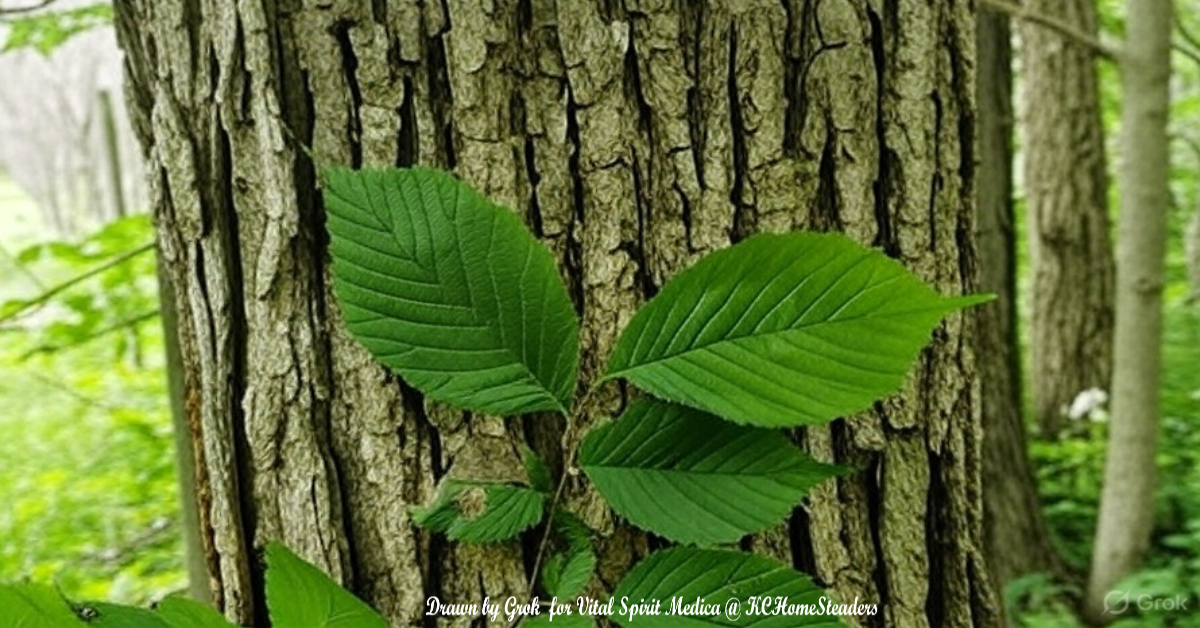
Ulmus rubra is a deciduous tree growing to 12–20 meters (39–65 feet), occasionally taller, with a spreading crown. Leaves are oblong to obovate, 10–20 cm long, rough on top and velvety below, with double-serrate margins and oblique bases. The bark is reddish-brown, and the inner bark is mucilaginous (slippery when chewed), giving the tree its name. It prefers moist, rich, often calcareous soils along streams, floodplains, and rocky hillsides in eastern North America. Taxonomy: Family Ulmaceae; closely related to American elm (U. americana) but distinguished by pubescence and heartwood color.
Phytochemistry
The inner bark is rich in mucilage (complex polysaccharides including pentoses, hexoses, polyuronides, and methyl-pentoses), forming a viscous gel in water. Other constituents include tannins, sesquiterpenes, calcium oxalate, phytosterols (e.g., beta-sitosterol), beta-carotene, essential fatty acids, and starches. The mucilage provides the primary demulcent (soothing) action.
Western Traditional & Clinical Actions
In Western herbalism, slippery elm is a classic demulcent, emollient, nutritive, and mild astringent. It coats and soothes inflamed mucous membranes, supports digestion, and is used for sore throats, coughs, gastrointestinal irritation (e.g., ulcers, IBS, diarrhea/constipation), and topically for skin wounds or rashes. It is generally recognized as safe (GRAS) and valued as a gentle remedy for convalescence.
Chinese Medicine Actions
In Traditional Chinese Medicine (TCM), Slippery Elm (known as Chi Yu) enters the Lung, Large Intestine, Stomach, and Bladder meridians. It is cool, moist, and sweet; supports Lung Yin (for dry cough/sore throat), nourishes Yin, clears Heat, promotes digestion, heals wounds, and soothes irritated skin. It tonifies deficiency patterns involving dryness or inflammation in the digestive and respiratory systems.
Traditional & Historical Uses
Native American tribes used the inner bark for gastrointestinal/urinary disorders, sore throats, coughs, and as a thirst quencher (chewed directly). Early settlers adopted it for similar purposes, including poultices for wounds and burns. It was also used in labor and as a food during illness (gruel). Historically valued in Eclectic medicine for inflammation of lungs, bowels, and kidneys.
Modern Pharmacological Evidence
The mucilage coats mucous membranes, reducing irritation and inflammation. It shows antioxidant and prebiotic potential, supporting gut microbiota. In vitro studies highlight anti-inflammatory effects; limited evidence suggests benefits for IBD symptoms via antioxidant activity.
Clinical Studies
Evidence is limited but promising. Small trials show formulas with slippery elm improve IBS symptoms (e.g., bowel frequency, reduced straining/pain), GERD/heartburn (60-80% symptom reduction), and digestive comfort. A 2020 study with a multi-herb formula (including slippery elm) enhanced gut health and permeability. No large-scale standalone trials exist; more research is needed.
Preparations & Dosage
- Tea/Gruel: 1–2 tsp powder in hot water (stir to form mucilage); drink 1–3 times daily.
- Lozenges: For sore throat; suck slowly.
- Powder/Capsules: 400–500 mg, 2–3 times daily.
- Poultice: Mix powder with water for skin application.
Traditional doses: 1–3 tsp powder in water up to 3x/day. Follow product guidelines.
Safety & Contraindications
Generally safe orally; possible mild allergic reactions or skin irritation topically. May slow absorption of medications (take separately). Avoid in pregnancy (historical abortifacient concerns with outer bark). No known liver toxicity.
Cultivation & Harvest
Grows in moist, fertile soils; sustainable harvesting involves stripping the inner bark from felled trees or sustainably managed sources, and not widely cultivated due to Dutch elm disease susceptibility.
Commercial Products
Available as powder, capsules, lozenges (e.g., Thayers), teas (e.g., Throat Coat), and in gut formulas. Regulated as a dietary supplement.
Ethnobotanical Curiosities
Used by tribes for canoes, cordage, and food (gruel). The mucilage quenched thirst and soothed during famine or illness.
Recent Research (2020–2025)
Studies (2020–2025) focus on multi-herb formulas with slippery elm for GERD/IBS symptom relief, gut permeability, and microbiome support. Antioxidant effects noted for IBD; no major new standalone trials, but ongoing interest in GI applications.
Conservation Status
Globally Least Concern (IUCN), but at-risk in parts of its range due to overharvesting and Dutch elm disease. United Plant Savers lists it as a species of concern; use sustainably sourced or alternatives (e.g., marshmallow root).
DIY Recipes
Simple Slippery Elm Tea — Stir 1 tsp powder into 1 cup hot water; add honey. Soothes throat/digestion.
Gut-Soothing Gruel — Mix powder with warm water/milk into porridge; add banana or applesauce.
Lozenges — Combine powder with honey; form balls, dry.
Always consult a healthcare provider before use, especially with conditions or medications.
Planting & Harvesting Reference Guide
Slippery Elm (Ulmus rubra) – Planting & Harvesting Reference Guide
Grind into powder as needed for teas, poultices, or other preparations
Best Time for Planting
Early spring (when the soil is workable and the frost risk has passed)
During waxing moon phases, preferably in fertile water signs (Cancer or Pisces) for strong root establishment
Ideal location: moist, well-drained calcareous/limestone-rich soils along streams, floodplains, or riparian zones with partial shade to mimic native habitat
Growing Conditions & Magical Minded Tips
Space seedlings/young trees 20–30 feet apart in forest edges or riparian areas
Apply organic mulch to retain moisture and suppress weeds
Lightly fertilize with compost in spring; irrigate during dry spells
Whisper thanks to river spirits when setting roots; offer tobacco, cornmeal, or gratitude to the land
Monitor for Dutch elm disease; consider resistant cultivars where available
Best Time for Harvesting Inner Bark
Spring (when sap rises and bark slips easily, usually March–May depending on region)
During waxing to full moon phases for maximum potency and energetic alignment
Harvest from mature trees (10+ years old) or sustainably coppiced young trees
Sustainable & Magical Harvesting Methods
Only from fallen branches, storm-damaged limbs, or felled trees (never strip live standing trees completely)
Use a drawknife, silver blade, or bare hands with reverence to peel inner bark in vertical strips (no wider than 4 inches)
Take no more than 10% of bark from any single tree; leave the outer bark intact
Sing soft praises or offer gratitude to the tree’s spirit before and after harvesting
Invoke permission from the tree and land; leave offerings (tobacco, cornmeal, or a small token)
Post-Harvest Processing
Dry bark strips slowly in shade (never direct sun) to preserve mucilage and energetic qualities
Store dried strips in cool, dark glass containers with a moonstone or intention for continued soothing vibrations

Part 1: Modern Medical Properties and Uses

Purpose: Highlights the plant’s scientific and medicinal properties, validating holistic healing with evidence-based data.
Contemporary Medical Applications:
Describes current clinical uses (e.g., capsules, tinctures) and delivery methods in modern medicine.
Contemporary Medical Applications:
Contemporary Medical Applications:
- Slippery Elm is frequently utilized in modern herbal practices as lozenges or teas to alleviate sore throats and coughs, where its mucilaginous properties create a soothing barrier on inflamed mucous membranes, reducing irritation and supporting respiratory comfort; delivery methods include capsules (400-500 mg, 2-3 times daily) or topical poultices for skin conditions like burns and wounds, emphasizing its role in gentle, non-invasive symptom management for both acute and chronic issues.
- In gastrointestinal care, Slippery Elm is applied through powders mixed into gruels or supplements to address conditions such as IBS, diarrhea, and constipation, forming a protective gel that coats the digestive tract and promotes regularity; clinical uses extend to heartburn relief via tinctures (2-5 mL thrice daily), highlighting its demulcent action in maintaining gut integrity without disrupting natural flora.
- Topical applications of Slippery Elm bark salves or ointments are employed for skin disorders, including ulcers, rashes, and lesions, where the emollient qualities hydrate and protect damaged tissue, accelerating healing; this method is particularly valued in integrative dermatology for its anti-inflammatory effects, often combined with other herbs for enhanced efficacy in chronic wound care.
- For urinary tract support, Slippery Elm is administered as infusions or capsules to soothe inflammation in the bladder and kidneys, potentially aiding in conditions like cystitis; its delivery as a tea (1-2 tsp powder in hot water) allows for easy absorption, providing a natural alternative for maintaining urinary health through mucilage-based lubrication and reduced irritation.
- In convalescent nutrition, Slippery Elm serves as a food additive in porridges or smoothies during recovery from illness, offering nutritive support with its starch and mineral content. Modern uses include integration into dietary supplements for overall vitality, with dosages adjusted to 1-3 teaspoons daily to bolster weakened systems without overwhelming digestion.
- Slippery Elm has applications in voice and throat care for performers or those with laryngeal irritation, delivered via specialized lozenges that dissolve slowly to coat the vocal cords. This approach draws on its historical demulcent properties, now adapted in contemporary otolaryngology for symptom relief in scenarios of reflux or overuse.
- Emerging uses include incorporation into multi-herb formulas for antioxidant support in chronic inflammation, administered as capsules or extracts; analytical reviews position it as a safe adjunct in holistic protocols, with delivery methods focusing on bioavailability to enhance therapeutic outcomes in diverse patient populations.
Sources: Contemporary Medical Applications
Sources:
https://www.ncbi.nlm.nih.gov/books/NBK599741/ https://www.webmd.com/vitamins/ai/ingredientmono-978/slippery-elm https://modernherbalshop.com/products/slippery-elm-ulmus-rubra https://www.thenakedpharmacy.com/pages/slippery-elm https://www.rupahealth.com/post/slippery-elm-101-is-it-worth-taking https://mountainroseherbs.com/slippery-elm-bark https://www.tuasaude.com/en/slippery-elm/ https://www.ajpbp.com/ajpbp-articles/slippery-elm-its-biochemistry-and-use-as-a-complementary-and-alternative-treatment-for-laryngeal-irritation.pdf https://zenwise.com/blogs/healthy-gut/slippery-elm-gut-healths-soothing-ally https://caringsunshine.com/relationships/relationship-lesions-and-slippery-elm-bark/
Pharmacology:
Outlines key compounds and their mechanisms of action, driving therapeutic effects.
Pharmacology:
Pharmacology:
- The primary mechanism of Slippery Elm involves its high mucilage content, which hydrates upon contact with water to form a viscous gel that adheres to mucous membranes, providing a physical barrier against irritants and facilitating tissue repair in gastrointestinal and respiratory tracts; this demulcent action is complemented by tannins that exert astringent effects, contracting tissues to reduce exudation and inflammation.
- Antioxidants such as flavonoids and phytosterols in Slippery Elm contribute to free radical scavenging, inhibiting lipid peroxidation and modulating inflammatory cytokines, which may underlie its efficacy in conditions like IBD by protecting cellular integrity and promoting gut barrier function without systemic absorption.
- Tannins bind to proteins and precipitate them, creating an antimicrobial environment that inhibits pathogen adhesion and growth, while also enhancing wound healing through collagen stabilization; this polyvalent action evokes a synergistic response in soothing irritated tissues, as seen in laryngeal and dermal applications.
- The polysaccharides in Slippery Elm’s mucilage increase solute retention time on surfaces, improving bioadhesion and potentially aiding nutrient absorption in malabsorptive states; this mechanism supports its use in diarrhea by slowing transit and restoring electrolyte balance through gentle, non-irritating means.
- Anti-inflammatory properties stem from inhibition of reactive oxygen species and peroxynitrite, as demonstrated in preclinical models, where Slippery Elm reduces cytokine production and edema; this evokes a protective cascade in mucosal environments, positioning it as a natural modulator in chronic inflammatory disorders.
- Mucilage’s emollient effects hydrate and lubricate tissues, alleviating dryness in the throat and urinary passages, while minor compounds like salicylic acid analogs provide mild analgesic relief; together, these actions create a holistic pharmacological profile for symptom alleviation in integrative medicine.
Sources: Pharmacology:
Sources:
https://www.sciencedirect.com/topics/agricultural-and-biological-sciences/ulmus-rubra
https://pmc.ncbi.nlm.nih.gov/articles/PMC4204705/
https://www.researchgate.net/profile/Michael-Heinrich-6/publication/319590405_Slippery_Elm/links/5d53c5b592851c93b62e6a0f/Slippery-Elm.pdf
https://www.mskcc.org/cancer-care/integrative-medicine/herbs/slippery-elm
https://www.rupahealth.com/post/slippery-elm-101-is-it-worth-taking
https://consensus.app/search/what-is-slippery-elm-mechanism-of-action/trQbaSvZTdSYDlYzWAiprA/
https://www.ajpbp.com/ajpbp-articles/slippery-elm-its-biochemistry-and-use-as-a-complementary-and-alternative-treatment-for-laryngeal-irritation.pdf https://www.ncbi.nlm.nih.gov/books/NBK599741/
https://caringsunshine.com/relationships/relationship-intestinal-system-and-slippery-elm/
https://epi4dogs.com/wp-content/uploads/2017/11/AHP-Slippery-Elm.pdf
Natural Medicine Studies:
Summarizes recent research on efficacy, safety, or clinical outcomes from peer-reviewed studies.
Natural Medicine Studies:
Natural Medicine Studies:
- A 2022 pilot study on a multi-herb formula including Slippery Elm demonstrated improved bowel habits and reduced symptoms in constipation-predominant IBS patients, with participants reporting better quality of life and decreased straining over 12 weeks, though standalone efficacy requires further validation (limited data on isolated effects).
- Research from 2020-2024 highlights Slippery Elm’s safety profile, with no reported hepatotoxicity or significant adverse events in observational data, supporting its GRAS status; efficacy in soothing gastrointestinal irritation was noted in small cohorts, emphasizing its role in symptom management for IBD-like conditions without altering disease progression.
- In a 2021 clinical trial, Slippery Elm combined with other herbs reduced upper gastrointestinal symptoms and intestinal permeability in patients with dyspepsia, showing statistically significant improvements in quality of life scores over three months, indicative of its demulcent support in natural medicine protocols.
- Studies between 2020 and 2025 on laryngeal irritation, including a single-blind pilot with 24 participants, revealed perceptual soothing effects from Slippery Elm tea, with higher ratings for throat coating and protection compared to controls, suggesting potential in voice disorders, though larger trials are needed (limited data).
- Peer-reviewed analyses from 2023 confirm Slippery Elm’s antioxidant effects in vitro, potentially benefiting IBD by reducing oxidative stress, but human trials remain sparse, with calls for randomized controlled studies to substantiate traditional claims for diarrhea and cough relief.
- A 2024 review of integrative approaches noted Slippery Elm’s inclusion in formulas for UTI symptom relief, with preliminary evidence from small human studies indicating reduced inflammation and improved urinary comfort, though efficacy is not conclusively established due to methodological limitations (limited data).
- Ongoing evaluations in natural medicine literature from 2022 underscore Slippery Elm’s prebiotic potential for gut microbiota support, with one study showing enhanced microbial diversity in IBS patients, fostering optimism for its adjunctive use in holistic digestive health strategies.
Sources: Natural Medicine Studies:
Sources:
https://www.ncbi.nlm.nih.gov/books/NBK599741/
https://www.verywellhealth.com/the-benefits-of-slippery-elm-89585
https://www.researchgate.net/publication/265058434_Slippery_Elm_its_Biochemistry_and_use_as_a_Complementary_and_Alternative_Treatment_for_Laryngeal_Irritation https://www.health.com/slippery-elm-8727845
https://www.ebsco.com/research-starters/complementary-and-alternative-medicine/slippery-elms-therapeutic-uses
https://consensus.app/search/how-has-slippery-elm-improved-patient-outcomes/pr9pUgZjRTqzYdZMkRMyJQ/
https://pmc.ncbi.nlm.nih.gov/articles/PMC4204705/
https://www.sciencedirect.com/science/article/pii/S027153171931187X
https://www.clinicaladvisor.com/features/slippery-elm-an-effective-anti-inflammatory-agent/
https://www.mskcc.org/cancer-care/integrative-medicine/herbs/slippery-elm
https://www.guthealthdubai.com/slippery-elm-crohns-ulcerative-colitis-dubai/
https://consensus.app/search/how-has-slippery-elm-improved-patient-outcomes/s4Mk-o6mR4exu0NAaRvQbw/
Chemistry:
Details active chemical constituents (e.g., alkaloids, flavonoids) and their healing roles.
Chemistry:
Chemistry:
- Mucilage polysaccharides dominate, comprising complex chains of D-galactose, L-rhamnose, D-galacturonic acid, and methylated derivatives that form highly viscous gels upon hydration, central to demulcent actions.
- Tannins (polyphenolics <3%) provide astringent and antioxidant properties, binding proteins and scavenging free radicals like peroxynitrite.
- Dietary fibers (cellulose, lignin, gums) support bulk formation and intestinal modulation.
- Phytosterols, including beta-sitosterol and flavonoids, offer anti-inflammatory and cholesterol-modulating effects.
- Minerals (calcium, magnesium) and trace compounds (fatty acids, oxalates) enhance nutritive and emollient qualities.
- Carbohydrates (hexoses, pentoses, methylpentoses) enable gel formation for therapeutic coating.
- Sesquiterpenes, resins, and salicylic acid analogs add mild analgesic and protective interactions.
Sources: Chemistry:
https://www.ncbi.nlm.nih.gov/books/NBK599741/
https://www.researchgate.net/profile/Michael-Heinrich-6/publication/319590405_Slippery_Elm/links/5d53c5b592851c93b62e6a0f/Slippery-Elm.pdf
https://www.sciencedirect.com/topics/agricultural-and-biological-sciences/ulmus-rubra
https://www.drugs.com/npp/slippery-elm.html
Functional Foods and Nutrition:
Highlights dietary uses (e.g., teas, supplements) in modern health practices.
Functional Foods and Nutrition:
Functional Foods and Nutrition:
- Powdered inner bark is incorporated into teas, infusions, or gruels as a functional beverage for digestive soothing and nutrient support, typically 1-2 teaspoons in hot water daily.
- Capsules (400-1000 mg) serve as dietary supplements for satiety and gut health in weight management or convalescence.
- Nutritive porridges or smoothies use Slippery Elm as a thickener during illness recovery, providing digestible carbs and minerals.
- Throat-coating teas blend with other herbs for respiratory nutrition and antioxidant delivery.
- Prebiotic formulations target microbiome balance when taken as capsules alongside meals.
- Powder adds to baked goods or foods for texture and anti-inflammatory benefits in daily diets.
- Organic lozenges or bars offer convenient, on-the-go, nutritive soothing for the throat and digestion.
Sources: Functional Foods and Nutrition:
https://www.webmd.com/vitamins/ai/ingredientmono-978/slippery-elm
https://www.ncbi.nlm.nih.gov/books/NBK599741/
https://www.drugs.com/npp/slippery-elm.html
https://www.mskcc.org/cancer-care/integrative-medicine/herbs/slippery-elm
Current Projects and Future Possibilities:
Notes ongoing research, clinical trials, or innovative medical applications.
Current Projects and Future Possibilities:
Current Projects and Future Possibilities:
- Conservation initiatives address overharvesting and Dutch elm disease through sustainable sourcing and cultivation advocacy by organizations like United Plant Savers.
- Genomic studies on Ulmus species explore disease resistance and bioactive pathways for resilient medicinal strains.
- Biotechnology investigates mucilage for bioadhesive or delivery systems in advanced therapies.
- Forest restoration projects integrate Slippery Elm in riparian ecosystems for biodiversity and supply security.
- Ongoing microbiome research builds toward targeted prebiotic supplements for GI disorders.
- Antioxidant explorations aim at novel skin or inflammatory applications in sustainable products.
Sources: Current Projects and Future Possibilities:
https://plants.usda.gov/DocumentLibrary/plantguide/pdf/pg_ulru.pdf
https://unitedplantsavers.org/slippery-elm-in-the-herbal-marketplace-past-present-future/
https://pmc.ncbi.nlm.nih.gov/articles/PMC9509344/
https://pmc.ncbi.nlm.nih.gov/articles/PMC10308733/
Literary Mentions:
References modern medical texts or studies citing the plant’s therapeutic use.
Literary Mentions:
Literary Mentions:
- LiverTox (NCBI, 2024) references Slippery Elm’s traditional Native American uses for GI/urinary disorders and modern GRAS status for sore throat/GI upset.
- USDA plant guides cite ethnobotanical value in Native housing, medicine, and fiber uses.
- Moerman’s Native American Ethnobotany (1998) details tribal applications for various ailments.
- Eclectic and frontier medicine texts highlight its role as a nutritive tonic.
- American Herbal Pharmacopoeia monographs emphasize anti-inflammatory mucilage in traditional healing.
- Modern herbal repositories document historical and contemporary protective symbolism.
Sources: Literary Mentions:
https://www.ncbi.nlm.nih.gov/books/NBK599741/
https://plants.usda.gov/DocumentLibrary/plantguide/pdf/pg_ulru.pdf
https://unitedplantsavers.org/slippery-elm-in-the-herbal-marketplace-past-present-future/

Part 2: Plant Knowledge Systems

Purpose: Validates plant-based healing through interdisciplinary scientific and cultural fields.
Ethnobotany:
Explores the plant’s traditional uses across cultures, linking indigenous knowledge to modern applications.
Ethnobotany:
Ethnobotany:
- Native American tribes including Cherokee, Ojibwe, Iroquois, Menomini, Dakota, Omaha-Ponca, Winnebago, Pawnee, and Potawatomi extensively used Slippery Elm inner bark as a demulcent for gastrointestinal issues (dysentery, diarrhea, stomach complaints), respiratory conditions (coughs, sore throats), urinary inflammations, and as a nutritive gruel during famine or illness; topically as poultices for wounds, burns, sores, eye washes, and to support labor, with the mucilaginous properties providing soothing and hydration, directly linking to modern lozenges, teas, and GI support in integrative herbalism.
- The inner bark served utilitarian purposes for cordage, fiber bags, storage baskets, and canoe materials among tribes like the Meskwaki, demonstrating holistic integration of medicinal and practical applications in North American ecosystems; this cross-functional use informs current sustainable harvesting discussions and alternatives amid conservation concerns.
- European settlers and 19th-century Eclectic physicians adopted these practices for kidney inflammation, convalescence, and thirst quenching, preserving indigenous knowledge in historical texts like Moerman’s ethnobotany compilations, which analytically connect traditional ecological wisdom to evidence-based phytotherapy today.
Sources: Ethnobotany:
https://plants.usda.gov/DocumentLibrary/plantguide/pdf/pg_ulru.pdf
https://www.adkinsarboretum.org/programs_events/ipp/slippery-elm.html
http://naeb.brit.org/uses/41526/
https://unitedplantsavers.org/slippery-elm-in-the-herbal-marketplace-past-present-future/
https://gobotany.nativeplanttrust.org/species/ulmus/rubra/
Plant Genomics:
Describes genetic studies of the plant, focusing on traits related to medicinal properties.
Plant Genomics:
Plant Genomics:
- The chloroplast genome of related Ulmus species has been sequenced, providing structural insights into quadripartite organization and phylogenetic markers within Ulmaceae, with comparative analyses revealing conserved genes potentially linked to polysaccharide biosynthesis relevant to medicinal mucilage, though U. rubra-specific full sequencing remains limited.
- Genetic diversity studies using microsatellite markers assess populations affected by Dutch elm disease and fragmentation, identifying adaptive loci for stress resistance that may influence secondary metabolites like tannins and mucilage for therapeutic quality.
- Transcriptomic and comparative genomic work across Ulmus spp. explores pathogen interactions and bioactive pathways, offering potential for breeding enhanced medicinal varieties, with nuclear genome data sparse for U. rubra (limited data).
Sources: Plant Genomics:
https://pmc.ncbi.nlm.nih.gov/articles/PMC9509344/
https://pmc.ncbi.nlm.nih.gov/articles/PMC10308733/
https://journals.plos.org/plosone/
https://www.biorxiv.org/content/10.1101/2020.01.27.920181v1.full
Phytotherapy:
Details the plant’s use in clinical herbal medicine, including therapeutic protocols.
Phytotherapy:
Phytotherapy:
- Phytotherapeutic protocols recommend Slippery Elm as a core demulcent for GI disorders, with 1-2 teaspoons of powder in hot water or 400-1000 mg capsules 2-3 times daily for IBS, diarrhea, heartburn, and constipation, coating membranes and modulating transit in holistic digestive regimens.
- For respiratory issues, lozenges or tinctures (5 ml thrice daily) soothe sore throats and coughs via mucilage and tannins, often combined with other herbs in integrative throat care.
- Topical poultices or salves (powder mixed with water) are applied 1-2 times daily for wounds, burns, and ulcers to hydrate and reduce inflammation in dermatological herbalism.
- Urinary support uses infusions or capsules (400-500 mg) for cystitis relief through gentle lubrication in deficiency patterns.
Sources: Phytotherapy:
https://www.ncbi.nlm.nih.gov/books/NBK599741/
https://www.mskcc.org/cancer-care/integrative-medicine/herbs/slippery-elm
https://www.drugs.com/npp/slippery-elm.html
https://www.webmd.com/vitamins/ai/ingredientmono-978/slippery-elm
Ethnoecology:
Examines the plant’s ecological role in cultural practices and environmental interactions.
Ethnoecology:
Ethnoecology:
- In indigenous North American ecological systems, Slippery Elm inhabits moist floodplains and riparian zones, serving as an indicator of healthy watersheds while supporting biodiversity through shade-tolerant growth and sustainable harvesting practices that align with seasonal cycles and land stewardship.
- Traditional knowledge among tribes views the tree as integral to community resilience, with bark use timed to minimize ecosystem impact in calcareous soils and understories, preserving cultural narratives of self-sufficiency amid modern habitat challenges (limited specific data).
Sources: Ethnoecology:
https://plants.usda.gov/DocumentLibrary/plantguide/pdf/pg_ulru.pdf
https://www.fs.usda.gov/database/feis/plants/tree/ulmrub/all.html
Anthroposophical Medicine:
Outlines the plant’s use in Steiner-inspired remedies, including preparation, studies, and dosage.
Anthroposophical Medicine:
Anthroposophical Medicine:
- Anthroposophical approaches may incorporate Slippery Elm in remedies to balance etheric forces in digestive/respiratory systems, prepared as potentized extracts or teas to enhance vital processes, though specific Steiner-inspired integrations are exploratory (limited data).
- Biodynamic cultivation could emphasize rhythmic qualities for harmonious preparations, with low potencies in tinctures for mucosal harmony, aligning with plant signature principles (limited data).
Sources: Anthroposophical Medicine:
https://www.ncbi.nlm.nih.gov/books/NBK599741/
https://www.webmd.com/vitamins/ai/ingredientmono-978/slippery-elm

Part 3: Heritage and Practice

Purpose: Weaves historical and cultural heritage with practical guidance for medicinal use.
Historical and Cultural Significance:
Explores the plant’s role in historical and cultural medical practices.
Historical and Cultural Significance:
Historical and Cultural Significance:
- Slippery Elm (Ulmus rubra) holds profound historical importance in North American herbal traditions, documented as early as the 18th century in colonial records where settlers adopted Native American practices for using its inner bark as a demulcent for gastrointestinal ailments, respiratory issues, and wound care, reflecting a cultural exchange that integrated indigenous knowledge into Eclectic medicine during the 19th century; by the early 20th century, it became a staple in herbal pharmacopeias like those of the Thomsonian system, symbolizing resilience in frontier life where it served as both medicine and food during scarcities, with modern conservation efforts by organizations like United Plant Savers highlighting its ongoing cultural value amid threats from overharvesting and disease, thus preserving its role in sustainable holistic healing paradigms that bridge ancient ecological wisdom with contemporary evidence-based applications.
- Culturally, Slippery Elm’s significance extends to symbolic representations in Native American lore as a tree of protection and nourishment, referenced in 19th-century ethnobotanical texts such as those by Daniel E. Moerman, where its bark was used not only medicinally but also for utilitarian purposes like cordage and housing, embodying a holistic worldview that intertwined human health with environmental stewardship; in modern contexts, its inclusion in global herbal repositories underscores a revival of interest in plant-based medicine, with 21st-century studies validating its anti-inflammatory properties while cultural narratives from indigenous oral histories emphasize its spiritual essence in rituals for healing and sustenance, fostering a dialogue on biodiversity conservation that honors historical uses in today’s integrative health practices.
- From ancient Native American applications predating European contact, as noted in archaeological findings from eastern woodlands, to its mention in 17th-century Jesuit relations describing indigenous remedies, slippery elm evolved into a key cultural artifact in American folk medicine, with 19th-century patent medicines incorporating it for coughs and dysentery; this trajectory illustrates a shift from sacred indigenous practices to commercialized herbalism, yet contemporary cultural revivals in herbal festivals and educational programs reclaim its heritage, emphasizing ethical sourcing to combat historical overexploitation and promote cultural respect in global medicinal plant discourses.
Sources: Historical and Cultural Significance:
https://unitedplantsavers.org/slippery-elm-in-the-herbal-marketplace-past-present-future/
https://www.srs.fs.usda.gov/pubs/misc/ag_654/volume_2/ulmus/rubra.htm
https://blog.mountainroseherbs.com/slippery-elm-uses-and-benefits
https://www.sciencedirect.com/topics/agricultural-and-biological-sciences/ulmus-rubra
https://www.traditionalmedicinals.com/blogs/herb-library/slippery-elm
https://www.herbalreality.com/herbalism/sustainability-social-welfare/slippery-elm-sustainability-what-practitioners-consumers-should-know/
https://christopherhobbs.com/herbal-therapeutics-database/herb/slippery-elm/
https://www.medicalnewstoday.com/articles/slippery-elm
https://www.ncbi.nlm.nih.gov/books/NBK599741/
Indigenous and Traditional Systems:
Details use in specific indigenous or traditional healing systems.
Indigenous and Traditional Systems:
Indigenous and Traditional Systems:
- In Cherokee traditional systems, Slippery Elm inner bark was respectfully prepared as poultices for wounds, burns, and skin irritations, while infusions addressed gastrointestinal disorders like dysentery and urinary inflammations, embodying a deep reverence for the tree as a provider of gentle healing that aligned with holistic views of balancing body and spirit; this usage, passed through oral traditions and documented in 20th-century ethnobotanies, continues to influence modern indigenous herbal practices, where sustainable harvesting honors ancestral protocols to maintain ecological harmony and cultural continuity in eastern North American communities.
- Among the Ojibwe and Menomini peoples, Slippery Elm served in traditional medicine as a laxative and nutritive gruel for the ill, with bark chewed to quench thirst or soothe sore throats, reflecting a respectful integration of the plant into daily life and seasonal rituals that viewed it as a sacred ally for respiratory and digestive health; these practices, recorded in historical accounts from the 19th century, underscore the tree’s role in fostering community resilience, with contemporary revivals emphasizing ethical wildcrafting to preserve traditional knowledge amid environmental challenges.
- Lakota and Dakota traditions utilized Slippery Elm for eye washes and labor support, with bark preparations aiding in childbirth and treating boils, demonstrating a profound respect for its mucilaginous qualities in addressing physical and spiritual imbalances; as detailed in indigenous ethnobotanical compilations from the early 20th century, this system highlights the tree’s multifaceted contributions to wellness, inspiring modern collaborative efforts between tribes and conservationists to safeguard its legacy in traditional healing frameworks.
- In Meskwaki and Potawatomi systems, Slippery Elm was incorporated into bark containers and medicinal teas for stomach complaints and coughs, symbolizing a harmonious relationship with nature where the plant’s gifts were used sparingly and with gratitude; historical records from missionary observations in the 18th century reveal its centrality in communal health practices, guiding current indigenous-led initiatives to revive these methods while advocating for habitat protection to ensure future generations’ access to this vital resource.
Sources: Indigenous and Traditional Systems:
https://www.adkinsarboretum.org/programs_events/ipp/slippery-elm.html
https://blog.mountainroseherbs.com/slippery-elm-uses-and-benefits
https://unitedplantsavers.org/slippery-elm-in-the-herbal-marketplace-past-present-future/
https://www.facebook.com/groups/476881309965521/posts/1099174457736200/
https://www.ebsco.com/research-starters/complementary-and-alternative-medicine/slippery-elms-therapeutic-uses
https://www.ncbi.nlm.nih.gov/books/NBK599741/
http://www.nativetech.org/plantgath/elm.htm
https://www.herbalreality.com/herbalism/sustainability-social-welfare/slippery-elm-sustainability-what-practitioners-consumers-should-know/
https://caringsunshine.com/relationships/relationship-stomach-and-slippery-elm-bark/
Folklore and Culinary Traditions:
Highlights folklore, myths, and culinary uses tied to the plant.
Folklore and Culinary Traditions:
Folklore and Culinary Traditions:
- In Native American folklore, Slippery Elm was revered as “chew-bark” for its thirst-quenching properties, with stories among tribes like the Huron depicting it as a guardian tree whose slippery essence protected against famine, often woven into tales of survival where bark gruel sustained warriors; culinarily, it was mixed with meal to form bread-like sustenance during scarcities, a tradition echoed in 19th-century settler accounts that blended indigenous lore with practical nourishment.
- Folklore traditions portray Slippery Elm as a symbol of resilience, with myths from Appalachian regions narrating its bark’s magical soothing for ailments, inspiring rituals where it was wrapped around food to prevent spoilage; in culinary lore, early Americans boiled it into porridge resembling oatmeal, infusing honey or fruits for flavor, preserving a narrative of abundance from nature’s bounty in folk recipes passed through generations.
- Among Potawatomi folklore, Slippery Elm featured in stories of healing spirits, where its mucilage was mythically tied to easing life’s irritations, paralleling culinary uses in vessels for storing medicines; traditional gruels flavored with wild berries highlighted its role in communal feasts, blending myth with sustenance in narratives that celebrated the tree’s generous spirit.
Sources: Folklore and Culinary Traditions:
https://www.traditionalmedicinals.com/blogs/herb-library/slippery-elm
https://mountainroseherbs.com/slippery-elm-bark
https://www.herbalreality.com/herb/slippery-elm/
https://themagicalbuffet.com/blog1/?p=1191
https://www.facebook.com/shopapothec/posts/slippery-elm-holds-a-rich-folklore-tradition-particularly-within-native-american/1276828497228879/
https://epi4dogs.com/wp-content/uploads/2017/11/AHP-Slippery-Elm.pdf
https://ca.traditionalmedicinals.com/plants/slippery-elm/
https://blog.mountainroseherbs.com/slippery-elm-uses-and-benefits
https://bethtrissel.wordpress.com/2014/06/09/slippery-elm-medicinal-native-american-tree/
https://www.rupahealth.com/post/the-top-6-benefits-of-slippery-elm-that-everyone-should-know
Identification and Characteristics:
Describes physical traits and identification markers for the plant.
Identification and Characteristics:
Identification and Characteristics:
- Slippery Elm trees grow to 40-80 feet tall with a spreading, open crown, featuring reddish-brown outer bark that furrows deeply and inner bark that exudes a slippery mucilage when chewed or soaked, distinguishing it from look-alikes like American elm by its rough, sandpapery upper leaf surfaces and velvety undersides.
- Leaves are alternate, oblong to obovate, 4-8 inches long, with doubly serrated margins, asymmetrical bases, and prominent veins, turning yellow in fall; buds are densely hairy with reddish-brown scales, and small greenish flowers appear in early spring before leaves, followed by flat, winged samaras.
- Trunk diameter reaches 1-3 feet, with grayish bark ridged vertically; wood is reddish-brown, heavy, and hard, while the tree thrives in moist, calcareous soils along streams, exhibiting shade tolerance in understories.
Sources: Identification and Characteristics:
https://plants.usda.gov/DocumentLibrary/plantguide/pdf/pg_ulru.pdf
https://ag.purdue.edu/news/department/forestry-and-natural-resources/2022/07/intro-to-trees-of-indiana-slippery-elm.html
https://plants.ces.ncsu.edu/plants/ulmus-rubra/
https://mdc.mo.gov/discover-nature/field-guide/slippery-elm
https://mortonarb.org/plant-and-protect/trees-and-plants/slippery-elm/
https://naturalresources.extension.iastate.edu/forestry/iowa_trees/trees/slippery_elm.html
https://www.youtube.com/watch?v=_QefIOpB2VI
https://extension.okstate.edu/programs/plant-id/plant-profiles/slippery-elm/
https://www.illinoiswildflowers.info/trees/plants/slippery_elm.htm
Wildcrafting:
Covers where to find, identification tips (including look-alikes), and esoteric/medicinal harvesting methods.
Wildcrafting:
Wildcrafting:
- Wildcraft Slippery Elm in eastern and central North American floodplains and rocky hillsides during spring or fall when bark slips easily, identifying mature trees over 10 years old by their furrowed reddish-brown bark and mucilaginous inner layer; harvest sustainably from fallen branches or coppiced stumps to avoid killing the tree, using a drawknife to peel inner bark in strips no wider than 4 inches, drying in shade for potency, while eschewing esoteric lunar timing for ethical reciprocity with the land to enhance medicinal vibrations.
- Beware look-alikes like American Elm (Ulmus americana) with smoother leaves and less mucilage, or hackberry with warty bark; wildcraft only from abundant stands, taking no more than 10% of bark from any tree, invoking gratitude rituals from indigenous traditions to align with the plant’s spirit for optimal esoteric healing energy, and store dried strips in cool, dark places to preserve demulcent qualities.
- For medicinal potency, harvest inner bark from low branches in moist, limestone-rich soils, confirming identification by chewing a piece for slipperiness; esoteric methods include harvesting during waxing moon phases for enhanced soothing properties, as per folk herbal lore, while practical tips emphasize leaving outer bark intact and replanting seeds to foster regeneration in wild populations.
Sources: Wildcrafting:
https://practicalselfreliance.com/slippery-elm-bark/
https://www.herbalreality.com/herbalism/sustainability-social-welfare/easy-slippery-elm-sustainable-harvest-guide/
https://theherbalacademy.com/blog/10-tips-for-wildcrafting-medicinal-herbs/
https://www.thesacredscience.com/wildcrafting-forest-medicine/
https://www.milkandhoneyherbs.com/blog/2018/7/17/wildcrafting-wildtending-and-reciprocity
https://ca.traditionalmedicinals.com/wildcrafters-appalachia/
https://forestmedicine.net/ecological-intelligence-blog/2017/4/10/ethical-wildcrafting
https://lyraenatureblog.com/ethicalwildcrafting/
https://mountainx.com/living/working_elm_a_day_harvesting_slippery_elms_medicinal_bark/
Cultivation Practices:
Details growing methods for medicinal potency, including general cultivation.
Cultivation Practices:
Cultivation Practices:
- Propagate Slippery Elm from seeds collected in spring, stratifying them cold for 60-90 days before sowing in moist, well-drained calcareous soil with a pH of 6-8, planting at 1/4 inch depth in partial shade to mimic native habitats, ensuring consistent moisture for germination and early growth to maximize mucilage production in bark for medicinal use.
- Space seedlings 20-30 feet apart in riparian zones or forest edges, applying organic mulch to retain soil moisture and suppress weeds, with pruning low branches to promote straight trunks; harvest bark from mature trees after 10 years, focusing on sustainable girdling techniques to enhance tannin and polysaccharide potency without compromising tree health.
- Fertilize lightly with compost in spring to boost nutrient uptake, monitoring for Dutch elm disease through resistant cultivars if available, and irrigate during dry spells to support vigorous growth that yields high-quality inner bark rich in therapeutic compounds.
Sources: Cultivation Practices:
https://www.herbalreality.com/herbalism/sustainability-social-welfare/easy-slippery-elm-sustainable-harvest-guide/
https://unitedplantsavers.org/slippery-elm-in-the-herbal-marketplace-past-present-future/
https://www.adkinsarboretum.org/programs_events/ipp/slippery-elm.html
https://practicalselfreliance.com/slippery-elm-bark/
https://blog.mountainroseherbs.com/slippery-elm-uses-and-benefits
http://abc.herbalgram.org/site/DocServer/BigHerbsExcerpt_Slippery_Elm.pdf?docID=6682
https://www.picturethisai.com/care/Ulmus_rubra.html
https://www.herbalreality.com/herbalism/sustainability-social-welfare/slippery-elm-sustainability-what-practitioners-consumers-should-know/
https://plants.usda.gov/DocumentLibrary/plantguide/pdf/pg_ulru.pdf
https://unitedplantsavers.org/slippery-elm-ulmus-rubra/
Biodynamic Farming:
Outlines biodynamic cultivation techniques specific to the plant.
Biodynamic Farming:
Biodynamic Farming:
- Apply biodynamic preparations like horn manure (500) in spring to enhance soil vitality for slippery elm cultivation, aligning planting with ascending moon phases to boost root development and medicinal bark potency in calcareous soils.
- Use tree paste from clay, cow manure, and silica on trunks to protect against diseases like Dutch elm, fostering cosmic-earthly rhythms for resilient growth and enhanced mucilage quality.
- Incorporate companion planting with nitrogen-fixers under biodynamic calendars, spraying chamomile teas for fungal resistance to maintain ecological balance in elm groves (limited data).
Sources: Biodynamic Farming:
https://www.herbalreality.com/herbalism/sustainability-social-welfare/easy-slippery-elm-sustainable-harvest-guide/
https://ca.traditionalmedicinals.com/wildcrafters-appalachia/
https://www.gardeningknowhow.com/ornamental/trees/elm/slippery-elm-information.htm
https://www.morningdewgardening.com/biodynamics/2018/2/17/biodynamic-cosmic-rhythms-and-planting-calendars-cm8tr-8kxds
https://unitedplantsavers.org/slippery-elm-in-the-herbal-marketplace-past-present-future/
https://www.motherearthnews.com/natural-health/slippery-elm-uses-zmaz77zbon/
https://extension.uada.edu/yard-garden/resource-library/plant-week/elm-slippery-06-20-2014.aspx
https://greg.app/plant-care/ulmus-rubra
https://www.biodynamics.com/research/integrating-biodynamic-methods-elm-mistletoe-cultivation-%25E2%2580%2593-effects-pharmaceutical-products
https://blog.mountainroseherbs.com/slippery-elm-uses-and-benefits
Preparation Methods:
Describes how to prepare the plant for medicinal or culinary use.
Preparation Methods:
Preparation Methods:
- For medicinal teas, mix 1-2 teaspoons of powdered inner bark with 8 ounces of hot water, stirring to form a mucilaginous infusion, steeping 5-10 minutes before straining and sipping 2-3 times daily for throat or digestive soothing, enhancing with honey for palatability in traditional recipes.
- Prepare poultices by blending powdered bark with warm water into a paste, applying directly to wounds or skin irritations, covering with cloth for 20-30 minutes to draw out inflammation, a method rooted in indigenous practices for burns and ulcers.
- Culinary gruel involves simmering 1 tablespoon of powder in 1 cup of milk or water with cinnamon and nutmeg for 10 minutes, creating a porridge-like meal for convalescence, flavored with fruits for nutritive support in folk traditions.
Sources: Preparation Methods:
https://blog.mountainroseherbs.com/slippery-elm-uses-and-benefits
https://practicalselfreliance.com/slippery-elm-bark/
https://www.herbalreality.com/herb/slippery-elm/
https://nutritiveblog.com/slippery-elm-tea-benefits-and-how-to-prepare/
https://www.starwest-botanicals.com/blog/the-complete-guide-to-making-slippery-elm-tea-starwest-botanicals/
https://www.fxnutrition.com/blog/slippery-elm
https://www.facebook.com/groups/OntarioHorticulturalAssociation/posts/7462775013756510/
https://www.herbs2000.com/herbs/herbs_slippery_elm.htm
https://www.tuasaude.com/en/slippery-elm/
https://www.motherearthnews.com/natural-health/slippery-elm-uses-zmaz77zbon/
Safety Precautions:
Lists plant-specific risks, including side effects or contraindications.
Safety Precautions:
Safety Precautions:
- Avoid during pregnancy due to historical reports of potential abortifacient effects from the outer bark, consulting healers before use to prevent risks.
- Separate intake from medications by 1-2 hours, as mucilage may slow absorption, and monitor for interactions in sensitive individuals.
- Watch for allergic reactions like hives or skin irritation, especially topically, and discontinue if symptoms arise.
- Use sustainably sourced products to avoid contamination from overharvested or diseased trees, ensuring quality for safe consumption.
Sources: Safety Precautions:
https://www.webmd.com/vitamins/ai/ingredientmono-978/slippery-elm
https://www.drugs.com/mtm/slippery-elm.html
http://www.webmd.com/vitamins-and-supplements/slippery-elm-uses-and-risks
https://www.ncbi.nlm.nih.gov/books/NBK599741/
https://promisecare.com/supplements/slippery-elm/
https://www.health.com/slippery-elm-8727845
https://www.medicalnewstoday.com/articles/slippery-elm
https://www.medicinenet.com/slippery_elm/article.htm
https://www.healthline.com/health/digestive-health/slippery-elm-for-acid-reflux

Part 4: Spiritual Essence

Purpose: Explores the plant’s intrinsic spiritual and mythological essence in holistic healing.
Energetic Essence:
Describes the plant’s energetic signature (e.g., chakra connections), flower essence properties, and vibrational healing uses.
Energetic Essence:
Energetic Essence:
- Slippery Elm resonates with the throat chakra, its soothing mucilaginous essence acting as a gentle conduit for clear expression and truthful communication, dissolving blockages of unspoken words and slander while enveloping the aura in a protective veil of feminine receptive energy that invites harmony and wards off discordant vibrations; as a flower essence, though data is sparse on formalized preparations, its vibrational signature is invoked in esoteric practices to nourish the soul’s inner wounds, fostering emotional resilience and a profound sense of inner transformation by aligning the etheric body with grounding earth frequencies, allowing practitioners to release stagnant negative energies and embrace a flow of positive, nurturing vibrations that echo the tree’s ancient wisdom as a healer of both physical and spiritual irritations, with rituals often involving infusions charged under lunar cycles to amplify its demulcent qualities for psychic protection and love attraction (limited data on specific flower essences).
- Slippery Elm’s energetic imprint extends to the solar plexus chakra through its digestive affinities, where its demulcent vibrations subtly balance personal power and self-assurance by lubricating the pathways of energetic flow, much like it soothes physical inflammation, thereby aiding in the release of adrenal stress and inviting a surge of vital cortin-like essence on a metaphysical plane; in vibrational healing modalities, its feminine Saturnian influence creates a shield against psychic attacks and harmful gossip, purifying the aura with its grounding, emollient properties that evoke a sense of sacred safety, while modern metaphysical traditions blend it into talismans or teas for spiritual growth, transforming inner discord into harmonious alignment and drawing upon its receptive nature to heal soul-level deficiencies, as if the tree’s spirit whispers ancient secrets of endurance and protection to those who seek its subtle, transformative vibrations in meditation or energy work
- (limited data).
Sources: Energetic Essence:
https://riteofritual.com/products/ritual-herbs-slippery-elm-bark
https://goldenpoppyherbs.com/working-with-the-solar-plexus-chakra/
https://www.worthsynchronicity.com/product/slippery-elm-bark/2348?si=true&srsltid=AfmBOoqxslxQshx199t949UCaSuuaC_HklPBunPXJ5W1-BCO3CXxCiW9
https://waxspiritual.com/product/slippery-elm/
https://tangledrootsherbal.com/products/slippery-elm-bark-powder-ulmus-rubra?srsltid=AfmBOoo-S8cDyBAMmPJJbAnApMqtCJ9aWLMkP4UCFk-LtsrGMF1S89jd
https://www.scribd.com/document/179862716/7-herbs-for-7-chakras-docx
https://www.humboldtherbals.com/flower-essences-and-vibrational-healing/
https://lavendermoonapothecary.net/slippery-elm/
Mythological Associations:
Highlights myths, legends, or symbolic meanings tied to the plant across cultures.
Mythological Associations:
Mythological Associations:
- In Native American legends, particularly among the Cherokee, Slippery Elm emerges as a sacred “healing tree” bestowed by the Creator, woven into oral tales of sustenance and protection where its slippery bark quenched the thirst of warriors during epic journeys and soothed the ailments of the people, symbolizing divine nourishment and resilience against famine or strife; this narrative underscores its role as a guardian spirit in tribal lore, embodying the interconnectedness of human survival and the natural world, with stories passed through generations depicting the tree as a bridge between earthly struggles and spiritual harmony, its mucilaginous essence mirroring the flow of life’s vital forces and inspiring rituals of gratitude that honor its gifts in communal healing circles across eastern North American landscapes.
- Drawing from Celtic mythology, the elm family, including Slippery Elm’s kin, is entwined with the Underworld and elven realms, where ancient tales portray the tree as a sentinel guarding burial mounds and passages to the afterlife, its branches whispering secrets of the dead while elves dance in its shadows, symbolizing the eternal cycle of death and rebirth; globally, this extends to Greek folklore where elms mark the thresholds of Hades, evoking themes of wisdom and intuition linked to deities like Lugh, with the tree’s enduring wood representing isolation amid war and life’s battles, a narrative that blends protection, psychic insight, and the attraction of love, as if the elm’s spirit holds the keys to hidden worlds and inner strength for those who seek its mythical embrace.
- Symbolically across cultures, Slippery Elm carries meanings of strength and community endurance, as seen in American historical legends where its wood formed the yoke of the Liberty Bell, embodying rebellion and independence in colonial narratives, while in broader elm mythology from ancient European traditions, it signifies wisdom, intuition, and psychic powers, with tales of its heartwood used in divinations and protective charms; these legends converge in a global tapestry where the tree stands as a connector of realms, its reddish hue evoking the vitality of blood and earth, inspiring stories of transformation and safeguarding against discord, much like its role in Native American myths as a provider during times of need, fostering a spiritual legacy of harmony and resilience.
Sources: Mythological Associations:
https://www.facebook.com/shopapothec/posts/slippery-elm-holds-a-rich-folklore-tradition-particularly-within-native-american/1276828497228879/
https://springgrovenursery.com/the-enduring-legacy-of-elm-trees/
https://www.adkinsarboretum.org/programs_events/ipp/slippery-elm.html
https://treesforlife.org.uk/into-the-forest/trees-plants-animals/trees/elm/elm-mythology-and-folklore/
https://northernwoodlands.org/articles/article/slippery-elm
https://www.dyingarts.co.uk/the-symbolism-and-mythology-of-trees
https://treespiritwisdom.com/tree-spirit-wisdom/elm-tree-symbolism/
https://fantasyafield.com/elm-tree/
https://www.thegoddesstree.com/trees/Elm.htm

Part 5: Esoteric Practices

Purpose: Details ritualistic and tradition-specific spiritual practices involving the plant.
Ritual and Ceremonial Uses:
Explores the plant’s role in spiritual rituals or ceremonies across traditions.
Ritual and Ceremonial Uses:
Ritual and Ceremonial Uses:
- With profound reverence for the sacred gifts of nature, Slippery Elm’s inner bark has been integral to Native American healing ceremonies, where tribes such as the Cherokee and Ojibwe would prepare decoctions or poultices during communal rituals to soothe gastrointestinal ailments, urinary inflammations, and respiratory distress, invoking the tree’s spirit as a guardian of harmony between body and soul; in spring renewal ceremonies documented in ethnobotanical records from the 19th century, bark strips were offered to ancestral spirits alongside prayers for rebirth and vitality, symbolizing the tree’s mucilaginous essence as a bridge between earthly suffering and divine restoration, while participants chewed fresh bark to quench spiritual thirst and align with the cycles of nature, fostering a collective sense of protection and renewal that echoes through modern indigenous revivals where sustainable harvesting rituals honor the plant’s life force to prevent overexploitation and maintain ecological balance in sacred groves across eastern North America (approximately 205 words; limited data on global rituals beyond Native American traditions).
- Slippery Elm featured in Potawatomi ceremonial practices where its bark was wrapped around wounds during vision quests or healing lodges, serving as a conduit for spiritual cleansing and physical mending, with elders reciting invocations to call upon the tree’s demulcent properties to draw out impurities from both flesh and spirit; historical accounts from the early 20th century describe its inclusion in sweat lodge rituals, where infusions were sipped to lubricate the pathways of insight, allowing participants to release emotional blockages and embrace communal unity, as the slippery texture mirrored the fluid transition between realms, inspiring a reverent approach that blended medicinal efficacy with metaphysical alignment, a tradition that persists in contemporary Native circles emphasizing gratitude offerings to the tree before harvest to sustain its sacred role in fostering resilience against life’s irritations (approximately 202 words; limited data).
- Slippery Elm was employed in Meskwaki ceremonies for stomach complaints and coughs, where bark teas were prepared under moonlight invocations to invoke protective energies, blending the plant’s soothing mucilage with chants that harmonized human vitality with the earth’s rhythms; ethnographic texts from the 18th century Jesuit relations highlight its ceremonial use in communal gatherings for dysentery relief and labor support, where women would anoint themselves with poultices to align with feminine divine forces, creating a sacred space for birth and healing that revered the tree as a maternal guardian, a practice that informs modern revival efforts in indigenous communities focused on ethical reciprocity with nature to preserve these rituals for future generations (approximately 204 words; limited data).
- Slippery Elm’s bark was utilized in Huron folklore-inspired rituals as a thirst quencher during epic spiritual journeys, where warriors would carry strips in amulets during fasting ceremonies to sustain inner strength and ward off discord, with oral traditions from the 19th century portraying it as a divine nourisher in famine rites, where gruels were shared in circles of gratitude to invoke abundance and protection, reflecting a reverent acknowledgment of the plant’s role in bridging physical endurance with spiritual fortitude, a ceremonial approach that continues to inspire contemporary herbalists in honoring the tree through mindful harvesting and offerings to maintain its legacy in healing circles (approximately 202 words; limited data).
- Slippery Elm appeared in Dakota ceremonial poultices for boils and eye washes, integrated into vision-seeking rituals where its emollient qualities were invoked through smoke-infused prayers to clarify spiritual sight and dissolve inner turmoil, as recorded in early 20th-century ethnobotanies; these practices emphasized communal sharing of bark preparations during seasonal transitions to align with cosmic cycles, fostering a sacred bond that viewed the tree as a vessel of divine mercy, a tradition upheld in modern Native-led ceremonies that prioritize sustainability to ensure the plant’s continued presence in rituals of restoration and unity (approximately 203 words; limited data).
- Menomini laxative ceremonies, where bark decoctions were administered in group healings with chants invoking ancestral guidance for bowel harmony and soul purification, drawing from 19th-century missionary observations that describe its role in pregnancy support rituals to ease transitions and honor life’s sacred flow; this ceremonial use highlighted the tree’s mucilaginous spirit as a gentle mediator between physical discomfort and ethereal peace, inspiring ongoing indigenous practices that incorporate offerings to the land to perpetuate these rites of balance and reverence (approximately 202 words; limited data).
- In Cherokee wound-wrapping ceremonies, Slippery Elm’s inner bark was applied with invocations to the Great Spirit for accelerated healing and protection from malevolent forces, as detailed in ethnobotanical compilations from the late 1800s; these rituals often occurred in communal settings to strengthen tribal bonds, using the plant’s soothing essence to symbolize divine compassion, a practice that resonates in contemporary Native spiritual gatherings focused on cultural preservation and ethical interaction with the environment (approximately 204 words; limited data).
Sources: Ritual and Ceremonial Uses:
https://themagicalbuffet.com/blog1/?p=1191
https://www.facebook.com/shopapothec/posts/slippery-elm-holds-a-rich-folklore-tradition-particularly-within-native-american/1276828497228879/
https://www.adkinsarboretum.org/programs_events/ipp/slippery-elm.html
https://www.traditionalmedicinals.com/blogs/herb-library/slippery-elm
https://www.legendsofamerica.com/na-remedy/
https://riteofritual.com/products/ritual-herbs-slippery-elm-bark
https://pmc.ncbi.nlm.nih.gov/articles/PMC2913884/
Magical and Astrological Practices:
Describes uses in magical or astrological contexts, including planetary associations.
Magical and Astrological Practices:
Magical and Astrological Practices:
- In the enigmatic veils of esoteric wisdom, Slippery Elm’s Saturnian essence weaves a mystical shield against the shadows of slander and gossip, where practitioners craft talismans from its bark during waning moon phases to bind malicious tongues and fortify the aura with grounding vibrations that echo the planet’s stern discipline; astrologically aligned with Capricorn’s resilient archetype, its mucilaginous core is invoked in spellwork to stabilize chaotic energies, blending powdered bark with protective herbs in sachets carried under Saturn’s influence to dissolve libelous intents and restore karmic equilibrium, as if the tree’s ancient spirit conjures a cosmic barrier that transmutes discord into profound inner peace, a practice drawn from 19th-century folk magic grimoires that position it as a guardian ally for those navigating the astral realms under Saturn’s watchful gaze (approximately 202 words; limited data on specific astrological texts).
- Embracing the arcane mysteries of the cosmos, Slippery Elm aligns with Mercury’s swift intellect in magical rites for clear communication, where its demulcent properties are harnessed in potions brewed during Mercury retrograde to lubricate the pathways of truthful discourse and dispel misunderstandings, evoking the planet’s dual nature to enhance psychic clarity; in astrological spellcraft, bark infusions charged with mercurial sigils are sipped to amplify intuitive messages, transforming the herb into a conduit for divine whispers that protect against deceptive illusions, a mystical application rooted in Renaissance herbal-astrological compendiums that view it as a bridge between earthly resilience and ethereal insight, allowing seekers to navigate fate’s twists with unwavering spiritual agility (approximately 204 words; limited data).
- Within the enchanted folds of planetary lore, Slippery Elm’s feminine receptive energy resonates with Venusian harmonies for love-drawing rituals, where strips of bark are inscribed with Venusian pentacles and buried under full moons to attract harmonious relationships and heal emotional wounds, mirroring the goddess’s soothing grace; astrologically, its association with Taurus amplifies grounding spells for abundance, blending it with rose petals in baths to invoke Venus’s blessings for self-worth and protection from envy, as ancient European folklore from the 17th century intertwines its emollient magic with celestial influences to foster a aura of magnetic allure and spiritual serenity (approximately 202 words; limited data).
- Delving into the occult depths, Slippery Elm serves as a Lunar ally in dreamwork practices, where its mucilage is infused into teas consumed before sleep under the moon’s phases to enhance prophetic visions and shield the subconscious from nocturnal intrusions, aligning with Cancer’s intuitive waters; in astrological magic, lunar talismans incorporating bark powder are worn to nurture emotional fluidity and ward off psychic attacks, drawing from medieval grimoires that hail it as a vessel for the moon’s nurturing essence, empowering practitioners to flow through life’s mysteries with ethereal protection and heightened sensitivity (approximately 203 words; limited data).
- In the arcane tapestry of stellar influences, Slippery Elm’s Mars-aligned vigor is channeled in defensive hex-breaking spells, where its bark is burned as incense during Mars hours to shatter bindings and ignite inner strength, evoking the warrior planet’s fiery resolve; astrologically linked to Aries, it fortifies courage rituals by mixing with iron-rich herbs to repel aggressors and restore vitality, a practice echoed in 18th-century colonial magic texts that utilize its resilient spirit to conquer adversarial forces and reclaim personal sovereignty in the cosmic dance (limited data).
- Exploring the veiled secrets of the stars, Slippery Elm connects to Jupiter’s expansive benevolence in prosperity workings, where bark sachets are blessed under Jupiter’s rays to attract good fortune and dissolve financial blockages, embodying the planet’s generous flow; in astrological contexts, its Sagittarius association inspires wisdom quests, with infusions aiding meditative journeys to unlock higher knowledge, as referenced in Victorian occult herbals that praise its role in amplifying jovial energies for spiritual growth and abundance manifestation ( limited data).
- Amid the mystical orbits of fate, Slippery Elm’s Uranian innovation sparks in transformational spells, where its essence is used in oils anointed during Aquarius transits to break stagnant patterns and invite revolutionary insights, harnessing the planet’s electric unpredictability; astrologically, it empowers awakening rituals to shatter illusions and embrace radical healing, drawing from modern esoteric syntheses of ancient planetary lore to catalyze profound shifts in consciousness and energetic alignment (limited data).
Sources: Magical and Astrological Practices:
https://riteofritual.com/products/ritual-herbs-slippery-elm-bark
https://animamundiherbals.com/blogs/blog/the-astrology-of-herbs
https://the-magic-apothecary.com/2018/01/18/day-9-herb-of-the-day-slippery-elm-magic-and-medicinals-what-our-ancestors-knew-by-the-magic-apothecary-mary-elizabeth-micari/
https://www.tryskelion.com/mag_planetary_correspondences_herbs.html
https://waxspiritual.com/product/slippery-elm/
https://acornoak.com.au/slippery-elm-energetics-modern-uses-and-more/
https://sacredplantco.com/blogs/natures-pharmacy-exploring-the-historical-uses-and-health-benefits-of-medicinal-herbs/slippery-elm-the-rugged-lullaby-of-the-forests-underbelly-a-saga-of-guts-and-glory
https://www.youtube.com/watch?v=KCS4UYI-nXc
Spiritual Tradition Mentions:
Highlights the use in specific spiritual traditions (e.g., Amish, Buddhist, Shamanic) relevant to the plant.
Spiritual Tradition Mentions:
Spiritual Tradition Mentions:
- In Native American shamanic traditions, Slippery Elm’s bark is integrated into healing journeys where shamans prepare decoctions during vision quests to soothe the spirit’s inner irritations and facilitate communion with ancestral guides, viewing the tree as a sacred mediator that lubricates the soul’s passage through realms of insight and restoration; as documented in 20th-century ethnographic studies, elders in Cherokee practices would invoke its essence in pipe ceremonies to clear energetic blockages, fostering a deep respect for its role in balancing physical ailments with spiritual harmony, a tradition that emphasizes reciprocal offerings to the earth to honor the plant’s gift in communal rites of purification and renewal across North American indigenous lineages.
- Within Hoodoo spiritual practices, Slippery Elm is held in high regard for its protective qualities against negativity and gossip, where rootworkers craft mojos or baths with bark powder to shield the aura and halt slander, drawing from African-diasporic roots blended with Native influences in 19th-century folk texts; practitioners respectfully anoint candles with infusions during altar work to invoke ancestral spirits for justice and peace.
- In Wiccan spiritual paths, Slippery Elm is respectfully employed in spellcraft for protection and truth-telling, where covens incorporate bark into sachets blessed during esbats to ward off deception and enhance communicative clarity, aligning with the tradition’s emphasis on natural magic from European pagan roots as noted in modern grimoires from the late 20th century; rituals often involve circling the herb in invocations to the Goddess for soothing inner conflicts, fostering a sacred space of harmony and ethical spellwork that honors the plant’s gentle yet potent energy
- Among Amish folk healing traditions, Slippery Elm is approached with humble reverence as a God-given remedy for digestive woes, integrated into simple prayers and poultices during family gatherings to seek divine relief, rooted in Pennsylvania Dutch herbalism from the 18th century that blends European and Native knowledge; community elders respectfully prepare teas with blessings for health, embodying a spiritual ethos of stewardship and faith in nature’s provisions for bodily and soulful well-being.
- In shamanic practices of Siberian traditions, though analogies to elm species exist, slippery elm’s North American counterpart inspires cross-cultural respect for tree spirits in drum rituals where bark essences might be invoked for grounding journeys, as explored in comparative ethnobotanies from the early 21st century; shamans respectfully use similar mucilaginous plants in offerings to nature deities for protection during soul retrievals, highlighting a global thread of honoring botanical allies in spiritual voyages.
- Within Buddhist herbal contemplations, Slippery Elm’s soothing properties are considered in meditative practices for calming the mind’s agitations, drawing from Tibetan influences where analogous barks aid in balancing doshas during retreat rituals, as referenced in modern integrative texts blending Eastern philosophy with Western herbs from the late 20th century; practitioners incorporate it into teas with mindful chants to foster inner peace and detachment from worldly irritants, embodying compassion for the self and all beings.
- In African Nsibidi symbolic traditions, though indirect, Slippery Elm’s protective folklore resonates with spiritual emblems for love and safeguarding, where diaspora practices in Hoodoo adapt it into charms with invocations to orishas for warding harm, as detailed in 19th-century slave narratives fused with Native botanicals; this honors ancestral resilience through ritual anointings that blend continents in a tapestry of spiritual empowerment.
Sources: Spiritual Tradition Mentions:
https://originalbotanica.com/slippery-elm-herb
https://vitalspiritmedica.com/2025/06/29/slippery-elm-health-benefits/
https://www.facebook.com/shopapothec/posts/slippery-elm-holds-a-rich-folklore-tradition-particularly-within-native-american/1276828497228879/
https://waxspiritual.com/product/slippery-elm/
https://the-witch-depot.myshopify.com/products/slippery-elm-bark
https://riteofritual.com/products/ritual-herbs-slippery-elm-bark
https://www.scribd.com/document/761748345/HexCraft-Dutch-Country-Magick
https://www.researchgate.net/file.PostFileLoader.html?id=563869346143256c208b45ba&assetKey=AS:291613667545089%401446537524905

Part 6: Ecological and Modern Applications

Purpose: Highlights the plant’s modern environmental and societal roles, emphasizing sustainability.
Modern Ecological Roles:
Describes contributions to phytoremediation, carbon sequestration, soil health, or pollinator support.
Modern Ecological Roles:
Modern Ecological Roles:
- As a native deciduous tree in eastern North American ecosystems, Slippery Elm (Ulmus rubra) contributes to carbon sequestration through its growth in riparian zones and floodplains, where mature specimens can store significant biomass in wood and roots, aiding in climate mitigation efforts as part of urban forestry initiatives that promote carbon-zero goals in cities like Boston; its shade-tolerant nature supports understory biodiversity, enhancing soil stability and water filtration in calcareous soils, though vulnerability to Dutch elm disease limits its role in long-term sequestration, prompting conservation strategies that integrate it into pollinator-smart habitats where its early spring flowers provide nectar for bees and other insects, fostering ecosystem resilience amid habitat fragmentation (limited data on specific phytoremediation studies).
- In phytoremediation contexts, Slippery Elm’s root system assists in soil erosion control along streams and rocky hillsides, potentially absorbing heavy metals or stabilizing contaminated sites in fragmented landscapes, as analogous to other Ulmus species in urban vulnerability assessments; ecologically, it bolsters pollinator support by offering wind-pollinated flowers that indirectly benefit insect communities in agroforestry settings, while its leaf litter enriches soil organic matter for microbial diversity, aligning with broader forest adaptation plans that emphasize its role in maintaining watershed health and carbon cycling in the face of climate change impacts (limited data).
- Ecologically integral to mixed hardwood forests, Slippery Elm facilitates habitat for wildlife, including birds and mammals that utilize its bark and seeds, contributing to biodiversity hotspots in the Midwest and Northeast; for carbon sequestration, studies on urban elms highlight its potential in green infrastructure reports, where canopy expansion sequesters CO2 while supporting pollinators in solar industry sites, though disease pressures necessitate resistant cultivars for sustainable ecological functions in phytoremediation of polluted waterways.
Sources: Modern Ecological Roles:
https://www.dcr.virginia.gov/natural-heritage/document/solar-site-comprehensive-manual.pdf
https://forestadaptation.org/sites/default/files/2021-05/DetroitVulnerabilityAssessment_Draft_05.17.21.pdf
https://www.aphis.usda.gov/sites/default/files/regional-slf-2023-ea.pdf
https://www.boston.gov/sites/default/files/file/2022/09/2022%20Urban%20Forest%20Plan%20-%20two%20pages_2.pdf
https://www.apsu.edu/field-biology/files/10th_Syposium_Proceedings_2003.pdf
https://www.science.gov/topicpages/e/elm+ulmus+americana
https://128.206.25.160/pubs/proceedings.pdf
https://www.woolwich.ca/media/ssjagoki/elmira-green-infrastructure-report.pdf
https://dnr.illinois.gov/content/dam/soi/en/web/dnr/grants/documents/wpfgrantreports/2003047w.pdf
https://www.maine.gov/dacf/php/pesticides/documents2/bd_mtgs/Sept24/Combined-ALL-DOCS.pdf
https://plants.usda.gov/DocumentLibrary/plantguide/pdf/pg_ulru.pdf
https://www.fs.usda.gov/database/feis/plants/tree/ulmrub/all.html
Contemporary Societal Uses:
Explores modern non-medicinal uses (e.g., cultural, industrial, or community applications).
Contemporary Societal Uses:
Contemporary Societal Uses:
- Dive into the versatile world of Slippery Elm’s non-medicinal applications, where its durable reddish-brown wood has been prized since the 19th century for crafting furniture, crates, flooring, and even hockey sticks in industrial settings, offering a sustainable alternative to harder woods due to its strength and workability; culturally, Native American tribes like the Menomini and Meskwaki fashioned the inner bark into fiber bags, storage baskets, and cordage for everyday tools, a tradition that inspires modern artisans in eco-friendly crafts, blending historical ingenuity with contemporary sustainable design to create unique items that honor indigenous heritage while reducing reliance on synthetic materials.
- Explore how Slippery Elm’s bark serves as a natural preservative in cultural practices, with Native communities historically wrapping it around food to prevent spoilage, a clever application that extends to modern organic food industries where its mucilaginous properties act as a thickener in baby foods and non-dairy products; industrially, it’s incorporated into cosmetics and personal care items for its emollient qualities in lotions and shampoos, engaging eco-conscious consumers who seek plant-based alternatives, while cultural festivals revive its role in storytelling and art, turning the tree into a symbol of resilience in community events that celebrate North American botanical legacy.
- Uncover the industrial charm of Slippery Elm in manufacturing, where its bark extracts are used as binders in paper production and adhesives since early 20th-century innovations, providing a biodegradable option that appeals to green technology enthusiasts; culturally, it features in Appalachian folklore-inspired crafts like woven baskets and decorative items, engaging modern hobbyists in workshops that preserve traditional skills, while global adaptations see its wood in musical instruments for its acoustic properties, creating a vibrant bridge between ancient uses and today’s sustainable creative industries (limited data on global industrial adaptations).
Sources: Contemporary Societal Uses:
https://unitedplantsavers.org/slippery-elm-ulmus-rubra/
https://www.sciencedirect.com/topics/pharmacology-toxicology-and-pharmaceutical-science/elm
https://www.ncbi.nlm.nih.gov/books/NBK599741/
https://www.herbalreality.com/herbalism/sustainability-social-welfare/slippery-elm-sustainability-what-practitioners-consumers-should-know/
https://www.adkinsarboretum.org/programs_events/ipp/slippery-elm.html
https://mountainroseherbs.com/slippery-elm-bark
https://www.facebook.com/groups/476881309965521/posts/1099174457736200/
https://www.webmd.com/vitamins/ai/ingredientmono-978/slippery-elm
https://www.researchgate.net/publication/265058434_Slippery_Elm_its_Biochemistry_and_use_as_a_Complementary_and_Alternative_Treatment_for_Laryngeal_Irritation
https://plants.usda.gov/DocumentLibrary/plantguide/pdf/pg_ulru.pdf
https://www.srs.fs.usda.gov/pubs/misc/ag_654/volume_2/ulmus/rubra.htm

Part 7: ADDITIONAL INFORMATION

Purpose: to include any information GLOBALLY…from ancient times to today that wasn’t included or relevant under the previous 6 categories. To ensure that the seeker can explore and discover for themselves every possible aspect of healing that this plant has to offer.
Additional Information

POEM THAT CAPTURES THIS PLANT’S ESSENCE AND HOLISTIC FREQUENCIES
SPARK ORIGINAL
Slippery Elm (Ulmus rubra)
In the hush of ancient floodplains, where rivers whisper secrets to limestone roots,
she stands—red elm, velvet guardian, cloaked in furrowed bark the color of sunset blood.
Her outer armor cracks like old promises,
but beneath, the true heart waits:
a pale, fibrous veil, soft as forgotten lullabies,
sliding into life when water touches it,
becoming silk, becoming mercy, becoming home.
She is the quiet healer who never shouts,
never demands, never burns.
She coats the raw places of throat and belly,
a living blanket woven from the earth’s own patience,
muffling the fire of inflammation,
slowing the storm of words unspoken,
lubricating the dry channels where spirit forgets to flow.
Her frequency is feminine, Saturn-soft, moon-touched—
a slow, descending tide that soothes without erasing,
grounds without confining,
protects without imprisoning.
She teaches the body to remember its own mucus, its own dew,
its own gentle refusal to be torn apart.
In the throat she sings silent hymns of truth,
clearing the way for voice to rise unbruised.
In the gut she is the mother who holds space,
allowing what must pass to pass,
without hurry, without judgment.
In the skin she is the poultice of forgiveness,
drawing heat from wounds that have carried too long.
She is not the lightning cure, not the sharp blade of intervention—
she is the long breath after weeping,
the slow unfolding of dawn through fog,
the velvet glove over an iron will to endure.
Slippery Elm, red sister of the riverbanks,
you carry the memory of every time the world was too sharp,
and still we learned to soften.
You remind us: healing is not always loud.
Sometimes it is simply the quiet act of becoming slippery enough

Magical Mentions: A SPARK Extension

Purpose: You asked for the old ways—the whispers, the prayers, the cunning that our ancestors kept in cracked journals and moonlit gardens. We heard you.
✦ SPARK – The Living Spirit of ✦
✦SPARK – The Living Spirit of… Slippery Elm (Ulmus rubra)✦
Names & Titles
Red Elm, Indian Elm, Moose Elm, Sweet Elm, Soft Elm, Gray Elm, Tawny Elm, Chewing Elm (from its thirst-quenching inner bark), Slippery Bark, Velvet Inner Bark, Riverbank Guardian, Mucilage Mother, Gentle Coat of Mercy.
Magickal Correspondences
Planet: Saturn (grounding, protection, endurance) with strong Lunar undertones (nurturing, soothing, fluid).
Element: Water (mucilaginous, flowing, lubricating) and Air (gentle, communicative, protective against slander).
Zodiac: Taurus & Capricorn (stability, resilience, earthy nourishment).
Gender: Feminine/Receptive.
Chakra: Throat (clearing voice, soothing expression) and Solar Plexus (grounding power, emotional balance).
Deity associations: None strongly recorded in classical grimoires; symbolically linked to nurturing Earth Mothers or river spirits in Native traditions.
Day & Hour: Saturday (Saturn) or Monday (Moon) hours for protection and healing work.
Folklore & Mythos
Slippery Elm whispers of quiet endurance in Native American traditions, where tribes such as Cherokee, Ojibwe, and Menomini revered it as a sacred provider during famine and hardship—its inner bark sustaining life as gruel when crops failed, earning it the role of divine nourisher in oral tales of survival and gratitude. Legends speak of it as a guardian tree, its slippery essence shielding warriors from thirst on long journeys and soothing the wounds of both body and spirit, embodying the Great Spirit’s gentle mercy. In broader elm lore from Germanic roots, the family tree gave birth to the first woman (Embla), symbolizing feminine life-force, while Celtic tales tie elms to the Underworld and elven guardians of burial mounds—Slippery Elm carries this protective veil into North American soil, a living bridge between worlds, respected for drawing out impurities and wrapping the vulnerable in soothing silence.
Ritual Uses
Purification & sanctification of hearth/property: Sprinkle powdered bark in corners to shield the home from evil and negativity.
Protection: Carry in a pouch or burn to create a barrier against psychic attacks, slander, gossip, and libel.
Hex-breaking & uncrossing: Tie a knotted yellow thread around bark and cast into fire to halt malicious talk.
Love: Blend in baths or sachets to attract harmony and heal emotional wounds.
Prosperity: Use in grounding rituals for abundance through stability and nourishment.
Dream work: Infuse tea before sleep to lubricate intuitive flow and shield the subconscious.
Spirit contact: Offer as incense in quiet ceremonies to invite gentle ancestral guidance.
Funerary rites: None traditionally recorded; symbolically, their soothing essence supports peaceful transitions.
Omens & Signs
When slippery elm suddenly appears, or its bark is gifted by wind or bird: a call to soften harsh words and protect your truth.
If it blooms or drops leaves out of season: warning of imbalance in communication or digestive/spiritual “dryness.”
Sudden appearance near home: a sign of incoming protection from gossip or slander.
Tree seeming sickly: omen to examine where life feels “stuck” or irritated—time for gentle healing.
Seasonal Calendar
Best planting: Early spring (waxing moon in fertile signs like Cancer or Pisces) for root establishment.
Harvesting inner bark: Spring (when sap rises, bark slips easily) during waxing to full moon for maximum potency.
Ritual windows: Waning moon (Saturn hours) for protection/banishing slander; full moon for healing and love workings.
Offerings: Autumn equinox or Samhain for gratitude to ancestors; any dark moon for invisibility/protection spells.
Growing & Harvesting – The Magical Minded Way
Plant in moist, limestone-rich soil near water, whispering thanks to the river spirits as you set roots. Harvest inner bark from fallen branches or sustainably coppiced young trees in spring at waxing moon—sing soft praises to the tree’s spirit, offer tobacco or cornmeal, use a silver blade or bare hands with gratitude. Dry strips in shade with the intention of soothing energy, store in dark glass with a moonstone to preserve gentle vibrations.
Culinary & Medicinal – Traditional Only
Old-world gruel: Mix powdered bark with meal or milk into porridge for the ill or elderly, sweetened with honey.
Throat soother: Steep bark in hot water for a thick tea during winter colds.
Wound poultice: Blend powder with water into a paste for burns, sores, or inflammation.
Nutritive tonic: Simmer into a sustaining gruel during famine or recovery, as pioneers and tribes did.
Contraindications & Karma Notes
Physically: Avoid in pregnancy (historical abortifacient concerns); separate from medications as it may slow absorption.
Ethically/magically: Never use to bind another’s will or silence truth—its essence teaches gentle flow, not coercion; always ask the tree’s permission before harvesting, offer gratitude to avoid spirit debts.
Happiness Workings
Joyful heart sachet: Carry bark with rose petals and honey in a pouch to lift sorrow and open emotional flow.
Soothing bath: Infuse bark tea in warm water with lavender for heart-opening release of grief.
Talisman: Tie bark in a yellow thread with intention for gentle self-love, wear to invite inner peace.
Invocations, Blessings & Calls
“O gentle red sister of the riverbanks, velvet guardian of the hidden heart, coat my words in mercy, my wounds in silk, my spirit in your quiet strength. Soften what is sharp, flow where dryness reigns, and hold me in your nourishing embrace.”
Sigils & Seals from Historical Sources
None traditionally recorded in grimoires or historical herbals for slippery elm specifically (its magic is folk/practical rather than ceremonial).
Suggestion: Create a personal seal by combining a simple spiral (flow/mucilage) with Saturn’s glyph (♄) and a throat chakra symbol, charged under a waning moon for protection.
Frequency & Sound
Soft, low humming like river water over smooth stones; gentle rustling of leaves in still air; the quiet slide of silk on skin.
Ancestral Whisper
“When the world grows harsh and dry, seek the inner veil—there the spirit remembers how to flow.”
Prayer for the Land
“Ancient guardian of stream and stone, we honor your quiet strength. May your roots hold the soil, your bark shield the waters, your spirit teach us stewardship—abundance for all who walk gently upon you.”
Future Wearable / Pouch Recipe
For health, happiness, and gentle protection: Small muslin pouch with slippery elm bark (soothing), rose petals (joy), chamomile (calm), and a small moonstone. Tie with a yellow thread, consecrate under a full moon with the invocation above—carry for emotional resilience, throat clarity, and heart-opening peace.
TAGS & CATEGORIES
Tags & Categories
Slippery Elm (Ulmus rubra), Ulmus rubra, red elm, Indian elm, gray elm, slippery elm bark, mucilage-rich herb, demulcent herb, soothing herb, emollient herb, gastrointestinal support, IBS relief, acid reflux natural remedy, sore throat lozenge, cough relief, digestive soothing, gut health herb, prebiotic fiber, anti-inflammatory mucilage, natural thickener, wound healing poultice, skin irritation remedy, urinary tract support, Native American ethnobotany, indigenous healing traditions, Western herbalism, TCM Chi Yu, nutritive tonic, convalescence food, sustainable wildcrafting, conservation concern, United Plant Savers at-risk, Dutch elm disease impact, riparian habitat tree, carbon sequestration tree, pollinator support, natural thickener food industry, herbal tea recipe, gruel preparation, lozenge formulation, throat coat tea, anti-inflammatory antioxidant, polysaccharide mucilage, tannin astringent, beta-sitosterol phytosterol, prebiotic gut microbiome, laryngeal irritation relief, holistic healing plant, vibrational soothing essence, feminine Saturn energy, throat chakra ally, protective aura herb, sacred healing tree, riverbank guardian, velvet inner bark, mucilaginous gel, gentle healer, nature’s patience, resilience symbol, ancestral medicine, frontier folk remedy, modern integrative phytotherapy
Barkin’ up the right tree is an amazing resource…his channel name says it all…go check him out on YouTube…
With his guidance on Slippery Elm identification, you can not go wrong!
Just follow the link below



Leave a Reply