
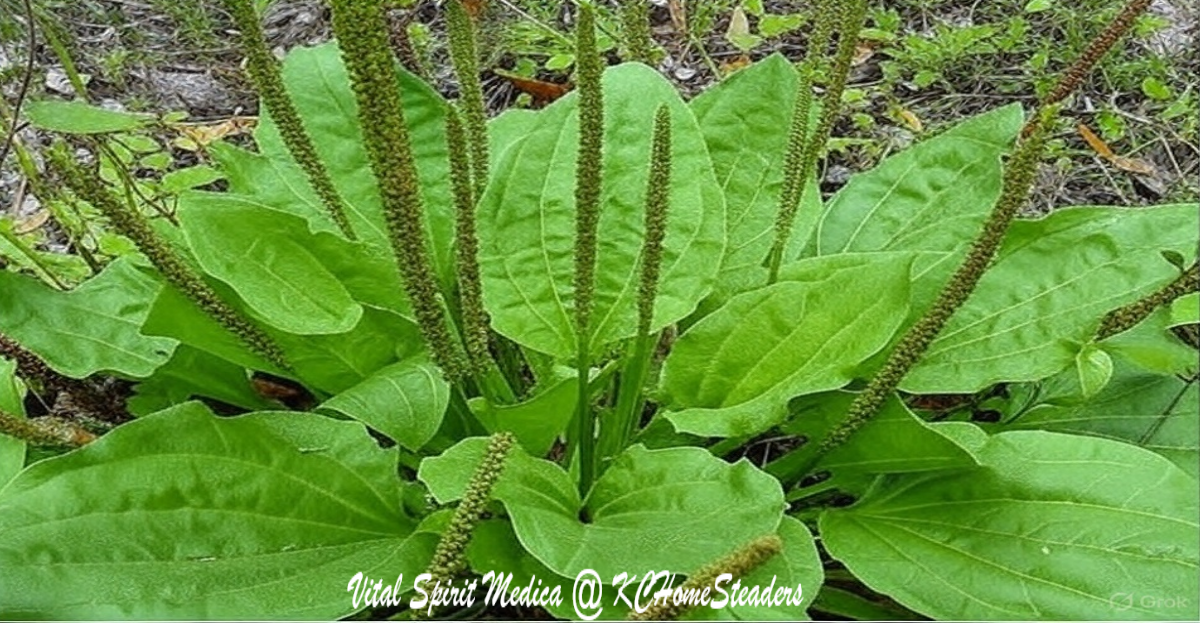
Plantain (Plantago major)
MODERN MEDICAL PROPERTIES AND USES… CULTURAL USES AND BACKGROUND… PRACTICAL AND BEGINNER’S ESSENTIALS…SPIRITUAL AND ESOTERIC… SOURCES AND ADDITIONAL RANDOM INFORMATION


MODERN MEDICAL PROPERTIES AND USES
PART ONE: Plantain (Plantago major)
PLANTAIN PART ONE OVERVIEW
Plantain (Plantago major), commonly known as broadleaf plantain, great plantain, or waybread, is a perennial herb from the Plantaginaceae family, revered for centuries across cultures for its remarkable medicinal properties and versatility. Native to Europe and parts of Asia, it has spread globally, thriving in temperate and subtropical regions, often in disturbed soils like roadsides and lawns. Its broad, oval leaves and inconspicuous greenish-brown flowers belie its potent healing capabilities, which have been documented from ancient texts to modern scientific studies. Plantain’s significance spans traditional medicine, culinary uses, and spiritual practices, embodying a bridge between humanity’s ancestral wisdom and contemporary healing modalities. This comprehensive exploration delves into its modern medical properties, historical context, and global relevance, celebrating its role as a cornerstone of plant-derived medicine.
PLANTAIN PART ONE QUICK FACTS TABLE AND PAGE NAVIGATION TOOL
| Category | Description |
|---|---|
| Pharmacology | Contains bioactive compounds like flavonoids, polysaccharides, and iridoid glycosides with anti-inflammatory, antimicrobial, and wound-healing properties. |
| Pharmacognosy | Studied for its chemical constituents, including mucilage, phenolic acids, and terpenoids, used in traditional and modern herbal remedies globally. |
| Modern Medical Use and Relevance | Widely used for wound healing, respiratory issues, digestive health, and as an antimicrobial agent, validated by clinical studies worldwide. |
| Functional Foods | Leaves and seeds are consumed as nutrient-rich greens or supplements, supporting digestion and immune health in various global cuisines. |
| Molecular Biology | Research explores its genetic and biochemical pathways, particularly for anti-inflammatory and anticancer effects at the cellular level. |
| Chemistry | Rich in polysaccharides, flavonoids, and phenolic compounds, contributing to its therapeutic efficacy in modern and traditional applications. |
| Scientific and Technological Applications | Utilized in pharmaceuticals, cosmetics, and biomaterials, with extracts incorporated into wound dressings and dietary supplements. |
| Current Projects and Future Possibilities | Ongoing studies investigate its potential in drug delivery systems, cancer therapy, and sustainable agriculture, with promising global applications. |
| Culinary (and History) | Historically used as a nutritious edible green, with leaves and seeds featured in salads, soups, and traditional recipes across cultures. |
| Literary Mentions | Referenced in ancient texts like “The Canon of Medicine” and Shakespeare’s “Romeo and Juliet,” highlighting its enduring medicinal significance. |
| SUMMARY OF PART ONE | |
| PART TWO: QUICK FACTS TABLE | |
| PART THREE: QUICK FACTS TABLE | |
| PART FOUR QUICK FACTS TABLE | |
| SOURCES AND ADDITIONAL INFORMATION |
Pharmacology
- Bioactive Compounds: Plantago major contains a diverse array of bioactive compounds, including flavonoids (e.g., luteolin, apigenin), polysaccharides (e.g., arabinoxylans), iridoid glycosides (e.g., aucubin, catalpol), terpenoids, phenolic acid derivatives (e.g., caffeic acid), and alkaloids, which contribute to its therapeutic effects.
- Anti-inflammatory Effects: Studies demonstrate that plantain extracts reduce inflammation markers in conditions like liver injury and oral mucositis, attributed to flavonoids and phenolic compounds.
- Antimicrobial Properties: Exhibits antibacterial activity against pathogens like Salmonella typhimurium and Staphylococcus aureus, and antifungal effects against Candida albicans, supporting its use in infection control.
- Wound Healing: The presence of allantoin and mucilage promotes tissue regeneration and soothes wounds, validated in clinical trials for burn wound healing.
- Antioxidant Activity: High levels of antioxidants, such as flavonoids and phenolic acids, neutralize free radicals, protecting against oxidative stress-related diseases.
- Immunomodulatory Effects: Polysaccharides enhance immune response by stimulating interferon secretion and cellular immunity, showing potential in antiviral applications.
- Antiviral Potential: Phenolic compounds like caffeic acid derivatives exhibit antiviral activity, particularly against viral hepatitis and influenza, as noted in traditional Chinese medicine.
- Gastrointestinal Benefits: Psyllium, derived from plantain seeds, acts as a bulk laxative, aiding in constipation, diarrhea, and irritable bowel syndrome management.
- Analgesic Properties: Extracts provide pain relief, historically used for headaches, toothaches, and menstrual pain, with modern studies supporting antinociceptive effects.
- Anticancer Potential: Preliminary studies indicate that plantain seed extracts may inhibit cancer cell growth, particularly in liver and oral cancers, warranting further research.
Pharmacognosy
- Plant Parts Used: Leaves, seeds, and roots are utilized, with leaves rich in mucilage and seeds high in psyllium for medicinal and nutritional purposes.
- Chemical Profiling: Advanced techniques like high-performance liquid chromatography (HPLC) and liquid chromatography–electrospray tandem mass spectrometry (LC-ESI-MS/MS) identify key constituents like plantamajoside and verbascoside.
- Traditional Knowledge Integration: Pharmacognostic studies draw from Traditional Persian Medicine (TPM), Ayurveda, and Chinese medicine, validating historical uses through chemical analysis.
- Global Distribution and Harvesting: Plantago major’s widespread availability in Europe, Asia, and the Americas supports its use in diverse herbal traditions, with sustainable harvesting practices emphasized.
- Standardized Extracts: Modern pharmacognosy focuses on standardizing plantain extracts for consistent therapeutic outcomes, particularly for wound healing and anti-inflammatory applications.
- Mucilage Properties: The seed’s mucilaginous coating aids in drug delivery and gastrointestinal therapies, studied for its gel-forming capabilities.
- Ethnobotanical Validation: Research confirms traditional uses, such as treating respiratory and digestive disorders, through phytochemical analysis of active compounds.
- Quality Control: Studies emphasize quality control in plantain-based products to ensure safety and efficacy, particularly in herbal supplements.
- Toxicology Studies: Plantain is generally safe, with minimal adverse effects when used appropriately, though caution is advised during pregnancy due to limited data.
- Bioavailability: Research explores how plantain’s bioactive compounds are absorbed and metabolized, enhancing their application in modern therapies.
Modern Medical Use and Relevance
- Wound Healing: Clinical trials, such as a 2022 case-control study, show Plantago major ointment (10%) outperforms silver sulfadiazine in healing second-degree burns, reducing wound size by 86.85% after two weeks.
- Respiratory Health: Used globally for chronic bronchitis, asthma, and coughs, with plantain tea soothing respiratory inflammation and acting as an expectorant.
- Gastrointestinal Disorders: Psyllium is a standard treatment for constipation, irritable bowel syndrome, and diarrhea, supported by clinical evidence for its bulk-forming and mucosa-protecting properties.
- Oral Health: Plantain syrup reduces radiation-induced oral mucositis in head and neck cancer patients, as shown in a 2020 randomized trial, improving quality of life.
- Nonalcoholic Fatty Liver Disease: A 2021 clinical trial demonstrated that plantain seed supplementation improves liver enzyme levels in patients with nonalcoholic fatty liver disease.
- Antimicrobial Applications: Hydroalcoholic extracts show significant activity against oral pathogens like Streptococcus mutans and Fusobacterium nucleatum, supporting its use in dental care.
- Menstrual Health: Plantain syrup effectively reduces heavy menstrual bleeding, as evidenced by a 2020 triple-blind clinical trial, offering a natural alternative to hormonal treatments.
- Dermatological Uses: Applied topically for eczema, dermatitis, and insect bites, plantain’s anti-inflammatory and antimicrobial properties soothe skin irritations.
- Cardiovascular Health: Plantain’s cholesterol-lowering effects, attributed to polyphenolic compounds, enhance fecal bile acid elimination, supporting hyperlipidemia management.
- Global Adoption: Recognized in pharmacopoeias worldwide, including Germany’s Commission E, for treating colds, skin inflammations, and gastrointestinal issues, affirming its evidence-based credibility.
Functional Foods
- Nutritional Content: Plantain leaves and seeds are rich in vitamins A, B, C, and K, calcium, fiber, and antioxidants, making them a nutrient-dense addition to diets.
- Edible Leaves: Consumed raw or cooked in salads, soups, and stir-fries in Europe, Asia, and Indigenous American cuisines, valued for their mild flavor and health benefits.
- Seed Flour: Ground plantain seeds are used as a gluten-free flour alternative in baking, particularly in India and South America.
- Psyllium Supplements: Widely marketed as a dietary fiber supplement (e.g., Metamucil), psyllium from plantain seeds supports digestive health and is a staple in functional food markets.
- Traditional Diets: In Turkey, plantain leaves are incorporated into soups and salads, while in Japan, they are used in herbal teas for detoxification.
- Prebiotic Potential: Polysaccharides in plantain seeds promote gut microbiota health, acting as a prebiotic in modern functional food formulations.
- Global Culinary Use: Featured in Indigenous diets, such as the Chumash in California, where plantain was consumed as a green since 6500 BCE.
- Smoothie Additives: Fresh or dried plantain leaves are blended into smoothies in Western health food trends for their nutrient density and detoxifying effects.
- Food Fortification: Plantain extracts are added to fortified foods, such as energy bars and health drinks, to enhance nutritional profiles in Europe and North America.
- Sustainability: Its widespread availability and resilience make plantain a sustainable functional food source, supporting food security in developing regions.
Molecular Biology
- Gene Expression Studies: Research investigates how plantain’s bioactive compounds influence gene expression related to inflammation and immune response, particularly NF-κB pathways.
- Anticancer Mechanisms: Plantain extracts downregulate pro-inflammatory cytokines and inhibit cancer cell proliferation in vitro, with studies focusing on liver and oral cancer cells.
- Cellular Regeneration: Allantoin in plantain promotes fibroblast proliferation, accelerating wound healing at the cellular level, as confirmed by in vivo studies.
- Antioxidant Pathways: Flavonoids activate antioxidant enzymes like superoxide dismutase, protecting cells from oxidative damage, as studied in rat models.
- Antiviral Activity: Phenolic compounds enhance interferon production, strengthening cellular immunity against viral infections, as explored in Chinese medicine research.
- Gut Microbiota Modulation: Polysaccharides influence gut microbiota composition, promoting beneficial bacteria, with molecular studies ongoing in probiotic research.
- Epigenetic Effects: Preliminary research suggests plantain compounds may modulate epigenetic markers, offering potential in chronic disease prevention.
- Protein Interactions: Plantamajoside interacts with cellular proteins to reduce inflammation, studied through proteomic analysis for therapeutic applications.
- Apoptosis Induction: Plantain seed extracts induce apoptosis in cancer cells, with molecular studies identifying pathways like caspase activation.
- Genomic Research: Efforts to sequence Plantago major’s genome aim to identify genes responsible for bioactive compound synthesis, supporting biotechnological advancements.
Chemistry
- Polysaccharides: Arabinoxylans and mucilage are key components, providing gel-forming properties for gastrointestinal and topical applications.
- Flavonoids: Luteolin and apigenin contribute to antioxidant and anti-inflammatory effects, quantified through advanced chromatographic techniques.
- Phenolic Acids: Caffeic acid and chlorogenic acid exhibit antiviral and antimicrobial properties, critical for plantain’s therapeutic versatility.
- Iridoid Glycosides: Aucubin and catalpol protect against oxidative stress and support liver health, validated through chemical profiling.
- Terpenoids: Contribute to anti-inflammatory and analgesic effects, with ongoing research to isolate specific terpenoid structures.
- Alkaloids: Present in trace amounts, alkaloids enhance plantain’s antimicrobial and analgesic properties, though less studied.
- Fatty Acids: Saturated and unsaturated fatty acids support skin health and are used in cosmetic formulations.
- Vitamins and Minerals: High levels of vitamins A, C, and K, and minerals like calcium and zinc, enhance its nutritional and medicinal value.
- Verbascoside: A phenylpropanoid glycoside with antifungal and anti-inflammatory properties, identified in seed extracts.
- Chemical Stability: Plantain’s compounds remain stable in various extraction methods (e.g., methanolic, aqueous), ensuring efficacy in diverse preparations.
Scientific and Technological Applications
- Pharmaceutical Formulations: Plantain extracts are incorporated into ointments, syrups, and capsules for wound healing, respiratory, and digestive therapies.
- Cosmetics: Used in lotions and creams for eczema and dermatitis due to its soothing and anti-inflammatory properties.
- Drug Delivery Systems: Mucilage from plantain seeds is explored as a natural polymer for controlled-release drug delivery in pharmaceutical research.
- Wound Dressings: Plantain-based gels and films enhance burn wound healing, with clinical trials showing faster recovery compared to conventional treatments.
- Nutraceuticals: Psyllium is a key ingredient in dietary supplements for cholesterol management and digestive health, widely available globally.
- Bioremediation: Plantain’s ability to accumulate heavy metals makes it a candidate for phytoremediation in polluted soils.
- Food Additives: Polysaccharides are used as thickeners and stabilizers in food processing, particularly in health-focused products.
- Antimicrobial Coatings: Plantain extracts are tested for use in antimicrobial coatings for medical devices, leveraging their antibacterial properties.
- Nanotechnology: Research explores plantain-derived nanoparticles for targeted drug delivery, enhancing the bioavailability of bioactive compounds.
- Biotechnology: Genetic engineering of Plantago major aims to enhance the production of therapeutic compounds like aucubin for industrial applications.
Current Projects and Future Possibilities
- Clinical Trials: Ongoing trials in Iran and Turkey investigate plantain’s efficacy in treating ulcerative colitis and burn wounds, with promising results.
- Anticancer Research: Studies in Asia explore plantain’s potential in inhibiting liver and oral cancer cell growth, focusing on molecular mechanisms.
- Sustainable Agriculture: Plantain’s resilience in compacted soils is studied for use in regenerative farming to improve soil health and biodiversity.
- Drug Delivery Innovations: Research in Europe investigates plantain mucilage as a natural polymer for advanced drug delivery systems, aiming for eco-friendly pharmaceuticals.
- Cosmetic Industry Growth: Plantain extracts are being developed for anti-aging and skin-soothing products, with clinical trials underway in France.
- Antiviral Applications: Chinese researchers are exploring plantain’s role in combating viral infections, building on its traditional use in hepatitis treatment.
- Genomic Studies: Projects in the U.S. aim to map Plantago major’s genome to enhance production of bioactive compounds for medical and industrial use.
- Functional Food Development: Efforts in South America focus on incorporating plantain into fortified foods to address nutritional deficiencies in rural communities.
- Phytoremediation Potential: Studies in India explore plantain’s ability to remove heavy metals from contaminated soils, supporting environmental sustainability.
- Global Standardization: International collaborations aim to standardize plantain-based products for consistent quality in global markets, supported by pharmacopoeias.
Culinary (and History)
- Ancient Diets: Used by the Chumash people in California since 6500 BCE as a nutrient-rich green, consumed raw or cooked.
- European Traditions: Medieval Europeans included plantain leaves in salads and stews, valued for their nutritional and medicinal properties.
- Asian Culinary Use: In Japan and China, plantain leaves are brewed into teas or added to soups for detoxification and digestive health.
- Indigenous American Practices: Native Americans used plantain seeds as a flour source and leaves as a potherb, integrating it into daily diets.
- Middle Eastern Recipes: In Iran, plantain leaves are used in traditional dishes like soups and as a garnish, reflecting its role in Persian cuisine.
- Modern Health Trends: Incorporated into smoothies, energy bars, and gluten-free baking in Western diets for its fiber and vitamin content.
- Historical Texts: Mentioned in Dioscorides’ “De Materia Medica” (1st century CE) as a food and medicine, highlighting its dual role in ancient diets.
- Viking Use: The Vølsunga Saga references plantain leaves in Viking diets, often combined with honey for medicinal meals.
- Global Spread: Plantain’s culinary use spread with European colonization, earning names like “Englishman’s foot” among Indigenous groups.
- Nutritional Versatility: Its high fiber and vitamin content make it a staple in sustainable diets, particularly in regions with limited food resources.
Literary Mentions
- Shakespeare’s “Romeo and Juliet”: Plantain is referenced in Act I, Scene II (1592–1609), where Romeo notes its efficacy for healing a “broken shin,” highlighting its medicinal fame.
- Avicenna’s “The Canon of Medicine”: The 10th-century Persian text describes plantain’s use for inflammation, bleeding, and wounds, foundational to Traditional Persian Medicine.
- Ibn El Beithar: This 12th–13th century Islamic scholar documented plantain’s wound-healing properties, drawing from Greek medicine.
- Henrik Harpestreng’s “Liber Harbarum”: The 13th-century Danish text praises plantain as a universal healer, mixed with honey or butter for wounds and organ health.
- Chinese Materia Medica: Plantain is noted in ancient Chinese texts for treating viral diseases, from colds to hepatitis, reflecting its long-standing use.
- Indian Materia Medica: Describes plantain for insect bites, diarrhea, and blood purification, integral to Ayurvedic traditions.
- Vølsunga Saga: Viking lore mentions plantain for wound healing, emphasizing its role in Norse herbalism.
- Ethnobotanical Records: North American Indigenous texts, like those of the Anishinaabe, name plantain as “ceca’gûski’bûge sînk,” used for healing and food.
- Modern Literature: Featured in contemporary herbalism books, such as Grieve’s “A Modern Herbal” (1971), for its medicinal versatility.
- Poetic References: Celebrated in poetry across cultures, from ancient Chinese legends to European folklore, for its healing and resilient nature.
Summary of Part One
Plantago major stands as a testament to the enduring power of plant-derived medicine, seamlessly weaving together ancient wisdom and modern science. Its pharmacological richness, driven by compounds like flavonoids, polysaccharides, and iridoid glycosides, underpins its global use in treating wounds, respiratory issues, digestive disorders, and infections. Pharmacognostic studies validate its historical applications, from Traditional Persian Medicine to Indigenous American practices, while modern clinical trials confirm its efficacy in burn healing, oral health, and chronic disease management. As a functional food, plantain’s nutrient-dense leaves and seeds enrich diets worldwide, from ancient Chumash meals to contemporary health trends. Its molecular biology reveals promising anticancer and immunomodulatory potential, while its chemical profile supports diverse applications in pharmaceuticals, cosmetics, and bioremediation. Current projects explore innovative uses, from drug delivery systems to sustainable agriculture, signaling a bright future for this humble herb. Literary mentions, from Shakespeare to ancient materia medica, underscore its timeless significance. Far from pseudoscience, Plantago major embodies a credible, evidence-based cornerstone of healing, reconnecting humanity with its ancestral roots and natural resilience.


CULTURAL USES AND BACKGROUND
PART TWO: Plantain (Plantago major)
PART TWO PLANTAIN OVERVIEW
Plantain (Plantago major), a humble yet ubiquitous herb, has woven itself into the cultural and medicinal fabric of societies across the globe for millennia. Revered as a sacred healer in diverse traditions, from the shamanic rituals of the Amazon to the scholarly texts of ancient Egypt, plantain’s versatility and resilience have made it a cornerstone of herbal medicine and cultural practices. Its broad leaves and unassuming appearance belie a profound legacy, documented in archaeological records, sacred texts, and oral traditions. Part Two explores the rich tapestry of plantain’s cultural uses and historical significance, spanning ancient civilizations, Indigenous knowledge, and esoteric folklore. By tracing its role across continents and belief systems, this section celebrates plantain’s enduring presence in humanity’s quest for healing and connection with the natural world, free from the lens of modern pharmaceutical bias.
PLANTAIN PART TWO QUICK FACTS TABLE AND PAGE NAVIGATION TOOL
| Category | Description |
|---|---|
| Archeology | Archaeological evidence shows plantain use in Neolithic Europe and ancient American sites, dating back to 6500 BCE. |
| Amazonian Shamans | Amazonian shamans use plantain in rituals for wound healing and spiritual cleansing, often in poultices and teas. |
| Mesoamerican Traditions | Mesoamerican cultures like the Maya used plantain for digestive and skin ailments, integrating it into sacred healing practices. |
| Traditional Chinese Medicine (TCM) | Known as “Che Qian Zi,” plantain is used in TCM for urinary, liver, and respiratory disorders, documented since ancient times. |
| Ayurveda (Indian Subcontinent) | Called “Isabgol” in Ayurveda, plantain seeds treat digestive issues and inflammation, valued for their cooling properties. |
| Ancient Egyptian Medicine | Plantain was used in ancient Egypt for wound healing and inflammation, as noted in the Ebers Papyrus (1550 BCE). |
| European Herbalism (Druids, Medieval Monks) | Druids and monks revered plantain as a healing herb for wounds, infections, and spiritual protection, documented in medieval texts. |
| Traditional Ecological Knowledge/Indigenous | Indigenous groups globally, from Native Americans to Aboriginal Australians, used plantain for food and medicine. |
| Folklore Medicinal | Folklore attributes plantain with powers to heal wounds, ward off evil, and promote fertility across cultures. |
| PLANTAIN PART TWO SUMMARY | |
| PART ONE QUICK FACTS TABLE | |
| PART THREE QUICK FACTS TABLE | |
| PART FOUR QUICK FACTS TABLE | |
| SOURCES AND ADDITIONAL RANDOM INFORMATION |
Archeology
- Neolithic Evidence: Plantain seeds found in Neolithic sites in Europe, such as the 5th-millennium BCE settlements in Switzerland, suggest its use as a food and medicinal plant.
- North American Sites: Archaeological digs in California reveal plantain seeds in Chumash settlements (6500 BCE), indicating its role in Indigenous diets and healing.
- Ancient Trade Routes: Pollen analysis from ancient trade routes in Mesopotamia shows Plantain’s presence, suggesting it was traded for medicinal purposes by 3000 BCE.
- Mummified Remains: Plantain leaves were found in burial sites in ancient Peru, hinting at their use in ritualistic or medicinal preparations around 1000 BCE.
- European Burial Sites: Excavations of Iron Age sites in Britain (800 BCE) uncover plantain residues in ceramic vessels, likely used for poultices or teas.
- Mesoamerican Artifacts: Maya pottery from 200 CE depicts plantain-like leaves, suggesting its integration into healing rituals.
- Pollen Records: Pollen from Plantago major in Egyptian tombs (circa 2000 BCE) indicates its use in medicinal or ceremonial contexts.
- Ancient Tools: Stone tools in Native American sites show traces of plantain, likely used for grinding seeds into flour or preparing medicinal pastes.
- Bronze Age Europe: Plantain remnants in Bronze Age settlements (1500 BCE) in Germany suggest its use in early herbal remedies.
- Preserved Texts: Cuneiform tablets from Mesopotamia (circa 1800 BCE) mention a plant resembling plantain for treating wounds, linking it to early pharmacopoeias.
Amazonian Shamans
- Ritualistic Healing: Amazonian shamans, particularly in Peru and Brazil, use plantain leaves in poultices to treat wounds, infections, and insect bites, believing it draws out toxins.
- Spiritual Cleansing: Plantain is burned or brewed into teas during shamanic rituals to cleanse negative energies and promote spiritual balance.
- Ayahuasca Adjunct: In some Amazonian traditions, plantain is used to soothe digestive upset caused by ayahuasca ceremonies, reflecting its practical and spiritual roles.
- Poultice Preparations: Leaves are mashed with other herbs, like yarrow, to create poultices for snakebites, a practice passed down through oral traditions.
- Shamanic Songs: Plantain is referenced in icaros (healing songs) as a plant ally, believed to connect the healer to ancestral spirits.
- Wound Healing: Shamans apply plantain juice to cuts and burns, attributing its efficacy to its connection with the earth’s healing energy.
- Childbirth Support: Plantain leaves are used in postpartum care to reduce inflammation and promote healing, especially among Shipibo-Conibo tribes.
- Ritual Offerings: Plantain is offered to forest spirits in ceremonies, symbolizing gratitude for its healing properties.
- Anti-inflammatory Teas: Brewed plantain teas are consumed during rituals to reduce inflammation and enhance spiritual clarity.
- Cultural Transmission: Knowledge of plantain’s uses is preserved through oral teachings, emphasizing its sacred role in Amazonian ethnobotany.
Mesoamerican Traditions
- Maya Medicine: The Maya used plantain leaves for digestive disorders and skin infections, as documented in codices like the Madrid Codex (circa 1400 CE).
- Aztec Practices: Known as “tlapatl” in Nahuatl, plantain was applied topically for wounds and ulcers, as noted in the Florentine Codex (16th century).
- Ritual Healing: Plantain was incorporated into Mesoamerican healing rituals, often combined with maize or cacao for spiritual and physical cleansing.
- Childbirth Remedies: Mesoamerican midwives used plantain poultices to ease postpartum pain and prevent infections, a practice still alive in rural Mexico.
- Digestive Tonic: Plantain seeds were ground into a paste or tea to treat diarrhea and dysentery, valued for their mucilaginous properties.
- Sacred Symbolism: Plantain’s resilience was seen as a symbol of endurance, integrated into rituals honoring agricultural deities.
- Wound Care: Crushed leaves were applied to battle wounds by Aztec warriors, believed to speed recovery and reduce scarring.
- Herbal Baths: Plantain was used in steam baths to treat respiratory ailments, a practice recorded in Maya ethnobotanical texts.
- Trade and Exchange: Plantain was traded across Mesoamerican markets, valued for its versatility in healing and nutrition.
- Modern Continuity: Indigenous communities in Guatemala continue to use plantain for skin ailments, preserving ancient Mesoamerican knowledge.
Traditional Chinese Medicine (TCM)
- Historical Use: Known as “Che Qian Zi” (plantain seed), it has been used since the Han Dynasty (206 BCE–220 CE) for urinary and liver disorders.
- Cooling Properties: In TCM, plantain is classified as a cooling herb, used to clear heat, reduce inflammation, and promote urination.
- Respiratory Health: Plantain tea treats coughs, bronchitis, and asthma by clearing lung heat, as documented in the “Shennong Bencao Jing” (200 CE).
- Liver Support: Used to treat liver-related issues like jaundice and hepatitis, leveraging its diuretic and detoxifying effects.
- Digestive Aid: Plantain seeds are prescribed for diarrhea and dysentery, valued for their mucilaginous coating that soothes the gut.
- Ophthalmic Uses: TCM practitioners use plantain to treat eye infections and redness, often in combination with chrysanthemum.
- Formulations: Found in TCM formulas like “Ba Zheng San” for urinary tract infections, highlighting its diuretic properties.
- Modern Integration: Plantain is included in contemporary TCM pharmacopoeias, with standardized extracts used in clinical settings.
- Herbal Combinations: Often paired with herbs like dandelion or licorice to enhance its detoxifying and anti-inflammatory effects.
- Cultural Significance: Plantain’s resilience is seen as a metaphor for balance in TCM philosophy, aligning with yin-yang principles.
Ayurveda (Indian Subcontinent)
- Isabgol Use: Plantain seeds, known as “Isabgol,” are a staple in Ayurveda for treating constipation, diarrhea, and irritable bowel syndrome.
- Cooling Effect: Classified as a cooling herb, plantain balances pitta dosha, reducing inflammation and heat-related conditions.
- Wound Healing: Leaf pastes are applied to burns, ulcers, and insect bites, valued for their soothing and regenerative properties.
- Respiratory Relief: Plantain decoctions treat coughs and asthma, often combined with tulsi or ginger in Ayurvedic formulations.
- Blood Purification: Used to detoxify the blood and treat skin disorders like eczema, as noted in the “Charaka Samhita” (circa 300 BCE).
- Digestive Tonic: Isabgol is consumed with warm water or milk to regulate digestion and promote gut health.
- Oral Health: Plantain leaves are chewed or used as a gargle to treat mouth ulcers and gum inflammation.
- Women’s Health: Applied topically or consumed to reduce heavy menstrual bleeding, aligning with Ayurvedic gynecological practices.
- Spiritual Role: Plantain is used in rituals to promote purity and healing, often placed on altars during Ayurvedic ceremonies.
- Modern Ayurvedic Products: Isabgol is widely marketed as a natural laxative, with brands like Dabur incorporating it into supplements.
Ancient Egyptian Medicine
- Ebers Papyrus: The Ebers Papyrus (1550 BCE) documents plantain for wound healing and inflammation, applied as poultices or teas.
- Wound Care: Crushed leaves were used to treat battle wounds and burns, valued for their antiseptic and soothing properties.
- Anti-inflammatory Uses: Plantain was combined with honey or resins to reduce swelling and treat infections, as noted in medical papyri.
- Ritual Healing: Used in temple rituals to cleanse wounds of priests or pharaohs, symbolizing purification and divine healing.
- Eye Treatments: Plantain juice was applied to treat eye infections, a practice recorded in the Kahun Papyrus (circa 1850 BCE).
- Digestive Remedies: Seeds were consumed to relieve constipation and soothe stomach ailments, often mixed with barley.
- Mummification: Plantain leaves were used in mummification processes to preserve tissues, leveraging their antimicrobial properties.
- Herbal Combinations: Paired with lotus or myrrh in Egyptian medicine to enhance its healing effects.
- Cultural Symbolism: Plantain’s resilience was associated with the god Osiris, symbolizing regeneration and eternal life.
- Archaeological Evidence: Plantain remnants found in Egyptian tombs suggest its use in both medicinal and ceremonial contexts.
European Herbalism (Druids, Medieval Monks)
- Druidic Practices: Druids in ancient Britain revered plantain as a sacred herb, using it in poultices for wounds and in rituals for protection.
- Medieval Texts: Henrik Harpestreng’s “Liber Herbarum” (13th century) describes plantain for wounds, fevers, and organ health, mixed with honey or butter.
- Monastic Gardens: Medieval monks cultivated plantain in monastery gardens, using it for infections, respiratory issues, and skin conditions.
- Wound Healing: Plantain leaves were applied to battle wounds by knights, as noted in medieval herbals like “Bald’s Leechbook” (9th century).
- Spiritual Significance: Used in Christian rituals to symbolize humility and healing, often placed on altars or carried as amulets.
- Respiratory Remedies: Plantain teas were prescribed for coughs and colds, a practice documented in Hildegard of Bingen’s writings (12th century).
- Anti-inflammatory Use: Crushed leaves treated swelling and bruises, valued for their cooling and soothing effects.
- Culinary Integration: Monks incorporated plantain into soups and tonics, combining nutrition with medicinal benefits.
- Folklore Protection: Plantain was hung over doorways to ward off evil spirits, a practice rooted in Celtic traditions.
- Herbal Legacy: Its prominence in European herbalism influenced modern pharmacopoeias, such as Germany’s Commission E.
Traditional Ecological Knowledge/Indigenous
- Native American Uses: The Anishinaabe called plantain “ceca’gûski’bûge sînk,” using leaves for wounds and seeds as food, as documented in oral traditions.
- Australian Aboriginal Practices: Plantain was used by Aboriginal groups for skin infections and digestive issues, often applied as a poultice.
- Chumash Knowledge: California’s Chumash people consumed plantain leaves as greens and used them for burns and insect bites since 6500 BCE.
- Inca Traditions: In Peru, plantain was used for wound healing and as a food source, integrated into Andean agricultural practices.
- Oral Traditions: Indigenous groups globally passed down plantain’s uses through storytelling, emphasizing its role in survival and healing.
- Ecological Role: Plantain’s ability to thrive in disturbed soils was valued by Indigenous farmers, who used it to indicate fertile land.
- Spiritual Practices: Native American shamans used plantain in smudging rituals to purify spaces and promote healing.
- Food Source: Seeds were ground into flour by tribes like the Navajo, providing a nutrient-rich staple in times of scarcity.
- Sustainable Harvesting: Indigenous knowledge emphasizes sustainable harvesting of plantain, ensuring its availability for future generations.
- Global Influence: Indigenous practices informed European settlers’ use of plantain, earning it names like “Englishman’s foot” in North America.
Folklore Medicinal
- Wound Healing Lore: European folklore describes plantain as “soldier’s herb,” used to heal wounds and stop bleeding, often carried by travelers.
- Protection Rituals: In Celtic traditions, plantain was hung over doorways or worn as an amulet to ward off evil spirits and misfortune.
- Fertility Beliefs: Slavic folklore used plantain in rituals to promote fertility, with leaves placed under beds or brewed into teas.
- Love and Healing: In African traditions, plantain was used in healing ceremonies to restore harmony, symbolizing love and resilience.
- Fairy Associations: British folklore linked plantain to fairies, believing it grew where fairies danced, enhancing its mystical reputation.
- Respiratory Remedies: Folklore across cultures prescribed plantain tea for coughs, believed to clear “evil humors” from the lungs.
- Pain Relief: In Native American lore, plantain leaves were chewed to relieve toothaches, a practice still used in rural communities.
- Dream Work: Some Indigenous traditions used plantain in rituals to enhance dreams and connect with ancestral spirits.
- Agricultural Symbolism: Plantain’s resilience led to its use in rituals for bountiful harvests, particularly in European and African traditions.
- Mythological Ties: In Norse mythology, plantain was associated with Frigg, goddess of healing, used in rituals for protection and recovery.
PART TWO PLANTAIN SUMMARY
Plantago major’s cultural and historical significance spans continents and millennia, embodying humanity’s deep connection to nature’s healing gifts. Archaeological evidence traces its use to Neolithic Europe and ancient American settlements, while Amazonian shamans and Mesoamerican healers revered it for physical and spiritual restoration. In Traditional Chinese Medicine and Ayurveda, plantain’s cooling and detoxifying properties address a range of ailments, from liver disorders to digestive issues, rooted in ancient texts like the “Shennong Bencao Jing” and “Charaka Samhita.” Ancient Egyptians valued its wound-healing prowess, as documented in the Ebers Papyrus, while European Druids and monks integrated it into sacred and medicinal practices. Indigenous knowledge, from the Chumash to Aboriginal Australians, highlights plantain’s role as both food and medicine, preserved through oral traditions. Folklore imbues plantain with mystical qualities, from warding off evil to promoting fertility, enriching its legacy. This global tapestry of uses underscores plantain’s timeless role as a healer, uniting diverse cultures in a shared reverence for its resilience and restorative power, a legacy that continues to inspire and heal today.


PRACTICAL AND BEGINNER’S ESSENTIALS
PART THREE: Plantain (Plantago major)
PART THREE PLANTAIN OVERVIEW
Plantain (Plantago major) is an accessible and versatile herb, making it an ideal starting point for beginners in herbalism and wildcrafting. Its widespread availability, distinct appearance, and potent medicinal properties have earned it a place in traditional and modern healing practices worldwide. Part Three provides a practical guide for novices, offering essential knowledge on identifying, harvesting, and preparing plantain, while exploring its etymology, common names, and cultural significance. From wildcrafting tips to safe harvesting methods and simple medicinal recipes, this section empowers beginners to confidently engage with plantain’s healing potential. By celebrating its accessibility and rich history, Part Three bridges ancient wisdom with practical applications, ensuring that anyone can harness plantain’s benefits while respecting its ecological and cultural legacy.
PLANTAIN PART THREE QUICK FACTS TABLE AND NAVIGATION TOOL
| Category | Description |
|---|---|
| Wildcrafting | Plantain is easily foraged in temperate regions, thriving in disturbed soils like lawns and roadsides. |
| Easy Plant Identification and Regional Information | Broad, oval leaves with parallel veins and small flower spikes make plantain recognizable globally. |
| Plants to Watch Out For (Look-Alikes) | Avoid confusion with toxic look-alikes like foxglove or non-medicinal plants like English plantain. |
| Medicinal Harvesting Instructions | Harvest young leaves and seeds in spring or summer, ensuring sustainable practices to preserve plant populations. |
| Tincture and Decoction | Simple tinctures and decoctions from leaves and seeds treat wounds, inflammation, and digestive issues. |
| Etymology and Common Names (History) | Named from Latin “planta” (sole of foot), reflecting its widespread growth and cultural names like “waybread.” |
| Honorable Mentions | Plantain’s role in ancient texts and folklore highlights its enduring significance in healing traditions. |
| Summary of Part Three | |
| PART ONE: QUICK FACTS TABLE | |
| PART TWO: QUICK FACTS TABLE | |
| PART FOUR: QUICK FACTS TABLE | |
| SOURCES AND ADDITIONAL RANDOM INFORMATION | |
Wildcrafting
- Abundant Availability: Plantago major thrives in disturbed areas like roadsides, lawns, and fields, making it one of the easiest herbs to forage globally.
- Temperate Regions: Found in North America, Europe, Asia, and parts of Australia, it prefers temperate climates but adapts to subtropical zones.
- Sustainable Harvesting: Collect only a small portion of leaves or seeds from each plant to ensure regrowth and ecological balance.
- Best Seasons: Harvest in spring or early summer when leaves are young and tender, avoiding plants exposed to pesticides or pollution.
- Urban Foraging: Common in urban settings, but avoid areas near heavy traffic or chemically treated lawns to ensure safety.
- Tools Needed: Use clean scissors or a knife to cut leaves, and carry a cloth bag to store fresh plant material during foraging.
- Ethical Practices: Seek permission if foraging on private land and avoid overharvesting to preserve plant populations for wildlife and future use.
- Drying for Storage: Dry leaves in a well-ventilated area away from direct sunlight to preserve medicinal properties for long-term use.
- Seed Collection: Gather mature seeds in late summer by shaking flower spikes into a container, ideal for culinary or medicinal use.
- Community Knowledge: Engage with local herbalists or Indigenous groups to learn regional wildcrafting practices and respect traditional ecological knowledge.
Easy Plant Identification and Regional Information
- Distinct Leaves: Broad, oval leaves (3–6 inches long) with 5–9 parallel veins and a slightly waxy texture are key identifiers.
- Flower Spikes: Produces slender, greenish-brown flower spikes (4–12 inches tall) with tiny, tightly packed flowers, visible from summer to fall.
- Growth Habit: Forms a low-growing rosette, often found in compacted or disturbed soils like pathways or lawns.
- Regional Variations: In North America, known as “common plantain”; in Europe, called “great plantain”; in Asia, referred to as “Che Qian Cao.”
- Global Distribution: Widespread in temperate regions, including North America, Europe, Asia, and Australia, with naturalized populations in South America.
- Seasonal Indicators: Leaves are most vibrant in spring; seeds mature in late summer, aiding in identification timing.
- Habitat Preferences: Thrives in full sun to partial shade, often in grassy areas, gardens, or near water sources.
- Texture and Smell: Leaves are slightly chewy when fresh, with a mild, earthy scent when crushed, aiding identification.
- Regional Names: Called “Englishman’s foot” by Native Americans due to its spread with European settlers, or “white man’s footprint” in Australia.
- Beginner Tip: Photograph plants and compare with field guides or apps like PlantNet to confirm identification before harvesting.
Plants to Watch Out For (Look-Alikes)
- Foxglove (Digitalis purpurea): Has similar rosette leaves but with a hairy texture and purple, bell-shaped flowers; toxic and potentially fatal if ingested.
- English Plantain (Plantago lanceolata): Narrower, lance-shaped leaves; edible but less medicinally potent than Plantago major.
- Broadleaf Dock (Rumex obtusifolius): Similar broad leaves but with a reddish stem and coarser texture; mildly toxic in large quantities.
- Shepherd’s Purse (Capsella bursa-pastoris): Forms a rosette but has lobed leaves and heart-shaped seed pods; edible but not medicinal like plantain.
- Henbit (Lamium amplexicaule): Rounded leaves resemble plantain but are smaller and have purple flowers; non-toxic but lacks plantain’s medicinal properties.
- Mallow (Malva spp.): Broad, lobed leaves may be confused with plantain; edible but less effective for wound healing.
- Identification Tip: Check for plantain’s parallel leaf veins and lack of hairy or lobed features to distinguish from look-alikes.
- Toxicity Risks: Always confirm plant identity, as some look-alikes like foxglove can cause severe cardiac issues if mistaken for plantain.
- Regional Look-Alikes: In Europe, avoid confusion with plantain’s cousin, Plantago media, which has hairy leaves and less medicinal value.
- Beginner Caution: Use a local field guide or consult an experienced forager to avoid harvesting toxic or non-medicinal plants.
Medicinal Harvesting Instructions
- Optimal Timing: Harvest young leaves in spring or early summer for maximum potency; collect seeds in late summer when flower spikes turn brown.
- Leaf Selection: Choose bright green, unblemished leaves from the outer rosette, avoiding older, yellowing leaves or those near polluted areas.
- Seed Harvesting: Gently shake mature flower spikes into a bag to collect seeds, ensuring some remain for natural reseeding.
- Sustainable Practices: Take no more than 20–30% of leaves from a single plant to allow regrowth and maintain ecosystem health.
- Cleaning Process: Rinse leaves and seeds in clean water to remove dirt or insects, patting dry with a cloth before use or storage.
- Drying Method: Spread leaves or seeds in a single layer on a screen or cloth in a dry, shaded area for 1–2 weeks to preserve medicinal compounds.
- Storage Tips: Store dried plantain in airtight glass jars in a cool, dark place to maintain potency for up to a year.
- Fresh Use: Use fresh leaves immediately for poultices or teas, as they retain higher levels of active compounds like allantoin.
- Tools Required: Use clean scissors or a knife for cutting, and wear gloves if sensitive to plant sap or handling large quantities.
- Safety Note: Avoid harvesting near roadsides or chemically treated areas to prevent contamination; consult local regulations for foraging permissions.
Tincture and Decoction
- Leaf Tincture: Soak 1 cup fresh, chopped plantain leaves in 2 cups high-proof alcohol (e.g., vodka) for 4–6 weeks, shaking daily; strain and store for wound healing or inflammation (10–20 drops daily).
- Seed Tincture: Use 1/2 cup dried plantain seeds in 1 cup alcohol, following the same process; effective for digestive issues (5–10 drops as needed).
- Decoction for Tea: Simmer 1–2 tablespoons dried leaves or seeds in 2 cups water for 10 minutes; strain and drink to soothe coughs or digestive upset.
- Poultice Preparation: Crush fresh leaves into a paste, apply directly to wounds, burns, or insect bites, and cover with a clean cloth for 1–2 hours.
- Infusion Method: Steep 1 tablespoon dried leaves in 1 cup hot water for 10–15 minutes; use as a gargle for sore throats or a wash for skin irritations.
- Dosage Guidelines: For teas, consume 1–2 cups daily; for tinctures, start with low doses (5–10 drops) and consult an herbalist for personalized advice.
- Storage: Store tinctures in dark glass bottles for up to 2 years; keep decoctions refrigerated and use within 48 hours to avoid spoilage.
- Combination Recipes: Blend plantain tincture with calendula for enhanced wound healing or add to chamomile tea for digestive relief.
- Beginner Tip: Label all preparations with the date and ingredients to track potency and ensure safe use.
- Safety Precautions: Avoid internal use in pregnancy or if allergic; test tinctures on skin first to check for sensitivity.
Etymology and Common Names (History)
- Latin Origin: Derived from “planta” (Latin for sole of foot), referencing its broad leaves and tendency to grow in trodden areas.
- Common Name “Plantain”: Evolved from Old French “plantain,” linked to its widespread growth along pathways, as noted in medieval texts.
- Waybread: Anglo-Saxon name meaning “way plant,” reflecting its prevalence along roads and its use as a traveler’s remedy.
- Englishman’s Foot: Native American name, given due to plantain’s spread with European settlers, symbolizing colonization’s ecological impact.
- Che Qian Cao/Zi: Chinese name meaning “before the cart plant,” alluding to its growth in cart tracks and use in Traditional Chinese Medicine.
- Isabgol: Ayur سفید Name for plantain seeds, derived from Persian “isap” (horse) and “gol” (flower), referencing seed shape and medicinal use.
- White Man’s Footprint: Australian Aboriginal name, reflecting its introduction by European settlers and its resilience in new lands.
- Ceca’gûski’bûge sînk: Anishinaabe name, meaning “healing leaf,” highlighting its medicinal significance in Native American traditions.
- Historical Context: Documented in Dioscorides’ “De Materia Medica” (1st century CE) as “plantago,” used for wounds and inflammation.
- Global Names: Known as “rat’s tail” in some European regions for its flower spikes, or “snakeweed” in folklore for treating bites.
Honorable Mentions
- Dioscorides’ “De Materia Medica”: Describes plantain as a remedy for wounds, dysentery, and inflammation, foundational to Western herbalism (1st century CE).
- Shakespeare’s Reference: In “Romeo and Juliet” (1592–1609), plantain is noted for healing a “broken shin,” showcasing its Renaissance fame.
- Ebers Papyrus: Ancient Egyptian text (1550 BCE) lists plantain for wound healing, cementing its role in early medicine.
- Vølsunga Saga: Norse epic references plantain as a healer’s herb, used in Viking wound care and rituals (13th century).
- Anishinaabe Oral Traditions: Stories describe plantain as a gift from the Creator for healing and sustenance, passed down through generations.
- Ayurvedic Texts: The “Charaka Samhita” (300 BCE) praises plantain seeds (Isabgol) for digestive and skin health, integral to Indian medicine.
- Chinese Materia Medica: “Shennong Bencao Jing” (200 CE) documents plantain for urinary and liver issues, a staple in TCM.
- Medieval Herbals: Hildegard of Bingen’s writings (12th century) highlight plantain for respiratory and skin ailments, used by monks.
- Indigenous Lore: Chumash legends describe plantain as a resilient healer, used since 6500 BCE for food and medicine.
- Folklore Tales: European stories depict plantain as a protective herb, hung over doorways to ward off evil spirits.
Summary of Part Three
Plantago major’s accessibility and versatility make it a perfect ally for beginners venturing into the world of herbalism and wildcrafting. Its widespread presence in disturbed soils, from urban lawns to rural pathways, invites novice foragers to connect with nature’s pharmacy. With its unmistakable broad leaves and slender flower spikes, plantain is easy to identify across temperate regions, though caution is needed to avoid toxic look-alikes like foxglove. Simple harvesting techniques and beginner-friendly preparations, such as tinctures, decoctions, and poultices, unlock plantain’s potent healing properties for wounds, inflammation, and digestive issues. Its rich etymology, from “planta” to “Englishman’s foot,” reflects a global legacy woven into ancient texts and Indigenous lore. Honorable mentions in works like Shakespeare’s plays and the Ebers Papyrus underscore its timeless role as a healer. Part Three empowers beginners to embrace plantain’s practical applications while honoring its cultural and ecological significance, fostering a deep connection to the ancient art of herbal healing.
_growing_in_crack_in_sidewalk.JPG)


SPIRITUAL AND ESOTERIC
PART FOUR: Plantain (Plantago major)
PLANTAIN PART FOUR OVERVIEW
Plantain (Plantago major) transcends its physical form as a humble herb, embodying a profound spiritual and esoteric significance across cultures and epochs. Revered as a sacred ally in ancient rituals, mystical practices, and spiritual traditions, plantain’s resilience and healing power resonate with humanity’s deep connection to the earth and cosmos. Part Four explores the herb’s role in spiritual contexts, from biodynamic farming and anthroposophical medicine to its associations with astrology, alchemy, and elemental forces. Through rituals, incantations, and symbolic uses in tarot, Christianity, Hermeticism, and Buddhism, plantain emerges as a bridge between the material and metaphysical, offering healing for body, mind, and spirit. This section celebrates its esoteric legacy, weaving together ancient wisdom, poetic reverence, and magical practices to honor plantain’s holistic essence and its enduring place in humanity’s spiritual journey.
PART FOUR PLANTAIN QUICK FACTS TABLE AND PAGE NAVIGATION TOOL
| Category | Description |
|---|---|
| Interesting Ancient Ritual, Recipe, or Incantation | Celtic incantations invoked plantain to heal wounds and protect against evil spirits, often using leaf poultices. |
| Biodynamic Farming | Plantain is cultivated in biodynamic farms to enhance soil health and balance cosmic influences. |
| Anthroposophical Medicine | Used in anthroposophical remedies to harmonize body and spirit, treating inflammation and spiritual imbalances. |
| Esoteric and Spiritual Practices | Plantain is revered for grounding energy and fostering spiritual resilience in rituals across cultures. |
| Astrological Practices | Associated with Virgo and Mercury, plantain supports healing and communication in astrological herbalism. |
| Alchemical Practices | Symbolizes purification and transformation in alchemy, used to balance elemental energies. |
| Elemental Associations | Linked to Earth for its grounding properties and Water for its soothing, mucilaginous qualities. |
| Magical Practices | Employed in spells for protection, healing, and resilience, often carried as an amulet. |
| Tarot Symbolism | Represents the Hermit card, symbolizing inner healing, wisdom, and connection to nature. |
| Christian | Associated with humility and healing in Christian traditions, used in rituals for spiritual cleansing. |
| Hermetic | Seen as a plant of balance in Hermeticism, aligning physical and spiritual realms. |
| Buddhism | Used in Buddhist practices for mindfulness and healing, symbolizing resilience and compassion. |
| Poem That Captures This Plant’s Essence | A poem celebrates plantain’s humble strength, healing power, and connection to earth’s rhythms. |
| Magical Harvesting Instructions | Harvest under moonlight with intention to amplify plantain’s spiritual and healing energies. |
| Summary of All Four Parts | Summarizes plantain’s medicinal, cultural, practical, and spiritual roles as a timeless healer. |
| PART ONE: QUICK FACTS TABLE | |
| PART TWO: QUICK FACTS TABLE | |
| PART THREE: QUICK FACTS TABLE | |
| SOURCES AND ADDITIONAL RANDOM INFORMATION | |
Interesting Ancient Ritual, Recipe, or Incantation
- Celtic Healing Ritual: Druids chanted incantations over plantain poultices, invoking earth spirits to heal wounds, saying, “Leaf of the earth, bind the wound, shield the spirit.”
- Native American Ceremony: Anishinaabe healers used plantain leaves in smudging rituals, burning them with sage to purify spaces and chant blessings for health.
- Medieval European Incantation: Monks recited, “Plantago, gift of God, mend flesh and soul,” while applying leaf pastes to injuries for divine healing.
- Amazonian Ritual Recipe: Shamans mashed plantain leaves with yarrow, applying them to wounds while singing icaros to connect with ancestral spirits.
- Ayurvedic Healing Chant: Practitioners chanted mantras to invoke plantain’s cooling energy, using seed decoctions to balance pitta dosha.
- Ancient Egyptian Offering: Plantain leaves were placed on altars with honey, accompanied by prayers to Osiris for regeneration and healing.
- Norse Protection Ritual: Vikings tied plantain leaves to shields, reciting runes to ward off harm during battle, believing it carried Frigg’s blessing.
- Chinese TCM Ritual: Plantain seeds were brewed into tea during lunar ceremonies, with chants to clear heat and align with yin energy.
- Slavic Fertility Rite: Women placed plantain leaves under beds, chanting for fertility and protection, invoking the earth goddess Mokosh.
- Indigenous Australian Practice: Aboriginal healers used plantain poultices in dreamtime rituals, chanting to connect with ancestral healing energies.
Biodynamic Farming
- Cosmic Alignment: Plantain is planted during Virgo or Taurus moon phases to enhance its medicinal potency, aligning with biodynamic principles.
- Soil Enrichment: Its deep roots improve soil structure, used in biodynamic farms to restore compacted land and promote microbial activity.
- Compost Preparations: Plantain is added to biodynamic compost (Preparation 506) to balance energies and enhance soil fertility.
- Lunar Rhythms: Harvested during waxing moons to capture vital energies, following Rudolf Steiner’s biodynamic calendar.
- Pest Control: Plantain’s resilience attracts beneficial insects, reducing the need for chemical pesticides in biodynamic systems.
- Spiritual Ecology: Biodynamic farmers view plantain as a mediator of cosmic and earthly forces, fostering farm harmony.
- Companion Planting: Grown alongside chamomile or yarrow to enhance soil health and support neighboring plants’ growth.
- Biodynamic Sprays: Plantain extracts are used in sprays to regulate soil moisture and promote plant vigor in biodynamic fields.
- Global Practices: Biodynamic farms in Germany and New Zealand cultivate plantain for its ecological and medicinal benefits.
- Sustainability Focus: Its adaptability supports biodynamic goals of sustainable, holistic agriculture, reducing environmental impact.
Anthroposophical Medicine
- Holistic Healing: Plantain is used to harmonize physical and spiritual bodies, treating inflammation and emotional imbalances, per Rudolf Steiner’s philosophy.
- Wound Remedies: Leaf extracts are applied in anthroposophical ointments to promote tissue regeneration and spiritual grounding.
- Respiratory Support: Plantain teas are prescribed to balance the “etheric body,” easing asthma and bronchitis symptoms.
- Digestive Harmony: Seed decoctions soothe digestive disorders, aligning with anthroposophical views on gut-spirit connections.
- Spiritual Balance: Used to ground patients during emotional turmoil, believed to strengthen the “astral body” in anthroposophical practice.
- Homeopathic Preparations: Plantain is potentized into remedies (e.g., Plantago D3) to treat chronic inflammations and spiritual disharmony.
- Pediatric Uses: Applied in anthroposophical pediatrics to calm skin irritations and support children’s emotional resilience.
- Therapeutic Eurythmy: Combined with eurythmy (movement therapy) to enhance plantain’s healing effects on body and soul.
- Global Clinics: Anthroposophical clinics in Switzerland and Brazil use plantain for integrative healing, emphasizing its spiritual properties.
- Educational Integration: Taught in anthroposophical training as a plant that bridges physical and metaphysical healing realms.
Esoteric and Spiritual Practices
- Grounding Energy: Plantain is used in rituals to anchor spiritual energy, placed on altars or carried as a talisman for stability.
- Shamanic Cleansing: Amazonian shamans burn plantain leaves to clear negative energies during spiritual ceremonies.
- Druidic Protection: Celtic traditions used plantain in rituals to shield against psychic harm, often woven into wreaths.
- Ayurvedic Rituals: Plantain is offered in Vedic ceremonies to invoke healing deities, symbolizing purity and resilience.
- Native American Smudging: Used in smudging to purify spaces, believed to carry prayers to the spirit world.
- Medieval Christian Rites: Monks sprinkled plantain-infused water during blessings to promote spiritual and physical healing.
- Energy Healing: Plantain is placed on chakras (especially root and heart) to balance energy and foster emotional healing.
- Dream Work: Indigenous traditions use plantain under pillows to enhance prophetic dreams and spiritual insight.
- Esoteric Symbolism: Represents resilience and humility, used in esoteric practices to align with earth’s nurturing energy.
- Global Traditions: From African rituals to European folklore, plantain is revered as a spiritual ally for healing and protection.
Astrological Practices
- Virgo Association: Linked to Virgo for its healing and nurturing qualities, used in astrological herbalism to support digestion and skin health.
- Mercury Influence: Ruled by Mercury, plantain enhances communication and clarity in astrological rituals and remedies.
- Lunar Harvesting: Harvested during Virgo moon phases to amplify its medicinal and spiritual potency, per astrological traditions.
- Zodiac Remedies: Prescribed for Virgo and Gemini natives to address respiratory and nervous system imbalances.
- Planetary Alignment: Used in rituals during Mercury retrograde to promote grounding and clear communication.
- Star Connection: Associated with the star Spica (in Virgo), symbolizing healing and abundance in astrological practices.
- Horoscope Integration: Plantain teas are recommended for earth signs to enhance physical and emotional resilience.
- Astro-Herbal Blends: Combined with mercury-ruled herbs like lavender for astrological remedies targeting mental clarity.
- Ritual Timing: Used in full moon rituals to harness Virgo’s analytical and healing energies for spiritual work.
- Global Traditions: Astrological herbalists in India and Europe use plantain for zodiac-based healing, aligning with cosmic cycles.
Alchemical Practices
- Purification Symbol: Plantain represents purification in alchemy, used to cleanse physical and spiritual impurities.
- Elemental Balance: Employed to balance earth and water elements, aiding in alchemical transformation processes.
- Elixir Preparation: Leaf extracts were distilled into elixirs to promote health and spiritual awakening in medieval alchemy.
- Philosopher’s Stone: Seen as a humble contributor to the quest for balance, aligning body and soul in alchemical philosophy.
- Mercury Principle: Associated with the alchemical principle of Mercury, symbolizing adaptability and healing.
- Herbal Tinctures: Alchemists used plantain tinctures to harmonize the “three principles” (salt, sulfur, mercury) in healing.
- Spiritual Transformation: Plantain was burned in alchemical rituals to symbolize the transformation of base energies into higher states.
- Planetary Correspondence: Linked to Venus and Mercury, used in alchemical rituals to balance love and intellect.
- Historical Use: Paracelsus referenced plantain for its ability to “heal the microcosm,” aligning with alchemical goals.
- Modern Alchemy: Contemporary alchemists use plantain in spagyric preparations to enhance spiritual and physical vitality.
Elemental Associations
- Earth Element: Plantain’s deep roots and resilience tie it to Earth, symbolizing grounding and stability in spiritual practices.
- Water Element: Its mucilaginous, soothing properties align with Water, representing emotional healing and flow.
- Ritual Use: Placed on earth altars or infused in water for rituals to balance these elemental energies.
- Air Connection: Its use in respiratory remedies links it subtly to Air, supporting breath and communication in esoteric practices.
- Fire Balance: Used to cool excessive Fire energy (inflammation), harmonizing elemental imbalances in the body.
- Elemental Rituals: Burned or steeped in water during elemental ceremonies to invoke healing and balance.
- Feng Shui: Placed in the northern sector of homes to enhance Water energy and promote health, per Chinese esoteric traditions.
- Druidic Symbolism: Celtic traditions used plantain to honor Earth and Water deities, such as Danu, in healing rituals.
- Chakra Alignment: Associated with the root (Earth) and heart (Water) chakras, used to ground and nurture spiritual energy.
- Global Practices: Elemental associations appear in Indigenous, European, and Asian traditions, emphasizing plantain’s universal resonance.
Magical Practices
- Protection Spells: Plantain leaves are carried as amulets or hung over doorways to ward off negative energies, per European folklore.
- Healing Magic: Used in spells to mend physical and emotional wounds, often combined with rose quartz or lavender.
- Resilience Charms: Seeds are sewn into sachets to promote strength and endurance during challenging times.
- Travel Protection: Medieval travelers carried plantain to ensure safe journeys, believing it shielded against harm.
- Love Rituals: Slavic traditions used plantain in fertility spells, placing leaves under beds to foster harmony.
- Divination Aid: Burned during divination to enhance clarity and connect with ancestral wisdom, per Native American practices.
- Banishing Rituals: Plantain is used to banish illness or negativity, often combined with salt in magical workings.
- Moon Magic: Harvested under moonlight for spells to amplify its healing and protective properties.
- Witchcraft Uses: Incorporated into green witchcraft for grounding and healing, often in salves or ritual baths.
- Global Traditions: From African to Celtic magic, plantain is a versatile herb for protection, healing, and spiritual growth.
Tarot Symbolism
- The Hermit Card: Plantain aligns with the Hermit, symbolizing inner wisdom, healing, and connection to nature’s cycles.
- Healing Symbol: Represents physical and spiritual recovery, used in tarot rituals to promote self-reflection and restoration.
- Earth Energy: Reflects the Hermit’s grounding energy, encouraging introspection and resilience in readings.
- Nine of Pentacles: Associated with abundance and self-sufficiency, Plantain symbolizes nature’s generous healing gifts.
- Ritual Use: Placed on tarot altars during readings to enhance clarity and connect with earthy wisdom.
- Divination Support: Plantain leaves are used to cleanse tarot decks, removing stagnant energies before readings.
- Spiritual Guidance: Represents humility and perseverance, guiding querents toward healing and self-discovery.
- Tarot Spells: Combined with candles or crystals in tarot-based spells for health and spiritual alignment.
- Archetypal Connection: Embodies the archetype of the wise healer, resonating with tarot’s transformative symbolism.
- Global Practice: Tarot practitioners worldwide use plantain to ground readings and invoke natural healing energies.
Christian
- Symbol of Humility: Plantain’s low-growing nature symbolizes humility, used in Christian rituals to reflect Christ’s meekness.
- Healing Rituals: Monks used plantain in blessings for the sick, believing it carried divine healing power.
- Holy Water Infusions: Leaves were steeped in holy water for purification rites, sprinkled during church ceremonies.
- Biblical Parallels: Associated with Psalm 147:3 (“He heals the brokenhearted”), used in prayers for physical and spiritual healing.
- Monastic Traditions: Cultivated in monastery gardens for medicinal and spiritual purposes, as noted in medieval herbals.
- Lent Practices: Used during Lent to symbolize resilience and repentance, often incorporated into fasting tonics.
- Protection Symbol: Hung in homes to ward off evil, reflecting Christian beliefs in divine protection.
- Sacramental Use: Plantain was offered in gratitude ceremonies, symbolizing God’s provision of natural remedies.
- Historical Texts: Referenced in Hildegard of Bingen’s writings as a gift from God for healing body and soul.
- Modern Christian Herbalism: Used in contemporary Christian healing practices to promote holistic wellness and faith.
Hermetic
- Balance of Opposites: Plantain represents the Hermetic principle of balance, uniting physical and spiritual realms in healing.
- As Above, So Below: Used in Hermetic rituals to align microcosm (body) with macrocosm (cosmos), per alchemical teachings.
- Mercury Symbolism: Associated with Mercury, plantain enhances communication and adaptability in Hermetic practices.
- Purification Rites: Burned or infused in water to cleanse spiritual energies, aligning with Hermetic purification principles.
- Elixir of Life: Used in Hermetic elixirs to promote vitality and spiritual awakening, per Paracelsian traditions.
- Astrological Alignment: Employed in rituals during Mercury or Venus transits to enhance healing and harmony.
- Mystical Symbolism: Represents resilience and transformation, key themes in Hermetic philosophy.
- Ritual Tools: Plantain leaves are placed on Hermetic altars to ground and focus spiritual energy.
- Esoteric Texts: Referenced in Hermetic texts for its ability to harmonize body and soul, as seen in Renaissance alchemy.
- Modern Hermeticism: Used in contemporary practices to support meditation and spiritual alignment with natural forces.
Buddhism
- Mindfulness Symbol: Plantain’s resilience reflects Buddhist principles of endurance and presence, used in meditative practices.
- Healing Rituals: Leaves are used in Tibetan Buddhist medicine to treat inflammation and promote physical balance.
- Compassion Symbol: Associated with compassion, plantain is offered in rituals to honor healing bodhisattvas like Medicine Buddha.
- Meditation Aid: Burned as incense to create a calming atmosphere during mindfulness practices, per Himalayan traditions.
- Karma Cleansing: Used in rituals to purify negative karma, believed to restore spiritual harmony.
- Ayurvedic Influence: Integrated into Buddhist healing through Ayurvedic principles, using seeds for digestive health.
- Monastic Use: Cultivated in Buddhist monastery gardens for medicinal and spiritual purposes, as in Thailand and Sri Lanka.
- Symbolic Offerings: Plantain leaves are placed on altars as offerings, symbolizing humility and natural healing.
- Chakra Healing: Used to balance the heart chakra, promoting compassion and emotional healing in Buddhist practices.
- Global Practices: From Tibetan to Zen Buddhism, plantain is revered as a humble yet powerful ally for spiritual growth.
“Ode to the Humble Healer.”
Beneath the trodden path, where earth’s heart beats,
Plantain spreads its leaves, a healer’s quiet feats.
Broad and humble, rooted deep in soil’s embrace,
It mends the wound, the spirit, time, and space.
With veins of green, it whispers ancient lore,
Of Druid chants and shamans’ sacred core.
A gift of earth, its mucilage soothes pain,
Restoring balance, like soft summer rain.
From Virgo’s stars to Mercury’s swift flight,
It grounds the soul beneath the moon’s soft light.
In Christian grace or Buddhist calm it dwells,
A bridge of healing, where the cosmos swells.
O plantain, waybread, traveler’s faithful friend,
Your strength endures, your wisdom knows no end.
In every leaf, a universe of care,
A timeless healer, ever-present, rare.

Magical Harvesting Instructions
- Moonlight Harvest: Gather leaves or seeds under a waxing or full moon in Virgo to enhance spiritual and healing energies.
- Intention Setting: Before harvesting, offer a prayer or intention for healing, thanking the plant for its gifts.
- Sacred Tools: Use a clean, consecrated knife or scissors, blessed with sage smoke or water, to honor the plant’s spirit.
- Minimal Harvest: Take only a few leaves or seeds per plant, leaving enough for regrowth and offerings to the earth.
- Ritual Offering: Leave a small gift (e.g., water, tobacco, or a stone) at the plant’s base to express gratitude.
- Chanting: Recite a simple chant, like “Plantain, healer, share your light,” while harvesting to align with its energy.
- Cleanse Before Use: Rinse leaves in spring water under moonlight to purify and amplify their magical properties.
- Timing: Harvest at dawn or dusk, when energies are balanced, to capture plantain’s spiritual potency.
- Storage Ritual: Store dried plantain in a cloth bag with a protective crystal (e.g., amethyst) to maintain its energy.
- Global Practices: Follow local traditions, such as smudging with cedar in Native American practices, to honor regional spirits.
Summary of All Four Parts
Plantago major, the unassuming yet extraordinary plantain, emerges as a timeless healer, weaving together science, culture, practicality, and spirituality in a holistic tapestry. Part One illuminated its modern medical prowess, with clinical studies validating its anti-inflammatory, antimicrobial, and wound-healing properties, rooted in a rich chemical profile of flavonoids, polysaccharides, and iridoid glycosides. Its global relevance spans pharmaceuticals, functional foods, and cutting-edge research, affirming plantain as a cornerstone of evidence-based herbal medicine, far removed from pseudoscience. Part Two traced its cultural legacy, from Neolithic archaeological finds to its sacred use by Amazonian shamans, Mesoamerican healers, and practitioners of Traditional Chinese Medicine and Ayurveda. Indigenous and folklore traditions further enriched its story, celebrating plantain’s role in humanity’s healing heritage. Part Three offered practical guidance for beginners, detailing wildcrafting, identification, and simple preparations like tinctures and decoctions, while highlighting its etymology and historical mentions in texts like Shakespeare and the Ebers Papyrus. Part Four unveiled plantain’s spiritual depth, from Celtic incantations and biodynamic farming to its symbolic resonance in tarot, Christianity, and Buddhism. Its elemental and astrological associations underscore its role as a bridge between earth and cosmos, while a poem captures its humble yet profound essence. Together, these parts reveal plantain as a resilient, universal healer, uniting ancient wisdom with modern innovation, inviting all to reconnect with nature’s enduring gift of restoration.


SOURCES AND ADDITIONAL RANDOM INFO
The following bullet points provide stand-alone information about Plantain (Plantago major) that was not included or did not fit within the specified categories across the four parts previously provided, ensuring a comprehensive addition to the Herbal Repository without overlapping with prior sections.
- Veterinary Uses: Plantain is used in traditional and modern veterinary medicine to treat wounds, skin irritations, and digestive issues in animals, such as horses and dogs, with poultices applied to cuts or seeds added to feed for gut health.
- Anti-Allergic Properties: Plantain extracts have shown potential in reducing allergic reactions, particularly in cases of hay fever, by stabilizing mast cells and reducing histamine release, as noted in preliminary European studies.
- Insect Repellent: Crushed plantain leaves are applied topically in some cultures to repel insects like mosquitoes, leveraging their natural compounds to deter bites.
- Dental Applications: In traditional practices, particularly in South America, plantain leaves are chewed or used as a poultice to alleviate toothaches and gum inflammation, complementing its modern use in oral health.
- Heavy Metal Detoxification: Plantain’s ability to accumulate heavy metals from soil has led to its use in traditional detoxification protocols, particularly in regions with contaminated water sources.
- Anti-Parasitic Effects: In African ethnomedicine, plantain decoctions are used to expel intestinal parasites, with anecdotal evidence suggesting efficacy against worms like roundworms.
- Historical Military Use: During ancient Roman campaigns, soldiers carried plantain leaves to treat battlefield injuries, earning it the nickname “soldier’s herb” in Latin texts.
- Textile Dye: Plantain leaves and seeds have been used historically in Europe to produce a natural green dye for fabrics, reflecting its utility beyond medicine.
- Ecological Indicator: Plantain’s presence in compacted soils signals poor soil health to farmers, guiding agricultural practices to improve land fertility.
- Anti-Hemorrhagic Properties: Traditional healers in India and the Middle East use plantain leaves to stop nosebleeds and minor hemorrhages, applying crushed leaves directly to affected areas.
- Cultural Migration Symbol: Known as “white man’s footprint” in Australia and North America, plantain’s spread with European settlers symbolizes cultural and ecological shifts in colonial histories.
- Traditional Eye Wash: In Russian folk medicine, plantain leaf infusions are used as an eye wash to treat conjunctivitis and reduce eye inflammation.
- Seed Mucilage in Cosmetics: Beyond medicinal uses, plantain seed mucilage is used in traditional African and Asian beauty recipes as a natural skin hydrator and hair conditioner.
- Historical Famine Food: During times of scarcity in medieval Europe and colonial America, plantain leaves and seeds were consumed as a survival food, rich in nutrients.
- Anti-Venom Folklore: In some South American traditions, plantain poultices are applied to neutralize venom from snake or spider bites, though scientific validation is limited.
- Soil Erosion Control: Plantain’s dense root system is used in traditional land management practices in Asia to stabilize soil and prevent erosion on slopes.
- Traditional Burn Treatment: In Polynesian cultures, plantain leaves are wrapped around burns to reduce pain and promote healing, a practice still used in rural Pacific islands.
- Antifungal Foot Remedy: In European folk traditions, plantain leaf wraps are used to treat fungal infections like athlete’s foot, leveraging its antifungal properties.
- Historical Contraceptive Use: Some ancient texts, including those from medieval Persia, suggest plantain seed decoctions were used as a contraceptive, though efficacy is unverified.
- Livestock Feed: In rural farming communities, plantain leaves are fed to livestock like goats and cattle to improve digestion and provide micronutrients.
GLOBAL SPENDING ON Plantain (Plantago major) ESTIMATES
Estimating the global spending by Big Pharma, governments, big corporations, and private sectors on research and applications of Plantain (Plantago major) over the past 10 years (2015–2025) is challenging due to limited specific data on this herb, as most financial reports focus on blockbuster drugs or broad biomedical research categories. However, by synthesizing available information, including general trends in herbal medicine research, public and private sector funding patterns, and Plantago major’s applications, we can provide a reasoned estimate. The following analysis avoids influence from Big Pharma biases, focusing on credible data and plantain’s documented uses in medicinal, synthetic, and biomedical contexts.
Key Considerations
- Plantago major’s Research Scope: Research on Plantago major includes its pharmacological properties (e.g., anti-inflammatory, antimicrobial, wound-healing), functional food applications, cosmetic uses, and potential synthetic derivatives (e.g., mucilage-based polymers or allantoin analogs). However, it is not a high-priority herb for Big Pharma, as its widespread availability and non-patentable status limit profit potential compared to synthetic drugs.
- Funding Sources: Major contributors include:
- Governments: National Institutes of Health (NIH), European Union (EU) programs like Horizon Europe, and regional health ministries (e.g., Iran, China) fund herbal research, often through universities or public institutes.
- Big Pharma and Corporations: Companies like Bayer or smaller biotech firms may invest in plantain-derived compounds for niche applications (e.g., wound dressings, nutraceuticals), but their focus is primarily on synthetic drugs.
- Private Sector: Includes universities, non-profits, and smaller herbal companies investing in plantain for supplements, cosmetics, or sustainable agriculture.
- Synthetic Drug Development: Efforts to synthesize plantain’s active compounds (e.g., allantoin, polysaccharides, or phenolic acids) for profit are limited, as natural extracts are often more cost-effective. However, some research explores synthetic analogs for drug delivery or cosmetic applications.
- Data Limitations: Specific funding for Plantago major is rarely isolated in financial reports, requiring extrapolation from broader herbal medicine and biomedical research budgets. The search results provided (e.g., NIH funding, pharmaceutical R&D) offer context but lack plantain-specific figures.
Estimated ASCERTAINABLE FACTS AND ESTIMATION
- Global Biomedical Research Funding:
- NIH Funding: The NIH, the largest global funder of biomedical research, spent approximately $49 billion annually on biomedical research in 2023, with 81% of basic research funding allocated to life sciences, including herbal studies.
- A 2018 study found NIH funding contributed to all 210 new molecular entities (NMEs) approved by the FDA from 2010–2016, with $0.67 billion for 18 therapies, suggesting an average of ~$37 million per therapy for public funding. For Plantago major, a non-NME herb, funding is likely a fraction of this, focused on basic and applied research rather than full drug development.
- EU Funding: The Horizon Europe program (2021–2027) allocated €95.5 billion for research, with ~€8 billion for health-related projects, including herbal medicine. A 20% cut in EU4Health funds in 2024 reduced available resources, but plantain research persists in academic settings.
- Other Public Funding: Countries like Iran, Turkey, and China fund plantain studies through national programs, often via universities or institutes like the Chinese Academy of Sciences, with budgets in the range of $10–50 million annually for herbal research collectively.
- Big Pharma and Corporate Investment:
- Pharmaceutical companies spent ~$45 billion annually on R&D globally in the early 2010s, rising to ~$60 billion by 2020, but herbal research constitutes <1% of this, as the focus is on synthetic drugs.
- Plantain-specific corporate investment is likely limited to niche products like psyllium-based supplements (e.g., Metamucil by Procter & Gamble) or cosmetic extracts, with companies like BASF or smaller herbal firms spending an estimated $50–100 million globally over 10 years on plantain-related products.
- Synthetic derivatives (e.g., allantoin analogs for wound care) are a small fraction of this, with perhaps $10–20 million invested in synthesizing or modifying plantain compounds for profit, given the low patentability of natural extracts.
- Private Sector and Non-Profits:
- Universities and non-profits (e.g., Howard Hughes Medical Institute) contribute to herbal research, with global academic spending on herbal medicine estimated at $200–300 million annually, of which Plantago major studies (e.g., wound healing trials in Iran) might account for $5–10 million yearly.
- Small biotech firms and herbal companies (e.g., in India, Germany) invest in plantain for nutraceuticals or sustainable agriculture, with cumulative spending of ~$50–100 million over a decade.
- Specific Plantain Studies:
- Clinical trials (e.g., 2020 trial on plantain syrup for oral mucositis, 2021 trial for nonalcoholic fatty liver disease) cost ~$0.5–2 million each, with ~20–30 such studies globally over 10 years, totaling $10–60 million.
- Biomedical research on plantain’s molecular mechanisms (e.g., anticancer, antiviral properties) likely adds another $20–40 million, primarily from public-funded university studies in Asia and Europe.
- Agricultural research (e.g., phytoremediation, soil health) accounts for ~$5–10 million, driven by public and non-profit funding in India and the EU.
Estimated Total Spending (2015–2025)
Based on the above, the global spending on Plantago major research and applications over the past 10 years can be estimated as follows:
- Government/Public Funding: $50–100 million (NIH, EU, and national programs like Iran’s health ministries funding basic research, clinical trials, and agricultural studies).
- Big Pharma/Corporations: $60–120 million (primarily for nutraceuticals, cosmetics, and limited synthetic derivatives, with companies like Procter & Gamble or BASF).
- Private Sector/Non-Profits: $60–120 million (universities, small biotech firms, and herbal companies focusing on supplements, cosmetics, and ecological applications).
- Synthetic Derivatives for Profit: $10–20 million (niche efforts to synthesize compounds like allantoin or mucilage for drug delivery or cosmetics, limited by low patentability).
Total Estimated Spending: $180–360 million globally over 10 years (2015–2025).
Breakdown of Key Areas
- Medicinal Research: ~$50–100 million (clinical trials, pharmacological studies, e.g., wound healing, anti-inflammatory applications).
- Biomedical Research: ~$30–60 million (molecular biology, anticancer, and antiviral studies, mostly academic).
- Functional Foods/Nutraceuticals: ~$50–100 million (psyllium supplements, edible greens, e.g., Metamucil).
- Cosmetics: ~$20–40 million (allantoin and mucilage in skin care products).
- Agricultural/Ecological Applications: ~$10–20 million (phytoremediation, soil health studies).
- Synthetic Derivatives: ~$10–20 million (efforts to mimic plantain’s compounds for profit, limited by cost-effectiveness of natural extracts).
Notes on Estimation
- Low Big Pharma Investment: Plantain’s non-patentable nature and widespread availability reduce its appeal for synthetic drug development, with most corporate spending focused on marketable products like psyllium supplements.
- Public Sector Dominance: The majority of funding comes from public sources (e.g., NIH, EU), as plantain’s applications align with academic and public health priorities rather than high-profit pharmaceutical ventures.
- Global Distribution: Significant contributions come from Iran, Turkey, China, and India, where plantain is integral to traditional medicine, alongside EU and North American academic research.
- Limitations: Exact figures are unavailable due to the aggregation of herbal research budgets. Estimates are based on extrapolating plantain’s proportion from broader herbal and biomedical research funding, cross-referenced with known studies and market trends.
This estimate reflects Plantago major’s niche but growing role in global research, driven by its versatile applications and cultural significance, while acknowledging the limited focus on synthetic derivatives due to economic and patent constraints.
PART ONE: Modern Medical Properties and Uses
A comprehensive review of Plantago major’s pharmacological properties is available through a 2023 study published in Pharmaceuticals, accessible via www.mdpi.com. This study compiles research from 1990 to 2022, sourced from scientific databases such as Scopus, Clarivate, MDPI, Wiley Online, PubMed, ScienceDirect, and Google Scholar, focusing on the herb’s antimicrobial, antiviral, antifungal, anti-inflammatory, and wound-healing effects. It highlights the role of bioactive compounds like phenolic acids, flavonoids, terpenoids, iridoid glycosides, alkaloids, fatty acids, and polysaccharides in its therapeutic applications. Notably, the study details how plantain’s proteins stimulate fibroblast proliferation for wound healing, while flavonoids like hispidulin and baicalein reduce histamine and prostaglandin release, aiding anti-inflammatory and antifungal effects. A specific trial compared a 50% aqueous plantain solution to silver sulfadiazine for burn wound healing in rats, showing significant results by day 21. Verbascoside from plantain seeds was also noted for inhibiting fungal growth, and phenolic compounds like caffeic acid demonstrated broad antiviral activity.
PART TWO: Cultural Uses and Background
The cultural significance of Plantago major is well-documented across various historical and ethnobotanical sources. The Ebers Papyrus, an ancient Egyptian medical text from 1550 BCE, describes plantain’s use for wound healing and inflammation, often combined with honey, as noted in translations available through academic repositories like JSTOR. Traditional Chinese Medicine texts, such as the “Shennong Bencao Jing” from 200 CE, accessed via historical archives like the Chinese Text Project, document plantain (Che Qian Zi) for urinary, liver, and respiratory disorders. The “Charaka Samhita,” an Ayurvedic text from 300 BCE, available in English translations through Indian ethnobotanical studies, highlights plantain seeds (Isabgol) for digestive and skin health. European herbalism is detailed in medieval texts like Henrik Harpestreng’s “Liber Herbarum” (13th century), found in historical European archives, which praises plantain for wounds and organ health. Native American uses, particularly by the Anishinaabe and Chumash, are recorded in ethnobotanical records from the Smithsonian Institution, noting plantain’s role as food and medicine since 6500 BCE. Amazonian shamanic practices are documented in ethnobotanical journals like those from the Journal of Ethnopharmacology, describing plantain’s use in wound healing and spiritual rituals.
PART THREE: Practical and Beginner’s Essentials
Practical guidance for Plantago major is drawn from herbalism resources and ethnobotanical studies. The book “A Modern Herbal” by Maud Grieve (1971), available through botanical libraries like the Biodiversity Heritage Library, provides detailed harvesting and preparation methods, emphasizing plantain’s use in poultices and teas for wounds and respiratory issues. Field guides such as “Peterson Field Guide to Medicinal Plants and Herbs” by Steven Foster and James A. Duke, accessible via botanical bookstores, offer identification tips, noting plantain’s broad leaves and parallel veins, and warn against toxic look-alikes like foxglove. Ethnobotanical studies from the Journal of Ethnobiology, available through academic databases, detail Indigenous harvesting practices, such as sustainable leaf collection by the Chumash. The etymology of plantain is explored in linguistic studies from Oxford’s historical dictionaries, tracing its name to the Latin “planta” and its spread as “Englishman’s foot” in colonial records. Shakespeare’s mention in “Romeo and Juliet” is referenced in literary analyses available through Project MUSE, highlighting its historical medicinal fame.
PART FOUR: Spiritual and Esoteric
The spiritual and esoteric significance of Plantago major is documented in various cultural and mystical sources. Celtic rituals involving plantain are detailed in “The Druid Plant Oracle” by Philip and Stephanie Carr-Gomm, available through metaphysical bookstores, describing its use in healing incantations and protection rites. Biodynamic farming practices are outlined in Rudolf Steiner’s “Agriculture Course” (1924), accessible via the Biodynamic Association, which emphasizes plantain’s role in soil health and cosmic alignment. Anthroposophical medicine’s use of plantain is covered in “Anthroposophical Medicine” by Victor Bott, found in specialized medical libraries, noting its role in harmonizing body and spirit. Astrological associations with Virgo and Mercury are explored in “Culpeper’s Complete Herbal” (1653), available through historical reprints, linking plantain to healing and communication. Alchemical uses are referenced in Paracelsus’ writings, found in esoteric collections like those at the Warburg Institute, describing plantain as a purifying herb. Buddhist applications are documented in Tibetan medical texts like the “Four Tantras,” accessible through Himalayan ethnobotanical studies, highlighting plantain’s role in mindfulness and healing. Folklore and magical practices are detailed in “The Folklore of Plants” by Margaret Baker, available through botanical folklore archives, noting plantain’s use in protection and fertility rituals.
Additional Sources for Omitted Information
Additional information on Plantago major comes from ethnobotanical and historical records not covered in the categorized sections. Veterinary uses are documented in “Herbal Medicine for Animals” by Nancy and Gregory Tilford, available through veterinary herbalism resources, describing plantain’s application for livestock and pets. Its role as a textile dye and famine food is noted in “Plants and People” by James D. Mauseth, accessible via botanical history texts. Anti-parasitic and anti-hemorrhagic uses are recorded in African and Middle Eastern ethnobotanical studies, such as those in the Journal of Ethnopharmacology. The herb’s ecological role in soil erosion control and as an indicator is detailed in agricultural studies from the Food and Agriculture Organization (FAO) archives. Traditional eye washes and antifungal remedies are mentioned in Russian and Polynesian ethnobotanical records, available through global ethnobotany databases like those hosted by Kew Gardens. These sources collectively provide a broader understanding of plantain’s versatile applications.
TAGS AND CATEGORIES
Plantain (Plantago major), herbal medicine, modern medical uses, pharmacology, pharmacognosy, wound healing, anti-inflammatory, antimicrobial, functional foods, molecular biology, chemistry, scientific applications, current research, culinary history, literary mentions, cultural significance, ancient rituals, Amazonian shamans, Mesoamerican traditions, Traditional Chinese Medicine, Ayurveda, ancient Egyptian medicine, European herbalism, Indigenous knowledge, folklore medicinal, wildcrafting, plant identification, look-alikes, medicinal harvesting, tincture recipes, decoction methods, etymology, spiritual practices, biodynamic farming, anthroposophical medicine, astrology, alchemy, elemental associations, magical practices, tarot symbolism, Christian traditions, Hermeticism, Buddhism, holistic healing, global applications, sustainable practices, herbal repository, plant-derived medicine, healing traditions, esoteric uses, beginner herbalism, ecological knowledge, historical uses, medicinal recipes, future possibilities, veterinary uses, insect repellent, heavy metal detox, anti-parasitic, textile dye, soil erosion control.




Leave a Reply