
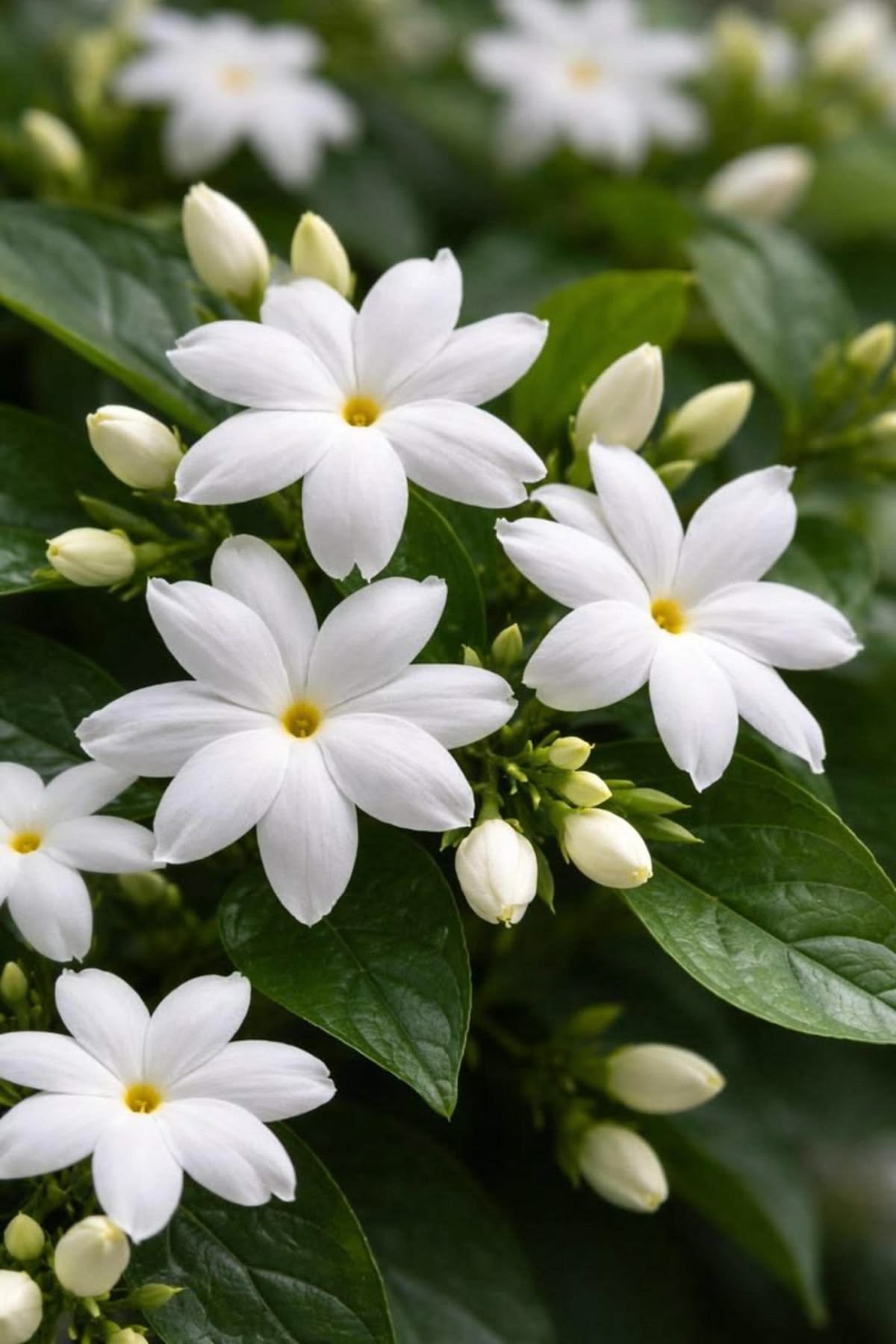
A Comprehensive Herbal Monograph:
👈Note on This Monograph:👇
Note on This Monograph: This extensive entry uses the full 8-part structure, offering a deep, interdisciplinary exploration of Jasmine (Jasminum officinale)— weaving together modern scientific evidence, traditional and ethnobotanical wisdom, practical cultivation and preparation guidance, and its living spiritual essence. Drawing from clinical studies, historical texts, indigenous knowledge, and esoteric traditions, it serves as a comprehensive resource for holistic understanding and respectful relationship with this powerful plant ally. Please work with trained professionals for therapeutic applications.
“Our Commitment to Transparent Research”
Unlike many herbal resources that offer generalized information with little or no backing, we provide direct links to every source we reference. This allows you to verify claims, explore topics in greater depth, and trust that what you’re reading is grounded in both modern science and time-honored tradition.
Section-specific Sources lists
Most monographs include dedicated “Sources:” sections at the end of major topics (e.g., Sources: Phytotherapy, Sources: Historical and Cultural Significance, Sources: Pharmacology). These contain direct, clickable links to the original material. We created this level of transparency so the research can serve you. Here are some ways readers use our sourced monographs: Anyone seeking truth — Verify claims for yourself instead of taking information at face value. Students & Researchers — Use the references for papers, assignments, or deeper study. Herbalists & Practitioners — Cite sources when educating clients or in professional materials. Curious Explorers — Follow the links to read original studies or historical texts yourself. Writers & Educators — Reference our monographs (with attribution), knowing the information is traceable.

“AT A GLANCE”
Jasmine is a twining olive-family climber native from the Caucasus to the Himalaya and south-central China. Its pinnate leaves and white, dusk-opening stars release an intense nocturnal perfume that has defined gardens, temples, and perfume stills for centuries. Hardy in temperate zones with support and drainage, it is grown worldwide for fragrance, tea-scenting, and traditional medicine.

Provides an overview of key points.
A Synopsis for Jasmine (Jasminum officinale)
👈At A Glance:👇
Jasmine
Scientific Name: Jasminum officinale L. (common / poet’s jasmine). Closely related and often used interchangeably in herbal and perfume contexts: J. grandiflorum L. (Spanish / royal jasmine) and J. sambac (L.) Aiton (Arabian jasmine).
Family: Oleaceae (olive family)
Common Names: Common jasmine, poet’s jasmine, white jasmine, jessamine, summer jasmine; Sanskrit/Ayurvedic: Jati, Mallika; Chinese: Mo Li Hua (usually J. sambac); many regional names (Chameli, Mogra, Yasamin).
Botanical Description
Jasminum officinale is a scrambling deciduous or semi-evergreen shrub or climber, typically 2–5 m, with angular or grooved stems. Leaves are opposite and pinnate, usually with 5–9 leaflets (terminal leaflet larger, ovate to lanceolate, pointed). Flowers are white, star-shaped, highly fragrant, in terminal clusters; they open more strongly at dusk. Fruit is a two-lobed berry. Native range is the Transcaucasus to south-central China and the Himalayan region (temperate to subtropical); widely cultivated and naturalized. Habitat: well-drained soils, sunny to part-shade positions; hardy in many temperate gardens.
Taxonomy: Lamiales, Oleaceae, genus Jasminum (~200 species). J. grandiflorum has often been treated as a variety or subspecies of J. officinale.
Phytochemistry
Contains alkaloids (jasminine), coumarins, flavonoids (rutin, quercetin and glycosides, luteolin derivatives, kaempferol), tannins, terpenoids, secoiridoid and iridoid glycosides (oleuropein-type compounds, loganin, aucubin relatives), steroids, saponins, anthocyanins, and a rich essential-oil/absolute fraction. Key volatiles in flowers/absolute: benzyl acetate, benzyl benzoate, linalool, phytol, indole, cis-jasmone, jasmolactone, squalene. Leaves and flowers also yield phenolic acids. Composition varies by species, part, and extraction method (solvent concrete/absolute vs. hydrosols).
Western Traditional & Clinical Actions
Traditionally: antiseptic, astringent, mild analgesic, antispasmodic, sedative/nervine, antidepressant/uplifting, aphrodisiac, emmenagogue, wound-healing, and lactation-modulating (topical suppression reported). Aromatherapy use centers on mood elevation, anxiety reduction, and reproductive/nervous-system support. Clinical observations and small trials support anxiolytic and analgesic effects of the scent/oil (e.g., labor pain, dental anxiety) more than strong internal “drug-like” actions.
Chinese Medicine Actions
Mo Li Hua (primarily J. sambac flowers) is a minor Qi-regulating herb: warm, sweet/pungent; enters Spleen, Stomach, and Liver. Actions: regulates Qi, relieves constraint/depression, harmonizes the middle jiao, dispels turbid foulness. Used for abdominal pain, dysentery-type diarrhea, irritability, chest oppression, and some eye or sore presentations. Dosage of dried flowers is typically low (often 1.5–10 g as tea or light decoction). J. officinale itself is less central in classical TCM than sambac tea-flower use.
Traditional & Historical Uses
Documented from Persian/Arabic medicine (Avicenna: skin pain, earache, uterine pain, headaches) through Ayurveda (mouth ulcers, wounds, fever, skin, eyes, reproductive complaints) and folk use across South and West Asia: chewed leaves for stomatitis and toothache; leaf paste for corns; flowers/leaves for fever, cough, as blood purifier or galactagogue in some regions and lactation suppressant in others; neuroleptic/sedative folk use in Turkey; tea flavoring in China and Indonesia. Flowers used in garlands, ceremony, and perfume from antiquity. Evidence for many internal folk claims remains limited.
Modern Pharmacological Evidence
Extracts and oil show antioxidant (DPPH and related assays), antimicrobial/antibacterial, anti-inflammatory, analgesic/antinociceptive, insecticidal, dermatological, and some antifertility or hypoglycemic activity in vitro and in animal models. Mechanisms include free-radical scavenging, modulation of inflammatory mediators, and effects on xanthine oxidase (gout-related interest). Anticancer and PI3K-AKT-mTOR pathway activity has been explored more for J. sambac phytochemicals in silico and preclinical work. Human mechanistic data remain sparse compared with traditional breadth.
Clinical Studies
Human evidence is modest and often aromatherapy-focused:
- Small non-randomized trial: J. officinale oil massage reduced labor-pain scores in primigravidas (needs larger RCTs).
- Systematic review support for aromatherapy (including jasmine) reducing first-stage labor anxiety.
- RCT: jasmine aromatherapy reduced pediatric dental anxiety and pain perception vs. placebo.
- RCT: jasmine vs. clary sage aromatherapy improved sexual-function scores vs. control in reproductive-age women.
- Older study: topical J. sambac flowers vs. bromocriptine for postpartum lactation suppression (methodological limits).
- Prospective work on jasmine compound oil for genitourinary symptoms in breast-cancer survivors.
Jasmine tea epidemiology and other internal uses lack strong modern RCT backing.
Preparations & Dosage
- Tea/infusion: Dried flowers 1–3 g (or a pinch of scented tea); not a high-dose “medicinal decoction” in most Western practice.
- Tincture/fluid extract: Traditional ranges vary; often low-dose aromatic use rather than high-volume dosing.
- Essential oil / absolute: Highly concentrated; dilute to ~1–4% in carrier for topical/liniment use 2–3 times daily. Inhalation/diffuser in small amounts.
- Ayurvedic-style: Leaf juice 10–15 mL; powder 2–4 g; decoction 50–100 mL (practitioner-guided).
- TCM flower tea: ~3–10 g dried flowers.
No universally standardized “clinical dose”; food/tea amounts are the best-supported everyday use.
Safety & Contraindications
Food and jasmine tea amounts are generally recognized as safe (GRAS in the US for food use). Medicinal or concentrated oil use is less well studied.
Avoid or use only under professional care: pregnancy (especially early; oil may stimulate uterine activity and is traditionally used near term for labor—NHS-style guidance often “avoid until term, then supervised”); breastfeeding if the intent is not to suppress lactation (topical flowers/leaves have been used to reduce milk). Possible dermal sensitization to absolute (dilute well). Limited data on drug interactions; caution with hormone-sensitive conditions given traditional reproductive effects. Occasional allergy. Canada draft assessment has flagged reproductive toxicity signals for certain high dermal/inhalation DIY exposures to jasmine oil—follow label dilution and do not ingest undiluted oil.
Cultivation & Harvest
Prefers warm summers, mild winters, well-drained loamy soil (pH 6–7.5), sun to light shade; J. officinale is among the hardier jasmines (−10 °C with protection). Propagate by cuttings. Commercial flower yield often from year 3 to ~10–15. Harvest unopened or just-opening buds early morning (or at peak fragrance) by hand; bruising reduces oil quality. Solvent extraction yields concrete (~0.25–0.3%), then absolute; steam distillation yield of true “essential oil” is very low. Sustainable practice: cultivated rather than wild-harvested stock; shade and moisture management for quality.
Commercial Products
Jasmine tea (scented green or other teas, especially in China), fresh garland flowers, jasmine concrete and absolute (perfume, cosmetics, flavor), infused oils, hydrosols, capsules/teas in supplement channels, and aromatherapy blends. Major oil/concrete production historically and currently includes Egypt, India, and Mediterranean growers (J. grandiflorum). Absolute is expensive because of low yield (thousands of flowers per gram of absolute). Quality varies widely; solvent residues and adulteration are industry issues.
Ethnobotanical Curiosities
Name from Persian yasmin. Night-blooming scent linked to “mistress of the night” lore. Used in Hindu and Islamic ceremony, Chinese tea culture, and as a national/cultural flower in several countries (e.g., sampaguita in the Philippines). Traditional dual reputation as both galactagogue and lactation suppressant depending on species, part, and application. Perfume history includes child and women’s labor in intensive hand-picking. Not to be confused with toxic “false jasmines” such as Gelsemium.
Recent Research (2020–2026)
Reviews and papers have catalogued 200+ compounds in J. sambac, updated Jasminum bioactives for food preservation and therapeutics, and reported hypoglycemic/antioxidant profiling of J. officinale leaf fractions (2024). New secoiridoid glycosides (jasminumosides) from sambac flowers (2026). Clinical and interventional work includes aromatherapy RCTs (dental anxiety, sexual function) and topical jasmine oil for menopausal/genitourinary symptoms in cancer survivors. In silico anticancer pathway studies and broader genus reviews (Food Frontiers 2025) emphasize antioxidant, anti-inflammatory, and antimicrobial potential while noting the gap in large human trials. Climate and post-harvest work focuses on oil yield and quality.
Conservation Status
Jasminum officinale itself is widely cultivated, Not Evaluated / no global NatureServe rank of concern (GNR), and not listed as threatened on the IUCN Red List in the sources reviewed. Pressure is on wild congeners: several Jasminum species in Peninsular Malaysia and Singapore are regionally Endangered, Critically Endangered, or Extinct; other taxa (e.g., J. azoricum, J. noumeense) carry IUCN listings. Conservation priority is habitat protection for rare wild species and sustainable cultivated production for commerce rather than wild collection of common jasmine.
DIY Recipes
Simple jasmine flower tea: 1 tsp dried jasmine flowers (or a jasmine-scented green tea) per cup, steep 3–5 minutes in just-off-boil water. Optional: blend with green tea leaves. Evening cup for relaxation—not a high-dose medicine.
Dilute massage oil (adult topical only): 1–2 drops jasmine absolute or high-quality oil in 10 mL carrier (jojoba or sweet almond) ≈ 1–2%. Use sparingly on pulse points or for gentle massage. Do not use in early pregnancy; patch-test first.
Flower rinse (traditional-style, external): Cool infusion of flowers as a facial or hair rinse for fragrance; not a substitute for medical care of infections.
These are culinary/aromatherapy-strength ideas, not standardized treatments.
X (Twitter) Snapshot – 2020–2026
Posts in this period repeatedly frame jasmine as a sensory and ritual plant—garden dusk scent, tea, incense, perfume, and “presence”—more than as a pharmaceutical herb. Wellness accounts circulate the claim that jasmine aroma is linked to lower anxiety and better sleep. Everyday conversation is dominated by jasmine milk teas and scented drinks. Medicinal-aromatic plant journals share post-harvest and essential-oil quality work. Conservation-garden and “herbal wisdom” threads appear, but high-engagement content is cultural and lifestyle rather than clinical advocacy. Sustainable cultivation and quality of absolute remain niche professional topics compared with the plant’s popular fragrance identity.
Planting & Harvesting Reference Guide for Jasmine (Jasminum officinale)
👈Planting & Harvesting Reference Guide:👇
Jasmine (Jasminum officinale) – Planting & Harvesting Reference Guide
- Best Time for Planting
- Early to mid-spring after frost risk has passed, when soil is workable
- Prefer waxing Moon phases; water-associated signs (Cancer, Pisces, Scorpio) support root and vine establishment in magical practice
- Propagate mainly from semi-hardwood or softwood cuttings; root in moist, well-drained medium
- Seed from ripe black berries is possible but less common and slower; clean and sow fresh or after light stratification
- Plant against a sunny south- or west-facing wall or strong trellis in cooler climates; full sun to light partial shade
- Soil: fertile, humus-rich loam with sharp drainage; pH roughly 6–7.5; avoid waterlogged ground
- Growing Conditions & Magical Minded Tips
- Space vines 1.5–3 m (5–10 ft) apart or give each plant a dedicated support; it twines and can reach 3–8 m
- Mulch with organic matter to retain moisture and feed the soil; water regularly while establishing, then moderately
- Feed with compost in spring; avoid heavy nitrogen that produces leafy growth at the expense of scent
- Prune lightly after the main flowering flush to encourage next season’s wood
- Hardiness approximately USDA zones 7–10 (protect below about –10 °C)
- Whisper thanks at dusk when planting or tending; offer clean water or a spoken blessing
- Leave some flowers for moths and night pollinators; Jasmine is a dusk-opening mutualist
- In biodynamic spirit: apply compost preparations, time major work with lunar rhythms, harvest scent crops in the plant’s own night clock
- Best Time for Harvesting Flowers & Leaves
- Flowers: late spring through early autumn, at dusk or pre-dawn when fragrance peaks (the classic perfume-harvest window)
- Prefer cool evening or first light; Monday nights and waxing-to-full Moon favoured for dream, love, and nervine work
- Leaves: during active growth for traditional mouth, skin, or external uses; gather on dry days
- Avoid midday heat, which drives off volatile oils
- Sustainable & Magical Harvesting Methods
- Take only what is needed; leave ample bloom for the vine’s health and for pollinators
- Prefer hand-picking over tools; if a blade is used, keep it clean and dedicated to beauty rather than force
- Ask permission of the plant; speak thanks before and after
- Never strip a vine bare; harvest open or just-opening flowers for peak scent
- For wild or naturalised plants: confirm true Jasminum officinale (pinnate leaves, two stamens); never confuse with toxic Gelsemium
- Favour cultivated vines over thin wild stands; common Jasmine is widely grown—protect rarer Jasminum relatives
- Post-Harvest Processing
- Process flowers the same day when possible for oil, tea-scenting, or fresh use
- Dry flowers and leaves in shade on clean cloth or screens, away from direct sun, to preserve fragrance and subtle qualities
- Store fully dried material in airtight, dark glass containers in a cool place
- For magical storage: add a small moonstone or written intention for heart ease and true dreams
- Absolute and concentrated oils are commercial extractions; home practice uses dried flowers, infusions, or gently macerated oils—always dilute strong preparations
Always prioritise ethical, sustainable practice: fair regard for pickers in commercial supply chains, reciprocity with the living vine, and clear species identification so Jasmine’s spirit and abundance continue.
Healing Categories of Jasmine (Jasminum officinale)
👈Jasmine (Jasminum officinale): fits most strongly into the following healing categories, based on its traditional use, phytochemistry, clinical observations, and energetic profile:👇
Best-Fit Healing Categories for Jasmine (Jasminum officinale)
1. Nervine / Emotional & Mental Calm
Soothes tension, lifts low mood, and eases anxious or restless states through scent and gentle internal use.
2. Heart & Spirit Opening
Softens emotional constriction, supports grief work, and encourages refined, non-binding love and presence.
3. Reproductive & Aphrodisiac Support
Traditional tonic for the reproductive sphere, labour comfort, and healthy desire without crude stimulation.
4. Aromatic & Respiratory Ease
Opens the breath, comforts the head and senses, and clears stagnant or heavy atmospheric feeling.
5. Skin & Topical Comfort
Folk use of leaves and diluted preparations for external soothing, mouth comfort, and gentle skin applications.
6. Ritual, Threshold & Sacred Healing
Works at life’s hinges—wedding, motherhood, sleep, death, and prayer—restoring dignity and pure regard.
7. Sleep & Dream Support
Encourages restful sleep and clearer, more prophetic or consoling dreams when used at night.
Healing Categories
Nervine & Mood Support
Jasmine’s primary modern and traditional gift is aromatic calm. The night perfume and flower infusions have long been used to quiet mental agitation, soften irritability, and restore a sense of ease. Small clinical and aromatherapy observations support effects on alertness, mood, and tension. This is not heavy sedation; it is the settling that follows when the nervous system is met with beauty rather than force.
Heart, Grief & Relational Healing
Across cultures Jasmine is offered at moments of love, honour, and parting. Energetically and folklorically it is linked with the heart centre—dissolving protective hardness, inviting sincere affection, and accompanying grief without drowning it. Magical and flower-essence traditions emphasise spiritual rather than possessive love, making it suitable for heart-centred emotional repair.
Reproductive & Feminine Tonic
Traditional systems (Persian-derived, Ayurvedic-adjacent, folk midwifery) regard the flowers as supportive of the reproductive sphere: easing spasms, comforting labour, and acting as a gentle aphrodisiac. Topical use of flowers has been studied for lactation suppression. Caution is required in early pregnancy and when breastfeeding is desired; the plant’s action here is real and must be respected.
Aromatic, Head & Respiratory Comfort
The scent itself is medicine for the head and breath. Historical European pharmacy valued Jasmine oil for the debilitated head and “recreation of the soul.” Folk practice uses the fragrance to clear heavy indoor air and ease a tight or preoccupied mind. It pairs naturally with evening rituals that mark the transition from day strain to night rest.
Topical, Oral & Skin Applications
Leaf juice and flower preparations appear in traditional external use for corns, minor skin complaints, mouth comfort, and, in modern pilot work, oral mucositis gels (J. grandiflorum). These are adjunctive, sensory, and local rather than systemic pharmaceutical claims.
Sacred, Threshold & Psychospiritual Healing
Jasmine’s deepest category may be ceremonial. It sanctifies thresholds—marriage, motherhood, funerary washing, temple offering, and quiet prayer. In this role it heals by restoring meaning, purity of intention, and connection to something larger than symptom management. Dream pillows, night offerings, and simple presence with the blooming vine belong here.
Sleep & Oneiric Work
Burned or placed near the bed, smelled, or taken as a light evening tea, Jasmine is classically linked with sleep induction and prophetic or clarifying dreams. The same nocturnal chemistry that calls moths also invites the human nervous system into the dark’s restorative frequency.
Synergistic & Holistic Note:
Jasmine rarely works as an isolated “active ingredient.” Her power is relational: scent + timing (dusk), plant + pollinator, flower + human threshold, traditional use + respectful modern observation. She synergises best with other heart and nervine aromatics (rose, lavender in careful balance), with lunar and water-element practices, and with ethical harvest that leaves bloom for moths and fair return for pickers. Holistically, Jasmine teaches that healing can be soft, nocturnal, and beautiful—an opening rather than a conquest. Used with clear identification (never confused with toxic Gelsemium), reciprocity, and humility, she remains a living ally for nervous system ease, heart presence, reproductive dignity, and the sacred ordinary moments that stitch a life together.
✦ If You Only Read U.S. Consumer Pages ✦
U.S. consumer pages usually meet Jasmine (Jasminum officinale) as a mood oil, a wedding flower and a night-blooming romance. Those pages are not inventing the scent. The same genus really does put benzyl acetate and indole on the evening air, and people really do buy the absolute to wear.
What those pages almost never carry is the split inside the name. They rarely say that the hardy poet’s vine, the Grasse grandiflorum crop and the sambac tea flower are three plants; that China standardized sambac concrete as a food additive while Europe registered officinale and grandiflorum extracts as cosmetic allergens; that “jasmine essential oil” is usually an absolute, not a still-distilled oil; that the best-known human autonomic trial used J. sambac; that Ayurvedic Jati and Unani Yaasmin still point at officinale / grandiflorum for wounds and mouth while HMPC wrote nothing; or that Carolina “jasmine” is a different, poisonous family. They also rarely distinguish dusk officinale from dawn grandiflorum from night sambac, or a garden climber from a hexane concrete.
Reading only U.S. retail copy makes the plant look like a single romantic essential oil. Reading the global official and field record makes it look like a Persian-named vine that fragrance law had to label, that India kept as Jati, that China mostly replaced with sambac for tea, and that clinical aromatherapy has tested more often as a neighboring species than as a locked J. officinale drug. Both pictures describe real flowers. The second one is the one most American seekers and shoppers never see.
Sources:
https://echa.europa.eu/substance-information/-/substanceinfo/100.081.751
https://www.ndls.org.cn/standard/detail/0298d206a18e48ff46bb4f6163d0eebc
https://pubmed.ncbi.nlm.nih.gov/20184043/
https://davpharmacy.com/herbs/jati/
Globally: Where This Plant Is Studied
👈Global research, official texts, publishers, and human-trial data, rather than U.S.-consumer-page-limited:👇
Where This Plant Is Studied
Jasmine (Jasminum officinale L.) is studied as a living West- and South-Asian climber of dusk-scented white flowers—not as a generic “jasmine oil” bottle. The name yasmin is Persian; the poet’s vine is a plant of the western Himalaya, Persia and the Mediterranean garden. That species is not the whole jasmine world. Perfume and pharmacy keep three true Jasminum plants in play, and they are not interchangeable.
Jasminum officinale is the common / poet’s jasmine: pinnate leaves, honeyed dusk scent, hardy enough for cooler gardens. Jasminum grandiflorum (Spanish / royal / Catalan jasmine) is the day-opening Grasse and Egyptian crop; many books still write it as J. officinale var. grandiflorum, and IFRA treats the two as a paired fragrance material. Jasminum sambac (Arabian jasmine, moli, mogra) is the night bloomer of Indian garlands, Chinese scented tea and the Philippine national flower. Star jasmine (Trachelospermum) and Carolina jasmine (Gelsemium sempervirens) are other families; the latter is toxic. A shop label that says only “jasmine” has already left the species behind.
What laboratories actually measure is a flower extract, seldom a steam-distilled “essential oil” in the thyme sense. Hexane or petroleum-ether concentrate, then ethanol absolute, is the industrial path. Headspace and GC-MS keep returning the same odor architecture across the genus: benzyl acetate, linalool, cis-jasmone, methyl jasmonate, jasmine lactone, indole, benzyl benzoate. Ratios shift by species and hour. Sambac leans more methyl anthranilate and indole (muskier, night). Grandiflorum is the classic perfume heart. Officinale itself is less often the factory flower than the hardy garden parent and the Latin name under which extracts are registered.
Study clusters sit where the flowers are picked and where the solvents are run: Grasse, Egyptian delta factories, Indian chameli / jaati fields, Chinese moli tea and cosmetic labs, Iranian clinical aromatherapy groups, Thai autonomic-physiology work on sambac, and Ain Shams / Egyptian GC groups comparing species. In short: J. officinale is a Persian–Himalayan officinal vine that perfume law, Ayurveda and Unani still name, while the global odor crop and the human-trial file keep sliding toward grandiflorum and sambac.
Sources:
https://echa.europa.eu/substance-information/-/substanceinfo/100.081.751
https://en.wikipedia.org/wiki/Jasminum_grandiflorum
https://www.indianmedicinalplants.info/2019/06/28/jasminum-officinale-linn-var-grandiflorum-jaati-medicinal-uses-adverse-effects-research-pharmacology/
https://www.nature.com/articles/s41598-026-39688-w
Official Books That Name This Species
Official herbal-medicine books have not written a European expectorant or a Chinese decoction drug for Jasminum officinale flower the way they wrote ivy leaf. There is no EMA HMPC monograph and no Ph. Eur. Jasmini flos assay. The naming that exists is fragrance law, food-additive law, and classical South Asian materia.
ECHA lists Jasmine, Jasminum officinale, ext. (EC 289-960-1, CAS 90045-94-6) as extractives from J. officinale—tinctures, concretes, absolutes, oils. J. grandiflorum extract sits under a sister CAS (84776-64-7). EU Cosmetics Regulation Annex III now forces the label “Jasmine Oil/Extract” above 0.001% in leave-on products and 0.01% in rinse-off; IFRA amendments 49/51 set category caps because linalool, benzyl alcohol, benzyl benzoate, eugenol and the absolute itself are restricted allergens. FEMA GRAS numbers attach historically to grandiflorum flavor use. That is cosmetic and flavor naming, not a well-established herbal indication.
China’s official flower for tea and concrete is usually 小花茉莉 Jasminum sambac: GB 1886.23-2015 is the food-additive standard for sambac concrete; the Chinese medicinal-plant record of Molihua is sambac flowers, leaves and roots, not poet’s jasmine. J. officinale is not the headline ChP TCM drug.
India is where J. officinale / J. officinale var. grandiflorum still holds a classical name. Ayurvedic Jati / Mālati / Chameli and Unani Yaasmin are mapped by modern dravyaguṇa texts to Jasminum officinale or to J. grandiflorum treated as its variety—bitter-astringent, uṣṇa, used on wounds, mouth, eyes, skin and as a heart-pleasant flower. Bhavaprakasha verses travel with that identification. API volumes and college monographs repeat leaves, flowers and roots; they are not a Ph. Eur. hederacoside assay.
The technical juiciness of the official file is the process: what the world sells as “jasmine essential oil” is usually an absolute. Steam distillation of these petals is poor-yielding; industry extracts. Reading a bottle as if it were lavender oil misreads both the plant and the book.
Sources:
https://echa.europa.eu/legislation-obligation/-/obligations/100.081.751
https://www.ndls.org.cn/standard/detail/0298d206a18e48ff46bb4f6163d0eebc
https://davpharmacy.com/herbs/jati/
https://sys01.lib.hkbu.edu.hk/cmed/mpid/detail.php?herb_id=D01010&lang=eng
Who Publishes on It
Publication splits into three rooms that do not always speak. Perfume chemistry (Grasse, Egyptian industrial steam-distillation papers, Scientific Reports multi-species volatiles from Ain Shams) publishes benzyl acetate, linalool enantiomers and methyl jasmonate stereochemistry. South Asian ethnopharmacology and dravyaguṇa publish Jati wound and mouth use. Clinical aromatherapy journals publish autonomic and obstetric trials that often say Jasminum or J. sambac on the methods line. Natural Product Communications printed Hongratanaworakit’s 2010 abdominal-massage study—explicitly J. sambac. Iranian Journal of Education and Health Promotion and older midwifery RCTs used Jasminum officinale or unspecified jasmine against clary sage. IFRA, ECHA and the China National Standards body publish the legal names. Consumer sites reprint “queen of the night”; they are not the original publishers.
Sources:
https://pubmed.ncbi.nlm.nih.gov/20184043/
https://www.nature.com/articles/s41598-026-39688-w
https://pubmed.ncbi.nlm.nih.gov/40144179/
https://pmc.ncbi.nlm.nih.gov/articles/PMC8747370/
Human Trials Tied to This Species
Human controlled evidence attached to the word jasmine is real, small, and species-messy. The cleanest human trial is not J. officinale.
Hongratanaworakit 2010 (Nat. Prod. Commun.): forty healthy adults, abdominal massage with jasmine oil specified as Jasminum sambac. Versus placebo, breathing rate, oxygen saturation and blood pressure rose; subjects rated themselves more alert and less relaxed. That is a sambac arousal signal, often reprinted as if it were poet’s jasmine.
Iranian labor work (Kaviani and colleagues, 156 nulliparous women): incense-mask aromatherapy comparing Jasminum officinale, Salvia officinalis and control. Sage, not jasmine, cut pain and shortened first and second stages at thirty minutes; differences faded by sixty minutes; APGAR and mode of delivery did not differ. A 2025 Rafsanjan triple-blind RCT (168 women, FSFI < 28) compared Jasminum, clary sage, sweet-almond placebo and no treatment for six weeks: both aromas and the almond placebo beat the no-treatment arm on total sexual-function score; sage outpaced jasmine on arousal, lubrication and pain subscales. The methods line says Jasminum, not a vouchered officinale chromatogram.
A 2024 prospective interventional study of a jasmine compound essential oil in premenopausal breast-cancer survivors with genitourinary symptoms (89 completers of 96) reported improved dryness and dyspareunia without moving E2/FSH out of the suppressed range—an open, compound-oil file, not a monograph extract of J. officinale flos.
There is no HMPC well-established cough or wound dossier. There is no large, species-locked oral RCT of J. officinale leaf or flower comparable to EA 575 ivy. Most of what looks like “jasmine clinical evidence” is inhaled or topical absolute, often sambac or unspecified, in aromatherapy designs.
Important cautions, held with the plant: absolute is a solvent extract; IFRA and Annex III exist because constituents sensitize; Gelsemium is not jasmine; sambac tea is not officinale tincture; this overview is not a labor protocol or a hormone claim.
Sources:
https://pubmed.ncbi.nlm.nih.gov/20184043/
https://www.researchgate.net/publication/367268505_Comparison_of_the_Effect_of_Aromatherapy_with_Jasminum_Officinale_and_Salvia_Officinale_on_Pain_Severity_and_Labor_Outcome_in_Nulliparous_Women
https://pubmed.ncbi.nlm.nih.gov/40144179/
https://www.researchgate.net/publication/381178659_Effect_and_acceptability_of_jasmine_compound_essential_oil_for_premenopausal_breast_cancer_survivors_suffering_from_genitourinary_syndrome_of_menopause_A_prospective_interventional_study

Part 1: Modern Medical Properties and Uses

Purpose: Highlights the plant’s scientific and medicinal properties, validating holistic healing with evidence-based data.
Contemporary Medical Applications of Jasmine (Jasminum officinale)
Describes current clinical uses (e.g., capsules, tinctures) and delivery methods in modern medicine.
👈Contemporary Medical Applications:👇
Contemporary Medical Applications:
- Jasmine flowers, leaves, and floral absolute are used today as complementary preparations rather than as a single standardized pharmaceutical capsule. Delivery methods include inhalation of Jasminum officinale or J. grandiflorum aroma, diluted topical massage oils, hydrosols, flower teas, and, in some traditional-pharmacy settings, leaf juices or low-dose fluid extracts. Contemporary obstetric and midwifery practice has absorbed jasmine most clearly as an adjunct for labor support, where massage or inhalation is layered onto standard care to ease perceived pain and tension without replacing conventional analgesia.
- Aromatherapy remains the dominant modern clinical pathway. Randomized and quasi-experimental labor studies have applied jasmine oil by massage, inhalation, or mixed methods during latent and active first-stage labor. Several trials and later systematic reviews report reductions in visual-analogue pain scores and anxiety when jasmine is included among labor oils, though effect size varies by route: massage with jasmine extract has often outperformed inhalation alone in first-stage pain relief.
- Gynecologic and psychosexual applications use diluted jasmine oil or aroma twice daily for weeks. A 2025 randomized trial comparing jasmine and clary-sage aromatherapy in reproductive-age women with sexual dysfunction found improved Female Sexual Function Index scores versus untreated controls, supporting a contemporary role as a sensory nervine and mood-lifting adjunct rather than a hormonal drug.
- Pediatric dentistry has tested jasmine extract inhalation as a low-cost anxiolytic adjunct. A single-blinded randomized placebo-controlled trial in children aged 7–12 undergoing restorative treatment found reduced modified child dental anxiety scores and visual-analogue pain scores after fifteen minutes of jasmine aromatherapy, without meaningful changes in heart rate or oxygen saturation.
- Topical and dermatologic use continues in wound comfort, skin soothing, and postpartum breast applications. Lactation research documents traditional binding of Jasminum sambac flowers to the breasts to suppress milk; a comparative Indian study reported suppression approaching that of oral bromocriptine, though design quality was limited. Modern lactation databases therefore treat jasmine as a plant with documented milk-modulating folklore that must be used with intention, not casually during desired breastfeeding.
- Food-adjacent medical use is centered on jasmine-scented teas and flavoring concentrates. Regulatory systems such as the United States GRAS listing treat jasmine as a food ingredient at culinary levels. Clinical “dosing” of teas is therefore dietary: cups of scented green or other teas rather than high-milligram isolated-flower capsules, with most measured benefits of commercial jasmine tea arising from both floral volatiles and the base tea polyphenols.
- Internal “capsule medicine” for Jasmine itself remains sparse compared with aroma and tea use. Reviews of J. officinale emphasize antimicrobial, antioxidant, dermatological, and antifertility laboratory actions more than licensed oral products. Practitioners who employ tinctures or powders generally stay within traditional low-dose ranges and treat jasmine as a nervine-aromatic, not a high-potency internal antimicrobial.
Sources: Contemporary Medical Applications
https://pmc.ncbi.nlm.nih.gov/articles/PMC4280734/
https://www.ncbi.nlm.nih.gov/pmc/articles/PMC7445940
https://pmc.ncbi.nlm.nih.gov/articles/PMC11939992/
https://pubmed.ncbi.nlm.nih.gov/39588286/
https://www.ncbi.nlm.nih.gov/books/NBK501843/
https://www.herbalreality.com/herb/jasmine/
https://www.webmd.com/vitamins/ai/ingredientmono-617/jasmine
Pharmacology of Jasmine (Jasminum officinale)
Outlines key compounds and their mechanisms of action, driving therapeutic effects.
👈Pharmacology:👇
Pharmacology:
- Floral volatiles act first through the olfactory-limbic axis. Benzyl acetate, linalool, indole, cis-jasmone, and related esters reach the amygdala and hippocampus within breaths, modulating emotional tone, perceived pain, and autonomic arousal. This pathway explains why inhalation and massage can alter labor anxiety and dental fear without requiring high systemic blood levels of the oil.
- Secoiridoid glycosides, especially oleuropein and related oleoside derivatives isolated from J. officinale var. grandiflorum flowers and leaves, show antiviral and antigen-secretion effects in hepatitis B models. Oleuropein blocked HBsAg secretion in HepG2 2.2.15 cells in a dose-dependent manner (IC50 about 23.2 µg/mL) and reduced duck hepatitis B viremia at 80 mg/kg intraperitoneally twice daily, linking a classic Oleaceae bitter glycoside to a modern antiviral mechanism.
- Flavonoids such as rutin, quercetin and its glycosides, kaempferol derivatives, luteolin glycosides, and cirsiliol contribute antioxidant and anti-inflammatory pharmacology. They scavenge DPPH and hydrogen-peroxide radicals, limit lipid peroxidation, and can dampen inflammatory enzyme activity. Leaf ethyl-acetate fractions of J. officinale have shown DPPH IC50 values approaching reference ascorbic acid in recent fractionation work.
- Phenolic acids, tannins, and astringent leaf principles support traditional mouth-ulcer, wound, and skin uses. Astringency tightens mucosa; combined antimicrobial screening of ethanolic flower, leaf-stem, and root extracts has shown activity against clinically relevant bacteria, giving a pharmacologic basis for folk antiseptic chewing of leaves and topical pastes.
- Alkaloidal traces including jasminine, together with coumarins, saponins, and steroids, round out a mixed secondary-metabolite profile. Reviews describe CNS-depressant, mild anesthetic, and sedative folklore that is consistent with both volatile-oil GABAergic-adjacent aroma effects and non-volatile bitter glycosides, though receptor-level human mapping of jasminine remains limited.
- Reproductive pharmacology is dual and route-dependent. Aroma and massage are used to ease labor and lift mood; older animal work and traditional application of flowers or leaves to the breast have been associated with reduced prolactin signaling and lactation suppression. This is not a contradiction so much as a reminder that part, dose, and contact surface change the physiologic conversation.
- Commercial jasmine oil also inhibits xanthine oxidase in laboratory assays, offering a mechanistic hint for traditional use in inflammatory and hyperuricemic complaints. The oil is not a substitute for established gout medicines, but the enzyme-level finding helps explain why Jasminum extracts appear in modern reviews of anti-inflammatory plant oils.
Sources: Pharmacology:
https://pubmed.ncbi.nlm.nih.gov/19580857/
https://www.sciencedirect.com/science/article/abs/pii/S0378874109004073
https://zenodo.org/records/1214994
https://www.cell.com/heliyon/fulltext/S2405-8440(24)15196-1
https://phytochem.nal.usda.gov/plant-jasminum-officinale
https://iadns.onlinelibrary.wiley.com/doi/10.1002/fft2.70024
https://www.ncbi.nlm.nih.gov/pmc/articles/PMC7084246/
Natural Medicine Studies / Jasmine (Jasminum officinale)
Summarizes recent research on efficacy, safety, or clinical outcomes from peer-reviewed studies.
👈Natural Medicine Studies:👇
Natural Medicine Studies:
- Kaviani and colleagues conducted a randomized clinical trial of 156 nulliparous women assigned to jasmine aromatherapy, salvia aromatherapy, or control. Salvia reduced pain and shortened first- and second-stage duration more clearly at thirty minutes; jasmine still belongs inside the obstetric aromatherapy evidence base that later reviews treat as generally favorable for first-stage comfort and anxiety.
- A 2018 Indonesian study of counter-pressure massage with Jasminum officinale oil in twenty primigravidas in active first-stage labor found a statistically significant drop in mean pain scores (about 6.53 to 4.16; p = 0.000). The design was small and non-randomized relative to large multi-center trials, yet it is repeatedly cited in later labor-aromatherapy meta-analyses as jasmine-specific massage data.
- A 2020 systematic review in Ethiopian Journal of Health Sciences isolated jasmine findings among thirty-three labor-aromatherapy trials: Joseph et al. reported significant first-stage pain reduction with jasmine-extract massage versus control, while some inhalation-only jasmine studies did not replicate that benefit. Alavi and colleagues found massage with jasmine oil more effective than jasmine inhalation alone.
- A 2023 meta-analysis of fourteen randomized trials of labor-pain aromatherapy (lavender, jasmine, rose, chamomile, bitter orange, boswellia) concluded that aromatherapy lessened labor-pain intensity in eleven of fourteen studies. Jasmine oil appeared in both first- and second-stage protocols, supporting inclusion of Jasmine among evidence-reviewed labor botanicals rather than as an untested folk oil.
- Pediatric evidence is newer. A 2024 single-blinded randomized placebo-controlled trial of jasmine extract inhalation before infiltration anesthesia in children showed significantly lower MCDAS and VAS scores after multivariable regression, with no important vital-sign differences. The authors recommended jasmine aromatherapy as a cheap complementary method in dental practice.
- Sexual-function evidence arrived in a 2025 triple-blind randomized trial of 168 women: jasmine and clary-sage aromatherapy groups improved median FSFI scores versus a no-intervention control after six weeks of twice-daily nasal application. Placebo almond oil also moved scores, reminding readers that ritual and scent expectancy matter, yet jasmine remained statistically separated from untreated controls.
- Safety-adjacent human data are still thin for internal high-dose extracts. LactMed notes GRAS food status, occasional allergy, and inadequate study of medicinal doses in nursing dyads. Labor reviews generally report no serious neonatal APGAR harm from jasmine-inclusive aromatherapy protocols, which is clinically important even when efficacy estimates differ by trial.
Sources: Natural Medicine Studies:
https://pmc.ncbi.nlm.nih.gov/articles/PMC4280734/
https://www.ncbi.nlm.nih.gov/pmc/articles/PMC7445940
https://www.sciencedirect.com/science/article/pii/S2590161323000807
https://pubmed.ncbi.nlm.nih.gov/39588286/
https://pmc.ncbi.nlm.nih.gov/articles/PMC11939992/
https://www.ncbi.nlm.nih.gov/books/NBK501843/
http://ejurnalmalahayati.ac.id/index.php/nursing/article/download/1590/pdf
Chemistry of Jasmine (Jasminum officinale)
Details active chemical constituents (e.g., alkaloids, flavonoids) and their healing roles.
👈Chemistry:👇
Chemistry:
- Jasminum officinale carries the Oleaceae chemical signature: secoiridoid and iridoid glycosides sit beside flavonoids and a luxurious floral volatile fraction. From buds and flowers, chemists have isolated loganin, aucubin, 6-O-methylcatalpol, deacetyl asperulosidic acid, 8-dehydroxyshanzhiside, jasgranoside B, oleuropein, ligstroside, 10-hydroxyoleuropein, 10-hydroxyligstroside, oleoside esters, and 8-epi-kingiside.
- Dried leaves have yielded (2″R)- and (2″S)-2″-methoxyoleuropein, oleuropein, ligstroside, demethyloleuropein, oleoside dimethyl ester, the lignan (−)-olivil, and p-hydroxyphenethyl alcohol (hydroxytyrosol-related). These bitter glycosides are the same chemical family that gives olive leaf its researched pharmacology, which is why Jasmine leaf chemistry is not “just perfume.”
- Flower flavonoid glycosides include kaempferol-3-O-rutinoside, kaempferol-3-O-glucoside, kaempferol-3-O-neohesperidoside, a kaempferol rhamnosyl-galactoside, quercetin-3-O-glucoside, and rutin. Recent LC-MS of J. officinale leaf ethyl-acetate fractions highlighted cirsiliol, kaempferol, 2-tridecanone, plus HPTLC confirmation of gallic acid, quercetin, and rutin.
- The commercially precious absolute is an ester-rich mosaic. Typical ranges reported for jasmine concretes and absolutes include benzyl acetate (often 15–40%), benzyl benzoate, linalool, phytol, indole, cis-jasmone, jasmolactone, squalene, methyl jasmonate, and green-leaf hexenyl esters. Duke’s phytochemical database lists benzyl acetate in J. officinale flowers at roughly 1560–2470 ppm among many other volatiles.
- Preliminary screens of aqueous and alcoholic J. officinale extracts consistently detect alkaloids, coumarins, tannins, terpenoids, glycosides, steroids, saponins, anthocyanins, leucoanthocyanins, emodin-like anthracenes, and phlobatannins. Quantitative snapshots from a 2025 pharmacognostic paper reported flavonoids near 1.50%, saponins 1.85%, and alkaloids 2.64% in the studied extract.
- Triterpenes and saponins add another layer: hederagenin glycosides, oleanolic-type esters, ursolic acid (especially in related Jasminum leaves), and 2α,3β,23-trihydroxyoleanolic glycosides appear in modern compound lists for J. officinale. These amphiphilic molecules help explain detergent-like traditional washes and some anti-inflammatory laboratory results.
- Chemistry is species- and process-sensitive. J. grandiflorum absolute is often richer in indole and the classic “animalic-floral” jasmine accord; J. sambac tea flowers emphasize benzyl acetate, linalool, and green hexenyl benzoates with lower indole. Solvent concrete versus hydrodistillation changes the profile dramatically, which is why “jasmine oil” on a label is not a single molecule.
Sources: Chemistry:
https://phytochem.nal.usda.gov/plant-jasminum-officinale
https://zenodo.org/records/1214994
https://www.cell.com/heliyon/fulltext/S2405-8440(24)15196-1
https://iris.unica.it/retrieve/e1b2333c-8a89-4eb1-962a-f652d6581ffd/Food%20Frontiers%20-%202025%20-%20Rescigno%20-%20Harnessing%20Jasminum%20Bioactive%20Compounds%20%20Updated%20Insights%20for%20Therapeutic%20and%20Food.pdf
https://www.cabidigitallibrary.org/doi/pdf/10.5555/20220164078
https://ijprajournal.com/issue_dcp/Bioactive%20Jasminum%20species%20Mini%20Review.pdf
https://www.flavorist.com/jasmine-as-a-natural-flavoring-a-comprehensive-technical-guide/
Functional Foods and Nutrition / Jasmine (Jasminum officinale)
Highlights dietary uses (e.g., teas, supplements) in modern health practices.
👈Functional Foods and Nutrition:👇
Functional Foods and Nutrition:
- Jasmine tea is the principal functional food. Flowers of J. sambac or, less often, J. officinale / J. grandiflorum are layered with green, oolong, or other teas so the leaf adsorbs floral volatiles. The resulting beverage is low-calorie, essentially non-nutritive in macronutrients, and valued for aroma, catechins from the base tea, and jasmine-derived terpenes and esters that survive scenting.
- Water-soluble polysaccharides isolated from jasmine tea (fractions JSP-1 and JSP-2, molecular weights about 18.4 and 14.1 kDa) have demonstrated ferric-reducing power, DPPH and hydroxyl-radical scavenging, and in-vitro protection of islet cells. JSP-1 was the stronger antioxidant and hypoglycemic fraction, expanding jasmine tea beyond “scented green tea” into a polysaccharide functional-food story.
- Cold-brewed jasmine tea has been studied in high-fat-diet mice, where it attenuated weight gain, abnormal serum lipids, fat deposition, hepatic injury, inflammatory tone, and metabolic endotoxemia while shifting gut microbiota toward a healthier profile. That animal work supports exploring jasmine tea as a metabolic beverage, not only a fragrant evening cup.
- A 2025–2026 food-science review of jasmine-tea processing maps how scenting creates the distinctive flavor through chemical reaction, physical adsorption, and sensory interaction between flower and leaf. The same review catalogs antioxidant, antidepressant, hypoglycemic, antibacterial, and immunomodulatory potentials attributed to the finished tea’s mixed phytochemistry.
- Jasmine concrete and absolute are used as natural flavorings in foods, beverages, and tobacco at very low concentrations. Flavor chemistry distinguishes Spanish jasmine (J. grandiflorum) from Arabian jasmine (J. sambac) by indole level and green-note esters. Culinary use is therefore micro-dose aroma, not gram-scale herbal eating.
- Leaf and flower infusions appear in regional diets as cooling drinks, after-meal teas, and ceremonial beverages from China through Southeast Asia and the Middle East. Nutritional contribution is mainly polyphenols, trace minerals from the tea base, and hydration; the flowers themselves are not a protein or vitamin staple.
- Functional-food innovation now treats Jasminum extracts as natural antioxidants and possible food-preservation agents. The 2025 Food Frontiers genus review frames terpenoids, flavonoids, and phenolic acids as dual-use molecules for therapy and shelf-life, which is a modern nutritional-technology reading of an ancient scenting plant.
Sources: Functional Foods and Nutrition:
https://pmc.ncbi.nlm.nih.gov/articles/PMC8535958/
https://pmc.ncbi.nlm.nih.gov/articles/PMC9784320/
https://www.tandfonline.com/doi/full/10.1080/10408398.2025.2556218
https://iadns.onlinelibrary.wiley.com/doi/10.1002/fft2.70024
https://www.healthline.com/nutrition/jasmine-tea-benefits
https://www.webmd.com/diet/jasmine-tea-health-benefits
https://www.flavorist.com/jasmine-as-a-natural-flavoring-a-comprehensive-technical-guide/
Current Projects and Future Possibilities / Jasmine (Jasminum officinale)
Notes ongoing research, clinical trials, or innovative medical applications.
👈Current Projects and Future Possibilities:👇
Current Projects and Future Possibilities:
- Genus-wide metabolomic and review projects (notably the 2025 Food Frontiers synthesis) are cataloguing hundreds of Jasminum metabolites and mapping them onto antioxidant, anti-inflammatory, antimicrobial, and anticancer assays. J. officinale is no longer treated only as a perfume crop; it is a secoiridoid-flavonoid resource sitting beside olive-family pharmacology.
- J. sambac received a major 2026 ethnopharmacology review isolating more than two hundred phytochemicals and arguing for antimicrobial, antioxidant, cardiotonic, anti-inflammatory, anticancer, immunomodulatory, vasodilatory, and anti-aging development tracks, plus ecological and food-safety uses. Parallel in-silico work docks sambac flavonoids against the PI3K-AKT-mTOR axis, a future-facing anticancer hypothesis that still needs wet-lab and human testing.
- New oligomeric secoiridoid glycosides (jasminumosides F–K) were reported from J. sambac flowers in 2026, showing that even a globally cultivated tea flower still yields undescribed molecules. Similar deep phytochemistry on J. officinale leaves continues to surface methoxy-oleuropeins and triterpenoid saponins worth pharmacological follow-up.
- Women’s-health research is moving from single-site labor massage studies toward broader aromatherapy RCTs (sexual function, genitourinary comfort after cancer treatment, pediatric procedural anxiety). Future work needs larger blinded samples, standardized oil composition, and clear separation of massage touch from odor pharmacology.
- Antiviral and metabolic pipelines remain open. Oleuropein from J. officinale var. grandiflorum already has cell and duck HBV data; leaf fractions show hypoglycemic and antioxidant signals in 2024 Heliyon work. Standardized leaf extracts, not only flower absolute, are a logical next investigational product.
- Food technology will likely expand cold-brew jasmine teas, polysaccharide fractions, and natural preservative extracts. Processing research that pins down biosynthetic pathways of key odorants could raise both cup quality and reproducible bioactivity, serving farmers and clinicians at once.
- Conservation-aware cultivation is itself a research frontier. Because common jasmine is widely farmed while some wild Jasminum relatives are regionally endangered, future medicinal supply should stay on cultivated J. officinale, J. grandiflorum, and J. sambac with documented chemotypes rather than pressuring rare wild taxa.
Sources: Current Projects and Future Possibilities:
https://iadns.onlinelibrary.wiley.com/doi/10.1002/fft2.70024
https://pubmed.ncbi.nlm.nih.gov/40882791/
https://link.springer.com/article/10.1007/s11418-026-02018-5
https://www.cell.com/heliyon/fulltext/S2405-8440(24)15196-1
https://pubmed.ncbi.nlm.nih.gov/19580857/
https://www.sciencedirect.com/science/article/pii/S025462992500122X
https://www.tandfonline.com/doi/full/10.1080/10408398.2025.2556218
Literary Mentions of Jasmine (Jasminum officinale)
References modern medical texts or studies citing the plant’s therapeutic use.
👈Literary Mentions:👇
Literary Mentions: in ancient texts
- The plant’s very name preserves a Persian medical-cultural path: yasmin / yasamin enters Arabic as yāsamīn and travels into medieval Latin pharmacopoeias as sambacus, gessominum, or jasminum. Pre-Islamic Iranian sources, including Pahlavi literature and later the Persian pharmacopoeia of Abū Manṣūr Muwaffaq al-Harawī, already treat jasmine as a known aromatic drug plant of the Iranian world.
- Avicenna’s Canon of Medicine (Al-Qānūn fī al-ṭibb) organized more than eight hundred simples; later clinical herbalists reading that Greco-Islamic stream cite jasmine among analgesics and anti-inflammatories for painful skin conditions, earache, ophthalmitis, uterine pain, and sexual headaches. The Canon’s second book on single drugs became the bridge by which Persian-Arabic jasmine lore entered European medical schools for centuries.
- Twelfth-century Salerno texts keep the thread. The Circa instans attributed to Matthaeus Platearius praises sambacus for its suave odor; the Antidotarium Nicolai lists oleum sambaci among ingredients of compound cordials such as confectio gallie muscate. Jasmine here is already both perfume and medicine.
- Renaissance commentary thickens the dossier. Pietro Andrea Mattioli (1544) calls jasmine warm in the second degree, helpful to phlegmatic and elderly cold constitutions, and records almond-based jasmine oil used by perfumers to anoint the beard and “grace the nose.” The plant is temperament medicine, not merely decoration.
- Seventeenth-century pharmacy is explicit. Giuseppe Donzelli’s Dogmatic and Spagyric Pharmaceutical Theatre (1685) prescribes distilled jasmine oil for heart palpitation, jasmine water sprinkled over the heart for cheerfulness of soul, jasmine oil for fissures of lips or nipples, and flower juleps to comfort the heart. He states that jasmine oil “recreates the soul, increases the vital spirits, and helps the debilitated head.”
- Chinese records capture an early eastward movement of the same plant. The Nanfang caomu zhuang tradition and later Youyang zazu discuss ye-si-min and mo-li flowers brought from western regions by Hu peoples and planted in Lingnan because southerners loved their fragrance. Li Shizhen and the Sino-Iranian botanical literature treat jasmine as a Persian gift that became Chinese tea-flower culture.
- Ayurvedic nighantu and later dravyaguna literature know the plant as Jati / Mallika, with rasa, guna, virya, and karma assignments that modern Indian medicinal-plant monographs still quote: cooling or heating depending on the recension, used for wounds, mouth disease, eyes, skin, fever, and reproductive complaints. Those verses are the South Asian literary twin of the Persian-Arabic-European jasmine monograph.
Sources: Literary Mentions:
https://csmbr.fondazionecomel.org/blog/forma-fluens/the-therapeutic-virtues-of-jasmines-flowers/
https://www.iranicaonline.org/articles/botanical-studies-on-iran/botanical-studies-i-the-greco-islamic-tradition/
https://www.herbalreality.com/herb/jasmine/
https://archive.org/download/sinoiranicachine153lauf/sinoiranicachine153lauf_djvu.txt
https://www.thefreelibrary.com/The+new+materia+medica+of+the+Islamicate+tradition%3a+the+pre-Islamic…-a0437059031
https://www.britannica.com/biography/Avicenna
https://www.sdach.ac.in/about-dravyaguna-vigyan/dravyaguna-vigyan-blogs/jasmine/

Part 2: Plant Knowledge Systems

Purpose: Validates plant-based healing through interdisciplinary scientific and cultural fields.
Ethnobotany of Jasmine (Jasminum officinale)
Explores the plant’s traditional uses across cultures, linking indigenous knowledge to modern applications.
👈Ethnobotany:👇
Ethnobotany:
- Across the Persian-to-Himalayan corridor that is the native home of Jasmine (Jasminum officinale), the plant is simultaneously a scent-crop, a household first-aid vine, and a named cultural emblem. In Battagram and the wider Himalayan belt of Pakistan, leaves and flowers are taken for fever, cough, and as a blood purifier, and are also given to increase lactation; in other Pakistani highland reports the whole-plant juice is anthelmintic, emmenagogue, and diuretic, while flower paste is applied for eyes, skin, and headache. Turkey’s Bilecik healers remember Jasmine as a neuroleptic. These geographically close but functionally different uses show how one climber can be recruited to fever, milk, worms, mood, and the senses depending on local theory of the body. Modern aromatherapy and obstetric massage sit downstream of that same sensory-nervine reading rather than replacing it.
- South Asian learned medicine folded Jasmine into the Jati / Mallika complex of Ayurveda, Siddha, and related nighantu literature: chewed leaves for aphthous ulcers, stomatitis, toothache, and mouth sores; leaf juice or oil dropped in the ear; fresh juice or paste for corns and ulceration of mouth, throat, and gums; flowers treated as aphrodisiac and complexion herbs. Unani and Persian streams, already carrying the name yāsamīn, used floral oils for pain of skin, ear, eye, and uterus. Those protocols map with surprising neatness onto today’s dental aromatherapy trials, topical astringent use, and labor-support oils—the difference is standardization and consent, not the original human observation that Jasmine speaks to mucosa, nerve, and reproductive heat.
- East and Southeast Asian ethnobotany often privileges sister species, yet still belongs in any Jasmine monograph because communities treat the genus as one fragrant medicine. Southern Chinese folk practice uses Jasminum officinale buds for hepatitis, dysmenorrhea, stomatitis, and duodenitis; Mo Li Hua tea culture, built mainly on Jasminum sambac, regulates Qi, eases chest oppression, and settles the stomach. In Indonesia, Melati—including Jasminum sambac and Jasmine called Melati gambir—enters Javanese wedding lulur, seventh-month mitoni baths, and flower-infused water for washing the dead. Thailand offers Jasmine as a maternal symbol. The same night-opening flower that scents tea and garlands is therefore a rite of passage plant: birth, marriage, death, and daily composure.
- Perfume and offering economies are ethnobotany with a ledger. India, China, Egypt, Morocco, and the historic fields of Grasse turned Jasmine blossoms into concrete, absolute, attar, hair oil, and temple garlands. Pakistan named common Jasmine (chambeli) a national flower. Hindu, Muslim, and Christian rites in South India treat the blossom as almost obligatory for puja. These are not side notes to “real” medicine: they explain why floral chemistry was conserved, why pickers still work at dawn and dusk, and why modern clinics inherited an oil already refined by centuries of cultural demand for presence, purity, and consolation.
Sources: Ethnobotany:
https://iadns.onlinelibrary.wiley.com/doi/10.1002/fft2.70024
https://www.sdach.ac.in/about-dravyaguna-vigyan/dravyaguna-vigyan-blogs/jasmine/
https://ebrary.net/27961/environment/jasmine
https://www.lokally.org/melati-the-fragrance-of-sincerity-in-javanese-life
http://www.plantsoftheworldonline.org/taxon/urn:lsid:ipni.org:names:609672-1
https://csmbr.fondazionecomel.org/blog/forma-fluens/the-therapeutic-virtues-of-jasmines-flowers/
https://www.researchgate.net/publication/373709295_Genus_Jasminum_Phytochemicals_and_Pharmacological_effects-a_Review
Plant Genomics of Jasmine (Jasminum officinale)
Describes genetic studies of the plant, focusing on traits related to medicinal properties.
👈Plant Genomics:👇
Plant Genomics:
- A chromosome-scale nuclear genome of Jasmine in the narrow sense—Jasminum officinale—has not yet been published as a finished reference comparable to the Jasminum sambac assemblies. What the genus does possess is a rapidly growing organellar and sister-species nuclear toolkit. Jasminum sambac now has multiple chromosome-level genomes (single-petal and double-petal cultivars, assemblies in the ~477–580 Mb range, thirteen pseudochromosomes, tens of thousands of predicted genes). Those maps show tandem amplification of terpene synthase gene clusters, whole-genome duplication around 91 million years ago, and divergence from the olive / sweet-osmanthus lineage near 29 million years ago—exactly the genetic architecture that produces the benzyl-acetate, linalool, and jasmonate chemistry shared across fragrant Jasmine crops.
- Chloroplast genomics of Jasminum advanced sharply in 2024–2025. Twelve newly assembled plastomes from seven species (GenBank OR730547–OR730558) are 159–165 kb, encode 134–135 genes, and support monophyly of the genus, with diversification estimated from the Late Cretaceous into the Eocene. Additional complete plastomes now exist for Jasminum sambac, Jasminum nudiflorum, Jasminum polyanthum, Jasminum multiflorum, Jasminum nervosum, Jasminum lanceolaria, and others. Comparative work finds conserved quadripartite structure, occasional gene or intron loss, and enough variable loci to serve authentication and breeding—tools that can later be aimed at Jasminum officinale chemotypes used in medicine and perfume.
- Mitochondrial genomes in the genus are more plastic than chloroplasts (roughly 481–509 kb in recent four-accession comparisons), with large repeats and extensive C-to-U RNA editing. That organellar contrast matters for anyone tracing maternal lineage, hybrid origin, or stress adaptation in cultivated Jasmine. Because Jasminum officinale and Jasminum grandiflorum have been taxonomically entangled for centuries, organellar phylogenomics is one of the cleanest ways to stop treating “Jasmine oil” as a single genotype when it is several evolving lineages.
- Transcriptomes, already rich for Jasminum sambac flowers at successive bloom stages, identify the benzenoid/phenylpropanoid and terpenoid routes that make night fragrance. A 2026 horticultural review frames molecular markers, omics, and prospective genome editing as the next breeding layer for aroma, yield, and climate resilience. For medicinal Jasmine, the practical implication is precise: fragrance genes and secoiridoid pathways can be selected without guessing, once Jasminum officinale itself receives the same chromosome-level attention already given to tea Jasmine.
Sources: Plant Genomics:
https://link.springer.com/article/10.1186/s12870-024-04995-9
https://pmc.ncbi.nlm.nih.gov/articles/PMC9241369/
https://pmc.ncbi.nlm.nih.gov/articles/PMC10372924/
https://www.sciencedirect.com/science/article/pii/S2468014123000456
https://www.sciencedirect.com/science/article/pii/S0304423825006259
https://www.sciencedirect.com/science/article/pii/S0926669025010908
https://link.springer.com/article/10.1007/s40415-024-01040-9
Phytotherapy of Jasmine (Jasminum officinale)
Details the plant’s use in clinical herbal medicine, including therapeutic protocols.
👈Phytotherapy:👇
Phytotherapy:
- Clinical herbal protocols treat Jasmine primarily as a floral nervine and reproductive aromatic rather than as a high-dose internal antimicrobial. Western phytotherapy uses the absolute or infused oil at low dermal dilution (commonly up to about one to four percent in a carrier), applied to pulse points, lower abdomen, or back, two or three times daily, or inhaled from a tissue, bowl, or diffuser. Labor protocols documented in midwifery and nursing trials apply Jasmine oil by massage during first-stage contractions, sometimes comparing it with clary sage or using it inside a mixed obstetric aroma kit. The clinical aim is reduction of perceived pain and anxiety, not cervical ripening as a drug effect.
- Internal phytotherapy stays close to tea and traditional low-dose forms. Dried flowers as an infusion or Jasmine-scented tea are the everyday nervine; Ayurvedic-style leaf juice (about 10–15 mL), powder (about 2–4 g), or decoction (about 50–100 mL) appear in Indian monographs for mouth, skin, fever, and wounds, always under practitioner guidance. TCM flower use of related Mo Li Hua is typically 1.5–10 g as a light tea to move constrained Qi and harmonize the middle. These are not interchangeable with swallowing undiluted absolute.
- Timing and contraindication are part of the protocol, not afterthoughts. Because Jasmine oil has a traditional reputation for warming the pelvis and accompanying labor, many maternity guidelines reserve concentrated aroma for term pregnancy under skilled supervision and avoid it in early gestation. Topical flowers or leaves on the breast belong to lactation-suppression traditions and should not be used casually when breastfeeding is desired. Patch-testing diluted oil is standard because absolute can sensitize. Asthma or strong scent intolerance is a reason to choose tea over steam.
- Pairing logic in contemporary herbal practice is sensory and system-based: Jasmine with rose or geranium for grief and self-image; with clary sage for pelvic tension; with lavender when sleeplessness is the door; as a tea after meals when digestion and mood are both tight. The phytotherapist is using odor, mild astringency, and ritual as much as milligrams—an honest clinical stance that matches the size of the human evidence (promising, still small) better than heroic dosing would.
Sources: Phytotherapy:
https://www.herbalreality.com/herb/jasmine/
https://pmc.ncbi.nlm.nih.gov/articles/PMC4280734/
https://www.ncbi.nlm.nih.gov/books/NBK501843/
https://www.sdach.ac.in/about-dravyaguna-vigyan/dravyaguna-vigyan-blogs/jasmine/
https://www.meandqi.com/herb-database/jasmine-flowers
https://www.indianmedicinalplants.info/herbs/index.php/j/1396-jasminum-officinale-linn-var-grandiflorum-jaati-medicinal-uses-adverse-effects-research-pharmacology
Ethnoecology of Jasmine (Jasminum officinale)
Examines the plant’s ecological role in cultural practices and environmental interactions.
👈Ethnoecology:👇
Ethnoecology:
- Jasmine is a night-working plant in human ecology. Flowers of the true jasmines release their richest scent at dusk and after dark; tea-scenting floors in Fuzhou and picking rows in Tamil Nadu, Egypt, and Morocco are scheduled around that circadian gift. Buds are taken by day so they can open against tea leaves at night, or fully open blossoms are stripped at first light for concrete. The ecological fact of nocturnal pollination chemistry becomes a labor ecology: women’s and children’s hands, cool hours, baskets lined with damp cloth, and a race against bruising and souring. Culture did not invent Jasmine’s night life; it organized whole landscapes around it.
- Habitat and climate script the crop. Jasminum officinale is a temperate-to-subtropical scrambler of the Transcaucasus-to-China arc, hardy enough to climb English walls, while Jasminum grandiflorum and Jasminum sambac need warmer open fields and fear frost. Well-drained loams, monsoon or irrigation rhythm, and multi-year stands (economic yield often from year three to ten or fifteen) turn hillsides into fragrant monocultures. Fuzhou’s identity as a Jasmine-tea city, Madurai’s temple-flower markets, and Grasse’s historic perfume basin are cultural landscapes grown from those tolerances. When climate shifts flowering windows, both ritual calendars and oil chemistry move with them.
- Ceremony recycles ecology into meaning. Garlands for Hindu puja, Javanese wedding hair and mitoni bath water, Pakistani chambeli as national flower, Thai maternal symbolism, Chinese New Year gifts of blossoms—all keep demand high enough to fund cultivation rather than strip wild Himalayan and Caucasian populations of Jasminum officinale. The plant’s ecological role in culture is therefore dual: a living fence and nectar source in gardens, and a keystone of purity-and-presence symbolism that finances the fields. Ethnoecology here is the study of how scent, pollinators, pickers, priests, and perfume houses co-produce a species’ survival.
Sources: Ethnoecology:
http://www.plantsoftheworldonline.org/taxon/urn:lsid:ipni.org:names:609672-1
http://www.fao.org/3/a-bp789e.pdf
https://www.townandcountrymag.com/style/beauty-products/a60472448/jasmine-trail-journey-perfume-history/
https://www.lokally.org/melati-the-fragrance-of-sincerity-in-javanese-life
https://www.researchgate.net/publication/398560613_Jasmine_Cultivation
https://ebrary.net/27961/environment/jasmine
https://www.newworldencyclopedia.org/entry/Jasmine
Anthroposophical Medicine of Jasmine (Jasminum officinale)
Outlines the plant’s use in Steiner-inspired remedies, including preparation, studies, and dosage.
👈Anthroposophical Medicine:👇
Anthroposophical Medicine:
- Limited data exist for a dedicated, widely catalogued Weleda or WALA single-remedy monograph of true Jasmine (Jasminum officinale). Anthroposophic pharmacy in Germany and Switzerland fields hundreds of rhythmically prepared plant, mineral, and organ medicines, yet public lists and family guides do not treat common Jasmine as a flagship doron or injected plant the way they treat mistletoe, arnica, or melissa. Seekers must not confuse this gap with the WALA/homeopathic use of Gelsemium sempervirens (“wild yellow jasmine” / Carolina jasmine), a different family and a toxic plant used in anthroposophic compositions for influenza-type headache and prostration. That namesake is not Jasmine of the olive family.
- The anthroposophic method still offers a coherent way to read Jasmine if a physician were to work with it. Rudolf Steiner and Ita Wegman’s school choose plants by the gesture of the organism: how a being manages warmth, light, flower, and fruit relative to root and leaf. Jasmine is a climbing, night-opening, intensely scented flower of the Oleaceae—kin to olive and osmanthus—whose life is poured into perfume rather than into heavy seed crops. In that picture the plant speaks to the rhythmic and sense-nerve organization, to consolation of the soul through warmth-scent, and to the flowering pole rather than the metabolic root pole. Preparation would follow anthroposophic pharmacy: harvest timed to the plant’s gesture (dusk bloom), rhythmic warming and cooling of extracts, possible potentization, and combination only when the whole composition is meant to act as one.
- Practical anthroposophic use, where it occurs at all, is therefore likely to be external and artistic rather than a high-potency internal specific: scented oil in rhythmical massage, room fragrance in nursing care, or a tea-like warmth for anxiety and sleeplessness, always inside a multimodal plan that may already include eurythmy, biographical counseling, and conventional diagnosis. Weleda’s biodynamic gardens grow scores of medicinal species by hand; Jasmine as ornamental and perfume plant fits that horticultural world even when it is not the labeled ampule. Until a published anthroposophic materia medica entry for Jasminum officinale is cited with dose and potency, honesty requires saying the system has a philosophy ready for Jasmine and very little standardized product literature compared with the plant’s enormous ethnobotanical life.
Sources: Anthroposophical Medicine:
https://en.wikipedia.org/wiki/Anthroposophic_medicine
https://www.anthroposophicmedicine.org.uk/
https://www.weleda.de/binaries/content/assets/pdf/de/ratgeber_gesundheit_2024.pdf
https://cleverhthemag.com/2019/09/30/steiner-and-the-simillimum/
https://www.bio-apo.com/product/gelsemium-comp-globuli.348117.html
https://archive.org/details/healingplantsher0000somm
https://www.scribd.com/doc/271628469/WALA-Compendium-of-Medicines

Part 3: Heritage and Practice

Purpose: Weaves historical and cultural heritage with practical guidance for medicinal use.
Historical and Cultural Significance of Jasmine (Jasminum officinale)
Explores the plant’s role in historical and cultural medical practices.
👈Historical and Cultural Significance:👇
Historical and Cultural Significance:
- Jasmine entered written civilization as a Persian gift whose name still travels. Yasmin / yāsamīn appears in Pahlavi literature, early Arabic poetry, and the Persian pharmacopoeia of Abū Manṣūr; Chinese sources record ye-si-min and mo-li flowers brought from western lands and planted in Lingnan because southerners loved their odor. Linnaeus later stamped the species officinale—“of the monastic storeroom”—because Europe already treated the climber as food and medicine. That linguistic road from Iran through Islamicate materia medica into the Salerno Circa instans, Mattioli’s Discorsi, and Donzelli’s cordial oils is the backbone of Jasmine’s medical prestige: not a late romantic fashion, but a continuous aromatic drug of courts, monasteries, and kitchens.
- Perfume history made Jasmine a geopolitical crop. Moors carried Jasminum grandiflorum across North Africa into Spain; Grasse, from the seventeenth century, grafted Spanish Jasmine onto hardier Jasminum officinale rootstock to survive frost and built a night-picking industry whose concrete and absolute still define fine fragrance. Egypt, India, Morocco, and the Tamil “Jasmine trail” around Madurai now feed the same global demand. Thousands of flowers yield a gram of absolute. The cultural fact is stark: temples, weddings, and flacons all compete for the same dusk-opening blossom, which is why Jasmine medicine inherited an oil already refined by luxury and devotion.
- Nation, rite, and season keep Jasmine in public memory. Pakistan named common Jasmine (chambeli) a national flower; Indonesia’s Melati—often Jasminum sambac, also Jasmine called Melati gambir—crowns Javanese brides, flavors mitoni pregnancy baths, and scents water for washing the dead; Thailand offers the blossom as a maternal emblem; China has scented tea with Jasmine flowers since the Song dynasty and still centers production in Fuzhou. Hindu, Muslim, and Christian ceremonies across South India treat the garland as nearly obligatory for puja. Historical significance here is not museum color. It is the reason cultivated Jasmine survived while many wild cousins did not: culture paid the pickers.
Sources: Historical and Cultural Significance:
https://csmbr.fondazionecomel.org/blog/forma-fluens/the-therapeutic-virtues-of-jasmines-flowers/
https://archive.org/download/sinoiranicachine153lauf/sinoiranicachine153lauf_djvu.txt
https://www.kew.org/plants/common-jasmine
https://ebrary.net/27961/environment/jasmine
https://www.townandcountrymag.com/style/beauty-products/a60472448/jasmine-trail-journey-perfume-history/
https://www.lokally.org/melati-the-fragrance-of-sincerity-in-javanese-life
http://www.fao.org/3/a-bp789e.pdf
Indigenous and Traditional Systems / Jasmine (Jasminum officinale)
Details its use in specific indigenous or traditional healing systems.
👈Indigenous and Traditional Systems:👇
Indigenous and Traditional Systems:
- Ayurveda and allied Indian systems know Jasmine chiefly as Jati or Mallika. Classical and later dravyaguna accounts assign mixed rasa (often tikta, kashaya, sometimes madhura), laghu and snigdha qualities, and actions that include wound healing, mouth and eye care, blood and reproductive tissue, and calming of excess heat or spasm depending on the recension. Practice is concrete: leaves chewed for stomatitis, toothache, and oral ulcers; leaf juice or oil into the ear; paste for corns and skin; flowers as aphrodisiac and complexion herbs; roots and leaves to cleanse wounds. Dosage traditions include leaf juice about 10–15 mL, powder 2–4 g, decoction 50–100 mL. The system treats Jasmine as a local, sensory, and reproductive plant, not as a panacea decoction for every dhatu.
- Unani-Tibb and the broader Greco-Arabic line received Jasmine as yāsamīn oil and flower. Avicenna’s world of simples—and the clinicians who taught from the Canon—used floral preparations for painful skin, earache, ophthalmitis, uterine pain, and sexual headaches. Later European readers of that stream kept Jasmine among warm, fragrant cordials: Mattioli placed it in the second degree of warmth for phlegmatic and elderly cold constitutions; Donzelli prescribed distilled oil for heart palpitation and “cheerfulness of soul.” The indigenous logic is humoral and cardiac-nervine: scent restores spirit, oil comforts cold and catarrh, flower water consoles the heart.
- Chinese medicine uses the flower more than the Himalayan vine itself. Mo Li Hua (primarily Jasminum sambac) is a light, warm, sweet-pungent Qi-regulating herb entering Spleen, Stomach, and Liver: it moves constraint, harmonizes the middle, and dispels turbid foulness at tea strength (often 1.5–10 g). Folk practice in southern China also employed Jasminum officinale buds for hepatitis, dysmenorrhea, stomatitis, and duodenitis. Tea-scenting in Fuzhou is itself a medical-cultural technology—green leaf taught to hold night fragrance—so the “indigenous system” includes farmers and tea masters, not only the herbal classic.
- Highland and village systems around the native range remain specific and oral. Pakistani Himalayan reports give Jasmine leaves and flowers for fever, cough, blood purification, and lactation; whole-plant juice as anthelmintic, emmenagogue, and diuretic; flower paste for eyes, skin, and headache. Turkish folk healers in Bilecik used Jasmine as a neuroleptic. Southeast Asian jamu and postpartum baths recruit Melati as a cooling, fragrant wash. These are not lesser copies of Ayurveda or TCM; they are the field notes from which those literate systems were once distilled.
Sources: Indigenous and Traditional Systems:
https://www.sdach.ac.in/about-dravyaguna-vigyan/dravyaguna-vigyan-blogs/jasmine/
https://www.indianmedicinalplants.info/herbs/index.php/j/1396-jasminum-officinale-linn-var-grandiflorum-jaati-medicinal-uses-adverse-effects-research-pharmacology
https://www.meandqi.com/herb-database/jasmine-flowers
https://iadns.onlinelibrary.wiley.com/doi/10.1002/fft2.70024
https://www.herbalreality.com/herb/jasmine/
http://efloras.org/florataxon.aspx?flora_id=5&taxon_id=200017787
Folklore and Culinary Traditions of Jasmine (Jasminum officinale)
Highlights folklore, myths, and culinary uses tied to the plant.
👈Folklore and Culinary Traditions:👇
Folklore and Culinary Traditions:
- Folklore casts Jasmine as purity, night love, and presence. It is “mistress of the night” because the perfume swells after dusk; brides wear it; mothers receive it; the dead are washed with it. Javanese literature such as Serat Centhini places Jasmine in wedding toilette. Temple garlands in India and national-flower honors in Pakistan turn a vine into a public virtue. The folklore is consistent: where speech fails, Jasmine is offered.
- Culinary tradition is scent more than calorie. China invented flower-scented tea more than a thousand years ago; Fuzhou still layers opening buds with tea leaf through repeated night rounds. Indonesia drinks Jasmine tea daily. Concretes and absolutes flavor desserts, drinks, and tobacco at trace levels. Flowers garnish and perfume rather than fill a plate. The kitchen and the clinic share the same cup.
- Mythic look-alikes complicate the story. Mock orange, star Jasmine, and yellow Carolina “Jasmine” borrow the name and sometimes the smell, then enter labels and legends that do not belong to Jasminum. True culinary and ritual Jasmine is the olive-family flower with two stamens and a night breath, not every white blossom called by courtesy Jasmine.
Sources: Folklore and Culinary Traditions:
https://www.lokally.org/melati-the-fragrance-of-sincerity-in-javanese-life
http://www.fao.org/3/a-bp789e.pdf
https://www.newworldencyclopedia.org/entry/Jasmine
https://ebrary.net/27961/environment/jasmine
http://www.botanicalaccuracy.com/2013/12/a-jasmine-is-not-always-jasmine.html
Identification and Characteristics of Jasmine (Jasminum officinale)
Describes physical traits and identification markers for the plant.
👈Identification and Characteristics:👇
Identification and Characteristics:
- Jasmine (Jasminum officinale) is a twining deciduous or semi-evergreen shrub, commonly 3–8 m, with long flexible stems. Leaves are opposite and imparipinnate, usually 5–9 pointed oval leaflets, the terminal leaflet larger. That pinnate leaf is the first field mark: many “Jasmines” in garden centers have simple, glossy, evergreen leaves and are not this plant.
- Flowers are white or rarely flushed pink, tubular then opening into a star of about five spreading lobes, clustered, intensely fragrant, strongest at dusk. The olive family shows in the two stamens hidden in the tube. Fruit is a small black berry, often scarce in cool gardens. Bloom in temperate gardens runs late spring through summer and early autumn.
- Confirm family, not nickname. True Jasmine never clings with adhesive roots; star Jasmine (Trachelospermum) does and has leathery evergreen leaves and propeller-twisted petals. Mock orange (Philadelphus) is a shrub with four petals and a crowd of stamens. Yellow Carolina jessamine (Gelsemium) is a different, toxic family. Two stamens, pinnate leaves, dusk scent: that is Jasmine.
Sources: Identification and Characteristics:
https://www.kew.org/plants/common-jasmine
http://efloras.org/florataxon.aspx?flora_id=5&taxon_id=200017787
https://totallywilduk.co.uk/2024/12/12/common-jasmine-identification/
http://www.botanicalaccuracy.com/2013/12/a-jasmine-is-not-always-jasmine.html
https://gardenia.cairoeditore.it/giardini/differenza-gelsomino-falso-gelsomino/
Wildcrafting / Jasmine (Jasminum officinale)
Covers where to find, identification tips (including look-alikes), and esoteric/medicinal harvesting methods.
👈Wildcrafting:👇
Wildcrafting:
- Find Jasmine on cultivated walls, old gardens, and, in its native band, temperate hill forest from the Caucasus and Iran through Afghanistan, Pakistan, the Himalaya, and south-central China. Flora of Pakistan notes it in northern hilly tracts, sometimes near Jasminum humile, and records grazing. In Europe it is an old garden escape more often than a true wildling. Prefer planted, identified vines over stripping thin wild stands; common Jasmine is widely grown, while some tropical Jasminum relatives are regionally rare.
- Identify before you pick. Opposite pinnate leaves, two stamens, white dusk-opening stars, no milky sap, no clinging aerial roots. Reject yellow unscented trumpets (Gelsemium—toxic), four-petaled many-stamened mock orange, and shiny evergreen star Jasmine. Traveller’s-joy Clematis can mimic the leaf but shows four tepals and a boss of stamens. If the plant is sold as “Jasmine” yet stays hard and green all winter with twisted star flowers in a short May–June burst, you likely have Trachelospermum, useful for fences, wrong for this monograph.
- Harvest as the perfume harvest does: unopened or just-opening flowers in the cool of evening or first light, when scent peaks and heat has not driven off volatiles. Handle little; bruise makes sour oil. Leaves for mouth and skin use may be taken in growth season and used fresh or dried quickly in shade. Esoteric and medicinal harvest share the same courtesy—take little, thank the vine, leave enough for pollinators and next year’s wood. Process the same day when making oil or tea.
Sources: Wildcrafting:
http://www.plantsoftheworldonline.org/taxon/urn:lsid:ipni.org:names:609672-1
http://efloras.org/florataxon.aspx?flora_id=5&taxon_id=200017787
https://totallywilduk.co.uk/2024/12/12/common-jasmine-identification/
https://lifetips.alibaba.com/plant-care/types-of-jasmine
https://www.researchgate.net/publication/398560613_Jasmine_Cultivation
Cultivation Practices of Jasmine (Jasminum officinale)
Details growing methods for medicinal potency, including general cultivation.
👈Cultivation Practices:👇
Cultivation Practices:
- Give Jasmine sun to light shade, a south wall in cold districts, and sharp drainage. It likes loam with organic matter, pH near 6–7.5, warm summers and not-brutal winters; Jasminum officinale is among the hardiest true Jasmines (near −10 °C with protection). Water while establishing; do not drown the crown. A trellis or wires lets the scrambler work without rotting in a heap.
- Propagate from cuttings; commercial flower fields often yield from year three through ten or fifteen. In old Grasse practice, frost-tender Jasminum grandiflorum was grafted onto Jasminum officinale understock—a medicinal-perfume lesson that the hardy species carries the other. Prune after the main flush to keep flowering wood; heavy winter chopping steals next summer’s scent.
- Potency follows timing and soil life. Flowers for tea, oil, or nervine use should be gathered at peak fragrance, not at ornamental convenience. Feed with compost rather than forcing soft, scentless growth. Keep spider mite and drought stress down; a stressed vine smells less like medicine and more like dust.
Sources: Cultivation Practices:
https://www.promessedefleurs.ie/gardening-tips/familysheet/jasmin-planting-maintenance-pruning/
https://www.researchgate.net/publication/398560613_Jasmine_Cultivation
https://img.perfumerflavorist.com/files/base/allured/all/document/2009/09/pf.PF_34_10_042_09.pdf
https://agriculture.institute/floriculture-and-landscaping/jasmine-cultivation-species-propagation-oil/
Biodynamic Farming / Jasmine (Jasminum officinale)
Outlines biodynamic cultivation techniques specific to the plant.
👈Biodynamic Farming:👇
Biodynamic Farming:
- Limited crop-specific Demeter monographs exist for Jasmine, yet the method fits a night-blooming perfume plant. Horn manure in the soil, horn silica for light and flower, and prepared compost build the farm organism that scent crops require.
- Align harvest with the plant’s own clock: Jasmine is a darkness flower, gathered before or at dawn when volatiles peak, then extracted the same day. Biodynamic growers treat that timing as Earth’s breathing, not superstition plus stopwatch.
- Use Demeter or organic stock when planting; apply preparations annually; keep biodiversity strips around picking fields so a fragrance monoculture does not become an ecological desert.
Sources: Biodynamic Farming:
https://demeter.net/wp-json/wp/v2/pages/11826
https://zenodo.org/records/5234577
https://substack.com/home/post/p-169379206
https://www.weleda.de/binaries/content/assets/pdf/de/ratgeber_gesundheit_2024.pdf
Preparation Methods of Jasmine (Jasminum officinale)
Describes how to prepare the plant for medicinal or culinary use.
👈Preparation Methods:👇
Preparation Methods:
- Tea and culinary scenting: dry flowers in shade or use fresh opening buds layered with tea leaf overnight, repeating for finer grades. Steep a pinch to a teaspoon of dried Jasmine flowers—or Jasmine-scented tea—three to five minutes. This is the household nervine and the Chinese culinary medicine of the plant.
- Oils: traditional enfleurage and hot-oil maceration gave way to solvent concrete and alcohol-washed absolute for perfume; home practice can macerate fresh flowers in a stable carrier, changing flowers for several nights, then strain. Dilute commercial absolute heavily (about one to four percent) for skin. Do not drink the absolute.
- Traditional pharmacy: chew or infuse fresh leaves for the mouth; express juice for ears or corns; powder or decoct leaf under guidance; prepare a liniment from diluted oil for massage. Whatever the form, fragrance is the quality-control test—if the preparation smells flat or fermented, it is no longer Jasmine medicine.
Sources: Preparation Methods:
https://teatrade.co.uk/learning/how-to-scent-tea-jasmine.html
https://www.herbalreality.com/herb/jasmine/
https://prosea.prota4u.org/view.aspx?id=664
https://www.sdach.ac.in/about-dravyaguna-vigyan/dravyaguna-vigyan-blogs/jasmine/
Safety Precautions for Jasmine (Jasminum officinale)
Lists plant-specific risks, including side effects or contraindications.
👈Safety Precautions:👇
Safety Precautions:
- Culinary Jasmine tea and food-level flavoring are the safest everyday uses. Concentrated absolute is for diluted external or inhalation use only—never swallow neat oil.
- Avoid medicinal or labor-strength Jasmine oil in early pregnancy; traditional and midwifery sources treat it as a uterine stimulant reserved for term, if at all, under skilled care.
- Do not apply flowers or leaves to the breasts if breastfeeding is desired; that method belongs to lactation-suppression practice. Patch-test oils; absolute can sensitize. Distinguish true Jasmine from toxic Gelsemium.
Sources: Safety Precautions:
https://www.ncbi.nlm.nih.gov/books/NBK501843/
https://www.webmd.com/vitamins/ai/ingredientmono-617/jasmine
https://www.canada.ca/en/health-canada/services/chemicals-product-safety/jasmine-oil.html
https://www.mygynaeplus.co.uk/post/is-it-safe-to-use-jasmine-essential-oils-while-pregnant
https://lifetips.alibaba.com/plant-care/types-of-jasmine

Part 4: Spiritual Essence

Purpose: Explores the plant’s intrinsic spiritual and mythological essence in holistic healing.
Energetic Essence of Jasmine (Jasminum officinale)
Describes the plant’s energetic signature (e.g., chakra connections), flower-essence properties, and vibrational-healing uses.
👈Energetic Essence:👇
Energetic Essence:
- Jasmine’s energetic signature is night-made presence. The vine does not shout in noon light; it stores the day’s heat and then pours perfume into darkness, which is why so many traditions read it as lunar, watery, and feminine even when the oil feels warm on the skin. In contemporary vibrational practice the flower is seated most often at the heart and sacral centers—Anahata and Svadhisthana—because the same scent that softens grief also unbinds desire from shame. Heart work with Jasmine is not sentimental: the fragrance finds the crust around tenderness and dissolves it on the exhale, restoring the chain of trust first toward the self, then toward the unseen, then toward other bodies. Sacral work is equally exacting. Jasmine does not inflame appetite so much as refine it, asking that creativity, intimacy, and fertility of imagination move without predation. Practitioners dilute the oil, anoint the sternum and lower belly, or simply sit with opening flowers after dusk. The teaching is physiological and subtle at once: what the nose receives, the limbic system already knows as consolation; what the soul receives is permission to be both devout and alive.
- Flower-essence literature, distinct from the distilled oil, treats Jasmine as a “now” medicine. One documented essence of a true Jasminum (often Jasminum polyanthum in Southern-Hemisphere maker lines, kin to Jasminum officinale) is described as stimulating the God/Goddess spark in the heart, unloading past burdens, and regulating the mucous waters of nose, throat, and lung—an odd-sounding pair until one remembers that grief and old stories lodge in breath. The protocol is simple and severe: when memories rise, they are placed in a bubble and returned to the universe with thanks, so the path ahead is not paved with unmetabolized nights. Gurudas-style vibrational texts already linked Jasmine essence to protein absorption and digestive balance, as if the plant that opens after dark also teaches the body how to take in what it has been refusing. This is not a Bach original; it is a later-generation essence reading that still rhymes with the plant’s folk job as a heart cordial and a breath-softener. Taken as drops, mist, or nearby blooming vine, the essence does not replace tea or oil. It works the interval between scent and meaning.
- Crown and third-eye correspondences appear wherever Jasmine is used to make the mind porous to prayer. Vedic-informed aromatherapy places Jasminum grandiflorum especially at the second and sixth chakras, calling its key vibrations sensitivity, nonordinary senses, and refinement—the oil traditionally used so the mind can catch the frequency of mantra. Other maps add the crown: Jasmine as a gentle opener toward insight, not a battering ram of “ascension.” Occult herbalism in the West names Jasmine a lunar herb of the waxing moon, water, and the feminine, burned or carried for prophecy, dreaming, and a love that is spiritually clean rather than merely spicy. Crystals are laid in a bowl of flowers; oil is touched to the brow before meditation; dream pillows are stuffed with the dried stars. The serious mystic does not need seven contradictory chakra charts. One gesture repeats across them: Jasmine tunes the instrument that feels, then the instrument that sees, then the instrument that loves, in that order, at night.
Sources: Energetic Essence:
https://www.flowersforhealing.com/product/jasmine/
https://uploads.teachablecdn.com/attachments/fnmgC3hGRrufscLsU61A_Jasmine-+Chakra+Healing+Power.pdf
https://www.consciouslifestylemag.com/22-essential-oils-for-chakras/
https://www.groveandgrotto.com/blogs/articles/magickal-uses-of-jasmine
https://wildravensnest.com/products/jasmine-herbs
https://www.uniguide.com/jasmine-flower-meaning
https://www.flychembio.com/jasmine-essential-oil-spiritual-benefits/
Mythological Associations of Jasmine (Jasminum officinale)
Highlights myths, legends, or symbolic meanings tied to the plant across cultures.
👈Mythological Associations:👇
Mythological Associations:
- In the Hindu cosmos Jasmine is an arrow and an offering. Kamadeva, god of desire, carries a sugarcane bow strung with bees and five flower-tipped shafts; mogra / Jasmine is named among those arrows in the kamashastra stream, so the plant is not a decoration beside the myth but a missile inside it. When those arrows strike, they do not merely inflame; they specify a mood of love. The same blossoms garland Vishnu, Lakshmi, Krishna, and Parvati. Krishna’s teeth are likened to Jasmine; Sita’s in the Sundara Kanda are “evenly smooth and their tips like Jasmine buds.” The Gita Govinda tradition bathes the Krishna–Radha night in floral scent. Mallika, Jati, Mogra, Chameli, Madurai malligai—the names multiply because the sacred job multiplies: puja, hair of the living, threshold of the wedding hall, and the erotic theology that refuses to split bhakti from beauty. A seeker handling Jasmine in this lineage is handling Kama’s ethics as much as a pretty white star: desire must become offering, or it remains only appetite.
- A caution belongs inside the Indian night-garden. Many beloved stories of Parijat—the tree stolen from Indra’s heaven, planted so its flowers fall into one wife’s courtyard while the trunk stands in the other’s, the princess who loved the sun and now blooms only after he has gone—attach in botanical fact to Nyctanthes arbor-tristis and sometimes to other night-whites, not always to Jasminum officinale. The confusion is itself mythic data. Cultures gather every dusk-opening, corpse-pale, heartbreaking fragrance under one spiritual office: the flower that will not perform for the daylit god, the blossom offered even from the ground, the scent that means both wedding and ghost. Jasmine of the olive family shares that office without stealing the Parijat tree’s passport. What the stories preserve is a metaphysics of timing. Holiness arrives after dark. Love that cannot bear the sun still waters the world.
- From Persia the name itself is a myth that became geography. Yāsamīn moves through Arabic poetry, Ottoman gardens, and Moorish Spain until Europe has no other word. Sufi speech—Rumi and Hafez among the voices later readers cite—uses Jasmine as a figure of divine beauty and the ache toward it, the flower of a paradise that can be smelled before it can be entered. Islamic wedding and funerary uses, and the later political baptism of Tunisia’s uprising as a Jasmine Revolution, show how a boutonniere can carry both tenderness and rupture. In Indonesia, Melati is purity, sincerity, the modest flower that outsmells its size; it crowns the Javanese bride, winds the groom’s kris in intestine-like garlands tied to the legend of Arya Penangsang, ornaments Bugis hair like pearls, feeds Balinese offerings to hyangs, and, for the superstitious, announces a spirit when it arrives unsourced on the night air. Fallen Melati in patriotic verse is the fallen hero. Thailand gives Jasmine to the mother. Pakistan sets common Jasmine, chambeli, in the place of a national soul. China drinks the myth as Mo Li Hua: a foreign western flower that became the scent of grace and of tea, with older Lingnan whispers of Jasmine on the graves of beautiful women—an echo of Indian cemetery warnings that Jasmine grown on a burning ground is a flower to walk around, not to trust as lightly as a love-song.
- Europe received the vine as medicine and then as romance, but the older European pharmacy already heard a spiritual physiology. Salerno praised the suave odor; Mattioli warmed phlegm with it; Donzelli said Jasmine oil recreates the soul, increases the vital spirits, and helps the debilitated head. That is myth in the language of spirits and humors: scent as pneuma, flower as cordial to the heart’s invisible weather. Victorian and later occult tables simply translated the same intuition into Moon, Water, and waxing-maiden bloom. Across this whole map the serious pattern is not that every culture invented a different Jasmine. It is that night, love, death, mother, nation, and God kept hiring the same small white employee. The spiritual essence of Jasmine is therefore vocational. It is the plant that stands at thresholds—dusk, marriage, grave, prayer, revolution—and tells the truth that beauty is a form of courage.
Sources: Mythological Associations:
https://mapacademy.io/worship-beauty-and-fragrance-the-many-lives-of-the-jasmine-flower/
https://sadhna.co/blogs/fragrances/jasmine-hindu-worship-kamadeva-incense-uses
https://www.wisdomlib.org/concept/jasmine
https://en.wikipedia.org/wiki/Jasminum_sambac
https://www.bloomingexpert.com/flower-meaning/jasmine/
https://www.newworldencyclopedia.org/entry/Jasmine
https://www.etymology.life/word/jasmine
https://archive.org/details/sim_journal-of-the-american-oriental-society_january-march-1948_68_1_0
https://www.scientificlib.com/en/Biology/Plants/Magnoliophyta/NyctanthesArborTristis01.html
https://csmbr.fondazionecomel.org/blog/forma-fluens/the-therapeutic-virtues-of-jasmines-flowers/

Part 5: Esoteric Practices

Purpose: Details ritualistic and tradition-specific spiritual practices involving the plant.
Ritual and Ceremonial Uses for Jasmine (Jasminum officinale)
Explores the plant’s role in spiritual rituals or ceremonies across traditions.
👈Ritual and Ceremonial Uses:👇
Ritual and Ceremonial Uses:
- Hindu puja treats Jasmine as a working substance, not a backdrop. Fresh Mallika, Mogra, Jati, or Chameli blossoms are strung at dawn while the buds still hold night oil, then laid on Vishnu, Lakshmi, Krishna, and Parvati, or wound into the hair of the worshipper so the body itself becomes the altar. The logic is reciprocal: the deity receives fragrance as the subtlest food, and the devotee receives the plant’s office as one of Kamadeva’s flower-arrows—desire transmuted into offering. Temple economies from Madurai outward exist so that this exchange never lacks material. A serious ritualist does not dump wilted supermarket stems on a shrine. The ceremony begins in the cool hour of picking, continues through the threading of garlands, and ends when scent has been given away before heat can steal it. That sequence is the rite.
- Javanese and wider Indonesian ceremony places Melati at the hinges of a life. In wedding toilette the bride’s hair is smoked and dressed with Jasminum sambac and with Jasmine called Melati gambir; the groom’s kris may carry intestine-like Jasmine ropes that remember the legend of Arya Penangsang. Mitoni, the seventh-month pregnancy bath, pours flower-water—including Jasmine—over a mother wrapped in seven cloths. Pangrukti layon washes the dead in the same white scent. Balinese Hindu offerings feed hyangs with the blossom. The ceremonial pattern is pitilessly complete: Jasmine attends conception’s threshold, marriage, and the corpse. Folklore that an unbidden waft of Melati announces a spirit is not a separate superstition; it is the funeral use speaking after hours. To work Jasmine in this lineage is to accept that purity here means sincerity at every gate, not innocence of death.
- Thai Buddhist and civic ritual braids Jasmine (dok mali) into both sangha and family. Garlands go to Buddha images, monks, teachers, and elders; flower-water appears in blessing and cleansing rites; household vines are grown as peace-bringers. Since 1976 the same white flower has been the official emblem of National Mother’s Day on 12 August, Queen Sirikit’s birthday: white for an unselfish heart, lasting fragrance for care that does not clock out. Children learn to give Jasmine before they learn a doctrine. The ceremonial intelligence is that maternal love and refuge in the Buddha are allowed to share one blossom without either being reduced to the other. A practitioner following this stream offers Jasmine with the body bowed, not as décor for a photograph.
- Filipino Christian and civic ceremony made Sampaguita—Jasminum sambac, sister to Jasminum officinale—the national flower in 1934 and then the daily currency of honor. Vendors thread buds before dawn and sell them at church doors, crossings, and cemeteries. Garlands dress santos, travel in Santacruzan processions, lie on photographs of the dead, welcome guests and graduates, and sometimes serve as the ribbon that opens a public work. Baptism, wedding, and funeral all borrow the same string. The esoteric content is hidden in plain commerce: a people chose the dusk-opening white flower as the way to say respect. Planting Sampaguita in churchyards and home gardens keeps the rite supplied. Anyone using Jasmine as a “blessing herb” in a Filipino-informed practice is standing in that street-to-altar traffic, and should handle the flowers as honor, not as inventory.
- Islamic and Persianate ceremony received Jasmine as yāsamīn, a garden and wedding flower whose oil and water already lived in medicine. Sufi lyric treats the scent as a figure of nearness to the Beloved; ordinary households still tuck blossoms into celebration and remembrance. Tunisia’s later naming of an uprising a Jasmine Revolution shows how a boutonniere can move from courtesy to history. The ritual core remains older and quieter: sweet odor offered toward mercy, garments and rooms made hospitable to blessing, the head cooled and the heart reminded. A formal reading does not force every ghazal into a grimoire recipe. It notes that fragrance in this world is already a form of dhikr when it is given, not hoarded.
- Chinese ceremonial life folded a western immigrant flower into tea-and-grace culture. Mo Li Hua scenting is itself a night rite: buds layered with leaf, rooms held at bloom heat, rounds repeated until the tea has learned the flower. New Year gifts of blossoms, feminine-grace symbolism, and the older Lingnan association of Jasmine with the graves of beautiful women sit beside the teacup. The ceremony is domestic and exacting. To prepare Jasmine tea with attention—fresh flowers, honest leaf, no synthetic bath—is to practice a Chinese esoteric of hospitality: the guest drinks night.
- Western liturgical and para-liturgical use is thinner as official rubric and thicker as popular devotion. Jasmine oil entered European pharmacy as a cordial that “recreates the soul”; later churches and homes used the scent in weddings, memorials, and Marian-adjacent white-flower language without writing a missal text. Contemporary practitioners who dress an ancestor altar or a threshold with Jasmine are improvising on that cordial tradition. The formal requirement is still identification. Star Jasmine, mock orange, and toxic yellow jessamine are other beings. The ceremony wants Jasminum.
- Perfume harvest is an unrecognized high ceremony. In Grasse, Egypt, India, and Morocco, pickers enter the rows in darkness or first light, taking flowers at the hour the plant itself elects. That labor is economic, and it is also the oldest Jasmine ritual still performed at scale: human hands agreeing to the vine’s clock. An esoteric practitioner who has never stood in a blooming row at dusk is missing the primary text. All later spells are commentaries.
Sources: Ritual and Ceremonial Uses:
https://mapacademy.io/worship-beauty-and-fragrance-the-many-lives-of-the-jasmine-flower/
https://www.lokally.org/melati-the-fragrance-of-sincerity-in-javanese-life
https://thethaiger.com/thai-life/why-thais-give-jasmine-mothers-day
https://festivepinoy.com/what-is-sampaguita/
https://en.wikipedia.org/wiki/Jasminum_sambac
https://csmbr.fondazionecomel.org/blog/forma-fluens/the-therapeutic-virtues-of-jasmines-flowers/
http://www.fao.org/3/a-bp789e.pdf
https://sadhna.co/blogs/fragrances/jasmine-hindu-worship-kamadeva-incense-uses
Magical and Astrological Practices of Jasmine (Jasminum officinale)
Describes uses in magical or astrological contexts, including planetary associations.
👈Magical and Astrological Practices:👇
Magical and Astrological Practices:
- Scott Cunningham’s modern cornerstone table assigns Jasmine (Jasminum officinale, J. grandiflorum, J. odoratissimum) the folk names Jessamin, Moonlight on the Grove, Poet’s Jessamine, Anbar, Yasmin; gender feminine; planet Moon; element Water; deity Vishnu; powers love, money, and prophetic dreams. Dried flowers go into sachets to draw spiritual rather than merely carnal love; carried, burned, or worn they are said to draw wealth; burned in the bedroom they invite prophecy; smelled, they invite sleep. This is the Anglo-American craft baseline. It should be used as a map, not as a substitute for the older Asian liturgies that trained the plant first.
- Lunar tables in planetary herbalism repeatedly list Jasmine among Moon plants: sedative, hormone-balancing, watery, night-blooming, concerned with dreams, divination, the female reproductive sphere, and the cooling of solar or martial excess. Monday, silver, pearl, moonstone, and the waxing moon are the usual timing kit. The agricultural fact that Jasmine opens after dark is the doctrine of signatures here—no medieval fantasy required. A lunar operation with Jasmine is therefore timed to dusk or night, to Monday if one follows planetary hours, and to a need that is psychic, cyclic, or consolatory rather than conquering.
- Venus claims Jasmine in other respectable lists because the flower is lush, sweet, attractive, and historically aphrodisiac. Alchemy Works and related Venereal tables place Jasmine herb and oil among rose, honeysuckle, myrtle, and the soft voluptuous odors used in philtres and beauty magic. The apparent quarrel between Moon and Venus is a teaching, not an error. Moon governs the night-tide and the dream; Venus governs the lure and the binding of hearts. Jasmine does both because its perfume is tidal and erotic at once. Formal practice chooses the hour by the job: Monday night for sight, Friday dusk for drawing.
- Occasional Jupiter listings exist for Jasmine among expansive, fortunate, and oil-bearing plants, a minority report that fits money-drawing charms in Cunningham and the plant’s role as a luxury crop. A Jupiterian Jasmine working would be less bedroom-prophecy and more petition for honorable increase—garland as gift-economy, oil as precious measure. It remains secondary to Moon/Venus in most Western books and should not overwrite them.
- Practical craft methods are remarkably stable across late-twentieth-century sources: petals in mojo bags and bottles; oil dabbed at the brow before scrying; flowers in dream pillows and ritual baths; crystals rested in a bowl of blossoms or passed through Jasmine smoke; altar decoration in white; pressed flowers kept as talismans of inner beauty and confidence. A ritual “marriage” of Jasmine and holly appears in popular witchcraft as a charm to attract or confirm passionate partnership. Dilution of absolute is mandatory. The magic is in contact and timing, not in swallowing perfume.
- Grimoire suffumigation tradition (Agrippa, the Solomonic incense chapters, the Picatrix stream) does not isolate Jasmine as a named planetary fume the way it isolates frankincense, aloes, or musk, yet it supplies the method into which Jasmine naturally steps: sweet odors for benefic spirits, planetary hours, fresh fire, consecrated smoke. Modern daemonolatry and folk formulary books that do name Jasmine flowers do so in composite incenses for specific spirits and for love-drawing blends with rose and cinnamon. A formal operator treating Jasmine as a lunar-Venusian suffumigant is extending a documented logic of sweet smoke, not inventing a medieval citation that is not there.
- Vedic-informed astrological aromatherapy adds a different sky: Jasmine oil used so the mind becomes sensitive to mantra, touching sacral fire and third-eye clarity, sometimes all elements at once because fragrance is already a complete sensory mandala. This is not tropical-hour magic in the Picatrix sense; it is nadī and bīja practice with a flower. Combining the two skies without study produces sludge. Choose a grammar.
- Money and love spells that “use Jasmine” should remember the plant’s real political life. A national flower, a Mother’s Day emblem, a revolution’s name, and a bride’s crown are already public magic. Private spellwork that ignores that weight treats a consecrated being as a grocery. The astrological practice worthy of Jasmine is one that pays the pickers, names the species, and asks for spiritual love when that is what the old table promised—not a glamour that mimics temple honor while emptying it.
Sources: Magical and Astrological Practices:
https://publicism.info/magic/books/herbs/222.html
https://www.patheos.com/blogs/poisonersapothecary/2019/01/12/principles-of-planetary-correspondence-in-plant-magick/
https://www.alchemy-works.com/planets_venus.html
https://lunary.app/grimoire/correspondences/flowers/jasmine
https://www.groveandgrotto.com/blogs/articles/magickal-uses-of-jasmine
https://www.consciouslifestylemag.com/22-essential-oils-for-chakras/
https://sacred-texts.com/eso/pnm/pnm52.htm
https://sacred-texts.com/grim/kos/kos46.htm
Spiritual Tradition Mentions of Jasmine (Jasminum officinale)
Highlights the use in specific spiritual traditions (e.g., Amish, Buddhist, Shamanic) relevant to the plant.
👈Spiritual Tradition Mentions:👇
Spiritual Tradition Mentions:
- Hindu tradition is the densest literate home of Jasmine-as-practice. Beyond puja and Kamadeva’s arrows, the flower participates in the sensory theology of the epics and Puranas: fair faces compared to Jasmine, autumn breezes carrying the bloom to yaksha-kings, Vaishnava and Shakta temples taking the garland as standard hospitality to the divine couple. Regional names—Mallika, Jati, Mogra, Madurai malligai—mark living cults, not synonyms on a list. Limited data exist for a single “official” tantric Jasmine mantra unique to Jasminum officinale; what exists instead is a continuous bodily liturgy of stringing, offering, wearing, and smelling. That is the tradition. A modern seeker entering it does so as a guest of those temples and streets.
- Theravada Buddhist practice in Thailand and neighboring cultures uses Jasmine as an offering-flower and as water-blessing material, then as the civic symbol of the mother. The doctrinal point is dana and purity of intention, not a hidden Jasmine-sutra. Households grow the plant; children learn the gift; monks receive the scent with the same courtesy given any wholesome offering. The tradition’s esoteric edge is ethical: white, lasting, unselfish—qualities named in the Mother’s Day pedagogy that already sound like paramis. Limited data support a distinct Himalayan or East Asian Buddhist alchemical use of Jasminum officinale itself; the living Buddhist Jasmine is overwhelmingly the garland and the cup of respect.
- Islamicate spirituality holds Jasmine in garden, lyric, and wedding rather than in a single canonical rite. The name travels from Persian into Arabic prayer-worlds as beauty that reminds. Sufi metaphor is the closest thing to an esoteric manual: the Beloved’s presence as perfume, the heart as a place that can be scented. Unani medicine’s cordial oils sit on the same shelf as that poetry. A practitioner in this stream burns or wears Jasmine as adab—courtesy toward the unseen—not as a substitute for salah.
- Christian practice, especially in the Philippines, absorbed Sampaguita into procession, santo-dressing, cemetery honor, and graduation blessing without requiring the flower to appear in Thomas Aquinas. The tradition is folk-sacramental: the church door is where the vendor stands. Limited data exist for Amish, monastic European, or official Roman ritual books specifying Jasminum officinale. Where Western Christians use Jasmine today it is usually wedding, memorial, or personal prayer-scent, downstream of the old “recreates the soul” pharmacy.
- Chinese popular religion and literati culture mention Jasmine as grace, tea, and, in older Lingnan notes, as a flower of beautiful women’s graves. Daoist or Confucian canonical ritual does not center Jasminum officinale the way it centers incense woods; the spiritual tradition that matters here is the night-scenting of tea and the ethics of feminine refinement encoded in Mo Li Hua. Limited data for shamanic Chinese Jasmine rites as a distinct office.
- Indonesian and Malay worlds treat Melati as national-spiritual property: purity, sincerity, modest radiance, wedding, death, patriot’s fall, and the omen-scent of the jinn. Balinese Hinduism offers it to hyangs. This is not “folk color.” It is a complete spiritual anthropology in one flower. Anyone citing “shamanic Jasmine” in Southeast Asia without sitting with those ceremonies is speaking in the wrong register. The shamanic note that does appear is the unplanned arrival of the smell—an unsought contact with the other world—which communities already know how to interpret and fear.
- Western occult, Wiccan, and contemporary pagan traditions adopted Cunningham’s Moon-Water-Vishnu table and built baths, sachets, and dream work upon it. Anthroposophic medicine, by contrast, has limited published single-remedy material on true Jasmine and must not be confused with Gelsemium “yellow jasmine.” Flower-essence makers in the Pacific and elsewhere have produced Jasminum essences for heart-spark and the release of the past. These are young traditions with honest documentation. They do not outrank temple and village use; they translate it into dropper bottles.
- Limited data exist for a continuous Siberian, Andean, or African indigenous shamanic cult of Jasminum officinale, a plant whose deep wild home is the Transcaucasus-to-Himalaya arc and whose ritual densest life is Afro-Eurasian garden civilization. Respect means not inventing a jungle shaman for a Persian-Himalayan vine. The global esoteric record that does exist is already immense: arrow of Kama, crown of the Javanese bride, lei of the Filipino santo, mali of the Thai mother, yasmin of the poet, moonlight on the grove of the modern witch. That is enough work for a lifetime of practice.
Sources: Spiritual Tradition Mentions:
https://www.wisdomlib.org/concept/jasmine
https://sadhna.co/blogs/fragrances/jasmine-hindu-worship-kamadeva-incense-uses
https://thethaiger.com/thai-life/why-thais-give-jasmine-mothers-day
https://www.thailanguagehut.com/flower-jasmine/
https://festivepinoy.com/what-is-sampaguita/
https://en.wikipedia.org/wiki/Jasminum_sambac
https://www.etymology.life/word/jasmine
https://publicism.info/magic/books/herbs/222.html
https://www.flowersforhealing.com/product/jasmine/
https://csmbr.fondazionecomel.org/blog/forma-fluens/the-therapeutic-virtues-of-jasmines-flowers/

Part 6: Ecological and Modern Applications

Purpose: Highlights the plant’s modern environmental and societal roles, emphasizing sustainability.
Modern Ecological Roles of Jasmine (Jasminum officinale)
Describes contributions to phytoremediation, carbon sequestration, soil health, or pollinator support.
👈Modern Ecological Roles:👇
Modern Ecological Roles:
- Jasmine is first an evening mutualist. White, long-tubed, nectar-rich flowers that open and peak in scent after dusk are classic moth architecture. Field and classical floral-biology work on Jasminum records hawkmoths (including Macroglossum and related sphingids) as efficient visitors at anthesis and again at dawn, with bees, carpenter bees, butterflies, thrips, and occasional other insects taking a daytime or opportunistic share. Jasminum officinale and Jasminum grandiflorum were already noted by older European observers as bee- and moth-visited. A garden or field of Jasmine is therefore a night-shift cafeteria. Sustainable planting means leaving dusk bloom uncut on some canes, avoiding blanket insecticide at opening hour, and treating moth habitat as part of the crop, not as a pest footnote.
- As a woody perennial climber, Jasmine contributes ordinary but real green infrastructure: leaf area for shade on walls, nectar across a long summer, berries for birds where fruit sets, and a living screen that cools masonry. Ornamental-plant reviews place such non-food species in urban phytoremediation and carbon-talk because they photosynthesize, trap dust on foliage, and keep contaminants out of dinner plates. Limited data isolate Jasminum officinale as a proven heavy-metal hyperaccumulator or as a quantified carbon-offset crop. Honesty requires that distinction. What is not limited is the plant’s fitness for pollinator gardens, heritage walls, and mixed hedges that replace sterile hardscape.
- Climate is now an ecological pressure on the species’ human ecology. Egyptian growers of perfume Jasmine report heat cutting daily flower yield sharply in recent summers; global fragrance houses already speak of shifting origins as ingredients “suffer.” A night-bloomer whose oil volatilizes in heat is a living meter of warming evenings. Conservation of common Jasmine itself is not an IUCN emergency—Jasminum officinale is widely cultivated—yet wild Jasminum relatives in Malaysia and elsewhere include endangered taxa. Sustainable ecology here means farmed vines, not raiding rare cousins, and breeding for heat-tolerant scent rather than simply moving the same extractive model to the next cool valley.
Sources: Modern Ecological Roles:
https://discoveryjournals.org/discovery/current_issue/v58/n320/A4.pdf
https://arboretum.harvard.edu/arnoldia-stories/the-intertwined-attractions-of-plants-moths-and-people/
https://pdfs.semanticscholar.org/f8bc/5ba41eb302912053e3a9ad5ea2227e01888b.pdf
https://archive.org/details/annalidibotanica09univ
https://link.springer.com/article/10.1007/s11356-021-17307-7
https://doi.org/10.1002/ldr.70193
https://trendsmena.com/economy/egyptian-farmers-behind-worlds-perfumes-face-climate-fight-alone-yield-drops-by-half/
Contemporary Societal Uses of Jasmine (Jasminum officinale)
Explores modern non-medicinal uses (e.g., cultural, industrial, or community applications).
👈Contemporary Societal Uses:👇
Contemporary Societal Uses:
- Perfume remains Jasmine’s largest industrial life. Concrete and absolute from Jasminum grandiflorum and related crops—often grown on or beside the hardier Jasminum officinale lineage—feed fine fragrance from Grasse to global houses. Egypt became a leading supplier of J. grandiflorum concrete; India, Morocco, and residual French plots still matter. Yields are tiny: thousands of flowers per kilogram of blossoms, a few kilograms of concrete per tonne, still less absolute. That scarcity is why the oil is precious and why harvest is predawn handwork. Contemporary use includes soaps, cosmetics, flavor traces, and the story luxury brands tell about “natural Jasmine.”
- Tea and fresh-flower markets employ whole districts. Fuzhou scenting, Indonesian cups, Indian garland streets, Filipino Sampaguita vendors, Thai mali strings, Pakistani chambeli as national emblem—these are not side hustles. They are food-culture, honor-culture, and cash-culture braided together. China still dominates Jasmine-tea volume; South and Southeast Asia dominate ritual strings. A societal map of Jasmine that lists only French perfume has not looked at a church door at dawn.
- Sustainability is now a social fact, not a slogan. Investigative work on Egyptian perfume-Jasmine supply chains has documented predawn family picking, poverty wages, child labor in some fields, and a price architecture in which villages sell flowers cheap while bottles sell dear. Heat is shrinking yields even as demand holds. Fair-trade claims, due-diligence law, and buyer audits are the modern instruments; they work only if someone pays pickers enough that children can stay asleep. A repository that celebrates Jasmine oil without this ledger is celebrating a ghost.
- Civic and symbolic use continues to outrun the factory. National and ceremonial flowers (Jasminum officinale in Pakistan; Jasminum sambac in Indonesia and the Philippines; mali for Thai Mother’s Day), weddings, funerals, graduations, and political memory (Tunisia’s Jasmine Revolution) keep the plant in public speech. Gardeners still train the hardy vine on temperate walls. The contemporary role of Jasmine is therefore triple: scent commodity, livelihood, and shared language of honor. Sustainability means keeping all three from eating the people who stoop in the dark.
Sources: Contemporary Societal Uses:
https://thecontrapuntal.com/jasmines-twin-scents-of-power-expliotation/
https://see.news/egypts-jasmine-fields-supply-fragrance-behind-worlds-luxury-perfumes
https://www.vogue.com/article/jasmine-farms-supplying-estee-lauder-and-loreal-linked-to-child-labour
http://www.fao.org/3/a-bp789e.pdf
https://ebrary.net/27961/environment/jasmine
https://festivepinoy.com/what-is-sampaguita/
https://www.newworldencyclopedia.org/entry/Jasmine
https://trendsmena.com/economy/egyptian-farmers-behind-worlds-perfumes-face-climate-fight-alone-yield-drops-by-half/

Part 7: Additional Information

Purpose: to include any information GLOBALLY…from ancient times to today that wasn’t included or relevant under the previous 6 categories. To ensure that the seeker can explore and discover for themselves every possible aspect of healing that this plant has to offer.
Additional Information About Jasmine (Jasminum officinale)
👈Additional Information:👇
Nomenclature, Taxonomy, and Garden Forms:
- Linnaeus published Jasminum officinale in Species Plantarum (1753). The epithet officinale means “of the storeroom”—the monastic or apothecary shop—because Europe already treated the climber as a useful plant. English has carried both Jasmine and the older poet’s form jessamine; all European names descend from Persian yāsmīn / Arabic yās(a)mīn, with a Greek perfume-word iasmē already in Dioscorides.
- Kew’s Plants of the World Online treats the native range as Transcaucasus to south-central China, with a long list of countries of occurrence and a cluster of synonyms (J. affine, J. viminale, J. vulgatius, and many varieties). Jasminum grandiflorum is a close commercial cousin, often grown on Jasminum officinale rootstock; inflorescence shape (subumbellate equal pedicels versus cymose unequal ones) is a practical field split.
- Garden seekers will meet ‘Affine’ (larger flowers), gold-variegated ‘Aureovariegatum’ / ‘Aureoviegatum’, and gold-leaved ‘Frojas’. Hardy zones for the species commonly run about 7b–10. Distinguishing true Jasmine from horticultural namesakes remains the first act of any later experiment.
http://www.plantsoftheworldonline.org/taxon/urn:lsid:ipni.org:names:609672-1
https://plants.ces.ncsu.edu/plants/jasminum-officinale/
https://prosea.prota4u.org/view.aspx?id=664
https://wehd.com/50/Jasmine.html
https://www.kew.org/plants/common-jasmine
Critical Look-Alikes, Berries, and Homeopathic Footnote:
- Gelsemium sempervirens (Carolina / yellow jessamine) is not Jasmine. It is a Loganiaceae neurotoxic vine. Italian gelsomino means true Jasmine; the Latin genus Gelsemium borrowed the sound and has caused centuries of label confusion. Never substitute.
- Clarke’s homeopathic Materia Medica records one boy who ate red berries of Jasminum officinale and developed coma, vomiting, convulsions, and tetanus-like spasm, eased by a bath. That is a poisoning note, not a proving tradition. Homeopaths themselves warn not to confuse Jasminum with Gelsemium. Ripe berries exist; they are not a food experiment.
- Mock orange (Philadelphus), star Jasmine (Trachelospermum jasminoides), and night-blooming Cestrum or Nyctanthes (Parijat) borrow the common name. Two stamens, pinnate leaves, olive-family tube: stay with Jasminum.
https://www.materiamedica.info/en/materia-medica/john-henry-clarke/jasminum
https://sammlungen.ub.uni-frankfurt.de/download/pdf/12594993.pdf
http://www.botanicalaccuracy.com/2013/12/a-jasmine-is-not-always-jasmine.html
https://lifetips.alibaba.com/plant-care/types-of-jasmine
Chemical Fingerprint for the Independent Reader:
- Absolute and oil profiles vary by year, hour, soil, and method, but recurring signature molecules include benzyl acetate, benzyl benzoate, linalool, indole, (Z)-jasmone, methyl jasmonate and its epi-isomer, (E,E)-α-farnesene, (Z)-3-hexenyl benzoate, methyl anthranilate, eugenol, phytol, isophytol, and related esters. Synthetic “Jasmine” can copy pieces; the living bouquet still needs the flower.
- Leaf and whole-plant chemistry adds secoiridoid glycosides (oleuropein-type and kin), flavonoids, tannins, and the usual olive-family bitter suite. That is why mouth, skin, and wound uses sit beside the perfume story.
- Grieve already noted that a fully convincing artificial otto still required a portion of the natural product. The seeker comparing GC tables should treat percentages as snapshots, not commandments.
https://onlinelibrary.wiley.com/doi/10.1002/ffj.3672
https://www.botanical.com/botanical/mgmh/j/jasmin06.html
https://www.researchgate.net/publication/381759922_Gas_chromatographic_sensory_profile_and_biological_properties_evaluation_of_Egyptian_Jasminum_grandiflorum_essential_oil_produced_industrially_by_steam_distillation
https://www.thieme-connect.com/products/ejournals/pdf/10.1055/a-2215-2791.pdf
https://www.researchgate.net/publication/324521531_PHARMACOLOGY_AND_MEDICINAL_PROPERTIES_OF_JASMINUM_OFFICINALE-A_REVIEW
Literary, Linguistic, and National Footprint:
- English verse from Cowley through Crabbe treats Jasmine trailing at the door as the smell of a civilized garden. Sanskrit and later Indian names pile sensory theology into the plant: Hrudya gandha (heart-pleasing scent), Ratripushpa (night-flower), Manojna, Malati, Chameli, Mallige, Malligai.
- Pakistan honors common Jasmine (chambeli). Indonesia and the Philippines honor Jasminum sambac (Melati, Sampaguita). Thailand gives mali to mothers. Tunisia’s uprising took the flower’s name. These are not trivia. They are living laboratories of how a scent becomes law, song, and street.
- Dioscorides already knew a Jasmine-oil perfume from the Persian sphere. The word outlived empires because the night bloom kept paying rent in human attention.
https://wehd.com/50/Jasmine.html
https://www.easyayurveda.com/2016/11/30/jati-jasminum-grandiflorum-sambac-jasminum-officinale/
https://www.newworldencyclopedia.org/entry/Jasmine
https://www.etymology.life/word/jasmine
https://csmbr.fondazionecomel.org/blog/forma-fluens/the-therapeutic-virtues-of-jasmines-flowers/
Veterinary, Household, and Odd Uses:
- Limited data support a standardized veterinary monograph for Jasminum officinale in animals. Folklore and household practice still put diluted scent near restless rooms; that is not a dosing schedule. Do not use perfume absolute on pets.
- Classic household arts include sugar-layered flower syrup, hair strings, pillow scenting, and tea-scenting. Mrs Grieve’s jar of alternate flowers and sugar under a damp cloth is still a valid kitchen experiment if the flowers are clean and identified.
- Insecticidal and dermatological laboratory notes exist in review literature; they are invitations to read the papers, not to spray a child with solvent extract.
https://www.botanical.com/botanical/mgmh/j/jasmin06.html
https://www.researchgate.net/publication/324521531_PHARMACOLOGY_AND_MEDICINAL_PROPERTIES_OF_JASMINUM_OFFICINALE-A_REVIEW
https://www.herbalreality.com/herb/jasmine/
Conservation Reality Check:
- Jasminum officinale itself is globally unthreatened in the usual garden sense. NatureServe lists it GNR (not ranked) and as exotic/unranked in parts of the United States. IUCN drama belongs to other Jasminum species: Peninsular Malaysia’s revision found extinct, critically endangered, and endangered taxa in the same genus.
- The ethical harvest is therefore cultivated Jasmine, never a rare wild cousin picked because a label said “Jasmine.” Germplasm banks in India hold cultivar collections; that is the right place for diversity work.
- Climate heat is already cutting perfume-flower yield in Nile Delta fields. The seeker’s conservation act can be as small as paying fairly for identified flowers and planting moth-friendly vines instead of stripping thin wild stands.
https://explorer.natureserve.org/Taxon/ELEMENT_GLOBAL.2.139700/
https://www.researchgate.net/publication/341027543_A_REVISION_OF_JASMINUM_OLEACEAE_IN_PENINSULAR_MALAYSIA_AND_SINGAPORE_WITH_CONSERVATION_ASSESSMENTS
http://www.plantsoftheworldonline.org/taxon/urn:lsid:ipni.org:names:609672-1
https://trendsmena.com/economy/egyptian-farmers-behind-worlds-perfumes-face-climate-fight-alone-yield-drops-by-half/
Open Doors for the Seeker:
- Species confusion in published trials (sambac vs officinale vs grandiflorum vs Gelsemium) is still common. A careful reader always checks the Latin binomial in the methods section before trusting a headline.
- Night-harvest timing, soil microbiome, and biodynamic or organic plots are under-measured relative to their importance for scent chemistry. Anyone with a wall and a notebook can add a data point.
- Labor justice in perfume Jasmine is part of the plant’s modern materia medica. Healing that ignores the picker is incomplete.
- The oldest remaining experiment is still the simplest: identified flowers, dusk, clean water or a honest carrier oil, and attention. Jasmine has been teaching that method since the word yāsmīn first left Persia.
https://prosea.prota4u.org/view.aspx?id=664
https://thecontrapuntal.com/jasmines-twin-scents-of-power-expliotation/
https://www.ncbi.nlm.nih.gov/pmc/articles/PMC3693616/
https://www.herbalreality.com/herb/jasmine/

POEM THAT CAPTURES Jasmine (Jasminum officinale) ESSENCE AND HOLISTIC FREQUENCIES
👈SPARK ORIGINAL:
Jasmine
She does not open for the noon god.
She waits until the heat has spent its argument
and the air grows soft enough to hold a secret.
Then the white stars unclench along the vine,
pinnate leaves still dark as olive memory,
and the night is rewritten in one long breath.
Call her yāsmīn—gift that left Persia walking—
and she answers in every tongue that ever needed
a flower for the hinge between worlds:
bride’s hair, mother’s day, the dead washed clean,
the brow anointed before prayer,
the picker’s hands moving before first light
so the oil will still remember darkness.
She is Moon and Water and the soft edge of Venus,
heart and sacral speaking the same language,
desire that refuses to stay only desire.
Kamadeva tipped an arrow with her
and the wound became offering.
Sufis smelled paradise in her.
Children in Thailand press her into a mother’s palm
and call the white of her pure.
Two stamens only—olive-family truth—
no false star, no toxic yellow twin.
Moths know the hour; the tube is built for them.
Humans learned the same clock:
harvest while the perfume is still deciding
whether to stay or rise.
She cools the frantic head,
reminds the heart it can open without breaking,
turns ordinary tea into a small night ceremony.
Absolute of her costs a fortune
because thousands of her must die into one drop,
yet a single living spray on a wall
is already the whole teaching:
Beauty that works after the sun has left,
love that is both body and devotion,
a frequency that does not shout—
only arrives,
fills the dark,
and stays.

Magical Mentions: A SPARK Extension

Purpose: You asked for the old ways—the whispers, the prayers, the cunning that our ancestors kept in cracked journals and moonlit gardens. We heard you.
A Page From The Herbal Grimore of SPARK
👈✦ SPARK – The Living Spirit of Jasmine (Jasminum officinale)✦👇
Names & Titles
Jasmine • Jessamine • Poet’s Jessamine • Moonlight on the Grove • Yasmin / Yāsamīn • Anbar • Queen of the Night • Gift from God (folk etymology of the Persian root) • Chameli • Mallika / Mogra / Jati (Indian names often shared across true Jasminum species) • Melati (related J. sambac in Indonesian sacred speech) • Chambeli (Pakistan’s national flower)
Magickal Correspondences
Planet: Moon (Cunningham; also Venus in some contemporary tables for her lush attraction)
Element: Water
Zodiac: symbolically linked with Cancer and the receptive night signs; no single classical assignment fixed
Gender: Feminine
Chakra: Heart and Sacral primary; Crown and Third Eye in modern vibrational practice
Deity associations: Vishnu (Cunningham); Kamadeva (Hindu lore of flower-tipped arrows of desire); Lakshmi and Parvati as beauty and devotion offerings; lunar goddesses by modern analogy
Day & Hour: Monday; hours of the Moon; dusk through deep night when her perfume peaks; waxing Moon preferred for drawing workings
Folklore & Mythos
From the Persian yāsmīn the name travelled through Arabic poetry and into every garden that ever needed a night-blooming white star. In Hindu tradition Jasmine belongs to the sensory theology of love and offering—Kamadeva’s arrows, the garlands of Vishnu and Lakshmi, the comparison of Sita’s teeth to Jasmine buds. Indonesian Melati crowns brides, washes the dead, and can arrive unbidden as spirit-scent. Thai dok mali is the pure maternal heart on Mother’s Day. Victorian floriography spoke of white Jasmine as amiability, grace, sensual intoxication, and deep affection. Europe received her as the climber that “recreates the soul.” She is never only one story: she is the threshold flower—wedding, mother, grave, and prayer—opening after the sun has left so beauty may work in secret.
Ritual Uses
Love (especially spiritual or refined attraction) • Prophetic and lucid dream work • Money-drawing when carried or burned • Sleep and gentle night consecration • Purification of space by scent alone • Bridal and maternal honour rites • Funerary and ancestor offerings in Southeast Asian and Filipino practice • Heart-opening and sorrow-softening • Temple and altar garlanding • Tea-scenting as domestic sanctification
Omens & Signs
None fixed in classical European omen books. In Indonesian folk belief a sudden, sourceless wave of Melati/Jasmine scent may signal spirit presence. Blooming heavily at dusk after long drought is taken by gardeners as the vine’s own blessing of the season. Gifted Jasmine strings in Filipino or Thai contexts carry honour and pure regard. A vine that refuses to open its stars may simply be asking for better drainage, more sun, or less impatient hands—listen before declaring omen.
Seasonal Calendar
Plant or transplant in spring after frost risk. Prune lightly after the main flush. Harvest flowers from late spring through early autumn at dusk or pre-dawn when scent is strongest—Monday nights and waxing-to-full Moon favoured for dream and love work. Offer at midsummer, at weddings, on maternal feast days, and in the dark half of the year when night needs sweetening. In perfume lands the season is the long hand-picked summer of concrete and absolute.
Growing & Harvesting – The Magical Minded Way
Speak to her at dusk. Thank the vine before you take. Prefer hand over steel when possible; if a knife is used, clean and dedicate it to beauty rather than cutting. Leave enough bloom for the moths. Dry the stars in shade on clean cloth, singing or breathing slowly so the intention stays. Store in dark glass away from heat. Offer a little water, a spoken blessing, or a returned petal to the root. She climbs by twining—give her a support and she will answer with perfume.
Culinary & Medicinal – Traditional Only
Flowers scent tea (Chinese tradition of layering buds with leaf). A light infusion of the blossoms for calm and gentle heart ease. Old European notes of syrup from the flowers for coughs and breast complaints (Green’s Universal Herbal). Leaf juice traditionally applied to corns and used for ear discharges in some folk records. Flower preparations regarded as aphrodisiac, antispasmodic, and nervine tonic in Persian-derived and Ayurvedic-adjacent practice. Always the living scent first; medicine second.
Contraindications & Karma Notes
Do not confuse with toxic Gelsemium (yellow jessamine). Absolute and strong oil are for dilution and external or aromatic use—never ingest neat perfume. Traditional caution around early pregnancy and deliberate lactation suppression. Never bind another’s will with her love magic; she prefers free, spiritual affection. Ask the plant before large harvests. Pay the pickers in spirit and in coin—her industrial life has known hard hands and unfair prices. What is taken without reciprocity returns as scent that will not stay.
Happiness Workings
A simple night tea of a few dried Jasmine stars, sipped slowly while naming one true joy.
Dream pillow of Jasmine petals and a single moonstone.
Bath of warm water and a drop of diluted absolute or a handful of flowers to soften grief and open the heart.
Sachet of dried Jasmine carried for quiet confidence and the drawing of kind regard.
Burn a petal (safely) before sleep and ask for a true dream.
Invocations, Blessings & Calls
“Jasmine, Moonlight on the Grove,
open now the gates of night.
Sweeten the heart, steady the breath,
bring pure love and gentle sight.”
“I greet thee, Yasmin, gift of the dark hours.
Climb the walls of my dwelling and the walls of my spirit.
Let only what is true remain in the perfume you leave.”
Sigils & Seals from Historical Sources
None recorded in the major grimoires under the name Jasmine.
Suggestion: draw a simple five-petaled star (her open corolla) inside a crescent Moon, with two small vertical lines within the tube for the two stamens of the olive family. Charge it at dusk with a living flower or a drop of her scent.
Frequency & Sound
No historical planetary tone or fixed Hz assigned. Her living frequency is the slow unfurling of night perfume, the soft brush of moth wings, the quiet human inhale when the first star opens. Work with her in silence or with soft, sustained tones—low flute, hummed vowel, or the simple rhythm of breath.
Ancestral Whisper
“Smell me after the sun has gone, and remember that beauty still works in the dark.”
Prayer for the Land
May every wall that holds Jasmine also hold kindness.
May the moths find her tubes full.
May the hands that pick her be paid in dignity.
May her roots drink clean water and her stars open without fear.
Guardian of dusk, keep this ground sweet and free.
Future Wearable / Pouch Recipe
For heart ease, restful sleep, and quiet joy:
A small white or silver cloth pouch.
Dried Jasmine flowers (a generous pinch).
A few rose petals (for the heart’s companion).
One small moonstone or clear quartz.
A single bay leaf (for the dream’s clarity).
Optional: one drop of diluted Jasmine absolute on the cloth only.
Sew shut under the waxing Moon. Wear near the heart or place beneath the pillow. Refresh the flowers when the scent fades. Ask nothing that would bind another; ask only that your own heart remember how to open.
Sources
Scott Cunningham, Encyclopedia of Magical Herbs (1985)
A. Grieve, A Modern Herbal
Kew Plants of the World Online / Jasminum officinale
Herbal Reality – Jasmine monograph
Natural Medicinal Herbs – Jessamine (Jasminum officinale)
Victorian floriography summaries (Petal Republic; historical flower dictionaries)
Hindu ritual and Kamadeva associations (classical and ethnographic overviews)
Indonesian Melati / Thai mali / Filipino Sampaguita cultural records
Persian–Arabic etymology of yāsmīn
Traditional European and Asian folk medicinal notes (leaf juice, flower syrup, tea-scenting)
Estimated total annual investment worldwide across all sectors

Pharmaceutical, biotechnology, agricultural, and other industries—on research and development focused specifically on plant-based compounds, products, and technologies over the past decade:
👈Global Plant-Based Compounds R&D Investment (Annual Average, Past Decade)👇
Approximate published figures:
- Plant-based APIs market: ~US$34 billion (2024)
- Botanical / plant-derived drugs market: ~US$39 billion (2025)
- Rough estimate cited for major pharma natural-products / plant-compound research divisions: >US$2 billion per year globally (order-of-magnitude only)
These are market sizes or partial research spends, not a complete all-sector R&D investment total.
Jasmine (Jasminum officinale and closely related commercial Jasminum spp.) – pharma / supplement / for-profit activity
Clinical trials / experiments (mostly small, often J. sambac or J. grandiflorum)
- Aromatherapy / massage for labour pain, sexual function, mood/arousal
- Topical flowers or extract for lactation suppression (vs bromocriptine; limited quality)
- Intranasal flower extract and prolactin lowering (small crossover)
- Oral gel (J. grandiflorum) as add-on for radiation-induced oral mucositis (pilot, n=20)
- Leaf-extract gel for musculoskeletal pain (related J. sambac)
No large Phase III program turning Jasmine into a registered single-entity pharmaceutical drug was identified.
Litigation / lawsuits
No major pharmaceutical patent or product-liability litigation specifically centred on Jasminum officinale as a drug candidate was found in the searched records. Commercial disputes in the fragrance supply chain (labour, pricing, origin) exist separately from drug development.
Patents & patent activity (examples)
Primarily extraction, absolute/concrete processes, fragrance, cosmetic, and composition patents rather than novel single-molecule drugs:
- Processes for jasmine absolute (including low-temperature / solvent methods)
- Hypoallergenic jasmine oil preparations (older European patents)
- Chinese and other patents on essential-oil extraction and blended oils naming Jasminum officinale
- Academic isolation of sesquiterpenoids from stems (anti-inflammatory interest, not a marketed drug)
Commercial reality
Jasmine remains overwhelmingly a fragrance, tea-scenting, and traditional/aromatherapy ingredient. For-profit pharmaceutical development is limited to small trials, topical gels, and extract patents; it has not produced a major patented blockbuster drug.

Interactive Corner
If you could plant Jasmine on only one wall of your life (literal or metaphorical), which wall would it climb and why?
Leave your answer (and why!) in the comments below (bottom of this page) for a chance to be featured as our “Comment of the Month” on the homepage!
Winners receive a special spotlight section with their full comment, name (or username), and the win date.
Past features are archived for inspiration.
“In Closing”
Thus Jasmine remains what she has always been: a night-worker among plants. She asks neither for the full blaze of noon nor for loud proclamation. She opens when the heat has spent itself, offers her white stars to moth and human alike, and leaves behind a perfume that softens the heart without binding the will. In garden, temple, still, and quiet cup of tea, she continues her ancient office—proof that beauty, properly timed, is itself a form of medicine.
Tags, Categories, & Image Resources
👈Tags & Categories:👇
Jasmine, Jasminum officinale, common Jasmine, poet’s Jasmine, jessamine, white Jasmine, Yasmin, Chameli, Mallika, Oleaceae, night-blooming, Queen of the Night, Moonlight on the Grove, aromatic nervine, heart-opening, reproductive tonic, aphrodisiac, dream work, sleep support, threshold rites, bridal flower, maternal symbol, funerary scent, sacred garland, lunar herb, water element, feminine plant, sacral chakra, heart chakra, crown chakra, Kamadeva, Vishnu, Lakshmi, Persian yāsmīn, Melati, Sampaguita, mali, chambeli, floriography, spiritual love, prophetic dreams, money-drawing folk magic, aromatherapy, Jasmine tea, Jasmine absolute, concrete, enfleurage, perfume plant, moth-pollinated, dusk harvest, pinnate leaves, two stamens, Gelsemium look-alike caution, star Jasmine distinction, mock orange distinction, cultivation climber, cuttings propagation, sustainable harvest, ethical perfume labour, secoiridoids, benzyl acetate, indole, jasmone, traditional European cordial, Unani, Ayurvedic-adjacent, Chinese flower tea, nervine calm, emotional ease, grief support, labour comfort, topical leaf use, oral comfort, skin soothing, ritual purification, dream pillow, night tea, flower essence, SPARK living spirit, holistic plant medicine, sensory healing, threshold medicine, night medicine, aromatic medicine, heart medicine, reproductive medicine, sacred plant, garden vine, wall climber, temperate Jasmine, Himalayan origin, Transcaucasus to China, national flower symbolism, conservation of relatives, pollinator support, moth mutualism, fair-trade scent, identification safety, traditional preparations, contraindications pregnancy lactation, diluted absolute only, domestic alchemy, tea-scenting, ceremonial offering, peroration essence, healing categories nervine, healing categories heart spirit, healing categories reproductive, healing categories aromatic respiratory, healing categories topical skin, healing categories sacred threshold, healing categories sleep dream, synergistic holistic aromatic, ethnobotany, folklore mythos, magical correspondences, planetary Moon, element Water, cultivation harvest guide, planting reference, clinical aromatherapy notes, patent fragrance extraction, plant-based R&D context, interactive wisdom, searchable monograph titles, night-blooming medicines pillar, aromatic nervines pillar, threshold plants pillar, perfume labour ethics, deadly look-alikes safety
👈Image Sources & Links:👇
Jasmine (Jasminum officinale)
GOOGLE /Jasmine (Jasminum officinale)
WIKIPEDIA / Jasmine (Jasminum officinale)
https://en.wikipedia.org/wiki/Jasminum_sambac
YANDEX /Jasmine (Jasminum officinale)
🌿“From Root to Crown: Healing Body, Mind & Spirit.”🌿
✨Other Posts You Might Enjoy👇

Discover the Power of Plant Medicine: A Comprehensive Guide
Vital Spirit Medica’s Site Navigation Tool This Comprehensive guide on plant medicine serves as Vital Spirit Medica’s Site Navigation Tool, the central pillar and authoritative hub. Here you will find a detailed map that honors both ancient traditions and rigorous modern research. Every monograph in our repository connects back to this guide, creating a complete…
Keep reading
🌿 A ~ Z PLANT MONOGRAPHS ( by common name ) IN ALPHABETICAL ORDER 🌿
A / B / C / D / E / F / G / H / I / J / K / L / M / N / O / P / Q / R / S / T / U / V / W / X / Y / Z

Vital Spirit Medica’s A~Z Plant Repository
A Medicinal Plants Library Welcome, seekers and kindred spirits. 🌿For too long, the living wisdom of the plant world has been filtered through a marketplace that too often bends truth for profit. Names of respected herbalists are borrowed, traditional knowledge stretched or simplified, and potent remedies packaged into promises that rarely honor the full depth…
Keep reading

🌿“Unlocking Nature’s Pharmacy: Science, Spirit & Self-Healing.”🌿




Leave a Reply