
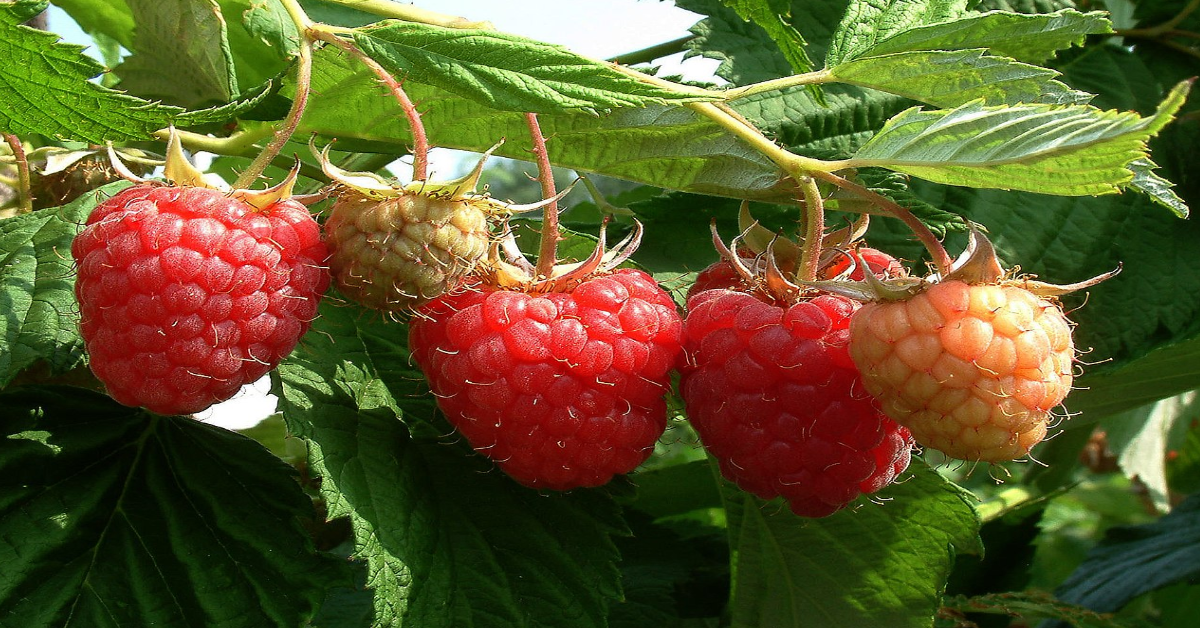
A Comprehensive Herbal Monograph:
👈Note on This Monograph:👇
Note on This Monograph: This extensive entry uses the full 8-part structure, offering a deep, interdisciplinary exploration of Red Raspberry (Rubus idaeus)— weaving together modern scientific evidence, traditional and ethnobotanical wisdom, practical cultivation and preparation guidance, and its living spiritual essence. Drawing from clinical studies, historical texts, indigenous knowledge, and esoteric traditions, it serves as a comprehensive resource for holistic understanding and respectful relationship with this powerful plant ally. Please work with trained professionals for therapeutic applications.
“Our Commitment to Transparent Research”
Unlike many herbal resources that offer generalized information with little or no backing, we provide direct links to every source we reference. This allows you to verify claims, explore topics in greater depth, and trust that what you’re reading is grounded in both modern science and time-honored tradition.
Section-specific Sources lists
Most monographs include dedicated “Sources:” sections at the end of major topics (e.g., Sources: Phytotherapy, Sources: Historical and Cultural Significance, Sources: Pharmacology). These contain direct, clickable links to the original material. We created this level of transparency so the research can serve you. Here are some ways readers use our sourced monographs: Anyone seeking truth — Verify claims for yourself instead of taking information at face value. Students & Researchers — Use the references for papers, assignments, or deeper study. Herbalists & Practitioners — Cite sources when educating clients or in professional materials. Curious Explorers — Follow the links to read original studies or historical texts yourself. Writers & Educators — Reference our monographs (with attribution), knowing the information is traceable.

“At A Glance”
Red Raspberry Leaf (Rubus idaeus), a revered botanical ally, has woven itself into the fabric of human healing across millennia, its vibrant green leaves offering a wealth of medicinal, cultural, and spiritual significance. Native to Europe, Asia, and North America, this perennial shrub of the Rosaceae family thrives in temperate climates, its thorny canes bearing both succulent fruit and leaves rich in therapeutic compounds.

Provides an overview of key points.
A Synopsis for Red Raspberry (Rubus idaeus)
👈At A Glance:👇
We compile a structured monograph on red raspberry leaf from botanical, traditional, and clinical sources. Checking recent evidence and status first.Scientific Name: Rubus idaeus L.
Family: Rosaceae
Common Names: Red raspberry, European raspberry, wild raspberry, garden raspberry; leaf specifically called raspberry leaf or Rubi idaei folium (EMA). Closely related North American taxon sometimes treated as R. idaeus subsp. strigosus or R. strigosus.
Botanical Description
Deciduous, prickly shrub, typically 1–2 m, with biennial canes: first-year primocanes are vegetative; second-year floricanes flower and fruit, then die. Leaves are pinnate, usually 3–5 (sometimes 7) leaflets, ovate to lanceolate, sharply serrate, green above and densely white-tomentose beneath. Flowers are white, five-petaled, in few-flowered racemes or cymes. Fruit is an aggregate of drupelets (the familiar red raspberry), separating from the receptacle when ripe. Native to temperate Europe and northern Asia; widely naturalized and cultivated in North America and elsewhere. Habitat includes woodland edges, hedgerows, clearings, and moist disturbed ground. The medicinal part in Western herbal practice is the dried leaf (sometimes young shoots); fruit is mainly a food.
Phytochemistry
Leaf is rich in hydrolysable tannins (about 2.6–6.9% w/w), including gallotannins and dimeric to oligomeric ellagitannins that yield ellagic acid on hydrolysis, plus flavonoids (about 0.46–1.05%), chiefly quercetin and kaempferol glycosides. Also present are phenolic acids (chlorogenic, caffeic, and related), small amounts of volatile compounds and terpenoids, vitamin C, vitamin E, and minerals (calcium, magnesium, manganese, zinc, iron). Older literature refers to “fragarine,” an incompletely characterized fraction reported to affect uterine smooth muscle; it is not a single, well-defined modern marker compound. Polyphenol profile varies with harvest time, drying, and extraction.
Western Traditional & Clinical Actions
Astringent, mild anti-inflammatory, and traditionally considered a uterine tonic. European Medicines Agency (HMPC) traditional herbal uses, based on long-standing use, are relief of minor spasms associated with menstrual periods, mild inflammation of the mouth or throat, and mild diarrhoea. Midwifery tradition also uses the leaf in late pregnancy to “tone” the uterus and support labor, though this indication is not accepted as well-established medicinal use by EMA and remains weakly evidenced.
Chinese Medicine Actions
Official Chinese materia medica drug Fu Pen Zi (覆盆子) is the dried unripe fruit of Rubus chingii Hu (Chinese raspberry), not the leaf of R. idaeus. Fu Pen Zi is classified as sweet, sour, and slightly warm; it enters the Liver and Kidney channels and is used to tonify and stabilize the Kidney, secure essence, reduce excessive urination, and improve vision in patterns of Kidney deficiency. R. idaeus fruit is used regionally in parts of China and is sometimes treated as related, but Western raspberry leaf should not be substituted for official Fu Pen Zi. Some Western-Chinese hybrid texts describe the leaf as cool and astringent, useful for damp-heat diarrhea or mild wind-heat, but that is not classical Ben Cao usage.
Traditional & Historical Uses
Greek and Roman sources (including references linked to Hippocratic tradition) used Rubus stems and leaves as astringent washes and for difficulties in childbirth. European folk practice employed leaf tea for diarrhea, sore mouth and throat, wounds, and menstrual complaints, and as a pregnancy tea from the second or third trimester. Indigenous North American groups used related Rubus leaves for gastrointestinal and obstetric purposes. Australian Aboriginal use of raspberry-leaf decoction for diarrhea is also recorded. Fruit has a separate food and mild diuretic/refrigerant history.
Modern Pharmacological Evidence
In vitro and animal work shows antioxidant activity (largely ellagitannins and flavonoids), mild antimicrobial effects, and both stimulatory and relaxant actions on smooth muscle, including uterine tissue, depending on preparation, concentration, and tissue type. Polyphenols, especially ellagic acid and ellagitannins, inhibit carbohydrate-digesting enzymes such as α-glucosidase and sucrase in experimental systems. High parenteral doses have produced toxicity in animals; oral traditional doses have not shown the same profile. Most mechanistic data do not directly confirm the traditional “uterine tonic” claim in humans.
Clinical Studies
The principal randomized trial (Simpson et al., double-blind, n = 192 low-risk nulliparous women) gave 2.4 g raspberry-leaf tablets daily from 32 weeks. No statistically significant differences were found versus placebo for length of labor stages, augmentation, analgesia, or mode of birth; a clinically noted shorter second stage (about 10 minutes) and fewer forceps deliveries did not reach significance. A 2024 prospective observational study associated raspberry-leaf use with shorter labor phases and higher vaginal-birth rates, but confounding prevents causal inference; authors explicitly stated the data do not establish safety. A 2025 randomized crossover trial in 22 healthy adults found that 10 g raspberry-leaf tea (about 50 mg total polyphenols) co-ingested with 50 g sucrose reduced early postprandial glucose (about 26% at 15 min and 44% at 30 min) and insulin, with no comparable effect when co-ingested with glucose—consistent with enzyme inhibition rather than a systemic insulin effect. Evidence for menstrual pain, diarrhea, and oral inflammation remains largely traditional.
Preparations & Dosage
EMA traditional preparations include comminuted herbal substance for tea and extracts for oral or oromucosal use. Common practical ranges:
- Infusion: 1.5–4 g dried leaf per cup, 1–3 times daily (traditional pregnancy teas often cited at roughly 1–2 cups, though evidence-based dosing is lacking).
- Dried leaf: up to about 4–12 g/day in divided doses in older herbal texts; the main RCT used 2.4 g/day.
- Liquid extract (1:1, ~25% ethanol): often 4–8 mL three times daily in secondary sources.
- Tincture (1:5): roughly 2–4 mL, two to three times daily.
Standardization is uncommon; tannin or polyphenol content is the most relevant quality marker.
Safety & Contraindications
Generally well tolerated as a short-term tea in non-pregnant adults; tannins may cause mild gastrointestinal upset or constipation in excess and can reduce absorption of non-heme iron and some drugs if taken simultaneously. EMA concluded that data are insufficient to recommend use in pregnancy, lactation, or under 18 years. UK Committee on Toxicity (2024) likewise found no health-based guidance value could be set because of data gaps on uterine activity, contaminants, and offspring outcomes. Theoretical concerns include premature uterine stimulation if used early in pregnancy and interactions with drugs affected by tannin binding. Hormone-sensitive condition warnings appearing in some databases are poorly supported for the leaf and should not be overstated. Allergy to Rosaceae is possible but uncommon. This is not a substitute for obstetric or medical advice.
Cultivation & Harvest
Hardy in temperate zones (roughly USDA 3–8). Prefers full sun to light shade, well-drained, slightly acidic, organic-rich soil, and consistent moisture. Canes are trained on supports; fruiting canes are removed after harvest. Leaves for medicine are best collected from healthy first- or second-year canes before or at early flowering, on dry mornings, and dried quickly in shade or with low heat to preserve polyphenols and color. Sustainable practice uses cultivated plants rather than wild harvest where populations are browsed or fragmented.
Commercial Products
Widely sold as loose leaf tea, tea bags, capsules, tablets, and liquid extracts, often marketed for menstrual comfort or third-trimester use. Quality varies; look for species-verified Rubus idaeus leaf, not fruit powder alone. In the EU, products may be registered as traditional herbal medicinal products for the EMA indications. Combination “pregnancy teas” are common and fall outside single-herb monographs.
Ethnobotanical Curiosities
The name idaeus refers to Mount Ida (Crete or Turkey in classical sources), linked in myth to the childhood of Zeus. European household tradition treated raspberry leaf as a standard “women’s tea,” sometimes combined with lady’s mantle or nettle. The same astringent leaf tea used internally for loose stools was applied externally as a gargle and wash—illustrating the classic tannin dual use. Fruit and leaf have largely separate cultural roles: dessert versus medicine.
Recent Research (2020–2026)
Integrative reviews (2021) reaffirmed biophysical effects on smooth muscle and the absence of clear human benefit or harm signals at studied doses. The 2024 observational pregnancy cohort and the 2024 UK COT statement both highlight evidence gaps and call for better trials. A 2023 ethnopharmacological review catalogued roughly 194 compounds across R. idaeus (fruit and other parts emphasized in Chinese literature) and preclinical activities including metabolic, antioxidant, and antimicrobial effects. The 2025 Nutrients crossover trial is the clearest recent human finding: acute blunting of sucrose-driven glucose and insulin rises via polyphenols.
Conservation Status
Rubus idaeus is assessed as Least Concern (IUCN Europe assessment, 2012) owing to a wide distribution and stable populations. It is extensively cultivated; medicinal leaf supply is not a conservation concern. Local wild populations can still be affected by habitat loss or overbrowsing.
DIY Recipes
Basic leaf infusion (non-pregnancy use): 2–3 g (about 1–2 teaspoons) dried leaf per 200–250 mL just-boiled water; cover and steep 10–15 minutes; strain. Up to 2–3 cups daily for mild menstrual discomfort or loose stool.
Throat gargle: stronger infusion (4 g per cup), cooled, used as a gargle and spat out, several times daily.
Simple oxymel-style syrup: simmer equal parts by volume strong cooled infusion and honey briefly, bottle, and refrigerate; 5–10 mL in water as a pleasant astringent drink. Do not use homemade preparations as a labor intervention without clinician guidance.
X (Twitter) Snapshot – 2020–2026
Recent posts continue everyday use of raspberry-leaf tea for menstrual cramps and as a flavored beverage (often blended with hibiscus), with mixed personal reports of benefit. Discussion remains largely anecdotal rather than linked to new trial data.
Sources informing this summary include EMA HMPC conclusions on Rubi idaei folium, the Simpson RCT and later integrative reviews, the 2024 BMC observational study, the UK COT 2024 statement, IUCN, and the 2025 Nutrients postprandial trial. Informational only; not medical advice.
Planting & Harvesting Reference Guide for Red Raspberry (Rubus idaeus)
👈Planting & Harvesting Reference Guide:👇
Red Raspberry (Rubus idaeus) – Planting & Harvesting Reference Guide
This consolidates the planting and harvesting details already given for Red Raspberry across the SPARK sections. Magical timing that was not in the old herbals is marked as contemporary.
- Best Time for Planting
- Set dormant bare-root canes in late autumn or early spring, when the soil is workable and hard frost is past. Autumn planting suits mild winter areas; early spring suits colder ones.
- Red Raspberry is hardy on the order of USDA zones 3–8. Choose full sun to light shade, on well-drained loam that may be slightly acid to neutral. Steady moisture, no waterlogging. Compost and mulch beat heavy nitrogen, which pushes soft growth.
- Space canes about 45–60 cm (18–24 inches) in the row and rows about 1.8–2.5 m (6–8 feet) apart, trained on wires. Hills are an alternative to rows. Do not use tree spacing.
- Summer-bearing types fruit on second-year floricanes and give a clear primocane year for leaf. Autumn-bearing (primocane-fruiting) types fruit on first-year canes, so a heavy leaf cut competes with the crop.
- Named hardy canes mentioned for small plantings include Killarney, Boyne, Prelude, and Encore, chosen for climate rather than for a published tannin rank. Red Raspberry is a parent of the cultivated raspberries; cultivars vary in season, size, and fruit color.
- Seed from fresh fruit is possible but slow and does not come true for named cultivars. Mash ripe fruit, rinse the seed free of pulp, cold-stratify moist for about 8–12 weeks, then sow shallowly in spring. Cane, sucker, or nursery plant is the practical start for medicine and fruit.
- Contemporary magical-minded timing, not an old raspberry rule: waxing moon, and a Friday or Venus hour, inferred from the Venus ruling. No traditional moon phase was recorded for Red Raspberry.
- Growing Conditions & Magical Minded Tips
- Mulch to hold moisture and suppress weeds. Compost in spring. Irrigate in dry spells. Return prunings and fruit waste to the row as compost.
- Thin primocanes so air moves through the row. Cut spent floricanes out after fruiting.
- Biodynamic and permaculture plantings already described use compost, vermicompost, companion planting, and integrated pest management. Preparations 500 and 501 belong to the holding, as with other Demeter crops. No study showed they raise leaf ellagitannins above well-grown organic cane.
- Before setting roots, a short asking is enough. Offer water at the root. Do not bind another person’s will over the planting. Leave a rough edge so bees can work the white flowers and birds can take fruit.
- Keep tea-leaf rows unsprayed, away from roadsides and sludge-amended ground. Cane disease is a crop issue; leaf for the cup should not come from a late-sprayed fruit block.
- Best Time for Harvesting Leaf and Fruit
- Leaf: from healthy primocanes or early floricanes, before or at first flowering, on a dry morning after dew has lifted. That is the medicinal and charm harvest named throughout these sections.
- Fruit: high summer into early autumn, when the red drupelets separate cleanly and leave the core on the cane.
- Contemporary energetic note only: waxing toward full moon was not a recorded Red Raspberry rule. Friday in a Venus hour is the inference from Culpeper and Cunningham. Potency in the leaf is tied more to harvest stage and shade-drying than to a moon phase.
- Sustainable & Magical Harvesting Methods
- Take scattered leaves, not every white-backed blade on a cane. Leave floricanes to fruit so birds keep dispersing seed.
- Hand-pinch or a clean knife. Identify first: pinnate three-to-five leaflets, white-felted beneath, slender prickles, fruit that leaves a hollow core. Blackberry keeps its core. Black raspberry often tip-roots and carries palmate leaflets.
- Avoid sprayed fields, roadsides, and plants below livestock runoff. Wild stands are Least Concern in the core range, but a small thicket is also cover; do not strip it.
- Speak before the cut: “Red Raspberry, I take leaf for gathering and for the threshold, and I leave your fruiting cane.” Pour a little of the first infusion back to the soil. A pruned cane may be hung at the door after fruiting if a threshold charm is wanted.
- Post-Harvest Processing
- Dry leaf in shade or with gentle air, out of sun, until brittle, then strip leaflets from stalks. Folk teaching warns that leaf used before it is fully dry can upset the stomach.
- Label with place and date. Store airtight, cool, and dark. Discard any lot that smells musty.
- A five-minute hot infusion later captures peak polyphenols; longer steeping draws more tannin and tastes harsher. That is a brewing note, not a drying note.
- Fruit is kept separate: fresh, frozen, jammed, or juiced. It is not a substitute for the leaf in a medicinal cup.
- For a charm pouch, use only fully dried leaf, sewn on a Friday if the Venus timing is chosen, and empty it under the cane when the work is done.
Always leave enough canopy for fruit and enough thicket for the bee and the bird. Cultivated or lightly managed cane is the better medicinal supply wherever a wild stand is small.
Healing Categories of Red Raspberry (Rubus idaeus)
👈Red Raspberry Leaf (Rubus idaeus): fits most strongly into the following healing categories, based on its traditional use, phytochemistry, clinical observations, and energetic profile:👇
Red Raspberry (Rubus idaeus) fits best where a cooling, drying, tannin-rich leaf gathers tissue and tone, and where the fruit is food rather than drug. The strongest categories are astringent, menstrual, oral, and late-pregnancy traditional use. Metabolic and joint uses are newer and narrower. Kidney-essence work belongs to Fu Pen Zi (Rubus chingii), not to this leaf.
Healing Categories
Astringent and gastrointestinal
Best-supported traditional category. Red Raspberry leaf infusions are used for mild diarrhoea and loose stool because hydrolysable tannins form a temporary pellicle on mucosa. This is an EMA traditional-use indication in adults.
Menstrual comfort
Best-supported gynecologic category short of birth. The leaf is registered in the European Union for minor spasms associated with menstrual periods, as tea or dry extract after meals. The picture is gathering and mild cramp relief, not a hormonal drug.
Mouth, throat, and minor surface care
Strong traditional fit. Cooled leaf infusion is a gargle for mild sore mouth and throat, continuous with the British Pharmaceutical Codex and with Cherokee and European wash uses. External washes for minor weeping skin appear in older formularies.
Late pregnancy and birth preparation
The category communities know best, and the one official monographs do not register. Midwifery uses Red Raspberry leaf in the third trimester, sometimes earlier, as a uterine tonic. The Sydney trial at 2.4 g daily from 32 weeks found no attributed harm and a shorter second stage that was not statistically significant. Place this category as traditional and still under-measured, not as a proven labor drug.
Post-meal carbohydrate tone
Emerging, specific. A 2025 crossover found that Red Raspberry leaf tea blunted early glucose and insulin rises after sucrose, not after free glucose, consistent with enzyme inhibition by ellagitannins and ellagic acid. It is a meal-side tea, not a diabetes medicine.
Joint comfort (extract)
Narrow but trial-backed. A phase II study of a patented hydro-alcoholic leaf extract (200–400 mg daily for 12 weeks) reported less knee-osteoarthritis pain than placebo. That is an extract product, not a household cup.
Nutritive mineral support
Secondary. Leaf infusions carry modest calcium, magnesium, manganese, and iron beside the phenolics. Fruit is the better vitamin C and fiber food. Useful as a mineral-bearing tea, not as a standalone nutrient replacement.
Veterinary birthing support
Recorded, not dosed for modern herds. Iroquois practice gave Red Raspberry leaves to cows at birthing. Parallel to the human confinement tea, and not a livestock protocol.
Healing Categories in more detail
Astringent work is the spine. Ellagitannins and gallotannins in the leaf bind protein at the surface of gut and mouth. That is why the same plant serves mild diarrhoea and a gargle, and why excess can constipate or bind non-heme iron if the cup is taken with the mineral. European registration stops at mild cases in adults and sends persistent symptoms onward.
Menstrual use sits on that same gathering action plus a long English and midwifery habit of giving the leaf for painful courses. EMA posology is a dry extract of 113–226 mg, up to three or four times daily after meals, or the comminuted leaf as tea. It is symptomatic relief, not a rewrite of the cycle.
Birth preparation is the cultural heart of Red Raspberry and the evidentiary edge. Cherokee leaf infusions for childbirth pain, the 1949 codex confinement tea, and contemporary midwifery protocols all point the same direction. Laboratory muscle work is biphasic: stimulate or relax, depending on tissue and extract. People who are pregnant decide this category with a midwife, especially before the third trimester.
Metabolic use is new and precise. Ten grams of leaf as a short infusion, about 50 mg polyphenols, changed the early sucrose curve in healthy adults and did not change a glucose load. Seekers exploring this category should not generalize it to every sugar or to fruit powder.
Joint use belongs to a defined extract and a patent-linked trial, not to every tea bag on a shelf. Nutritive use is the quiet companion of the obstetric cup. Veterinary use is a historical echo worth citing by nation, not copying as a dose.
Synergistic & Holistic Note
Red Raspberry works as a pair of gestures: the leaf gathers, the fruit gives. In traditional formulae the leaf is often set with blackberry leaf or agrimony when diarrhoea leads, and with nettle or peppermint in women’s teas when a gentler daily cup is wanted. Holistically she belongs with patience — a year of cane before fruit — and with tone rather than force. She is a poor match for a picture that is already dry, bound, or iron-poor if the tea is taken at every meal. She is a strong match for mild flux, a sore mouth, a cramp that needs gathering, and a late pregnancy that wants preparation rather than a push. The Chinese securing fruit is a relative, not a substitute. Leave that category with Fu Pen Zi, and let Red Raspberry keep the leaf, the threshold, and the hollow berry.
✨ If You Only Read U.S. Consumer Pages ✨
U.S. consumer pages almost always present Red Raspberry (Rubus idaeus) as a pregnancy tea: a gentle uterine toner, a cup in the third trimester, sometimes a warning not to start too early. That picture comes from midwifery custom, and it is the use communities actually keep. It is also a narrow window on the plant. Those pages rarely say that the leaf has a European Pharmacopoeia monograph with a tannin minimum, or that the European Union herbal monograph registers three traditional indications—menstrual spasm, mild diarrhoea, and mild mouth and throat inflammation—and does not register labor. They rarely name the Sydney trial’s actual dose and its non-significant second-stage finding, the 2024 observational cohort’s own caution, or the Reading sucrose study, which is the clearest controlled human result and has nothing to do with birth. They rarely separate the leaf from the fruit, or Red Raspberry (Rubus idaeus) from Rubus chingii, whose unripe fruit is the Chinese drug Fu Pen Zi. Fruit tonnage, chromosome assemblies from Norway and China, and a Least Concern wild plant that feeds bees and birds fall outside the tea-bag frame. Reading only retail copy makes the species look like a single obstetric suggestion. The global record makes it a pharmacopoeial leaf, a midwifery tradition still ahead of its trials, a sequenced crop, and a food plant whose official medicine is astringency as much as it is birth.
Sources:
https://www.ema.europa.eu/en/medicines/herbal/rubi-idaei-folium
https://www.ema.europa.eu/en/documents/herbal-report/addendum-assessment-report-rubus-idaeus-l-folium_en.pdf
https://pubmed.ncbi.nlm.nih.gov/11370690/
https://pmc.ncbi.nlm.nih.gov/articles/PMC12430597/
https://gd.eppo.int/taxon/RUBID
Globally: Where This Plant Is Studied
👈Global research, official texts, publishers, and human-trial data, rather than U.S.-consumer-page-limited:👇
Checking official monographs, trial registries, and where Red Raspberry research is actually published so this section is global rather than retail-page limited.Red Raspberry (Rubus idaeus) is studied as a cane fruit, a leaf drug, and a sequenced diploid, across Europe, Australia, China, Norway, the United Kingdom, Poland, and North America. The medicinal leaf and the dessert berry are not the same research field. Most official herbal texts name the leaf. Most agronomy and genome papers name the fruit crop. U.S. consumer pages usually name the tea.
Where This Plant Is Studied
Red Raspberry (Rubus idaeus) is a living research plant in the countries that grow it and in the countries that still use the leaf. Fruit breeding and genomics cluster in Norway (Norwegian Institute of Bioeconomy Research, NIBIO, with Graminor and the Njøs Fruit and Berry Centre, cultivar ‘Anitra’), the United Kingdom (NIAB and the Darwin Tree of Life / Wellcome wild-collected assembly), the United States (early ‘Joan J’ assembly work associated with the University of Maryland), and China (Northeast Agricultural University and the Fourth Affiliated Hospital of Harbin Medical University, line DNS-1). Leaf chemistry was quantified in Poland at the Medical University of Białystok. Human leaf work has been led from Australia (Sydney midwifery trial and the 2024 observational cohort) and from the Hugh Sinclair Unit of Human Nutrition at the University of Reading, with co-authors at Taif University. Regulatory assessment sits in London and Amsterdam: the European Medicines Agency HMPC, and the UK Committee on Toxicity. Field supply is the FAO map itself—Russian Federation, Mexico, Serbia, the United States, Poland, Morocco, and the Scottish soft-fruit counties. Chinese institutes publish heavily on Rubus, but the official fruit drug Fu Pen Zi is Rubus chingii; Red Raspberry (Rubus idaeus) enters that literature as a regional relative and as a genome, not as the classical materia medica species. The plant is a horticultural, pharmacognostic, and midwifery subject. It is not a single-country supplement story.
Sources:
https://journals.plos.org/plosone/article?id=10.1371/journal.pone.0265096
https://pmc.ncbi.nlm.nih.gov/articles/PMC11611404/
https://wellcomeopenresearch.org/articles/11-615
https://link.springer.com/article/10.1007/BF02975114
https://clinicaltrials.gov/study/NCT06385626
https://www.atlasbig.com/countries-raspberry-production
Official Books That Name This Species
Red Raspberry (Rubus idaeus) is named as a leaf drug in European official texts. The European Pharmacopoeia added a Raspberry leaf monograph (ref. 2950, 2020), with content expressed as tannins calculated as pyrogallol, minimum 3 percent. The 2014 EMA community herbal monograph on Rubus idaeus L., folium (Rubi idaei folium) had used the French Pharmacopoeia monograph ‘Ronce – Rubus’ (Ph. Fr. XI) as its quality reference, with a higher tannin floor of 5.0 percent; an EMA addendum later noted that the HMPC text should be aligned to the Ph. Eur. monograph when revised. The HMPC monograph itself is traditional use only: minor spasm associated with menstrual periods, mild inflammation of the mouth or throat, and mild diarrhoea, in adults. German Commission E issued a negative monograph on efficacy and recorded no known risks. The British Pharmaceutical Codex of 1949, cited in the EMA assessment report, already listed a leaf infusion for painful menstruation, for use before and during confinement, and as an astringent gargle. The British Herbal Pharmacopoeia tradition sits in that same English leaf line. The Pharmacopoeia of the People’s Republic of China names Fu Pen Zi from Rubus chingii, not the leaf of Red Raspberry (Rubus idaeus). No FDA botanical new-drug application exists for the leaf. Official naming, where it is strict, is European leaf identity and tannin assay, plus a clear separation from the Chinese fruit drug.
Sources:
https://www.ema.europa.eu/documents/herbal-monograph/final-community-herbal-monograph-rubus-idaeus-l-folium_en.pdf
https://www.ema.europa.eu/en/documents/herbal-report/addendum-assessment-report-rubus-idaeus-l-folium_en.pdf
https://www.ema.europa.eu/en/medicines/herbal/rubi-idaei-folium
https://www.ema.europa.eu/en/documents/herbal-report/final-assessment-report-rubus-idaeus-l-folium_en.pdf
https://www.altmeyers.org/de/naturheilkunde/rubi-idaei-folium-156222
Who Publishes on It
Publication splits by organ. Leaf pharmacology and pregnancy outcomes appear in Journal of Midwifery & Women’s Health (Simpson, Parsons, Greenwood, and Wade, Sydney), BMC Complementary Medicine and Therapies (the 2021 integrative review and the 2024 observational cohort), and the EMA assessment report. Polyphenol method and the glucose crossover appear in Nutrients and related PMC analytical papers from Reading. Leaf tannin and flavonoid numbers still trace to Archives of Pharmacal Research (Gudej and Tomczyk, Białystok). Genomes appear in PLOS One (NIBIO), International Journal of Genomics (Harbin / Northeast Agricultural University), Wellcome Open Research, and the earlier ‘Joan J’ bioRxiv assembly. Horticultural pharmacology from antiquity forward was reviewed in HortScience (Kim Hummer, USDA). Trade and crop identity sit with FAO compilations, CABI, Kew, and the Botanical Society of Britain and Ireland. Publishers and official bodies that actually carry the plant include Elsevier, Wiley, Springer Nature, MDPI, PLOS, the European Medicines Agency, the European Pharmacopoeia, the UK Food Standards Agency Committee on Toxicity, and national breeding institutes in Norway and the UK. Consumer sites reprint the pregnancy tea. They are not the source of the tannin monograph or the chromosome assemblies.
Sources:
https://pubmed.ncbi.nlm.nih.gov/11370690/
https://link.springer.com/article/10.1186/s12906-021-03230-4
https://pmc.ncbi.nlm.nih.gov/articles/PMC12430597/
https://journals.ashs.org/view/journals/hortsci/45/11/article-p1587.xml
https://www.gov.uk/government/publications/raspberry-leaf-tea
https://www.cabidigitallibrary.org/doi/abs/10.1079/cabicompendium.48002
Human Trials Tied to This Species
Human evidence for Red Raspberry (Rubus idaeus) leaf is small, specific, and not a hospital injectable story. The only double-blind randomized labor trial is Simpson and colleagues, Sydney, 1999–2000, published 2001: 192 low-risk nulliparous women, 2.4 g leaf tablets daily from 32 weeks versus placebo. No adverse maternal or neonatal outcomes were attributed to the leaf. First-stage labor was not shortened. Second stage was shorter by a mean of 9.59 minutes, and forceps births were 19.3 percent versus 30.4 percent; neither difference was statistically significant. The authors questioned whether the dose was high enough. A 2024 Australian prospective observational cohort associated leaf use with shorter labor phases and more vaginal births, and stated outright that the design cannot prove safety or efficacy. The metabolic trial is registered as NCT06385626 at the University of Reading and published in Nutrients in 2025: 22 healthy adults, 10 g leaf tea with 50 g sucrose or glucose. With sucrose, early glucose and insulin fell; with glucose, they did not. That is species-tied leaf tea, not fruit powder. EMA assessments remain traditional-use. The UK Committee on Toxicity in 2024 reviewed the maternal diet and set no health-based guidance value. There is no well-established-use dossier, and there is no large multicenter registration trial of the leaf. Fruit trials on vascular or metabolic endpoints often use black raspberry or mixed berry products and should not be cited as leaf evidence.
Sources:
https://pubmed.ncbi.nlm.nih.gov/11370690/
https://link.springer.com/article/10.1186/s12906-024-04465-7
https://clinicaltrials.gov/study/NCT06385626
https://pmc.ncbi.nlm.nih.gov/articles/PMC12430597/
https://www.gov.uk/government/publications/raspberry-leaf-tea
https://pmc.ncbi.nlm.nih.gov/articles/PMC7871383/

Part 1: Modern Medical Properties and Uses

Purpose: Highlights the plant’s scientific and medicinal properties, validating holistic healing with evidence-based data.
Contemporary Medical Applications of Red Raspberry (Rubus idaeus)
👈Contemporary Medical Applications: Describes current clinical uses (e.g., capsules, tinctures) and delivery methods in modern medicine.👇
Red Raspberry (Rubus idaeus L., Rosaceae) is treated here principally as the dried leaf (Rubi idaei folium), the part used in European and North American clinical herbal practice. The fruit is noted where nutritional chemistry overlaps with leaf polyphenols. Official Chinese Fu Pen Zi is the unripe fruit of Rubus chingii, a related but distinct drug, and is not substituted for the leaf in this part.
Contemporary Medical Applications:
- European regulatory practice recognizes Red Raspberry leaf as a traditional herbal medicinal product for adults. The European Medicines Agency Committee on Herbal Medicinal Products lists three traditional-use indications: symptomatic relief of minor spasms associated with menstrual periods, symptomatic treatment of mild inflammation of the mouth or throat, and symptomatic treatment of mild diarrhoea. These rest on long-standing use of at least thirty years, including fifteen years within the European Union, rather than on a well-established-use dossier built from modern controlled trials.
- Delivery forms in current practice include comminuted dried leaf as an infusion, dry extracts in tablets or capsules, and liquid extracts or tinctures. The EMA monograph specifies, for menstrual spasm, a dry extract at 113–226 mg up to three or four times daily after meals; for mouth and throat inflammation, 1.5–8 g of comminuted leaf in 150 ml boiling water used as a gargle three times daily; and for mild diarrhoea, the same infusion range taken orally three times daily. German phytotherapy sources often cite 2–4 g per cup and a daily leaf dose of about 6–8 g.
- Midwifery and community use continue to supply leaf tea, tablets, and tinctures in late pregnancy with the aim of supporting efficient uterine work and comfort in labor. The only double-blind randomized trial of this practice used 2.4 g of raspberry-leaf tablets daily from 32 weeks in low-risk nulliparous women. That trial did not show a shorter first stage of labor, but recorded a mean second-stage difference of 9.59 minutes and a lower forceps rate (19.3 percent versus 30.4 percent), neither of which reached statistical significance.
- Oromucosal use exploits the leaf’s tannin astringency. Infusions are cooled and used as gargles or mouth rinses for mild sore throat, tonsillar irritation, and inflamed oral mucosa, a practice continuous with the British Pharmaceutical Codex of 1949 and with earlier European gargle traditions. External washes of the same infusion have been applied to minor weeping skin and to conjunctival irritation in older formularies, though modern licensed products concentrate on oral and oromucosal routes.
- Commercial products sold outside formal herbal registration include loose-leaf tea, tea bags, capsules standardized only by weight of dried leaf, and combination “women’s” or “pregnancy” blends with nettle, peppermint, or alfalfa. Quality varies with species verification, harvest stage, and drying. European Pharmacopoeia monographs for raspberry leaf set identity and purity expectations that registered products are expected to meet, while food-supplement teas are regulated as foods rather than as medicines.
- Observational maternity data from 2024 describe real-world use as tea, tablets, or both, sometimes beginning well before the third trimester and ranging from one to eight cups or tablets daily. Those patterns document how the leaf is actually taken, but they do not establish an optimal obstetric dose. Secondary dosing summaries also list liquid extract at about 4–8 ml of a 1:1 preparation three times daily, a range drawn from traditional rather than trial-based posology.
- Nutritional and metabolic applications are emerging beside the classic astringent uses. A 2025 randomized crossover study gave healthy adults 10 g of leaf as a short infusion with a sucrose load and measured early post-meal glucose and insulin. That work positions the leaf tea as a dietary adjunct at the meal, distinct from the gynecologic and antidiarrheal indications already recognized in traditional herbal registration.
Sources: Contemporary Medical Applications
Sources:
https://www.ema.europa.eu/documents/herbal-monograph/final-community-herbal-monograph-rubus-idaeus-l-folium_en.pdf
https://www.ema.europa.eu/en/medicines/herbal/rubi-idaei-folium
https://pubmed.ncbi.nlm.nih.gov/11370690/
https://www.ema.europa.eu/en/documents/herbal-report/final-assessment-report-rubus-idaeus-l-folium_en.pdf
https://www.altmeyers.org/de/naturheilkunde/rubi-idaei-folium-156222
https://link.springer.com/article/10.1186/s12906-021-03230-4
Pharmacology of Red Raspberry (Rubus idaeus)
👈Pharmacology: Outlines key compounds and their mechanisms of action, driving therapeutic effects.👇
Pharmacology:
- The dominant pharmacological signature of Red Raspberry leaf is astringency from hydrolysable tannins. Gallotannins and ellagitannins bind proteins on mucosal surfaces, forming a temporary protective pellicle that reduces local secretion and mild inflammation. This mechanism accounts for the traditional effect in mild diarrhoea and for the soothing action of a gargle on inflamed oral and pharyngeal tissue, without requiring systemic absorption of the intact tannin polymers.
- Ellagitannins release ellagic acid on hydrolysis in the gut and in analytical acid digests. Ellagic acid and related metabolites inhibit carbohydrate-digesting enzymes, notably α-glucosidase and β-fructofuranosidase (sucrase). That enzyme-level action offers a coherent explanation for the 2025 finding that leaf tea blunted early glucose and insulin rises after sucrose but not after free glucose, because sucrose must first be cleaved before its monomers are absorbed.
- Flavonoids, chiefly quercetin and kaempferol glycosides, contribute antioxidant and mild anti-inflammatory activity. They scavenge reactive oxygen species and can modulate inflammatory signaling in cell systems. Leaf flavonoid content measured by classical methods falls roughly between 0.46 and 1.05 percent, lower than in some blackberry leaves, yet sufficient to participate in the overall polyphenol effect alongside the much larger tannin fraction.
- Uterine pharmacology is biphasic and preparation-dependent. Laboratory work on isolated smooth muscle, including uterine strips, has shown both contractile and relaxant responses according to extract type, concentration, and the tissue studied. Older literature named an active fraction “fragarine,” reported to coordinate rather than simply stimulate uterine muscle. The fraction was never fully characterized as a single modern marker compound, so contemporary discussions treat the effect as a property of the complex extract rather than of one isolated alkaloid.
- Mineral and vitamin constituents—calcium, magnesium, manganese, zinc, iron, and vitamins C and E—are present in nutritionally modest amounts in a typical infusion. They are unlikely to be the primary drivers of the astringent or uterine actions, but they contribute to the leaf’s reputation as a mineral-bearing tea in traditional obstetric diets. Phenolic acids such as chlorogenic acid add a further layer of antioxidant capacity.
- High-dose parenteral administration in animal studies has produced toxicity, whereas oral doses in the human trial range have not reproduced that picture. The distinction matters: tannin-rich extracts given intravenously or intraperitoneally do not model a cup of tea. Oral pharmacology is dominated by local gut and mucosal effects plus limited absorption of smaller phenolics and their microbial metabolites.
- Antimicrobial and tissue-protective actions reported in vitro are consistent with ellagitannin and flavonoid chemistry, including activity against selected oral and enteric organisms and support of epithelial repair in experimental ulcer models that used ellagic acid. These findings align with gargle use but have not been translated into licensed antimicrobial indications for the leaf.
Sources: Pharmacology:
Sources:
https://link.springer.com/article/10.1007/BF02975114
https://www.ema.europa.eu/en/documents/herbal-report/final-assessment-report-rubus-idaeus-l-folium_en.pdf
https://pmc.ncbi.nlm.nih.gov/articles/PMC12430597/
https://link.springer.com/article/10.1186/s12906-021-03230-4
https://www.gov.uk/government/publications/raspberry-leaf-tea
https://www.mdpi.com/2076-3921/5/2/17
Natural Medicine Studies /Red Raspberry (Rubus idaeus)
👈Natural Medicine Studies: Summarizes recent research on efficacy, safety, or clinical outcomes from peer-reviewed studies.👇
Natural Medicine Studies:
- The Sydney randomized trial remains the principal controlled human study of Red Raspberry leaf in labor. One hundred ninety-two low-risk nulliparous women received 1.2 g tablets twice daily or placebo from 32 weeks. No adverse maternal or neonatal outcomes were attributed to the leaf. First-stage labor was not shortened. Second stage was shorter by a mean of 9.59 minutes and forceps births were fewer, differences the authors called clinically interesting but not statistically significant, and they questioned whether 2.4 g daily was a fully effective dose.
- A 2021 systematic integrative review assembled laboratory, animal, and human evidence from 1941 to 2016. It confirmed biophysical effects on animal and human smooth muscle, including uterus, and noted toxicity only when high doses were given intravenously or intraperitoneally in animals. Human studies available at that time had not demonstrated clear harm or clear statistical benefit, while the second-stage signal from the Sydney trial was retained as clinically meaningful.
- A 2024 prospective observational study of raspberry-leaf users in pregnancy reported shorter phases of labor, a higher proportion of vaginal births, and lower proportions of augmentation, epidural, instrumental birth, caesarean section, and postpartum haemorrhage in the leaf cohort. The authors stated that no safety concerns were observed in that cohort, and they also stated that the design cannot be taken as proof of safety or efficacy. They called for a randomized trial.
- The 2025 University of Reading crossover trial is the first controlled human evidence that Red Raspberry leaf tea alters postprandial metabolism. Twenty-two healthy adults consumed 50 g sucrose or glucose with or without 10 g leaf tea. With sucrose, glucose fell by about 1.19 mmol/L at 15 minutes and 2.03 mmol/L at 30 minutes, and insulin was lower at 15, 30, and 60 minutes. Glucose alone was unaffected. Thirty-seven polyphenols were identified in the five-minute infusion.
- The UK Committee on Toxicity 2024 statement reviewed human, animal, and in vitro data on raspberry-leaf tea in the maternal diet, including uterine contractility, contaminants, and estimated exposure from tea, tablets, and tinctures. It concluded that data gaps prevented a health-based guidance value. The European Medicines Agency assessment likewise found clinical efficacy data insufficient for well-established use and did not recommend the leaf for pregnancy or lactation on the evidence then available.
- German Commission E issued a negative monograph on efficacy grounds while noting no known risks, a position later contrasted with the EMA traditional-use registration, which accepts plausibility plus thirty years of documented use for menstrual spasm, mild diarrhoea, and mild oral inflammation. ESCOP has not produced a monograph. This split illustrates how the same safety record can support traditional registration without supporting a claim of proven obstetric efficacy.
- Polyphenol quantification studies published alongside the metabolic trial measured ellagitannins as the dominant class in commercial leaf teas, with total measured polyphenols ranging from about 359 to 602 mg per 100 g across samples, and peak hot-water extraction near five minutes. Those analytical data strengthen dose interpretation for future trials by showing how brew time and source change the delivered phenolic load.
Sources: Natural Medicine Studies:
Sources:
https://pubmed.ncbi.nlm.nih.gov/11370690/
https://link.springer.com/article/10.1186/s12906-021-03230-4
https://link.springer.com/article/10.1186/s12906-024-04465-7
https://pmc.ncbi.nlm.nih.gov/articles/PMC12430597/
https://www.gov.uk/government/publications/raspberry-leaf-tea
https://www.ema.europa.eu/en/documents/herbal-report/final-assessment-report-rubus-idaeus-l-folium_en.pdf
https://pmc.ncbi.nlm.nih.gov/articles/PMC11858761/
Chemistry of Red Raspberry (Rubus idaeus)
👈Chemistry: Details active chemical constituents (e.g., alkaloids, flavonoids) and their healing roles.👇
Chemistry:
- Hydrolysable tannins are the principal chemical class in the leaf, reported between about 2.62 and 6.87 percent in raspberry cultivars and wild material examined by Gudej and Tomczyk. After acid hydrolysis, ellagic acid across Rubus leaves ranged from 2.06 to 6.89 percent. These figures remain the reference values cited in the European assessment report and in subsequent phytochemical reviews.
- Flavonoids occur at roughly 0.46–1.05 percent in raspberry leaf by the Christ–Müller method, with quercetin and kaempferol as the dominant aglycones after hydrolysis. Individual glycosides vary by cultivar, season, and canopy position. Blackberry leaves in the same study were often richer in flavonoids, so species identity matters when a product is labeled only as “bramble.”
- Modern LC-MS profiling has resolved dozens of polyphenols in leaf and in tea infusions. One 2025 method investigated 52 constituents and quantified 37 in water–methanol extracts, including ellagitannins, phenolic acids, and flavonoids. Ellagitannins were the largest fraction, spanning about 155–394 mg per 100 g across commercial samples, with phenolic acids about 39–119 mg per 100 g and flavonoids about 125–157 mg per 100 g in the methanolic assay.
- A five-minute hot-water infusion of 10 g leaf, as used in the metabolic trial, delivered approximately 38 mg ellagitannins, 7 mg flavonoids, and 4 mg phenolic acids, totaling about 50 mg polyphenols. Brewing studies show total polyphenols peaking near five minutes (about 506 mg per 100 g equivalent) and declining with prolonged steeping, a practical chemical constraint for home tea and for clinical protocols that must specify extraction time.
- Phenolic acids include chlorogenic acid and related caffeoylquinic acids, together with gallic acid liberated from gallotannins. Small quantities of volatile compounds, including octanol and terpenoids such as terpinolene, contribute aroma but are minor by mass. The historical fraction called fragarine has not been isolated as a single authenticated structure in modern chromatographic surveys and should not be listed as a defined marker.
- Mineral analysis of leaf and of infusions consistently detects calcium, magnesium, manganese, zinc, and iron, with vitamin C and vitamin E present in fresh and carefully dried material. Absolute amounts in a cup depend on leaf dose and water volume. These micronutrients are real constituents but are secondary to the tannin–flavonoid complex in explanations of astringent and enzyme-inhibitory effects.
- Quality-control chemistry uses total tannin, ellagic acid after hydrolysis, and flavonoid profile as identity and potency markers. The European Pharmacopoeia monograph for raspberry leaf specifies botanical and chemical tests that distinguish Rubus idaeus leaf from adulterant Rubus species. Cultivar, wild versus cultivated origin, and drying temperature all shift the ellagitannin-to-flavonoid ratio.
Sources: Chemistry:
Sources:
https://link.springer.com/article/10.1007/BF02975114
https://pmc.ncbi.nlm.nih.gov/articles/PMC11858761/
https://pmc.ncbi.nlm.nih.gov/articles/PMC12430597/
https://www.ema.europa.eu/en/documents/herbal-report/final-assessment-report-rubus-idaeus-l-folium_en.pdf
https://www.gov.uk/government/publications/raspberry-leaf-tea/statement-on-the-potential-health-effects-of-raspberry-leaf-tea-in-the-maternal-diet
https://www.altmeyers.org/de/naturheilkunde/rubi-idaei-folium-156222
Functional Foods and Nutrition /Red Raspberry (Rubus idaeus)
👈Functional Foods and Nutrition: Highlights dietary uses (e.g., teas, supplements) in modern health practices.👇
Functional Foods and Nutrition:
- Red Raspberry fruit is the familiar functional food: an aggregate of drupelets eaten fresh, frozen, or as juice, jam, and puree, supplying ellagitannins, anthocyanins, vitamin C, and fiber. The leaf is the medicinal and tea form. Both organs share ellagitannin chemistry, but the fruit is anthocyanin-rich and the leaf is tannin-dominant, so nutritional claims should not be transferred unchanged from berry to leaf.
- Leaf tea is consumed as a daily beverage outside any medical indication, often blended with hibiscus, mint, or lemon balm. A standard cup uses about 1.5–4 g dried leaf in 150–250 ml water, steeped 5–15 minutes. At the 10 g dose studied in 2025, one strong infusion delivered about 50 mg total polyphenols, enough to modify the early glycemic response to table sugar in healthy adults.
- The sucrose-specific effect is nutritionally distinctive. Because the tea reduced glucose and insulin only when the carbohydrate was sucrose, the practical implication is an interaction with sucrose-containing meals and drinks rather than a blanket hypoglycemic action. People using the leaf as a food tea alongside sugary foods are the population in which this acute effect has been measured.
- Mineral contribution from leaf infusions is modest relative to dietary requirements but is repeatedly cited in traditional obstetric nutrition as a source of calcium, magnesium, and trace elements alongside the astringent phenolics. Fruit remains the better vehicle for vitamin C and soluble fiber. Combining fruit in the diet with leaf as tea therefore covers two different nutritional niches of the same species.
- Food-supplement capsules of dried leaf, typically in the 1–2 g range per day in commercial obstetric products, sit between culinary tea and registered herbal medicines. They deliver a measured mass of leaf without the variable extraction of home brewing. The Sydney trial’s 2.4 g daily tablet dose is the best-documented supplement-style intake in pregnant participants.
- Processing changes the nutritional profile. Shade-drying and a short hot infusion preserve ellagitannins better than prolonged boiling, which the brewing-time study associated with a drop after the five-minute peak. Fermented or heavily oxidized leaf would be expected to shift the tannin profile, though commercial raspberry leaf is normally sold unfermented, unlike black tea.
- Public dietary exposure assessments, including the 2024 UK Committee on Toxicity review, treat tea, tablets, and tinctures as separate intake routes with different phenolic and solvent loads. No health-based guidance value was set. As a food, the leaf remains widely available; as a concentrated supplement in pregnancy, intake is a clinical decision rather than an ordinary dietary one.
Sources: Functional Foods and Nutrition:
Sources:
https://pmc.ncbi.nlm.nih.gov/articles/PMC12430597/
https://pmc.ncbi.nlm.nih.gov/articles/PMC11858761/
https://www.gov.uk/government/publications/raspberry-leaf-tea
https://www.ema.europa.eu/documents/herbal-monograph/final-community-herbal-monograph-rubus-idaeus-l-folium_en.pdf
https://pubmed.ncbi.nlm.nih.gov/11370690/
https://www.herbalgram.org/resources/herbalegram/volumes/volume-20/issue-9-september/news-and-features-3/fam-raspberry/
Current Projects and Future Possibilities /Red Raspberry (Rubus idaeus)
👈Current Projects and Future Possibilities: Notes ongoing research, clinical trials, or innovative medical applications.👇
Current Projects and Future Possibilities:
- The clearest research gap named by both the 2021 integrative review and the 2024 observational authors is an adequately powered randomized trial of leaf in late pregnancy, using a dose closer to traditional 4 g daily intakes and with prespecified labor outcomes. The Sydney trial’s 2.4 g dose and sample size leave the second-stage and instrumental-birth signals unresolved. A modern trial could also bank serum and cord-blood phenolics to link exposure with outcome.
- Postprandial metabolic work is positioned to expand beyond a single sucrose challenge in healthy adults. Dose-ranging infusions, chronic tea intake, and studies in people with impaired glucose tolerance would test whether the α-glucosidase and sucrase inhibition seen acutely persists and whether it is clinically useful. Ellagic acid and ellagitannin metabolites are the logical biomarkers.
- Analytical standardization is an active enabling project. LC-MS methods that quantify ellagitannins, quercetin and kaempferol glycosides, and phenolic acids across commercial lots can define a polyphenol range for future clinical batches. Brew-time curves already show that a five-minute infusion is near the practical maximum, which future protocols can adopt so that home tea and research tea are comparable.
- Contaminant and alkaloid surveillance, flagged in the UK maternal-diet statement, remains a quality project rather than a settled risk. Pyrrolizidine alkaloids from weed admixture, heavy metals, and pesticide residues are measurable in leaf crops and can be controlled by cultivation standards. Clean cultivated leaf would remove an uncertainty that currently limits guidance values.
- Uterine organ-bath and human myometrial strip work can revisit the old fragarine observations with chemically defined fractions. Separating ellagitannin-rich, flavonoid-rich, and low-molecular-weight fractions would show which constituents drive contraction, relaxation, or the coordinated pattern traditionally claimed. Such mapping would also clarify why results have differed between aqueous teas and solvent extracts.
- Oral-mucosal and mild-diarrhoea indications, already accepted as traditional use, are candidates for small pragmatic trials with patient-reported symptom scores and, for gargles, clinical grading of pharyngeal erythema. Because the mechanism is local and the safety record of short-term oral use is long, these indications are more tractable than obstetric endpoints.
- Agricultural projects on cultivar selection for leaf chemistry, rather than for fruit yield alone, could raise ellagitannin consistency for medicinal harvest. Dual-purpose plantings that take a leaf cut before fruiting, then fruit from floricanes, fit existing raspberry horticulture and would supply traceable material for the repository of clinical studies still needed.
Sources: Current Projects and Future Possibilities:
Sources:
https://link.springer.com/article/10.1186/s12906-021-03230-4
https://link.springer.com/article/10.1186/s12906-024-04465-7
https://pmc.ncbi.nlm.nih.gov/articles/PMC12430597/
https://www.gov.uk/government/publications/raspberry-leaf-tea
https://pmc.ncbi.nlm.nih.gov/articles/PMC11858761/
https://pubmed.ncbi.nlm.nih.gov/11370690/
Literary Mentions of Red Raspberry (Rubus idaeus)
👈Literary Mentions: References modern medical texts or studies citing the plant’s therapeutic use.👇
Literary Mentions:
- Dioscorides, in De Materia Medica Book IV, distinguishes the Idaian bramble—named for Mount Ida and corresponding to Red Raspberry—from the common bramble, describing it as softer and sometimes less prickly, and assigning it uses allied to those of bramble: astringent care of the mouth, gums, and fluxes. Pliny echoes the leaf and fruit tradition. These passages are the classical root of the European astringent indication still reflected in the EMA diarrhoea and gargle entries.
- John Gerard’s Herball (1597) figures the raspberry and places its leaves and fruit in the bramble chapter’s orbit: decoctions to fasten the teeth, lotions for the eyes, and fruit judged less drying than blackberry and suited to weak stomachs. John Parkinson (1629) records red, white, and thornless raspberries grown in England. Nicholas Culpeper (1653) declines to describe a plant already familiar, assigns it to Venus, and repeats the Greco-Roman uses of binding the belly and washing wounds and throat.
- The British Pharmaceutical Codex of 1949 lists an infusion of dried raspberry leaves for painful menstruation and for use before and during confinement to ease parturition, and as an astringent gargle, with wineglass doses of a 5 percent infusion two or three times daily. That codex entry is a principal modern-regulatory bridge cited in the EMA assessment report between folk obstetric use and twentieth-century pharmaceutical practice.
- Mrs. M. Grieve’s A Modern Herbal (1931) gathers the English-speaking tradition: leaf tea as a uterine tonic in pregnancy, an aid in childbirth, a remedy for diarrhoea and dysmenorrhea, and an external wash for wounds, ulcers, and sore throat. Grieve’s compilation is not a clinical trial, but it documents the indications that later midwifery surveys found still in active use.
- Commission E (Germany) and the later EMA HMPC monograph are the principal late-twentieth and early-twenty-first-century official literary assessments. Commission E found efficacy unproven and risks unknown in a negative monograph. The 2014 EMA community herbal monograph accepts traditional use for menstrual spasm, mild oral inflammation, and mild diarrhoea, and its assessment report archives the historical posology from the British Pharmaceutical Codex onward.
- Peer-reviewed clinical literature that cites the plant as a study drug begins in earnest with Simpson and colleagues in the Journal of Midwifery & Women’s Health (2001), continues through the Bowman integrative review (2021) and the 2024 BMC observational cohort, and includes the 2025 Nutrients metabolic trial. Hummer’s 2010 HortScience review, “Rubus Pharmacology: Antiquity to the Present,” explicitly ties Dioscorides, Gerard, Parkinson, and Culpeper to contemporary research interest.
- Chinese literary mention attaches mainly to raspberry fruit as a regional stand-in or relative of Fu Pen Zi (Rubus chingii fruit) in texts descending from the Shennong Bencao Jing tradition, where the fruit secures the Kidney and reduces polyuria. Those fruit entries should not be read as monographs on Rubus idaeus leaf. European leaf literature and Chinese fruit literature are parallel raspberry traditions, not a single continuous text.
Sources: Literary Mentions:
Sources:
https://journals.ashs.org/view/journals/hortsci/45/11/article-p1587.xml
https://www.researchgate.net/publication/301104467_Rubus_idaeus_raspberry
https://www.ema.europa.eu/en/documents/herbal-report/final-assessment-report-rubus-idaeus-l-folium_en.pdf
https://www.ema.europa.eu/documents/herbal-monograph/final-community-herbal-monograph-rubus-idaeus-l-folium_en.pdf
https://www.botanical.com/botanical/mgmh/r/raspbe05.html
https://archive.org/details/herballorgeneral00gera
https://pubmed.ncbi.nlm.nih.gov/11370690/

Part 2: Plant Knowledge Systems

Purpose: Validates plant-based healing through interdisciplinary scientific and cultural fields.
Ethnobotany of Red Raspberry (Rubus idaeus)
👈Ethnobotany: Explores the plant’s traditional uses across cultures, linking indigenous knowledge to modern applications.👇
Red Raspberry (Rubus idaeus L.) sits at a meeting point of classical Mediterranean pharmacy, Indigenous North American practice, European midwifery, modern phytotherapy registration, and a fully sequenced diploid genome. Leaf, fruit, stem, and root have not carried the same meanings in every culture, and those distinctions are kept here.
Ethnobotany:
- Mediterranean and early modern European practice treated Red Raspberry as the Idaian bramble, softer than common blackberry and used for the same astringent ends. Dioscorides and later Pliny, Gerard, Parkinson, and Culpeper describe leaf and fruit for mouth and gum complaints, fluxes of the belly, and external washes. That astringent thread runs forward into the British Pharmaceutical Codex of 1949, which lists a leaf infusion for painful menstruation, for use before and during confinement, and as a gargle, and into the European Medicines Agency traditional-use monograph for minor menstrual spasm, mild diarrhoea, and mild mouth or throat inflammation. The cultural use and the modern registered indications are the same three actions, separated mainly by dosage form and regulatory language.
- Indigenous North American records, compiled in the Native American Ethnobotany database, document Red Raspberry fruit as food among Abenaki, Alaska Native, Bella Coola, and other nations, and the leaf, stem, and root as medicine. Cherokee sources record a strong infusion of leaves for childbirth pains and a decoction of the highly astringent leaves for bowel complaint. Iroquois practice used a leaf decoction for burning and pain on passing water and as a physic, and a veterinary preparation of leaves given to cows at birthing. Woodlands Cree used a decoction of stem and upper root for teething sickness. These records parallel the European obstetric and astringent uses without being derived from them.
- Australian Aboriginal practice has been recorded as a decoction of Red Raspberry leaves for diarrhoea, the same indication that European folk medicine and the EMA monograph retain. In Britain and Ireland the wild plant was gathered from woodland edges and hedges long before commercial cane culture; archaeological pips in waterlogged deposits show fruit consumption deep into prehistory. Scotland’s later soft-fruit districts, especially Angus, Perthshire, and Fife, turned a wild edge species into a commercial crop while leaf tea remained a household remedy for loose stool, sore mouth, and women’s cycles.
- Chinese materia medica centers on Fu Pen Zi, the dried unripe fruit of Rubus chingii, sweet and slightly warm, entering Liver and Kidney to secure essence and reduce polyuria. Red Raspberry fruit is used regionally in parts of China and is sometimes discussed beside that drug, but the leaf of Red Raspberry is not the classical Fu Pen Zi. Keeping the two traditions separate prevents a European uterine-leaf tea from being read as a Kidney-essence fruit formula, and the reverse.
- Across these regions the leaf is repeatedly the astringent and women’s medicine, and the fruit is food, refrigerant, and, in East Asia, a securing tonic. Modern applications that follow directly are gargles and antidiarrheal infusions, menstrual-spasm teas within traditional-use registration, and late-pregnancy leaf protocols in midwifery. The ethnobotanical record is broad. It is also organ-specific, and it does not by itself establish an optimal obstetric dose.
Sources: Ethnobotany:
Sources:
https://journals.ashs.org/view/journals/hortsci/45/11/article-p1587.xml
https://www.researchgate.net/publication/301104467_Rubus_idaeus_raspberry
http://naeb.brit.org/uses/search?string=Rubus+idaeus
http://naeb.brit.org/uses/34470/
https://www.ema.europa.eu/documents/herbal-monograph/final-community-herbal-monograph-rubus-idaeus-l-folium_en.pdf
https://www.herbalreality.com/herb/raspberry/
https://growwild.kew.org/plants/raspberry
Plant Genomics of Red Raspberry (Rubus idaeus)
👈Plant Genomics: Describes genetic studies of the plant, focusing on traits related to medicinal properties.👇
Plant Genomics:
- Red Raspberry has been sequenced more than once, and the species is diploid with 2n = 14 and a base number of x = 7. A 2022 chromosome-level assembly of the cultivar ‘Anitra’ totaled 291.7 Mbp, with 247.5 Mbp (84.8 percent) placed in seven scaffolds of mean length about 35.4 Mbp, anchored to an existing linkage map with high synteny. Gene prediction called 39,448 protein-coding genes, about 75 percent of them functionally annotated. Comparisons within Rosoideae showed chromosome-scale rearrangements over relatively short evolutionary time, which matters for breeding and for transferring marker data between raspberry and blackberry.
- A later high-quality assembly of the line DNS-1, built from Pacific Biosciences long reads and Hi-C, placed 321.29 Mb on seven chromosomes and scored LAI 21.32, reported as gold quality. About 52.3 percent of the assembly was repetitive sequence, 24.15 percent long-terminal-repeat elements. Prediction yielded 29,814 protein-coding genes and 2,474 pseudogenes. Comparative analysis found 652 gene families unique to DNS-1, with 1,000 families expanded and 5,193 contracted relative to the ancestor used in that study. An earlier hybrid assembly of the ‘Joan J’ variety (bioRxiv 2019) had already annotated 35,566 protein-coding genes and anchored 80.1 percent of scaffolds to seven chromosomes.
- A 2026 Wellcome Open Research assembly of a wild-collected Red Raspberry reports two haplotypes of 274.19 Mb and 288.22 Mb, with 99.88 percent of haplotype 1 scaffolded into seven chromosomal pseudomolecules, a mitochondrial genome of 406.48 kb, a plastid genome of 155.7 kb, and 32,297 protein-coding genes on Ensembl. The authors note it as the first chromosome-level sequence of a wild-collected plant, beside earlier cultivated assemblies, and they explicitly connect the species to leaf infusions used as astringent gastrointestinal and throat remedies. Wild versus cultivar assemblies now allow leaf-chemistry traits to be compared outside breeding pedigrees selected only for fruit.
- Medicinal-property genomics is still indirect. Assemblies were built for fruit quality, antioxidant content, and breeding speed, not for a uterine-activity locus. Even so, the gene catalogs cover pathways that produce the leaf’s hydrolysable tannins, flavonoids, and phenolic acids—the constituents measured by Gudej and Tomczyk and by later LC-MS tea studies. Expanded and unique gene families in DNS-1 are a starting map for ellagitannin and flavonoid regulation. No published genome-wide study has yet tied a specific Red Raspberry haplotype to the fragarine fraction or to labor outcomes.
- Practical use of these genomes includes marker-assisted selection for leaf polyphenol yield as well as for fruit, discrimination of Red Raspberry from adulterant Rubus species in medicinal leaf, and tests of whether wild accessions carry tannin profiles absent from dessert cultivars. The sequencing question is settled. The pharmacogenomic question—which genes set the infusion that midwives and the EMA monograph actually use—is open and now experimentally reachable.
Sources: Plant Genomics:
Sources:
https://journals.plos.org/plosone/article?id=10.1371/journal.pone.0265096
https://pmc.ncbi.nlm.nih.gov/articles/PMC11611404/
https://wellcomeopenresearch.org/articles/11-615
https://www.pacb.com/publications/draft-genome-assembly-and-annotation-of-red-raspberry-rubus-idaeus/
https://link.springer.com/article/10.1007/BF02975114
Phytotherapy of Red Raspberry (Rubus idaeus)
👈Phytotherapy: Details the plant’s use in clinical herbal medicine, including therapeutic protocols.👇
Phytotherapy:
- European phytotherapy registers Red Raspberry leaf (Rubi idaei folium) as a traditional herbal medicinal product for adults, not as a well-established-use drug. The EMA community monograph gives three indications: minor spasms associated with menstrual periods (dry extract 113–226 mg, up to three or four times daily after meals); mild inflammation of the mouth or throat (1.5–8 g comminuted leaf in 150 ml boiling water as a gargle, three times daily); and mild diarrhoea (the same infusion, three times daily). Symptoms lasting beyond a week are referred onward. German practice often uses 2–4 g per cup and a daily leaf dose of about 6–8 g, including cold maceration brought briefly to the boil.
- Clinical herbal protocols for the menstrual and bowel indications follow that posology and add the older liquid preparations: a 1:1 extract in about 25 percent alcohol at 4–8 ml three times daily, or a 1:5 tincture at 2–4 ml two or three times daily, taken between meals when the aim is astringency. Gargles are prepared stronger, cooled, and spat out. Leaf is combined in some traditional formulae with agrimony or blackberry leaf when diarrhoea is the leading picture, a pairing already present in European domestic practice.
- Obstetric phytotherapy is widespread and less formally registered. Herbal Reality and midwifery teaching describe Red Raspberry leaf as a partus preparator and uterine tonic, with Ruth Trickey recommending use in the last five months of pregnancy, continued to support involution and, in some texts, lactation. The only double-blind trial used 2.4 g tablets daily from 32 weeks and found no adverse maternal or neonatal signal, no shortening of the first stage, and a clinically noted shorter second stage (mean difference 9.59 minutes) with fewer forceps births, neither statistically significant. Practitioners who follow tradition often use tea at roughly two to three cups daily in the third trimester; that dose has not been the trial dose.
- External phytotherapy continues the classical wash: cooled infusion for sore mouth, tonsillar irritation, minor wounds, and, in older formularies, conjunctival bathing. Phytopharmacy summaries list the same cluster—late-pregnancy tea, menstrual cramp, diarrhoea, mouthwash, eye lotion—and locate the plant as native to Europe and northern Asia and cultivated elsewhere for fruit. Quality expectations for registered leaf follow the European Pharmacopoeia identity tests so that blackberry or other Rubus leaf is not substituted unnoticed.
- Phytotherapy therefore has two lanes. One is monograph-bound: menstrual spasm, mild diarrhoea, and oromucosal inflammation, with defined gram and extract ranges. The other is midwifery tradition: late-pregnancy leaf as tea or tablet, supported by a safety-oriented trial and by long use, still without a registered obstetric indication or a settled optimum dose. Both lanes use the same dried leaf.
Sources: Phytotherapy:
Sources:
https://www.ema.europa.eu/documents/herbal-monograph/final-community-herbal-monograph-rubus-idaeus-l-folium_en.pdf
https://www.ema.europa.eu/en/medicines/herbal/rubi-idaei-folium
https://www.altmeyers.org/de/naturheilkunde/rubi-idaei-folium-156222
https://www.herbalreality.com/herb/raspberry/
https://pubmed.ncbi.nlm.nih.gov/11370690/
https://onlinelibrary.wiley.com/doi/10.1002/9781118543436.ch86
https://link.springer.com/article/10.1186/s12906-021-03230-4
Ethnoecology of Red Raspberry (Rubus idaeus)
👈Ethnoecology: Examines the plant’s ecological role in cultural practices and environmental interactions.👇
Ethnoecology:
- Red Raspberry is a suckering, biennial-caned shrub of woodland edges, clearings, heaths, and hedgerows across boreo-temperate Europe and northern Asia, naturalized widely in North America. Flowers depend entirely on bees and other insects for fruit set. Birds take the aggregate fruit and disperse the seed in droppings, which is why the plant colonizes new clearings so effectively. Foxes, badgers, and small mammals take fallen fruit, and the prickly thicket itself is cover for small birds and mammals. Cultural harvest of leaf and fruit therefore sits inside a pollinator-and-bird cycle, not outside it.
- In Britain and Ireland the species is both native and a garden escape. Botanical Society accounts describe wild strains with many short thin canes, leaves white-tomentose beneath, on wood margins, cliffs, hedges, heath, and drier bog edges, and cultivar discards on waste ground near houses. Kew records archaeological pips from early periods, evidence that people were gathering Red Raspberry long before cane training. Eastern Scotland’s soft-fruit parishes later intensified that relationship: Angus, Perthshire, and Fife became commercial landscapes in which a wild edge plant was selected for fruit while leaf remained available from the same canes.
- Traditional leaf harvest takes material from first- or second-year canes before or at early flowering, leaving floricanes to fruit. That timing matches the plant’s biennial architecture and leaves the bird-dispersed seed crop intact if fruiting canes are not stripped. Hedgerow and clearing populations tolerated moderate hand harvest; the conservation assessment is Least Concern, with stable wild populations, so cultural use has not driven a threat category. Cultivation for medicine can be stacked on fruit horticulture by a single leaf cut, reducing pressure on wild thickets where those still matter locally as cover.
- The ecological role in culture is therefore edge and disturbance: a plant that follows light gaps, feeds pollinators and frugivores, and supplies a household astringent from the same canes that feed people. Garden escapes blurring into native stands are part of that story in Ireland and Britain. Sustainable practice for a repository of medicinal leaf is cultivated or lightly managed cane, timed before fruit, rather than repeated wild stripping of the white-backed leaves that also shelter the thicket.
Sources: Ethnoecology:
Sources:
https://growwild.kew.org/plants/raspberry
https://bsbi.org/in-your-area/local-botany/co-fermanagh/fermanagh-species-accounts/rubus-idaeus-l
https://www.iucnredlist.org/species/203456/2765767
https://www.herbalgram.org/resources/herbalegram/volumes/volume-20/issue-9-september/news-and-features-3/fam-raspberry/
Anthroposophical Medicine of Red Raspberry (Rubus idaeus)
👈Anthroposophical Medicine: Outlines the plant’s use in Steiner-inspired remedies, including preparation, studies, and dosage.👇
Anthroposophical Medicine:
- Limited data specific to Red Raspberry as a named anthroposophic remedy. Rudolf Steiner and Ita Wegman’s medical approach, carried by Weleda and by anthroposophic clinics, uses plant preparations chosen for a picture of the whole plant—growth gesture, relationship of root, leaf, and fruit, and mineral processes—alongside conventional findings. Public Weleda and anthroposophic overviews describe individualized prescribing aimed at supporting self-healing. They do not, in the sources available, publish a standard Red Raspberry leaf potency, rhythmical preparation, or clinical study comparable to the EMA monograph or the Sydney labor trial.
- Where Red Raspberry enters holistic European practice that overlaps anthroposophic settings, it is as the same leaf tea or dilute aqueous preparation already used in phytotherapy: a cooling, drying, astringent leaf, associated with uterine tone in late pregnancy and with binding of mild fluxes. Herbal organoleptic teaching describes the leaf as restorative and astringing. That picture is compatible with an anthroposophic reading of a plant that fruits on second-year wood and carries tannin in the leaf, but compatibility is not the same as a documented Steiner potency schedule or a Weleda monograph for this species.
- No peer-reviewed anthroposophic dosage trial of Red Raspberry leaf was located. Practitioners working in that tradition who use the plant appear to follow the phytotherapy ranges already cited—infusion of about 1.5–4 g per cup, or the late-pregnancy tea protocols of midwifery—rather than a separate anthroposophic posology. Potentized preparations, if used, are not described in the regulatory herbal assessment or in the labor trials.
- The honest entry for this subcategory is therefore a boundary note. Anthroposophical medicine has a developed pharmacy and a published method. Red Raspberry has a developed leaf tradition in European herbal and midwifery practice. A specific Steiner-inspired remedy, manufacture method, and outcome study for Red Raspberry leaf was not found in searchable sources and should not be invented from the general system. Seekers wanting that lane will find richer primary material on plants Weleda has actually monographed, and can still use the phytotherapy and ethnobotany sections here for the leaf itself.
Sources: Anthroposophical Medicine:
Sources:
https://www.weleda.co.nz/magazine/health/anthroposophic-medicine
https://www.herbalreality.com/herb/raspberry/
https://www.ema.europa.eu/en/medicines/herbal/rubi-idaei-folium
https://onlinelibrary.wiley.com/doi/10.1002/9781118543436.ch86

Part 3: Heritage and Practice

Purpose: Weaves historical and cultural heritage with practical guidance for medicinal use.
Historical and Cultural Significance of Red Raspberry (Rubus idaeus)
👈Historical and Cultural Significance: Explores the plant’s role in historical and cultural medical practices.👇
Red Raspberry (Rubus idaeus L.) is both a wild edge bramble and a domesticated cane fruit. Leaf, fruit, and cane have carried different cultural jobs, and the practical sections below keep those jobs separate so a gargle, a dessert, and a late-pregnancy tea are not collapsed into one recipe.
Historical and Cultural Significance:
- The name Red Raspberry is a geographical memory. Rubus idaeus means bramble of Ida, tied in classical sources to Mount Ida, where Hellenistic and later European writers placed the plant. The story repeated from antiquity into modern herbal lore is that the nursemaid Ida, tending the infant Zeus, pricked her finger on the cane while gathering berries that were then white, and the blood stained the fruit red. Whether read as myth or as a folk etymology, the tale fixed Red Raspberry to fertility, infancy, and a mountain landscape, and it is the reason early modern herbals still call it the Idaian bramble rather than treating it as anonymous scrub.
- Roman and medieval Europe moved the plant from wild gather to garden crop. Palladius, in the fifth century, is cited as an early written notice of cultivation. Seeds recovered from Roman forts in Britain are used as evidence that fruit traveled with people and animals as well as with birds. By the reign of Edward I (1272–1307), later horticultural tradition credits a push toward wider planting. Wealthy medieval households used the fruit as food and as a red pigment. In early Christian imagery the fruit stood for kindness, the red juice read as blood from the heart carrying nourishment. German folk practice tied a piece of cane to a horse believed to be bewitched. These uses sit beside, not instead of, the medical leaf tradition.
- Early modern English print fixed the leaf in household medicine. Gerard’s Herball (1597) figures the plant and places leaf and fruit with bramble remedies for teeth, eyes, and fluxes. Parkinson (1629) records red, white, and thornless kinds grown in England. Culpeper (1653) calls the plant too well known to need a description, assigns it to Venus, and repeats binding actions for fevers, mouth sores, and excessive menstrual flow. The British Pharmaceutical Codex of 1949 still lists a leaf infusion for painful menstruation, for use before and during confinement, and as an astringent gargle. That line, from Idaian bramble to codex tea, is the European cultural spine of Red Raspberry leaf.
- North American cultural significance is both Indigenous and settler. Fruit was food across northern nations long before commercial canes. Cherokee and Iroquois records include leaf infusions for childbirth pain, bowel complaint, and urinary burning. Settler midwifery adopted the European leaf tea and carried it into twentieth-century nurse-midwife practice, which surveys still find among the herbs most often suggested for late pregnancy. Commercial culture in eastern Scotland—Angus, Perthshire, Fife—made Red Raspberry a regional identity crop, while the leaf remained the quiet medicinal part of the same plant.
- Regulatory culture in the late twentieth and early twenty-first century split the heritage in two. German Commission E found efficacy unproven and risks not established. The European Medicines Agency later accepted traditional use for minor menstrual spasm, mild diarrhoea, and mild mouth or throat inflammation, explicitly on long-standing use. Midwifery culture kept the confinement indication that the monograph did not register. Red Raspberry is therefore culturally secure as food and as astringent leaf, and culturally contested only on the obstetric claim, which communities continued to practice while assessors asked for stronger trials.
Sources: Historical and Cultural Significance:
Sources:
https://journals.ashs.org/view/journals/hortsci/45/11/article-p1587.xml
https://blog.herbsociety.org/raspberry-herb-of-the-year-and-herb-of-the-month-history-and-lore/
https://thepracticalherbalist.com/advanced-herbalism/raspberry-myth-and-magic/
https://www.researchgate.net/publication/301104467_Rubus_idaeus_raspberry
https://www.ema.europa.eu/documents/herbal-monograph/final-community-herbal-monograph-rubus-idaeus-l-folium_en.pdf
https://www.botanical.com/botanical/mgmh/r/raspbe05.html
Indigenous and Traditional Systems /Red Raspberry (Rubus idaeus)
👈Indigenous and Traditional Systems: Details its use in specific indigenous or traditional healing systems.👇
Indigenous and Traditional Systems:
- Indigenous North American practice, as compiled in the Native American Ethnobotany database, treats Red Raspberry as food and drug, with the organ specified. Abenaki, Alaska Native, and Bella Coola records emphasize fruit eaten fresh or preserved. Woodlands Cree used a decoction of stem and the upper part of the root for teething sickness. Cherokee practice, recorded by Hamel and Chiltoskey, used a strong infusion of leaves for childbirth pains and a decoction of the astringent leaves for bowel complaint, and external leaf preparations in antirheumatic contexts. Iroquois medical botany records a leaf decoction for burning and pain when passing water, a leaf decoction as a physic, and a veterinary use of leaves given to cows at birthing. These are local protocols, not a single continental recipe.
- European traditional systems form the other major leaf culture. Dioscorides distinguishes the Idaian bramble and aligns it with bramble uses for mouth, gums, and fluxes. From that base, English domestic medicine and the 1949 British Pharmaceutical Codex carry painful menstruation, confinement, diarrhoea, stomatitis, and tonsillitis as a wash. Mrs. Grieve’s A Modern Herbal gathers the same cluster: uterine tonic in pregnancy, aid in childbirth, diarrhoea, dysmenorrhea, and external wash for wounds and sore throat. Australian Aboriginal use of a leaf decoction for diarrhoea is recorded in ethnopharmacological reviews and matches the astringent indication rather than the obstetric one.
- Traditional Chinese practice does not center the leaf of Red Raspberry. Fu Pen Zi is the dried unripe fruit of Rubus chingii, sweet, sour, and slightly warm, entering Liver and Kidney to secure essence, reduce polyuria, and support vision. Red Raspberry fruit is used in some Chinese regions and is sometimes discussed beside that drug. Reading a European leaf tea as Fu Pen Zi mixes two systems. Tibetan and other Himalayan Rubus uses exist for related species and should be identified to species before they are borrowed for Red Raspberry leaf.
- Physiomedical and later Western herbal practice in Britain and North America kept the leaf as a trophorestorative for the uterus and an astringent for mild fluxes, often paired with blackberry leaf or agrimony when diarrhoea led. Late-pregnancy tea became a standard community protocol, frequently started in the third trimester or, in some teaching lines such as Ruth Trickey’s, earlier in the second half of pregnancy. The Sydney trial tested one version of that protocol at 2.4 g tablets daily from 32 weeks and did not replace the tradition; it measured it.
- What the systems share is organ logic: fruit feeds, leaf binds and is given to women around bleeding and birth, root and stem appear in teething and local washes. What they do not share is a single dose. Indigenous decoctions, codex wineglass infusions, and modern tablets are parallel answers to related pictures, and a repository entry should cite the nation or the text rather than merge them.
Sources: Indigenous and Traditional Systems:
Sources:
http://naeb.brit.org/uses/search?string=Rubus+idaeus
http://naeb.brit.org/uses/34470/
https://journals.ashs.org/view/journals/hortsci/45/11/article-p1587.xml
https://www.botanical.com/botanical/mgmh/r/raspbe05.html
https://www.ema.europa.eu/en/documents/herbal-report/final-assessment-report-rubus-idaeus-l-folium_en.pdf
https://www.herbalreality.com/herb/raspberry/
https://pubmed.ncbi.nlm.nih.gov/11370690/
Folklore and Culinary Traditions of Red Raspberry (Rubus idaeus)
👈Folklore and Culinary Traditions: Highlights folklore, myths, and culinary uses tied to the plant.👇
Folklore and Culinary Traditions:
- Folklore of Red Raspberry clusters on Mount Ida, the nursemaid’s pricked finger, and the staining of white fruit red. Culpeper’s astrological reading places the plant under Venus, with the prickles explained by Venus in the house of Mars, and the element often given in later herbal folklore as water. German cane-magic for horses and the Christian reading of the fruit as kindness are household-scale stories, not temple cults. Cave and fort finds of seeds show the culinary trail is older than the myths written down for it.
- Culinary use is the fruit, not the leaf. Ripe aggregates are eaten fresh, folded into cream, jammed, juiced, and fermented. Scotland built a commercial identity on the berry; Chambord and other liqueurs use the fruit as flavor. Wild fruit is smaller, softer, and sharper than dessert cultivars. Leaf is the tea herb: pleasant, tannic, often compared with black tea without caffeine, and commonly blended with hibiscus, mint, or lemon balm. Leaf is not a substitute for the berry in a pie.
- Medieval and early modern kitchens used fruit as pigment as well as food. Domestic medicine crossed the kitchen when the same leaf that flavored a pot of tea was cooled for a gargle or a wash. That overlap is why preparation sections below separate a culinary infusion, drunk for taste, from a medicinal infusion measured in grams.
- Naming folklore includes hindberry and raspis, English vernaculars beside Red Raspberry. White-fruited and thornless garden forms, already noted by Parkinson, fed stories of the original unstained berry. None of these names changes identification: the receptacle stays on the cane when the fruit is picked, which is the field mark cooks and foragers both use.
Sources: Folklore and Culinary Traditions:
Sources:
https://thepracticalherbalist.com/advanced-herbalism/raspberry-myth-and-magic/
https://blog.herbsociety.org/raspberry-herb-of-the-year-and-herb-of-the-month-history-and-lore/
https://journals.ashs.org/view/journals/hortsci/45/11/article-p1587.xml
https://growwild.kew.org/plants/raspberry
https://www.herbalgram.org/resources/herbalegram/volumes/volume-20/issue-9-september/news-and-features-3/fam-raspberry/
Identification and Characteristics of Red Raspberry (Rubus idaeus)
👈Identification and Characteristics: Describes physical traits and identification markers for the plant.👇
Identification and Characteristics:
- Red Raspberry is a deciduous, suckering shrub with biennial canes, usually 1–2 m. First-year primocanes are vegetative; second-year floricanes flower, fruit, and die. Stems carry needle-like prickles rather than the heavy hooked prickles of many blackberries. European cultivated forms often lack the stalked glands typical of American Red Raspberry (Rubus idaeus subsp. strigosus), whose stems and petioles are stipitate-glandular and whose bark often peels with age.
- Leaves are alternate, pinnately compound, usually three to five leaflets, sometimes seven, ovate to lanceolate, sharply serrate, green above and densely white-tomentose beneath. When five leaflets are present they are generally pinnate. Paired narrow stipules sit at the leaf base. Flowering shoots may carry only three leaflets. The white underside is the field mark most useful when fruit is absent, and it is shared with some other raspberries, so it is not used alone.
- Flowers are white, five-petaled, in few-flowered clusters. Fruit is an aggregate of red drupelets that separates cleanly from the receptacle, leaving a hollow core and the receptacle on the cane. Blackberry keeps the receptacle inside the picked fruit. Black raspberry (Rubus occidentalis) has glaucous, arching canes that root at the tip, palmately arranged leaflets when five are present, and dark fruit. Those two contrasts—hollow core, and pinnate rather than palmate leaflets—separate Red Raspberry from the look-alikes most often bagged with it.
- Flavor and texture support the eye. Crushed leaf smells green and slightly tea-like, not resinous. Wild canes are thinner and more numerous than named dessert cultivars. Subspecies and hybrids complicate North American stands; Flora of North America treats American plants as subsp. strigosus and lists a wide synonymy. Medicinal leaf buyers rely on white-backed pinnate leaves plus a hollow-cored red fruit on the same plant, and on supplier identity where wild hybrids are possible.
Sources: Identification and Characteristics:
Sources:
https://www.inaturalist.org/posts/67775-raspberry-id-rubus-occidentalis-rubus-leucodermis-rubus-idaeus-strigosus
http://dev.floranorthamerica.org/Rubus_idaeus_subsp._strigosus
https://bsbi.org/in-your-area/local-botany/co-fermanagh/fermanagh-species-accounts/rubus-idaeus-l
https://growwild.kew.org/plants/raspberry
Wildcrafting /Red Raspberry (Rubus idaeus)
👈Wildcrafting: Covers where to find, identification tips (including look-alikes), and esoteric/medicinal harvesting methods.👇
Wildcrafting:
- Red Raspberry is a plant of light gaps: woodland edges, hedges, heath, clearings, and the drier margins of bogs across temperate Europe, northern Asia, and, as the glandular subspecies or close relative, much of North America. Kew and regional floras place flowering and fruit in summer into autumn. Least Concern status and stable populations mean modest hand harvest is not a conservation threat in the core range, but local thickets can still be nesting cover, so stripping a whole stand is poor practice.
- Harvest leaf from healthy primocanes or early floricanes before or at first flowering, on a dry morning after dew has lifted. Take scattered leaves, not every white-backed blade on a cane, and leave floricanes to fruit so birds continue to disperse seed. Young, unblemished leaves dry greener and carry the tannin profile the tea is drunk for. Avoid roadsides, sprayed cane fields, and plants downstream of livestock runoff.
- Identification in leaf only: pinnate three-to-five leaflets, white-felted beneath, slender prickles, no tip-rooting arch of black raspberry. Confirm later with fruit if the stand is unfamiliar. Blackberry leaf is greener beneath, often with hooked prickles on angled canes, and the fruit keeps its core. Glandular hairs on American Red Raspberry stems separate that subspecies from smooth European cultivars escaped from gardens. When in doubt, do not dry the lot for medicine.
- Esoteric and traditional timing follows the plant’s biennial gesture rather than a single lunar rule. Leaf is taken in the vegetative year or at the opening of flower, fruit at full color, cane rarely and only in the folk uses already noted. Dry leaf in shade or with gentle air, out of sun, until brittle, then strip leaflets from stalks. Label with place and date. Cultivated plants are the better source wherever wild stands are small or heavily browsed.
Sources: Wildcrafting:
Sources:
https://growwild.kew.org/plants/raspberry
https://bsbi.org/in-your-area/local-botany/co-fermanagh/fermanagh-species-accounts/rubus-idaeus-l
https://www.inaturalist.org/posts/67775-raspberry-id-rubus-occidentalis-rubus-leucodermis-rubus-idaeus-strigosus
https://www.iucnredlist.org/species/203456/2765767
https://www.herbalreality.com/herb/raspberry/
Cultivation Practices of Red Raspberry (Rubus idaeus)
👈Cultivation Practices: Details growing methods for medicinal potency, including general cultivation.👇
Cultivation Practices:
- Red Raspberry is hardy on the order of USDA zones 3–8, in full sun to light shade, on well-drained loam that may be slightly acid. Canes are planted dormant, in rows or hills, and trained on wires. Floricanes are cut out after fruiting; primocanes are thinned to keep air in the row. That architecture is the medicinal one as well: leaf for tea is a by-product of a fruit planting if it is cut before the canopy is stripped.
- For leaf potency, harvest before flowering or at early flower, from unsprayed canes, and dry quickly in shade. Brewing studies show hot-water polyphenols peaking near a five-minute infusion and declining if the leaf is over-extracted; field practice cannot change that, but slow sun-drying and mould both flatten color and tannin. Cultivars selected only for dessert fruit are not automatically the richest leaf; wild-type and dual-purpose canes are reasonable choices when leaf is the goal.
- Summer-bearing and primocane-fruiting (autumn-bearing) types differ in when leaf and fruit coincide. Summer bearers give a clear primocane year for leaf before the fruiting year. Autumn bearers fruit on first-year canes, so a heavy leaf cut competes with the crop. Medicinal growers who want both usually take a light leaf harvest and leave enough canopy for fruit.
- Soil practice that supports polyphenol-rich leaf is ordinary good cane culture: compost, mulch, steady moisture without waterlogging, and avoidance of excess nitrogen that pushes soft growth. Companion rows and IPM reduce the need for residues that have no place in a tea herb. Named hardy cultivars used on small farms include Killarney, Boyne, Prelude, and Encore, chosen for climate rather than for a published ellagitannin ranking.
Sources: Cultivation Practices:
Sources:
https://growwild.kew.org/plants/raspberry
https://bsbi.org/in-your-area/local-botany/co-fermanagh/fermanagh-species-accounts/rubus-idaeus-l
https://pmc.ncbi.nlm.nih.gov/articles/PMC11858761/
https://collettegreystone.substack.com/p/raspberry-farming
Biodynamic Farming / Red Raspberry (Rubus idaeus)
👈Biodynamic Farming: Outlines biodynamic cultivation techniques specific to the plant.👇
Biodynamic Farming:
- Limited species-specific Demeter trial data for Red Raspberry leaf. Biodynamic cane culture that does exist treats the planting as part of a farm organism: compost, animal manures, and site-specific soil building rather than soluble feed, with preparations 500 and 501 used on the holding as in other Demeter crops.
- Working biodynamic and permaculture raspberry plantings use dormant bare-root canes on terraced or mulched rows, compost and vermicompost, companion planting, and integrated pest management instead of routine sprays. Leaf taken from such rows is simply clean canopy from that system, dried in shade.
- No published study shows that biodynamic preparations raise ellagitannin content in Red Raspberry leaf above well-grown organic cane. The ecological gain documented in practice is soil care, residue avoidance, and a closed loop of prunings and fruit waste returned as compost, which suits a tea herb.
Sources: Biodynamic Farming:
Sources:
https://collettegreystone.substack.com/p/raspberry-farming
https://www.demeter.net/biodynamics/biodynamic-approach/
https://pmc.ncbi.nlm.nih.gov/articles/PMC11858761/
Preparation Methods of Red Raspberry (Rubus idaeus)
👈Preparation Methods: Describes how to prepare the plant for medicinal or culinary use.👇
Preparation Methods:
- Medicinal infusion: 1.5–4 g dried Red Raspberry leaf, about 1–2 teaspoons of broken leaf, in 150–250 ml just-boiled water, covered, steeped 10–15 minutes, strained. EMA diarrhoea and gargle ranges allow 1.5–8 g in 150 ml, up to three times daily. A five-minute steep captured peak polyphenols in analytical brewing work; longer steeping extracts more tannin and can taste harsher. Drink the medicinal cup between meals if iron absorption is a concern.
- Gargle and wash: the stronger infusion, cooled, used as a mouth rinse and spat out, three times daily for mild sore throat. The same liquid has been used as a skin wash and, in older formularies, as an eye lotion; eye use wants a sterile or carefully strained preparation and is not a modern licensed route. Compresses for minor weeping skin use the cooled tea.
- Tablets and tinctures follow secondary and trial practice rather than kitchen measure. The labor trial used 1.2 g tablets twice daily. Liquid extract 1:1 in about 25 percent alcohol is listed at 4–8 ml three times daily; a 1:5 tincture at 2–4 ml two or three times daily. Dry extract in the EMA menstrual indication is 113–226 mg, up to three or four times daily after meals.
- Culinary fruit is prepared apart from the leaf: fresh, frozen, jammed, or juiced. Leaf tea as a beverage may be blended with hibiscus or mint and sweetened, but sugar changes the metabolic picture studied in 2025, where unsweetened leaf tea blunted the early glucose rise from a sucrose load. Dry leaf fully, store airtight and dark, and discard any lot that smells musty.
Sources: Preparation Methods:
Sources:
https://www.ema.europa.eu/documents/herbal-monograph/final-community-herbal-monograph-rubus-idaeus-l-folium_en.pdf
https://www.altmeyers.org/de/naturheilkunde/rubi-idaei-folium-156222
https://pmc.ncbi.nlm.nih.gov/articles/PMC11858761/
https://pubmed.ncbi.nlm.nih.gov/11370690/
https://pmc.ncbi.nlm.nih.gov/articles/PMC12430597/
Safety Precautions for Red Raspberry (Rubus idaeus)
👈Safety Precautions: Lists plant-specific risks, including side effects or contraindications.👇
Safety Precautions:
- Short-term oral use of Red Raspberry leaf as tea in healthy adults has a long record and few reported effects. Tannins can upset an empty stomach, constipate in excess, and bind non-heme iron and some medicines if taken at the same moment. Separate the tea from iron supplements and from mineral-rich meals by about two hours if iron status is low.
- Pregnancy is the live question, not a settled ban and not a settled endorsement. The Sydney trial at 2.4 g daily from 32 weeks reported no maternal or neonatal harm attributed to the leaf, and a shorter second stage that was not statistically significant. EMA found the efficacy and safety data insufficient to recommend use in pregnancy or lactation. The UK Committee on Toxicity in 2024 could not set a health-based guidance value because of gaps on uterine activity, contaminants, and offspring outcomes. People who are pregnant and considering the leaf should decide with their midwife or clinician, especially before the third trimester.
- High intravenous and intraperitoneal doses were toxic in animal work; that route does not model a cup of tea. Allergy to Rosaceae is possible. Weed-contaminated leaf can carry pyrrolizidine alkaloids, so source matters. Children and adolescents are outside the EMA traditional-use indication. This repository entry is information, not a personal dose.
Sources: Safety Precautions:
Sources:
https://www.ema.europa.eu/en/documents/herbal-report/final-assessment-report-rubus-idaeus-l-folium_en.pdf
https://pubmed.ncbi.nlm.nih.gov/11370690/
https://www.gov.uk/government/publications/raspberry-leaf-tea
https://link.springer.com/article/10.1186/s12906-021-03230-4
https://link.springer.com/article/10.1186/s12906-024-04465-7

Part 4: Spiritual Essence

Purpose: Explores the plant’s intrinsic spiritual and mythological essence in holistic healing.
Energetic Essence of Red Raspberry (Rubus idaeus)
👈Energetic Essence: Describes the plant’s energetic signature (e.g., chakra connections), flower-essence properties, and vibrational-healing uses.👇
Red Raspberry carries a documented classical myth, a Venusian assignment in English astrological herbalism, and a set of modern energetic and flower-essence readings. Those layers are kept distinct. The Ida story and Culpeper’s planetary ruling are old texts. Sacral-chakra and commercial flower-essence claims are contemporary interpretations, not ancient liturgy.
Energetic Essence:
- The energetic signature repeated for Red Raspberry in European herbal teaching is cooling, drying, and astringent, with a sweet-sour leaf and a fruit that is food rather than drug. Practitioners who work with temperature and moisture read the white-backed leaf as a plant that gathers and holds: tannins that draw tissues together, a biennial cane that spends a year in leaf before it is willing to fruit, and a hollow berry that gives its core back to the cane. That gesture—hold, then release—is the serious core of the energetic picture, and it matches the medical uses already recorded for mild flux, mouth inflammation, and late-pregnancy tone. It does not require a chakra map to be coherent. Witch-botanical and organoleptic sources state the same pair of qualities, mildly cooling and dry, under Venus and the element Water, and list the leaf as nutritive and parturient in the traditional sense of a plant taken around birth.
- Contemporary vibrational teaching places Red Raspberry at the sacral center and in the field of fertility, protection, and bonded love. Commercial folk-magic listings assign the plant feminine gender, the Moon and Venus, the element Water, and deities including Isis and Oshun, and they recommend carrying the leaf in pregnancy, bathing for marriage, hanging cane over a door, or growing the shrub near a workplace for protection. These correspondences are modern Western syntheses. They are searchable and widely repeated, and they are not found in Dioscorides, Gerard, or the European Medicines Agency monograph. A repository can report them as living practice without treating a shop list as an ancient sacrament. The overlap that is historically real is Venus and the women’s cycle: Culpeper already governed the bramble under Venus, and midwives already used the leaf around bleeding and birth.
- Flower-essence lines that include Red Raspberry describe a different action from the tea. One producer frames the essence as clarity around conception for both parents, self-expression through bringing life, and a felt increase in conductivity to creative impulse, with an affective tone of correctness or love. That teaching explicitly separates the essence from the herb tea used for women’s complaints and pregnancy. No controlled vibrational trial was located. People who use flower essences take this as a subtle-body protocol; people who use the leaf take grams of tannin-bearing herb. Both can be named. They are not the same preparation, and the essence claim should not be used to explain the Sydney labor trial or the ellagitannin chemistry.
- A restrained holistic reading, useful beside those systems, stays with the plant’s own timing. Primocane leaf is the year of building; floricane flower and fruit are the year of offering; the dead cane is cut and returned to the row. Spiritual practice that follows Red Raspberry in this sense is preparatory rather than cathartic: strengthen the vessel, then let the fruit go, hollow and complete. Protection lore—cane at the threshold, prickles that still belong to a Venus plant—reads the same architecture as a boundary that feeds. Limited data exist for any standardized vibrational dosage. Where essence producers give directions, they are product-specific and sit outside phytotherapy posology.
Sources: Energetic Essence:
Sources:
https://witchinthewoodsbotanicals.com/pages/red-raspberry
https://themindseyeii.com/products/raspberry-leaf
https://www.pegasusproducts.com/shop/flower-essences/raspberry-rubus-idaeus-self-expression/
https://thepracticalherbalist.com/advanced-herbalism/raspberry-myth-and-magic/
https://journals.ashs.org/view/journals/hortsci/45/11/article-p1587.xml
https://www.herbalreality.com/herb/raspberry/
Mythological Associations of Red Raspberry (Rubus idaeus)
👈Mythological Associations: Highlights myths, legends, or symbolic meanings tied to the plant across cultures.👇
Mythological Associations:
- The founding story of Red Raspberry is the bramble of Ida. Classical and early modern writers tie the epithet idaeus to Mount Ida, in the versions that place the infancy of Zeus in Crete or that locate the berries on the mountain of the Troad. The narrative that herbal tradition still tells is that Ida, nursemaid of the infant Zeus, pricked her finger while picking berries that were white, and the blood dyed them red for good. A sibling version says the Olympian gods, searching the mountain, named the bramble for the place. The Latin name is the myth condensed: bramble of Ida. Hummer’s review of Rubus from antiquity to the present and the Herb Society’s lore essay both carry this naming. It is a fertility-and-infancy myth, not a war myth, and it is why later Christian and folk readings could lean on blood, kindness, and the care of the small.
- English astrological myth, as Culpeper fixed it, gives Red Raspberry to Venus and explains the prickles by Venus standing in the house of Mars. The virtues he repeats are the old astringent ones: binding, mouth sores, excessive courses. Later folklore adds the element Water and a feminine designation. That planetary story is seventeenth-century English craft, downstream of Dioscorides rather than a Greek cult of the berry. It still governs how many Western practitioners choose the leaf when the picture is pelvic, cyclical, or in need of tone without heat. Gerard and Parkinson supply the garden reality beside the planet: red, white, and thornless kinds already growing in England, the white fruit quietly supporting the tale that the berry was not always red.
- Medieval and early Christian symbolic use took the color as kindness. Fruit in artwork stood for a gentle virtue; the juice was read as heart’s blood carrying nourishment. Wealthy kitchens also used the fruit as pigment, so the symbol and the dye were the same red. German folk practice had a narrower apotropaic note: a piece of Red Raspberry cane tied to a horse thought to be bewitched, to settle the animal. That horse charm is reported in modern compilations of herbal folklore; it is a rural binding spell, consistent with a plant already classed as binding, and it is thinner in primary citation than the Ida story or Culpeper. Archaeological seeds from European caves and Roman forts in Britain show people were eating the fruit long before any of these stories were written down to explain it.
- North American mythic material tied specifically to Red Raspberry as a named deity-plant is limited. Indigenous records in the ethnobotany database are use-records—food, childbirth infusion, bowel complaint, teething root, a veterinary birthing aid—not published creation myths of the cane. Settler culture imported the Ida story and the Venus ruling with the European leaf tea. Commercial modern lists that assign Red Raspberry to Isis or Oshun are cross-cultural correspondences of contemporary practice, not documented rites of those traditions using this species. The respectful statement is that the deep mythic dossier is Mediterranean and English, the deep practical dossier is also Indigenous and midwifery, and the two should not be fused into a single sacred origin.
- Across these layers the symbol holds. Red Raspberry is a plant of the threshold between white and red, leaf-year and fruit-year, prickle and sweetness, the nursemaid’s blood and the child’s food. Cultures that kept the story used it for kindness, fertility, and binding. Cultures that kept the leaf used it to gather what was flowing too freely and to prepare a body for labor. The mythology and the medicine rhyme. Neither replaces the other.
Sources: Mythological Associations:
Sources:
https://journals.ashs.org/view/journals/hortsci/45/11/article-p1587.xml
https://blog.herbsociety.org/raspberry-herb-of-the-year-and-herb-of-the-month-history-and-lore/
https://thepracticalherbalist.com/advanced-herbalism/raspberry-myth-and-magic/
https://www.researchgate.net/publication/301104467_Rubus_idaeus_raspberry
https://growwild.kew.org/plants/raspberry
http://naeb.brit.org/uses/search?string=Rubus+idaeus

Part 5: Esoteric Practices

Purpose: Details ritualistic and tradition-specific spiritual practices involving the plant.
Ritual and Ceremonial Uses for Red Raspberry (Rubus idaeus)
👈Ritual and Ceremonial Uses: Explores the plant’s role in spiritual rituals or ceremonies across traditions.👇
The esoteric dossier of Red Raspberry is real but uneven. English astrological herbalism and twentieth-century magical handbooks give a clear Venusian practice. Classical myth supplies the Ida story. Household charms for doors, birth, and horses are reported in folklore compilations. Formal liturgies in Buddhist, Amish, or named shamanic lineages that specify Red Raspberry were not found; those absences are stated rather than filled.
Ritual and Ceremonial Uses:
- The most concrete ceremonial gesture attached to Red Raspberry is the hanging of brambles at doors and windows. Scott Cunningham’s Encyclopedia of Magical Herbs (1985), summarizing folk practice for Rubus idaeus and R. strigosus, says the canes are hung at openings for protection, and that the same hanging is done after a death so the spirit will not re-enter the house once it has left. Later compilations repeat the act with dried leaf over the front door and with a scattering of leaf around the property for love and luck. This is a threshold rite: the prickle is the boundary, the sweet fruit is what the boundary guards. It is household ceremonial practice, not a temple calendar.
- Birth rites using the leaf are widely described and poorly ritualized in print. Cunningham says the leaves are carried by pregnant women to alleviate the pains of pregnancy and childbirth. A medicine-wheel compilation adds the instruction to place leaves under the bed where birth will occur. Midwifery tea in the last trimester is the medical form of the same impulse, measured in grams rather than in placement under the mattress. The ceremonial and the clinical versions should stay linked but not identical: one is a carried or placed leaf, the other is an infusion or a 2.4 g tablet protocol studied in Sydney. Neither description includes a fixed spoken liturgy.
- Love and fertility servings treat the fruit as the ritual food. Cunningham lists Red Raspberry served as a love-inducing food. Contemporary folk lists add a bath to solidify marriage, charms carried for fertility, and an amulet to strengthen the reproductive organs. The Practical Herbalist reading ties the magic to patience: first-year canes do not fruit, and the leaf must be fully dried before use, so the rite is waiting as much as gathering. Early Christian artwork that used the fruit as a sign of kindness is a visual rite rather than a spoken one, the red juice standing for heart’s blood and nourishment.
- The German horse charm is a binding rite on an animal. Folklore compilations report tying a piece of Red Raspberry cane to a horse thought to be bewitched, to settle it. The logic matches the plant’s astringent classification: what binds a flux is asked to bind a spirit-ridden animal. Primary archival detail is thin beside the Ida myth and Culpeper; the report is included as a recorded rural practice, not as a reconstructed liturgy.
- Death, marriage, and property rites in the modern lists stay at the doorway. Hang cane so a departed spirit does not return; scatter leaf to draw love and luck; grow the shrub near a workplace for protection. Philippine folk note, as repeated in herbal lore essays, of canes hung outside homes against wandering souls belongs to the same threshold family, whether or not every regional report has been separately archived. Limited data exist for seasonal priesthoods, sacrificial formulae, or fixed feast days proper to Red Raspberry. The ceremonial year people actually keep is the plant’s own: leaf in the building year, fruit when the cane has waited, cane cut and hung when a boundary is needed.
Sources: Ritual and Ceremonial Uses:
Sources:
https://publicism.info/magic/books/herbs/340.html
https://thepracticalherbalist.com/advanced-herbalism/raspberry-myth-and-magic/
https://www.crystalwind.ca/medicine-wheel-plants/red-raspberry
https://themindseyeii.com/products/raspberry-leaf
https://blog.herbsociety.org/raspberry-herb-of-the-year-and-herb-of-the-month-history-and-lore/
Magical and Astrological Practices of Red Raspberry (Rubus idaeus)
👈Magical and Astrological Practices: Describes uses in magical or astrological contexts, including planetary associations.👇
Magical and Astrological Practices:
- The planetary assignment is Venus. Culpeper governed brambles under Venus and explained the prickles by Venus in the house of Mars. Cunningham codifies the same planet for Red Raspberry, with feminine gender, element Water, and powers of protection and love. Later shop and grimoire-style lists add the Moon beside Venus and, in some cases, Isis and Oshun as associated deities. The Venus ruling is the part with a seventeenth-century English textual root. The Moon, Isis, and Oshun pairings are contemporary correspondence, useful to practitioners who work that way, and not attested in the astrological herbals that first placed the plant.
- Operative magic follows those powers in three clusters. Protection: hang brambles at doors and windows, including after a death; hang dried leaf over the entrance; grow the plant near a business. Love: serve the fruit as a love food; bathe with the leaf to solidify marriage; scatter leaf on the property for love and luck. Pregnancy: carry the leaf; place leaf under the birth bed. Each cluster is a practical instruction in the handbooks, not a chart election. Nothing in these sources requires a particular hour beyond the general Venusian preference some modern workers add on their own.
- Elemental and gendered practice treats Red Raspberry as feminine and watery, cooling and dry in the herbal sense even while the element is Water. That tension is instructive. Water here is the old elemental label for a Venus plant associated with cycles and fluids; cooling and dry is the taste of the tannin leaf. Practitioners who confuse the two may over-moisten a formula that traditional energetics would use to gather. The biennial cane supplies the timing magic: a year of leaf before a year of fruit, so spells for fertility in this plant’s image are built on delay, not on forcing a bloom out of season.
- Astrological election detail specific to Red Raspberry is limited. Culpeper does not give a degree, a mansion, or a talismanic seal for the Idaian bramble. Modern workers who elect Venus hours or Friday plantings are extending the planetary ruling, not quoting a raspberry-specific election from the Complete Herbal. Flower-essence practice, as in commercial lines that speak of conception clarity and creative conductivity, is a subtle-body use of the flower and sits beside, not inside, the cane-hanging charms.
- What the magical record does not support is a unique Red Raspberry alphabet, a fixed sigil in the classical grimoires, or a claim that the leaf replaces midwifery care. The operable heritage is Venus, Water, feminine, protection at the threshold, love in the fruit, and leaf carried around birth. Those points are searchable in Culpeper’s tradition, in Cunningham, and in the folklore essays that repeat them.
Sources: Magical and Astrological Practices:
Sources:
https://journals.ashs.org/view/journals/hortsci/45/11/article-p1587.xml
https://publicism.info/magic/books/herbs/340.html
https://thepracticalherbalist.com/advanced-herbalism/raspberry-myth-and-magic/
https://www.crystalwind.ca/medicine-wheel-plants/red-raspberry
https://themindseyeii.com/products/raspberry-leaf
https://www.pegasusproducts.com/shop/flower-essences/raspberry-rubus-idaeus-self-expression/
Spiritual Tradition Mentions of Red Raspberry (Rubus idaeus)
👈Spiritual Tradition Mentions: Highlights the use in specific spiritual traditions (e.g., Amish, Buddhist, Shamanic) relevant to the plant.👇
Spiritual Tradition Mentions:
- English astrological herbalism is the tradition with a named ruling. Culpeper’s Venusian bramble, repeated by later authors, is a spiritual-medical system: planet, temperament, and virtue in one paragraph. Red Raspberry enters that system as too familiar to need a botanical description, then receives the virtues of binding. Anyone reconstructing seventeenth-century English practice has a text. Anyone seeking a pre-Christian priesthood of the berry has the Ida story and little else in the way of rite.
- Modern Western witchcraft and folk magic, as standardized by Cunningham and repeated on contemporary herbal-magic sites, is the tradition with operable charms: door canes, carried leaf in pregnancy, fruit as love food, leaf scattered for luck. Medicine-wheel presentations add a Ripe Berries Moon (23 July to 22 August) and a totem reading of gratitude and care for family, and they connect the leaf to a Great Earth Mother figure. That moon-totem frame is a modern teaching system. It is not a recovered ceremonial calendar from a single Indigenous nation, and it should not be cited as one.
- Indigenous North American traditions, in the ethnobotany database, document use more than published mythic liturgy for this species: fruit as food, Cherokee leaf infusion for childbirth pain and bowel complaint, Iroquois leaf for urinary burning, Cree stem-and-root for teething, a veterinary birthing aid. Those are medical and practical traditions with spiritual context in the nations that keep them. They are not a pan-Indian Red Raspberry ceremony. Respectful use means citing the nation and the recorder, not inventing a shared shamanic rite.
- Christian symbolic culture used the fruit as kindness in artwork, the red juice as heart’s blood and nourishment. That is a visual theological mention, not a sacrament of the leaf. German rural practice of tying cane to a bewitched horse is a folk-Christian or folk-apotropaic gesture at the edge of church life. Limited data exist for Amish doctrinal or ceremonial use of Red Raspberry as a ritual plant; Amish and related communities have used common garden berries as food, which is not the same as a named spiritual office for the leaf.
- Buddhist, Taoist, and classical Chinese spiritual mention attaches to raspberry fruit in the Fu Pen Zi lineage (Rubus chingii and regional relatives), a Kidney-securing food-herb, not to a liturgical role for Red Raspberry leaf. No Buddhist sutta or Taoist ritual manual specifying Rubus idaeus leaf was located. Anthroposophic medicine, already noted in Part 2, has method and little published Red Raspberry rite. The global picture is therefore concentrated: Venusian English herbalism, modern protective and birth charms, Indigenous use-records, Christian kindness imagery, and a clear limit where other named traditions have not left a Red Raspberry liturgy.
Sources: Spiritual Tradition Mentions:
Sources:
https://journals.ashs.org/view/journals/hortsci/45/11/article-p1587.xml
https://publicism.info/magic/books/herbs/340.html
https://www.crystalwind.ca/medicine-wheel-plants/red-raspberry
http://naeb.brit.org/uses/search?string=Rubus+idaeus
https://blog.herbsociety.org/raspberry-herb-of-the-year-and-herb-of-the-month-history-and-lore/
https://thepracticalherbalist.com/advanced-herbalism/raspberry-myth-and-magic/
https://www.weleda.co.nz/magazine/health/anthroposophic-medicine

Part 6: Ecological and Modern Applications

Purpose: Highlights the plant’s modern environmental and societal roles, emphasizing sustainability.
Modern Ecological Roles of Red Raspberry (Rubus idaeus)
👈Modern Ecological Roles: Describes contributions to phytoremediation, carbon sequestration, soil health, or pollinator support.👇
Red Raspberry is a Least Concern cane fruit of edges and clearings, a global commercial crop measured in hundreds of thousands of tonnes, and a modest ecological worker: insect-pollinated, bird-dispersed, and usable as a leaf crop from the same rows that feed people. It is not a proven phytoremediation champion, and that limit is stated plainly.
Modern Ecological Roles:
- Pollinator support is the clearest ecological service of Red Raspberry. Kew notes that the flowers rely entirely on bees and other insects to set fruit. A flowering row or a wild thicket is therefore a nectar and pollen station in early summer, not a self-fertile crop that can ignore insects. Commercial plantings that keep unsprayed blossom, or that time insecticides away from open flowers, keep that service intact. Wild edge plants do the same work without a management plan, which is one reason remnant hedges still matter in landscapes otherwise given over to dessert canes.
- Seed dispersal and cover follow the fruit. Birds take the aggregate drupelets and spread seed in droppings, which is how Red Raspberry colonizes new clearings. Foxes, badgers, and small mammals take fallen fruit. The prickly biennial thicket is shelter for small birds and mammals. Cutting every cane for leaf, or netting an entire commercial block without a wild margin, removes that cover function. A medicinal and fruit system that leaves some floricanes and a rough edge keeps the dispersal loop the species evolved with.
- Carbon and life-cycle data exist for cultivation systems, not for a wild thicket as a climate plantation. A 2025 life-cycle assessment of Red Raspberry in Cyprus compared open-field and high-tunnel production of the same cultivar and found protected culture with a lower impact score per kilogram (about 3.7 versus 7.4 milli eco-points) and a water-footprint reduction on the order of 76 percent, at a still-high cost per kilogram. Those figures describe intensive horticulture, not sequestration by a hedgerow. Perennial roots and cane residues returned as mulch hold some soil carbon; they do not make the species a carbon-credit crop on present evidence.
- Heavy-metal and waste-amendment work is limited and should not be recast as cleanup. A three-year field trial of sewage sludge on ‘Heritage’ Red Raspberry tracked metals in soil and leaves and reported improved growth and yield at moderate rates, with no adverse plant effects observed in that period, the most effective rate in that soil being 7.5 kg dry matter per plant. That is a disposal-and-fertility study, not a demonstration that the cane extracts and safely sequesters contaminants for harvest-and-removal. Leaf intended for tea should not come from sludge-amended or roadside canes. True phytoremediation rankings favor other crops; Red Raspberry is not among the plants with a dedicated remediation literature.
- Conservation status supports sustainable use if harvest stays modest. The IUCN Europe assessment lists Red Raspberry as Least Concern, widespread, with stable populations and no major threats. Garden escapes blur into native stands in Britain and Ireland. The ecological risk is local—loss of edge habitat, spray drift, and stripping of white-backed leaves from a small thicket—not global extinction. Cultivated leaf, taken before flowering from fruit rows, is the lower-impact medicinal supply.
Sources: Modern Ecological Roles:
Sources:
https://growwild.kew.org/plants/raspberry
https://www.iucnredlist.org/species/203456/2765767
https://www.researchgate.net/publication/391584234_A_comprehensive_assessment_of_life_cycle_environmental_impact_and_economic_feasibility_of_different_red_raspberry_Rubus_idaeus_L_cultivation_systems
https://link.springer.com/article/10.1007/s10341-016-0303-9
https://bsbi.org/in-your-area/local-botany/co-fermanagh/fermanagh-species-accounts/rubus-idaeus-l
Contemporary Societal Uses of Red Raspberry (Rubus idaeus)
👈Contemporary Societal Uses: Explores modern non-medicinal uses (e.g., cultural, industrial, or community applications).👇
Contemporary Societal Uses:
- Food is the dominant modern use. FAO-based compilations for 2024 put world raspberry production near 920,000 tonnes across dozens of countries, with the Russian Federation first (about 214,000 tonnes), Mexico second (about 176,000), Serbia third (about 94,000), the United States fourth (about 82,000), and Poland fifth (about 77,000). Fruit is sold fresh, frozen, jammed, juiced, and dried. Scotland’s eastern soft-fruit districts—Angus, Perthshire, Fife—remain a cultural as well as an agricultural center for the crop. Leaf tea is a side stream of the same species, not the tonnage that moves markets.
- Flavor, pigment, and drink industries use the fruit. Liqueurs such as Chambord, wines, vinegars, and confectionery rely on the red juice that medieval kitchens also used as a dye. Early Christian artwork had already read that color as kindness; industrial use reads it as anthocyanin color and aroma. Leaf does not substitute for fruit in these products. Seed oil and pomace from juice processing are smaller industrial outlets for antioxidant extracts, again from fruit rather than from the medicinal leaf.
- Herbal commerce is the societal lane that meets this repository. Dried Red Raspberry leaf is sold as tea bags, loose leaf, capsules, and combination women’s blends, and in the European Union it can be registered as a traditional herbal medicinal product for minor menstrual spasm, mild diarrhoea, and mild mouth or throat inflammation. Midwifery culture keeps a late-pregnancy use that sits beside, not inside, that registration. Quality splits along species identity, spray residue, and whether the buyer is getting leaf or fruit powder.
- Breeding, genomics, and horticultural identity are societal infrastructures. Chromosome-level assemblies of cultivars and of a wild-collected plant now underpin marker work for fruit quality and, potentially, leaf polyphenols. CABI treats Red Raspberry as a crop datasheet covering pests, distribution, and food quality. Named cultivars structure nursery trade and protected-culture investment. The life-cycle work from Cyprus shows the societal tradeoff in plain numbers: tunnels can lower impact per kilogram and save water, while open-field fruit still costs and impacts more per kilo where yields are lower.
- Cultural non-food uses continue at household scale. Cane has been hung at doors in folk practice, fruit has stood for kindness in images, and regional festivals and pick-your-own farms make the ripening thicket a public season. None of these rivals the fruit trade in economic weight. Together they keep Red Raspberry visible as a plant people still meet in hedges and in cups, not only in frozen aisles.
Sources: Contemporary Societal Uses:
Sources:
https://www.atlasbig.com/countries-raspberry-production
https://growwild.kew.org/plants/raspberry
https://www.herbalgram.org/resources/herbalegram/volumes/volume-20/issue-9-september/news-and-features-3/fam-raspberry/
https://www.ema.europa.eu/en/medicines/herbal/rubi-idaei-folium
https://www.cabidigitallibrary.org/doi/abs/10.1079/cabicompendium.48002
https://journals.plos.org/plosone/article?id=10.1371/journal.pone.0265096
https://www.researchgate.net/publication/391584234_A_comprehensive_assessment_of_life_cycle_environmental_impact_and_economic_feasibility_of_different_red_raspberry_Rubus_idaeus_L_cultivation_systems

Part 7: Additional Information

Purpose: to include any information GLOBALLY…from ancient times to today that wasn’t included or relevant under the previous 6 categories. To ensure that the seeker can explore and discover for themselves every possible aspect of healing that this plant has to offer.
Additional Information About Red Raspberry (Rubus idaeus)
👈Additional Information:👇
Names, Codes, and Language Trail:
- Accepted scientific name is Rubus idaeus L., family Rosaceae, subfamily Rosoideae. EPPO code is RUBID. English vernaculars include Red Raspberry, European raspberry, wild raspberry, garden raspberry, hindberry, and hineberry. French names include framboisier and ronce du Mont Ida, the last preserving the Mount Ida epithet. German is Himbeere. Spanish includes frambuesa and frambueso. Italian is lampone. Russian is малина. Chinese trade lists sometimes use fu pen zi or 复盆子 for raspberry fruit, which collides with the official drug name for Rubus chingii and is a labeling hazard, not a botanical identity.
- American plants are often treated as Rubus idaeus subsp. strigosus (basionym Rubus strigosus Michx.), with a long synonymy in Flora of North America. European cultivated Red Raspberry generally lacks the stalked glands of that subspecies. Royal Horticultural Society lists Red Raspberry as a parent of cultivated raspberries and notes cultivars that vary in season, fruit size, and fruit color, including white-fruited kinds Parkinson already knew.
- Seekers comparing labels should match white-felted pinnate leaves and a hollow picked fruit to Red Raspberry, and should not accept “raspberry” on a tin as proof of species. Blackberry, black raspberry, and Rubus chingii fruit are different drugs.
Sources:
https://gd.eppo.int/taxon/RUBID
https://www.rhs.org.uk/plants/16137/rubus-idaeus/details
http://dev.floranorthamerica.org/Rubus_idaeus_subsp._strigosus
https://www.inaturalist.org/posts/67775-raspberry-id-rubus-occidentalis-rubus-leucodermis-rubus-idaeus-strigosus
Other Organs: Root, Shoot, Fruit, Seed:
- Leaf is the European medicinal part. Root and upper stem appear in Woodlands Cree practice as a decoction for teething sickness. Fruit is food, pigment, refrigerant, and the organ behind Chinese Fu Pen Zi when the species is Rubus chingii rather than Red Raspberry. Seed and pomace from juice lines are modern antioxidant feedstocks and are not the tea herb.
- White and yellow cultivars are color forms of the fruit, not different leaf medicines. Thornless garden kinds still key as Red Raspberry if the fruit leaves its core on the cane. A root decoction is a different preparation from a leaf infusion and should not be dosed as if it were the EMA leaf tea.
- Fruit chemistry (anthocyanins, vitamin C, fiber) and leaf chemistry (ellagitannins, quercetin and kaempferol glycosides) overlap only in the tannin family. Discoveries about berries do not automatically transfer to the leaf, and the reverse is also true.
Sources:
http://naeb.brit.org/uses/34470/
https://www.herbalgram.org/resources/herbalegram/volumes/volume-20/issue-9-september/news-and-features-3/fam-raspberry/
https://link.springer.com/article/10.1007/BF02975114
https://pmc.ncbi.nlm.nih.gov/articles/PMC11858761/
Early Muscle Studies the Trials Still Cite:
- Laboratory work from 1941 onward, reviewed by Bowman and colleagues, is the trail underneath the “fragarine” story. Burn and Withell reported both stimulatory and relaxant effects on cat, dog, rabbit, and guinea-pig uteri, varying with tissue, in-vivo versus in-vitro conditions, and baseline tone. Bamford, Percival, and colleagues in 1970 applied a saline infusion of crushed whole leaf to rat and human uterine tissue: no effect on non-pregnant rat or human tissue in that setup, inhibition of contractions in pregnant rat uteri, and a coordinated stimulatory effect on pregnant human uterine strips.
- Later rat work (Zheng and colleagues) found a more stimulatory pattern on pregnant uterine tissue, which does not match Bamford point for point. The integrative review treats the contradiction as real: preparation, dose, and species change the direction of the effect. High intravenous and intraperitoneal doses were toxic in animals; oral tea was not the route in those toxicity tests.
- Seekers who want the primary muscle literature start with the 2021 review’s study table, then Bamford 1970 and Burn and Withell 1941, rather than with a single named alkaloid. Fragarine remains a historical fraction name, not a modern marker on a certificate of analysis.
Sources:
https://pmc.ncbi.nlm.nih.gov/articles/PMC7871383/
https://link.springer.com/article/10.1186/s12906-021-03230-4
https://link.springer.com/article/10.1186/s12906-024-04465-7
Veterinary, Household, and Minor Records:
- Iroquois veterinary practice, as recorded in the ethnobotany database, gave Red Raspberry leaves with other plant material and wheat flour to cows at birthing. That is a parallel to the human confinement tea, recorded for cattle, and it is not a modern livestock dose.
- Appalachian household practice used juice and wine of the berries for diarrhoea, the fruit doing the astringent job more often assigned to the leaf in European pharmacy. German folk tying of cane to a horse sits in the esoteric section; it is noted here only as a non-human use of the cane.
- Eye washes and wound washes of cooled leaf infusion appear in older European formularies and in Grieve. They are external, strained uses. They are not sterile ophthalmic products, and modern registered use stops at oral and oromucosal routes.
Sources:
http://naeb.brit.org/uses/search?string=Rubus+idaeus
https://www.crystalwind.ca/medicine-wheel-plants/red-raspberry
https://www.botanical.com/botanical/mgmh/r/raspbe05.html
https://www.ema.europa.eu/en/medicines/herbal/rubi-idaei-folium
Pests, Adulteration, and Quality Traps:
- CABI lists Red Raspberry as a crop with its own pest and pathogen datasheet. Cane disease and spray programs are why wild or unsprayed leaf is not the same material as leaf from a conventional fruit block. Tea herb should be identified to species and grown or gathered away from late sprays.
- Adulteration and mix-ups include blackberry leaf, black raspberry leaf, fruit powder sold as leaf, and Chinese fu pen zi fruit sold into a European leaf niche. White underside plus pinnate leaflets plus hollow fruit is the field check. European Pharmacopoeia identity tests are the laboratory check for registered leaf.
- Sewage-sludge trials that improved yield of ‘Heritage’ also moved metals in soil and leaves. That material is a study crop, not a tea crop. Pyrrolizidine alkaloids from weed admixture are the contaminant the UK maternal-diet statement flagged for surveillance.
Sources:
https://www.cabidigitallibrary.org/doi/abs/10.1079/cabicompendium.48002
https://www.altmeyers.org/de/naturheilkunde/rubi-idaei-folium-156222
https://link.springer.com/article/10.1007/s10341-016-0303-9
https://www.gov.uk/government/publications/raspberry-leaf-tea
Trails Still Open:
- A powered trial of leaf at traditional gram doses from late pregnancy, with phenolic measures in maternal and cord blood, is the obstetric gap named by the 2021 review and the 2024 observational authors.
- Chronic tea studies in impaired glucose tolerance would extend the 2025 sucrose finding, which was acute and specific to sucrose, not to free glucose.
- Leaf-chemistry breeding, using the published genomes, could separate dessert cultivars from high-ellagitannin leaf lines. Wild-collected assemblies now exist beside ‘Anitra’ and DNS-1.
- Homeopathic provings specific to Red Raspberry were not located as a primary dossier and are not invented here. Anthroposophic manufacture records for this species were likewise not found. Indigenous nation-level recipes beyond the ethnobotany summaries remain in the original theses and museum papers cited there, which are the right next read for seekers who want the uncompiled record.
Sources:
https://pmc.ncbi.nlm.nih.gov/articles/PMC7871383/
https://link.springer.com/article/10.1186/s12906-024-04465-7
https://pmc.ncbi.nlm.nih.gov/articles/PMC12430597/
https://journals.plos.org/plosone/article?id=10.1371/journal.pone.0265096
https://wellcomeopenresearch.org/articles/11-615
http://naeb.brit.org/uses/search?string=Rubus+idaeus

POEM THAT CAPTURES THIS PLANT’S ESSENCE AND HOLISTIC FREQUENCIES
👈A Spark Original:👇
Red Raspberry
She keeps a year in leaf before she consents to fruit.
White felt under every leaflet, a private winter worn in summer,
while the cane stands armed and still offers the bee its small white star.
Mount Ida is in the name. A nursemaid’s finger. A berry that was snow
until blood taught it red. Kindness, the old painters said,
looking at the juice. Binding, said the herbalists,
looking at the leaf.
What flows too freely, she gathers.
Mouth, bowel, the long muscle that must both hold and let go.
Not a whip. A tone. Cool, dry, Venus with a prickle,
the planet of ripening wearing Mars at the gate.
Hang the bramble at the door when a spirit should not return.
Carry the leaf when a body is learning how to open.
Dry it fully. She does not like to be hurried,
even in the cup.
The fruit leaves its heart on the cane.
That is the whole teaching, if one is needed:
sweetness given, core returned, thicket still shelter
for the bird that will carry the seed into the next clearing.
First year, build. Second year, offer. Then the cane is cut
and laid back into the row, and the root, which no one praises,
begins again.
Red Raspberry is the pause between white and red,
between the held breath and the cry,
between a flux and a shore.
She does not invent the birth.
She keeps the vessel steady
until the fruit is ready to fall.

A Page From The Herbal Grimore of SPARK

Purpose: You asked for the old ways—the whispers, the prayers, the cunning that our ancestors kept in cracked journals and moonlit gardens. We heard you.
👈✦ SPARK – The Living Spirit of Red Raspberry Leaf (Rubus idaeus)✦👇
✦ SPARK – The Living Spirit of Red Raspberry ✦
Red Raspberry does not rush. She spends a whole year in leaf, white felt turned to the ground like a private moon, before she consents to fruit. The cane is armed. The flower is a small white star for the bee. The berry, when it comes, gives its sweetness and leaves its heart on the stem. That is the spirit these workings follow: patience, a boundary that still feeds, a gathering of what flows too freely, and a red that old stories say was once white.
Names & Titles
Folk and book names for Red Raspberry include hindberry, hineberry, raspis, European raspberry, and wild raspberry. Cunningham records the folk names European Raspberry and Red Raspberry for Rubus idaeus and R. strigosus. The Latin title is the oldest sacred name we can verify: bramble of Ida, Rubus idaeus. French herbal speech still says ronce du Mont Ida. English astrological herbalism gives her to Venus. Modern folk-magic lists sometimes add the Moon. No ancient cult title beyond the Idaian epithet is securely recorded.
Magickal Correspondences
Planet: Venus, as Culpeper governed the bramble, with the prickles explained by Venus in the house of Mars. Cunningham repeats Venus. Element: Water, in Cunningham and in later folk herbalism. The leaf itself tastes cool and dry; that medicinal temperament is not the same as the elemental label, and both are worth keeping. Gender: feminine, in the same modern handbooks. Day and hour: Friday, and the hour of Venus, inferred from the planetary ruling; Culpeper did not leave a raspberry-specific election. Zodiac: none traditionally recorded for Red Raspberry alone. A careful inference from Culpeper’s phrase is Venus tempered by Mars, so Taurus or Libra as the Venusian signs, with Aries as the note in the prickle. Chakra: none in classical or early modern sources. Contemporary shop lists say sacral; treat that as a modern assignment, symbolically associated with cycles and the pelvis, not as an old doctrine. Deities: the Ida story belongs to the infancy of Zeus and the nursemaid Ida. Isis and Oshun appear only on recent commercial lists and are not attested for this species in those traditions.
Folklore & Mythos
Listen. On the mountain the berries were white until a nursemaid pricked her finger. That is the story European herbal memory still tells of Red Raspberry: Ida, keeper of the infant Zeus, staining the fruit red, or the gods naming the bramble for Mount Ida. The Latin name is that story compressed. Culpeper, finding the plant too familiar to describe, set it under Venus and repeated the binding virtues for mouth, fever, and courses that ran too long. Medieval and early Christian images used the fruit as a sign of kindness, the juice read as heart’s blood that carries nourishment. German rural lore tied a bit of cane to a horse thought to be bewitched, to settle it. Archaeological seeds from European caves and Roman forts show people ate the fruit long before the myths were written down to explain the red. Indigenous North American records are use-records more than published origin myths: fruit as food, leaf for childbirth pain and bowel complaint among Cherokee sources, leaf for urinary burning among Iroquois sources, stem and upper root for teething among Woodlands Cree. Those are medical traditions with their own spirit. They are not the Ida story, and they should not be folded into it.
Ritual Uses
Protection of the threshold is the clearest recorded rite. Cunningham says the brambles of Red Raspberry are hung at doors and windows, and hung again when a death has occurred so the spirit will not re-enter once it has left. Later folk lists repeat dried leaf over the lintel, and a scattering of leaf on the ground for love and luck. Love workings use the fruit as a food, not the leaf as a chain: served to incline affection, in Cunningham’s summary. Pregnancy practice, folk rather than liturgical, is to carry the leaf, and in one modern medicine-wheel compilation to place leaves under the birth bed. A bath for marriage is contemporary folk magic, not a medieval manual. Hex-breaking in the narrow sense is the horse charm: cane tied to bind what was riding the animal. Dream work and formal spirit-contact rites are none traditionally recorded. Funerary use is the door-hanging after a death, a boundary for the departed, not a grave offering with a set prayer.
Omens & Signs
None traditionally recorded as a coded omen system for Red Raspberry. Symbolically, within the verified stories, a cane that fruits only in its second year speaks of a wish that must be built before it is answered. Fruit left hollow in the hand, core still on the stem, is the plant’s own sign that sweetness can be taken without tearing out the heart. A bird carrying red fruit into a clearing is ordinary ecology and, if one is watching, a picture of seed moved by another’s flight. Bloom or fruit out of season is a gardener’s question first. Do not read it as a spirit-message until the weather and the cultivar have been asked.
Seasonal Calendar
Leaf for medicine and for charm is best before or at first flower, on a dry morning, from the vegetative cane. Fruit for food and love-dishes is high summer into early autumn, when the drupelets leave the receptacle cleanly. Cunningham’s door-hanging has no sabbat attached; a practical window is when canes are pruned after fruiting, the cut bramble then hung with intention. Modern medicine-wheel teaching places Red Raspberry in a Ripe Berries Moon from about 23 July to 22 August; that is a contemporary frame, not a recovered national calendar. Friday in the hour of Venus is a reasonable election only because the planet is Culpeper’s and Cunningham’s. No traditional instruction fixes Red Raspberry to a particular moon phase.
Growing & Harvesting – The Magical Minded Way
Speak before you cut. A short asking is enough: “Red Raspberry, I take leaf for gathering and for the threshold, and I leave your fruiting cane.” Hand-pinch or a clean knife, scattered leaves, not a stripped bush. Offer water at the root, or a little of the first infusion poured back to the soil. Dry in shade until brittle; folk teaching in the Practical Herbalist line warns that leaf used before it is fully dry can upset the stomach, so patience is part of the magic. Store dark, named, and dated. Do not sing a binding over another person’s will while you tie the bundle. The plant’s own song is delay: first year build, second year give.
Culinary & Medicinal – Traditional Only
Old domestic use is a tea of the dried leaf for loose stool, for a sore mouth as a gargle, and for painful courses. The British Pharmaceutical Codex of 1949 still listed a wineglass of a weak infusion, two or three times daily, for painful menstruation and for use before and during confinement, and the same infusion as an astringent gargle. Wise-woman measure in the English line is about a small handful, later weighed near 2–4 grams, to a cup, steeped covered and strained. Fruit eaten fresh, jammed, or taken in wine was the household astringent in some Appalachian practice, and the kindness-colored food of the medieval table. These are traditional preparations, not a claim about modern trial outcomes.
Contraindications & Karma Notes
Tannin leaf can bind the belly too hard if the person is already dry, and it can sit poorly on an empty stomach. Do not take the tea at the same moment as an iron medicine. Pregnancy lore is old and loved; it is also not a command to start in the first weeks, and it does not replace a midwife. Magically, do not use Red Raspberry to bind a lover’s will, to shut a spirit into a house, or to force a birth before its time. Ask the plant. Take little. The cane that guards the door is a boundary, not a prison. Spirit debt, if any, is paid by leaving fruit for birds and by not stripping a wild thicket that is also a nest.
Happiness Workings
A joy cup: dried Red Raspberry leaf with a few crushed ripe fruits, steeped, drunk slowly when sorrow has made the mouth bitter. A kindness dish: fresh fruit set on the table and shared, in the spirit of the old image of the juice as heart’s nourishment, with no name written under the bowl. A threshold charm for a heavy house: a short pruned cane hung above the door after a death or a quarrel, with the words “What has left may rest. What lives here may come in glad.” A bath of leaf for married peace is modern folk practice; if used, it is for the people who choose it, not as a spell cast on an absent partner.
Invocations, Blessings & Calls
“Red Raspberry, bramble of Ida, white-backed leaf and fruit that learned the color of blood, I ask the gathering and the gate. Tone what runs too fast. Sweeten what has gone bitter. Keep the threshold kind, and leave the core upon the cane.”
“Friday’s berry, Venus with a thorn, stand at this door. No spirit uninvited, no sweetness stolen at the root. What we take, we thank. What we wait for, we do not force.”
Sigils & Seals from Historical Sources
None recorded for Red Raspberry in the classical grimoires or in Culpeper. To make one mindfully: a circle for the hollow fruit, a vertical stroke for the cane, three small barbs for the prickle, and a V for Venus set outside the circle rather than across another person’s name. Cut it on a Friday, on paper that has touched the dried leaf, and retire it by burying it under the row when the working is done.
Frequency & Sound
None traditionally recorded as a musical pitch or measured frequency for Red Raspberry. Symbolically associated, in this SPARK reading only, with a mid-range hum rather than a shout: the bee in the white flower, the soft tear of fruit from the receptacle, the quiet of leaf drying in shade. If a tone is wanted for meditation, a low hummed fifth, unforced, matches the plant’s refusal to hurry better than a bright charm-song.
Ancestral Whisper
“First the leaf, then the red; leave the heart on the stem.”
Prayer for the Land
Red Raspberry of the edge and the clearing, feed the bee and the bird, hold the bank with your roots, and forgive the hand that takes only a few white-backed leaves. Let the thicket stay a house for the small. Let the fruit fall where seed can travel. We ask stewardship, not a clean field. Stand armed and generous, and teach the row to rest.
Future Wearable / Pouch Recipe
A small cloth pouch for ordinary courage and for a cycle that needs gathering, not forcing: a pinch of fully dried Red Raspberry leaf, one dried white petal if the bush offered it, and a short thread of red cloth for the Ida stain. Sew it on a Friday. Wear it at the hip or hang it at the bed’s foot in late pregnancy only with a midwife’s knowledge. Renew the leaf each season. When the work is finished, empty the pouch under the cane and thank her by name.
Sources:
https://publicism.info/magic/books/herbs/340.html
https://journals.ashs.org/view/journals/hortsci/45/11/article-p1587.xml
https://thepracticalherbalist.com/advanced-herbalism/raspberry-myth-and-magic/
https://blog.herbsociety.org/raspberry-herb-of-the-year-and-herb-of-the-month-history-and-lore/
https://www.crystalwind.ca/medicine-wheel-plants/red-raspberry
https://www.ema.europa.eu/en/documents/herbal-report/final-assessment-report-rubus-idaeus-l-folium_en.pdf
http://naeb.brit.org/uses/search?string=Rubus+idaeus
https://themindseyeii.com/products/raspberry-leaf
Estimated total annual investment worldwide across all sectors

Pharmaceutical, biotechnology, agricultural, and other industries—on research and development focused specifically on plant-based compounds, products, and technologies over the past decade:
👈Global Plant-Based Compounds R&D Investment (Annual Average, Past Decade)👇
Pulling market, trial, and patent figures so the numbers stay tied to searchable sources.Red Raspberry (Rubus idaeus) has no published worldwide R&D-spend total of its own. The figures below are the closest searchable numbers, then the species-specific trials, disputes, and patents.
Plant-based R&D and market numbers (not Red Raspberry alone)
- No single audited figure exists for total annual worldwide R&D investment on all plant-based compounds across pharma, biotech, and agriculture over the past decade.
- Botanical and plant-derived drugs market: about $38.7 billion (2025), forecast $58.1 billion by 2030 (BCC Research).
- Another estimate: about $41.43 billion (2024); Technavio projects +$20.93 billion from 2024 to 2028, CAGR 8.18%.
- Same trade reports cite lack of funding for botanical-drug R&D, about 4 U.S. prescription botanical drugs approved, and botanical patent applications up about 15% in 2023. Those are market and pipeline notes, not an R&D budget for Red Raspberry.
- World raspberry fruit crop (all uses): about 920,000 tonnes (2024). That is farm output, not research spend.
Clinical and experimental use of Red Raspberry
- NCT03703024 — phase II randomized trial, 198 people with knee osteoarthritis, 12 weeks, 200 mg or 400 mg hydro-alcoholic Red Raspberry leaf extract versus placebo. Reported pain relief and good tolerance. Extract tied to patent US20200222486A1.
- Simpson 2001, Sydney — 192 low-risk nulliparous women, 2.4 g leaf tablets daily from 32 weeks. No attributed harm; second stage shorter by 9.59 minutes (not statistically significant).
- NCT06385626, University of Reading, published 2025 — 22 healthy adults, 10 g leaf tea with sucrose or glucose. Sucrose response blunted; glucose response not.
- 2024 Australian observational cohort — pregnancy use of tea and tablets; not a randomized efficacy trial.
- Registered traditional herbal product in the EU (leaf tea and extract) for menstrual spasm, mild diarrhoea, and mild mouth or throat inflammation. No FDA botanical new-drug approval located for Red Raspberry leaf.
Litigation
- No pharmaceutical patent-infringement case specific to Red Raspberry leaf was located.
- A U.S. class-action claim against Total Life Changes over Raspberry Lemonade Iaso Tea alleged hidden THC and failed drug tests (reports around 2021). That product is a multi-ingredient diet tea, not a Red Raspberry leaf drug.
Patents
- US20200222486A1 — Red Raspberry leaf extract, inflammatory-resolution markers, used as the extract in the osteoarthritis trial.
- Broader fruit, juice, and ellagitannin filings exist under raspberry or Rubus and are not all species-specific to Red Raspberry leaf. A full pending list changes daily; the live search is the USPTO and Espacenet under Rubus idaeus.
Sources:
https://www.researchandmarkets.com/reports/6214989/botanical-plant-derived-drugs-global-markets
https://www.prnewswire.com/news-releases/botanical-and-plant-derived-drugs-market-to-grow-by-usd-20-93-billion-2024-2028-driven-by-government-initiatives-with-ai-powering-market-evolution—technavio-302320525.html
https://pmc.ncbi.nlm.nih.gov/articles/PMC9261022/
https://pubmed.ncbi.nlm.nih.gov/11370690/
https://clinicaltrials.gov/study/NCT06385626
https://www.wftv.com/news/local/woman-says-diet-tea-helped-her-lose-weight-also-cost-her-new-job/4IIVX5YZPJBI5PZOLPMFNZPE24/
https://www.atlasbig.com/countries-raspberry-production
⚠️Placeholder for Pillar Page info…Coming Soon.⚠️
Comment Invitation Board

“Thank you for being here, however briefly or deeply you’ve chosen your visit (this time) to be.If this entry stirred something, leave a reply below, email your wildcrafting photos/stories to vitalspiritmedica@gmail.com, or follow us on X for more plant wisdom. The conversation is the living part of this work. We love hearing from you!”
“In Closing”
May the record of Red Raspberry stay as clear as a shade-dried leaf: species named, organ named, dose named, gap named. May no retail sentence be asked to carry what a Pharmacopoeia, a midwife, and a thicket each know differently. And may the plant remain abundant at the edge, armed and generous, long after the page is closed.
Tags, Categories, & Image Resources
👈Tags & Categories:👇
Red Raspberry, Rubus idaeus, Rubi idaei folium, Rosaceae, raspberry leaf, hindberry, European raspberry, wild raspberry, biennial cane, white-tomentose leaf, hollow fruit, ellagitannins, ellagic acid, hydrolysable tannins, quercetin, kaempferol, fragarine, polyphenols, astringent, gathering herb, mild diarrhoea, gastrointestinal, menstrual spasm, dysmenorrhea, women’s health, uterine tone, partus preparator, late pregnancy, childbirth, lactation tradition, mouth and throat, gargle, oral inflammation, sore throat, wound wash, postprandial glucose, sucrose, alpha-glucosidase, knee osteoarthritis, leaf extract, nutritive tea, calcium, magnesium, veterinary birthing, bees, bird dispersal, hedgerow, Least Concern, European Pharmacopoeia, EMA traditional use, Commission E, British Pharmaceutical Codex, midwifery, Sydney labor trial, University of Reading, NCT06385626, NCT03703024, genome, Anitra, DNS-1, Fu Pen Zi distinction, Rubus chingii, Venus, element Water, Mount Ida, threshold charm, shade-dried leaf, tea, tincture, gargle, capsule, sustainable cane culture, phytotherapy, ethnobotany, pharmacognosy.
👈Image Sources & Links:👇
Red Raspberry Leaf (Rubus idaeus)
GOOGLE /Red Raspberry Leaf (Rubus idaeus)
WIKIPEDIA /Red Raspberry Leaf (Rubus idaeus)
YANDEX /Red Raspberry Leaf (Rubus idaeus)
🌿“From Root to Crown: Healing Body, Mind & Spirit.”🌿
✨Other Posts You Might Enjoy👇

Discover the Power of Plant Medicine: A Comprehensive Guide
Vital Spirit Medica’s Site Navigation Tool This Comprehensive guide on plant medicine serves as Vital Spirit Medica’s Site Navigation Tool, the central pillar and authoritative hub. Here you will find a detailed map that honors both ancient traditions and rigorous modern research. Every monograph in our repository connects back to this guide, creating a complete…
Keep reading
🌿 A ~ Z PLANT MONOGRAPHS ( by common name ) IN ALPHABETICAL ORDER 🌿
A / B / C / D / E / F / G / H / I / J / K / L / M / N / O / P / Q / R / S / T / U / V / W / X / Y / Z

Vital Spirit Medica’s A~Z Plant Repository
A Medicinal Plants Library Welcome, seekers and kindred spirits. 🌿For too long, the living wisdom of the plant world has been filtered through a marketplace that too often bends truth for profit. Names of respected herbalists are borrowed, traditional knowledge stretched or simplified, and potent remedies packaged into promises that rarely honor the full depth…
Keep reading

📚Coming Soon…Subscriber PDF Download Links for Your Favorite Monographs! Click this link for a sample.🖨️
🌿“Unlocking Nature’s Pharmacy: Science, Spirit & Self-Healing.”🌿





Leave a Reply